 kiwinopal
i`d rather pick an aircraft which hard to landing but more capable to shoot you down.
Besides, have you estimated how difficult EuroCanards to land is?The upwash flow out of canards is the very vortex through main wing leading to a higher lift main wing desired.
This is the very moving which makes trim drag of canards smaller than tail, if not, the canards will stay at down deflection that cause trim drag you blame to.
Yes, I admitted that push nose down would be hard for a canard aircraft.
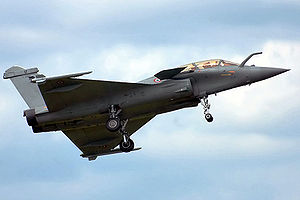
By watching this video you can feel the typical canard jet Rafale flying with an invisibly huge lift a head of its CoG, if there is no canrad to suppress, its nose will pitch up till stall, which means a canard aircraft being subsonic would easily gets lift and arm force of pitch up with reducing the downward deflection of canard.Finally I realized you were talking about T-4 or B-70.:D
Yes, being supersonic, a stable aircraft’s CoL moving far more away from canard and CoG to both, that’s why causing more trim drag, but this is only suitable for stable layout not Eurocanards today. You missed your target.:confused::confused::confused:Where did I claim a downwash operate at supersonic speed to help a canard aircraft gets more superior performance?
Do you know that strake only used to transfer vortex while Typhoon being high AoA?
What a funny it is you are going mad to forget all Eurocanard today are unstable design!
This simply will explain you what i am saying
Wing/aft-tail combinations achieve generally lower drag than wing/canard systems of equal weight and area. If the section CLmax is constant over all sections, aft-tail configurations exhibit greater maximum lift capability than canards of moderate aspect ratio. Relaxing static stability results in canard and aft-tail designs with very similar performance
The differences between aft-tail and canard configurations’ maximum lift capability is again related to the trim constraint. There exists one position of the center of gravity for which each surface carries maximum lift. This optimal static margin is shown in figure 11. Nearly neutral stability is required for canard designs while static instabilities from 0 to 20% are necessary for aft-tail designs.
Because of the unfavorable interference of the canard on the wing, asymmetries appear in these curves. The best aft-tail designs achieve 2% to 3% lower drag than canard designs, and although in each case relatively high aspect ratio tail or canard surfaces are preferred, the drag is insensitive to the aspect ratio of aft-tail. Canard designs suffer large penalties in drag with low aspect ratio canard surfaces.
http://aero.stanford.edu/Reports/MultOp/multop.html
This is what really happens.
Now see what happens with the F-22
The forebody of the fuselage was provided with a sharp edge, or hard chine running from the tip of the nose to the upper inlet lip, and there was a small aerodynamic lip attached to the top outside corner of each inlet. These were designed to cause the formation of vortices at high angles of attack. As a result of these chines and lips, at high angles of attack a pair of strong vortices form over the fuselage center section and another pair form over the wings. Because of low pressure inside these vortices, additional lift can be generated, improving the controllability at high angles of attack. However, these vortices can have an adverse affect on the vertical tails– they can cause aerodynamically buffeting, they can blanket the vertical tails so that they become aerodynamically ineffective, or they can form asymmetrically so that there is a destabilizing effect. Careful computational fluid dynamics calculations using supercomputers were needed to avoid these unwanted side effects.
http://www.joebaugher.com/usaf_fighters/f22_1.html
1 Canard aircraft characteristics
1.1 Advantages
The canard surface normally produces positive (upwards) lift which adds to the overall lift, whereas a conventional tailplane normally produces a downforce, partially cancelling the lift from the main wings.
Careful design of a canard aircraft can make it effectively “stall-proof” – the canard surface stalls first which tends to pitch the nose down and prevent the main wing from stalling.
Canard designs can sometimes have a more useful range of centre of gravity.
1.2 Disadvantages
The wing operates in the downwash from the canard surface, which reduces its efficiency
It is often difficult to apply flaps to the wing in a canard design. Deploying flaps causes a large nose-down pitching moment, but in a conventional aeroplane this effect is considerably reduced by the increased downwash on the tailplane which produces a restoring nose-up pitching moment. With a canard design there is no tailplane to alleviate this effect. The Beech Starship attempted to overcome this problem with a swing-wing canard surface which swept forwards to counteract the effect of deploying flaps, but many canard designs have no flaps at all.
In order to achieve longitudinal stability, most canard designs feature a small canard surface operating at a high lift coefficientThe coefficient of lift is a number associated with a particular shape of an aerofoil, and is incorporated in the lift equation to predict the lift force generated by a wing using this particular cross section. Note that the lift equation does not include (CL), while the main wing, although much larger, operates at a much smaller CL and never achieves its full lift potential.
http://www.economicexpert.com/a/Canard.html
The downwash from the canard wake, as it streams over the wing, reduces the effective angle of attack locally, and hence the local lift on the wing behind the canard
http://docs.google.com/viewer?a=v&q=cache:4thAdGmFzz4J:aircraftdesign.nuaa.edu.cn/aca/Slide/16-Vortex%2520Lattice%2520Methods(5).pdf+canard+downwash+wing+lift&hl=en&pid=bl&srcid=ADGEESiWc1qU13dRDD_BcrpBqBIfkw_pUml9R4W8VEanrAtN00RG96mzFva0uUtum8zbUDV5AeeykvYzF6cTB7tnmFB5_VcVxnPCcdJZHko7bLLeByH1vNLAADjAxzrvD-rLgw767PnE&sig=AHIEtbRpGrxZgJbRB6hEM-IjlrSwaIpSTA
kiwinopalYour expression is right only under the precondition below:
1. the aircraft is unstable
2. the aircraft is being subsonic
While the aircraft pass transonic, an unstable aircraft’s CoL and CoG will be coincided, the canards will give the a/c much more trim force.You are going from wrong start, so your answer also is going wrong way.
All you said must be presumed the aircraft being subsonic, so that down deflected canards will lead a down wash which kills total lift, but this phenomenon is not suitable to long-coupled canards also not suits any canards configuration being transonic and supersonic because the canards will return to be level while the aircraft goes sonic speed.
Conversely, a tail configuration, because of the distance between tail and wing couldn’t be set as longer as long-coupled canards, it always being an adverse down-wash flow caused by main wing. This disadvantage not only kills total lift if the aircraft being subsonic so that tail up deflected to contribute a little positive lift, but also kills the trim force the tail could contribute, and that is why you saw almost all of tail area are comparably larger than canards. It need a large area not only for making bigger trim force also for offsets that very bad down wash flow.Until here I realized what wrong with you finally!
My Dear:
A canard aircraft does not mean that LERX will not allowed be used, a key here is many canards also fits Fuselage Side-age Rooting Extension or we called Strakes, but you can see many tailed aircraft refitted with canards whereas no canards refitted tail.
Let us go by what studies say about the canard lte us see if they say something i have not said.
Recently, projected fighter aircraft designs such as the Saab JAS39 Gripen, the U.K. ACA, the French ACX, and the IAI Lavi use a variation of thecanard surface in a “close-coupled” arrangement. The foreplane is close-coupled when it is placed a relatively short distance ahead and slightly above the main wing such that the wake (vortices) shed from the lifting canard reenergize the flow over the inner portions of the wing.This tends to supress vortex bursting, thereby promoting more linear lift and pitching moments to high AOA beyond the nominal C. In particular, the delta wing planform which offers lower wave drag over a wide range of Mach numbers can benefit from the canard by providing better lift distributing (higher L/D) in tran-sonic flow conditions and increased usable lift in takeoff and landing
By see in this we get to important clonclusions, the Rafale has optimized canards for re-energizing the wings at AoA, while the Eurofighter more for supersonic cruise
let us see why the Delta wing is not the best for agility at low speeds
The low-aspect delta planform has disadvantages inlanding because of its low lift curve slope. Large pitch attitude is required to generate desirable values of lift for landing. On approach, pitch attitudeis constrained by pilot visibility and ground geometry clearance, and unless very low wing loading is employed, high approach speeds are required
Now Why they use near neutral stability?
The high-speed performance of this canard aircraft is strongly affected by the tradeoff between stability and performance. determined by the wing/fuselage pitching moment. therefore requires that the c.g. be located such that zero or low positivetail loads are needed. provide positive pitch stability, adequate control power for more wheel lift-off, and for maneuvering at supersonic speeds. Subsonic trim drag is determined by the wing/fuselage pitching moment, Optimum subsonic trim drag For an aft-tail fighter aircraft, the tail is sized to provide positive pitch stability , adequate control power for more wheel lift-off, and for maneuvering at supersonic speeds The same sized tail placed forward at the same moment arm provides similar control power for more wheel lift-off; however, pitch stability has changed sign. Thus, the canard operating in the upwash of the wing is destabilizing and the c.g. must be moved forward for a stable significant proportion of the total lift, roughly 155, with a corresponding induced drag penalty. Going to supersonic speeds, the aerodynamic center moves aft approximately 15% mean aerodynamic chord for this wing planform. This increase in stability further increases the up-load requirement of the canard, with severe trim and maneuver drag penalties. If the c.g. is located for minimum supersonic trim drag (approximately C = 01, the aircraft becomes highly unstable upon returning to subsonic flight. The obvious solution is to provide artificial pitch stability, a feature not provided in the Viggen control system.
So too much pitch up will render the aircraft difficult to trim.
A modern aircraft like Rafale will do okay with artificial pitch stability
Now does supersonic speed create downwash?
the answer is yes. see
The canard lift distribution began about 15 feet behind the nose. Although the main panels of the wing were well aft of the canard, the central wing section, which began 63.0 feet aft of the nose, was entirely within the canard’s downwash field. With so much area affected, the wing required an additional increment in angle of attack to generate it’s contribution to the cruise lift. This, unfortunately, generated an incremental drag-due-to-lift penalty.
see the solution to reduce the effects of the downwash
To be of significant value as a low-boom feature, the canard would have to be moved forward closer to the nose. In this more forward location, it’s downwash effects would be somewhat reduced, though not eliminated. Moreover, it’s lift would be a little more effective as a rotation-inducing force during takeoff and low-speed flight. As a result, it might be possible to reduce the configuration’s size and weight
http://webcache.googleusercontent.com/search?q=cache:fq3bZSG0jN8J:ntrs.nasa.gov/archive/nasa/casi.ntrs.nasa.gov/20060005154_2006004319.pdf+canard+wing+distance&cd=5&hl=en&ct=clnk
as you can see the Eurofighter has canards designed more for supersonic cruise like aircraft in the kind of the XB-70 or Sukhoi T-4
see here the contradiction, Rafale is using a canar closer to the wing so the vortices shed by the canard re-energize the wing, but also this has supersonic implications, the Eurofigher uses canard a bit more forward for better supersonic performance but losses it vortex optimun distance so it uses strakes.
So there is no such thing downwash does not operate at supersonic speeds as you claim.
kiwinopalI do not agree the Su-27 is Russian and they have the last word in IT rights, is like in Mexico we build a MD helicopter call it H-1 and later we say we did not break any agreement.
Or we build a Learjet 85 and call it A-1 and later we use a few composite tricks and some new avionics and we say it is our aircraft.
We do not have such rights and the mexican government knows that, so we are limited to build what the original owner of the design wants no more no less.
That is sadly the conditions of the agreement if we break it they will leave Mexico and find a new place to invest and that is what is happening to China.
Mexico is atracting new investment due to the fact we know we have to respect the IT rights.
thanks to that we have Bell, Textron, Cessna, Bombardier, MD helicopters, GE, Honeywell etc etc it is a matter of taking the right path to get investment
see we are building parts of bell helicopters
CHIHUAHUA Chih, Mexico.- Yesterday, Felipe Calderon, President of Mexico visited the City of Chihuahua to inaugurate Textron International Mexico Plant, located at the Chihuahua Industrial Complex where parts for BELL commercial helicopters will be assembled.
TIM´S (Textron International Mexico) investment for this project is close to 85 million dollars in the initial phase, generating 375 new jobs in the community.
With this announcement, the City of Chihuahua confirms its position as a leading player in the Aerospace Industry in Mexico. “With these investments, the Mexican Aerospace Sector achieves a high position in the global market, offering quality products at competitive prices and a highly skilled workforce” said the Governor of Chihuahua, Jose Reyes Baeza Terrazas.
INTERMEX Industrial Parks has been working together with TIM during the process of expanding in to Mexico, providing Real estate and Shelter services.
http://www.intermex.com/company.html
kiwinopalthey don’t need to have perfect coverage. But we know from plenty of articles that ROCAF fighters get locked on by Chinese SAMs across the straits. And that was before the latest deployment of PMU2s. And when ROCAF is in operations, it always has to be mindful avoiding getting too far into the S-300 kill zone.
they will be targeting both. The initial waves will obviously be for more prized targets. They are not designed to completely put Taiwan out of commission but rather to just soften it up when PLAAF comes.
And once that happens, China has plenty of more surface to surface missiles in its arsenal aimed at attacking Taiwan. The so called 1200 missiles really isn’t a lot when you think about it. But that’s not counting YJ-62s across the straits, the number of WS-2 and SY-400 they could be deploying there too. And of course, the biggest part are the PGMs, AGMs and such.AGMs like KD-88, KH-59 are stand-off weapons that can be fired while the PLAAF is under the protection of S-300. They only need to be used more in the beginning stage as a second wave to further soften ROCAF defense. Same with YJ-91, which will be used to neutralize the Taiwanese batteries.
They actually have thousands of AGMs that they could use for this purpose. And they can always ramp up domestic production close to wartime. My question about delivering AGMs is not the missiles they have in reserve but rather they can get enough JH-7As and Su-30s out there to deliver the necessary damage. But that I think is more of an issue for PLAAF.
Now PLAAF is notoriously cheap, so that’s where PGMs come in. That’s why they are fielding so much LGBs and TGBs these days and why they have developed so many variants of SGBs.
Sure, ROCAF is training against PLA, but it’s outmatched by better quantity and quality coming from across the straits that can put its SAMs out of commission and also cause enough damage on the airbases. Which will suffer more with subsequent attacks with cheaper ammunition.
China now has the capability of beating probably most asian nation now in exception of Russia and India; Taiwan won`t be the exception, but while the US is willing to defend Taiwan, the risk of nuclear war is too high for both sides and basicly the entire wold, so i do not think China can take Taiwan any time soon unless is by Western approval.
But i do agree with you China has total superiority in terms or weaponry against Taiwan
kiwinopalWell, you sure didn’t sounded that way few pages ago…
Anyway, it’s not being pro or con, but understanding working mechanics behind it.
Unfortunately, the amount of wrong claims and assertions you wrote in this thread is almost legendary and I’ve only jumped in, 5/6 or so, pages ago.The point being is US went for less advanced (more conservative) way in flight mechanics sense and that’s it.
For all fanboys out there, does it mean USAF will loose next air war because of that?
I don’t know and I don’t care.Yes, because both needed reduced take off/landing strips, hence canards.
Not very flattering for elevators.Yes but that’s because average European country is small and its interceptors have much less time to react than US’ or Russian’s, so they need superior performances.
Well, you’re wrong again, at least according to all US’ published material on F16’s origins up until now, that I’ve managed to find.
F16 was designed to beat Mig21 across the board, which it did.
Mig23 is something else and if it was a catalyst for F16 IOC I can’t tell, but it wasn’t a benchmark the F16 was designed around.How about taking a stopwatch and measure each quarter of a turn.
In a video posted by Sign, Gripen does last quarter in roughly 4 seconds, so your assertion doesn’t hold water.
ay Cola! my assertions are correct, and based upon studies, and i have proved it that canard downwash is a big hindrance as well as relaxed stability and LERXes will improve tailplanes.
I have as a proof the F-16, MiG-29 and Su-27, i have as a proof the F-22 and T-50 both of which don`t use canards.
I have given you proof that canards downwash the wing in two sources a few pages ago.
Now you are just declaring your self right i have given you two aerodynamic studies which basicly say and support my opinion.
Now if you want to think the americans are wrong and are conservative simply you are wrong, the first aircraft to fly was with canards but stability problems plagued the design of course it was a triplane ala Su-37 but WWI aircraft saw more advantages in tailplanes than in canards, canards are old nothing revolutionary at all.
Tailplanes are not conservative, by the way the Su-33 and Su-34 use canards as an aid but still have tailplanes, and has a lot to do with tailplane size and LERX shape limits , but in the T-50 they have created something more practical and without downwash the LEVCON.
So this show you in the T-50 and F-22 there is no need for canards but still are tailplanes call those two aircraft conservative is not the right word since are the most advanced fighter aircraft in 2010
kiwinopalWhat criteria are you using? Why is the Su 35 BM classified as superior to the Su 30 Mk given that the radar is not that important in your WVR only evaluation??
Where do you get info regarding the J-10’s maneuverability? Please, the first two posters, cite some sources…
Most of it is guess using a few public known numbers.
The F-22 was said to have a STR of 28 deg/s by an american pilot debriefing US pilots about Red Flag.
I have read Rafale`s ITR in the range of 32-30 deg/s and STR in the order of 23.9 deg/s.
Eurofighter of 30 deg/s ITR and 23.3-22deg/s STR
the MiG-29 is ITR 28 deg/s and STR of 23.5-22.8deg/s STR.
Gripen 30deg/s ITR and 20 deg/s STR.
Su-27 it is said on the range of 27deg/s ITR and 21deg/s STR.
F-16 has an ITR of 27 deg/s and a STR of 21.5-20deg/s
Mirage 2000 has a ITR of 29deg/s and a STR of 19deg/s
F-15 has an ITR of 21deg/s and 16 deg/s STR.
The J-10 is basicly a guess since is more or less in the size and weight of the F-16 and configuration of the Gripen i would say 30-31 deg/s ITR and 21deg/s STR at the best.
The Su-30MKI can not be better without TVC than the original Su-27 due to same TRW and the drag induced by its canards
The Su-35BM has new engines.
The MiG-35 has new engines.
The Rafale is not much better than the regular MiG-29A so i guess the Su-35BM must be comparable and the MiG-35 too in performance to both Rafale and Eurofighter
kiwinopalIf it is the same image which has been posted at least three times now we have all seen it & can easily go back in this very threed & see it again.
Nice try but the center of gravity is AHEAD of the main landing gear, not behind it.
F-16: 23.1666 -> 34.333 = 11.1666
Rafale: 17.1666 -> 25.0 = 7.8333
Typhoon: 9.333 -> 19.666 = 10.333
I agree 100%
kiwinopalSo as you are saying, gripen with its “weak” engine without TVC, sacificed STR over the a f-16 design, and landed on “only” at about 22deg/s STR?
this makes no sens…
With it weaker engine, the deltacanard, really need to be extemely efficient in turns (less bleed), not the other way around.
Man the Gripen has no STR of 22.5deg/s it has one of only 20 deg/s however a turn is the result of ITR and STR, in a turn the Gripen will start with an advantage that will evaporate as the turns developes, the F-16 will start slower but will surpass the Gripen`s rate at the end.
The end result is the parity of both designs.
The MiG-29 will start at 28 deg/s ITR and will end up with 22-23.5 deg/s, so it will catch up fast with the Gripen and at the end will surpass it by a great margin.
The Gripen starts at 30 deg/s ITR and finishes at 20deg/s STR.
The Gripen has a very low yield engine compared to a F100 or AL-31 but it has relatively a small weight and size and a huge wing in proportion plus canards.
These are realities, the Gripen more or less is on par with the Mirage 2000, F-16 and MiG-29
For the Gripen it has to get the first look first kill at the begining of the turn, once the turns develop the advantage is on the F-16 and MiG-29 that will out turn the Gripen.
So long turning maneouvres are not the main strength of the Gripen, the Gripen is just slightly better than an Mirage 2000
kiwinopalOk, now this starts to turn into cheap demagogy and again you’re very wrong on most points.
LOL, Porsche, Ferrari, Lamborghini, Mercedes, Audi, etc…
Really?
How come US constructors didn’t think of that, if it’s so simple?Again, that’s true on Academic level, but in reality Gripen outperforms F16 in anything but vertical climb, since it’s the only performance in which wing system isn’t important.
Well, as far as I can remember, F16 was designed in response to Mig21.
On full strength, EU should have about 1200 Eurocanards fielded.
How is this a small number? Let’s wait and see, how will US sell it’s F35 is current economic conditions…it’s not 1970s, anymore.Then maybe Americans should revise their standards, because SAAB devised a way to produce high performance aircraft at really affordable production cost.
Cola before arguing you should just try to understand why i say things, i am not against canards niether i think the eurocanards are bad aircraft.
In order to understand why the USA studied canards and later simple used tailplanes for its operational aircraft you have to see advantages and disadvantages, design philosophy and military budgets.
Russia also has used canards and in fact two operational fighters have canards, the Su-34 and Su-33, however the russian aircraft have also tailplanes.
You need to figure out why at least know why they use both control systems in a single aircraft.
Europe uses canards all with delta wings ask your self why?
The main factor in Europe is size, most european fighters flying today are smaller than their Russian and American counterparts
Everything is related to what design philosophy exists in each nation.
If you go and see history you will see the MiG-23 started in production in 1971 and was the main production soviet fighter in the 1970s, the MiG-21 and MiG-23 were the main reason why the F-16 exists today but the MiG-21 by 1974 was not the real threat in numbers and by 1974 was obsolete.
Thinking canards are hated in the US or the americans are blind to their advantages is something people guess but the reality is the americans have studied canards and have found both their pros and cons and chosen to use tailplanes for their needs.
kiwinopalwasn’t there an interview posted a week or two ago where an enginner who was part of teh designers team explained thatthey tested all sorts of configurations for the future gripen and the actual canard layout came out as the best performing way to do it?
what’s more, you should come down to earth, kiwinopal. Any aircraft is a design that takes years of studies, coparative tests etc.. by people that are certainly more competent than any participant on this forum, and they choose their configuration in order to fulfill their objective, depending on the available knowhow.
Your posts since you arrived in this thread are simply said: “tail planes = better, period”… so one really has to wonder what were all auropean engineers thinking when they designed, all of them, canard equipped aircraft.
What’s even more funny, you state one way, and a little later exactly the opposite, like when you said that a delta (and a canard delta of course) are limited in STR because you need more power to maintain speed, and a couple of pages later you state that europeans wanted canard-deltas because they needed small airframes and had weak engines. So according to you, europeans must really be completely dumb, as they made exactly the type of aircraft that needed more powerful engines while they did not have them.
The easiest way to build an aircraft is to keep doing what you were doing before, and all european manufacturers were building conventional (tail planes) aircraft in the past… and little by little all switched to deltas.
SAAB and Dassault did so with the Draken (and Viggen, and now Gripen) and Mirage series (III, IV, 2000 and now Rafale), even Boeing started to make the X-32 as a delta aircraft, and only after they had trouble reaching weight target and sufficient levels in control and agility that, in the end, they decided to make it more “conventional”… a configuration they knew better (easier FCS programming etc…).
That is not correct, i have never said canards are not good, the only thing i have said is there are other ways and solutions for the same problem, in Europe they have no engine powering any modern operational aircraft in the range of the ones in the MiG-31 even Su-27 or MiG-23.
The reason i guess is related to economics rather than unabilities to design one since europe makes really powerful engines for Airbus and Boeing aircraft.
In Europe the trend is similar to their cars, basicly economic and small.
The Russians need aircraft with very large ranges or very fast.
The Su-27 is huge carring lots of fuel and weapons,
The americans are more or less the same in the F-15 and F-14 and later F-22.
The F-16 as a single engine aircraft carries a large load so it needs a powerful engine.
In Europe the Rafale and Eurofighter are small but with a huge wing and twin engined to reduce accident rates.
LERXes were used in the Soviet Union as well in the USA because they have the same benefits of canards but one, no control, that is the reason they have tails.
Aircraft like the Mirage 2000 were designed with simplicity in mind and the same is Gripen.
SAAB knew the Gripen chosen configuration sacrificed STR but in general it offered a good ITR and small size using a single engine with less power than any engine used on F-16s and MiG-23s.
single engine fighters are easy to manufacture, the F-16 was a response to the MiG-23, both were produced in really high numbers.
The MiG-29 and Su-27 are far behind the F-16 in production numbers.
in General terms the F-16 reflects the best technology of 1974, using LERXes and tails coupled with relaxed stability and FBW has made it a fighter without any peer among the fourth generation as a export success.
all Eurocanards are still in small numbers, by 1996 the next F-16 was thought as the F-35 giving it a decent agility and stealth by that time the Gripen concept was outdated for american standards.
kiwinopalin my opinion i would rate like this up to my knowledge i have now.
F-22 best fighter but i feel T-50 must be better, number two must be between Rafale and Su-35BM, number 3 must be between MiG-35 and Eurofighter, four i guess is between Gripen, J-10, Su-30MKI and MiG-29, five is beween F-35, Su-27 and F-16
Here we are not considering TVC just pure turning and loops.
The reason i say more than one aircraft for each slot is because i am not sure the real agility each aircraft has.
kiwinopalI think you are going i circles and not getting anywere. first of all 28deg/s STR (have it ever been displayed?) comes from vectored thust and to big engines, not tailed configuration.
second, downwash or killing lift of a canard is something a have never read in any literature, so if you got sources on the subject it would be really nice.
if you look at few past pages you will find a few articles tha say that.
If you wonder why the Gripen was build like that the answer lies more in the requirements than with Canards or tailplanes.
They also chose its current configuration knowing they were trading off some other desired advantages of the tailed design.
But very likely achieved their goal and for a tiny nation like Sweden they did an excellent job making an aircraft competitive with the F-16
kiwinopali think the chinese do have some original designs, the JH-7 is i think totally domestic at least in airframe, others have bits a pieces of other aircraft but in general they have their own originality.
In Mexico we still need to fly a single helicopter like the Z-9 or jet like the ERJ-145, so i do not think they do anything wrong by flying aircraft that were not originally designed in China, in General terms the Chinese have gotten a good level and they are quit impressive with their J-10, Z-10 or J-8II and domestic jet engines.
What is probably the only thing to say is the J-11B shows basicly the bad sides of the Chinese technology transfers.
In many ways we are going to do something similar in Mexico, we are probably going to fly a Learjet or MD helicopter totally built in Mexico but i do not think we are going to say it is an original mexican design niether sell it like ours and it is probably that in 10-20 years Mexico will get the technology to build an entire jet engine since we already have some experience and we are building in partnership low pressure turbines.
China has a good policy to in terms of building an aircraft industry but they lack a good policy in terms of protection of the intellectual property.
kiwinopalWhat I am going to tell you is that canard contributes a positive lift during speed over sonic but without tail F-16 will loose an arm force of pitching up during same speed, which meanwhile gives a negative lift.
You answer is uncorrect and biased and i will tell you why.
It is true that the canard in order to pitch up uses upward deflection and basicly it increases its AoA, it is true that the canard brings lift ahead of the center of gravity under this precepts you claim it has better lift.
Well things are quit not so simple.
The canard delta wing configuration uses as the best trimming static stability position the near neutral why?
Answer because higher levels of unstability will induce an over pitch, this will mean the canard won`t be deflected upwards but downwards in order to kill lift and trim the aircraft at level flight, something which is not desired because the canard has a downwash killing wing lift.
So a little degree of unstability is needed in order to get a balanced pitch up nose up tendency.
This will mean because of canard lift the center of lift of the main wing is not so far from the center of gravity of the aircraft it self.
A tailed aircraft is different, it has no canard so it needs higher levels of unstability in order to achieve the same levels of pitch up nose tendency.
so usually a 10-20% degree of unstability is desired
By using relaxed stability both configurations the canard and the aft tail will have similar performance.
now you say the canard delta has relatively speaking less trimming drag, the answer is yes, but the other side of the coin is due to downwash the aft tailed aircraft has better total lift.
While the canard adds lift also adds downwash killing lift on the main wing, at level flight it has been proven the difference of between having a canard and not having the canard in the aircraft`s total lift is the same, so downwash is killing lots of lift, the canard only increases the total lift at AoA higher than 7 or 10 degrees like a LERXes that is when the lift is higher than the aircraft without canard`s total lift.
This is considering both canard and tailplane having similar moment arm, shape, size and wing profile.
Now the question is why use a canard?
simply because you are using a delta that has lots of lift and little drag and you are using a small canard.
and when use a tailplane? answer when you can mitigate supersonic center of lift shift with LERXes and/or use relaxed stability besides by sweeping the tailplane higher than the wing, use the wing downwash as a download force for trimming at cruise speed and or locating the tailplane the farthest possible from the center of gravity of the aircraft it self.
The F-22 and T-50 can use all of these features and still being competitive with a canard delta in drag trimming performance and agility without compromising stealth.
Now the F-22 has a STR of 28deg/s, can do the cobra and has a Max supercruise speed Mach of 1.7, this means its tailplanes are doing a good job (The T-50 is similar).
This proves you you can get better results with tailplanes if the designers do a good job.
kiwinopalThat is why I said INCISIVE.
A donkey is running around a mill.:D
what about i tell you that if you take the canard off from the Rafale the total lift is the same as with canard on at level flight? do you know why? downwash ah…. a detail upward or downward deflection you still make drag, too much deflection will stall the canard and over burden the canard as a lifting surface since the wing is losing lift, besides you did not consider the F-16 has LERXes niether the F-22 has relaxed stability and tailplanes with their center of lift are far from the Center of gravity.


 Sign In







