 kiwinopal
there’s no such thing as “similar aircraft” when you have to evaluate specific performance further than “with truckload of margin for error”… they may look similar, especially to someone who doesn’t know squad about aircraft, but the profiles, airflows etc are unique to every type.. that results in different lift/drag caracteristics and, combined with engine power (and ability of the engine to remain feeded with fresh air at this or that AoA, etc…), the FCS programming and so on, results in features that you can’t just consider “similar because that other type looks that way too”.
In the end, when the author himself says:
“This is known as not realistic but I don’t have reliable data to differentiate them”
it seems obvious that he puts equal numbers for both aircraft while having no way to know whether they are, actually, anywhere near accurate.
He continues:
“Non confirmed information indicated higher AoA values allowed for the Rafale (Flight envelop of the Typhoon is still not fully open)”
so, again, he shows his calculations, but gives from the beginning the information that he, actually, can’t say whether any result will be accurate, since he has no way to know whether the numbers he starts with are correct.
Now, what part of “I don’t know what my calculations should be based upon” sound like “reliable source” to you?
Let us see what are you expecting 30 deg/s STR?
You are expecting even a higher value than 23.9 deg/s for the Rafale STR, of course this can be even lower than 22 deg/s for its STR.
A 22 deg/s for the Rafale is a logical number, specially since it does not carry its weapons internally and needs to cope with high drag at 50% of fuel and armed.
One thing is you have a desire to be higher in order to expect it will defeat those numbers by the MiG-29M or MiG-29S
The Gripen is a really good yardstick, however you expect more based upon a wish, in reality 23.9 deg/s STR is a really high number, most fighters still are in the 21-18 deg/s range and that includes the Gripen and the Su-27.
Gordon gives a believeable number for the Eurofighter of 22 deg/s at 3000 meters.
Of course you think the optimized wing of the MiG-29 for Mach 0.8 should do worse than a Delta canard just based upon a desire.
The Data for the Gripen goes perfectly with aerodynamics, but you expect the Gripen to be abyssmally worse than Rafale.
kiwinopalto add to Cola’s post, the first page of the “rafale vs typhoon” pdf states its hypothesis about their caracteristics quich, as the author himself says “isn’t realistic”..
from there on, his own calculations are necessarily inaccurate
Are inaccurate to who does not like them, they are very likely accurate simple because published data for a similar aircraft, the JAS 39 Gripen has 30 deg/s for ITR and 20 deg/s for STR then those figures are believeable since the difference between a Rafale and a Gripen must be in the region of 2 or 3deg/s of course now you want even more, Gordon also gives logical figures for that reason
kiwinopalthat is not true see here what was said in that lecture here is the transcript:
Discussion on the Su-30MKI. I stands for ‘Indian’, ‘Su-30M’ is the Russian designation for theie newest fighter and ‘K’ means that its an export version. These were version five airplanes, they had vectored thrust, canards, all the advanced weapons the Russians build, including the AMRAAMSKI – their active radar missile, and the R-73 which is there IR missile, which has a 30 mile range on it. Nothing classified, everything I say can be found in Janes website.
We had them here at Mountain Home for two weeks where we told them how to fly for Red Flag. And a couple of things happened.
Firstly, the Tumansky engines are very suseptible to FOD (Foreign Object Damage). Now the reason thats a big deal is because they asked for a 1 minute spacing between take offs. At Red Flag with nearly 50-60 aircraft supposed to take off, if you have one person who will wait one minute between each take off to launch these six aircraft… yeah…. right, they can go find some other place to fly. So we trained with them, worked with them, and got them to shorten that down to 45 seconds, still not acceptable. But what we did was send these guys out first and ask them to wait for everyone else, since they had enough gas fuel, they would go up and wait for everyone else. They were very concerned about FOD and how Russian engines are not nearly as reliable as Americans. One of the things the Indians were very disapointed in, if an engine breaks down because of FOD, the Russians make them send the engine back to Russia, then you’ll send you back a new one. So its not the ideal situation for them here in the United States because they have no spare engines here.
How did they Fly? There is a lot of stuff on the subject in the newspapers and magazines about this airplane. There’s a great video on youtube, where somebody shows the F-22 flying its demo, and the Su-30MK, side by side, and he does the exact same demonstration, as the F-22. And an airshow, then can do the same demonstration. The reality is, that’s about as close as the airplanes ever get. When you compare it with US airplanes; where does it stand up against the F-16 and F-15, it’s a tad bit better than we are. And that’s pretty impressive, it has better radar, more thrust, vectored thrust, longer ranged weapons, so it’s pretty impressive. The Sukhoi is a tad bit better (holds arm at chest level, and the other arm signifying the Sukhoi a wee bit higher). But now compare with the F-22 Raptor, the raptor is here. (holds palm way above his head – signifying that the aircraft is much better). OK, next.
Now coming to the maneuvering. We did a lot of 1 to 1 fighting with it…. and we were very concerned, because in Cope Indias when we went over to India and fought them, they always had their best pilots. We always fought them at the ‘Indian Nellis’ and they always had their best pilots flying. We always had our operational unit based out of Kadena where the experience ratio is 80% inexperienced guys with less than 500hrs flying time and 20% experienced. The 20% were fairly experienced but they came back from a staff jobs so they really hadn’t had a lot of time flying. Anyway at Cope India, we held our own, but the Indians pounded their chests – they said we beat them more than they beat us – and that was true there.
Now they come to Mountain Home, and the Su-30 unit that they bring was a regular operational unit – with an experience mix of about 50-50 (experienced vs inexperienced). Their experienced guys had all come off the MiG-21 Bison.. The MiG-21 bison is a pretty neat airplane. It is based on the MiG-21 as many of you guys know from the Vietnam (War) era, but upgraded with an F-16 radar built by the Israelis in the nose, active radar missile, and they carry an Israeli jammer on it would practically make them invisible to our legacy radar in the F-15 and F-16.
Remember days in 4477th (4477 Test and Evaluation Squadron)… MiG-21 had the capability to get into the scissors with you, 110 knots, 60 degrees nose high, go from 10,000 feet to 20,000 feet, very manoeuvrable airplane, but it didn’t have any good weapons. Now it has high off bore sight Archer missile, helmet mounted sight, active missile, and a jammer that gets it into the merge, good radar, so that’s the plane the SU-30 experienced pilots came out of and they were pretty good in the engaged fight.
Well we get them to Mountain Home and we let the operational guys fight… and then a couple of things happened. Amazingly, we dominated – not with a clean F-15 i.e. Without any wingtanks and other stores, but we dominated with an F-15 in wartime configuration i.e. 4 missiles onboard, wingtanks, and they’re sitting there in clean Su-30s except for pylons which did not have anything on it except a ACMI pod. They were amazed, matter of fact they were floored to the point after the first 3 days, they didn’t want any more 1 vs 1 stuff. Lets move on the something else (laughs). Funny ’cause in India, they wanted only 1 to 1 – cause they were winning at that.
A quick word on the airplane. Vectored thrust. The Raptor has vectored thrust, but its two dimensional and works only in the pitch mode. When the airplane pulls, and it gets past a certain AoA (Angle of Attack), the vectored thrust kicks in and drives the airplane around. In the Su-30, instead of having it in the pitch, it has TVC in a V. It doesnt have to be in a post stall manoevering…. the TVC would kick in and push the aircraft the direction when the pilot engages the switch on the stick. All this is formidable on paper but what you would know is that with the TVC kicking in, its a huge aircraft, and thrusting such a huge aircraft in that direction creates a lot of drag. It’s a biiig airplane. A huge airplane. So what happens is when it moves its nose around, its sinking. We had enough experience with the F-22. which has up/down TVC nozzles.
What would happen is that the in a merge with the F-22… From our experience, that’s the only way you would get the F-22. and the only way – this happens only if there is an inexperienced pilot because the experienced ones never make the mistake. You would be pulling in scissor fight hoping you would get the F-22 in your sights (laughs ).The F22 can sustain a turn rate of 28 deg per second at 20,000 feet while the F-15 can get an instantaneous rate of 21 and a sustained rate of 15-16 degrees. So you are pulling and hoping. Post stall, maneuver, the ass end drops and instead of going up, it just drops in mid air and the airplane will rotate with its nose up. This is where the Eagle or Viper pilot would pull up vertical, switch to guns, then come down and take a shot at the F-22. Of course you have to first get in close to do this, most probably the F-22 will kill you before that.
The Su-30? No problem. Big airplane. Big cross section. Jamming to get to the merge, so you have to fight close… he has 22 – 23 degrees per second sustained turn rate. We’ve been fighting the Raptor, so we’ve been going oh dude, this is easy. So as we’re fighting him, all of a sudden you’d see the ass end kick down, going post stall – but now he starts falling from the sky. The F-15 wouldn’t even have to pull up. slight pull up on the stick, engage guns, come down and drill his brains out.
While on paper, he has vectored thrust, all these great weapons and everything, he looks the same as a Raptor, he’s nowhere near the same. So that was a really good thing for us to find out, that we really didn’t know until this last excercise. Now, what I’m scared of, is congress is going to hear that and go ‘great we don’t need to buy any more airplanes… no no no, we used to be way ahead of them, now they’re right up close to us and just a little bit higher. I say that they’re just a little bit better than us, is because when there pilots learn how to fly, they’ll be able to beat the F-16 and F-15, on a regular basis. Right now, they use TVC and just go into post stall…. so it’s only a matter of time before they learn.
As far as the Red Flag went, we also had the French out here. The French were going to get the Mirage 2000 dash 5, one of their older airplanes, but the moment they knew the Indians were getting the Sukhois they decided to send the Rafales – their latest, advanced jet. 90% of the time, they followed the Indians in, but they never really came into the merge. Like anyone of you who has flown in Desert Storm (Iraq) and Afghanistan, they would do local flights over Bagram, Bahrain and Alseraj and say we participated, but what they were really doing is just sniffing electronically and finding out how our radars work. And that’s really all they did out here…. came out here with all the electronic receiving equipments and sucked out all the trons in the air.
One thing about the IAF – they learnt their lessons very well at Mountain Home, they were extremely professional – they never flew out of the airspace which we were very concerned about. They had zero training rule violations. And that in itself was incredible. We were very impressed and thanked them so much because they were very very professional.
Where they had problems was they killed a lot of friends. Red Flag has changed now, the first week of Red Flag is basically large force deployment and the second week is about a campaign…. where the surface to air missiles come up. What was happening was that they did not have combat I.D capability.
The Koreans bought in their brand spankin’ new F-15Ks. beautiful aircraft, with AESA radar and all like on the F-22. Had Israeli targeting and jamming pods on them. Incredible airplanes. Very professional also. But they had less than 50 hours total on the F-15 it and none on the airplane, they were still learning the aircraft. So it did not have any significant impact.
You know what was happening is that they didn’t have the datalink with the Awacs. Big internet data links. The Koreans, the French and us could see the complete picture on the HUD, but the IAF had to ask the AWACS. they would ask about a target ahead, “Contact on my nose 22 miles, friendly or hostile?” Awacs would say “No hostile within 40 miles of you” then “Fox2.” (laughs) The first two days they got hit bad, they were getting shot down while waiting for answers so they decided to kill the other guy fast without knowing.. better you die than me. So they had a fairly high number of fratricides. But they took the fratricides very seriously.
So while Nellis is about training with people who we will go to war with, Red Flag Alaska: This is different from Red Flag Nellis. In Alaska we exercise for friendship building. Most countries that fly there are in a conflict with each other. The Indians really wanted to participate in Red Flag Nellis, so they could mix right in and be a part of the coalition, and they learned, in a big way, that, that, wouldn’t happen.
Was the AESA radar in the Indian aircraft…? Well the Indian is PESA which is not active but passive, as opposed to AESA. Huge difference, because and actively scanned AESA pings more, and sees more, and is more accurate, than just a passively scanned radar. PESA is good but ends up having more technical problems in discriminating, and finding the right guy.
Some guy said F-15 was last dog fighting airplane, he discounted the fact the F-22 was really terrific in the fight…? I think the Raptor is the next great dogfighter we have. Reason is, electronic jamming, and not only electronic jamming, but we don’t carry enough missiles. We’re going to have to go in with guns. Gonna happen and thank god the Raptor still has a gun on it. It’s fast, its manoeuvrable, …. and the Block 50 (and 52 EHRM P&W FTW), is pretty good dogfighter also, so these aircraft, the F-15, Block 50 F-16, and the Raptor, are still very capable aircraft, because when the Bison MiG-21 that gets in unseen with the small RCS and a big jamming pod…. going to need manoeuvrability.
http://www.militaryphotos.net/forums/showthread.php?176561-Red-Flag-2008-4-Lecture-by-USAF-Col-Terrence-Fornof
What about the F-35? Let’s save that for another discussion. We do too much work on it at this moment, but we’ll save that for another time.
see they say for the F-22 is 28 deg/s STR at 20000 feet, Rafale will do 23.9 deg/s at see level the F-22 must have a real high STR
kiwinopalI’d say the altitude is similar, speed, who knows, close enough I think.
Look at the vids again. Which aircraft starts the turn with a turn rate it can’t sustain, bleeding alot of speed in the process? Hint, it’s not the Gripen.
That is a empirical method, publish data and aerodynamics shows that the Gripen though being a good fighter due to its delta won`t sustain its high ITR, the Delta wing is only good for high speed, the MiG-29 has a wing designed specifically for near transonic speeds, it will perform the best at Mach 0.6-0.9.
The Gripen is a compromise of a high speed wing with canards to reduce its drawbacks, can the Gripen turn well? yes it can but it won`t sustain its turns easily at speeds of Mach 0.7 and it will bleed more energy at transonic speeds perhaps at higher speeds might have an advantage in STR but in the main range of combat below Mach 1 hardly will do it.
kiwinopalget the book;) Gordon is lithuanian and lives in Moscow, he publishes in Russia, he has access to MiG`s archive and interviews.
kiwinopalOut of curiosity, where did you get all those figures from (particularly the ones at altitudes)?
Yefim Gordon`s book MiG-29 and a PDF title Rafale versus Typhoon
http://www.calf.cn/attachment.php?aid=209172 page 6 gives you the turn rates at sea level and 50% fuel basicly combat weight of both Rafale and Typhoon.
F-22`s STR from a red flag lecture on youtube
http://www.youtube.com/watch?v=b2siH9W5P4E&feature=related
kiwinopalNow, compare the TWR of these aircraft. Also, the 21.6deg/sec for the F-16 is not up to date. AFAIK, the latest versions of the F-16C/D is 18deg/sec. However, if we go by the 21.6 figure, performed by an early Block F-16A, the A still had a much higher TWR compared to a Gripen.
As to the 22deg/sec MiG-29 turn rate, I´m sceptical. While the ITR of the MiG-29 is good, around 28deg/sec, it´s sustained turn rate is rather poor. It bleeds energy like crazy in sharp turns. I know an airshow performance isn´t the most scientific way to judge an aircrafts performance, but the MiG-29 is rather sluggish, especially in comparison to the eurocanards, as well as by a well flown F-16.
In the video below at 1:58, a MiG-29 makes a 360 in around 16 seconds, notice that when it enters the turn it has plenty of speed, and when it exits the turn it travels at a much lower speed.
http://www.youtube.com/watch?v=FHcgqHehP5w&feature=related
In the video below, at 3:32 you can see a Gripen perform a 360 in 16 seconds, with no visible speed loss.
The videos are not comparable unless they are done at the same speed and height.
The MiG-29 does not bleed energy as you claim, the Gripen is the one that bleeds energy more, why? It starts its turn at 30 deg/s but can not sustain it so it drops to 20 deg/s so now tell me who is bleeding energy, the MiG-29A that starts at 28 deg/s but can not keep the 28 deg/s turn so it drops to a 22deg/s STR?
kiwinopalWill be 22°/s of MiG-29’s STR is implausible, even this, average of these three is 21.5°/s, average of all three Eurocanards will be 22.4°/s, needless say that ITR.
More lift?
Let me tell you what does lift mean:only 2 seconds Le Rafale has changed its nose if not almost 90degs at least 80 degrees with no altitude dropping.
Here is doing like this above again but exactly 90° at least:
Then lets see your small swept wing is able to do this if it is possible, no matter Harrier or your favorite S.H.
This thread is going funny, do you know a wing like diamond or say F-22 used will be much less aspect ratio than a rectangular wing which F-18 or P-51 used? Are you going to say a delta wing or even a diamond wing causing low STR because its stronger wingtip vortex? Do you know only moment arm of LERX will be stronger than Canards but lift?
The MiG-29 will have a better sustained turn than the Gripen that is a fact.
Now to turn you need these things:
Lift and thrust does not matter the airframe configuration as you claim, The Rafale has excellent aerodynamics not because of canard as you claim but because a smart way of achieving Lift by reducing weight and relaxed stability giving to its thrust the least resistance.
The MiG-29M and MiG-29SE (MiG-29C) at 3000 meters have better STR than the Eurofighter that is another fact.
The main question to balance a design is how much thrust you have available, in Russia they had the RD-33 in the US had at the time other engines available such as the General Electric F404 for the F-18 and the F110 for the F-16.
Given the thrust available you think the configuration, the F-16, MiG-29 and F-18 were built with those constraigns, so they had to think the best aerodynamic configuration that would give the best performance with the thrust and materials available.
The Rafale has been built with newer materials, simply the MiG-29 is a 11000kg empty weight aircraft and only has excellent agility at the expense of range.
The Rafale C has lower empty weight and a bigger wing.
The MiG-29 was made stable to made it easy available for operational service in 1983 thus reducing its development time, now you are wrong because you think a 1977 aircraft can be comparable to a 1986 aircraft tha got operational in 2000 and even in limited numbers.
Rafale has and continue having the limits of any canard delta aircraft, more drag, flutter etc etc…however thanks to a long development process it has cured most of its limitations.
The wing of a F-14 at landing is swept around 16 deg so its wingtip vortex is small by the fact its a very high aspect wing, thus reducing aproaching AoA and speed and reducing drag.
Rafale has a more swept wing you can not expect this wing alone having less drag than the F-14`s or MiG-29`s wing, so they made it bigger than the MiG-29`s to offset this limitation.
By adding a canard you create a less powerful vortex than a highly swept canard but you add a Vortex to the delta therefore improving the delta`s lift.
By using relaxed stability they added a vertical vector to its wing and by using lighter materials in its construction the Rafale magnified its resultant.
Is the Rafale a result of good engineering? yes it is.
Now a MiG-29 even been older has excellent aerodynamics designed to achieve the STR with the least complexities in the least time.
The results are the MiG-29C and MiG-29M still remain good fighters and competitive with a younger product even at STR
kiwinopalThe STR of the Gripen is known it is 20 deg/s lower than the F-16`s 21.6 deg/s and 21 deg/s of the Su-27 most used STR figure for the MiG-29A is 22 deg/s, taken from ex-Warsaw pact machines.
No MiG-29C or MiG-29M was ever operated in western Europe niether by Iraq or Syria at this moment only India will get it as the MiG-29K .
The LERXed Harrier has a very high instantaneous turn rate 19 deg/s or 18 deg/s and something like 16 deg/s sustained.
You are just following the idea the canard delta is better but you forget the lower sweep in the Harrier`s wing allows for higher lift and less powerful wintip vortices allowing higher lift and less drag than a delta wing; combine this with LERXes to allow for more lift you get better sustained turn rates.
Deltas have more powerful wingtip vortices so a small delta LERX is beneficial only as a vortex generator but the main wing should be of higher aspect ratio then you get better sustained turn rates.
A canard delta configuration use high spect ratio canards that generate less powerful vortices and low aspect wings that generate powerful wintip vortices, then you get lower sustained turn rates, that combination offers a good wing for high speed and canards to reduce its low speed drawbacks
kiwinopalone thing that is important is how much lift (G’s) you can generate ata given speed.
For example, in the video posted by wrightwing, the SH flies slow, 110kts, generating 1.0G at 29.9° AoA which is beyond what rafales limiter will allow. the rafale does a 100kts slow flight in a straight line in its demo (1.0G too). it can manage the same load factor at a slower speed while, obviously, flying with a lesser AoA.
while some point the “high AoA” as a killer capability, the fact is that the Sh has to be a higher AoA than the rafale to manage to simply generate the same acceleration (G), which most certainly comes with a superior drag as well…
what’s even more interesting is that, while going about 360kts, the SH pulls its highest load (5.5G’s) that is visible in that demo (from parts where the HUD is displayed).. it is at an AoA of 7.8° at that point… so much for the need to go to some insane AoAs… unless youre going realy slow, you don’t go anywhere near 30° or more; and, in any case, you don’t turn all that much while doing so anyway
the highest AoA reached in the video that we can witness is 38.3°, instant (not sustained) as the pilots pulls hard on the stick while the aircraft is slowing down at that moment, the recorded G’s are diminishing as AoA goes above 30°, the aircraft acting more as an airbrake (speed ~210kts and slowing down) than producing lift
at 40 AoA the LERXes of the F-18 still produce lift after 40 AoA its LERXes will reduce wing lift, in fact most modern aircraft can handle 60 to 80 AoA to some degree, the MiG-29, F-18 will do it, but real post stall is only handle by the Su-27, Su-37, and F-22
Handlling high AoA will show the real aircraft`s ability to turn and recover from slip departure
kiwinopalThe F-22 is complete a new generation next to Rafale, which TVC helps lot for its turn rate, without TVC, F-22 won’t get such huge advangtage compare to canards. And the keypoint here is canards surpass all of normal tailed design in same comparable condition.
Here is not of generations, you claim the canard will always give the advantage, the LERXed Harrier is better than the Viggen and Kfir, the Gripen STR is lower than the one of the MiG-29, Su-27 and F-16 why?
The Eurofighter`s STR of 23.3 deg/s at seal level is lower than the MiG-29C`s 23.5deg/s at 3000 meters and 50% of weight why?
the MiG-29C is stable longitudinally and flying higher
Rafale will do 23.9 deg/s at sea level too in combat weight of 50% weight
the Eurofighter STR at 3000 meters is 22deg/s Rafale must have similar figures
The MiG-29M`s sustained turn rate at 3000 meters and combat weight is 22.8 deg/s both MiG-29M and MiG-29C must have higher STR at sea level.
Rafale did not do the cobra in 1986 when the Su-27 did it.
The Cobra can be used as the Hook and bell in combat by the Su-27.
F-22 can get 28 deg/s STR.
The F-22 will achieve that thanks to better lift/drag ratio and higher TWR
kiwinopal10 deg/sec is a number belong to Mirage without canards
In the Falklands the Argentine Kfirs (Daggers) were not better than the Harrier, in 1982 Israel Used the Kfirs as fighter bombers leaving the air superiority role to F-15s and Syria were flying MiG-21s and MiG-23MFs why?
The Viggen pilot said the F-15 is more agile than the Viggen.
kiwinopalBe in dogfight, both of F-18C and Rafale got total 14.5 ton thrust, weight of Rafale M is 10.5 ton for empty and half internal fuel 2250kg, weight of F-18C is 10.5 ton for empty and half internal fuel for air combat is also 2250kg, why and where did you get underpower?
That is not accurate, the Rafale is much lighter, the M is the heaviest and still won`t pass the 10.5 tonnes it weighs roughly 10200kg, the F-18C is heavier around 10800kg-11000kg, do you really think dassault was going to built something with the same weight, drag, lift and thrust to the F-18 and get the same performance?
That is just not realistic, the Rafale is lighter, has a bigger wing and has reduced stability.
The results are better performance due to newer materials, bigger wing and lighter weight.
Is Rafale better than the F-18C? yes it is, but in terms of basic parameters is lighter, with lower wing load and better TWR.
It has nothing to do with having canards or LERXes or foreplanes and tailplanes is pure lift, drag thrust and weight
Rafale of course pulls 23.9 deg/s STR while the F-18C and F-18E pull barely 18 deg/s in STR
kiwinopalKiwinopal , I don ‘t want to start a “pi**ing contest .
First , because I am a huge fan of the F-22 🙂 , then because I am also a huge fan of the Rafale 😉
You read me posting rather strong disagreements on the F-35s , but you will hardly find me writing something bad about the F-22 and since you want to hear it , there are only 2 things which I don ‘t like on the F-22 :
– no IRST or any long range passive device to scan , acquire , target and identify targets . A Rafale will recognize a F-22 at 50km with the TV . A F-22 can ‘t recognize a Rafale unless its pilot use his Mark-I eyeballs . You also must agree that within tight RoE , the Rafale has the advantage . A Russian or Chinese Flanker also share the same advantage , which is dangerous . Don ‘t you agree Kiwi ? 😎
– no active ECM suite . It only has the ALR-94 which is a passive (listening) suite .
The F-22 deserves both , I tell you . Why is it not fielded is beyond my comprehension … 😡
That being said , in real life Ops I wouldn ‘t like to be in either seats ! That ‘s for sure ! 😮
I say again , if both fighters are using dogfighting missiles , I couldn ‘t bet . The outcome is so uncertain that I stop right there .Cheers .
To catch a F-22 on IRST is very hard, it has reduced IR signature it uses technology used on the space shuttle to make the nozzles cold with the same technology applied to the shuttle tiles, it also does not use afterburner.
Rafale can catch probably a MiG-29, Eurofighter J-10, Su-30MKI on pure IRST but an F-22 is something which is very difficult, for Europe the answer is a stealth fighter, Sweden has already started working on one, they are pondering the wisdom of the canard as a stealth device, they are trading off stealth for performance by adding canards and canards above the wing level.
A stealthy canard has to have the same angle of the wing leading edge on its leading edge and the complementary obtuse angle at its trailing edge.
For example if the angle of the wing leading edge is 40 deg, the canard should have a trailing edge angle complementary and obtuse basicly Alternate exterior angles .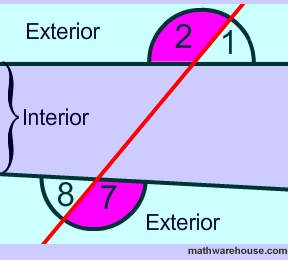
this makes canard stealth design harder since you end up with diamond shaped canards or a 1/2 rhombus shaped canard basicly a triangle with clipped tips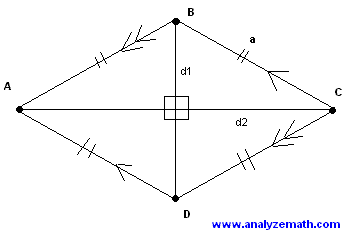

The Yak design was like that, the new Grippen model too but the Chinese fan art does not

this Korean concept also respects planforming
kiwinopalNot likely , I remind you that the F-22 only scored once out of 6 engagements against the Rafale in WVR and that was with canon only .
If both are using IR missiles , well … Who knows 😉Cheers .
You do not believe that even in dreams, the F-22 will rule over the Rafale, in STR it will always be behind, the F-22 has a difference of 4 deg/s over the Rafale, the F-22 holds 28deg/s versus Rafale 24deg/s in STR, even a well flown MiG-29 will score sometimes over the Rafale, i am not saying the crappy MiG-29As underpowered German MiG-29s but the MiG-29Cs that only Russia and Ukraine had.
Rafale has been considered not the best option as a fighter in Brazil in terms of aerodynamics and performance the Su-35 is prefered why? Japan and Australia want F-22s but the US won`t sell them but France will sell Rafale why do you think than happens?
Rafale is only better over legacy fighter of 1970s vintage like the F-18 or MiG-29


 Sign In







