 kiwinopal
Hello Kwinopal,
Thanks for the images of the Balbuena. Do you have any information on how long it served with the FAM?
Regards,
Clint
I have not such information but once i have it i will pass it onto you, in the meantime i leave you a few pictures of the Aura and a PDF document where you can see more pictures of the Toloche, Series C and the twin engine Sport.
The Documents are scanned originals from the project Aura.
the PDF documents has excellent pictures at pages 7,8 and 9
http://www.ai.org.mx/Estado/pdf/Aeronautica%20coloquio%20de%20especialidades%202005.pdf
kiwinopalRoughly, Canards with delta makes aircraft more like an arrow so that less drag being the speed approaching sonic.
Also there is no evidence displayed LERX is better, this is why Sukhoi PAK FA added a movable LERX which effects like a canards more than a LERX.
F-22 is not a ruler to measure tailed layout is perfect or tail is better than canards.
Canards are mostly used on deltas because they improve greatly their lift at high AoA: LERXes are more effective with medium to low swept wings this is the reason they are used depending in what flight envelop parameters an aircraft will operate.
Cracked compound wings are prone to high pitch forces this forces designers to reduce it by different means.
The F-18 is a good example of an aircraft with good low speed agility but not designed for high speed, its wings are a compromise.
At low speed low swept wings are better than highly swept wings, LERXes also improve the lift of their wings.
So a design is a compromise of different needs and different flight envelopes.
kiwinopalAnd we know after your teaching session, that a tailless fighter is crap.:diablo:
All configurations have trade offs, if you think canards do not have you are wrong, but after also LERXes have trade offs as well as tailess.
I have never say things as you are trying to imply.
That is the reason you have aircraft like the F-16AFTI, F-16XL, F-16VISTA and Lavi.
Each aircraft had its strong points, from the point of view of a company modifications can bring more cost effective products and more profit see it in the Su-27 family.
kiwinopalThere is no the perfect configurations once you follow one path you lose other.
Everything is mission driven, a stealth tailess compound wing aircraft with less radar signature and drag clutter is logic if you get the latest in FCS and TVC.
If the aircraft will fly at high supercruise speeds such as Mach 2.5 or more probably it justifies less agility in terms of aerodynamic conventional controls
kiwinopalare you sure?
see this other view of the aircraft concept from below
see what the article
says
Boeing is betting that something will be a clean-sheet,tailless fighter design. Concepts displayed at Navy League show off a 40,000lb-class fighter for carrier decks. The air force would likely need an airframe at least 50% larger to replace the 60,000lb-class F-22. If the airframes are not common, the air force and navy would likely be pressured to share the cockpit avionics and — possibly — engines.
from the same article
http://www.flightglobal.com/blogs/the-dewline/2010/05/boeing-plots-return-to-next-ge.html
They are tailess with a compound wing
kiwinopalthe image is blur however you did not show this model
This has a compound wing and very visible Lerxes.
the report says
Right at the top of their briefing is a graphic of their F/A-XX tailless, two-engine jet blue-sky marketing effort.
http://ericpalmer.wordpress.com/2010/02/20/boeing-global-strike-were-not-those-other-guys/
both images show a tailess aircraft
A tailess makes more sense for a stealth aircraft due to ist simplicity and lack of more aerodynamic and radar signature clutter, the compound wing with LERXes makes sense to improve stability at high AoA
kiwinopalThe F-18 has a wing design that ARE prone to the Supersonic speed performance..
You cant just say that the wing fuselage blending/LERX makes all the different here, there are many other thing to consider in the world of aerodynamics.As far as the LERX creating stability and high AoA on the Su-27.. yes but its just a small part of it.
Here are some other resons for that:
The huge lift by the wide engine placement.
The long nose section merged with the Lerx is feeding the air into the wing and the wing design itself is wery important.
And finaly the two huge stabilazors all contribute to the impressive stability of the Su-27.I’m not sure how much better performance the Su-35S will be over the Su-27SM.
Sergey Bodgan Sukhois test pilot in the Su-35 “901” said:
“you can feel the extra thrust pressing you into the seat, its more manuvreble and easier to handle etc”..Thanks
I agree with you but what i am trying to say, is according to what i have read, to do the Cobra you need these conditions.
A) good lateral stability, this is obtained by good control of forebody vortices and the use of aerodynamic controls. In aircraft with canards and LERXEs also means controling the interaction their vortices have with forebody vortices
B) relaxed stability
C)Good pitch control
All the explanations mention Hysteresis as the main element behind it due to the very fast pitch up and pitch down the maneouvre represents and the differences seen in steady pitch up conditions and the unsteady ones.
When we go to the aerodynamic aspects of canards up to what i know and i have read the high aspect canard and low aspect delta wing configuration obtains the least drag and good lift.
Relaxed stability is a must
The wing increases the most its lift by having the canard above its own level
All the modern high performance delta canard fighters follow these conditions.
These include the Eurofighter and Rafale; now when i see the real stealth aircraft with canards like the X-36 or JSF with canards concept they do not follow all of these conditions due to stealth.
Stealth aircraft with canards have low aspect canards at the same level of the wing
With respect Tailplanes vs Canards well both have advantages and disadvantages, the canard has added drag and less lift, the tailplane relatively speaking more sensibility to supersonic center of lift shifts.
About LERXs vs Canards, there is no evidence canards are better, since basicly both generate vortices and add lift ahead of the center of gravity , in the case of the LERX this is due to wing fuselage blending that starts at the apex of the LERX
Now with respect the F-22, we have no evidence it does not satisfy the conditions to do the Cobra on aerodynamic controls alone such as good lateral stability and good pitch control besides hysteresis but at least we know it has relaxed stability.
However we know it can do the Cobra and it has a 28 deg/s STR, in my opinion the F-22 has excellent aerodynamics.
kiwinopalHello Kwinopal,
I’m wondering if you have a photo of a Baluena aircraft known either as the Balbuena 20 de noviembre or possibly Balbuena Barreda which I believe may have served with the FAM in the early 1940s? Assuming my information is correct and the aircraft operated with the FAM at all.
Regards,
Clint
i think this is the aircraft you are looking for it is a license built aircraft named Ares, designed by the canadian company Maple Leaf, 10 units were built in Mexico during 1940, and were equipped with the Warner Super Scarab 165 hp engine
kiwinopalIn terms of your theory, Rafale with that rooting extension of forebody and LERX of wing will win more powerful lift than F-16, and EF also has its own air strake aside the fuselage, so does Gripen as well.
If there is no canards, their performance will just same as F-16, thanks by canards they get the advantage.
My whole point is the americans experimented even with canards or strakes in the F-16, however the settled for what we call LERXes, the reality is LERXes and Canards pretty much do the same, but the difference is this.
Canards are mostly used on deltas, so the combination is high aspect canard with low aspect main wing, the LERXes are low aspect delta wings (forebody strake) with a high aspect main wing, so its only mission driven the choice aerodynamists take
The Canard works as a control surface, the LERX does not because you have a tailplane but pretty much they do the same.
Rafale is a good fighter because it has a huge wing thanks to a large delta with a well position canard and new materials, that is the reason is better but basicly there is nothing inferior to the tailplane-LERX-wing combination.
Canard will enhance a delta and most wings but are not utterly superior to a tailplane they also have trade offs and disadvantages.
Now without considering forebody vortices is hard to dismiss the F-22 agility as a pure TVC trick, it is more than just TVC, its agility is a result of a well thought configuration.
kiwinopalI’m not sure what your point in your post here is?
Your post is touching many different subject.The fact that the Mig-29 and Su-27 CAN do very high Alpha AoA angle and the “Cobra” have very little to to with the fact that they keep getting orders from India etc etc.
You have to look at the bigger picture here, that the MKI have a wide range of good capability not just in high AoA..
The Su-27/30 MKI is firstly a heavy long range interceptor and a good one too!
Not many western fighters can match all the capability of the MKI and the most important one is of course the price tag;).As far as the LERX creating the stability on the Su-27..yes but it is several other
My whole point was due to fuselage wing blending and LERXes. the F-16, MiG-29, F-18 and Su-27 are not so prone to suffer at supersonic speed due to supersonic aerodynamic center shifts, they also are equal to Eurocanards in many ways simple they are another way of solving the same aerodynamic problem.
And because the F-16, Su-27, MiG-29 and F-18 are older than the Eurofighters their first variants are not so good, but i am sure the Su-35 must be competive with the eurofighters in agility and it is not only because TVC alone but because its aerodynamic layout does not yield in concept to the canard delta.
kiwinopalStrake is strake, LERX is LERX, don’t mess them…..
The LERX is called forebody strake i am not wrong, what you want to pretend to dismiss is the fact the LERX is a wing it does produce lift as well as vortices.
The MiG-29 as well the F-16 have enough fuselage lift, the LERX has lift but contrary to a canard it is not a separate unit from the wing.
You are trying to portrait the F-16 as a Mirage F1, the Mirage F1 has a single wing and the lift is mainly around the center of the aircraft, the MiG-29 and F-16 have lift in their forebodies due to their LERXes and fuselage-wing blending.
The MiG-29 has a fuselage producing 40% of its lift, if you want to consider the wing as the part with leading edges flaps, ailerons and flaps you are separating the lift produced by the LERXes.
the thing is this, a LERX does produce lift in the forebody section very close to the radome and around the cockpit area.
Now if you consider the wing as a single unit then the wing and LERX are a compound wing.
Now the F-16 has lift almost at same longitudinal location a Rafale has with its canard.
For study considerations, LERXes are think as separate elements of their wings that is the reason they say the wing has its aerodynamic center shifted forward.
But if you consider the wing-LERX unit as a single element then it does not move forward but as a single unit is the center of lift new to the LERX wing unit that is thought to move forward.
You are calculating the aerodynamic center of the F-16 as if it was one on a Mirage F1 and without considering the lift it has in its forebody.
in few words due to great fuselage lift, the F-16 is not nose heavy as you want to portrait and with relaxed stabity it does well with supersonic aerodynamic center shifts
kiwinopalthere a few things you have made artificiously to prove your point, first the F-16 has lerxes, you have conveniently presented the F-16 as it was a Mirage F1 without forebody strakes, the forebody strakes aka LERXes have a influence on the F-16 center of lift, they do move forward the center of lift of the main wing ahead at low speeds ah but here is the thing that probably you do not expect, at transonics speed that shift of the F-16`s center of lift is more limited than at low speeds? why do you think that happens yeah it is because of the LERXes lift , now at low speed there is not supersonic shift but at transonic there is, so it balances the LERXes lift.
Now if you want to know why is the F-16 less capabe is simple higher wing loading due to a smaller wing and lesser thrust to weight ratio.
The F-16 also has fuselage lift.
The F-18 is also similar
Now the MiG-29A has less thrust than the Eurofighter and with respect the Rafale also a smaller wing and is heavier due to less advances in materials the MiG-29 is a 1977 design while the Rafale was a 1986 aircraft and just entered service in 2000 almost 17 years after the MiG-29A.
This has made a few differences in terms of STR, the MiG-29C has a 23 deg/s STR and 28-29deg/s ITR at normal combat weight.
Rafale can boast at normal combat weight around ITR of 30deg/s and STR of close to 24 deg/s
The MiG-29A is a stable aircraft only its stable mate the MiG-29M has relaxed stability.
In terms of exportability the MiG-29 continue winning orders even despite the Eurofighter and Rafale are slightly better than early MiG-29 variants.
Both the Su-27 and MiG-29 can do the cobra and use it in combat the Eurocanards have not shown they can do it .
I can not tell you what ITR and STR the newer Su-35 and MiG-35 have, but i am pretty sure they are competive with respect the Rafale and Eurofighter due to new technologies in materials and newer more powerful engines .
Now the F-22 boasts acording to some a 28deg/s STR and i thing this has also a lot to do with its forebody vortices since their symetry will allow better turns and excellent AoA handling because it will keep its nose stable laterally.
LERXes can be stabilizing or destabilising laterally and longitudinally at the break of AoA basicly giving either the ability of recover from stall or departure into a spin, the Su-27 has pretty much a really good AoA handling and its LERXes allow it to recover from 120 deg AoA break of AoA making the tailplane pitch control stable.
This will depend ina great degree how much pitch the LERX produces and how interact with the forebody vortices.
kiwinopalThe Barcenas B-01 was an agricultural airplane build and designed in mexico by the Mexican engineer David Bárcenas Beutelspacher in the 1970s but by the 1980s its production ceased, 11 aircraft were built.
It flew for the first time on 8 june 1978 at the Ignacio López Rayón airport in Uruapan Michoacan, Mexico
kiwinopalHere we see a later mexican aircraft the Tonatiuh which served the mexican navy from 1982 as a two seats primary trainer and scout aircraft and was build in mexico by the IPN and Mexican navy based upon de Mexican made Barcenas B-01 agricultural airplane, it first flew on 1 June 1980 at 9:00AM at Las Bajas naval Base in Veracruz, Mexico.
Only 8 aircraft were built it, but only 6 served in the mexican Navy, it had a max speed of 195 km/h
kiwinopal😀
Nothing proved.
.
I will explain you why a triangular canard is less effective with these two tail planes. see these two tailplanes
If you see the MiG-29 tailplanes they are not triangular but trapezoidal with its center of lift the farthest from the gravity center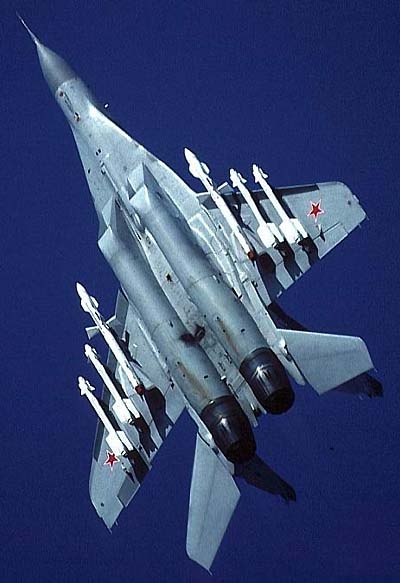
if you make them like the X-36 canards triangular they will get closer to the center of Gravity
same is with the F-18 tailplanes they are the farthest from the center of gravity by if you make them triangular its center of lift will change and will get closer to the center of gravity.
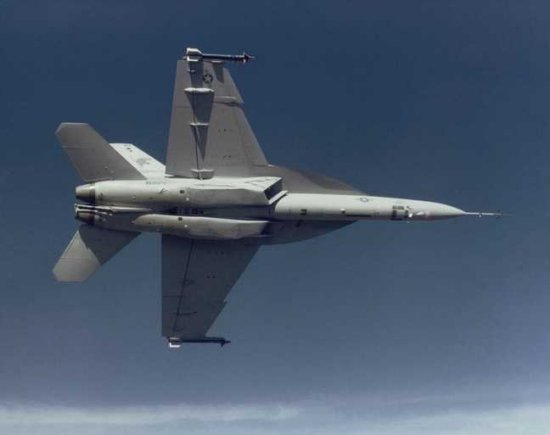
The F-22 has no triangular tailplanes
see
It is easier to make the tailplane stealthy than a canard
From the frontal view the F-22 has its tailplanes hiden by the wing and from the lateral view it plansform with the engine nacelles so it is at the same level of its wing to keep planforming and stealthiness


 Sign In







