 kiwinopal
Let me feed you back,
for promoting maneuver, we could see tail plane or tailless plane added with canards, but when did you see a realistic tailless plane added with horizontal tail if it original is a tailless?For F-22 and F-15, some one has told you before, for maneuver most to do with F-22 is TVC compare with F-15.
As for 1.44, only one question: how do you define a canards layout?What if not delta wing?
Please prove it with argumentation.
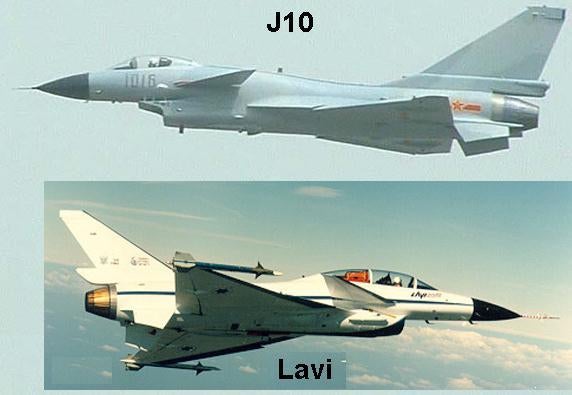
Please do not misunderstand me, canards are okay they do improve wing flow and AoA behavior, but the Mirage III for example has a delta wing, this was improved with a canard in the Kfir, the delta wing has the disadvantage of being easy to stall at relatively low AoA, the canard improve the low pressure flow above the delta wing, making it to have better AoA handling.
Why you need a delta wing? well simple it is highly swept so it has low drag and has an extra area that swept wings like those of the MiG-15 lack and that at high speeds can hold the supersonic shift of the aerodynamic center of lift.
Adding a canard allows extra lift at the fore part of the fuselage which is good for the control of the shift of the center of lift at supersonics speeds.
If you look at the canards of most fighters they are trapezoidal in shape and have high aspect ratio.
This is the best for high lift and low drag.
The large low aspect canard of the Viggen to the contrary is more for lift but has more added drag
Now, you can have a fighter with tailplanes that can surpass a fighter with canards in speed and agility example F-15 versus Kfir and viceversa the Typhoon surpassing the F-16, this has nothing to do with canards or tailplanes but thrust and lift.
The triplane configuration has canards and tailplanes, so they can use flaps and some kind of vortex control, the T-50 now has LEVCONS, which is a kind of LERX-canard hybrid.
Since canards in modern jet fighters are swept and trapezoidal in shape, making them triangular to reduce RCS by aligning them with the wing, they loose some aerodynamic properties deemed necesary.
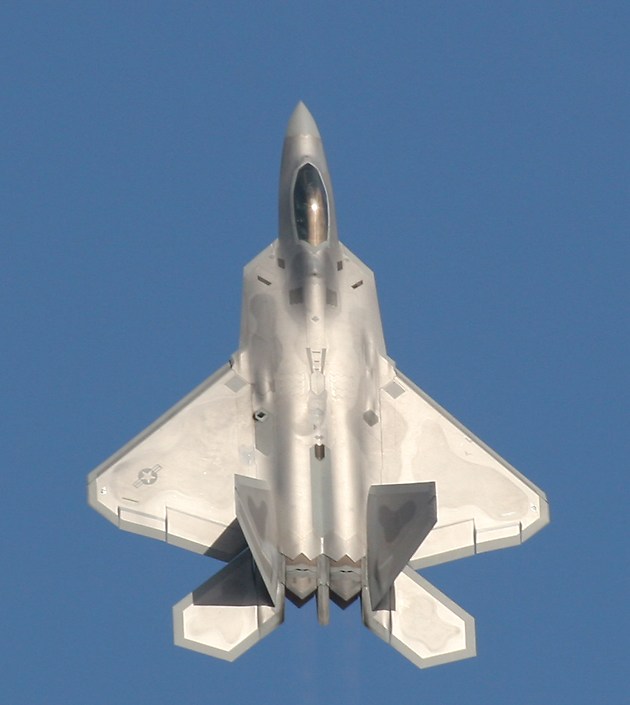
Stealth degrades aerodynamics so a stealth fighter should remain the closest to a very agile conventional fighter like the Su-27 or F-15 but adding stealth, the F-22 and T-50 do that and their tailplanes can be made similar to the trapezoidal tailplanes of the very agile F-15 and Su-27 without loosing some stealthiness.
The tailplane has to have an specific distance between the center of gravity of the aircraft and the aerodynamic lift center of the tailplane so shape does matter.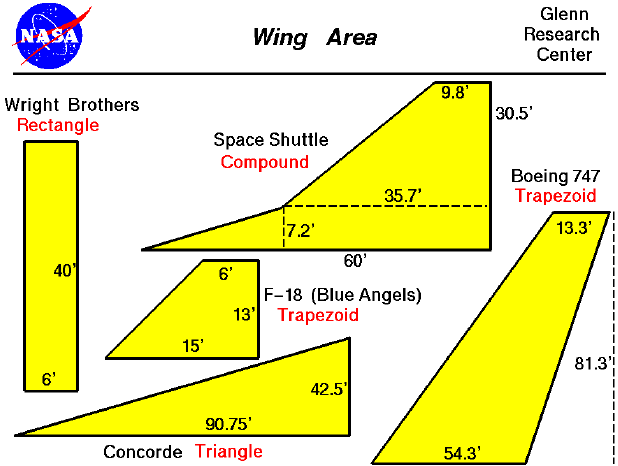
Now some will say that the canard does not affect negatively but it does it does move the center of lift sometimes in an adverse way and creates flutter. LERXes have some degree of returning some stability in stall that is seen in the cobra and the tailplane is the control device used in the Su-27 allowing the use of flaps.
kiwinopalWrong, the first plane ever flew by mankind was a canards layout. Nobody here think canards will take advantage just because it is more futuristic or exotic. Perhaps you think so then put your idea on others brain.
10 pages gone but I still didn’t see anyone bring out any evidence to prove what disadvantage of canards has been forgotten, but I saw you admitted that Su-35 fitted with canards was more agile and nimble than original Su-27, also no need moi point out that MFI 1.44 designed as Canards to overwhelming the layout Fulcrum and Flanker used on aerodynamics.
I could not see any risk of canards to be aircraft layout, too many airplane in history used canards as designation not even jet but also propeller.
There is either a double-standard somebody glade to use
When they want something is deemed good, they say it advanced, when they want sth is deemed bad, then regardless how advanced it is they say it is risky!:D:diablo: Compare to the TVC at that time, canards was much less risky……
By the exception of the B-2, X-32 and F-117, all of them are no-tailplan aircraft!:dev2:
The Su-35 has also tailplanes like the Su-33 and the Su-47 has too tailplanes and the MiG-1.44 has a very innovative control surface between the tailbooms and the fuselage that basicly work like tailplanes, their configurations are more complex than the Eurofighter, Rafale or Gripen even the ventral fins in the MiG-1.44 were hinged, what i can tell you is if you look at the F-15 and F-22 their aerodynamics are quit similar with trapezoidal tailplanes
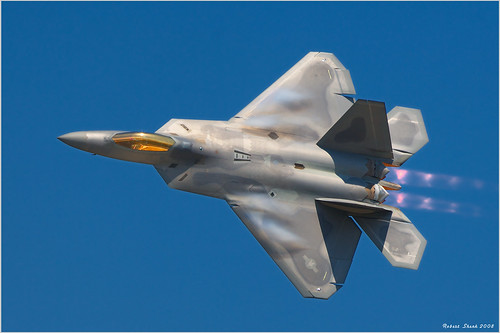
but the X-36 and Gripen have a different shape, the gripen has trapezoidal canards while the X-36 triangular,

the same seen in the F-22 and F-15 is repeated in the PAK FA and Su-27, even the T-50 has very similar tailplanes to the Su-27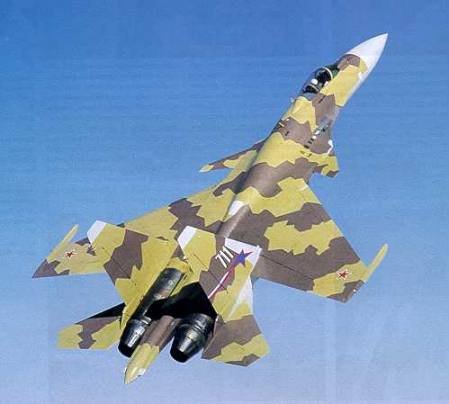
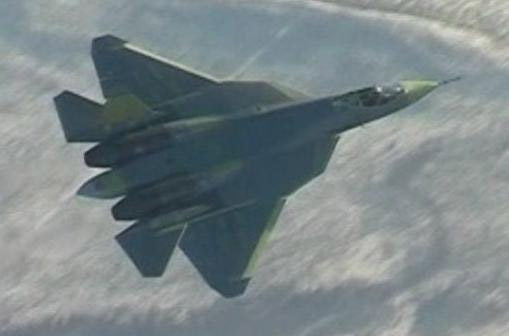
remember the only pure canard-wing tailess aircraft are fighters with delta wings.
The fact the canard designs are more different than the tailed designs between the stealthy aircraft and the conventional proof the F-22 retains an aerodynamic configuration more suited for air combat than the designs with canards
kiwinopalWith the 2107 the desired STR was achievable with a stable platform. However its drag at supersonic speeds were too high, and as you say the dorsal intake was too risky. As the delta/canard, when bulit unstable offerded good sustained turn rates, as well as low supersonic drag it was (amongst many other reasons)chosen instead of 2107.
I guess in a fighter like the Gripen canards have to have a specific shape and are free to have it, but in a stealthy aircraft like the F-22, the planform alignment constraigns that in a way is harder to achieve the same performance. If we look at the F-22 we see its tailplanes do align well with the engine nozzles and the tailbooms and do not have a triangular shape like the canards of the X-35 project early configuration or the X-36 but a trapezoidal shape like the canards of the Gripen or most tailplanes of current fighters
see the X-36 or even the stealthy Gripen have triangular canards.


even the Chinese UCAV
the freedom is more constraigned than with a tailplane since all the currently deployed fighters have high aspect canards with trapezoidal shapes not triangular


kiwinopalYou guys should either go to school and get your Aero degree, or really, just stop. I can’t believe the amount of BS I’ve seen in this thread, although em475 has tried to educate along with a few others. Let’s try this again. What’s better, the canard or the conventional tail? The answer: Neither.
The mission defines the airplane, not the other way around. The reason American aircraft don’t have canards is because the conventionally tailed designs met the design requirements better than canards did. That’s it. It isn’t magic. It isn’t knowledge limited (Grumman and many of the other companies have years and years of wind tunnel, flight test, and design studies I’m not going to reference here, and yes I do possess them, though you guys did forget the McDD F-15 STOL demonstrator.) It isn’t because of what designers are used to designing.
The same goes for the Euro-Canards. The reason they have canards is because they met their requirements better than a conventional tail. I remember studying the engineering back then on the euro canards and one of the main reasons given for using them was that they could get “better” performance in parts of the flight envelope over a conventionally tailed design at a lower weight. Also, since weight translates into cost, that meant lower cost. Cost has always been a much larger design driver in Europe than in the U.S. (Just witness the JSF 😉 )
So, let me say this again; The mission drives the design, not the other way around. Any aero engineer who decided that a fighter must have canards or a conventional tail based on “belief” wouldn’t be employed very long on either side of the Atlantic. Also, just as a reference, anyone who has studied the Gripen knows that what appeared to be the best design was the conventionally tailed model 2107, but they thought the dorsal inlet was too risky. They said it actually had lower weight than the canard configuration, which I “think” is due to how they were able to greatly simplify the airframe/engine integration issues by minimizing the weight penalty of the inlet.
So what’s better for the mission? Put up your mission requirements, set up your design space and run the trade studies, etc., and that will tell you if you need a canard or a conventional tail. And they all lived happi…all hell, who am I kidding, this is key forums. Back to your regularly scheduled belief systems.
I guess most people think having canards has to be better than tail planes just because they look more futuristic and up to a degree more exotic and modern than regular tailplanes.
Also fighters like the Mirage III and Su-27 that were highly improved with canards have given the idea of performace improvers to canards and the idea that regular back tails and LERXes can not do the same.
Before i thought in that way, now i guess i do not favour niether configuration in terms of aerodynamic performance.
true some aircraft like the Su-27K aka Su-33 improved greatly after getting canards and the Su-35 with canards was more agile and nimble than the original Su-27B, most people forget the disadvantages of canards too.
I guess in a fighter like the F-22 tailplanes were deemed less risky technologically speaking than the V tail YF-23 and the very early configurations of the YF-22 with canards were simply not even been built due to the complexities of building such aircraft.
Same is with the YF-35 and X-36 aircraft, canards were considered too complex and relatively unwanted.
But up to now canards are not being used in stealth aircraft that have been built.
By the exception of the B-2, X-32 YF-23 and F-117 all the current stealth aircraft feature tailplanes and none has ever used canards
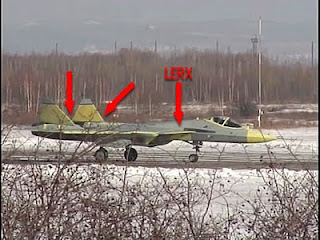
kiwinopalThe fact this what you mean is not a LERX where is that the ROOT! Then is the sweep angle not usefull enough and when angled down can’t this structure produce a vortex. This picture shown that the T50 use a mini LERX.
I think you need urgently a pair of spectacles the hinges line for this structure is not in the right position for planeform. Then is the misaligment to the differter unmissable, this is planeform only in your dream.;)

Let us start by the definition of LEVCON
LEVCON ( Leading Edge Vortex CONtroller ) is a deflectable aerodynamic device in wing apex region LEVCON surface is deflected +20 (down) to 30 (up) from its neutral position.Downward deflection of LEVCON is used for reducing aproach speed for carrier landing
http://www.lca-tejas.org/navaltejas.html
Now as you can see LEVCON means Leading edge Vortex controler, this is important the LCA used it in the naval version, the PAK FA uses it too.
Main advantages over a canard are no trailing edge wake and down wash niether the need to angle the trailing edge of the canard to align it with the wing for planforming as part of stealth treatment.
However the LEVCON is not a control device like the canard or tailplane is just works like a wing drooping leading edge
The PAK FA T-50 comes from the Su-30MKI, Su-33, Su-37 stable and probably they found out the Su-47 with its canards harder to adapt for stealthy planform alingment than the PAK FA with LEVCONs without sacrificing too much aerodynamic performance.
whether this was an Indian idea or Russian it is open to debate but it does bring some advantages
Now the F-22 has tailplanes, but its rival the YF-23 did not, same is the F-35 with the YF-32.
Some F-22 and F-35 earlyconcepts had canards however wh they have tailplanes?
Answer simple tailplanes are more practical for stealth, it does not mean you can not put canards in a stealthy design although simply they are not the best option
kiwinopalAll of tail plane inferior more than canards in terms of your list, but Harrier is something different, which set engine coincided with CoG making LERX more lift during turn and tail surface more trim free.
My list included the F-15 too.
I think you misundestand me, first i have never said canards are not good, or fighters with canards are inferior to fighters with tailplanes.
Fighters are a combination of physical parameters among them are thrust and lift counter balanced by drag and weight.
Inertia coupling will be a second factor affecting the turn of a fighter.
The F-15 has a turn of at least 16 deg/s STR and 21deg/s ITR up to what i have read, the Viggen pilot acknowledged he would not like to mingle with an F-15 in a dogfight.
the F-15 has a big wing that equates lots of lift and it has lots of thrust that equates to small turn rates.
Also the F-15 wing is not so swept as a delta making for a relatively good sustained turn rate and low drag.
When a design bureau builds a fighter they try to balance the main parameters to be included in the fighter`s performance.
You are equating that canards are superior to tailplanes, that is not true, niether of both are superior, everything depends in what you need.
The F-15 is better than the Viggen because of its big wing and excess thrust, is not because it has tailplanes.
The Kfir is not better than a F-4 or MiG-23 even having canards and this has nothing to do with the fact it has canards it is simply the product of its stability and low thrust .
Modern fighters have canards because they have mostly delta wings and delta wings bleed energy fast, this makes for fighters with good speed due to low drag, relatively fast turns but not very good sustained turn rates.
The Eurofighter certainly has better turn rates than the F-15, more or less is on par with the MiG-29 and Su-27.
But it has a lot to do with its thrust and the fact it is an unstable machine.
The F-22 is an agile machine, of course its TVC makes it more agile but its big wing and high thrust have to do a lot with its agility.
Canards and LERXes are used just to improve the lift in some types of wings and allow for wings more adaptable for different flight regimes.
kiwinopalSo what you point also means F-4 take a large turn radius than Viggen.
I did admit the F-4 is not better than the AJ-37 in turn
kiwinopalSure a moveable moustache or a very close coupled Canard.:diablo: But this is more a moveable differter the sweep angle is not great enough to produce a usefull leading-edge vortex.;)
One benefit obtainable from a control-canard is avoidance of pitch-up. An all-moving canard capable of a significant nose-down deflection will protect against pitch-up. As a result, the aspect ratio and wing-sweep of the main wing can be optimized without having to guard against pitchup.
Daniel P. Raymer, Aircraft Design: A Conceptual Approach, Section 4.5 – Tail geometry and arrangement.
The fact it is moveable LERX makes it able to control the vortex, and contrary to a canard wont have the added drag and reduction of lift to the wing and blends perfectly with planforming and stealth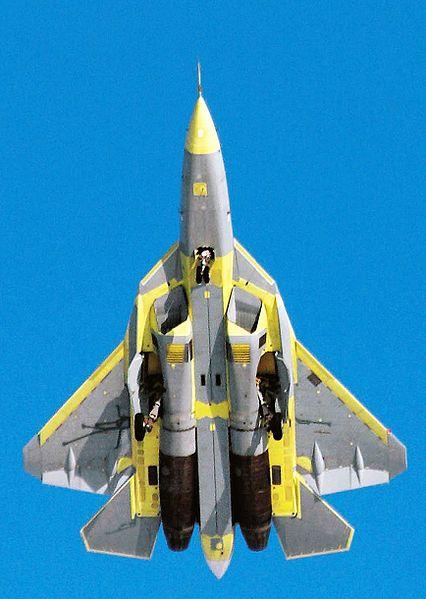
The T-50 has LERXes and a LEVCON but no canards
kiwinopalStrange, because there’s no way around it. They are quite clearly of the same generation. Technology wise the AJ 37 is comparable to the F-15A, and the JA37 is comparable with the F-15C. The JA37 was taken out of service because of budget cuts, not because it wasn’t still effective in its role.
But I agree, the generation issue is indeed mostly subjective and up to a degree a commercial ploy
well that will depend most people will call it a third generation but if you call it a forth generation then the Viggen with Canards did not give any real advantage with respect to the tailplanes of the F-15 see this from a swedish pilot, see we are not talking about the MiG-29 with LERXes too
Patrik Sebek interviewed Swedish Air Force Captain Mikael ‘BUTCHER’ Tormalm of 211 Squadron on behalf of MILAVIA. Captain Mikael Tormalm had flown various Saab Viggen variants, including the Jaktviggen (Fighterviggen) before transitioning to its replacement, the Saab Gripen.
1. What is your opinion about the Viggen compared to other fighters from the same era? For example the Tornado, F-15 Eagle, Mig-29 and so on.
Well… Not an easy question to answer. The air-to-air combat arena is very complex and involves factors like; how many are you? Distance? Weapons carried by both the opponent and your own group, etc. It’s not as easy as to say that whoever turns best comes out on top. But to give some kind of answer would be that I, having a choice, would not go into a dogfight with the Fighterviggen versus the F-15 or the MiG-29. Tornado Yes. Basically based on rate-of-turn performance. On the other hand I would consider to face both the F-15, MiG-29 and Tornado if I had enough distance at setup, flying with a wingman who knows what he is doing and my sensors gave me good situation awareness.
kiwinopalBut a LERX is not stealth compatible and a F-22 had no LERX and the tail planes are greater as a Canard shown that the tail plane is less effective as a Canard.
The F-22 tail is direct positioned in wing slipstream, sacrifice aerodynamic for RCS. The F-22 show that the YF-22 had a traveling wave problem at the tail. Now the F-22 tail leading and trailing edge point in the same direction and sacrifice in the rear quarter a low RCS.;)
The T-50 uses LERXes see
right above the inlets
kiwinopalThe F-4 was concieved at the same time as the Draken, which is a 2nd gen aircraft, according to how SAAB devides the generations. That is, aircraft with integrated weapons and avionics systems. Viggen is a 3rd gen, meaning its infrastructure is based on separate digital systems which rely on computers to achieve functionality.
It is true that in terms of sustained maneuvering capability the stable delta/canard are at a disadvantage(drag), in comparison to an aircraft with a tail.
Before SAAB had decided upon which configuration to use, they saw that a good STR was possible even with a stable tail design, however the delta/canard needed to be unstable.
the question of generation is mostly subjective and up to a degree a commercial ploy, if you analyze the Viggen, F-4, F-15 up to the Eurofighter, you can see that gradually each new aircraft included technologies new to the previous aircraft.
while you can say the F-4 and the eurofighter definitively belong to different technological criteria, this process has been gradual.
Of course when the Viggen replaced the Draken, the F-4 was replaced by the F-14 and F-15, so under that consideration the F-15 is of the same generation, but of course few will say the F-15 and Viggen belong to the same generation.
My whole point is Canards definitively are useful, but are not the synonim of most agile, simply they are way to increase the agility of some configurations, but tailplanes can work too in the same way, that is why the T-50, F-35 and F-22 use tailplanes in fact up to this moment no stealth fighter uses canards even if we include the YF-23 and X-32.
kiwinopalThe JA37 Viggen can pull 7G’s, and fly at close to 30 deg AoA before the engine starts to complain.
Also, the F-4 and Viggen does not belong to the same generation. The F-4 is more comparable to the Draken here.
If the youtube vid I posted is anything to go by the Viggen makes a sustained 360 in 22 seconds. The average turn rate would then be 16.36 deg/sec.
The difference is not as great, both are third generation aircraft, the difference in turn rate is substantial of around 2.6deg/s at Mach 0.6, the MiG-23 will be similar with 14.1deg/s sustained turn at 780km/h and 16.7 deg/s instantaneous, however see the early Harrier variants could not pull more than 15 deg/s instantaneous but once LERXes were added it pulled 20deg/s instantaneosu and 17-18 deg/s sustained much superior to the Viggen which shows you using tailplanes is as good as Canards and in stealth tailplanes are easier to adapt to planforming.
See that the Kfir wont go beyond 10deg/s sustained and 18 deg/s instantaneous turn rates so canards are not the inherently superior to tailplanes
kiwinopalThat’s not an accurate description.
In reality an F-4 pilot would be unwise to mix it with a Viggen. Tornado pilots avoided close combat against the Viggen if they could. And Viggen pilots have told me they found it quite easy to outmaneuver the large F-4.
The big delta and canard produced plenty of lift, but as the canards were fixed and the aircraft was aerodynamically stable it couldn’t get the most out of the configuration like the newer Gripen, Rafale and Eurofighter could.
Nevertheless, the Viggen had a very powerful engine that offered tremendeous acceleration and climb rate. ITR was very good, and at certain altitudes the Viggen could sustain a 6G turn rate until it ran out of fuel.Video of an AJS 37 airshow display. http://www.youtube.com/watch?v=-JK3Vx_G2k0
The Gripen has in comparison with the F-16, Eurofighter, F-22, MiG-29 etc, a rather poor thrust to weight ratio. But even so, it can still sustain a 20 deg/sec turn rate. And it can fly at supersonic airspeeds with a full A2A load out.
This should give us an idea that todays modern canard/deltas has come quite a long way in comparison to the stable Viggen, which barely scraped the surface of the delta/canards potential.Gripen video. From 3:32 – 3:48 Showing a sustained 360 turn in 16 seconds, average turn rate 22.5 deg/sec. http://www.youtube.com/watch?v=ACDGkNa77Rs
Let us say it, the Viggen can not pull more tha 6Gs in a turn, the F-4 can pull a little bit more 6.4 and the MiG-23 around 7Gs.
Now the F-4 was not the most agile of that generation, that honor belongs to the F-5 and MiG-21.
Now most aircraft won`t win at all heights and speeds,
If i am not wrong the Viggen will pull a Max of 15.6deg/s in a turn at sea level and 0.6 Mach around 720km/h
http://www.temporal.com.au/Viggen_Final.Pdf
If that is right then the Viggen is indeed more agile than the F-4 and MiG-23 since the F-4 will have a turn rate of 14.5 deg/s at the same height but at higher speed at 0.9 Mach at 0.6 will have around 13 deg/s, then your assesment is right
the MiG-23ML will have a turn rate of similar proportions
http://forums.airforce.ru/attachment.php?attachmentid=7704&d=1184631130
http://forums.airforce.ru/attachment.php?attachmentid=7569&d=1183809027
However the Harrier has a turn rate of 17-18deg/s and instantaenous of 20deg/s
http://www.history.navy.mil/planes/av-8b.pdf
see the harrier is not using its thrust vectoring and it is a tailplane aircraft with LERXes
Note the Viggen assesment does not mention if it is instantaneous or sustained turn rate
kiwinopalBut the AJ-37 can thing do that a F-15 can’t do. The AJ-37 lands on small ordinary highways whit carrier like rates of descent. A big wing alone make not a good fighter or a B747 would be the master of dog fight. The JA-37 intercepts the SR-71 routinely. ;)The Saab Viggen (Thunderbolt) is a short coupled fixed Canard. The flaps on the Viggen Canard is used for STOL purposes only and not for steering input.:diablo:
Is the angle of attack increases the leading edge of the delta-wing generates a vortex which remains attached to the upper surface of the wing, giving the delta a very high stall angle. A normal wing built for high speed use is typically dangerous at low speeds, but in this regime the delta changes over to a mode of lift based on the vortex it generates.
The Mirage 2000 prototyp without Canards achieve easily a AoA of 26° at 110 knots and outclassed the F-16 at the Farnborough Airshow 1978.
At higher AoA inertia coupling can appears a F-16 problem and less steering autority can caused a super stall.What happens on a conventional wing at higher AoA without LERX?
Pitch-Up (Sabre Dance).The phenomenon of pitch-up is directly related to inherent properties of all swept wings. The wingtips of a swept wing aircraft operate at a higher local lift coefficient than inboard sections of the wing so the wingtips are more heavily loaded than inboard sections. In addition, swept wings tend to generate spanwise flow of the boundary layer (along the length of the wing from root to tip rather than across the wing from front to back). The combination of these factors means that at a high angle of attack the wingtips stall before the rest of the wing.
Of course , the Mirage 2000, Eurofighter and Rafale have been optimized for some flight regimes, same is any other aircraft.
The Mirage 2000 does exhibit some degree of parity with the F-16 at some flight regimes, but in others is the other way around the F-16 is superior.
The F-15 and Viggen only show how a design does not exhibit inherent superiority just because it has taiplanes or canards.
The Viggen was optimized for STOL but it does not mean it was not build as a fighter or fighter bomber.
The F-15 was a better design because it has higher thrust to weight ratio and a very big wing the F-15 even has not wing leading edge control devices, a Flanker or Fulcrum are two designs which basicly are vastly superior to the Mirage 2000.
In Europe the delta wing has been used to make relatively compact designs, the canard delta wing configuration allows them to create relatively small designs.
The Russians and Americans have created aircraft with compound wings and tailplanes and have fighters with very high thrust to weight ratios in the F-22 is far far higher than a Gripen and the Su-35BM alone is more powerful than even the Eurofighter in terms of thrust.
This allows them to achieve excellent turn rates even without the use of canards.
The russians have experimented with canards and even other types of control devices like in the MiG-1.44 and PAK FA.
The Delta wing has its regimes where is more efficient but at low speeds it is not as efficent as a straight wing.
But since aircraft are designed to fly at several speeds and heights then you need to compromise and the canard is a type of solution to the inherent deficiencies of the delta wing
kiwinopalTo be fair, the Kfir was a Mirage III with non-moving canards. And the Viggen’s canards were intended mainly for STOL purposes.
My whole point was there is no reason to consider an airplane with canards superior to one with tailplanes or a tailess delta, the F-15 has a higher TWR than the AJ-37 and a big wing giving it the edge over the Kfir and Viggen.
Canards are used to improve the AoA mostly of delta wings in modern fighters, this is because the delta wing main trade offs is low AoA handling and flow separation relatively at low AoA, this is partially compensated by the fact it has low drag and a big wing area.
All aerodynamic configurations have trade offs, compromises, canards are not the exception, they reduce wing lift at level flight and create flutter that is the reason the usually have dihedral, also LERXes can give the same results.
In terms of stealth it seems tailplanes are better in terms of adaptability to stealthy treatment.
However canards can be smaller than tailplanes as control planes


 Sign In







