 Mildave
Historic access to something doesn’t make it a right. Historically, Falklanders did not have British citizenship either, they do today. South America was historically a disunited squabbling group of countries in no position to support Argentina. Today they are united and are led by a future world power. Circumstances change. Argentina doesn’t acknowledge British ownership of the Islands. I see no reason why they should have normal relations with it as a matter of course.
Your position appears to be – the Argentinians should stop their diplomatic actions against the UK, should concede their position and withdraw from the dispute, and normalize trade relations with the Falklands. In return for? Well…. Britain getting to enjoy the rightfully earned fruits of its victory.
That’s not how disputes are resolved.
Let’s see how you people react when China start “claiming” in force all the territories they think it rightfully theirs…
MildaveMildave,
I see that Reuters have finally blown the gaffe!
This is not really news since it’s been known for a while now that the project to assemble the remaining 48 EFT in SA would be aborted, and I never said otherwise… I did question once the likelihood of an additional order of EFT after the 72 already commended (although they’re still in price negotiation…).
In other related news
Voyager Planes Don’t Work for RAF
Let’s hope it doesn’t affect other type as well…
Mildavebtw, the F-35 runs on segregated “virtual machines” to give you an idea of its fault tolerance.
So ? “virtual machines” allow you to run more software with the same set of hardware and can provide some level of redundancy. If there is a serious bug in the system though it won’t do you any good. It usually add more complexity, and complexity brings lots of problems and cost.
MildaveNot really. You have fall back options for safety reasons but your mission is gone in general. Despite your claim a F-35 pilot has no idea what affected his system really and how long it will last in such a situation.
Well that should only happen during the first few years while the major bugs are found out and corrected. If later on you have a computer problem you should in theory have back up systems, though because they’re trying desperately to reduce cost, they might not develop as much redundancy as they probably should. Some systems will likely automatically reboot and try to switch to emergency procedure etc. It would take the failure of a major system for the mission to be aborted or if the mission is too dangerous to fly in like if your bay door stays open compromising manoeuvrability and stealth.
The point is whether you look at F-22, EFT or Rafale recent jets takes time to mature and it’s not because they’re declared operational that they’re. Sometimes it takes more than 8 years for basic systems to reach enough maturity and reliability in order to be used as front line fighter in enemy territory with the same trust than legacy fighters…
MildaveYou are mistaken. The F-35 learned it’s lesson from the F-22 problem and segregates a lot of the processing of the sensor information. The processing of the sensors and the integration of the resulting data is handled separately. This is why you can have multiple testbeds flying with different hardware configurations all testing the same code (its modular).
I don’t have the details about the F-35 achitecture but from what I know it’s indeed different from the F-22, although how much is the question. They are not testing the same code on every hardware however, there is the core system that is probably tri or quadri redundant for security reason then you have each sensors with its own code acting like a peripheral on your computer that will likely be designed to work as close from a plug and play as possible. While simulator and simulation can help big time with testing and verification of the software that still leave a big work to be done considering the scope of the program. The software will still need calibration every time the hardware is changed or redesigned etc. There is a reason why they decided to delay the purchase of the plane until it reach some maturity and given all the different parteners, with all the different versions, with each variant or version needing to comply to the complex US’s bureaucracy, there is still plenty of work to be done, expansive and complex work. And we won’t know the real cost of the development until its over. I would not be surprised of a 4th restructure of the program….
MildaveBrazil to insist on technology transfer in defense deals
Brazil, which is close to awarding a lucrative jet fighter contract, said Tuesday that it would insist on technology transfer in its defense agreements.
“In all its alliances, Brazil will put on the table the demand for technology transfer,” Education Minister Aloizio Mercadante told foreign correspondents.
“We no longer intend to have the passive attitude we used to have throughout our history,” he added.
He made the remarks as Brasilia was set to decide within a few months on a tender for 36 multi-role combat aircraft.
MildaveThere are many software development methodologies out there. But the one that is increasingly in use follow that path with many variations, but still with that general order in mind.
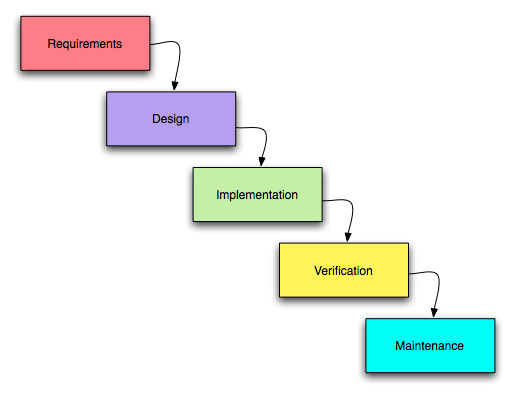
The most important thing is to get requirements right and clear. Then you start the design process. If something is wrong there, you often need to go back to requirements. Then you move to implementation. If something goes wrong there you need to go back to the design process that may in turn send you back to the requirement process. This is also true for verification. Now on a program as complex as the JSF, the verification process is going to last a very long time, requiring many modifications to the implementation and design process that in turn may often demand a change in the requirements.
The necessity for high sensor fusion is going to make all these thing even more complicated since every-time a single piece of software goes wrong, there is a chance for the entire system to bug. Finding out the problem can be time intensive (just ask LM why they haven’t find the problem with the oxygen generation equipment). LM need to find out whether the problem come from them, if not which of their supplier has messed up, and then according to the contract find out whether the requirements were wrong, or the design, or the implementation and who is supposed to pay for the changes. In a context of high economic pressure, subcontractor can sometime go bankrupt, or change management etc.
There is a reason why the JSF is getting ever so expansive, and trust me, they’re not out of the wood yet. If we’re to believe some reports, Chinese cyber activities have made the JSF program even more complicated than its already is.
MildaveRafale is listed as operating the dual mode Brimstone on the MBDA website. I haven’t heard any integrating work going on, does anyone has more info on this ?


MildaveThis mini-thread started when I said that the F-35’s avionics are mostly done, which they are. TR2 hardware has been flying for a while, 80% of the software is flying, and more than 80% of the software is written. I am not saying that 80% of the sotware is verified, far from it. A majority of the work left to do is verification, not creation of the software/hardware.
The first aircraft for Japan will be stateside trainers and will be Block3 (just not complete with the USAF’s IOT&E). If they wanted to they could takeoff and go into combat just fine.
From my experience, writing that last 20% of the software is what’s going to take 80% of the effort. Beside as someone said already, writing software isn’t a linear process. There is a cycle where you must constantly restart from almost the beginning if you find major issues, and that is when at least half the cost of the software is going to come from. It require long hour of engineering work to check and recheck million of lines, write new one and not go crazy. The longer it takes, the higher the chances the engineers that’ll write the last lines won’t be the same as those who started it. Delays, funding trouble, changing requirement… That’s where things get very messy. It’s like trying to sort out a family garage after 10 years…
MildaveWhy is that ?
MildaveBAE Systems making progress on Saudi-Eurofighter talks
Defence contractor BAE Systems (BAES.L) said it was making good progress on talks with Saudi Arabia over changes to its order for 72 Eurofighter Typhoon jets but that an agreement on price had yet to be reached.
MildaveFirst they take the technologies developed for the F-35 and place them into F-15s, F-16s and SH while working on another project with fixed price contracts, serious management etc and they built a cost effective F-35.
One thing Russia learnt is that when you no longer have money leap development is far too risky to be effective. So instead they test their 5th gen sensors on the Su-35 while developing a LO airframe. In the end, you get twice the money back. The sensors developed for the Su-35 will start making money on the export market and at home, and when the PAK-FA is ready, you’ll be able to provide a cost effective solution with far lesser things to be developed, with far better reliability.
Instead the US love quantum leap in technologies, but they also pay the high price. Right now I would separate the B from the A and C version, I would focus on developing these even if another engine has to be added and other significant changes like that, and I would develop the B has another project altogether but still keep commonalities in sensors so that upgrades could be share between platform (which is what should have been done with the F-22 to begin with).
MildaveIsrael has no other choice but to buy US if they want to keep the aid coming their way. They have no other choice but to buy US if they want their own companies to be selected by the Pentagon for juicy contracts, or for LM, Raython etc. to share technologies and cooperate with them.
Japan is in a similar situation although with significant changes.
MildaveHallbergmoos | Eurofighter Jagdflugzeug GmbH has today signed a major contract with NATO Eurofighter and Tornado Management Agency (NETMA) to support the fleet of Typhoon jets across the four Eurofighter core nations: Germany, Italy, Spain and the UK.
The five-year support contract is part of a new contract suite agreed with the nations which includes integrated mechanisms for continuing development work on the aircraft and will replace a number of legacy contracts whilst extending the terms for a longer period. The agreement demonstrates a commitment by all parties in achieving continued efficiencies on the programme; long-term support for the sustainability of aircraft covering all three production tranches and future enhancements and upgrades of the platform.
The new contract will focus on performance and affordability and will ensure a range of support services to the Typhoon users. The contract will also help to sustain European aerospace engineering, capability and jobs.
As part of the contract, Eurofighter’s partner companies: AleniaAermacchi in Italy, BAE Systems in the UK and Cassidian in Germany and Spain will work closely with the local MOD’s and Air Forces to improve the way it delivers a range of support services. This work will provide a strong basis for future support requirements including potential export opportunities.
The contract will help to sustain the thousands of jobs that are supported by the Eurofighter programme across a range of disciplines such as engineering, supply chain and project management and is further confirmation of the role of the Eurofighter programme as catalyst of high-tech aerospace European manufacturing, engineering and technological capabilities. Today, around 100,000 jobs are supported by the programme in the four core nations and the economic impact generated largely off-sets the investments made to develop and manufacture the aircraft.
Enzo Casolini, Eurofighter CEO, said: “This contract is important for the Eurofighter programme but also for the nations and the Air Forces. The contract’s goal is not only to deliver savings to the customer, but also guarantee a better management for the processes involved in the sustainability of the aircraft in-service. This can be considered a massive step in supporting the enhancements programme planned for Eurofighter, which is a fantastic, young platform with plenty of development capability still to be exploited”.
MildaveBrazil close to decision on jet fighter deal
Brazilian Defense Minister Celso Amorim said in remarks published Saturday that the country is in the “final chapters,” of awarding a lucrative jet fighter deal and should decide within a few months.
The Rafale fighter, made by French firm Dassault Aviation, is up against US aviation giant Boeing’s F/A-18 Super Hornet and Swedish manufacturer Saab’s Gripen jet for a tender from Brazil to supply 36 multi-role combat aircraft.
The contract has been variously valued at between $4 billion and $7 billion.
“We are entering the final chapters,” Amorim told the magazine Istoe. “I have an expectation that the matter can be resolved in this semester (first half of the year),” he said.
A senior Brazilian government source said Monday that President Dilma Rousseff would decide which fighter jet to buy after a visit to Washington in April and the French presidential election in May.
Amorim has previously said June is a likely date for the announcement.
Last year, Brazil delayed a decision on the purchase following a major budget cut, but the jets are needed to beef up the country’s air force.
French Prime Minister Francois Fillon said before a visit to Brazil in December last year that he was confident the Rafale could beat off rival bids because the aircraft’s technology was superior.
The Rafale was used in the recent war in Libya but the fighter has repeatedly lost out in tenders in countries including Singapore, South Korea, Morocco, and earlier this month, Switzerland.
India has selected the Rafale for its air force, but a deal has not yet been formalized.
French Defense Minister Gerard Longuet said last year that unless the Rafale can find a foreign buyer, the government will have to stop funding its production by Dassault.
.


 Sign In







