Vnomad
These quotes are dangeorusly misleading as they only include contents produced by a single company. An example could be Moroccan F-16s.
Your AMRAAM Lot 27 quote is most likely for the bits of the missiles made by Raytheon – not even complete units, let alone ready to be operated
Of course, not suggesting it is. The contracts for the the seeker and rocket motor would probably have been awarded independently to Raytheon and Naamo. The unit cost again is addressed in the Selected Acquisition Report, 2011. For the USAF/USN appear to vary $1-1.5 mil.
In any case, what I was pointing out was that half of the contract was for export orders, which despite smaller European orders haven’t fallen that greatly owing to significant orders from the Middle East.
VnomadIf no export order comes, gov will have to stick to 11/year. It has several advantages for french government :
Correct me if I’m wrong but isn’t the decision to revise production, in case no export orders are incoming (as is looking increasingly likely), to be taken at the end of 2015. Which would imply that delivery rates would remain below 5 units annually upto 2016 assuming a year (more/less?) between the placing of indent and start of delivery.
VnomadI take that is retrofitted AESA Radars going into existing Rafales. As current production has been cut back to 11 New Aircraft per year with the New Defense Budget. (I believe?)
Actually 11 aircraft per year has been the production rate since 2009 I believe. The French MoD is proposing to reduce that to 26 aircraft over 6 years (2014-2019), which slightly over 4 aircraft annually. Though in case of ‘export failure’ its retaining the option of bumping up the rate post-2015.
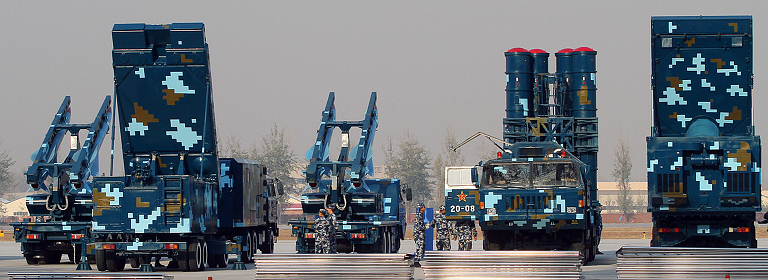
VnomadNot to derail the topic, but what’s the thinking behind that camouflage pattern. Shouldn’t it be green or brown. Maybe grey, if its to blend onto concrete. Something drab basically.
VnomadTrue. MICA has always been claimed for being an expensive weapon. But these numbers pretty much show that AMRAAM is every bit the same – if AIM-120 was to be built in numbers similar to MICA, then the procurement cost incl. support would be somewhere around $4mil, I estimate.
BTW, those orders are not that small. No one will be buying the missiles in thousands, anymore. If I remember correctly, Czechs have only procured two dozens of C-5 AMRAAMs, as a supplement to ca 100 older Mike winders which were given them for free. This is the budget reality for many smaller AFs.
Well the contract awarded to Raytheon for the AMRAAM Lot 27 production is valued at $534 million for 1800 missiles (ref). Works out to be little under $300,000 each. 51% of the contract is for FMS procurement, (presumably for 900 units).
Vnomad– 100 Raytheon AIM-120C-7 AMRAAM to Chile for $145 million – unit price $1.45 million (FY 2009)
– 260 Raytheon AIM-120C-7 AMRAAM to South Korea for $452 million – unit price $1.74 million (FY 2013)
– 150 Raytheon AIM-120C-7 AMRAAM to Switzerland for $358 million – unit price $2.39 million (FY 2010)
– 25 Raytheon AIM-120C-7 AMRAAM to Bahrain for $78 million – unit price $3.12 million (FY 2013)
All save for the Korean one are small orders and with the resulting cost inversely proportional .
But if the Meteor costs are anything like the MICA –
– 490 MBDA MICA to India for $1.18 billion – unit price $2.4 million.
And the MICA’s total order book stands at 3300+. The Meteor will find it hard to touch 1000 units in the near future without big export successes (India and Saudi Arabia being prime targets).
In contrast AMRAAM production (judging by the Lot 27) stands at about 900 units per year. Hard to compete with those volumes.
VnomadIt’s certifying Meteor loads currently. Are you sure it has fired them?
Press Release – FIRST EUROFIGHTER TYPHOON METEOR FIRING TRIAL A SUCCESS
Thursday, 6. December 2012
Typhoon with Meteor
The Meteor Beyond Visual Range Air-to-Air Missile has been successfully launched from a Eurofighter Typhoon as part of the Future Enhancements Flight Test Programme.
The missile was eject launched from a rear fuselage missile station, which on Eurofighter Typhoon is semi-conformal for aircraft drag and radar signature reduction. The missile motor was fired, providing data that will allow the missile launch envelope to be expanded.
VnomadThe endless bickering about how Rafale can never match F-35 because it lacks stealth shaping is in deep contrast with claims of the same people claiming that F-15SE can somehow easily match PAK-FA.
Who?
VnomadVnomad, I already answered your queries, you need to carefully read what I wrote.
:confused:
The F-15’s load bearing structures weren’t designed with CF composites in mind?
Also I’d still like to hear your views as to what differentiates the PAKFA airframe from the Eurocanards aside from the planform arrangement and the internal load. How for example will the RCS of the PAKFA compare to a clean Rafale. Theoretically.
I’m glad you mentioned the engine compressor though, I’ve got a major update coming (a gapping hole/fundamental flaw in my theory has been addressed), so stay tuned…
No no. Not referring to the compressor. I was talking about the aircraft’s rear end (or aft fuselage or whatever); the exposed engines, all Flanker-like.
VnomadEven moderate RCS reduction will give that considering there won’t be any external weapons or fuel, & it’s probably going to light on it’s radar a few hundred kilometers away to fire its long range missiles so why bother with such levels of stealth like the F22 or F35 if your radar is going to give you away anyway?
Why would the launch platform light off its radar when it can simply get the targeting data off another friendly sitting at range (preferably in a different sector)?
VnomadConceivably, fighters such as Rafale and Eurofighter could undertake a widespread retrofit of CNT RAM because their load bearing structures were designed from inception with CF composites in mind and they already had a large composite surface area, but there still remains the problems of external weapons loads not to mention no planform edge alignment.
So that’s –
1. Lack of internal payload
2. Absence of planform edge alignment
Aside from that, how else do the Eurocanards airframes differ from the PAKFA as far as RCS goes?
The F-15SE can only pay token homage to these solutions- the conformal bays can be made of this stuff and the tail fins have been canted outwards, but the vast majority of its post production RAM treatments Boeing will be forced to adopt, will date from the previous generation. This is why marketing the SE as anything other than ‘RCS reduced’ hasn’t washed with the S.Koreans.
Why would Boeing be forced to resort to an older generation of RAM, especially given its involvement in various stealth program, not to mention the generally high degree of tech share facilitated by the US govt?
The implication of this thread is that the T-50 is nothing more than a ‘Silent Flanker’
Would that be such a terrible thing? One of the world’s premier air dominance fighters + improved performance + improved sensor coverage + improved sensor fusion + LO. Hardly something to scoff at, even for an F-22 pilot.
Also, since this is not the PAK FA’s definitive engine can I assume that the production variant with the 117(?), will have its huge exposed engine area somehow shrouded?
VnomadI’m astounded that the level of debate regarding the PAK-FA’s stealth has returned to January 2010 precipitated by a flawed journalist not even Mercurious could defend and certain known trolls.
The journalist in question is one of the better ones out there. Also he was merely quoting someone from the Indian MoD who’d been invited to visit the facility in Russia.
Did I not present to you a commercial brochure of Russian CNT RAM developments earlier this year? How is it that the same technology will work for the F-35…..but not for the T-50 (despite being used in a more explicit and fundamental way):
Fair enough. But by the same token, what would prevent the F-15SE with RAM addition from achieving a similarly high level of RCS reduction?
VnomadThe LO characteristics of both don’t compare.
Not much of a comparison I am afraid.
Would appreciate more specifics though.
VnomadF-15SE is most likely not going to see the light of the day. If Boeing wants to be competitive in the next stage of the ongoing Korean procurement SAGA then they’d better double up on stealth features…Perhaps a F-15 – Deadly Silent Eagle …is in the works..
Agreed. But we should still be able to make a theoretical comparison.
VnomadJ-10B has more RCS reducing airframe modifications than F-15SE does. DSI hides the engine blades.
I’d expect no less from an F-22 killer. :eagerness:


 Sign In