 Tu22m
Tu22mI think the A2A stats needs to be updated now. http://www.reuters.com/article/2014/07/17/us-ukraine-crisis-jet-idUSKBN0FM12C20140717?irpc=932
Ukrainian Su25 shot down by Russian fighter jets. Is it the Flankers or Fulcrums?
Tu22mPicard, do you have any actual hands-on experience with real radars, RWR, and IRST? Have you ever been part of a development team that makes those sensors? Because when you make such definitive statements like “And AESA can be detected by modern RWRs”, I’m wondering just how you would know that. Not only that, you seem to be blatantly cherrypicking your data, and your analysis is full of confirmation bias.
Its not rocket science. The illuminating power is many times greater at the target that whatever the reflection is. AESA or not but that is how radars work.
Older RWRs had problems with LPI because they where designed to spot higher energy pulses instead of the lower energy but longer endurance continuous-wave radar signals that usually are quadband today.
Its simple radar mechanics.
Tu22mFfs MiG-31BM!
F-117 was shot down due to bad SA and mission planing , and no evidence about the f-117 that got damaged
http://www.rand.org/pubs/monograph_reports/MR1365.html
only two NATO aircraft, an F-117 and an F-16, were shot down by enemy fire,
although another F-117 sustained light damage from a nearby SA-3
detonation and two A-10s were hit by enemy AAA fire but not downed.
However, the F35 does seem to be much better shaped and much much better coated with RAM. But then again, radars have evolved since the 60s…
Tu22mI dont think Argentina is on the radar for Gripen exports. It would fit them considering their financial status and Gripens anti ship capabilities, but would they afford it?
Chile however is a candidate for Gripen E (Currently operates F16A/B + some F5… and 10 F16 block 50).
Colombia is also a candidate (their Kfirs should be ripe for replacement as well).
Peru might be a candidate in the future (and they currently operate MiG 29 + Mirage 2000 with huge costs to keep them air worthy. Mirage needs about >600m$ to stay operational where 480m$ is to put them at M2000-5 standard and 140m$ is for planned maintenance and will only keep them operational until 2025. MiG 29s will also be retired in 2025).
In this lot Peru and Chile stand out as strong candidates.
Tu22m@BIO, thx for the vid. Love the flight restrictions… It’s not grounded, but you will have more fun in a Cessna.
Speed < 0.9 mach
G-forces +3/-1
Roll: Only really really slow rolls
And a mandatory inspection after max 3 hrs where the front of the engine section has to be inspected with a borescope.
I wonder if the customers who get these LRIP aircrafts are happy with what they are getting. At least the technicians get a helluva great training.
Pardon me, first of what type?
A supersonic multirole stealth fighter that is limited to subsonic speeds.
Btw, how is that bubbling/peeling problem going when using the afterburner for more than 2 minutes? (Ie reaching speeds near or at mach 1,5+)
Tu22mMy guess is they will focus on engines, hydraulics and actuators, ergonomy, and basic control theory on ATD-X. Not so much on the actual war fighting suite.
24dmu has been funded, too, correct? Should be good designs coming out of Japan.
To be perfectly honest, as long as they dont have unrealistic goals for range there will be space left over to fit avionic suites from the F2 which may be upgraded after IOC.
The primary aim for a 5th gen fighter is to reduce the detection range for the enemy. Shaping and RAM will do that to a very high degree. Current jammers and EW support will aid and be sufficient for the next decade or so.
Secondly they need good warning and targeting systems, current radars, IRST and EW/RWR-systems do that satisfactory today.
This means that if they need to rush the production they can have upgraded F2 avionics in a 5th gen body within a few years and a full 5th gen fighter (maybe with GaN based AESA, panoramic IR and next gen jammers) within 10 years.
I know that for Gripen many of those things where fallback solutions and similarily it is for Pak FA where Su35S avionics are fallback if the schedule is broken.
Tu22mF-35… Ohh…
:dev2:
Neither simple or light weight… apart from that… yes. It would fit on the list as well.
Tu22mWith its -unnecesarily- low wing loading Typhoon should not require as much AOA as F-16 for example, to make the same turn.
And thus bleeding less energy giving highe sustained turn rate.
Tu22mBy the way and besides all ongoing posts … I WANT PICTURES !!!!! :apologetic:
Like these?
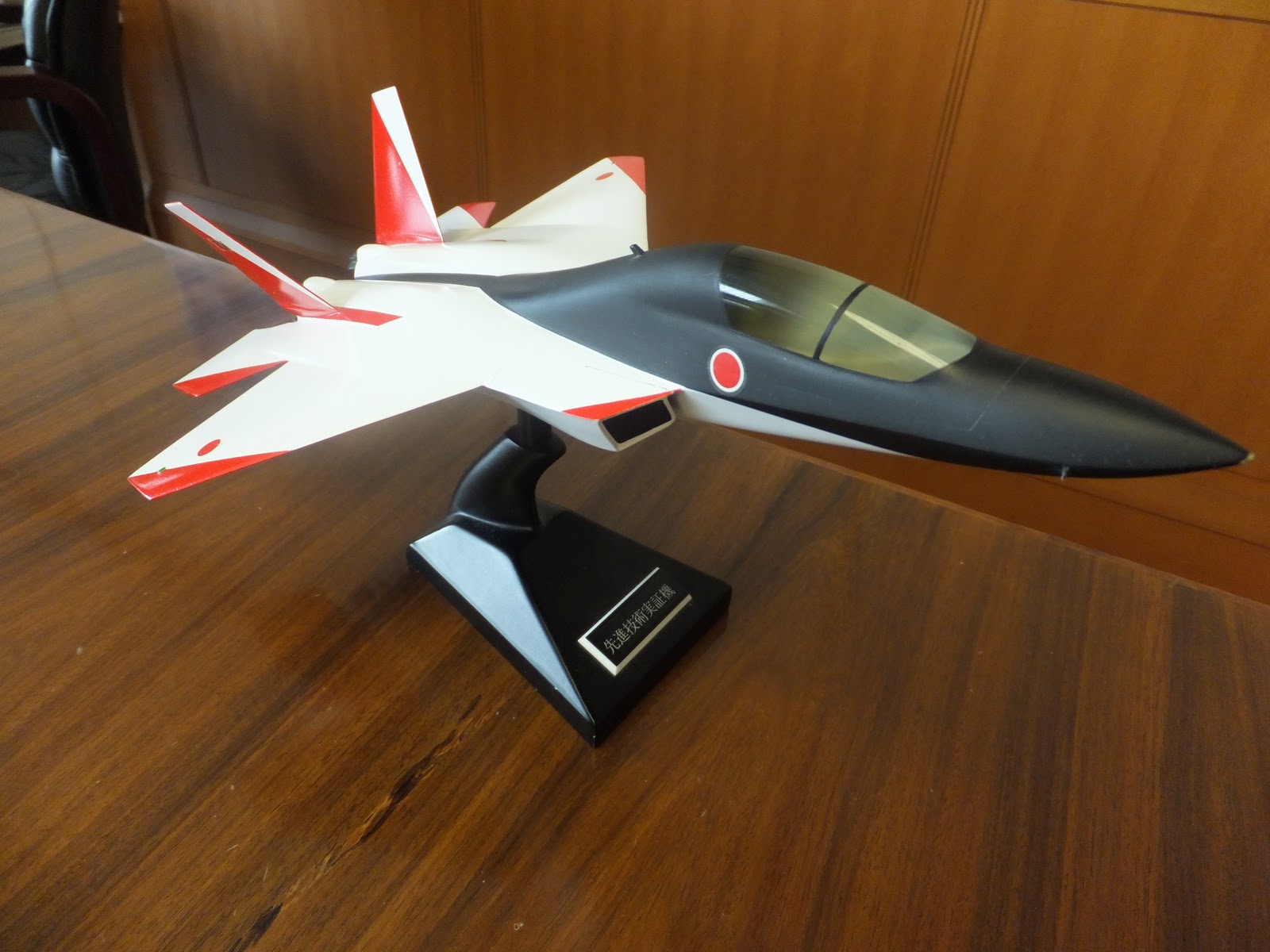

Tu22m…as much as small fighters tend to imply long range, see P-51 & Gripen E.
But on a 2nd thought small fighters is not compatible with internal bays, or they will look and fly like a brick,
i cant see how its possible to keep 6 aam internal on a stealthy Gripen, even F-35 only hold 4
It all depends on what you want to fit inside the bays and what you are willing to sacrifice for it.
For instance the wing roots are perfect to fit up to 2 AAM on each side without much addition to the cross section/drag. A small bay for another 2 AA missiles or SDB below center fuselage would also not add much to drag.
OTOH, if you want to fit 2x2000lbs JDAMs + 2 AAM below the center fuselage and demanding pretty extreme range then it will be a bulky design unless the aircraft is the size of the PAK FA.
So a small fighter that is designed to not carry more than 4 SDB/2 METEOR in the center bays and only have another 2-4 AAM in the other bays may very well be a slender thing.
Tu22mRead the article again…Incidentally this also how the author understood the point (like Bill Sweetman formely)…Anyway active cancellation or not the aim is to disappear from radar screen. The rest is semantic.
Active cancellation, especially in the X-band) is the big mystery feature, just like plasma stealth. In theory it will work, but in order to actually make it happen you would need technology that doesnt exist today. That is why it is such a big thing.
But having intelligent jamming that produces virtual targets with false echoes, jamming that can produce targets of varying sizes etc is what everyone in the industry is working on. I have no doubts that Rafale and SPECTRA can perform these tricks at the highest levels.
If you are interested I suggest that you read up on active cancellation (which is a fascinating topic). James May has a presentation of it for audio https://www.youtube.com/watch?v=VTx4JgYsW5s
But when we talk about radars we are talking about light waves that are about an inch long with a frequenzy of ~10 +/-2 GHz. Using active cancellation in the X-band would be… impossible. That is why there is such a big fuzz about semantics.
Here is some more and I will end with a quote from Wiki on the subject. http://en.wikipedia.org/wiki/Destructive_interference
Active cancellation
With active cancellation, the target generates a radar signal equal in intensity but opposite in phase to the predicted reflection of an incident radar signal (similarly to noise canceling ear phones). This creates destructive interference between the reflected and generated signals, resulting in reduced RCS. To incorporate active cancellation techniques, the precise characteristics of the waveform and angle of arrival of the illuminating radar signal must be known, since they define the nature of generated energy required for cancellation. Except against simple or low frequency radar systems, the implementation of active cancellation techniques is extremely difficult due to the complex processing requirements and the difficulty of predicting the exact nature of the reflected radar signal over a broad aspect of an aircraft, missile or other target.
Tu22mPretty misleading. Doesn’t look like the full burn was used. If you take 9s of propulsion from rest to Mach 4, that probably covers about 9-10km and maybe 11-12km if you reach Mach 5. How could you intercept a target 42km away doing Mach 1 away from you if your burn ends after 11-12km? That’s just for the C5, the C7 has a range increase. By the time you get to 12km, the target is at ~47km and your missile’s speed is falling at an alarming rate – drag will do that at Mach 4+. You’d be lucky to reach 40km at Mach 2 in the next 30s. Your Mach 1 target is now at 57km. I don’t even know if an AMRAAM flies at M2.0. Your target will get to 67km in the next 30s. Decelerating from Mach 2, the best you can hope for 55km (average M1.5 from 40-55km). Your missile is dead and the target is 12km away and I’ve assumed a very very very low drag missile.
NOTE: Interesting – when I wrote ” < M ” the text stopped.
I dont think it’s misleading.
The SLAMRAAM uses the Aim120C7 without an added boster. The engine can not throttle back. So that should be the whole thing.
Thx Peregrinefalcon.
Tu22mWhich version of the AIM-120?
AIM-120B
AIM-120C-5
Even for a B, 9s seems a little low. Even assuming Mach 5, 9s only gives you 9mi(15km) ignoring acceleration time, whereas even the B version can make tail-chase intercepts at 25km horizontal distance after a 5km climb and only achieves a maximum of Mach 4.
Aim120C7, from SLAMRAAM launch https://www.youtube.com/watch?v=mXTDrLs2n_E ca 9 s. SLAMRAAM uses the Aim120C. And as you see there is no added boster.
http://www.zgjunshi.com/Article/UploadFiles/201010/20101015180302710.jpg
Tu22mYes, metal printers are expensive but definitely a reality.
http://3dprinting.com/materials/metal/3d-printing-metal/
The Koenigsegg Agera One car used a 3D printed turbo housing.
Haha, I was just thinking about posting that Koenigsegg video but i deleted that part 😀
Tu22mAre we talking about the booster stage or the ramjet here? The ramjet burns for well over 25s! 25s would only give it a range approximating an AIM-120B.
Aim120 has a burn time of <9 seconds which at 15kft gives a tail chase range of 8km as per attachement (the missile envelope).
[ATTACH=CONFIG]216497[/ATTACH]
This is in line with the numbers for RVV AE and Aim7
Aim7 (much shorter range)
RVV AE, good second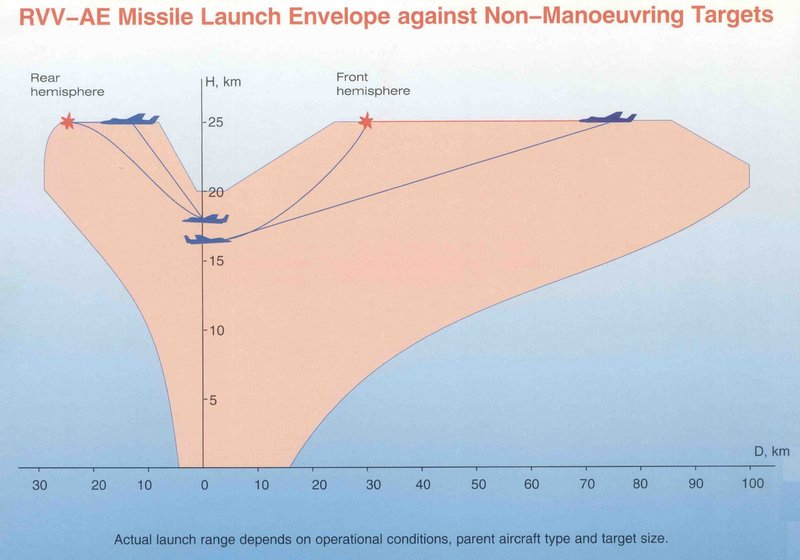
Meteor should have a booster if I’m not mistaken. Based on the data we have the Meteor should still have propulsion and a velovity of mach 4 at least 2,5 times longer than the tail chase case for the RVV AE at 10km alt.
The actual numbers for the Meteor are secret so I can only speak of the lowest possible performance metric based on public trials/benchmarks. And the lowest number for range with propulsion is 30km or ~25 seconds @43 kft or 13,3 km alt. I have no doubt the Meteor performs better IRL but that at least gives you a floor.


 Sign In







