 Tu22m
Tu22mHard kill countermeasures? On a fighter?
I said that it is a possibility. If the jet is carrying IRIS-T then they have that option. It just not demonstrated in a war yet 🙂 Similarly the DIRCM on the F35 is also unproven.
Tu22mI guess this post is about some of my claims so I’ll go ahead and answer it 🙂
The thing i find amusing is that those that actually have Aim-120 figures infront of them actually wrote the requirements for the fighters in question and believe that the weapon combined with the F-35’s RCS would give it plenty of edge in A2A combat…while those that know nothing about the performance (which is classified) are generating HARD NUMBERS as to what it can and cannot do, and are based on those numbers coming out with the conclusion that the F-35 despite of what its designed to do, wont get first shot off before 20 km or so. I think we can end it at that…
Why dont you come out with the math behind how less agile it would be and how many fighters it wont be able to deal with because of that 🙂
On a more serious note, the degraded performance has to be analyzed and deemed sufficient, if the potential customers do not think it as being adequate they can wait for the US NGM in the future. None seems to be in very much of a hurry to ditch the AMRAAM anyhow given how lousy it performs beyond 15 km 😉 as per the classified research of some of our forum members..
The math behind it is the following:
Lift or turn performance = Thrust lift + Aerodynamic lift (where thrust lift typically is 50-80% of the missiles performance).
Max G in turn performance is typically around 40G for the Amraam at low altitude. Aerodynamic lift comes from 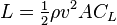 Where Cl is lift coefficient, A = lift generating surface, v= speed, and p = air density.
So If the missile can pull 20G (from aerodynamic lift) at 6kft, it will only be able to pull 10G at 28kft according to the formula for lift, but it’s more likely that the max G will be closer to 17G after burnout. Typically the Cl increases slightly at lower speed, but it is only a part of the equation, while speed has a bigger impact as it is squared. This is a pretty normal change for the Cl.
So, if we want to calculate an example we get the following @12kft:
17 = 0,5 * 1200^2 (V) * 0,5 (CL) * 0.82 (pressure, @6kft its closer to 1.00) * A (the unknown.. but this will be the same in both cases so we can ignore it)
Now, we use a lower speed, like mach 3 (that happens after ~13 seconds or ^13km if it flies in a straight line at 12kft). The difference here is 25% higher CL and 44% lower speed. So we get a turn performance of…
17G * 0,5625 * 1,25 = 12G.
However, to produce any form of turn the missile will need to go into a pretty high alpha (because the body is the biggest lift generating surface), this increases drag by a factor of 2 to around 7 meaning the actual time to lose 25% of the velocity gets closer to 2-8 seconds or a turn distance of 2-7km.
Thats the basic math behind it and its just the reality where the missiles have to operate within.
Now, If we assume a higher altitude like 30kft, we get an air density of 0.41, so the turn performance will drop from 20G at 6kft to 8,2G while the fighter jets still can do 9G at high speeds at that altitude.
Here is Obligatorys post on the topic (energy conservation):
http://forum.keypublishing.com/showthread.php?97983-AIM-120-range-questions&p=1534761#post1534761
So that’s the math (and engagement envelopes happen to coincide with them). What it means is that a target that is maneuvering hard, getting into a dive, turning sideways and so on always will be a hard target, especially once half the turn performance is gone. This is why the burn time is interesting, and for the coming Aim120D and for the current Aim120C7 it is ~8 seconds.
What they show is that the missiles do have some turn performance left after burn out but that it is unlikely to be enough if the target can react in time. I assume that the modern jets will be able to turn in time since the sensors of today are pretty good and likely will provide warnings in time.
Note:
My assumptions here are that the missile is similar to the PAC3 missile in agility after burnout and that the baseline performance is measured at 6kft. This is needed to produce any numbers but are not claims backed up by a source etc. It’s just my starting point. I have also made the assumption (probably wrong) that the missile can reach mach 4 at 6kft.
Tu22mnot very sure how accurate your assumption is but you left out several things
1-f-35 can have Meteor
2- what stop the f-35 from accelerating to high speed , high altitude if it detect su-35 or EF-2000 long before the other aircraft see it 🙁
3- even in the example irbis-e only see F-35 from 40 km , in real life Irbis-e is unlikely to get these impress range ( due to single target track focus beam ) not to mention it may have to deal with clutter , jamming )
1 Not the current version of Meteor, there may be modified Meteor for the F35 but it’s not in the workings today.
2 The acceleration “speed” is a limiting factor. In my old thread with PPI-films you can see the exhaust gases (the aircraft isnt necessarily visible but the tail of ionized gas is pretty easy to pick up from ground radars), the use of afterburner also makes it really hot, and the gases makes is a larger target to detect. So by accelerating (takes 68 seconds from mach 0,8-1,2) the F35 loses the advantage of stealth, at least momentarily.
3 There are more than one sensor. IRST cant be jammed at the ranges discussed. With the IRST-systems fielded today a target like the F35 can be engaged at 50km by using IRST alone when flying at altitude.
without CFT or EFT the EF-2000 likely to run out of fuel long before it detect f-35 , f-35 can operate alone without AWACs
All modern jets can operate without AWACS if they want to thanks to modern data links. And once the target detects illumination and threat direction they can drop the EFTs and optimize the interception. Remember that the target always will detect the illuminator first if we assume a reasonably small technology gap between the sensors.
what stop the AWACs from being shot down ?
btw even with low PK 2-3 AMRAAMs shot at the same time will have quite decent PK
Against AWACS it’s all about the electronics and jam resistance so it’s one or two less factors than against a fighter jet where the missile needs to beat kinematics, ew and possibly hard kill countermeasures.
at higher altitude => lower drag => faster cruise speed => may be the the time take not that different
Top speeds are usually at altitude but for the missiles the most important thing is energy conservation once the thrust is gone. Thats why maneuvering and altitude matters so much. And then you need decent maneuverability in the missile to actually get close enough, and that is not the case after burnout.
Tu22mHow much is “a little combat maneuvering?”
For that matter the recce profile clearly said that cruise took place between 5k and 25k feet. It doesn’t specify how much of that was at each altitude, nor how many trips up and down might be expected.
Bottom line, there is just too little information here to make any direct comparisons.
Sure. But its enough to make approximations. According to most manufacturers the combat maneuvering is roughly equal to 15 min of flight. So thats what I usually go for. And then you have 610nm at near optimum altitude with a little maneuvering at the end.
So I think I’m fairly close.
I suspect 700NM is quite conservative if you are really talking about an F-35 cruising at optimal speed and altitude.
The 610nm figure is close to that. Or do you think they include the equivalent of 180nm in the tiny combat maneuvering? Im skeptic.
But I will say it again. I use the most common numbers when I make approximations. It’s not exact science like Andraxxxus, Mr Asakuras or Obligatorys posts. So please. Show me a better overview of the mission profiles giving a better range and I will use those numbers instead.
Tu22mFirst of all I just have to say thank you so much for the very informative posts. After all the one liners being tossed around this is a breath of fresh air. I would love to see some of your comments in the anti BVR-tactics thread a well a the Aim120 range thread.
It is the typical hi-lo-lo-hi mission with optimal cruise (involves slight climb as wingloading decreases with spent fuel), dive, accelerate and conduct a low altitude penetration mission.
As far as I understand it that is not the case.
The 610nm number is 220nm at 35kft, 390nm at 30kft and then a little “combat/maneuvering”. This is with 2 x ~1000lbs bombs. The difference in weight here is 1000lbs and it is roughly the same range. Considering the drag at 5kft and energy loss in climbing 20kft I think it is unlikely that the mission profile in the recce profile will involve much low alt at all (since cruising is at 25kft)…
I would love you to prove me wrong but I think the logic holds up and that the max range for the F35 is in the ballpark just short of 700nm on internal fuel and optimum altitude. But as always, I never go for the exact numbers, my focus is on finding the likely ballpark and build up a logical method to get there. Doing it your way requires too much work for me.
If you have better data, other interpretations etc, please post it so we can get the real stuff out here 🙂
I am happy, however maneuvering is part of “combat” so I don’t think its fair to add that to given figure. I will do a comparison sometime just waiting for “opposition” reach consensus on operational range, speed an acceleration. I may have some free time in the next few days, (either that, or a very busy week), and I am hoping to generate a very simplified aerodynamic layout of F-35 by selecting an NACA 64Axxxx airfoil based on the assumption threshold maneuverability values are reached, to find out its maneuvering performance.
Of course my numbers aren’t exact. There is a reason why I always give out each component in the calculations and the basic assumptions. But I know that I usually end up fairly close to the real numbers and I always try to be fair in treating the aircrafts similarly.
I’m looking forward to reading your work.
Tu22mActually, this is not at all the case as you can see in my post above.
the flight profiles in the F16vsF35 chart are pretty much the same except that the F16 carries more weapons and has longer time at low altitude.
in the recce mission i wouls say a difference in cruise alt of ~5’000 ft may have an impact (about 15-120% differenve in air density), but the gripen also carries a lot more missiles. Do we cant get a real apples to apples comparison.
however. the Gripen numbers are on the lower end while the f35 numbers are in the high end. that should also be accounted for. either way you get a pretty huge difference so the end result is still the same. Gripen E can carry more weapons lonher than the F35 in the given config.
we are talking about 162 more nautical miles on a 673nm dash. (and thats the best F35 numbers so far)
Tu22mThis is about the time someone is going to jump into the picture and says Stealth, VLO is not required for A2G as Stand off cruise missiles will take care of everything 😉 until their favorite air force fields a stealthy VLO strike platform (Unmanned)
I think the general consensus is that a VLO platform is better at getting close to enemy radar stations, but that is not the only task of an air force. SEAD is only one aspect, and it can be done with drones (actually that is preferred because of the riscs involved).
In a perfect world every jet would be a stealth fighter costing less than a JF17, but in reality there are tradeoffs. Just look at the alternative costs of the other options.
In an american strike package the F35 fits the bill, but as a replacement for a low cost multirole interceptor it is among the worst options at the current price point.
UMMM, for someone with no interest, you seem to spend a lot of time on the f-35,,,am I right with reading that you don’t think the range would alter between all high, above 35,000ft and all low between 5-20,000ft?
you have responded to my original point about apple comparisons with apple and orange, yet at the same time you are trying to say an orange is an apple
well donethe Norway 56nm example is in dispute, simply because it defies physics if the alt is the same profile, there needs another source if you want to pursue it
I am trying to simplify as much as possible and get as similar benchmarks as possible.
You wanted an actual comparison and you got it with a very simiar flight profile and a total range comparison. Gripen in air patrol vs F35 in Recce is definately comparable if you look at the recce mission profile, the F16 strike range and the F35 strike range are also pretty similar in mission profile. But I’m not interested in getting into too much details in comparing an outdated F16 to a F35 that will come some time in the future when the F16 is so far behind the Eurocanards in performane. It would just be irrelevant and a waste of time. Similarly I wount compare the Pak FA o the Brewser Buffalo since that too would be irrelevant. The optimum cruise altitude for the Gripen is in the high 20’000 ft, ie somewhere between 27’000-32’000ft. So its not that big of a difference. If you have other numbers, please share.
My main interest in this thread is to separate all the BS, mostly from posters like wrightwing, hopsalot and other trolls, and focus on the facts and physics behind it all. The debate (where theories and models can be tested and criticised) just happens to take place around the F35 where marketing claims are getting thrown out by the fanboys, then questioned and after that usually there is a genuine debate on what actually works and what doesnt. (see the debates on AESA performance, anenna and rwr sensitivity, kinematic performance, physics behind missile maneuverability, actual IRST system performance, claimed vs actual misile performance, evolution of datalinks and so on. All of this comes from a genuine debate and discussion and it has all taken place in this thread. Please tell me it isnt interesting topics!)
Mercurius, Halloweene, Bring_it_on, Obligatory, Jô Asakura, OooShiny and TooCool_12f (probably missed someone) are all good posters who always give good feedback, solid and constructive criticism etc. And they just happen to be active in this thread.
Now, about that 56nm figure… if you want to refute the numbers produced by Ralph D. Heath; the Executive Vice President, Lockheed Martin and his staff of salesmen and researcers. Then please, be my guest. My stated numbers are with internal fuel only, but if you think its relevant to start a debate about a scrapped supplement to a product that will come in the future then so be it. Produce some sort of source or provide hard numbers that give you a sound basis for your claims. Anyone can use onliners like “if you believe X then you are stupid” or “my tarot cards say physics don’t apply here”, you need more than that.
Tu22mDo you think a low to very low alt of 5,000-20,000 (no mention of speed or times at various alt?) would be less fuel efficient than a 35,000+ Hi-Hi-Hi, as per the gripen like CAP example.
Look at the normal F35 flight profile. I would describe it as a high alt with a quick dive.
So there is very little difference. Both will spend most time cruising at optimum altitude. Only one of them will have more missiles and longer range in the specific config.
I don’t have the time or interest to to the calculations for the F16. But the range for the F16 was in 1998 marketed as 630nm with ALQ 184, 2xGBU10 (2000lbs draggy bombs), 2 x Aim120, 2 x Aim 9 and 2 x 600 gal drop tanks. It would likely be slightly better with JDAMs instead and without the ALQ 184 pod.
[ATTACH=CONFIG]217716[/ATTACH]
So we end up with the comparable range of 623nm (2x Aim120 + 2x 200lbs JDAMs in the F35 vs 2 x Aim9 + 2 x 120 Aim120 + 2x 200lbs GBU10) on the F16. So the gain in range with the F35A isnt really there. And after this we have the F16 block 60 and/or F16V with even better performance.
But to be fair I think the F35 will be more maneuverable than the F16 in the example. But this is the beaty of the “legacy” jets. If you need range, just strap some extra tanks on them. If you want speed and agility, drop the tanks 🙂 You cant do that with a bulky fuselage or CFTs (ok its possible, but its rare).
I think one of the designers in the Gripen team said he loved designing and working with fighter jets because its the “art of compromise“. And we see the results in the compromises pretty clearly when it comes to the F35. Similarly we would see the effects of the compromises if SAAB started to merket the Gripen as a personal transport or dedicated SEAD resource. Then suddenly other alternatives would look far better designed.
It doesn’t make sense that 2 tanks of fuel, would only get you another 56nm. One of those figures has to be off.
http://norway.usembassy.gov/root/pdfs/volume-1—executive-summary—part-1_dista.pdf (for all interested, here is the presentation in Norway)
Read it for yourself. It’s the official numbers
Tu22mWhere are you getting this from? The F-35 does not use drop tanks, and in the future it would probably be CFT’s rather then conventional tanks.
row 6 it says “external tanks”. I will attach the quote first and image of the CFT/Drop tank/external tank below.
Row 6, see?
[ATTACH=CONFIG]217714[/ATTACH]
External fuel tank:
[ATTACH=CONFIG]217715[/ATTACH]
Is that ok 4 u? 🙂
The text comes from LM so its not my fantasy.
Tu22mthat might be a bit too simple, isn’t there a 30min holding pattern or something above the airfield as well? the combat mission is online somewhere.
Unless it’s an apple for apple mission, I’m tempted to just go with a fuel fraction, although it will give the f-16 a clear advantage when you compare the 2 engines
I try to make is as much of an apples to apples comparison as I can. But we can use one simple example. Gripen E in AA/CAP config with 6 AAM and 2 drop tanks has a combat radius of 700nm… +30 min CAP/loiter. This means an actual radius of just over 835nm or 1670nm total distance.
The F35 is presented as having “up to 728nm combat radius”. But thats with 2 AIM120 + 2 GBU 12 (500lbs each)… and no maneuvering… with drop tanks (plural). If we would just assume they measure it in the same manner the results would be very misleading. But here is one source for the highest estimate. (Lockheeds presentation in Norway)

You see why I go for the total travelled distance divided by two in the comparison? Theats the only numbers without excuses and manipulations.
As for the 623nm figure it is the 590nm number with maneuvering included as per the mission profile. Othes have calculated it to 613nm but when it comes to the F35 i always use the highest estimates so I can’t be blamed for being biased.
And here are the numbers again, that is the simplified radius where maneuvering is assumed to be at 900-1000km/h (same when i compare the Gripen and others).
F35, 2xAim120 + 2x2000lbs bombs – 623 nm (the 590/584 nm figure + maneuvering)
F35, 2xAim120 + 2x900lbs bombs – ~670 nm (the 610 nm figure + ~15 min maneuvering)
F35, 2xAim120 + 2x500lbs bombs – ~673 nm (the 673 nm figure)
Happy with sources so far? Another interesting thing to add is that the Rafale on penetration mission (strike with heavy load) has a maximum radius just over 1’000nm. That is pretty sick…
Tu22mNo, math is very accurate, but comparison logic is slightly flawed:
An F-16 with only 370 gal tanks have 688 nm combat radius. For that range figure, F-16 carries 9632 lb of fuel (page 487). On the configuration you made, F-16 carries 12605 lb of fuel. For drag index 250, it would make an additional 252 nm flight, adding 126 nm to combat radius (814 nm). F-35’s undisclosed combat radius is 590 nm with full internal fuel load of 18500 lb. For F-35, to reach 814 nm combat radius, it needs fuel tanks; How many? Assuming “miles per pound” stays same -which is not possible due to increased drag and weight-, it will need at least ~7030 lb of fuel, which equals to 1064 gallons.
FYI the range for the F35 is as follows:
Without drop tanks, total range is the radius x 2. (it’s simplified)
F35, 2xAim120 + 2x2000lbs bombs – 623 nm (the 590/584 nm figure + maneuvering)
F35, 2xAim120 + 2x900lbs bombs – ~670 nm (the 610 nm figure + ~15 min maneuvering)
F35, 2xAim120 + 2x500lbs bombs – ~673 nm (the 673 nm figure)
That’s the numbers LM produce in their presentations when mission profile etc has been accounted for. The range number is 0,5 x total range (makes it easier to compare). Inside the parenthesis is the stated “mission radius” or “combat radius” based on normal combat load, longer range combat load and recce loadout). The average altitude should be 20-30 kft.
Hopefully this gives you a better start for your comparisons. (two of these numbers are from the norwegian executive summary, dont remember where the other is from but its all from official sources)
Tu22mCan we please get back on topic?
Tu22mYou are still messing up some basics. AMRAAM maintains the ability to over-match any manned aircraft well beyond the time its motor is burning. This is primarily dependent on the missile’s speed and is really not subject to debate or your internet doodling.
:confused:
Yeah yeah, we get it, you don’t think BVR really works. All the air forces of the world are confused and just don’t understand the problem as well as you do.
BVR works. But it’s first with the Meteor and MICA NG that the “high Pk” part of the envelope has got any significant boost.
Try drawing the circles of turn performance and look what happens when the missile is just slightly off (natural situation if you have to lead the target).
Also consider what happens if it has to make turns for 3 seconds or if it flies at low altitude.
You can come with as many bs claims as you wish but if you don’t take physics into account you will end up with nothing but words. Like you always do.
I will try it in small words.
Some approaches are more efficient than others. Even with equal available energy a more efficient lofting method can provide both greater range and energy.
There are a lot of opportunities for efficiency or inefficiency in missiles, this goes well beyond lofting.
You can not simply assume all missiles of similar sizes have the same range, period.
How cold you not understand what you are replying to?
Try thinking about the BVR-zones again.
First part = pretty certain kill (as demonstratd in actual wars) (missile has thrust)
Second part = some likelyhood to hit a slow reacting target. (missile has enough kinetic energy)
Third part = pure luck. (missile can barely maneuver and has a slow relative closing speed, still effective against slow targets like cargo ac)
Tu22mI proved that missiles with similar dimensions can have very different ranges.
You haven’t proved anything.
If I can throw a rock 10 meters using the force X, and by changing the angle will throw it 20 meters, I am not proving that the rock will hit harder in the end. All I prove is that a change in angle offers better range. The force will still be the same.
Similarly you are using the best case scenario for the manufacturer when it comes to range, but you leave out the interesting part. The force used. Without that or an actual flight envelope your bs claim is useless. The least you can do is to show how much more fuel the Aim120D has compared to the A-version, preferably along side with a flight envelope (like the one bligatory has posted).
Luckily we know what fuel the ASTRA has and what the fuel fraction in the missile is. Can you provide this for the Aim120D together with the flight envelope? That would really help to give your statement some level of validity.
Tu22mIf we want to go to real extremes we could assume that the Aim120 can be used to engage enemies as far out as 300km. The likelyhood of a hit will be pretty close to 0 but hey, it’s within the “engagement range”…
In real life the missiles have their highes Pk inside the burn time envelope, for the Aim120C5-latest Aim120D it is roughly 11km.
After that there is a range where the speed is good enough to provide some turning capabilities. This range is depending on drag and turn rate, ie energy bleed. Inside this part of the envelope (typically airspeed above mach 3) a novice pilot with a late warning could be hit, but a trained pilot with early reactions doing the right maneuvers will have a very high survivability.
And then we have the very low Pk range where luck and unaware targets is what makes a kill happen… if it happens at all.
These are basically the three zones of BVR, where the first zone usually is WVR.


 Sign In







