 Tu22m
Tu22mSo when an air marshal is asked about one particular KPP, that is well recognized both in terms of what it was, and where it stands now (8 second difference) he is well within his right to talk about that particular KPP, ad compare other aircraft that may be operated by his service, or may be available to it and base the comparison one particular KPP. Despite of what others (politicians and the public at large) may want he is not going to start divulging performance data that is not disclosed, or is classified. He is not lying, his reply or statement is based on the things he is allowed to openly talk about.
So can a 4½ gen fighter get supersonic with external fuel tanks and weapons, yes or no? He said they can’t.
He also claimed that a 4th gen fighter would take substantially longer than 63 seconds to accelerate from m0.8 to m1.2 with 2xMk84 + 2 AAM + fuel for ~590nm. If we find any example of a 4th gen fighter jet that is within 10% of the time with similar configuration then that statement is also a lie. My focus is on the obvious BS and I think we can conclude that it is exactly that, BS.
Tu22mWe are talking about a particular combat load here. The F-35A in that scenario carries 2 large bombs and 2 missiles, your Typhoon scenario only has 2 missiles. Again, with just missiles the F-35 can do better than with 2 2000 lb bombs and 2 missiles.
The drag index of 3 drop tanks is vastly greater than that of two JDAMs.
Tu22m[QUOTE=FBW;2217324]I think you missed what the AVM was saying. Given the DI of a similarly equipped fighter in the class of the F-35, it would take longer than 63 seconds to accelerate from Mach .8 to Mach 1.2. I don’t know what he was trying to say with the 4.5 gen fighter. Frankly, drag does not care if your gen 4, 4.5, 4.75 whatever.
Well, the F35 is in the same weight class as the F15…
Either way, he tried saying one thing. Did a very dishonest comparison and followed it up with a BS claim. It doesnt matter if he though something else, he said what he said. And he did so under oath.
When they say the acceleration KPP was written on a F-16C, most likely (based on the numbers) it was comparing the F-16 having a DI of around 100 (sounds high, but really as shown on previous page, pylons and 4aam gets you to around a DI of 50).
Probably, but an F15E with CFTs and 8 AAM will go from m0.8-1.2 in about 70 seconds at 30kft. That jet is closer in weight to the F35 and would be more fair to make comparisons with (or better yet the F15C).
People tend to forget that with a weight of 13’300 – 15’800 kg depending on version the F35 is in the same weight class as the F15 family (12’700-14’300 kg) and close to the Su27SK at 16400kg.
OTOH we have the F16 at 8’600 kg. I’d say that any comparison that doesnt take fighter size into comparison is an anfair comparison.
The F-35’s acceleration, based on it’s range and load it’s carrying, is good (also considering that for any strike mission legacy aircraft would also be carrying a targeting pod with all the limitations that places on the aircraft). Now stripping off that legacy fighter, it’s acceleration would improve dramatically as the drag would decrease. Hence an F-16 with a light load and four Amraams will beat the F-35, as the F-35 can lose weight but not drag.
Well, most modern radars have A2G modes from the beginnning. They have weapon handoffs via datalink meaning that not everyone needs reccepods, modern IRST can be used against ground targets etc.
The F35 is not a bad performer in acceleration, speed while loaded etc. It just isnt any better than other things on the market in that aspect.
That jives with what pilots have said, the F-35 “feels” about the same laden and lightly loaded. One way or another you’re going to pay a penalty (external weapon drag, or larger fuselage).
Exactly, and that is why one measurement of performance isnt enough.
Tu22m“Air Vice Marshal Osley: If we compare those two, the legacy aeroplane with fuel tanks and weapons on it, if we take a fourth generation fighter, typically an F16 or an F18, in that configuration it would take substantially longer than 63.9 seconds.
Well, those arent sold anymore… nowadays its either MiG 29, Flankers or older eurocanards.
If we look at what he is actually saying: ” if we take a fourth generation fighter, typically [insert an example of a 4th gen], in that configuration it would take substantially longer than 63.9 seconds”
So an Su-27 with -1000lbs of fuel, + 2 x 2000lbs bombs + 2 AAM will accelerate slower than an F35? Allow me to doubt that. But this is the somewhat honest part. After all, he is using the one situation that the F35 is optimised for.
If you took a 4½ generation aircraft it actually could not accelerate to supersonic in any time over that 0.8 to 1.2 range with a combat configuration of external tanks and weapons.
This statement is nothing short of rubbish.
We could take examples like Su35, or Eurofighter that with 3 drop tanks + 2 missiles can get to mach 1,6. Heck, I think every 4½ gen fighter can do this. Either he lies or doesnt tell the truth. Your choice.
The point I made originally was that we need to talk apples and apples between legacy fighters and the F35 on manoeuvrability and performance capabilities.
And this is just to top off the dubious nature of his examples. He cherrypicks the single situation where the F35 is among the best performers, rightfully aplaudes the capabilities in that situation and then goes on to tell lies.
This is not honest.
So a senior Australian officer was lying under oath? Is that really the best you can come up with? You realize the actual MPs can see the real data, right? They would know if he was lying…
Ok, so 4½ gen fighter “could not accelerate to supersonic in any time over that 0.8 to 1.2 range with a combat configuration of external tanks and weapons”.
That statement is according to two persons on the planet correct.
The fact is that acceleration KPP was with a heavy load. Who compares a F-35 loaded with 2,000lb bombs and a huge fuel load to a 4th generation fighter carrying only a few air to air missiles and less than half of the F-35’s fuel load and calls that fair?
:stupid:
Nobody.
But similarily one has to accept that not every mission looks like fule for <590nm, 2x2000lbs bombs + 2 AAM. Some missions require longer range, more AAM and less AGM. Or more small bombs. Some missions look like these:
And sometimes they look like these: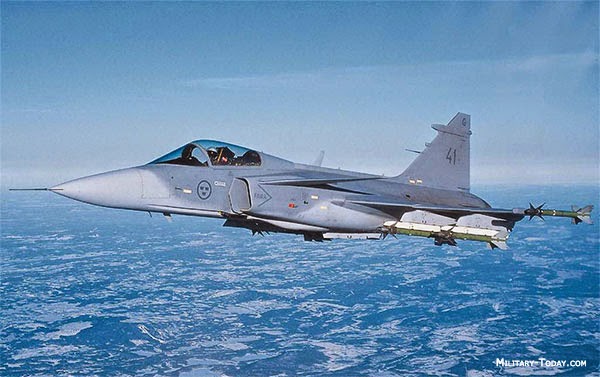
If I, or anyone else, demands just one comparison then that is dishonest. Just like focusing on the KPP. Gripen and Rafale both have a combat radius of just over 1700nm while armed and with drop tanks. Lets say that would be the basis for all comparisons. How would the F35 stack up for those long range engagements?
For the F35, a comparison like that would require it to carry about 4 x 450 gallon EFTs assuming they reach an efficiency level of >84% (as in external fuel with drag penalty vs internal fuel of equal amount).
This “discussion” we have had is ending on my part here and I will get back to follow other peoples postings.
Tu22m“Air Vice Marshal Osley: If we compare those two, the legacy aeroplane with fuel tanks and weapons on it, if we take a fourth generation fighter, typically an F16 or an F18, in that configuration it would take substantially longer than 63.9 seconds. If you took a 4½ generation aircraft it actually could not accelerate to supersonic in any time over that 0.8 to 1.2 range with a combat configuration of external tanks and weapons. The point I made originally was that we need to talk apples and apples between legacy fighters and the F35 on manoeuvrability and performance capabilities.
Thanks. That is one of the best examples of outright lies used to promote the F35. That and cherrypincking in 4th gen is just superb. I wonder how… say the Flankers fit in? Or the F15 (a fighter of similar weight class as the F35).
About 4½ gen… :stupid: Yes, i used that emoticon as this might be among the most blatant lies in the F35 promotion campaign I have read. And it is not directed at you.
Tu22mWhy would the F-35 A & C need the be compared with the aircraft it is replacing instead of the fith & sixth generation aircraft it may have to someday try to survive against in combat?
The F-35 A & C sustained turn performance will never be as good as it would have been without the design compromises required for the F-35 B, B design requirements that a future opponent will not be compromised with.Freddy.
Because it has to motivate the increased cost vs getting a modernized 4th gen.
If we look at jets like the F22 or Pak FA it is easy to see the value. They are, in every single aspect, better than the platforms they replace. Basically they take everything that is good with the current generation, improve it a bit and add new capabilities. In both cases it is easy to see that capability has improved since it is without any other compromise but costs. And in the case of the F22 the cost and maintenance aspect is getting closer to the F15s every year.
Now on the other hand we have the F35. It is better in some aspects and worse in others, that along with a hefty pricetag is fueling the actual debate. Are the new features worth the tradeoff? The easiest way to respond is to look at the different components.
If we start with BVR, then we see that it is depending on the missiles. Historically targets that lag technologically behind the missile technology the killrate is likely above 50%. If they are sort of the same era the probability of a kill goes down to some 20-40% and if the EWS is leading technologically then the probability of getting a kill is close to a monkey throwing darts. http://forum.keypublishing.com/showthread.php?117432-historical-kill-percentages-of-SAMs&p=1904859#post1904859
We also see that the probability of a kill goes down with range. BVR missiles have great Pk at WVR distances, but not at long ranges. Carlo Kopp made a claim that in BVR the AMRAAM has a Pk of less than 50% against targets that have no ECM/EWS and/or are clueless that they are being targeted. If WVR shots are included then the Pk is closer to 90%.
Why? Because of kinetic energy and the difficulty of providing accurate guidance over long ranges. If a missile has no propulsion then maneuvering is extremely limited and the missile is easy to dodge (this is why the Meteor is the only true BVR missile in existance today). Secondly, getting a radar lock on a target is tricky if the enemy uses an EWS. USAF F15s could not obtain radar lock on the fairly huge Indian Su30MKIs even at WVR ranges. And that is the power of ECM/Jamming today at short ranges. It wont get easier at +50km.
This is the first point. F35 is designed as a BVR-platform. Is BVR a silver bullet or are WVR capabilities also required? History, statistics and recent events point to the fact that against somewhat equally modern foes BVR is not a silver bullet. It is more of a deterrence.
Secondly we have WVR, is the F35 any good in it? The simple answer is that it is ok. The F16 does have a slight kinematic advantage in “endgame configuration”. And the F16 lags behind all of the Eurocanards. And why is this importande in the era of HOBS and over the shoulder missile launches?
To put it simply, all fighters have the ability to target and engage targets behind the cockpit, but this isnt desired. And the reason is simple. Energy conservation! A short range missile that has to waste enrgy in taking a wide turn will lose range. For most WVR missiles the killrange is less than half in “over the shoulder launches”. So you need a jet than can position itself faster for a longer ranged WVR kill shot. And in this arena the F35 is not up to the task.
And that actually sums it up, it is most likely the best BVR platform on the market. But it better not get close. Once in a WVR situation the best option is to get out for the F35, but the acceleration performance (or lack thereof) makes it very difficult. Nor does it have any noticeable top speed that could help it get out. To its aid the F35 has a lot of awesome features (like a 3D helmet and DIRCM) but the 3D helmet vs helmet mounted displays is simply cosmetic. Do you prefer a “HUD marking” in the visor or do you want a black and white display + a “HUD marking”? What does the DIRCM do against DIRCM resistant missiles or two incoming missiles?
None of these features change physics. You still need to get in a somewhat decent firing position to actually become a threat, and you’d have better luck doing that in any other competing platform.
This is why the F35 is compared to the current fighters. Now, about 6th gen… who knows what that will be? We barely know 5th gen (Lockheed change the specs every other year). Is it lasers? Well, having a skin that absorbs electro magnetic energy is pretty unlikely to be the solution against weapons that send directed electro magnetic energy…
Tu22mPutting a radar on a gimbal doesn’t make it more modern. Not by any acceptable definition of the word ‘modern’. It says nothing at all about the technology at play. Using the same logic, you could take a 40 year old pulse doppler put it on a gimbal and then state that is more modern than the APG-77 because it has a larger FoV (which would be true). A wide FoV is an advantage no doubt, but it doesn’t make the radar more (or less) modern.
It is more modern as it has more modern feautures that where overlooked in the design of APG81.
1. Rafale F3R which enters service roughly the same time as the Gripen E will also have GaN EW components.
2. Using GaN modules doesn’t make an EW system a ‘generation ahead’. By that definition, the F-35 could bridge a full ‘generation’ gap just by integrating the GaN-based NGJ.
1. Then the F35 EWS will be lagging behing behind two other jets.
2. How so, the only difference between a 5th gen fighter and a 4th gen is in the shaping of the hull and the amount of RAM. At least compared to later 4th gen fighter jets like the Gripen E or Rafale. And yes, by upgrading the EWS the technology gap can be bridged. Sure, it wont be internal, just like a recce pod isnt internal, but the capability is the same.
This is why there is such a buzz around GaN…
the devices have the potential for realising higher breakdown voltages and lower on-state resistances in comparison to silicon-based devices conventionally used (a projected 100x performance advantage), and to provide unprecedented microwave power amplification (>10x performance advantage over GaAs-based counterparts).
And that is why the NGJ is called Next Generation Jammer, because of the capabilities GaN brings to the table.
Makes zero difference operationally. Logistically, the F-35 achieves the same thing through the UAI, arguably a more efficient solution by virtue of being platform neutral.
Luckily you are not a software developer.
Tell me how UAI allow an F35 operator to add their own encryption to their indegionuos C4i solutions? Can this be done without access to the F35 source code?
Tell me how an operator of the F35 can add software support for Russian or Chinese missiles that they have in stock using the UAI.
…and so on.
Tu22mBig difference. The F-35 will be a full multi-role aircraft in 2017
We will see.
[B]while the Rafale took nearly 25 years to get there (it could self designate targets only by 2010).
If we start adding definitions of the word operational we can do that for the F35 as well. I make up the new definition that a fighter isnt AA-capable unless it at least can reach mach 1,8.
The Rafale delivered the desired performance early on. Moving the goal posts wont change that.
Tu22mThat’s a big assertion. Care to elaborate? The Gripen E that you’re describing sounds almost… sixth generation.
“…a more modern radar,…”
Well, it is. It is a more modern design with more than twice the scan sector. Heck, it is a front mounted radar that can obtain radar lock on targets behind the cockpit. The tactical advantage is pretty huge since a fighter with the more modern design can break away before the enemy without losing radar lock.
“…an EWS thats a generation ahead and…”
Well, I wont go into the unknown here. Gripen is the only one that has GaN based AESAs as the active component of the EWS. GaN-based systems are a generation ahead of GaAs from a purely physical perspective.
“…a software architecture that puts the F35 back in the stoneage.”
This is how it is described.
The Gripen E/F avionics system is designed pursuant
to the Split Avionics principle, meaning that the part
of the system linked to flight safety performance is
separated from the tactical part. Users can therefore
create their own tactical applications, adapted to
specific needs. With Split Avionics, test phases
following various upgrades are less extensive, which
reduces costs and means that innovations can be
introduced more quickly.
This means that the Gripen has taken the architecture away from the “main system + all features in one compiled into one”-approach and gone directly to the smartphone way. I think calling it one generation ahead is an understatement. The difference is like going from analogue controls to digital from an architectural point of view.
Tu22mthing is, on paper it is great, IRL, it has a long (and tortuous) way to go yet to reach what the paper says. Today, it is just a “work in progress… progressing slowly”
Look. I agree with the point you are making, but the fact is that the F35 is (despite being almost 10 years delayed) still likely to be the one fighter that uses AESA radars en massé at the time of IOC.
Sure, other US made fighters can offer AESA radars, but how many are actually sold or will be delivered in the given time period?
Rafale — how many are actually ordered with AESA radar and whats the delivery dates?
Gripen NG — will likely reach IOC after the F35.
Mig29/35 — how many are actually ordered with AESA radar and whats the delivery dates?
Possibly Typhoon (don’t know where they are with AESA integration on it) — so not really?
As I have stated many times before. The F35 will, at the time of IOC likely be a steap ahead of almost every other fighter on the market when it comes to avionics, but it will be short lived since we see Gripen coming out with a more modern radar, an EWS thats a generation ahead and a software architecture that puts the F35 back in the stoneage.
And then in a few more years we will see Pak FA.
Tu22mnot excuses, just reality… but as usual, the only way to make the JSF look at least remotely good is to distort reality
Come on…
It is one of few fighters….
[INDENT]…with an AESA-radar in standard config (and its a large one as well…).
…with the range and speed capabilities while fully armed (internally) and fully fueled.
…that has a spherical IRST MAW/Targeting system by default.
…that actually can be called a stealth fighter.
[/INDENT]
However, the argument could be made about the costs and delays and the deceptive marketing. To be honest, how many of the competing fighter jets are actually being delivered with an AESA today?
Tu22mFound the F-35 vs Rafale milestone conversation interesting. Pretty sure if we want to compare accurately, we need to go back to the original requirements phase, that’s when money started being spent after all.
[ATTACH=CONFIG]236623[/ATTACH]
Starting to count from pre ECA, or “European Combat Aircraft”, feels a bit dishonest since that is the time of the decisionmaking before the program before the program.
If thats the way the comparisons go we should also look at the scrapped programs pre JAST and that puts the start of JSF in the 80’s. So lets make it simple. If we cant agree on when the program started (I still say ~1981, maybe we could stretch that to ~1979 if we really are pushing it), then lets go for what we can agree upon. First flight. And thats 1986 vs 2000.
Second up we have IOC. To me, and many others, that means that the airframe delivered at least can fly in 99% of the agreed flight envelope, the F35B block 2B flies in less than 75% of it. IOC also means that weapons systems do work as expected, not perfect, but at least up to the agreed initially required standard. This is how it looked instead.
In November, the
program deferred two of
the planned Block 2B WDA
events to Block 3, due to
deficiencies and limitations
of capability in Block 2B
mission systems
So the planned initial operational capability is pushed to the next iteration software block. This means that USMC need to redefine IOC.
IOC, to me, also requires the structural aircraft design to be fixed. This isnt true for the F35 either. The F35 is about as finnished as a product as the Gripen Demo is today.
This is what should be done before the design is finalized:
F-35B durability test article (BH-1) has been halted since
September 2013, when the FS496 bulkhead severed
at 9,056 EFH, transferred loads to an adjacent FS518
bulkhead, and caused cracking. Root cause analysis and
corrective action – for repairing the bulkheads on the test
article, modification for the fielded aircraft, and redesign
for production Lot 8 (and subsequent lots) – have been
ongoing throughout CY14…
…According to the Program Office, the effect on fielded aircraft
will be limited life for FS496 (approximately 10 years of
service life) until replaced or repaired.
Does this sound like something with production quality or something that is worthy of calling “IOC ready”?
Lrip 8 is probably of acceptable production standard, and that is also when F35B and C operators will be able to reach speeds above mach 1,2. (Block 2B/3I is limited to <1,2 and lower altitudes than initial requirements…)
So, operational capability (A2A, A2G) for the F35 according to requirements will wait to LRIP 8 or 2016.
EDIT, forgot the conclusion…
This puts Rafale at first flight 1986 and IOC in 2001 (15 years), and the F35 with a first flight in 2000 and IOC in 2016-2018 (16-18 years). The point still holds its ground.
Tu22mMath is hard?
The Rafale program started in ~1981 (in the collapse of ECA program that was initiated in 1979). This is when one can actually talk about specifications materialising for the system and it is also similar to the foundation of the JAST program in 1993/1994.
The Rafale, despite being delayed due to budget cuts, reached IOC in 2001, or 20 years later.
The F35 will reach IOC in 2016-2018 if all goes according to plan. Thats 22-25 years later.
In reality though the french efforts got restarted in 1984 making the Rafale time closer to 18 years.
Tu22mIf you prefer to live in a fanboy echo chamber then you can hardly complain about not knowing what is going on.
The choice was made to get out of the Spud + Hopsalot fanboy echo chamber. Bring It On (also very pro F35) is not ignored because he posts relevant things and can have a civil debate.
Try the F-14.
That was the only example I could tink of. But as I understand it the engine did deliver the performance spec it promised and the only downside was availability/maintenance. In every other aspect it delivered what it promised.
In the end they delivered the last jets in the first batch with the new engines.
Because people need/want their aircraft earlier. Don’t forget there are substantial costs associated with keeping older airframes operational past their intended service lives as well.
There is no free lunch, but it is still an option for countries that have decent airforces today (like Japan, Israel, Italy, UK with the queen elisabeth reaching IOC in 2020 etc).
For countries like Norway thuough it looks a bit more dim.
Finland, if they get the F35, will be able to afford the wait…
Either way, the new engine is targeted at F35 but will probably be used in other places.
Tu22mAt least two of the partners (Norway and GB) and one customer (Israel) have some sound operational needs for wanting some air frames yesterday, and I suspect that SK and Japan might be in a bit of a hurry.
Cheers
Sure, but for every nation that gets the F35 someone else can “borrow” or lease F16s for cheap.


 Sign In







