 Tu22m
Tu22mFrom two pages ago…
Does anyone read this thread?
Hopsy, you are on the ignorelist so I and many others dont read 99% of what you post. But thanks for the information.
Yes, I am just making fun of hopsalot who in another thread is telling us that there is no such thing as a free lunch, while enthusing about the possibilities of free lunch in this one.
To be fair, that is usually true in the grand scheme of things. But we have seen good engine upgrades (like the branching out of F414 to F414EDE/EPE) where performance and cost have both got better.
The F135 hasnt been the most efficient engine so naturally there is room for improvement. What is odd though is that they will build a new “6th gen engine” to sell to the F35 customers in 10 years…
The Pentagon’s new sixth-generation engine will be built for the F-35 and several other aircraft
The new engine would be 35% more fuel efficient than existing engines, extending the range of US aircraft significantly……GE Aviation’s projected timeline for developing its variable-cycle design to completion coincides well with the DoD’s plans. Company officials have said that their engine could be production-ready in the 2022-2024 timeframe.
So… they will deliver a jet to the customers in 2012-2021. But it will be, surprise, unfinished and only deliver the promised capability once the operators buy a new engine. I have never heard of anything like this for western fighters.
Delivery schedule:
Come to think of it, why would any customer/partner ask for deliveries before 2022? By waiting just a few years they will get a jet with lower operational costs and higher performance.
Tu22mA more efficient engine resulting in increased range? But what will be the trade-off?????
I think at this stage it can be done without tradeoff. The F135 engine is still new so there is likely room for some improvement without sacrifices.
Tu22mI know that the MiG-25 is about the only Soviet aircraft to have faced significant NATO adversaries in its life and still ended up with a kill-ratio better than parity overall.
And thats all proof we need that speed is the single most important aspect of a fighter. 😉
Tu22mI’m surprised they aren’t re-engineering a more boxy, faceted outline for Gripen. Flatter belly, with angled intakes rather than the current rounded square inlets. More angles to break up reflections. I can only guess the exhaust will get the uneven sawtooth treatment. I’m curious what this new landing gear arrangement will look like in production. They aimed for bigger drop tanks, but will they get the drag reduction found in the F-35A program?
I think the boxed design is pretty well done. There are few reflection angles and it is smooth enough to still be very aerodynamic.
Considering it will keep the weapons on the outside I think there is no need for further enhancements. It is stealthy enoungh. After all, whats more important, having a (potentially) marginally better RCS or increasing internal fuel by 40%?
And why bother with a flat belly if you are to carry external weapons under it? If they would use a weapons pod, well… it still wouldnt matter because there is a stealthy pod under it.
Tu22mNonetheless, by the time the first air-to-air only capable Gripen NG is delivered the F-35 will be wrapping up its SDD program and will have already delivered several hundred airframes.
Where is that coming from? If memory serves me right the carriage trials for JDAM and SDB where done years ago on the Gripen Demo.
This is the Demo with with some AG loadout (systems arent integrated at the time of the photo).
[ATTACH=CONFIG]236516[/ATTACH]
Tu22mAnd change materials used in the airframe. They could still achieve Mach 1.8 without the excess Mach 2.5 capability.
That too. Lower cost, no actual penalty. It would be different if they had an armed speed of mach 2+ (like the F22).
Tu22mIf you invert the logic, they needed that much thrust to achieve M 1.8 with a load. So they couldn’t really design it with less thrust, could they?
Being able to hit 2.5 clean was a bonus. Being able to achieve 1.8 loaded was a capability.
One could argue that the intake design could have been made a lot simpler if the top speed while armed wasnt supposed to be above mach 2. The variable ramps and vents wouldnt be needed –> less complex design –> lower operating and manufacturing cost.
Tu22mGripen ng classified information made available for Finnish representatives.
Lol at SVD… They claim T50 (Pak FA, not golden eagle) are also rumored to be a candidate…
Either way. Good news for SAAB. Lets hope it isnt a Norway 2.0
Tu22mThere have been good examples as well, like the F4 and F18. Albeit the F18 wasnt in the US air force, but in many others.
What makes a project good or bad is project management and how well defined the scope of the project is. For instance, Rafale is a better defined project than the Eurofighter. (The French left because they wanted something cheaper than what EADS wanted to make, and they wanted it carrier capable).
In the end, EADS are still struggling with costs and they can’t make it carrier capable. And this while the French have a superb jet with the same payload capability, a lower cost, better weapons integration (at least the Rafales get their weapons integrated…) and despite a later start (about 2 years) for the design the Rafale was introduced two years earlier than EF2000. In my mind this is due to better scope definitions and better project management. For once the french knew what they wanted.
The F35 is more similar to the EF2000 in that sense. Will the product be good? In my mind the answer is yes. Similarily the F111 in many cases was an excellent aircraft. And to be frank, most of the faults of the F35 are due to really bad specifications from the people ordering it and from Lockheed not telling them what was actually realistic. For instance, just look at the minimum requirements…
You cant make a long range supersonic fighter with the physical size constraints of the F35 (+ shape restrictions), the range of an F15, with more avionics than the F22 and expect it to be nimble, light weight and cheap.
Tu22mok
Agm-84 have RCS around 0.1 m2, so let assume a small UAV have RCS equal that ( even though UAV often have bigger wing, size)
now if Giraffe 8a can detect target with RCS = 0.1 m2 from 200 km, it will detect target with RCS = 0.01 m2 from around 100 km,
So you are saying that the strategy employed by the F35 is to go head on against all emitting radars?
I hope this will make you reconsider throwing around unverified best case scenarios as a general rule.
[ATTACH=CONFIG]236253[/ATTACH]
From http://www.intechopen.com/books/aeronautics-and-astronautics/the-assessment-method-for-multi-azimuth-and-multi-frequency-dynamic-integrated-stealth-performance-o
It isnt perfect but it should give you an idea on what a near perfect RCS shaped aircraft reflects (look up the X-45 if you havent). Most of the time the reflection is at 0,01 sqm (with valleys down to <0,0001 as well as higher than 10sqm.
Claiming that the head on RCS is to be expected in any situation is naïve to say the least. Especially in situations where multiple emitters are to be considered.
This thread is not about the F35, and the F35 thread is not about the Gripen.
Tu22mThe only thing I would comment on TU-22m, would be the assertion that the Gripen would outclimb or accelerate the F-16.
The F-16 MLU as those flown by Norway, are essentially F-16A with the added weight of latter blocks without the increased power.It is likely that the Gripen has better sustained turn rate at altitude, but I doubt it could out climb or accelerate an F-16C. As many try to point out with the F-35: and aircraft with lower TWR and greater drag is unlikely to match the F-16 by sheer physics.
I agree. Physics are what they are.
i dont deny that Rafale , Typhoon , gripen are better at dogfight at high altitude compared to F-35
what iam trying to say is that at low altitude ,they are somewhat equal as it is stated by italian pilot that below 10.000 feet ,F-16 and typhoon are closely matched
Well, at low alt the F16 and the others can sustain 9G. This is the upper limits of what the pilots can handle so naturally they are pretty equal.
i do aware that Gripen-E , typhoon , rafale can drop their external fuel tank , but
1-they cant drop the pylon…
The F35 is a solid performer and it is has superior capabilities to all other fighters in some aspects like BVR and ground attack.
1-3 Look in the flight manual for the F16 regarding the pylons, they barely have any effect. And in the chart i gave you the baseline was F35 with 50% fuel and the F16 with full internal fuel.
fair enough ,but APG-81 , DAS and AN/ASQ-239 have been tested as well , and many of them have been made
by contrast Gripen-E and it’s AESA radar is still somewhat like Mig-35 at the moment (only 1-2 prototype been made )
Sure, but the IOC/FOC are still roughly the same. This means shorter TTM.
Why its important: http://www.prismagraphic.com/prisma-paper/speed-to-market-why-is-it-so-important/
Example: If you lag 5 years behind your competitor but they have a TTM of 10 years, then you can beat them with an equal product by 1 year if your TTM is 4 years.
F-35 did similar thing
http://www.airforce-magazine.com/MagazineArchive/Pages/2012/November%202012/1112fighter.aspx
Not really the same. Not even O’Bryan at LM calls it supercruise so why should you?
honestly , i have no idea what is this about :p cant you explained it a bit simpler ?
about threat , weapon update didnt F-35 have UAI or sth like that ?
The language is less important than the design, but C++ doesnt have one standad for compiling. Or rather it has a standard but not everyone follows it. This means that something that is correct according to C++ specifications can produce errors due to a special interpretation in the compiler. This is why most others use C or ADA for their system cores.
if i remember correctly in the Rafale case , there was another Rafale datalink to it
So its a feature not advertised to be in the F35? Awesome 😉 Either way, think about the actual usecase. Do you need to see a grey dot in your hud or do you need to see the hud marking of a target to take the shot? Sure, at low alt in the middle of the night it might be good, but why would you go there in a dogfight? (Rethorical question)
if you read the link carefully it does say PAWS-2 is strictly a missile warning system , when integrated it can detect threat and active the countermeasure available on the aircraft ,gripen-E have chaff and flare however it lack DIRCM ( same for typhoon , Rafale )
even SAAB themselve said nothing about DIRCM on gripen-E
PAWS-2 is queing the DIRCM.
It provides warning to aircrew in the presence of hostile missiles and automatically activates onboard countermeasures such as flares, DIRCM, etc.
yeah ,seem true
Tu22mwe dont have the flight graph of Rafale , Eurofighter ,Gripen or F-35 yet so my point still stand
Ok, this is from elements of power.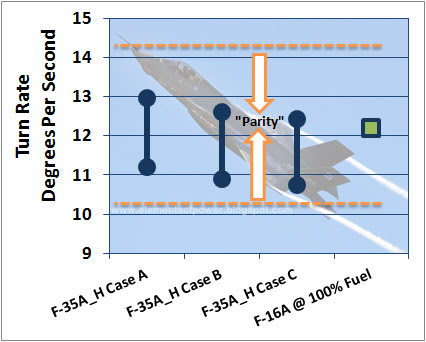

At low alt the differences between fighters is quite small. But none the less thie is what RNAF have to say.
OK, la oss si det slik: Med blanke ark og fly som er likt konfigurert, svinger Gripen krappere og stiger raskere enn en F-16, det er tross alt et nyere fly. Men erfarne norske flygere har også klart å utmanøvrere Gripen.
Ok, lets tell it straight. With “blank sheets” and similarily configured aircrafts, the Gripen turns tighter and climbs faster than a F16, after all its a newer fighter. But experienced norwegian pilots have still managed to outmaneuver the Gripen.
unless you have some flight manual that show otherwise , it not easy to design an aircraft that superior to another for the entire flight envelope
an example of this :
Similarily Gripen has been succesful in beating Typhoons (like in meat Grinder for SwAF and Czech AF in later excercises). But those are exceptions to the rule, just like when the F16 or Gripen can win duels with Typhoons.
When it comes to agility while carrying heavy loads the Rafale is quite a beast. I’d put Gripen C half a step behind Raffie and Taffie because of their performance while loaded and at high alt, and I’d put Gripen a half or a full step ahead of the F16. As stated above (elememts of power, as well as Andraxxus charts) the F35 will roughly match the F16. The problem it has is that while others can jettison fuel tanks and fly “clean” in the endgame, the F35 has to fly with whatever it has in the tanks as well as the penalty of being huge to begin with.
yes but they made many F-35 and tested most part of it’s flight envelope and avionics suite while we still dont have any Gripen-NG ,it’s avionic havenot been tested either
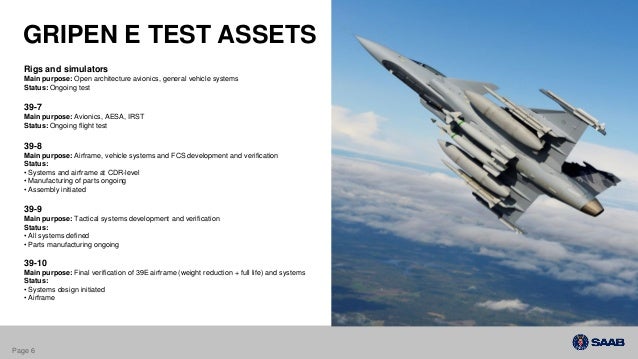
39-7 is the aircraft that has been flying since 2008 and several news are out regarding the avionics tests, stuff like the AESA and EWS over performing and so on.
The twin seater has also been supercruising while armed (mach 1,2+). This is more than most current F35 blocks are allowed to go with afterburner…
http://jyoutouhei548.up.seesaa.net/eecfd3aa.jpg
what coding language is Rafale , EF-2000, Gripen’s avionics written in ? and why are they superior to C++?
There is nothing wrong with C++ other than the compilers and that for some reason LM design the avionics as a single system block (probably because of a desire to increase performance and not risc any interface bugs between modules). To quote Bjarne (the designer of C++)
C makes it easy to shoot yourself in the foot; C++ makes it harder, but when you do it blows your whole leg off.
Now add a thousand engineers of various competence levels designing one single system and you start to understand the problem. Also building everything as software blocks makes the entire system really hard to manage and debug. Gripen C OTOH gets upgrades for the threat library or FCS upgrades without having to wait for the MS* packages.
There are no warnings anywhere, everything looks ok but stuff just dont work (look at ALIS for a prime example). And since the software is so fkn huge it takes a genious to find the little hardcoded bug.
Others, like Gripen, have smaller codebases and code separation. For instance the EWS works separately from the FCS and weapons control (at least initially). This meant few clashes and the smaller codebase meant easier bug fixes.
Now, Gripen E will have a much larger code base. And this is handled by physically separating the code and have the system use internal APIs for communication. This means that users now can develop their own apps, and if they mess something up the fighter is still flyable and it can still use its basic functionality. This also makes bug testing much easier.
we never know anything for sure about modern, top of the line weapon
yes , fighter producer try to reduce aircraft RCS to improve survivability
F-16C RCS is around 1.2 m2 clean
Dassault’s claim that the Rafale’s RCS is 1/10th of the Mirage 2000 RCS => Rafale RCS is about 0.5-0.3 m2 clean
EF-2000 was claimed to have RCS = 1/3 Rafale => around 0.1 m2 clean
According to Airforce’s Monthly magazine the Gripen’s RCS(with full A2A loadout) is 1/3 that of an F-16 => around 0.4 m2 with weapon
F-35 was declare to have RCS equal a golf ball => around 0.0014 m2 clean
but i rounded everything because that make calculation easierwhat i was trying to say with that assessment is that F-35 was designed to hide from really big and powerful ground radar ,it wouldnt be a big deal for it to hide from fighter radar
example :
The question still remains. Did the previous 100 times RCS-reductions make modern fighters invincible? Yes or no.
DAS give many advantage compared to normal HMDS
1- give more accurate guide to HOBS missiles
2- give pilot warning and accurate location of enemy’s missiles or Flak
3- night dogfight ?
( it true that the system still have some bugs at the moment though )
Just give me one situation where this is needed (apart from when you have a missile and you enemy doesnt), in which case DAS or no DAS – You just need to point the nose a bit and fire.
Also, Rafale has already demonstrated 180 degree off boresight lock on in various excercises so the capabilities arent exactly new.
actually PAWS-2 is just a missiles warning sensor that can be put on fighter or helicopter , connecting to aircraft it can detect missiles launch , give warning and deployed countermeasure ( chaff , flare , DIRCM ) , however like i said it cant deploy DIRCM if the aircraft itself dont have laser turret , so Gripen-E dont have DIRCM , neither are EF-2000 or Rafale
http://www.flightglobal.com/news/articles/elisra-to-boost-gripen-missile-warning-suite-393897/
http://defense-update.com/products/p/paws.htm
http://www.gripenblogs.com/Lists/Posts/Post.aspx?ID=793
PAWS-2 is an IR based combat-proven Missile Warning Systems designed to strengthen tactical aircraft safety and survivability. It provides warning to aircrew in the presence of hostile missiles and automatically activates onboard countermeasures such as flares, DIRCM, etc.
Is SAAB a good enough source for you?
EDIT: I think this is starting to get off topic. But now you have sources for every claim I have made and I think that even if you have a different conclusion than I have you will find that in principle our differences lie not in the facts (not anymore at least), but rather in our expectations. I have seen leaps like the F35 before and the result has not been the revolution everybode was hoping fore. The competition has a wierd way of catching up faster than expected.
Tu22mi dont think F-35 is vastly inferior to Rafale and Typhoon in term of kinematic, i agree that Rafale and Typhoon are more maneuver but not in all situations
The F35 struggles to be on par with the F16, Gripen is quite a bit more nimble. Rafale and Eurofighter are one more step up the ladder. Gripen E will close the gap a bit, ie further outrunning the F16 and by implication also outrunning the F35.
correct me if iam wrong, but at the moment they have made many F-35 while Jas-39E ( GRIPEN-NG) is still a concept on paper
How many of the delivered F35s are flying with the full avionics suite and cleared for the entire flight envelope? Not a single one?
The thing with delivering testbeds to clients is that they will be sitting with junk for a couple of years until the avionics and other fixes are finnished. The LRIP system serves a couple of purposes.
1 Excellent PR. They dont have to finnish the product before delivering it and thus they can “beat the deadline”. Everybody applauds.
2 They lock up customers money. Once you have payed hundreds of million $ for a piece of plastic that is no where near combat ready (and still needs fixes like redesigned tail section, several avionics upgrades etc…) it will be too costly to pull out.
F-35 have alot more customers compared to Rafale and Gripen-NG , the country develop the F-35 are also the richest in the world so honesty i fall to see why would F-35’s EW system will get upgrade less and lag behind Rafale and gripen, or even Typhoon
It is a good fighter and if you want to fight a war with the US you will need to use the same gear. It is cheaper for a country like the Netherlands to just piggy back on the US if they share maintenance resources rather than getting their own ground crew etc. In this aspect the F35 is excellent.
When it comes to upgrades… The F35 has all avionics written in C++ and everything is compiled to a software block together with the flight controls. This was probably ok back in the 90’s when projects had fewer lines of code. Bogdan says software is the biggest reason for the delays, and this is on a fighter that up to last year melted its own tail stabilizers (at least the skin) when using afterburner, that had premature cracks in the bulkheads and so on. I think that says is all.
oh and btw Rafale, Typhoon, gripen have RCS around 0.1 m2 clean, while F-35 have RCS around 0.001 m2 clean
that is 99% reduction in RCS => F-35’s jammer only need to be 1% as powerful as the one on 4.5 gen fighter to achieve the same effect
, burn through distance reduce by 45% too
First of all, we dint know for sure. Second of all, the fighters before the Eurocanards (Su27, F16, MiG 29 and so on) had RCS of around 5-15m². (F16C was quite the improvement vs F16A)
So, from 10 to 0,1 is 100 times.
From 0,1 to 0,001 is 100 times.
Do you see something repeating itself? 😉
F-35 was designed to be highly efficient at neutralise S-400 and their cousin by it’s stealthy characteristics ( you know how much bigger and more powerful SAM radar is compared to fighter radar)
most fighter’s radar will have really hard time to detect F-35, let alone tracking it at distance…
If it all where that simple…
SA-6 where expected to have about 90% killrate in Yom Kippur 1973, but it ended up at 2%.
Speaking of SAMs and the S-400. It is specifically designed to handle stealth targets. And so is Pantsir S1 which always tags along to give S-400 a good SHORAD.
In the end, we need a war to actually settle this.
4 at the moment
6 after block 4
when we have CUDA the number will be 12 internally
But the CUDA is not more than a concept. Like FOI/SAABs supersonic UCAVs that where meant to be a silent extended arm of the Gripens with passive sensors. That would pretty much be the end of stealth fighters right there. Should we assume production to start in 2017?
[ATTACH=CONFIG]236148[/ATTACH]
i agree that all fighter now can carry HOBS missiles , but F-35 is still the only one with DAS, that will allow more accurate guidance of AAM in WVR
No. All modern fighters have HMDS giving the same capabilities but without the headache.
only the F-35 have a planned internal DIRCM , neither Gripen, Rafale, or Typhoon have that, F-16 may have DIRCM in future but in a form of centerline pod => increase RCS, reduce maneuverability , limited FoV
Nope. DIRCM will come in the PAWS-2 suite för Gripen E to name one example.
Tu22mI think its time for the US to start fielding a replacement for the AIM-120, this is an issue that extends beyond the F-35. That said, even with modern ECM the odds aren’t very appealing to whomever has to evade the incoming missiles.
It depends on range and how early the system detects an incoming threat (right away nowadays).
Evading incoming missiles is not something that is particularily difficult (historically), and every time a new ECM or countermeasure is tested against the latest missiles available the results are usually 90-100% successful.
This is one example of marketing vs reality.
Stinger offers a high explosive hit-to-kill, blast-fragmentation warhead. Stinger has nearly 300 combat kills and a success rate of over 92 percent in more than 1,500 live fire tests by U.S. and allied forces.
And as the Falklands showed
Falklands 1982.
Seacat – 10 % – leading 5 years
Sea dart – 27% – leading 10-15 years.
Blowpipe – 1-2% – leading 5 years
Stinger – 17-33 % – leading 20 years.
Sea wolf – 50 – 62 % – leading 20 years.
Rapier – 5 – 15 % – leading 10 years.
The Stinger was pretty new at the time of the war.
http://forum.keypublishing.com/showthread.php?117432-historical-kill-percentages-of-SAMs&p=1904859#post1904859
This if anything shows the importance of staying current. And the missiles one gets in the inventory are usually 5 years old at the time of purchase and then stockpiled a couple of years before actual use.
Vastly inferior? I’d say its performance is inferior to the Typhoon and Rafale in some respects but I think you’re overestimating what a single F404/F414 can do for a Gripen. Attrition and quantity? None of the Eurocanards are particularly cheap as the numbers do show.
It is vatly inferior to Rafale and Typhon while being “only” inferior to Gripen. If we are kind and say it equals the F16 (F16 at full internal fuel, no EFT) then it still is quite a long way behind the Gripen A and C in terms of kinematcs. The Gripen E will be even better performing.
There is always a big difference between what is being tested and what is actually in the field. By the time Block 3F is fielded Typhoon operators will be lucky if they have just have gotten the CAPTOR-E. Likewise the bulk of the Chinese and Russian fighter fleets are still using old mechanically scanned radars. This isn’t going to change that quickly. It’s also very unlikely that nobody in the F-35 program is thinking ahead about incorporating GAN-related radar and EW/ECM upgrades into the aircraft.
You mean in 2017/2018? I dont know, but the Gripen E will be delivered with fully functional GaN based EWS along with the new AESA (which is of a more advanced model than the one in the F35).
Sure, the F35 will be among the most advanced at delivery (in terms of avionics, not to mention stealth). But it wont be the relative technological marvel that it would have been in 2008.
Another problem is costs. Austria and South Africa are in my mind prime examples of many future F35-fleets. They are buying systems that are too expensive for their budgets and thus upgrades, training and actual capability suffers.
What is this based on? Historically this hasn’t been true for the Eurocanards. Meanwhile to the east economic conditions aren’t going to help the Russian’s upgrade programs. As long as the customers and funding is there I don’t see any reason why the F-35 should lag behind in regards to upgrades.
I have my eyes focused on the Gripen. Every 2,5 years there is a major upgrade for Gripen (with small upgrades in between, stuf flike improved threat library in the EWS). If my memory serves me correct this is also true for the Rafale.
Abysmally low? What numbers are you thinking of here? I’ll agree that against the latest ECM probability of a kill isn’t as high as it was say, a decade ago, but I wouldn’t bet on evading AMRAAMs with ease.
The hitrate is good if you fire on targets up to 18nm away with a BVR missile and the enemy has no RWR, chaffs or jammer. In that case the Amraam has almost 50% succesrate in hitting targets (if it also is leading 20 years technologically, see reference below to trailing/leading).
The main problem in BVR is that yout have long kill chain.
1 Guidance from launching aircraft. This requires active radar from a fighter within the formation/group launching the missile.
2 Missile seeker is easily jammed and needs to correlate information with guiding ac to be able to handle jamming.
3 The missile has to get close to targets within the sustainer range
For instance. Responding to a detected launch by sending a LOAL capable missile in that direction makes part 1 a very risky venture. Sending out 2 counter missiles (one to “hunt” for the active radar and one to chase the estimated position of the launch point) will stop anything but a very suicidal attacker. (See Operation Allied Force for reference on SAM vs SEAD).
This effectively destroys point one in the kill chain and this is one of the reasons why active seekers are so popular in modern missiles. (And why the Israelis specifically added this feature to Python 5).
Now one is left with relying on the built in seeker in the missile which is MUCH easier to jam. This despite various HOJ features. And most likely the fighter is outside the range of the missiles radar at this point anyway.
For an unguided (ie without updates from external source) missile to find its target after losing it once will cost energy. Most likely the loss of energy will be too high for it so the hit is unlikely (as is evident in the Israeli/Arabic wars, Falklands, Allied force etc). Unfortunately there arent many AA missile standoffs to look at, but there are plenty examples of SAM-systems (with better radar systems) vs fighter jets where the kill probability in good cases is 20% and usually is below 1%.
(Once again, Allied Force is a prime example as is Desert Storm, the Falklands, The Israel/Arab wars).
This is statistically what a disturbed kill chain looks like.
In all, more than 800 SAMs were reported to have been fired at NATO
aircraft, both manned and unmanned, over the course of the 78-day
air war, including 477 SA-6s and 124 confirmed man-portable infrared
missiles (see Figure 6.1 for a depiction of reported enemy SAM
launches by type).19 A majority of the fixed SAMs were fired without
any radar guidance. Yet despite that expenditure of assets, only two
NATO aircraft, an F-117 and an F-16, were shot down by enemy fire,
although another F-117 sustained light damage from a nearby SA-3
detonation and two A-10s were hit by enemy AAA fire but not
downed. 20 There also were two reported cases of short-range
infrared (IR)-guided missiles hitting A-10s, one of which apparently
struck the bottom of the aircraft, defused itself, and bounced off
The HARM-missiles where roughly just as effective. The difference there is that the air targets where moving while the ground targets where fixed.
Yet once you’re WVR you’re up against extremely maneuverable all-aspect HOBS missiles with IIR/UV seekers that are nearly impossible to fool (without DIRCM). Couple these with helmet mounted cuing systems and the sustained turn rate of your fighter is irrelevant. It’s going to be a very costly fight for both sides once this happens.
How many missiles are the F35 carrying? The WVR-missiles are present on both sides, the difference is that an agile fighter that doesnt need to use HOBS can double the effectie range of its missiles. The whole idea behind shooting a fighter behind your back is based assuming you have missiles and your enemy not having them. Ie, the premise is faulty. This is also a feature all modern fighters have, so its not unique to the F35.
The problem with the statement “impossible without DIRCM” is that most modern fighters (Israeli F16s, Gripen, Rafale etc) have both DIRCM and flares.
This is true of every fighter to some extent or another. Even a fighter with unmatched stealth, performance, and avionics isn’t going to be very effective if it’s lobbing AIM-7Es at the enemy.
And still, that is how the reality looks. Take this for example:
First you have a few years of testing, and then they pass, get ordered and about a year later they are delivered.
Deliveries of the AIM-120C-5 began in July 2000
But that is first deliveries, this is when the customers en massé get them:
In 2006 Poland received AIM-120C-5 missiles to arm its new F-16C/D Block 52+ fighters.
In early 2006, the Pakistan Air Force (PAF) ordered 500 AIM-120C-5 AMRAAM missiles as part of a $650 million F-16 ammunition deal to equip its F-16C/D Block 50/52+ and F-16A/B Block 15 MLU fighters. The PAF got the first three F-16C/D Block 50/52+ aircraft on July 3, 2010 and first batch of AMRAAMs on July 26, 2010.
And so on.
This means that the missiles are +15 years old when most users get them. Lets say Poland does fight a war in 5 years. Do you think it will be using Meteor or the then 20 years old Aim 120C-7?
Lets just say that the enemy has an EWS from 2014 (like Gripen C, MS18), what do you think the odds are of actually hitting that target in BVR based on the reality of previous wars?
A missile system (like SA-6) used when it is less than 5 years old, had a kill probability of about 2% over the course of the war (1973). In the beginning it was highly succesful because the Israeli RWRs didnt pick up the signal but after changed tactics it was no longer getting any kills. (Hirsh Goodman, W. Seth Carus)
So my criticism isnt about the F35 in itself. It is a mix of relying on the weak link (the missiles), a weak kill chain, low “bang for the buck”, and pretty much no endgame.
Oh, and to the defence of the missiles. The poor performance is usually due to attacks on the kill chain and adapted tactics. If the enemy would fly with jammers off within 20km of the SA-6 the killrate would be very high (as it was initially).
Tu22mWell, the F35 is a very impressive fighter in many respects. But it is an iterative step up from legacy fighters.
What is most important is the technology carried by the platform. Sure, the F35 has a good selling point in it being stealthy –> it can have worse EWS and still have similar effect in the end as better competing EWS-platforms.
But to put this in perspective. A fighter jet today has a similar RCS head on as a few missiles. For the F35 to actually have an edge here it has to be limited to internally carried missiles (currently 4). Otherwise one could just as well use an old fighter like the FA18C. With the high survivability expected of modern jets the Pk of the missiles at range will be low.
Due to the fact that the endgame for the F35 is to “bug out” or as the Australians put it:
during high-risk missions such as visual close air support and within-visual-
range air-to-air combat (i.e., “dog fighting”). In such cases, the F-35 survivability can largely
depend on its ability to tolerate threat-induced damage;
Considering this, one has to take kinematic performance in the endgame into account. And in comparison to the Eurobirds the F35 is vastly inferior. One also has to consider attrition, or quantity.
The biggest drawback for the F35 is that it relies on very few punches and the hope that the enemy doesnt have any fighters left.
But now over to the fun stuff. What is the status of the avionics? At the planned IOC the F35 would be half a decade ahead of most competitors. At IOC (in 2017-2018) the competition wont just have caught up, the ones at the forefront will have superseded the F35 in many key areas. Examples:
Radar:
The competition will use radars with +/-100 deg scan sectors + higher azimuth than the F35/APG-81. (Half a generation ahead)
Next the competition will use GaN-based radars. (One generation ahead)
EWS:
Gripen E will in 2018 use GaN-based AESA jammers. Just as the case with radars this is a huge leap forward and should be called a generation ahead.
Countermeasures:
Modern IR-missiles, like the Iris-T, can engage incoming missiles.
And so on.
The economy also makes other jets more likely to get upgrades on a more regular basis than the F35 meaning that technologically it will be just below par compared to its peers. In 5-10 years the F35 fleets are likely to lag substantially behind the latest toys on the market.
And this is why the endgame (kinematics) is so important. Because you missiles that where designed 10 years ago and just stockpiled for 5 years in your airbase are 8-9 years older than my countermeasures (the threat library upgrade). The likelyhood of an actual hit is abysmally low.
The F35 is probably a fantastic machine i many aspects, but it relies on a chain (economy, weaponry, logistics etc) and that chain has weaknesses. Ergo, the F35 has those weaknesses. And as we see, it is no longer leading the competition across the board.


 Sign In







