 viscount
Just had a look through spotters logs for the period XS176 was in service, but don’t appear to have seen this particular aircraft.
Then had a ‘Google’, and found the history already on the net!
http://www.jetprovostfile.org/t4-xs175-to-xs186/
Would appear to be a tie breaker, establishing the correct dated version of the history. Hope the work put in by Vampire Dave, myself and others have proved useful. You should be able to get an interesting history board put together out of this lot.
Nice photo in silver and dayglo patches as ’36’ of 2 FTS 6/67 on http://www.na3t.org/air/photo/MIL22252 – this confuses/adds to the information; presumably a recode during service with 2 FTS as “Sycamore” confirms the code ’28’ very soon after delivery.
viscountPolish built PZL Wilga.
Should have a entry on wikipedia should you wish to find out more about the type.
viscountTo make the page I was photographing lie flat I seem to remember improvising several techniques.
Near the beginning or end of a book, I would place thinner books underneath the low side, so the spine was raised, encouraging the page being photographed to lie flatter. Seem to recall weights and light metal bars did not really help the lie-flat issue and tended to get ‘in shot’.
With a large stiff book, with pronounced wave across the page when flat open, I’d raise the other half of the book to near vertical, so relaxing the side being photographed.
The need to get the page as flat as possible was not so much a focus issue as one of image distortion and light flare.
In the days when I was photographing photos from books it was onto 35mm colour transparency for use to illustrate talks or quizes – I had no option of digital cropping etc.
viscountA couple of tips from experience some time ago.
Found by removing a stopper at the end of the vertical extender on my tripod, I could reverse this ie hang my camera under the tripod, then move the mounted camera until horizontal – looking directly down. Once in position, zoomed (on macro setting) and focused I could safely take as many pictures as I wished – providing I ensured that each page was completely in the frame.
Beware of bright glare/shine from external light sources ‘burning out’ parts of the page. At least with digital any ‘burn-out’ glare can be noticed immediately – uneven and changing light was certainly a problem when working with film, as changes were not recognised until the prints came back.
Beware of uneven light or of shadows cast across where you are working. Tripod legs cast sharp shadows, your body blocks and alters the light too. Studio diffused lighting would help.
Seem to remember using a fairly high shutter speed to cut down on shake, even though using a tripod and cable release, and a fairly high f setting – using a tabletop (easier than the floor) in a bright room, but no direct sunshine. Working far too close to the image for flash – which is also likely to reflect off shiny paper or photos.
Be absolutely certain that the pages are at absolute right-angle to the camera. Be certain too that the pages lie absolutely flat (not easy when working from a book).
…… and finally, why are you taking photos of the album pages, not directly scanning directly into digital on a decent flat-bed scanner ? Direct, controllable, instant and usable directly to a printer, or processed through an image programme (Picassa, Photoshop etc). No contest for me, flat bed scanner anytime (I have a Canoscan 9000F which is great for the job, but my Kodak all-in-one does mean manipulating pages which may be undesirable). Using a camera and tripod is to increase the difficulty and produce less certain results!
viscountThe link to ‘demobbed’ provides great detail post service. From a 1978 enthusiast magazine (‘Flypast’ of the Merseyside Aviation Society, JPT4 histories compiled jointly by MAS and Humberside Aviation Society), details of the service story:
Awaiting collection 30.9.63
Delivered to 27MU 3.10.63
Issued 10.1.64 to 2 FTS and coded ’28’
To 27 MU on 10.7.68; transferred 18.10.68 to 5 MU; back to 27 MU 1.11.68
Issued 28.1.69 to 3 FTS and coded ’47’
Transferred 24.11.70 to CATCS and coded ‘O’
Transferred 28.2.72 to CAW as code ’18’
Transferred 6.12.73 to 3 FTS/SoRF with code ’71’
To 5 MU 25.2.74 until 26.2.75, when re-issued to 3 FTS/SoRF still as ’71’
Transferred 30.6.75 to CATCS, this time as code ‘B’
SOC 24.3.77. To Halton SoTT before 7.77.
Appears to be compiled using the History Card, plus enthusiast sources to record the individual aircraft codes.
27 MU = Shawbury
5 MU = Kemble
CATCS = RAF Shawbury
CAW = RAF Manby
Added on ‘edit’ having now seen the previous reply posted while I was typing a list that broadly agrees in terms of units and codes – but oh dear, oh dear, one source or the other has had finger trouble transcribing the history – all dates effectively transposed by one line. Arrival dates in my source, being arrival dates at the previous unit in the other. The error is constant through the listing.
I would point out that the dates on demobbed site are also out, effectively by one line – so would it be heresey to suggest the JP File ‘bible’ is wrong.
Referee urgently sought!! (Dr.John Smith, do you have JPT4 histories recorded independently of the two quoted sources?)
viscountFor more on this British ‘one-off’ experimental aircraft, a good place to start is:
viscountOn reading the original and subsequent posts again, I support the suggestion that the aircraft seen are Flybe Dash 8 aircraft – the height they are observed at being a big clue. The Security forces Islander and Diamond Twin Star aircraft generally operate below oxygen requiring altitutes, say below 8000ft, the Police Islander and helicopters generally at 1000-3000ft. The question is asking about aircraft being observed much higher, 20000ft being suggested (missed that crucial info on my initial reply). From experience 16000 to 20000 ft, is the usual cruising height of the likes of Dash 8, ATR-42, Fokker 50 etc on domestic flights.
When seen from underneath, have the aircraft got a blue line along much of the length of the underside, with a slightly broader white either side and white under the tail? Do the engine pods significantly extend behind the wing trailing edge? (PS those on a King Air 200-350 don’t). Is the fuselage longer than the wing span? If so, increases the chance of Flybe Dash 8s actually being the answer.
On the rare clear day, I see several Flybe Dash 8s per hour over Merseyside. The drone of a crusing Dash 8 can be heard on the ground, although not an intrusive noise. The turbo-prop drone appears to be absorbed by thick cloud. Flybe have a considerable fleet of Dash 8Q-400s, flying a wide network of routes around Britain and beyond. Flybe don’t track on SBS.
viscountThere are a number of aircraft used by Police/Security Services that fly regular large orbits/grid patterns etc while listening out to communications and watching major drug activity/suspected terrorists etc. Clearly such flights do not track and indeed talk little to ATC. Main types involved are ‘Army’ marked BN-2T Islanders and civilian marked Diamond Twin Stars, while potentially RAF marked King Air 200 Shadow aircraft could also work in UK airspace. Police Force’s own Islanders and helicopters are clearly marked and nearly always in distinctive black and yellow colours.
The other thought is that it is a Partenavia P.68 or BN-2B Islander on environmental survey work – although the frequency of overflight seems rather too often.
viscountI’ve let my request for anyone with service photos of WG474 simmer for 10 days. Although I did get a good lead via a PM, for which I thank DGH.
Since de-mob in 1974, WG474 has flown as G-BCSL in at least two schemes.
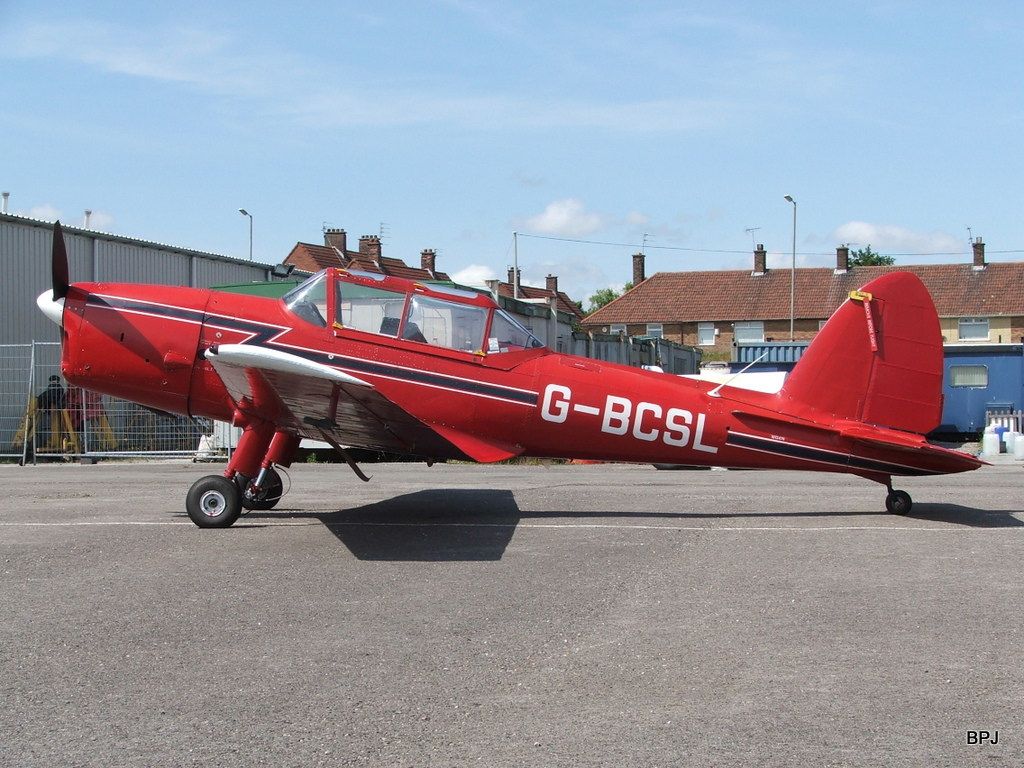
Today she flies from Liverpool John Lennon in a black RAF training style scheme, note the roundel colours have modified colours.
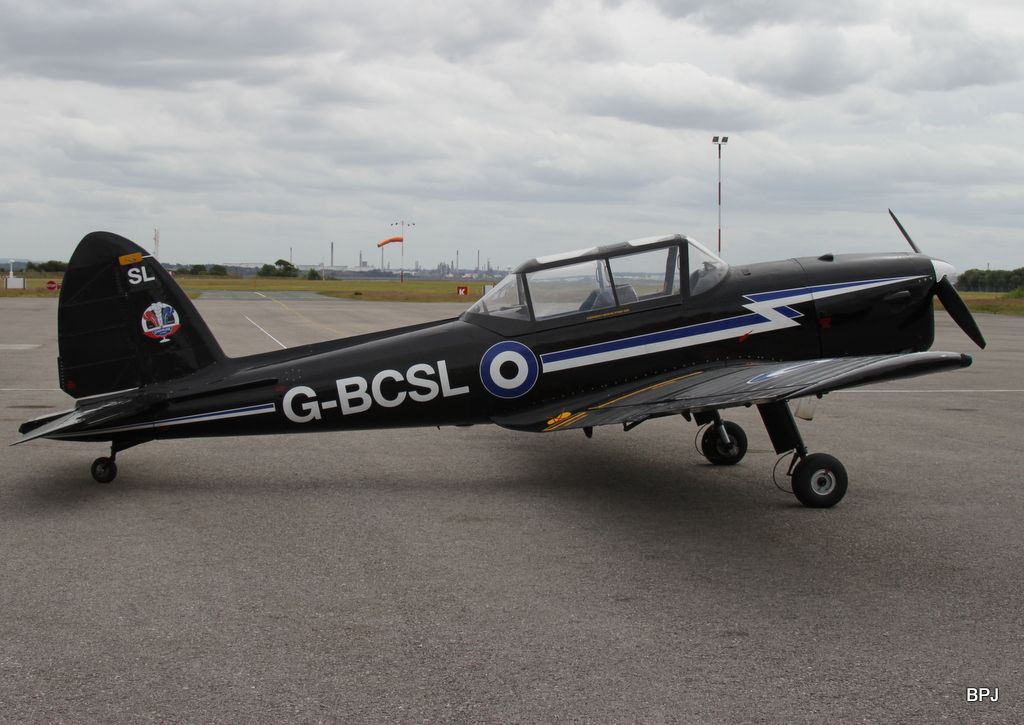
However it is not the civilian shots which are hard to locate, it is as WG474 between 1951 and 1974, with the units outlined in earlier posts, which I am seeking.
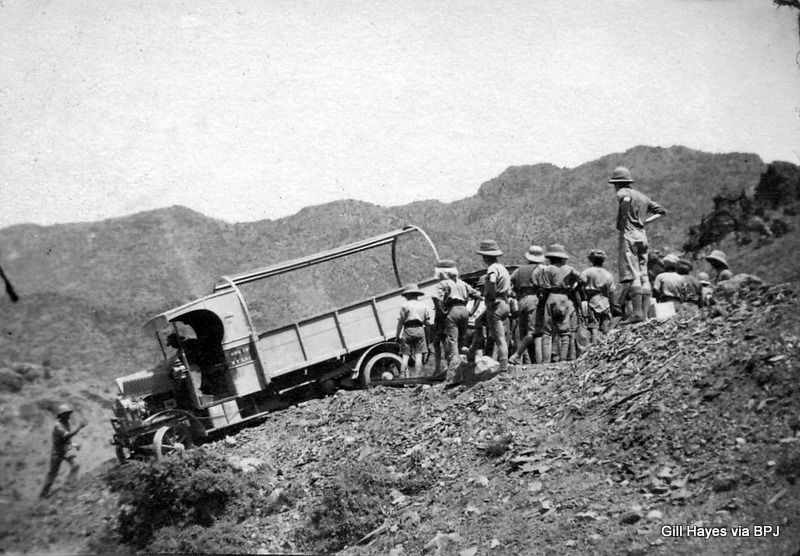
viscountI didn’t post any examples of my find of photographs depicting a British Army mechanised heavy gun crew in Iraq, 1919, because they fall well outside any section of this forum. A few of the best, now that I’ve been invited to share.

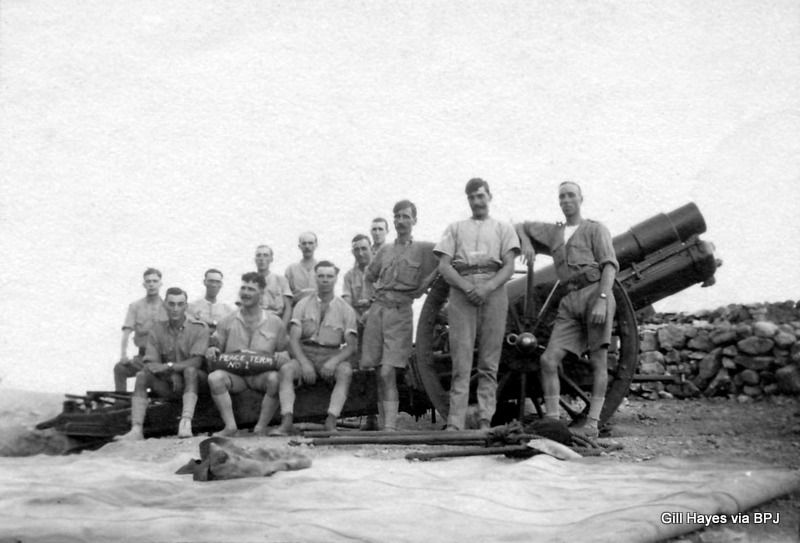

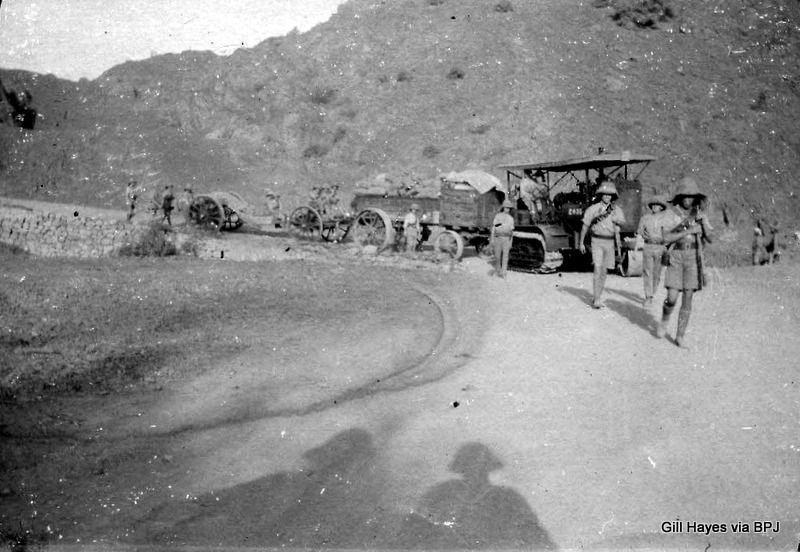


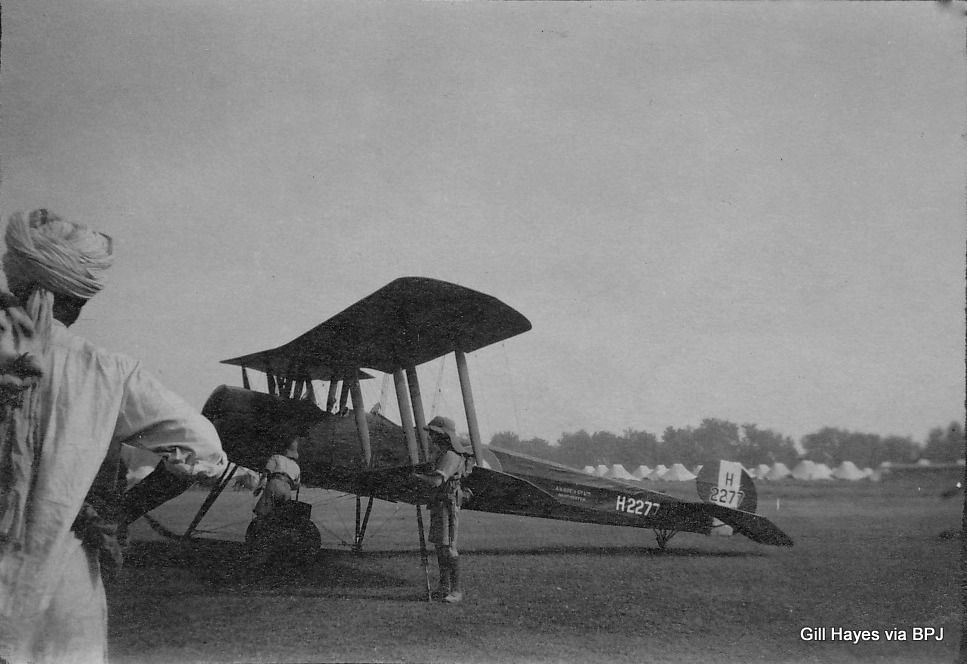
Finally, just the one of aviation interest, a 1918 built Avro 504K.
viscountI didn’t post any examples of my find of photographs depicting a British Army mechanised heavy gun crew in Iraq, 1919, because they fall well outside any section of this forum. A few of the best, now that I’ve been invited to share.
Finally, just the one of aviation interest, a 1918 built Avro 504K.
viscountWhile there has been no response from the original postee, I think some of the experts are over answering this question, jumping beyond what they view as the obvious. Although ‘Pimpernel’ provides a great link.
The aircraft is a WWII B-25 Mitchell bomber, with a highly modified nose to enable air-to-air photography minimising risk of reflections as the camera angle turns. Tallmanz Aviation Inc were a major player in the 60s to 80s, providing both aircraft and camera-ships to the film industry. As has been stated, the aircraft has been involved in a number of very high profile aviation films.
In addition to Pimpernel’s link, certainly a Google of ‘Tallmanz Aviation’ brings up many hits, including a Wikipedia entry, film exploits and other sites about the role of their Mitchell film-ships.
viscountFar too early.
In the 60s was still painted as G-AGOS.
Unsure as to when it was repainted and displayed in its’s former RAF markings. Fancy it would have been during the 70s. This is likely as the first record in Ian Allan’s Civil Aircraft Markings of VZ728 worn by G-AGOS is in the 1974 edition. So it most likely has to be mid or late 70s, as W&R 23 shows that the C of A expired 11.80 and that the aircraft still exists, but is now in store in Leicestershire.
A really nice photo of an interesting aircraft.
viscountThank you for making that clearer, Pagen 01. So it is now accounted for which is good.
viscountThank you for making that clearer, Pagen 01. So it is now accounted for which is good.


 Sign In







