 viscount
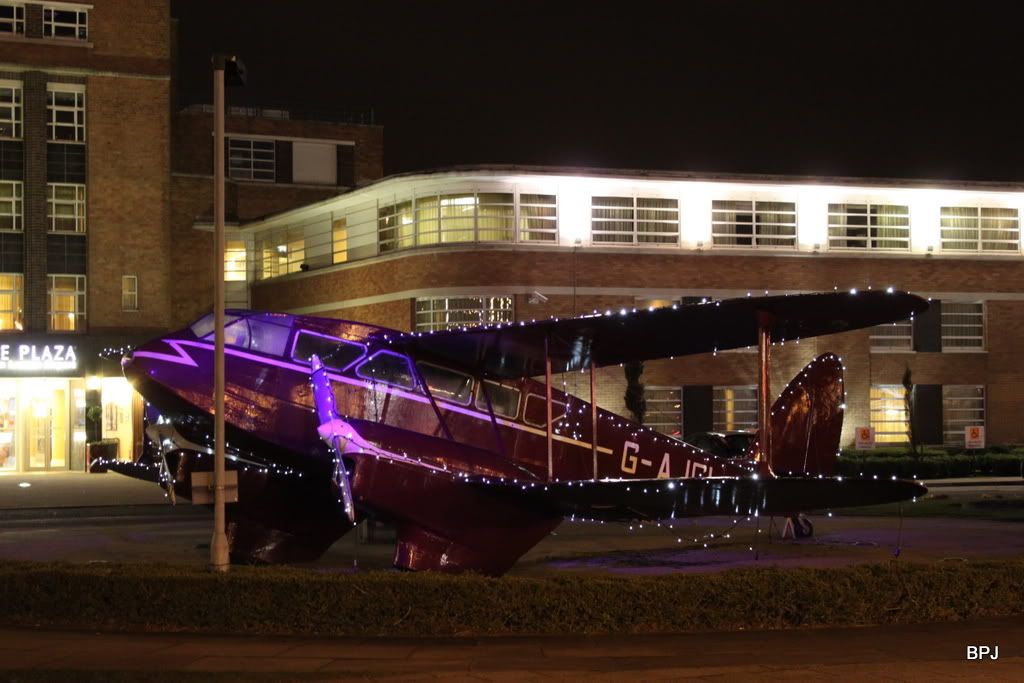
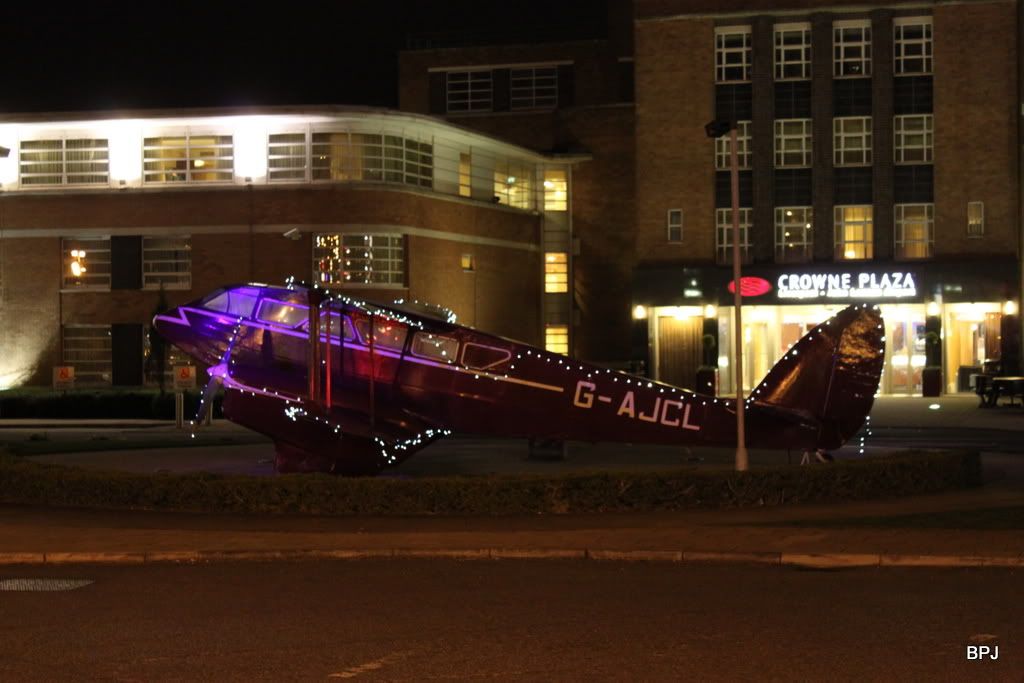
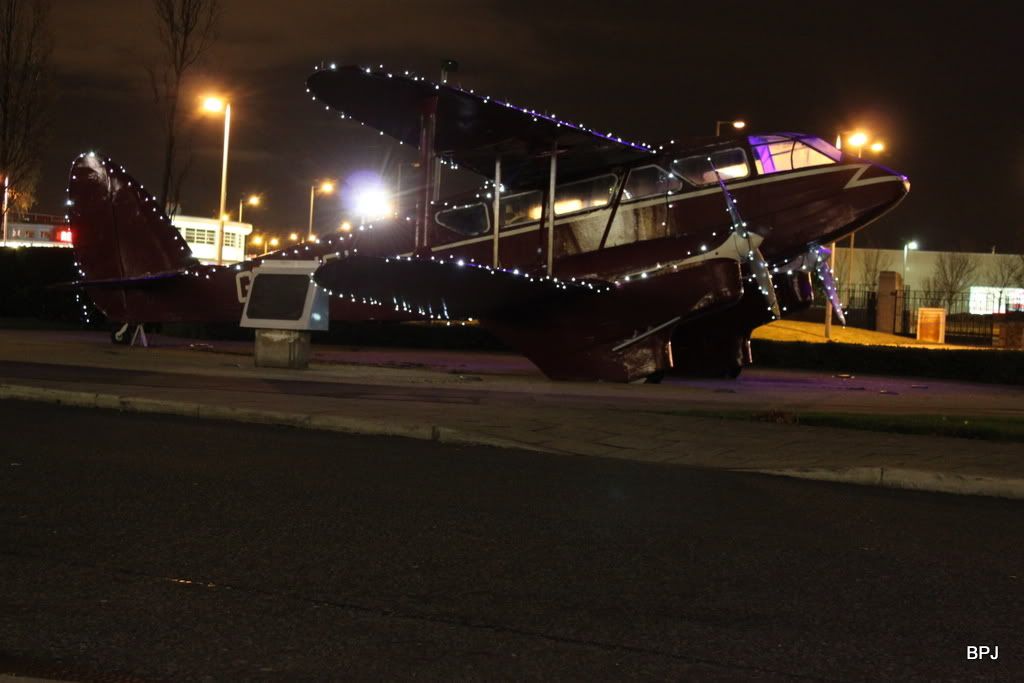
Nothing to set the world alight photographically, however in response to the request, a few down at the Crowne Plaza Hotel/former Liverpool Airport apron earlier tonight on a breezy, cold and damp evening. Simply used the automatic settings, hand held leaning against buildings etc having left the tripod behind. The results are rather lighter than the scene to the naked eye, must learn how to use the manual settings on my Canon to make the best of low light situations.
Jon H, could not see the blue glow from underneath, but the on/off tail beacon and wing tip lights working well.
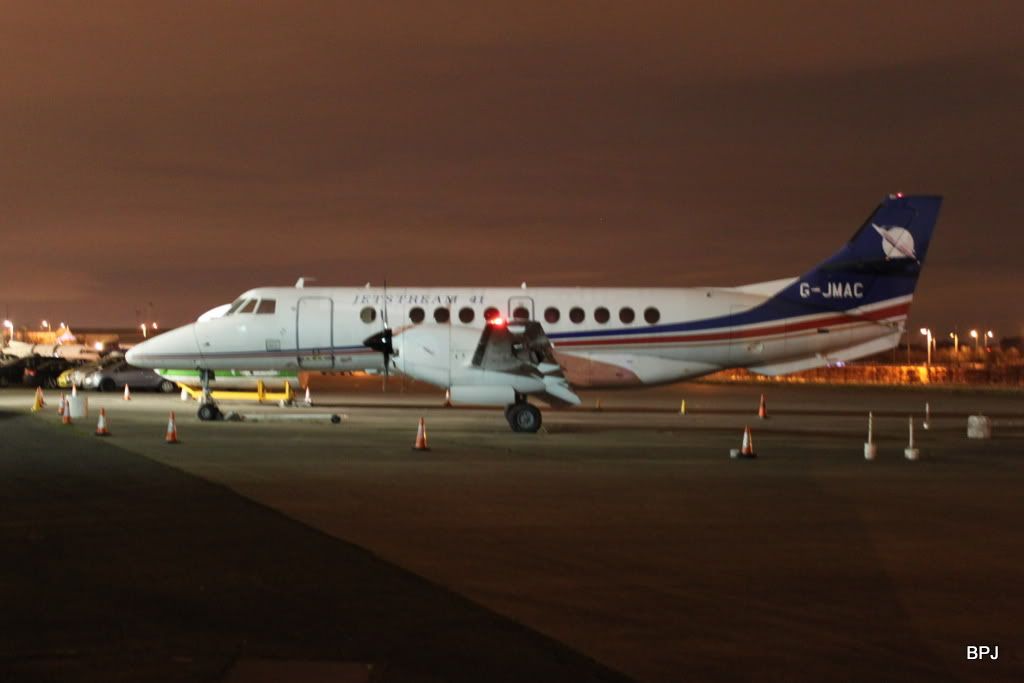
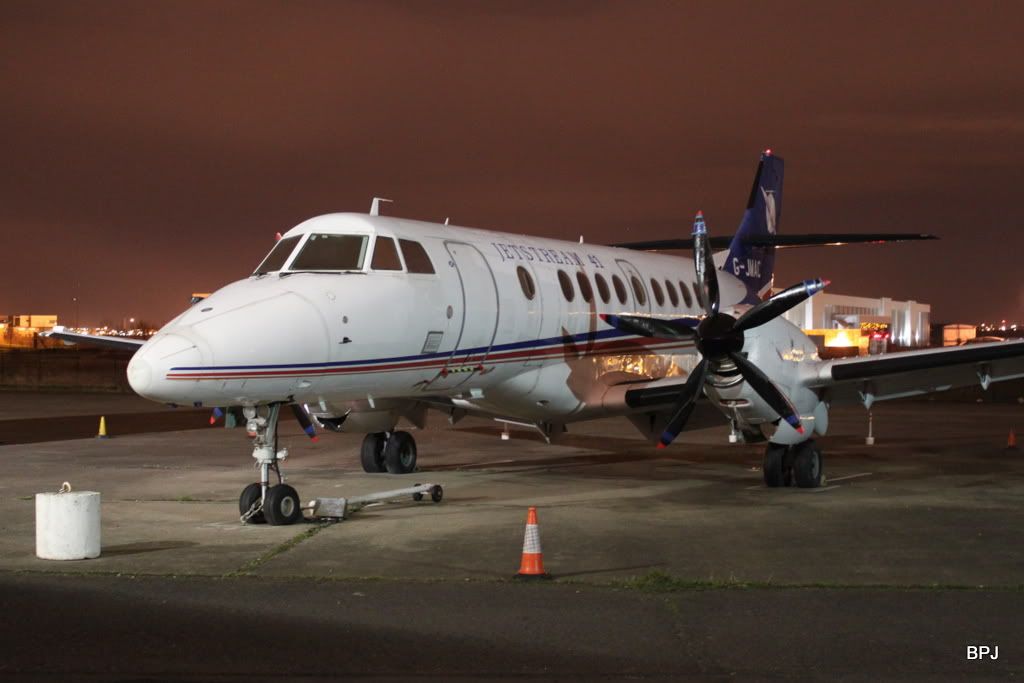
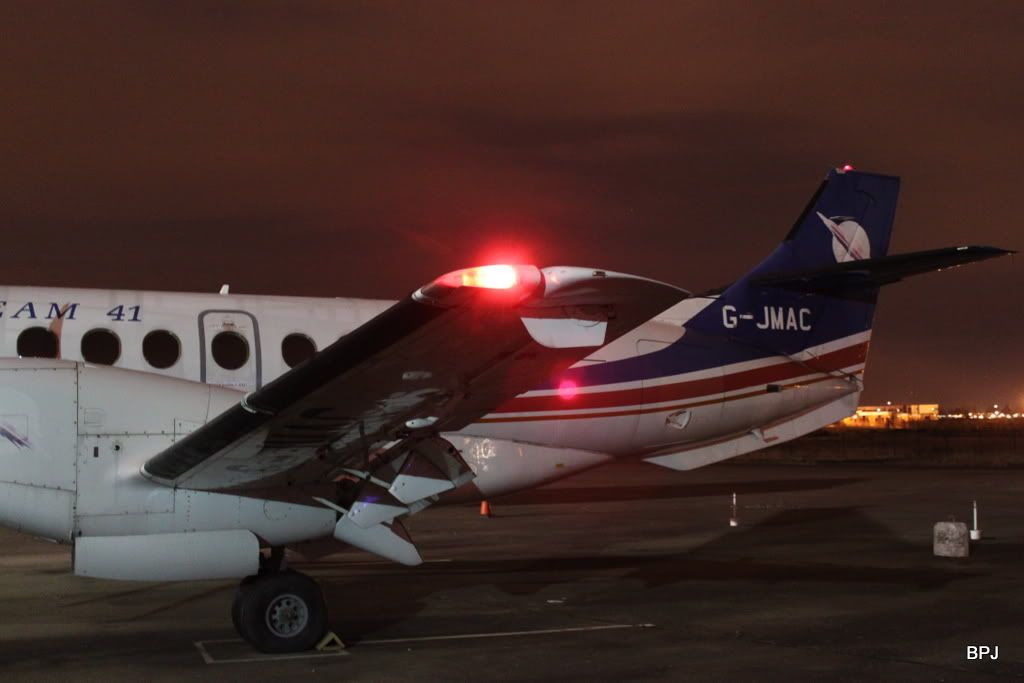
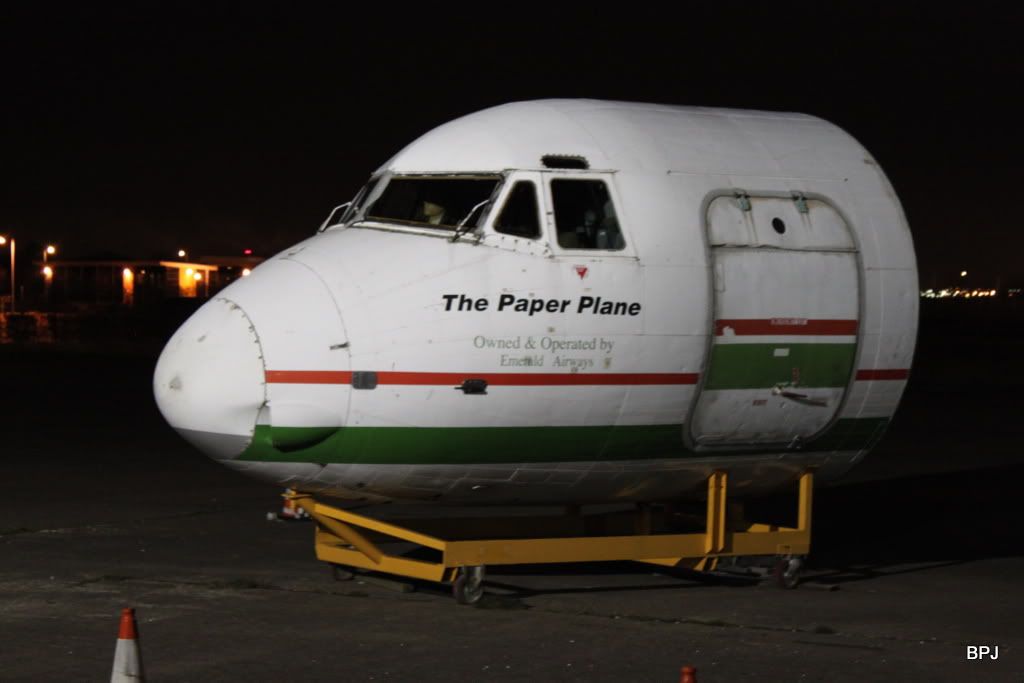
Beside the Jetstream 41 is the nose section of G-ORAL. I did not venture over into the darker corner for the Prince G-AMLZ, HS.748 G-BEJD or indeed swing the camera around for Britannia G-ANCF knowing the results would not be fantastic.
Something I’ve been meaning to try and photograph for a while are the ‘fairy’ lights drapped around Dragon Rapide ‘G-AJCL’. Photos not as effective as the effect is by naked eye. A pity that the flat tyres always make the Rapide look rather more unlooked after than she is.
viscountUnless anyone has one ‘on file’ and posts during today (Tuesday), I’ll pop down tonight and take a couple. Only ever seen it in daylight!
viscountDue to weight and awkwardness to carry and erect, I very, very rarely use my tripod anywhere other than at home with the head used inverted to copy from books, documents, maps.
However, in my camera bag I keep a good sized dollop of blu-tack. Very useful on handrails, display boards, pillars, door frames etc to partially secure the camera – not just in aviation museums, but in churches, cathedrals and for outdoor night shots too. Have tried a fist-sized bean-bag with reasonable success, but dropped it somewhere and returned to blu-tack (kept in a screw of its waxed-type paper) in an old 35mm plastic film container.
Yes, I have been shouted at – but usually for leaning on a wall or pillar, not use of the camera!
I had no problem at Tangmere – but I was only attempting to take photos in the crowded space inside. Got stonewalled once at Hendon, hand held, when I requested permission to stray a couple of feet off the pedestrian pathway to get a clearer shot.
Only place in the UK that I’ve been told not not to take aviation photos (apart from inside factories, and occasional private hangar – which is fair enough) is at Hooton Park! But that is a case of thread cross-over.
viscountThe topic of RAF Valley air displays has been subject to a major thread on another forum site. There the vast majority of shows since the late 50s have display reports and most have photo coverage too, currently spread over 6 sides.
http://www.derbosoft.proboards.com/index.cgi?board=furtherafield&action=display&thread=4900
The 1994 air show participants are listed on post #57/page 4, with photos on posts #2, 24, 33, 58 & 59. The “Black Marrows” are listed in the report and a photo posted of 2 on climb-out for their display. They were in the standard black colours of the time. I have noted in the caption that this was likely the only appearance by the “Black Marrows” – but don’t absolutely know that as a fact. Unfortunately I don’t have the programme for that year, which is likely the best printed source for participating pilot’s names. Although there, I don’t recall the routine beyond 4-ship formation work. The “Red Arrows” were unavailable that weekend, presumably the creation of the “Black Marrows” was the local response to no Hawk formation team.
‘Vampire Dave’, have you tried an e-mail enquiry to the Valley Aviation Society?
viscountActually three “Red Arrows” schemes, or variations, when flying Gnats.
1964 yellow overall as “Yellowjacks”, otherwise normal RAF markings, swept version of fin-flash (upright on dayglo/silver and dayglo/grey schemed aircraft).
Once scarlet as the “Red Arrows” then:
1966 overall scarlet, including fin with a normal sized swept red-white-blue fin flash.
1968-1977, similar but with white ‘lightning’ flash on nose and full tricolour fin with small Union Jack on the central white section.
1978-79, similar but white flash on nose modified in shape and incorporated wording ‘Royal Air Force’ in white as part of the flash.
This information is from colour scheme side views in Paul Jackson’s Gnat monograph published by Aviation News circa 1979. Team name not carried on the aircraft.
viscountms shackleton, there was a thin monograph published by Aviation News, compiled by Paul Jackson many years ago, with individual aircraft histories, dates, fates etc – and colour scheme plans too.
Probably impossible to find one on the open market, however consult your PMs.
viscountBeen following this thread as a matter of interest and note the references to the Merseyside Group of Aviation Enthusiasts and the early ‘Wrecks and Relics’ editions. I have a near complete collection of their ‘Merseyside Aeronews’ and ‘Flypast’ magazines,and while looking through researching another topic noticed a visit report to Minworth Metals. No photos in the days of Gestenter reproduction, but the aircraft seen may be of interest in view of the posts above regarding a Prentice.
A trip report to the National Air Races 12th July 1958 seems to have called-in at Minworth Metals and Seighford on the way home. Noted at Minworth Metals:
VW278 Meteor F.4 ex 611 Sqn
VW416 Meteor T.7 ex L/610 ex F/56 Sqn
VW428 Meteor T,7
WA655 Meteor T.7
7132M Meteor F.8, No.64 Sqn badge
7364M Prentice, from Kirkham
VS652 Prentice – Vendair’s G-APIF
WB435 Firefly Mk.5
WD916 Firefly Mk.6
XF930 Balliol T.2
TF960 Sea Fury
WA487 Attacker F.1
WZ278 Attacker FB.2
WK121 Canberra
This puts VS562/(G-APIF) at Minworth earlier than the speculation in earlier posts.
Todays North West Air News website and forum is a direct descendant of the late 50s Merseyside groups. It worries me that while information related 50 years ago can still be found, albeit in a quite obscure source -will todays information on the web now still be available for research in 2060? Against that uncertainty though is a desire to digitise the back-issues and so make them available to a wider research audience in the near future.
viscountYou don’t state if you have the entries from the ‘file card’ operational history of XP701. The official transfer and unit dates would help your history greatly.
From a February 1976, updated April 1977, local enthusiasts magazine, a list of Lightning histories jointly compiled by Merseyside and Humberside groups, mostly ‘over the fence’ observations. A good guide, but more recent sources may well be more detailed and reliable.
Used by BAC 9.63 to 7.64, 7.64 to 1.66, 6.66 to 9.67.
Used by A&AEE 7.64 & 1.66 to 6.66, Boscombe Down
By 9.67 was M/29 Sqdn, Wattisham
By 9.70 became M/111 Sqdn, Wattisham
By 2.72 was F/29 Sqdn, Wattisham
With 60MU from 11.7.72 until 5.73
Continued as F/29 Sqdn, Wattisham again until at least 10.74
By 13.5.75 was W/56 Sqdn, Wattisham (56 Sqdn mainly operated F.6s), current 1976.
Incidently 95155 is more correctly a ‘Constructor’s fuselage number’, f/n rather than c/n. Pedantic perhaps.
Hope this helps rather than hinders. You seem on the link provided to have both detailed info and gaps in the record. A little worried by your reference to testing at Samlesbury. Possibly true if testing was all ground based. Certainly when I was on the Fylde in late 60s/early 70s all Lightning flying was from the considerably longer runway at BAC Warton.
viscountThis topic has just ‘popped-up’ on another forum, and quickly linked to this thread. However there is fresh information regarding five of the ‘extras’ from “Blue Max”, 4 x Tiger Moths and a Stampe that found their way back to the UK in December 1965.
http://www.derbosoft.proboards.com/index.cgi?action=display&board=history&thread=8220
viscountHow right Arthur Pewtey is. Having noticed that a leading published authority had the names for a British Eagle Britannia quoted in an impossible sequence for one aircraft, discovered (for what was a well covered topic at the time) that I question the source regarding around 7 names on 5 aircraft – some of this is clearly due to wrong information becoming established as fact many, many years ago. Wether simply mistaken or deliberate misinformation, who knows, but it is now the very devil to sort out!
viscountIn the following month’s issue of the enthusiast magazine found a very different, and somewhat longer, list for the 13.6.92 open day, along with an editor’s apology for the previous incomplete report. This includes mention and registrations of the 16 Phantoms provided by 56 & 74 Sqdns. The Phantoms in the flying display were engaged in the Queen’s Birthday flypast and overflew en route back to Wattisham.
Sorry Dazza, seems I was initially wrong to doubt, but can supply the information you require.
viscountI have quickly located a list for that 13.6.92 Coningsby Open Day in an enthusiast magazine, however the log I have found is going to disappoint ‘Dazza’ as it only lists 1 Phantom, but 22 Tornado F.3! I had a feeling when I noticed the year, that a 16-ship formation of Phantoms was improbable. Unfortunately there is no comment on the report I have, nor are the aircraft present listed as static or participating.
Sorry Daz, but on the evidence I have here, your formation flypast was by Tornado F.3 not Phantoms, although I’d be delighted to be proved wrong!
If Daz wishes to send me a PM with his e-mail, I’ll see if I can make my new scanner/printer with an e-mail facility work as easily as the sales-person said it would!
viscountAt last found my copy of Paul Jackson’s mini monograph ‘Hawker Siddeley Gnat F.1 & T.1’ published by Alan Hall/Aviation News, I suspect around 1979.
There were 105 Folland Gnat T.Mk.1 built for the R.A.F. and operationally all served with either No.4 F.T.S. at RAF Valley or the C.F.S.
However XM691 was the first to be built (Constructors Number FL.501), and was the first of an initial production order for 14 aircraft to Contract 15434 (often refered to as a pre-production batch, although a number served with the CFS and later 4 FTS).
XM691 First flown 31st August 1959. The nose shape was different to later aircraft. Initially silver with yellow T-bands scheme.
XM691 was used for trials by Folland/Hawker Siddeley at Chilbolton and the A&AEE at Boscombe Down, before being withdrawn from use at HSA Dunsfold in 1964. XM691 did not operate with any R.A.F. training units, being purely used for test and development purposes. Paul Jackson states that it was ultimately scrapped in 1968 – clearly at that time the information provided here regarding film use and parts donation was not known about.
Adds little to the earlier posts I know, but confirms information regarding the flying career of the aircraft.
viscountJack,
Glad you have had your query sorted out to a successful conclusion – and awakened a few memories for some along the way!
viscountRegretably I know nothing of Elmdon 6/63. My earliest Air Britain UK movements mag is Jan ’64, although oddly I was looking at some 1965 Air Pictorials for sale (at Hooton Park 610 Sqdn Association) at the weekend, but don’t think they went back to 1963 either.
Do ‘Airstrip’ and MCAS go back that far, and if so anyone got mags from that period to see what the airport movements covered for June 63? Or, indeed anyone able to dig back into Air Britain’s movements mag for the period?
Just for fun, late May/early June 1963 enthusiasts recorded the following visitors of interest at Blackpool/Squires Gate:
22/5/63 G-ASDJ Cessna 320A B.U.A., Gatwick-Ronaldsway
24/5/63 G-ARYU Cessna 320 Wilmot Breeden, Ringwasy-Halfpenny Green
31/5/63 PH-CGF Convair Cv-340, KLM, Brussels-Amsterdam
01/6/63 G-ALRY P.54 Prince, Huntings, from Crosby-on-Eden
01/6/63 G-AIYR Dragon Rapide, Huntings, from Crosby-on-Eden, night stopped
04/6/63 PH-MAB Dakota, Martins Air Charter, f&t Rotterdam
05/6/63 EI-AMY Colt, Communications Systems Ltd, f&t Dublin
09/6/63 G-ARCS Auster D.6/180, f&t Halfpenny Green, with G-ARRD, G-AIJR & G-ARBS.


 Sign In







