martinez
That paragraph reads just fine to me. A false fire indication isn’t something unusual, and their response to such a warning is exactly correct.
you are misunderstanding, I had no objection on their response taken.
That paragraph doesn’t try to link the fire warning to the high temp…it says just the opposite.
No, it links them together, read again
because the R-29A ran extremely hot, the fleet was plagued by false alarms when the temperature sensors in the engine bay of the gangly jet reach a critical temperature , thus energizing fire warning lights in the cockpit, perhaps you have the second edition where author made some corrections.
You said, “giving false alarms what plagued the whole Mig fleet”. The wording in my book is different. The “fleet” refers to MiG-23 since the engine in question is the R-29. You have misrepresented the author.
Again you are misunderstanding, I was talking Mig-23 fleet only.
Blame? I don’t see what you are talking about.
As the quote in the book suggests, there is nothing unusual about “problem children”…we call them “hangar queens”.
Without having read Ted`s reply you would not be sure what was going on there. I made it easy for you, did I?
This one jet seemed to have a problem. After several attempts to fix the original equipment, they replaced the system with a US system. US fire detect systems operate in a similar way. Once done, problem went away.
Ted explained that quickly, whereas in the book was written the “whole fleet was plagued”. I wonder what would you say if I never posted link to Ted`s answers.
I think you are seeing controversy where none exists. Nope. Don’t agree with that at all. Maintenance issues was not the point of the book. You seem to understand that.
Ahh, there are many. I remember they were complaining about the system measuring fuel consumption in the Mig-23 when filling it with 400liters of kerosine. Well, the aircraft had its emergency reserve red light on when 600liters was left in the main fuel tank.:D The contradiction above is just top of the iceberg, but if you are unwilling to see them, the end of the world is not going to happen.
Maintenance issues was not the point of the book. You seem to understand that.
I think the book RED EAGLES about evaluating soviet Migs in USA was predetermined in order to deal with both. It is sad, bcs maintainability and maintenance are of interest not only to the military tech stuff but also hundred of aviation enthusiast reading forums around the world.
Perhaps it was written too much for a pilot’s point of view.It certainly wasn’t written for your point of view.
I agree
martinezI certainly do. I eagerly await him doing that.
Maybe he will do that. So far, he hasn’t.
What he has done is make allegations about “poor maintenance” in that program. Perhaps he can provide a reference for that.
His ‘perspective’ was to dismiss the book ‘out of hand’.
You didn`t read my previous reply carefully, I did say that there was a plenty of discussion on this forum some time ago where I made all my statements clear. Why do you think I`ll jump whenever a guy has a dream. As I recall we had some Red Eagle personal here clarifying book`s content, so why don’t you just save my time and read it by your self. link here. Anyway, tell me what purpose would there be to discuss any maintenance procedure on soviet Migs with you, when you have ZERO experience with them? If you are still eagerly waiting for that contradicting stuff in Red Eagles book, here is one of many.
page227, Red Eagles by Steve Davies.
Quote:
In addition, because the R-29A ran extremely hot, the fleet was plagued by false alarms when the temperature sensors in the engine bay of the gangly jet reach a critical temperature , thus energizing fire warning lights in the cockpit. Such an indication resulted in an immediate “Knock it off!” call and return to TTR. Each fire warning light activation was treated with the utmost caution and respect, and following a thorough inspection on the ground the aircraft in question would have to be flown on an FCF sortie before it could be released back onto the flying schedule. On one occasion, Shervanick had to fly three FCF sorties in a row on the same Flogger when the fire warning light illuminated on successive flights. “It felt like every day one of the Mig-23s had a fire warning light come on, ” Geisler reflected,”and so we ended up putting in a second fire warning system that was of American design…
Dont you think that claiming such bs like “engine running extremely hot and reaching critical temperature in engine bay” in the first place was doubled with another one “thus energizing the fire alarm system and giving false alarms what plagued the whole Mig fleet”? What does the fire alarm system have to do with engine running hot, when its principle of work is based on the detection of electric conductivity in the flame burning in the air of the engine bay? One can say, poorly maintenaned fire alarm system hence it gave false alarms what can be easily fixed if you have spares. Surprisingly, after I pointed out that there is something wrong with this statement an ex-Red Eagle pilot clarified Steve Davies folklore.
….
….
….
Quote:
We had one MiG-23BN that had a problem with giving us false fire warning indications in flight. Every aircraft type I have ever flown has had one airplane that was a “problem child”. Things would go wrong in flight and maintenance could not duplicate it on the ground. This happened 3-4 times with this particular plane and we finally said “to hell with it”. We had already spend more sorties flying FCFs trying to find and fix the problem than we wanted (remember, every FCF sortie flown was 1 sortie not available to train our guys), so we decided to just put one of our warning systems in it and be done with it.
well, who to blame then? Hopefully I made that clear in my first reply. I do understand the book wasnt about tech stuff, but rather about colorful stories of US jocks flying soviet Migs, but with all respect after reading such arguments I was not sure whether to laugh or cry. Sure, we can continue to discuss every story in that book and at the end you`ll agree that the book is full of nonreasonable stuff which needs further explanation what is polite atleast to say. At last we had a good understanding of problems Red Eagles were facing when evaluating soviet Migs without most of operational manuals, spares, tooling and ground test equipment, explicitly meaning no proper maintenance according to manufacturer’s recommendations, what a reasonable person just can`t argue about!!! This is a fact, no wonder that their conclusions about aircrafts were derived mostly empirically, even if profesionally, but not always correct.
P.S. If you check the link above, you will find more contradicting stuff about Mig fuel system, engine antisurge and relight system, flight, takeoff and landing characteristics, ..etc
martinezWe all know you are “special”, but calling Slovakia “some third world European country” does not help your case.
do not worry buddy, and lol i’m flattered for that…:D
I don’t think that anybody is pretending that the MiG-23 has an exemplary safety record, but is it WORSE than the MiG-21 (which is what the original claim effectively was)? Might want to ask India about that aspect of the Fishbed.
Sorry for not responding earlier, the forum was down the whole night. Anyway, thanks for being resonable, all I can do is not to respond to this kind of people, just let them make fools of them selfs.
So you don’t agree that the MiG-23/MiG-27 has a poor safety record?
I think the available evidence would show otherwise (you are familiar with the website – you originally posted it on the forum).
http://www.valka.cz/clanek_10869.html
http://www.valka.cz/clanek_10870.html
Maybe you can ask those African countries why they still operate such an aircraft – if they really do?
Ah, Levsha, Levsha, do you have any clue what is written on those pages, not sure why pointed out both, when only the first one is describing mishaps and crashes of all Mig-23(U, BN, MF, ML) in former Czechoslovakia. You can count 9 crashes within 25 years of service, just three of them due to a/c malfunction. Does it speak for poor safety record of Mig-23 at all? Try to do some comparison with the Red Eagle praised Mig-21.:rolleyes:
martinezbecause every pilot is proud about his aircraft till he flies something better to compare it first hand. 😉
:D:D I agree
martinezOK…so you aren’t a pilot, you haven’t flown these aircraft, you don’t know the people who were in that program, and you haven’t any experience with that program.
But you do have some some unfounded and reckless criticisms of the program…based on who knows what.
.
Ok, I do not need to know them personally or having any experience with that program, but opposite to you I know the aircraft bcs I maitained them and I know personally dozens of pilots who flew them x-times as much as Red Eagles.
Do you think I care about your vote? Absolutely no, so accept I do have the right to write my opinion.
martinezLooks like i was right, but i read about this in various Aviation magazine as well.
Do anyone have any specs to other Engines fuel consumption here?
Hopefully it satisfies your request…
P.S. based on article published in Military magazine 11/1997, Rd-33 engine comparison
martinezyou said pretty much the same thing as I did just with more detail! 😉
Ok, then you`re right, sorry.;)
martinezI don’t see how that makes any difference. Surely, if a country’s air arm wanted to extend the life of their MiG-23s they would have. I wonder what is the typical airframe life of the Indian AF MiG-27 presently serving?
I dare say, many countries got rid of the MiG-23 because of its bad safety record?
Seeing as we are talking about MiGs, why not use the MiG-31’s service and maintenance record instead?:rolleyes:
No surprise you don`t see any difference there Levsha, I got used to your mindless remarks ages ago. Apparently you`ve missed an important fact that India was a producer of the Mig-27M(38 pcs upgraded to UPG lately) Bahadur in Hindustan Aeronautics Limited (HAL), therefore the IAF had the ability, guts and money to extend their service life, whereas most of poor post-commie airforces didn`t. Rest of the former eastpac Mig-23 users just waited till calendar life ran out then retired the aircraft. Anyway I wonder why are still many African countries flying the type in spite of its bad safety record then?:rolleyes:
http://en.wikipedia.org/wiki/Mikoyan-Gurevich_MiG-23
Some remarks on Mig-23BN from Indian AF….
As flown by the Indian AF it was a very effective attack aircraft. It was a pretty honest airplane if flown for the role – which was low level interdiction and attack. It was untouchable by the air defense aircraft in the region because of its speed and sustained turn capability. It also had a pretty good range and could carry a lot of weaponry. Some really good for real missions were flown with it, including a low level recce of Gilgit on the other side of the ceasefire line in Kashmir. During the Kargil war, it was the most effective bomber with dumb bombs because it could fly at low TAS at the height with wings swept forward and could make those tight turns in the Himalayas without hitting rock or falling out of the sky. The other dedicated attack aircraft (Jaguar) of the IAF suffered in comparison to it. They kept it in service way past they intended to in the IAF because there wasn’t anything to replace it for the high level attack role (high level meant drop at 25000-30000 ft and hit targets between 15-20000 ft!). Even with the dutch roll I mentioned in the post above, it was still very maneuverable and went where you pointed it (still banging your head against the canopy). The IAF ones had the “get me level” switch which brought it to straight and level flight from any attitude – and saved a bunch of guys who got disorientated while flying in night/bad visibility. Despite having almost no avionics the fleet took pride in regularly beating DARIN equipped Jaguars and Mirage 2000s in gunnery/bombing competitions and exercises.
martinezWhat do you disagree with in the book?
There was a plenty of discussion long time ago on this forum and I made my reasons clear to the author already, no need to rehash. The book is full of comical anecdotes from U.S. airmen trying to fly inside poor maintained Migs. The point here was that the comical way they were bitching about soviet hardware made me think they never knew the material part of the aircraft well, so they were trying and failing, again and again and manytimes end up making fools of them selfs. Nevertheless, in general I felt admiration for them having guts to fly those alien aircrafts, but being critical towards writter work leaving their claims unedited or cross-checked. You as a former military pilot should know what was meant to fly poor maintained aircraft, certainly I know that as a/c engineer very well.
martinezTry reading “Red Eagles:America’s secret MIGs” Our guys were pretty impressed with the MIG 21……..they rated the MIG 23 as a piece of junk however.
The book “Red Eagles:America’s secret MIGs” is quite a piece of junk, do not take it seriously.
its probably why the few air forces that had both the MiG-21 and 23, or the 21 and 29.. ended up retiring the “newer” models while keeping the 21.
The Fishbed was the last reliable, simple, cheap aircraft MiG made.. all other models being much more complicated, prone to serviceability issues, etc
No, it`s bcs the Mig-21MF service life was prescribed 2500fh/30y compared to Mig-23ML 1500fh/17years. During nineties all post-commie countries like Poland, Hungary, Czech republic, Yugoslavia, Bulgaria, Romania, Belarus, Slovakia, even Russia and Ukraine were in economical crisis which had its impact on their military airforces. Due to lack of money they wanted cheap service and maintenance of the smaller Mig-21 which has been found adequate for tasks like air-policing, also later under NATINEADS requirements. Between the cheapest Mig-21 and perspective(as seen in early 90ies) Mig-29 the Mig-23 was just redundant, therefore after ending calendar service life 17years Mig-23 fleets were simply retired. Yes, indeed the Mig-23 was much more complicated and prone to serviceability issues, but still praised for its performance and weapon systems in the PVO and VVS than the Mig-21. Anyway which aircraft today is not complicated and prone to serviceability issues, perhaps the F-22 craptor, the mother of all maintenance nightmares??? 🙂
In that cases it is about AD/interceptor duties at first. For that the MiG-23/29 offers all weather, BVR capability together with capabilities for head-on and look-down engagements. For air-policing and training the MiG-21 is the better selection.
that`s correct.
martinez
A plea to the more knowledgeable on aeronautical tech,
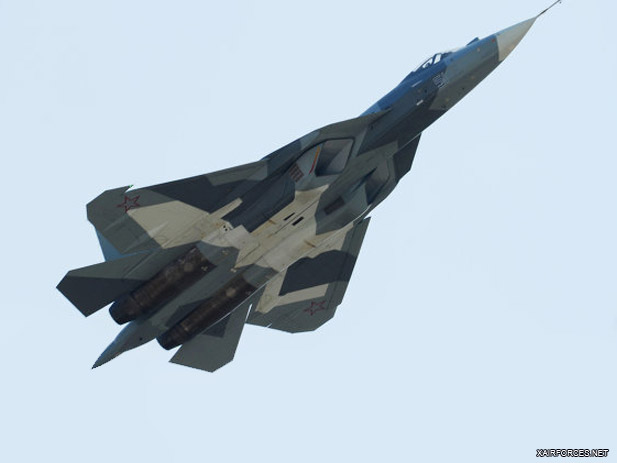
I’ve been reading up on Divertless Supersonic Inlets(DSI) and have been wondering whether it could be implemented on straight, rectangular inlets like the T-50’s. If so, how would it look?
Why to destroy characteristics of the engine inlet with a bump in front of it if you can manage the boundary layer better way? In this case, designers in Russia are way too much smart for that. It is a matter of compromise.
martinezDo not worry Frankie, everything is under control, something to enlighten the atmosphere here, an explanation why is the An-72 called Cheburashka…:D
martinezMartinez/J-20 Hotdog thats just uncalled for! PhantomII has proven himself to be a reasonable and considerate forum member over the years. He is all actually in military service flying the C130 Hercules .
If you can’t be constructive then leave it be…I have a good mind reporting both of you to the moderators for being overly disruptive!
Unbelievable, you have been smoking really bud stuff buddy calling me overly disruptive overlooking the fact that I sent a link to the aircraft manual where he finds answers on the question he asked for. So please, if you really insist on reporting to moderators bcs of me being helpful, please do it and make a fool of your self.
I`m sorry, but we’re not going to be all on the same page when tracing his military career and I’m really ashamed that I missed that he is actually flying the C130 Hercules. As for calling him lazy, he has proven himself to be, but I bet he will not become angry at me, bcs he knows that I’m encouraging him this way for several years now. 🙂
martinezReally??
All of the Russian aviation nuts on this board and no one can even suggest a place to search??
If its not a Flanker or T-50 discussion then it isn’t had??
Really no surprise here, you are the most laziest guy on this forum buddy, I doubt you ever tried to use google to find the answer, I`ve found this within a minute. Unbelievable 😀
http://www.avsimrus.com/f/aviation-documents-15/rle-of-the-an-74-200-11182.html
martinezTricky, but with Russian aircraft it could also be an embedded radio-nav antenna, .
😉 applause, to be exact the ARK-10 radiocompass antenna.


 Sign In