 H_K
H_KObjectively it has to be Mirage 2000. But I have always had a soft spot for Etendard IV.
The Étendard always looked odd when they added that ugly nose strake. The original IVM prototype was a classic transonic design though:
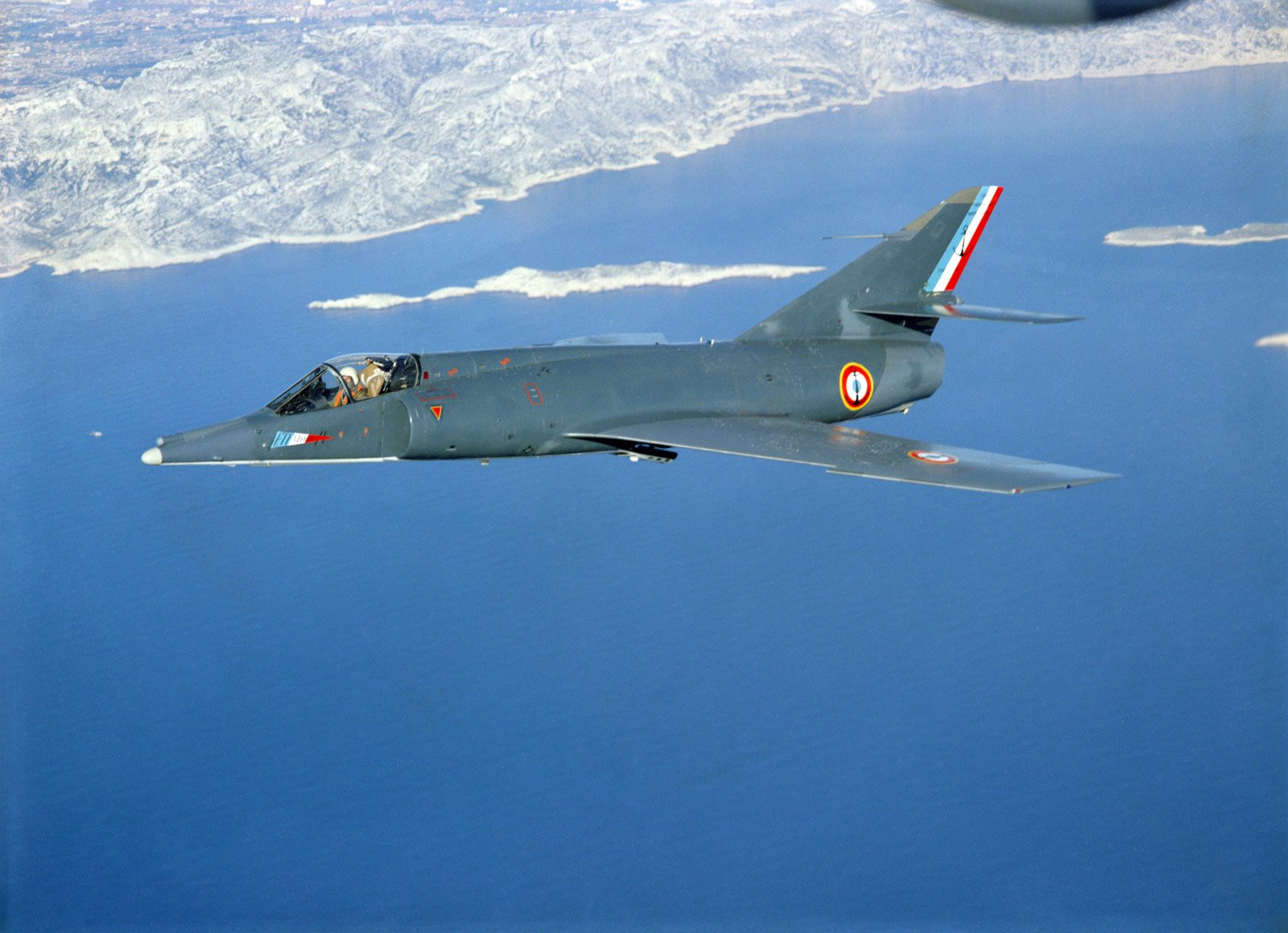
Anyway 60 years from breaking the world long distance speed record in Jan 1958 (speed over 1,000km) to dropping its last bomb over Iraq in 2017. And still going in Argentine service. A classic.
H_KNot gonna solve their pressing need of air defence assets. Subsonic, no-afterburner aircraft is pretty useless even in QRA.
Not necessarily. The Super Etendard is a pretty “hot” aircraft as far as non-AB fighters go, much like the A-4M Skyhawk. Lots of dry thrust and good lift, so it climbs fast. It can get to 35,000ft in ~5min from brakes off, with plenty of fuel remaining (80%).
That’s only 1-2 minutes slower than a Mirage III or F-5E.
The SuE also has a slight supersonic capability. To exploit this it needs to climb to 40,000ft then do a “zoom dive” to break the sound barrier. It’s been tested to Mach 1.3. Not sure what stabilized level speed it could achieve doing this, but perhaps Mach 1.1-1.2 at ~30,000 ft. This might be useful for a minimum time to intercept scenario at 100-300nm.
H_KI’m surprised that all the proposed T-X aircraft are so short/fat… seems like long/thin (area ruled) would make sense for transonic performance.
Picture a two-seat coke bottle planform like the F11F Tiger or Super Etendard, which were both originally light fighters with good lift/drag ratios (due to carrier requirements and weak engines). With a modern non-afterburning engine (F404 or F414) a repeat design would be competitive (and low risk).
To illustrate, the Super Etendard could hit M0.99 straight and level at a wide range of altitudes (from 20K to 35K feet). It could easily accelerate supersonic by “zoom diving”, hitting Mach 1.3 by diving from 41K to 27K feet. At which point it could level off and supercruise for a bit (perhaps slowly losing some speed/altitude). All this with only 11,000lbs of thrust!
A low drag planform also enables good maneuverability for subsonic training, better for example than the vaunted A-4M Skyhawk… The Super Etendard, again, could sustain 6.2g at sea level, despite having a fairly modest T/W. With a slightly more powerful engine it could probably meet the T-X rules, which only require “sustaining” 6.5g for ~10 seconds at 15K feet (since the USAF allows for losing 10% speed and 2K ft altitude, the trainer can actually use up to ~600ft/s of potential energy (Ps) during the maneuver and still meet the rules!). The Super Etendard also has a high airframe structural limit of 7.2g-8.6g, useful for practicing shorter, sharp instantaneous turns.
Maneuverability of a low-drag transonic planform… the Super Etendard outmaneuvers the A-4M and F-4J!
[ATTACH=CONFIG]246578[/ATTACH]
A pic to illustrate… someone kit-bashed a two-seater trainer Super Etendard (backseat replaces the electronics bay and 10% internal fuel)! 🙂
http://scalemodel.forumactif.org/t5168-super-etendard-biplace
[ATTACH=CONFIG]246579[/ATTACH]
F11F Tiger… good enough for the Blue Angels, good enough for T-X?
[ATTACH=CONFIG]246581[/ATTACH]
H_KPic of the Super Etendard’s last Exocet live fire shoot a few months ago. Still deadly 33 years after that attack against HMS Sheffield…
[ATTACH=CONFIG]246182[/ATTACH]
H_KSuper Etendard #1, the first production jet, still going strong this weekend… 38 years after its first flight!
Markings under the cockpit show that it dropped 7 GBUs in combat over its lifetime. The other SEM this weekend dropped 15 GBUs.
Note the special commemorative paint…
[ATTACH=CONFIG]246161[/ATTACH]
https://m.facebook.com/Flying-Spirit-940114662725422/
H_KIf cost of tooling for Rafale is considered a sunken cost for French made Rafales then yes it can be a huge problem. Meaning the cost of paying for tooling to make french Rafales is not part of price of purchasing a new build Rafale from Dassault. If that is the case then it could very well cause a price blowout on Indian built Rafale as they would have to purchase identical tooling at likely higher costs because of ten years of inflation. They would then have apply those costs to a smaller overall Indian production run of 150ish planes compared to French production run of 300ish. The costs of tooling and factory set up in India would be most likely around three times the cost on a per plane basis then it is in France. That estimate is on the lowside by the way.
There is no real way for India to sign a contract for locally built Rafale and not include those costs in the contract.
Great post. Cost of Rafale tooling and production start-up was EUR 2.7B back in 1999 (http://www.senat.fr/rap/l98-066343/l98-06634322.html). Factor in 16 years of inflation and that comes to EUR 3.5B today.
This was paid by the French government upfront and is not included in the basic unit production cost of each French-built Rafale. So the tooling alone could increase the production cost of an Indian Rafale by 50%.
In reality the cost difference won’t be as extreme because HAL won’t need to recreate everything, but then you add in the cost of T-o-T…
H_KWhat 2/3 new Su-30 lifetimes? The Su-30MKI has a service life of 6000 hours and that may also well get extended based on fatigue studies that will be carried out whenever they approach the latter period of their service life.
I know that the Mirage-2000 has plenty of life left in its airframe, but the original service life of both the Mirage-2000 and the Su-30MKI is 6000 hours and we don’t know exactly how much additional life the IAF will get out of its Mirage upgrade nor from the Su-30MKI SLEP that will come eventually.
No, we do know the maximum life for each. As I stated, 9,000hrs for the Mirage 2000 vs. 6,000 hours for the Su-30.
It is VERY VERY likely that the Su-30 can’t be extended beyond 6,000 hours. Part of the problem is that they simply aren’t built to the same quality standards, but the real issue is that due to low availability, at the current rate of flying it will take them 52 years to reach the 6,000 hour mark! (Currently they are being overhauled every 14 years before they even hit the 1,500hour mark)
At that point the Su-30 will be totally obsolete and not worth life extending even if the airframe can take it (and the problem isn’t the airframe but the low-quality sub-systems that won’t have any life left in them, and will long have stopped production, especially the engines).
Russian “quality” has its price.
H_KNot quite. the Su-30 has an airframe life of 6000 hours
The Mirage-2000 would in total exceed the 6000 hours original service life with additional few thousand hours, but there is no source for how much additional service life is going to be obtained.
The life extended M2000-5s in French service are good for 7,500hrs and this is being increased to 9,000hrs, so about 50% more life than a Su-30.
India’s Mirages haven’t flown that much by Western standards (less than 165 hours/year) so even the 30 year old fleet leaders are still under 5,000hrs. So if they can now extend the life to 9,000hrs like the French did, then the upgrade will give them the IAF the equivalent of 1 brand new Mig 29 or 2/3 new Su-30 lifetimes.
Pretty good deal IMHO.
H_KIn the naval aviation realm, France should have developed a carrier-capable multirole Mirage F1M (preferably M53 powered) in the early 70s, instead of wasting time with the Jaguar M, warmed-up Super Etendard and Crusader upgrades.
If the Cold War had gone hot, the European buyers of the F16A would have regretted not buying the Mirage F1-M53 instead.
Luckily for them, the wars that did come generously waited for the F16 MLU upgrade to fix the F-16As limited capabilities, and were ideally suited to close air support (instead of more stressful high-altitude BVR scenarios).
H_KThat was a very enjoyable video clip!
Love the Super Etendard. Kinda like a French A-4 Skyhawk. Nice looking little jet in my opinion.
Even better video here. Oldie but a goodie (especially if you like 80s music and hairstyles !):
Fun starts around 2:00.
3:00 Nice aerial refueling sequence
5:30 Carrier operations… guest starring the mighty Crusader!
6:15 Exocet & bomb launches… very rare footage
H_Kand what about a Mirage ?
http://z11.invisionfree.com/TSR2_SIG/index.php?showtopic=34
How the RAF almost acquired Mirage IVs: An insider’s story
http://hushkit.wordpress.com/2013/05/23/how-the-raf-almost-acquired-mirage-ivs/
A fascinating episode that is rarely discussed is how close Britain’s RAF got to adopting Mirage IVs. This insider’s account of this unusual episode in aviation’s annals is taken from Charles Gardner’s ‘British Aircraft Corporation – A History’. This true story starts shortly after the shock-cancellation of the BAC TSR.2…
…The idea was to get the government to take jointly made Mirage IV airframes fitted with Spay engines instead of buying the F-111. This, BAC argued, could provide a highly efficient TSR.2 replacement aircraft, fully capable of performing the TSR.2 tasks, at a total cost, for seventy-five aircraft of under £2 million each.
Mirage IV flight tests as a bomber (8x 1,000lb bombs) for the RAF requirement (1965)
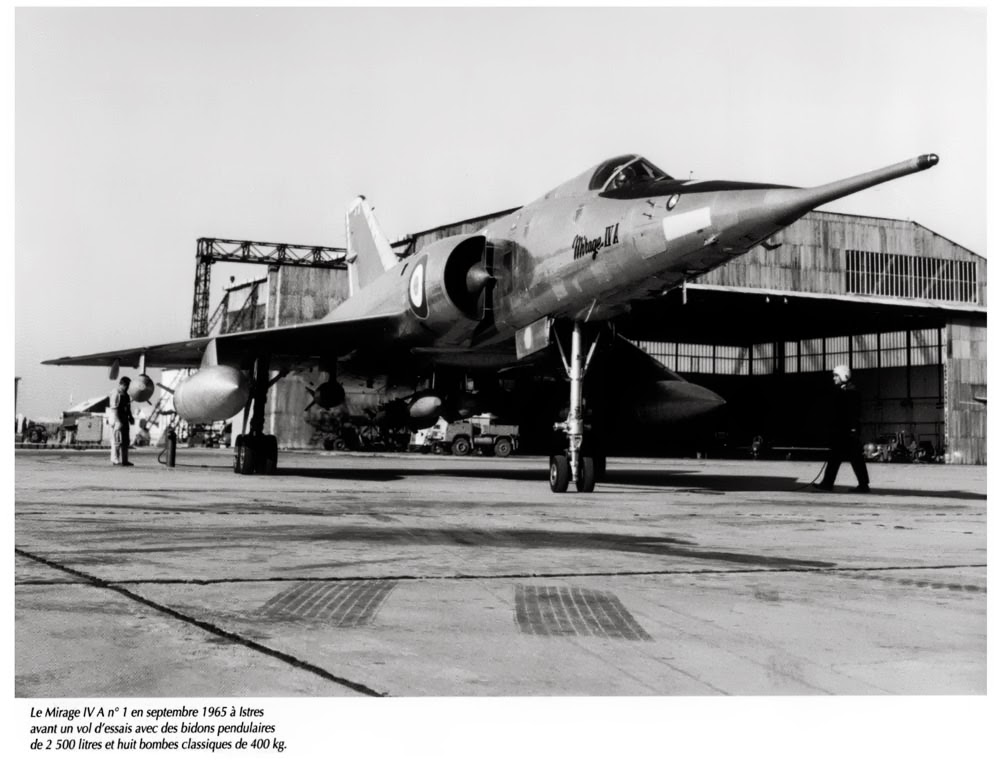
Other view
H_KThe Mirage F1 bowed out this week after 41 years of French service.
A few pics of the Mirage F1’s last hours, showing the range of colorful paint schemes to great effect.

http://www.flickr.com/photos/106507397@N03/14465358680/in/photostream/lightbox/
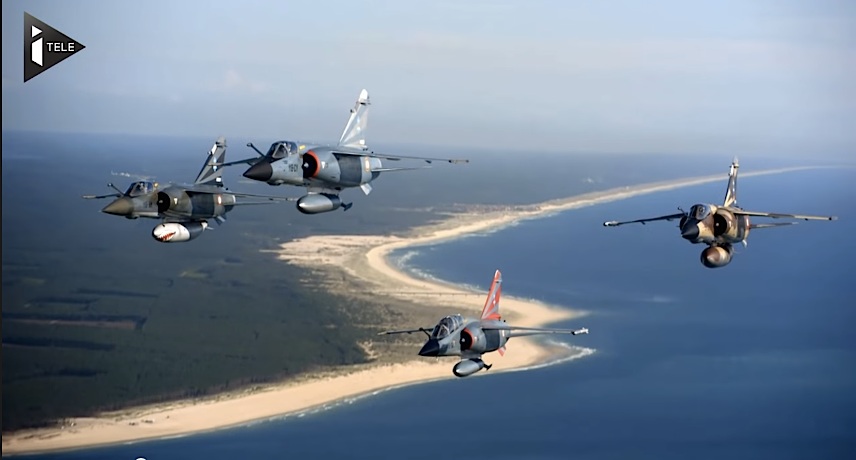
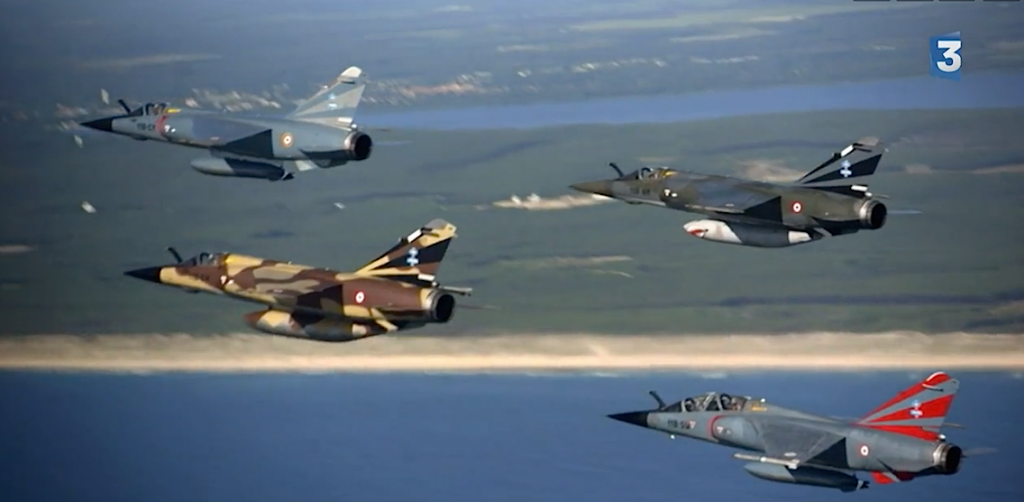

http://www.facebook.com/media/set/?set=a.717070555026405.1073741866.273495002717298&type=1
H_KTextron AirLand Scorpion makes debut in the UK:
This new US aircraft actually made it to the UK. :applause:
Interesting selection of stores under the wings too. From left to right: Hellfire, Lockheed DAGR, Paveway IV, SDB I and II (?), unknown, laser JDAM, AGM-176 Griffin.
The left inner pylon carries four G-CLAW cluster bombs. Textron claims a single G-CLAW is as effective as a 1,000lb cluster bomb, thanks to its airburst mode and larger fragments. It’s GPS guided, weighs 64lbs, can glide 15km and blankets a 75m radius area with 10 anti-personnel submunitions.
http://www.textronsystems.com/sites/default/files/pdfs/product-info/claw_datasheet.pdf
Very impressive stores capability IMHO. 13 guided-munitions, all with a decent stand-off capability…
[INDENT]4 bombs (600 kg)
4 cluster munitions, 15km range (115 kg)
3 missiles, 8-20km range, 6-9kg warhead (80 kg)
4 rockets, 12km range, 4kg warhead (60kg)
Total: 850kg[/INDENT]
H_KProbably a better point of comparison IMHO would be the Turkish MILGEMs. Hulls 8-16 will cost $300-350 million each.
That’s pretty much the same ballpark once you factor in differences in hull size (+500 tons), equipment fit (CAPTAS, Mica VL vs. RAM), economies of scale, design & tech transfer costs etc. Certainly the Philippines won’t be getting more than basic light frigates on that budget!
H_KNothing there that LCS can’t have a module set made for (even the 8xHarpoon class ASM & tactical VLS for 32 ESSM-class missile – 4xMk41 would do). Even the same 57mm gun and 2xtwin 30mm set that everyone criticizes as inadequate.
A bit more survivable hull, twice the crew, and a lot slower.
Indeed, the Malaysian Gowind basically is LCS without the speed requirement.
This makes for an interesting comparison of trade-offs. In return for a 12-knot loss in sprint speed, you get:
IMHO a slightly enlarged Gowind (in order to fit a double hangar) would make for a very good paper benchmark for the future LCS Flight II “frigate”.


 Sign In








