H_K
H_KI feel like a broken record, but if anyone can objectively point out what aircraft was a better alternative than the F-104 for Europe at the time frame it was chosen, then please be my guest…the next closest I can think of is the Mirage III, and even then as we’ve pointed out there are some areas (namely nuclear strike) where the F-104 comes out on top even if its not a “landslide.”
On paper the F-104 was superior to the Mirage III in all respects. Better climb rate, high wing loading for low-level strike, better radar, better specific fuel consumption…
In practice, I’m not sure it panned out (despite Sens & AlfaKilo’s protests!):
[INDENT]1) The Mirage IIIE seems about equal as all-weather strike platform, despite the delta wing:
– It was effective in the nuclear role, according to this story of a mission flown in typical European winter conditions: 1,000ft cloud ceiling, 2-3nm visibility, cruise in at 400-450 KTS at 500-1,000ft, accelerate to 550 KTS at 300ft, wait for navigation system countdown, pull-up for toss-bombing maneuver, pickle bomb in the clouds… a while later the (practice) nuclear bomb comes floating down under the cloud layer and detonates nicely in front of the crowd of expecting politicians.
– The Mirage IIIE was also a stable gun platform., as indicated by this story of numerous multiple direct hits during gun passes on vehicles
– RAAF pilots have commented on the Mirage’s particularly clean stores separation – better than some purpose designed strike aircraft.
[/INDENT]
[INDENT]2)The F-104 was a highly complex platform – IMHO too much “missile” and not enough “aircraft”.
– It depended on many features to keep it flyable, and a lot of things good go wrong: yaw damper, boundary layer control, leading edge slats & trailing edge flaps, stick shaker & stick pusher… Any of these failure points could kill a pilot on take-off/landing, or force him to eject. It happened all too often… at least 8 deaths just for the stick pusher, for example. Not to mention that the engine was unreliable and spins unrecoverable! One test pilot’s verdict:
The F-104’s potential stems from its engine, which is well adapted for supersonic flight and has low specific fuel consumption. It’s a simple, easy aircraft, but only as long as everything works…
– When things did go wrong, as they often did, the poorly integrated ejection seat would either shoot the pilot straight into the ground, or (after some fixes) shoot him upward at an angle such that he was sure to break his neck. This totally unnecessary problem took years (and lives) to fix.[/INDENT]
[INDENT]3) The Mirage III had a few things going for it as a fighter/interceptor:
– All aspect missiles. Sure the Matra R530 is much maligned, but it was a decade ahead in some important technological & reliability respects (solid state seeker, electric controls, 3-5µm IR seeker – partial thanks due to the Brits for sharing some of their work on Red Top), at least compared to the AIM-7E (1950s vacuum tube technology, hydraulic controls) and AIM-9B (1.8-2.7µm band IR seeker with its tendency to home in on the sun or the ground). In firing tests in 1962/63 the R530 had a 90% success rate, and the Israelis had a 50% kill rate in combat (1 for 2). Compare that to the Israeli’s 0% success rate with the AIM-7E prior to 1978 (0 for 12) and the US’s 10% kill rate in Vietnam…
– In the interceptor role, the Mirage’s rocket booster more than made up for the lack of engine thrust vs. the F-104
– Although the F-104 could break off at will against all opponents in fighter-vs-fighter combat, its poor maneuverability and smoky engine made it hard for it to jump opponents for a kill (especially a gun kill).
[/INDENT]
Now not to be too one-sided, the one clear advantage the F-104 definitely had was its lo-lo-lo fuel consumption (20% lower). In a nuclear strike scenario this would translate into a range of 600-700nm (tanks retained/dropped) for the F-104 vs. only 500-550nm for the Mirage IIIE (based on their flight manual fuel flows). However this was only valid at low-level. At high altitude, the Mirage III would typically be able to cruise ~5,000ft higher, and could thus fly as far (and 25-40kts faster). The Mirage also may have guzzled less gas at high mach… at Mach 2, the Mirage’s fuel flow was 27,000pph vs. 36,000pph for the F-104A (possibly something to do with engine/air intake optimization).
H_KBut did the F-104 have enough fuel to sustain high transonic low-level flight?
The F-104’s max mission time was 3 hours hi-hi-hi with 4 tanks (all dropped) and almost no use of afterburner… translate that to low level fuel burns + more AB use in order to sustain high transonic flight, and the “two hours high speed low level” that Sens keeps harping about seem rather exaggerated. I’d love to see real numbers on average mission speed & duration at low altitude…
Anyway with these 1960s designs I’m not sure that sustained comfort at low-level/high speed was an important criteria… unlike dedicated strike aircraft like the F-111, Buccaneer & Tornado with much higher fuel loads.
H_KIt was not about a brief dash, when the pilot and the fighter has endure that for minutes only. Without a high wing-load your speed is limited for most time of your mission below 400 kt to stay in one piece. A RAAF Mirage III did not high speed lo-lo-lo mission in nap of the earth flights in adverse weather conditions for two hours. Just with the F-111 they got something capable in doing that. A new F-4E can do a dash of 560-620 kt TAS in full AB in loaden condition ~ 200 feet. Your claim for the Mirage III under such conditions maybe in miles at best and not kt as claimed or higher up.
My source is on Mirage III low-level performance is Wing Cdr. Jack Smith, who flew 2,900hrs on the type:
[INDENT]I should mention two attributes the aircraft possessed for the strike role. Firstly, even when fully laden with bombs and tanks it exhibited a good turn of speed, and if the fuel to use afterburner was available, target approach speeds in the region of 550-600 knots were possible. Secondly, the airflow around the superbly design airframe was smooth and guaranteed clean stores separation from the aircraft over the full range of delivery speeds. The same could not be said of some purpose designed strike aircraft of the same era as the Mirage III. http://www.scribd.com/doc/174970296/The-Raaf-Mirage-Story-Opt[/INDENT]
He was highly critical of the Mirage III’s limited payload-range for RAAF needs, and the lack of weapon options in RAAF service (500lb and 1,000lb bombs only).
(In European service these issues would have been less critical. Colder temperatures would allow the Mirage III take-off with more payload, and there were many effective weapon options such as Martel (anti-radar), AS-30 (precision strike), rockets, anti-runway bombs etc.)
H_KI think the F-4 was not really an option in the timeframe considered (1958-60). It only became clear that it would be developed into a tactical aircraft in 1962.
Also was the F-4 available for export in those early years?
H_K.. and missed the main reason. Buffeting prevents high-speed low level for more than just brief moments. A no go for the main GAF mission. To overcome that you are in need of a very high wing-load or swing-wing design not available in the late 50s. http://en.wikipedia.org/wiki/Blown_flap gave a normal landing speed.
High up the F-104 surpassed the Mirage III as well. The Mirage IIIE was just available from the mid 60s and when we compare loss-rates it is misleading without the related mission and enviroment.
That’s why I used French Mirage IIIEs and Aussie IIIOs for my comparison. Both types were operated in low-level, low-viz conditions with a high-pilot workload, much like the Luftwaffe F-104G. The IIIEs were tasked with nuclear penetration and Wild Weasel missions, and half the IIIO fleet was tasked with low-level strike and flew in difficult tropical conditions in Malaysia (high humidity, thunderstorms, no fog but low cloud ceiling etc).
That was as close to apples-to-apples as I could get in terms of mission environment & loss rates… the F-104G loss rates come out 25-50% higher.
Which also raises the interesting question of buffeting… somehow the French & Australians low-level strikers were able to deal with it, so perhaps not a show stopper as you imply? In RAAF usage, the Mirage III would ingress at 550-600 knots fully loaded with bombs and fuel tanks at low level.
H_KWrong claims. The Israelis judged the French Cyrano radar as useless and most of their IIIC were used without operating ones. No head on intercept capabiliy for the Matra R530.
Context, context!
The Cyrano/R530 combo was designed for GCI-controlled head-on intercepts of high-flying, supersonic nuclear bombers. By definition this kind of target was non-maneuvering and easier to lock-on with radar. The Mirage III seems to have been effective in that role, about as much as its contemporaries (Lightning F.3, F-106, Draaken, F-4 Phantom).
What happened was that the technology at the time didn’t work well in off-design conditions, such as low-level intercepts or maneuvering targets. The Israelis discovered this with the Cyrano/R530, but they weren’t the only ones. Remember the issues with the the F-4/AIM-7B in Vietnam… same problem.
The F-104G didn’t have that problem, but only because it couldn’t do head-on intercepts at all! When the F-104S arrived in 1969/70, technology had advanced enough that the F-104S was able to finally leapfrog the early 60s interceptors it was competing against. But by then only the Italians were buying – everyone else was moving on to F-4s, Mirage F-1s and F-15s.
H_KWhen comparing the price of an F-104G with a Mirage III – don’t forget – the G version had a far more complex, advanced an more expensive avionics fit than any other single engine, single-seat aircraft at that time. The F-104G basically had the avionics of the F-105.
Correct me if I’m wrong, but I believe the Mirage IIIE avionics were similar?
Ground mapping + blind penetration radar, Doppler nav, radar slaving for head-on missile interceptions… only thing missing seems to have been an inertial nav system. Though the F-104G’s inertial nav system is said to have been almost useless in the beginning, so Doppler nav might have been the right call.
Even the Mirage III’s A2A avionics were quite good for the time. RAAF pilots who compared RAF and French interception tactics in 1963 came away thinking that the Mirage III was ahead of the BAC Lightning F1/F2, because the Mirage avionics and missile system (even the much maligned Matra R530) enabled head-on intercepts. Admittedly the RAF was months away from receiving improved Lightning F3s with Red Top missiles and AI.23B radar, which might have changed their conclusions…
Anyway, the F-104G’s one undeniable advantage was that the US was willing to allow Germany to do nuclear missions, and the French weren’t.
H_KThe RAAF seemed to have lost as many Mirages in accidents as the Luftwaffe lost Starfighters, maybe even more – almost 40%? (40 losses out of 116 Mirages delivered to the RAAF)
The Mirage saw longer service in our front line than any other fighter. Despite the original estimated design fatigue life of only 1500 hours, some Australian Mirages flew over 4000 hours. Over forty aircraft were lost in flying accidents, but those who flew it held the type in high regard.
The RAAF Mirage IIIO accident rate was 12 losses per 100,000 hours. This is somewhat artificially inflated, due to two very RAAF-specific causes of losses (5 low-level night crashes + 5 landing gear collapses, eventually traced to mistakes in RAAF maintenance practices and a single Australian-made bearing).
Excluding those 2 unique factors, the RAAF suffered only 9 losses per 100,000 hours, which is slightly less than the French IIIEs (10 per 100,000FH). And significantly less than the German & Italian F-104Gs (15 per 100,000FH).
Source: http://www.scribd.com/doc/174970296/The-Raaf-Mirage-Story-Opt
H_KInteresting to look at why Australia reversed its position and ended up choosing the Mirage IIIO over the F-104G. This was in 1960, so the F-104G had only just started its flight tests.
[INDENT]- F-104 was “much more” expensive (25 to 33%)
– F-104 was unsuitable for most runways in the Far East (runway length requirements, excessive tire pressure, FOD ingestion risk)
– Dangerous stall & landing characteristics (“violent pitch up”, engine-off landings)
– Mirage III had “important operational advantages” (higher cruising & loiter altitudes, trouble-free gun firing, 10% longer ferry range)
– Reliability concerns (J79 engine, “bad accident record”)[/INDENT]
http://recordsearch.naa.gov.au/scripts/Imagine.asp?B=544956
There’s also a more detailed technical report in the Australian archives, which I should be able to post in a few weeks.
H_KThe F-104’s accident rate wasn’t as bad as its reputation suggests, if you include its later years of service in the 70s & 80s:
[INDENT]12.5 losses per 100,000 hours for the Luftwaffe’s fighter-bomber squadrons
15 losses per 100,000FH for the Marineflieger and Italian air force.[/INDENT]
That’s a bit higher than the Mirage IIIE, which suffered 10 losses per 100,000FH flying low level nuclear/Wild Weasel penetration missions in the French tactical air force, over the same timeframe (mid-60s thru 80s).
Admittedly the F-104’s loss rates were awful in the 1960s, as experienced by all operators irrespective of the mission profile being flown (Canada: 24 losses per 100,000FH, USAF: 27 losses per 100,000FH). So there were some serious teething & early reliability problems.
H_KWhat would be the source of P-3 airframes? In fact, are there ANY surplus P-3 airframes available at all?
There will soon be ~12 surplus Atlantique 2s, with 25 years of service life potential remaining. Upgrading them to the latest avionics standards (new mission system, radar, radios, flight deck, acoustic processors etc.) will cost under €50 million per aircraft.
H_KHe had a lot of good points that are still universally accepted. You will have a hard time finding a professional that won’t tell you that training, being the first to detect your opponent, and being the first to positively ID your opponent all play a critical role in determining outcomes.
On the other hand, his bottom line assessments have been more or less universally rejected.
100% agree. Sprey’s “Measures of Effectiveness” are very intuitive, and still very relevant. But he can’t seem to acknowledge that sometimes bigger/complicated = more effective, according to his own criteria.
For example, how would he rate the Rafale vs. Mirage 2000?
Mirage 2000: smaller, cheaper, simpler engine, no navalization penalty etc.
Rafale: more likely to achieve tactical surprise (passive sensors, situational awareness, low RCS – probably in that order of importance), better loiter (thanks to engines that Sprey would probably consider “overly complex”), more manoeuverable (twin engine acceleration), better gun. Not to mention much more flexible (strike, carrier-capable etc).
Which is better? Rafale, without a doubt.
Would Sprey be able to acknowledge this? I guess his counter-argument would be that the proper comparison would be Gripen vs. Rafale, and that buying a large number of Gripens would be better than buying a small number of Rafales… which the Swiss evaluation doesn’t seem to entirely agree with.
H_KThe F-4 was the super fighter of the 60s and from 1969 the Israelis never looked back and always to the best from the USA.
Not quite true. Apparently Israeli pilots much preferred the Mirage III as a fighter.
They had a number of less-than-complimentary things to say about the F-4, calling it the “B-4”. According to the head of the IAF, the F-4’s radar was “essentially useless”, as were the F-4’s Sparrow missiles (only 1 kill in ’73 – not even a confirmed one). The F-4 was also way too easy to spot.
Source: Comparing the Effectiveness of Air-to-Air Fighters: F-86 to F-18
http://pogoarchives.org/labyrinth/09/08.pdf
H_KBlitzfighter Part II
Here’s some great historical context on the Blitzfighter, which kept popping up again and again in the 70s and 80s.
With Scorpion, it seems like the Blitzfighter battles are still being fought… 40 years on!
The Pentagon Wars: Reformers Challenge the Old Guard
Colonel James G. Burton, USAF
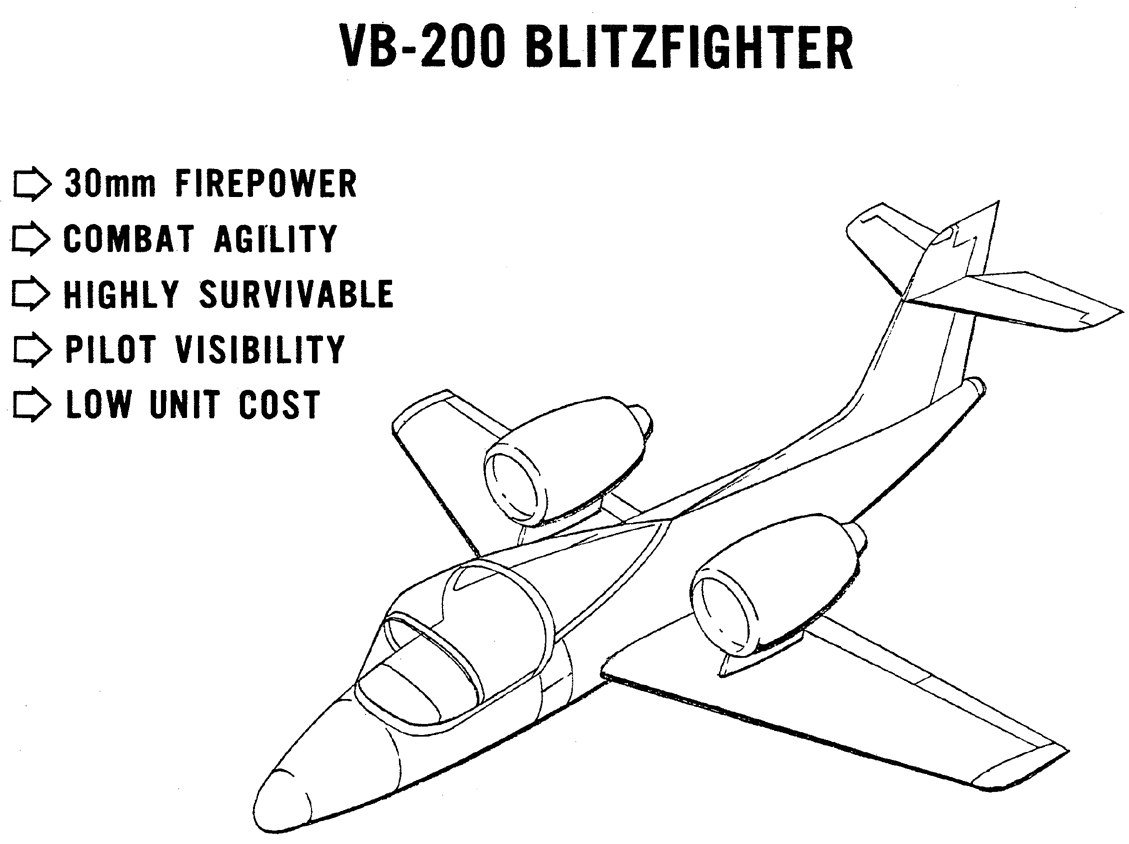
http://www.combatreform.org/killerbees.htmAs it happened, I was putting together my proposal for a new airplane at that time (March 1978). I prepared an advocacy briefing that called for the development of a small, simple, lethal, and relatively cheap airplane that would be designed solely for close support of the ground troops who would be engaged with Soviet tanks and armor. Because the intelligence community was making such a big deal about how difficult it would be to stop the Soviet blitzkrieg, I named this airplane the “Blitzfighter”. Rather catchy, I thought.
Everything about my proposal, including the plane that would be used, was diametrically opposed to the prevailing philosophy relating to the new wonder weapons of the Air Force. I wanted an airplane in the 5,000- to10,000-pound class (one-tenth the weight of the Enhanced Tactical Fighter), one smaller than any combat airplane in the inventory (one-fourth the size of the A-10), and one that cost less than $2 million. At this price, we could flood the battlefield with swarms of airplanes.
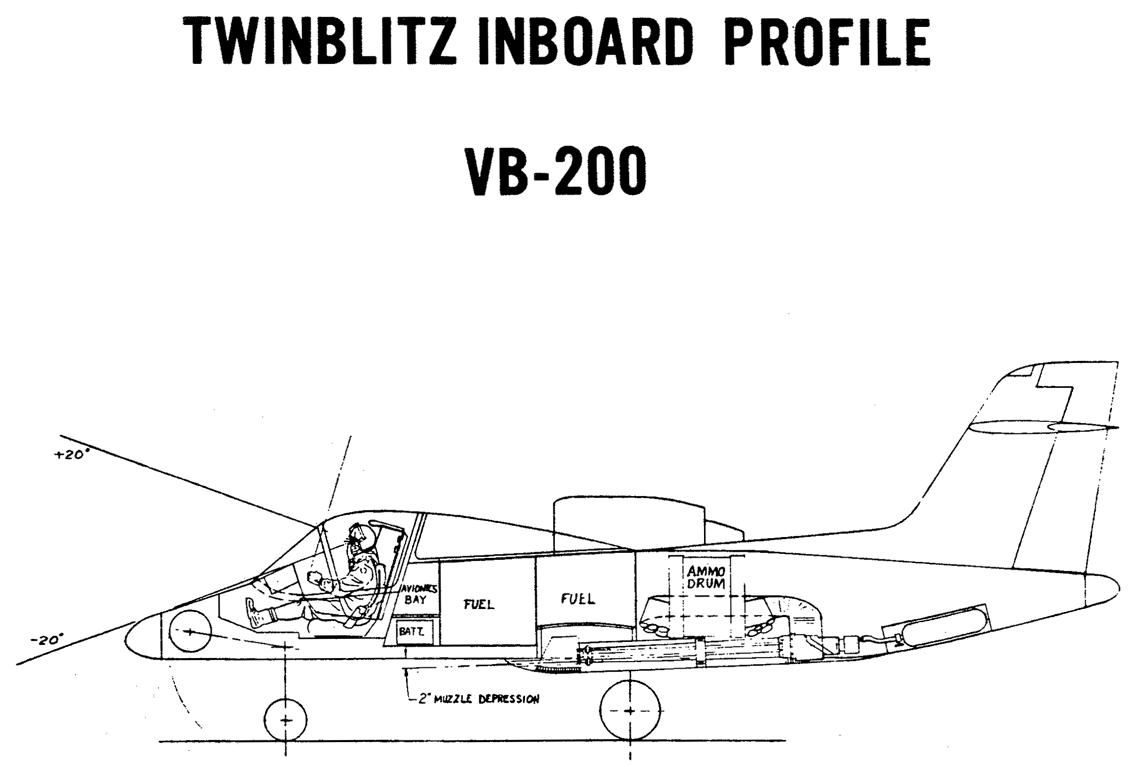
The airplane would be designed around a four-barrel version of the same cannon that was in production on the A-10, which used a seven-barreled cannon that fired shells costing only $13 apiece. This was a far cry from the guided missiles on the Enhanced Tactical Fighter that cost several hundred thousand apiece. The Blitzfighter would have no high-tech bells and whistles and no wonder weapons. Essentially, it would contain the engine (an existing commercial one), a pilot, a titanium-armored bathtub for the pilot to sit in, a few flight instruments, a radio for the pilot to talk to the ground troops, and a cannon for killing tanks. Nothing more – no radars, infrared sensors, guided missiles, or any of that high-priced junk being installed on every other airplane – was needed.
With the ability to operate from grass fields, the Blitzfighter did not demand fixed, expensive airfields that would probably cease to exist ten minutes after a war started. Squadrons of Blitzfighters would pack up, move from pasture-to-pasture overnight and follow the flow of battle. Pilots would receive only verbal orders that identified the main points of their effort and left the details of execution to them, a notion that was consistent with Boyd’s theories. The plan was in direct contrast to the standard practice of using excruciatingly detailed orders published by higher headquarters for each mission. The orders dictated how much fuel went on board, which weapons were loaded on which wing, the exact route that would be flown to the exact target that had been assigned, and even when the pilot would be allowed to relieve himself. Such rigid orders did not always match up to what was happening in a fast-moving situation.
**********I presented this advocacy to General Toomay and asked his permission to make a formal request to our design bureau at Wright Patterson Air Force Base for design studies. He nearly gagged. He was a high-tech advocate. Everything I was proposing was anti-high-tech. Naturally, we got into an argument.
He said, “You have to put a radar on the plane; you can’t find tanks without a radar.”
I responded, “You can’t find tanks with radars; radars can’t see through trees, over hills, and when you do see something, you can’t tell whether the blob on the scope is a friendly tank, an enemy tank, or a Volkswagen full of refugees; no sir, you can’t find tanks with radars.”
He said, “Yes you can.”
I said, “No, you can’t,” my voice rising.
Then, standing up, he raised his voice, “Yes you can.” General Toomay was a large man, over 6 feet 8 inches tall (His son, Pat Toomay, who took after his father, was a defensive end for the Dallas Cowboys at the time.) At this point, the argument was over. We had been through this routine many times.
**********Even though he disagreed with me, General Toomay permitted me to proceed without making any changes. He knew my proposal was going to stir up a hornet’s nest once the word got out, and he really enjoyed making the system react to unconventional ideas.
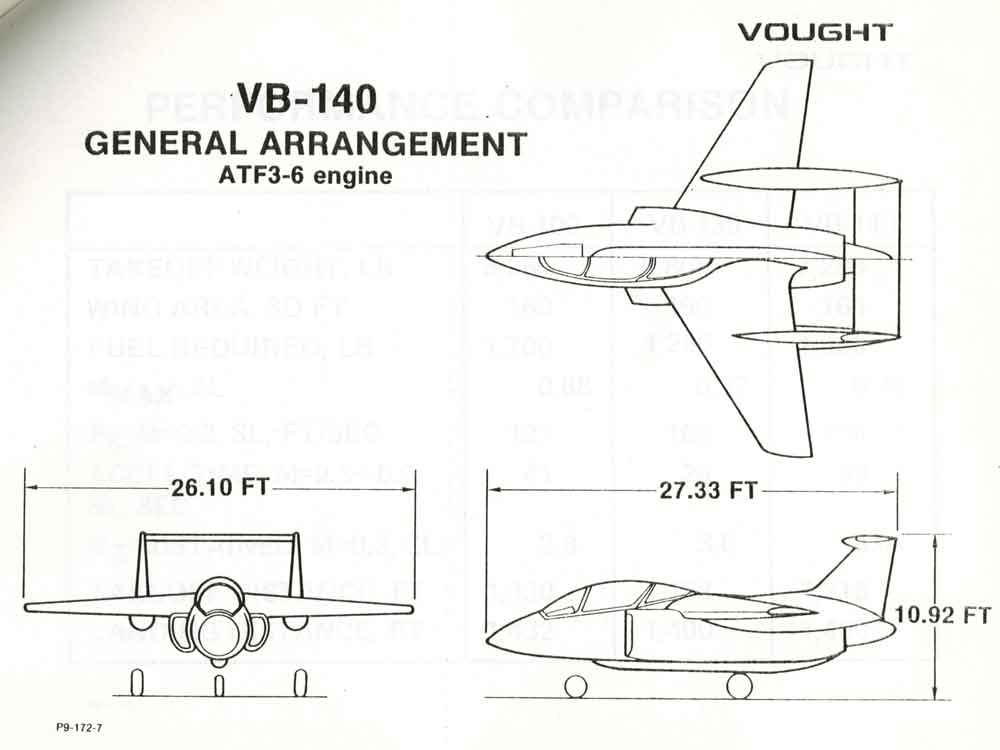
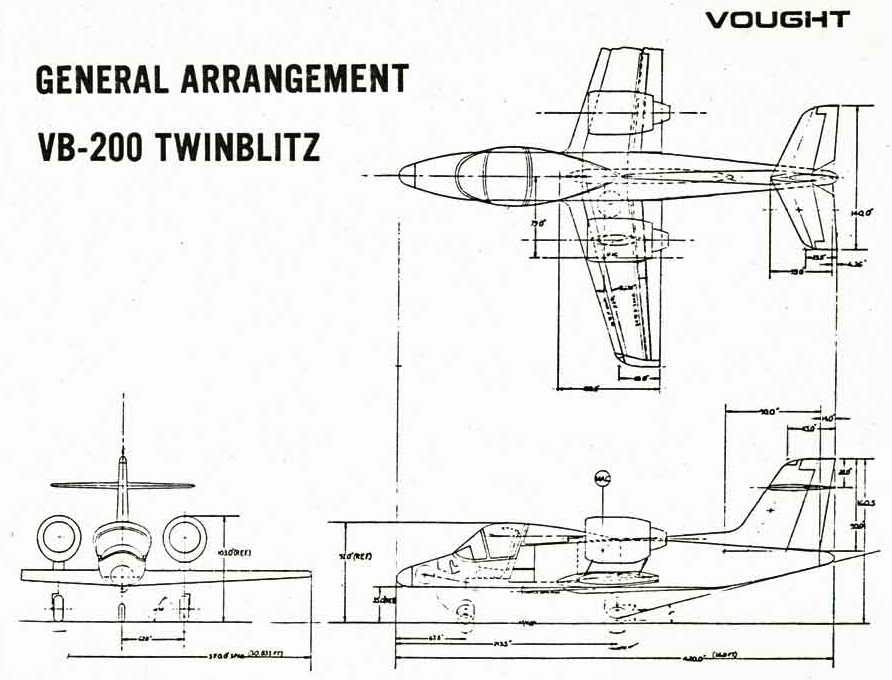
I immediately fired off a teletype to John Chuprin, chief of our design bureau at Wright Patterson. John and I performed thousands of design trade-off studies on the lightweight fighters for Boyd a few years before. He and his staff went to work and, within a month, reported back to me that it was entirely feasible to build the airplane I wanted – like I wanted it. He then gave me the preliminary designed for three possible configurations.
Armed with this information, I hit the briefing trail. My intent was to quietly build a network of support at various key agencies within the Air Force and within the Office of the Secretary of Defense before the establishment could react and kill the idea – much the same way the lightweight fighter had been ushered in.
**********One of the first places I went with my briefing was the A-10 program office at Wright Patterson, where Boyd arranged for me to meet Col. Bob Dilger. Dilger was in charge of producing the 30mm cannon and the ammunition used on the A-10. Because that equipment was such a key part of my proposal, I was anxious to get his reaction.
Dilger was an eccentric character. He was a fighter pilot in Vietnam and was credited with one MIG kill. After firing his radar-guided missiles at his opponent and watching them all miss, he literally ran his opponent into the ground. Bob can be quite aggressive, and he loves a good fight. I liked his style. We quickly became friends. We would join forces a few years later, to discomfort the army.
Dilger was very excited about my proposal and pledged his support. While I was there, he also briefed me on an unusual program he was running. The normal way to test ammunition coming off the production line was to select samples at random and fire them in a laboratory environment to measure muzzle velocity, trajectory, and other factors to determine if they meet the specifications of the contract.
Dilger did it differently. He put some realism into the tests. He scrounged up a bunch of old army tanks and about a half dozen Soviet [medium] Tanks (T-55s and T-62s), loaded them up with fuel and live ammunition as though they were in combat, and deployed them in typical Soviet tank formations on the Nevada desert. He then talked operational A-10 fighter units into attacking the tanks. Using their combat tactics, they fired Dilger’s production line samples of ammunition.
These tests gave pilots valuable training experience. They also revealed, for the first time, major inconsistencies in the computer models that were used to predict the lethality of U.S. weapons. It seems that the test results differed by a factor of two from the model predictions on the lethality of the ammunition. The Soviet tanks were easier to kill than predicted, and the old U.S. tanks were more difficult to kill than predicted. The models were not only off by a factor of two, but they were off in two different directions. This really caught my attention, and I would pursue this subject with great vigor in the years to come.
**********I next slipped into the Pentagon, and quietly briefed Boyd, Spinney, Christie, and the other rebels in the TAC air shop. It was like preaching to the choir, for this whole crowd had become disenchanted with the direction things were headed in the tactical air forces of all three services.
Boyd arranged for me to meet and brief Pierre Sprey. I heard much about Pierre and was anxious to meet him. He became extremely excited over the Blitzfighter concept, not just the airplane itself but the whole philosophy and concept of operation. He offered suggestions to improve my briefing and put more bite into it. Pierre is very good with the editing pen, as I would learn in the years to come. He would become my chief editor during my running battle with the army over the Bradley. His pens are shaped like fangs, and his finished product drips with blood, usually Army blood.
Christie then ushered me into a secret meeting with Russell “Russ” Murray II, director of Program Analysis & Evaluation (PA&E). Murray was the defense secretary’s chief analyst. Over the years, this position has been one of great power and influence – one that the secretary has turned to for advice on what weapons systems to buy. That advice, in the past, was usually contrary to the wishes of the services and led to a long-standing adversarial relationship between the director and the various services. In my view, that relationship was healthy, for it sharpened the debate over the appropriate choice of weapons. Under the Reagan administration, unfortunately, the position was completely neutered so that it was no longer a force to be reckoned with.
Russ Murray was receptive and pledged his support if my Blitzfighter proposal ever officially got to his level, but he doubted that would ever happen. In his view, the Air Force senior leaders would kill the idea as soon as they heard about it. “The airplane doesn’t cost enough,” he said. “They might buy it if you jack the price up two or three times.” It turned out that he was correct.
**********My career suddenly took on a new life. For some strange reason the Air Force promoted my to full colonel after passing me for two straight years. Historically, the chances of being passed over twice is less than 3 percent. General Toomay surprised me one night when he called my home to give me the news. This promotion meant that I would be able to stay in the Air Force for many years to come, rather than leave the service within he next year. (This is known as the “up or out” policy. Any officer who is passed over three times must leave the service.)
Another promotion was important to my future. My favorite three-star, General Infamous, who had so kindly asked me to leave the Pentagon three years earlier, was promoted to four stars. You guessed it – he was immediately assigned to Air Force Systems Command Headquarters at Andrews. He would again become my boss and General Toomay’s. I will never forget the day he arrived. He came to Toomay’s office to greet us. In front of the staff, he actually wrapped his arms around me and greeted me like a long-lost brother. I thought to myself, “What’s wrong with this picture?” I soon found out – Within weeks, I was shipped out again.
**********Meanwhile, Pierre was busy spreading the Blitzfighter story throughout the defense industry and on Capitol Hill. The concept was stirring up a lot of excitement in the design bureaus of various companies. Early in June 1978, a large group of designers met in a hotel conference room in Springfield, Virginia, about 10 miles south of the Pentagon, to explore the concept in some detail and trade ideas on design approaches. Unfortunately, the press was also there.
Aviation Week ran a two-page story about the conference and treated the Blitzfighter like it was an officially sanctioned Air Force program. The story cited the design studies that I had asked Wright Patterson to do and even showed sketches of the designs. The Air Force senior leaders were shocked and horrified. The story broke about two weeks after my favorite four-star, General Infamous, had arrived on the scene, and he went ballistic.
Undoubtedly, he got many calls from his fellow four-stars. Like many of them, he was an Enhanced Tactical Fighter advocate, and he was not going to let this Blitzfighter nonsense continue. He directed that I stop briefing. I was not even allowed to show him the briefing or explain the concept to him in any fashion. His closed mind had all the answers, and the Blitzfighter was not one of them. He pronounced to the world that the Blitzfighter idea was dead, by fiat, and then he arranged for me to be transferred out of his hair – again.
**********But the Blitzfighter was not dead. It would raise it’s ugly head numerous times during the next few years as one of several symbols of the Reform Movement. Each time it surfaced, the senior leadership went berserk.
I returned to the Pentagon in June 1978 as military assistant to Air Force Assistant Secretary for Research, Development, and Logistics Dr. Jack Martin. By law, the Air Force cannot negotiate and sign a contract to produce or develop a weapon system unless it has it’s civilian master’s signature on a document that permits it to do so. Called a Sectarian Determination & Finding (D&F), that document represents the instrument of control over the military’s plans to buy new weapons – no signature, no program.
Dr. Martin, as the acquisition executive for the Air Force, would sign literally hundreds of D&Fs a year. My job was to make sure he knew the implications of what he was signing. Once he had signed, he became an equal partner to the venture (or crime).
I shall never forget that Summer day in 1978 when Brig. Gen. Richard “Dick” Phillips and his team of briefers marched into the Dr. Martin’s office to seek his signature on the D&F for the Air Force’s new fighter, the Enhanced Tactical Fighter. The rationale for developing this new airplane was so full of holes and the arguments presented by Phillips were so misleading that I could not remain silent, as I was expected to do. I must admit that as a newcomer in this arena, I was apprehensive about speaking up, but I did. In the middle of the briefing, I interrupted Phillips and blurted out three questions.
“What is the mission of this airplane?”
“Night, all-weather deep interdiction,” the answer came back.
“General, would you give me an example or two from history where deep interdiction has actually influenced the outcome of a battle or campaign?”
The silence was deafening. Phillips scowled at me, but there was no other answer. So I quickly moved on to my last question.
“Is this airplane going to cost $2 million apiece, or $50 million?”
Answer: “Well, we don’t really know because we haven’t gotten that far in the program yet.”
I knew this was untrue, because I had talked to the cost analysts at Wright Patterson air force base the day before the meeting. The $2 million figure was a subtle reference to the Blitzfighter, which was at the other end of the spectrum in both cost and mission.
The meeting broke up in disarray. Dr. Martin asked me to remain as the others filed out. He asked me what was going on since this was the first time I had become an active participant in one of his meetings. I explained to him that the Air Force was intentionally misleading him [It’s called LYING] on this proposed program, and I gave him names and telephone numbers he could call to confirm if he had any doubt.
Dr. Martin picked up the phone, called Vice Chief of Staff Gen. James Hill, and asked for an immediate private meeting. He then walked next door and handed the unsigned D&F to the Vice Chief, and told him to forget about the program. Who says there is no justice in this world? The mighty Enhanced Tactical Fighter had been shot down in flames by the Blitzfighter. (During the Reagan administration, the Enhanced Tactical Fighter had been resurrected and put into production.)
Needless to say, General Phillips was not happy with me. I was soon braced up against the wall of the “E” ring. With his forefinger pounding my breastbone like a jackhammer, and his nose about one inch from mine, he let me know that I was dog meat and that several other generals would have a feast when I came back into the “blue suit” Air Force.
Then, the paranoia surfaced: “You’re not going to ram that F___ing Blitzfighter down our throats like your friends did the F-16!” They were still smarting over that coup.
**********Although the Blitzfighter never got off the drawing board, either as a weapon system or a concept, it continually haunted the Air Force senior leadership. As a symbol of the Reform Movement, it would not go away no matter what the generals did. Every time the Blitzfighter surfaced, the generals went to “red alert”.
Someone on the OSD staff (whose identity is still a mystery to me) had inserted into the Air Force’s Fiscal Year 1980 budget the funds and directions for the purchase of 400 F-5E fighters. The F-5 is a small, low-cost fighter version of the T-38 trainer, the plane in which U.S. Air Force pilots learn how to fly. Thousands of F-5s have been sold to Third World countries because they are relatively inexpensive. The U.S. Air Force, however, considered it a second-rate fighter; it was beneath the dignity of the Air Force to have the plane in it’s own inventory. This is the same fighter that had embarrassed the Air Force and Navy in the in mock combat tests in 1977, when it fought the vaunted F-15 and F-14 to a virtual draw.
When the Air Force leaders saw the F-5E entry in the budget plan, they came unglued. The vice chief of staff called a special meeting with the secretary of the Air Force and all of the civilian and military leaders. (I attended the meeting. The conversations of the participants below are related below in accordance with the best of my memory.)
At the meeting, the vice chief explained to Secretary of the Air Force Dr. Hans Mark that the OSD action was a ruse and that the money was secretly going to pay for the Blitzfighter, not F-5Es. The vice chief added that this evil act was being perpetrated by the reformers and it had to be stopped.
Dr. Mark asked, “Who are these Reformers?”
Gen. Jasper Welch, the No.2 man in charge of research and development on the Air Staff, gave a long speech about this gang of rebels and mavericks that gathered every afternoon in the TAC Air Shop. He quickly reviewed the reformers’ philosophy and their preference for simple, low-cost weapons instead of the more technically advanced weapons the Air Force prefers. The other generals began their customary round of snide remarks aimed at the reformers and openly chuckled and laughed at the stupidity of the reformers’ ideas.
As General Welch began to reel off the names of John Boyd, Pierre Sprey, Chuck Spinney, Chuck Meyers and the other reformers, Br. Mark interrupted him: “Wait a minute, I know these guys, and they are very smart people. Maybe we should listen to them.”
This was not what the generals wanted to hear. Suddenly, they were no longer interested in getting Dr. Mark involved in stamping out the secret Blitzfighter raid on their budget. Dr. Mark was a strong-willed, hands-on secretary. When he became involved, things were done his way. Before coming to the Air Force, he had been director of one of NASA’s laboratories.
It turns out the generals were all excited over a tempest in a teapot. The reformers had nothing to do with the F-5 showing up in the Air Force’s budget. In fact, they were more surprised than the generals. Someone else in OSD placed it there as a lark, simply to make the Air Force mad – which it certainly did.
**********The National Guard is a vital part of the overall defense of the nation. The peacetime relationship between National Guard units, who work for the president, is somewhat fuzzy. National Guard units receive their equipment from the regular forces, that is, the units do not buy their own airplanes. When the Air Force buys new airplanes, it puts them into the active force and sends it’s older airplanes to either the National Guard units or the boneyard at Tucson. Whether the boneyard or the National Guard gets the better deal is not clear. Therein lies the rub.
In early 1982, a committee of Army and Air National Guard officers, mostly generals, published a report titled VISTA 1999. This report, which had a definite flavor of “Alsatian cuisine,” called for two unprecedented actions. First, because the Air Force had, in essence, turned it’s back on the concept of close air support, the National Guard wanted to assume the responsibility for that mission for the Department of Defense. Second, the National Guard did not want any more worn-out, hand-me-down aircraft from the Air Force. The repair costs for these old planes were much too high. The National Guard wanted Congress to give it permission and the funds to buy it’s own airplanes – and the airplanes it wanted were Blitzfighters!
This was an act of open rebellion. The National Guard was asking for it’s own budget, and permission to spend the money as it saw fit. Charles Mohr, in an article for the New York Times, stated, “The report angered and stunned many regular officers and Pentagon officials because of the degree to which the committee accepted major arguments of the ‘military reformers’.”
When Vice Chief Mathis learned of VISTA 1999, he virtually exploded. The National Guard Bureau, located on the second floor of the Pentagon, was the headquarters of all the guard units. The bureau was run by a two-star National Guard general. According to an aide, when Mathis saw a copy of VISTA 1999, he jumped up from his desk and shouted, “I’m going down there and punch that general’s lights out.” He had to be physically restrained by his aides. The battle lines were drawn.
Even though they had old, tired equipment, the Air National Guard units always performed better than the regular Air Force units. At every turn, the National Guard units and their individual pilots were winning fighter competitions against the regular forces. Of course, such victories stuck in the Air Force’s collective craw. These victories also added ammunition for the reformers, who publicly argued that pilots’ and mechanics’ skills were more important than the technological sophistication of a weapons system. With motivated and skilled people, the National Guard units produced superior performance, even though their equipment came from local Air Force thrift shops. Imagine what they could do with equipment of their own choosing.
When the National Guard stood up and said it was tired of being treated like a poor country cousin, Congress had to listen. Hearings were called. The Air Force scrambled to call in all of it’s markers to fight off this unusual and unprecedented request by the National Guard to buy it’s own airplane. After a heated debate on Capitol Hill, the Air Force prevailed.
The National Guard, however, did produce some good results through it’s efforts. The Air Force began to send the National Guard better equipment, including F-16s and A-10s, instead of worn-out F-4s that were difficult to maintain. Of course, senior Air Force leaders were glad to be rid of what they considered low-end-of-the-spectrum systems. They felt they were “purifying” the regular force because of the reformers’ favoritism for the F-16s and A-10s.
H_KBlitzfighter Part I
The Blitzfighter was the 1970s brain child of the fighter-mafia – the same folks who brought you the F-16 and A-10.
What was the Blitzfighter? At its core, it was:
Sounds a bit like the Scorpion (or a jet-engined Skyraider), doesn’t it?
Thirty years on, people like Pierre Sprey (one of the fathers of the A-10 Warthog) are still advocating for this idea:
Defense Media Network, June 2013: Combat Dragon II Demonstrates OV-10G+ Bronco Capabilities
Sprey believes present-day technology would enable a vastly improved, cheaper A-10 type of aircraft that would be suitable for all intensities of warfare:
“Piddling around with light attack is not the way to help out our troops,” Sprey told Defense Media Network. “In any case, a ‘light attack aircraft’ isn’t going to happen in part because we’re leaving Afghanistan next year and mostly because the Air Force despises the mission. We could do much better today if we developed a smaller, hotter, more lethal and survivable version of the A-10 and put the emphasis on ‘close support’ rather than on ‘light attack.’
http://www.defensemedianetwork.com/stories/combat-dragon-ii-demonstrates-ov-10g-bronco-capabilities/


 Sign In