dark light

FalconDude

Forum Replies Created

Viewing 5 posts - 1,096 through 1,100 (of 1,100 total)
  • Author
    Posts
  • in reply to: Pak-Fa news thread part 20 #2325486
    FalconDude
    Participant

    I don’t speak russian so a bit hard for me to get the feel of the article through google translate.

    any comments from anyone more knowledgeable ?

    http://topwar.ru/16968-predvaritelnaya-ocenka-prototipa-malozametnogo-kitayskogo-istrebitelya-chengdu-j-xx-j-20.html

    Update .. :: Forget it, I just noticed Kopp and Goon authored it.

    in reply to: Pak-Fa news thread part 20 #2326128
    FalconDude
    Participant

    Done…

    but let’s not over react here… it ain’t a big deal.

    in reply to: Pak-Fa news thread part 20 #2326769
    FalconDude
    Participant

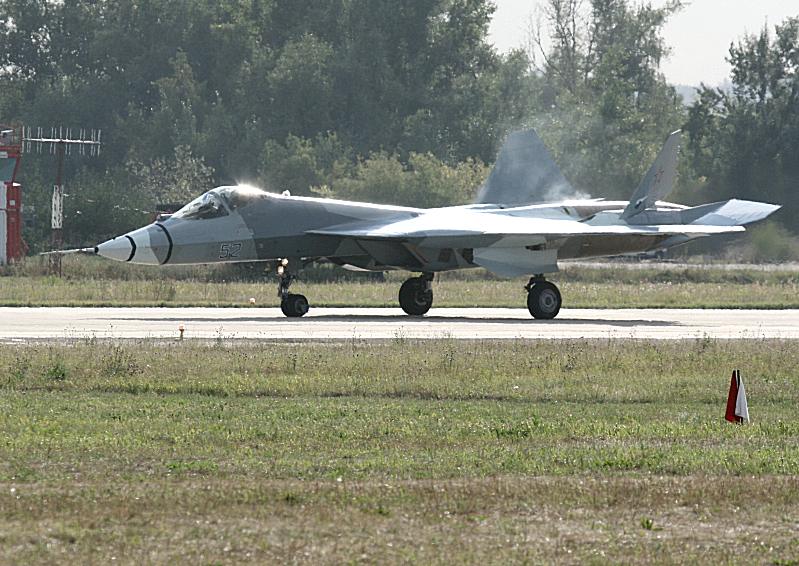
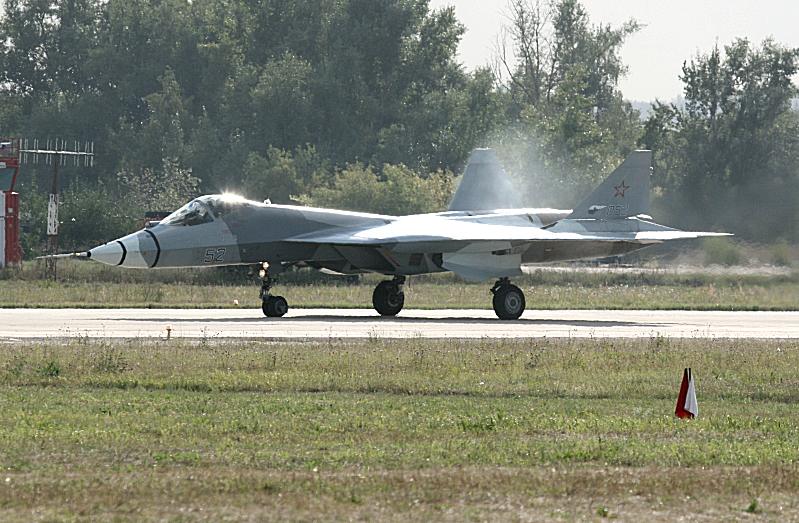
    I’m surprised no-one has mentioned the smoke emanating from bort 52 as he began his display at the 100th anniversary show last weekend.

    I took these on the Friday – there was quite a bit of smoke coming from the area of the upper engine as he positioned on the runway…..

    http://www.flankers-site.co.uk/misc_pics/pakfa_smoke_01.jpg

    http://www.flankers-site.co.uk/misc_pics/pakfa_smoke_02.jpg

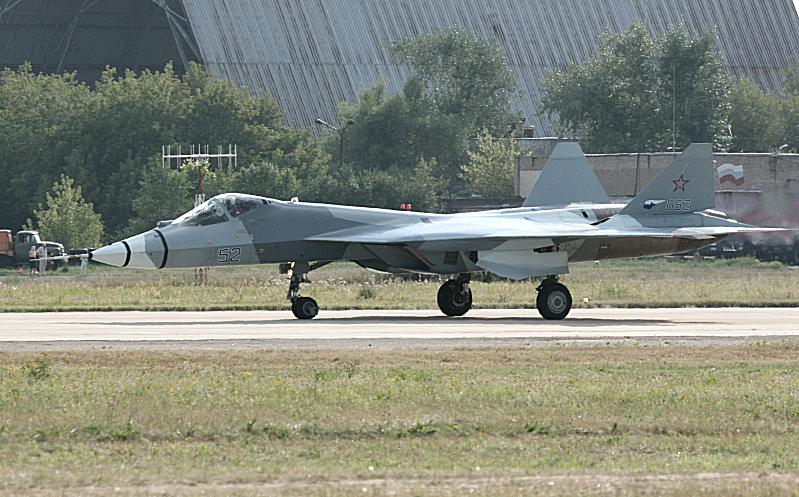
    The smoke cleared as he spooled up and accelerated…..

    http://www.flankers-site.co.uk/misc_pics/pakfa_smoke_03.jpg

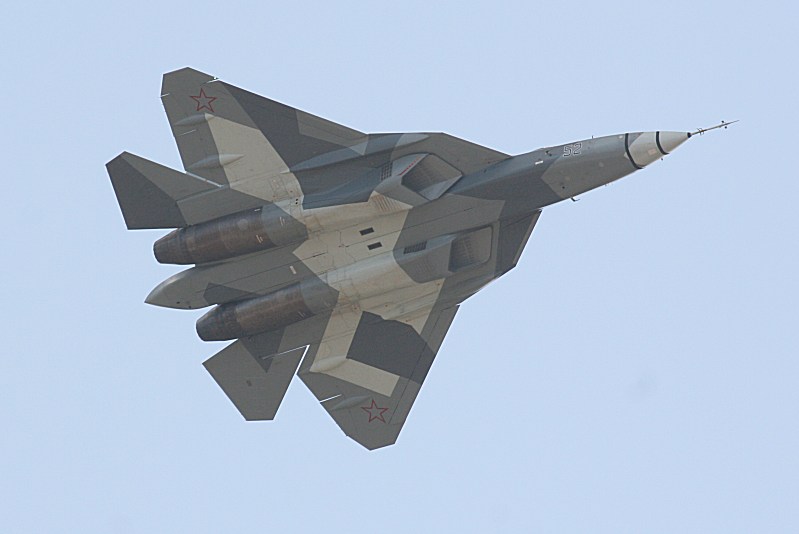
    The aircraft flew the display without apparent incident – although it was rather muted……

    http://www.flankers-site.co.uk/misc_pics/pakfa_smoke_04.jpg

    I didn’t see the takeoff on Sunday – but the display was ‘normal’ – but again rather sedate.

    Ken

    The smoke could be/should be the engine fuel starter.

    in reply to: Pak-Fa news thread part 20 #2334351
    FalconDude
    Participant

    Couldn’t help but be amused by those trying (maturely :rolleyes:) to discredit the previously posted plots as “completely” incorrect based on pyhsical optics methods being used, especially the guy taking a 2yo, unused account out of mothballs to post on it for the first time.
    PO provides decent estimations of the specular RCS of objects, period. It’s more than acceptable for comparing the exposed surfaces of to-scale shapes and good enough for numerous military and civilian universities to use in their engineering courses.

    PO does not take into account corner reflectors, edge diffraction, creeping waves, and it ignores shadow regions, but as mentioned earlier these things would actually accentuate RCS spikes of cluttered shapes with little surface blending and alignment, not negate them.

    Cross sections are used in these samples rather than entire aircraft to help keep models simple and avoid too much inaccuracy.

    http://i.imgur.com/4WmBD.jpg

    The same material selection was used in sampling both shapes (PEC) so RAM is irrelevant. Applying RAM to both models would not change the angle of RCS spikes, nor would it benefit one shape and not the other.

    Cylinders are not a stealthy object, they provide a decent, uniform return all the way around. Applying RAM to one makes it a slightly less detectable, non-stealthy object (hint, cylindrical poles are not used on RCS test stands). No cylinders were used in these cross section samples in any case.
    I’ll get to those for my own curiosity later, along with comparing the LO impact of all moving rudders, ventral fins and those enormous flap actuators on the J-20, wing leading edge length, sweep angle, sharpness and edge design, and the lumpy-guts F-35 (though I have a feeling it might have been cleverly done).

    As Obligatory said, I think if they were going for an all out stealth fighter, they would have. It seems that the basic design of the PAK FA all centres around the engine configuration. They just want to keep those engine spread wide and in that V arrangement. This dictates the centre tunnel being a part of the design which in turn dictates how the IR missiles will be mounted and what cant angle can be used on the nacelle inner surface.

    Perhaps the fact that a guy who has remained silent for 2 years, just reading the forum, felt the need to come on and tell you why you shouldn’t be using PO to do such an analysis should be ringing alarm bells in your head. But a large ego is a bad thing.

    As someone else already mentioned, you don’t think Russians have access to what you might have?

    And second. Your models may be inaccurate, your plots are not labelled and your ego is not allowing you to show us exactly what you did.

    The only thing I may give you some basis for carrying on talking is that you haven’t been clear with what you did down to the smallest detail.

    Do that and then we’ll talk.

    in reply to: Pak-Fa news thread part 20 #2335205
    FalconDude
    Participant

    I can assure you this was an apples to apples, physical optics calculation method simulation using the same width cross section of both aircraft in the area just behind their intakes. Also because PO method was used rather than MOM or FDM, double reflection of waves are not taken into account which would act even more in the F-22’s favor. T-50 has a couple corner reflectors, but in areas that would only matter while its banking.

    The result is hardly surprising. The PAK FA has a lot going on underneath the fuselage compared to the F-22 and J-20 due to the underslung nacelles.

    The inner surface of the engine nacelles are almost perpendicular to source radar at around 10 degrees below horizontal causing that upper spike seen on the polar diagram (indicated by the arrow).

    http://i.imgur.com/bRly1.jpg

    Well first of all I am always suspicious of unlabelled and unannotated diagrams. This could easily be between the F-5 and the MiG-21 for all we know.

    Second the PO approach is not suitable,
    PO have severe limitations

    -it obtains only reflection from surfaces, but not diffraction at wedges
    -it fails for wide non specular angles
    -it has no dependance on polarization
    -it results false shadow boundary contributions because of the artificial boundary between illuminated and shadow regions.

Viewing 5 posts - 1,096 through 1,100 (of 1,100 total)