@Jõ: I think that the engines must have a pretty strong focus on the generation of electricity. What makes a geared turbofan a burden of complexity (during cruise there are no needs to increase the torque as the excess Power is converted into electricity).
I mean this is converging with the advent programs (from shaft to…).
I think you’re right – power generation has to be a primary consideration for LRS-B. The GTF will also easily deliver a higher bypass ratio than 4:1.
To be fair, Djcross may have a point. The P&W 9000 (with the core of the commercial PW1000G) has been strongly linked to the LRS-B. In a ‘medium’ by-pass ratio configuration, ~4:1.
I stared today lengthy (maybe too much) at the picture and it appeared to me that some communality in shapes let suggest a propulsion system derived/evolved from that of the F23.
Nothing given away in higher res either:
Boeing has dropped its appeal so looking forward to (another) kick-ass design from NG, especially interesting is how next-gen nano particle RAM will free-up the design and improve aerodynamic performance compared to the B2. I’m also curious as to engine type and number.
On the whole, I like it.
Ken, well maybe it’s time the FAI introduced a new category: ‘Instantaneous Vmax in a vertical climb for non-rocket, non-ram/scramjet engined aircraft’. Time-to-altitude is boring in comparison!
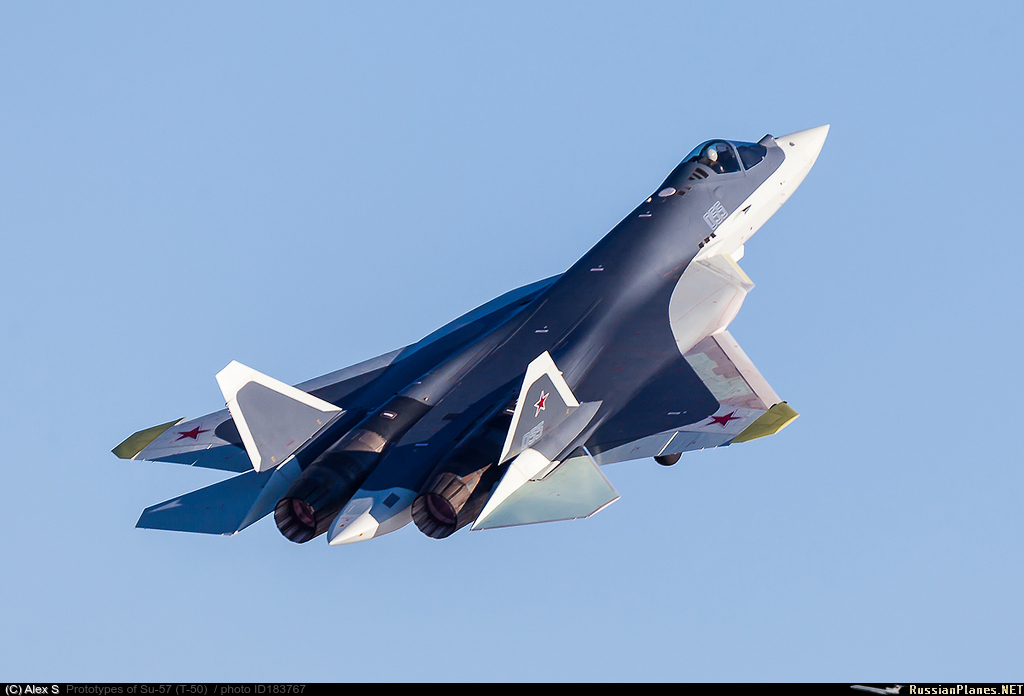
MadRat, definitely [would be] testament to the T-50’s outstanding aerodynamic design (particularly transonic performance). Me thinks breaking the sound barrier (perhaps and some) in a vertical climb for an operational fighter (as opposed to a souped-up, stripped down, one trick pony), [would be] quite a big deal, no?
Of those 27 Time-to-Climb records – is there one for “breaking the sound barrier in a vertical climb” ??? – I doubt it…
Ken
Not sure if you’re having trouble accessing the link, but page 23, bottom of centre column (Sukhoi Su-27 Flanker – WarbirdTech Vol 42 By Yefim Gordon):
I think the climb figure may be doable with the izd.30 engines, though I find it less likely with the interim ones. The T-50 is heavier than the Su-27 by at least 10% (18 tons vs 16.3 tons), with 27% more wing area, with only 20% thrust with the 117. But since such climb rate is well into the transsonic region, the T-50 may very well have better drag characteristics at those speeds since it’s optimized for supersonic performance. Accounts from Dozer several years back documented that the F-22 can reach 310 m/s with combat load and in less than ideal climb profile, so with definitive engines I think it’s possible for the T-50 to do something similar.
I don’t see how people arrive at that 18T figure. The Su-30 is 18.4T empty, yet dimensional differences are stark before we even get into composites’ weight saving over an all metal airframe (irrespective of ballast/avionics, increased wing area etc.):

The P-42’s T/Wr was 1.93 (13.598T x 2/14.1T MTOW*). For arguments sake, if one uses 18T for the T-50 (inclusive of fuel and a TOW 28% (!) greater than the P-42) with ‘overclocked’ 117 @ 16T, this gives a T/Wr of 1.78.
This would mean the T-50’s aerodynamic efficiency (particularly in the transonic regime) is significantly greater than the P-42 – which is to be expected.
However, if this record was indeed set then I would highly doubt the T-50 concerned was 28% heavier than the P-42.
It seems they are very persistent in repeating this info :)……Story starts at 8:50.
At 10:30 the report states the P-42 “was the first aircraft to break the sound barrier in a vertical climb”. At 20°C and @ SL the speed of sound is 343.2 meters per second*- so the T-50’s 384m/s does indeed seem plausible.
I’m just a tad surprised such a considerable achievement wasn’t reported on sukhoi.org, but I guess (if true) it’ll soon be reported to the relevant World aeronautical societies/authorities.
Parrikar is determined to adhere to the ‘Make in India’ banner, hence the only realistic contenders are Airbus and SAAB (in that order).
Not undeniable article

…
IIrc, 330m/s is the widely accepted figure for the MiG-29.
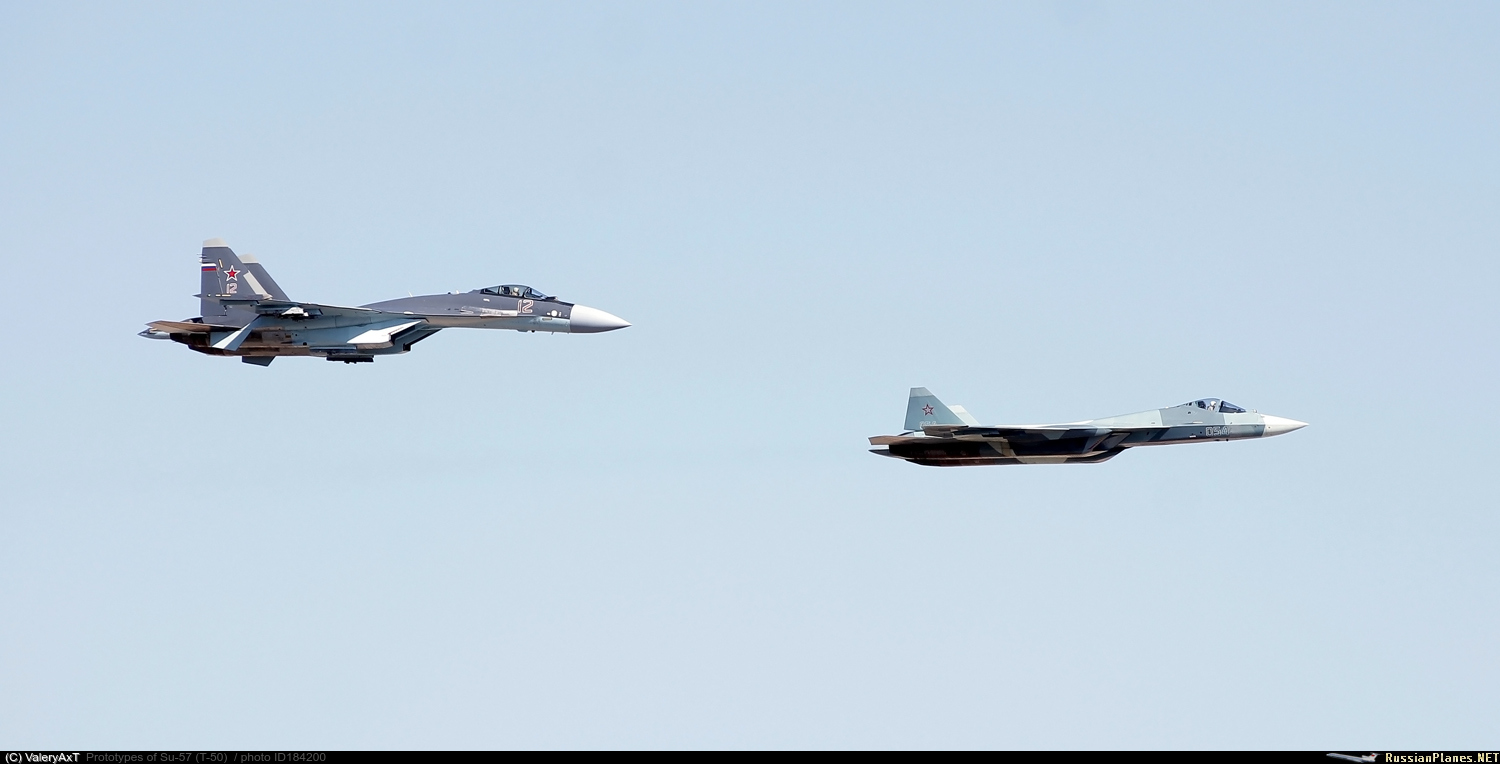
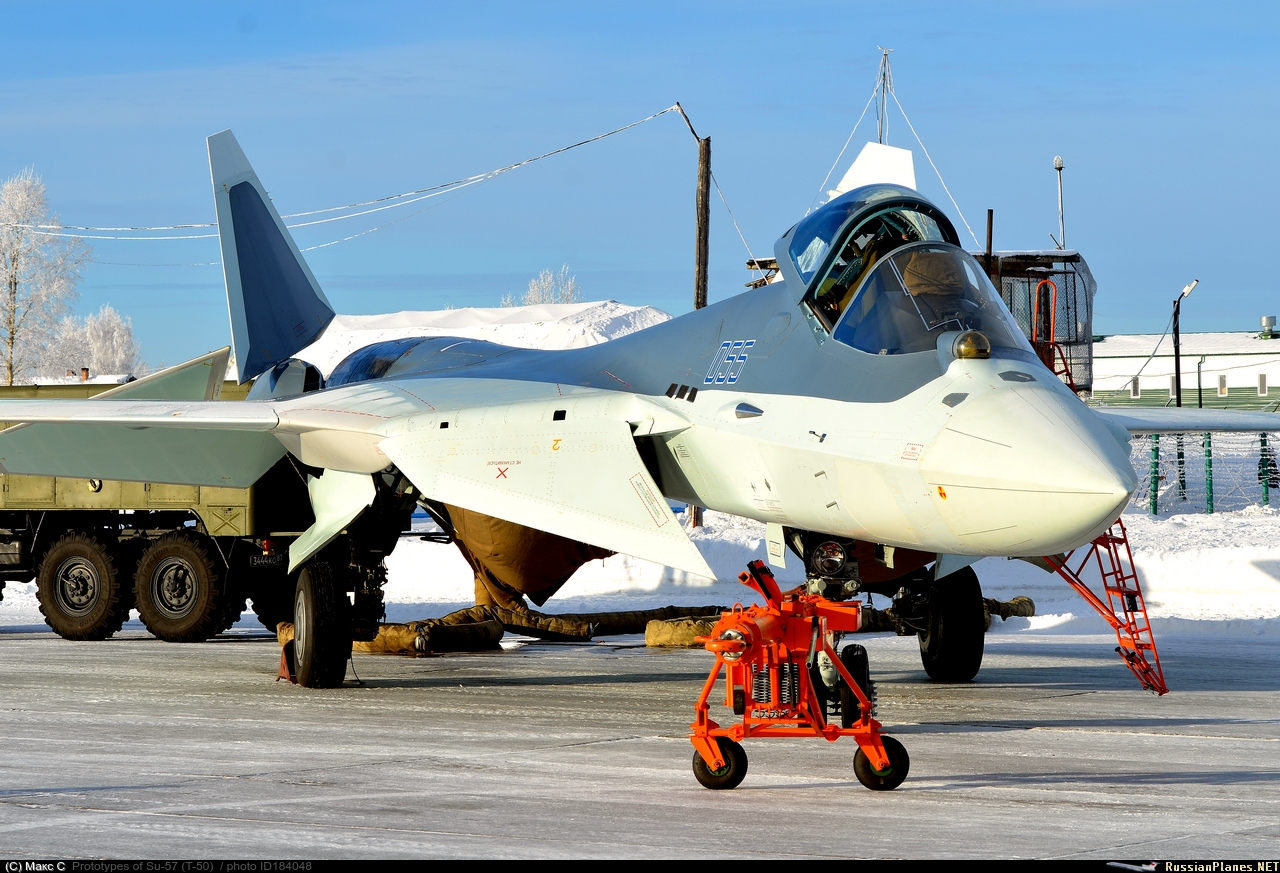
‘052’, today, with a cream-coloured tail cone:
…I’ll raise your wind-tunnel T-103 model with a T-102 model:

Larger pic and ‘electronic wind-tunnel/FlowVision’ analysis:
http://tesis.com.ru/infocenter/downloads/flowvision/fv_es15_13.pdf
Assad forces’ intelligence services should be quite clued-up on where IS forces strongholds (both temporary and permanent) are, and will pass that intel to the Russkies. I think soon the Assad regular army will be significantly reinforced by Iraqi & (more) Iranian ground forces of the Shi’a denomination.
It’s the Russian version of the CBU-105.
I’m no fan of the ‘Hellduck’, but God speed kickin’ ISIS butt: