 RadDisconnect
Well I suppose even B747 would have a RCS of 0.1 m2 if a fighter spots it at 700 km on his radar scope the signal would be weak and target would be faint.
Stating an RCS is 0.1 or 0.001 does not mean any thing unless the distant to the target is know and band/frequency of RF also other factor like if its receding or approaching target and what angle is RF wrt to target any of these or a combination of these can give variable RF returns
RCS is not a function of distance…
EDIT: Looks like other people beat me to the punch.
Also, can we stop posting that aircraft comparison profile? It’s horribly outdated, especially since we now have a better idea of the J-20’s size. Also, the T-50 is more voluminous than that diagram suggests. Here, have a look at this comparison at proper scale. F-22 frontal from LM, T-50 from Sukhoi patent document.
I’ll keep reposting this as long as people keep posting that erroneous diagram.
RadDisconnectThat left nozzle… Hmmmm…..
RadDisconnecthttp://www.flightglobal.com/news/articles/lockheed-not-ditching-agile-fighter-designs-412288/
Lockheed not ditching agile fighter designs
Lockheed Martin says it is too early to discount highly maneuverable fighter aircraft designs for future US Air Force and Navy warplanes, even as advances in long-range air-to-air missile technology makes dogfights less likely.
According to the company’s director of advanced air dominance and unmanned systems strategy, Bob Ruszkowski, the US must be prepared to fight outnumbered, and air-to-air missiles can be countered.
“In a situation where maybe there’s a numerical mismatch between the number of threat aircraft and the number of allied aircraft, there may be situations where dogfighting emerges, even as a secondary capability, but one you may have to resort to,” Ruszkowski tells Flightglobal. “Or, in situations where long-range missiles are negated by some other capabilities and now they’re rendered relatively ineffective. What bet are you going to make?”
Some in Washington have argued that speed and agility should not automatically be key attributes of a sixth-generation combat aircraft, since those design attributes could be traded for greater size, range and payload. According to a report published in April by the Center for Strategic and Budgetary Assessments, the lethality of a large combat aircraft “may be competitive or even superior to more traditional fighter aircraft designs”.
“We’re at a point where it’s time to think long-term, and hard, about what attributes we want and need and make everything earn its way onto the platform,” the report’s author John Stillion said at an Air Force Association event last month. “Don’t just assume it’s going to be fast and agile.”
Ruszkowski agrees that a larger combat jet might be preferred in the future, but it’s too early to tell.
“I don’t believe anybody has defined what those attributes are,” he says, while noting that the Vietnam War-era McDonnell Douglas F-4 was delivered without a gun, but one had to be installed later as a “fallback capability” because air-to-air missiles of the day proved to be less effective in combat than imagined.
“They needed a fallback capability,” he says.
Lockheed has been exploring sixth-generation aircraft capabilities and designs in earnest since 2009, and Ruszkowski says the company is looking for high-payoff technologies to invest in.
He thinks assured communications with satellites and other aircraft will be essential, and next-generation weapons will be a “discriminating” factor on any future air dominance platform. To that end, the company is investing heavily in hypersonic air vehicles laser weapons.
Last year, the company demonstrated a new beam control turret for an airborne laser, conducting eight flight tests in a surrogate aircraft over Michigan. Lockheed is also exploring the propulsion, materials and sensor technologies needed to develop an air-launched hypersonic missile.
“They’re not only applicable for next-generation air dominance platforms, but they’re applicable for current-generation platforms,” Ruszkowski says.
The navy is looking to replace its Boeing F/A-18 Super Hornets in the late 2020s. The air force wants to develop a truly next-generation platform through its Air Dominance 2030 initiative.
RadDisconnectWhile no mention of Mach 4+, Bondarev indicated a new interceptor to be designed in 2017. Now, whether this is based off of the T-50 or not is up for debate.
RadDisconnectWith respect, utter rubbish.
The PAK-FA is needed to replace the MiG-31 and much of the legacy Su-27 fleet. It is a step above the Su-35 in kinematic performance and that will not be dismissed by the Russian authorities.
I have to disagree, the PAK FA and the MiG-31 are designed for very different mission profiles. A T-50 with max speed of Mach 2.1 isn’t going to be performing the pure interceptor missions of the MiG-31, which is substantially larger and designed to regularly operate at Mach 2.35.
RadDisconnectUsing the F-22 as an example, design work started in 1986, at 500 flight hours (along with 90 hours for the YF-22s) was achieved in 1999 after 13 years. Design work on the PAK FA started in 2002 and it has also reached roughly 600 hours after 13 years.
But even this comparison is simplistic. Remember that the F-22 program budget was repeatedly cut in the 90s. Also, according according to reports, it seems like the T-50 is closer to the EMD F-22 rather than the YF-22 or X-35. Take that as you will.
RadDisconnectAre we sure it’s only around 600 hours or so right now? IIRC, the aircraft reached 500 flight hours early last year, so 600 hours right now seems awfully low to me.
For comparison, after 5 years the F-22 had 2000 hours, and after almost 6 years the F-35 had 4300+ hours. Now, admittedly both of those programs had more funding, but I don’t think somehow the T-50 will be this far behind in flight hours.
http://www.codeonemagazine.com/article.html?item_id=101
http://f-35.ca/wp-content/uploads/2012/02/F-35-Fast-Facts-September-5-2012.pdf
EDIT: I’m also questioning his statement about T-50-9 getting a new engine, if that aircraft is to fly by the end of this year. Didn’t prior reports say that the Izd.30 wouldn’t be ready until 2017? That said, looking forward to RAM covered nacelles.
RadDisconnect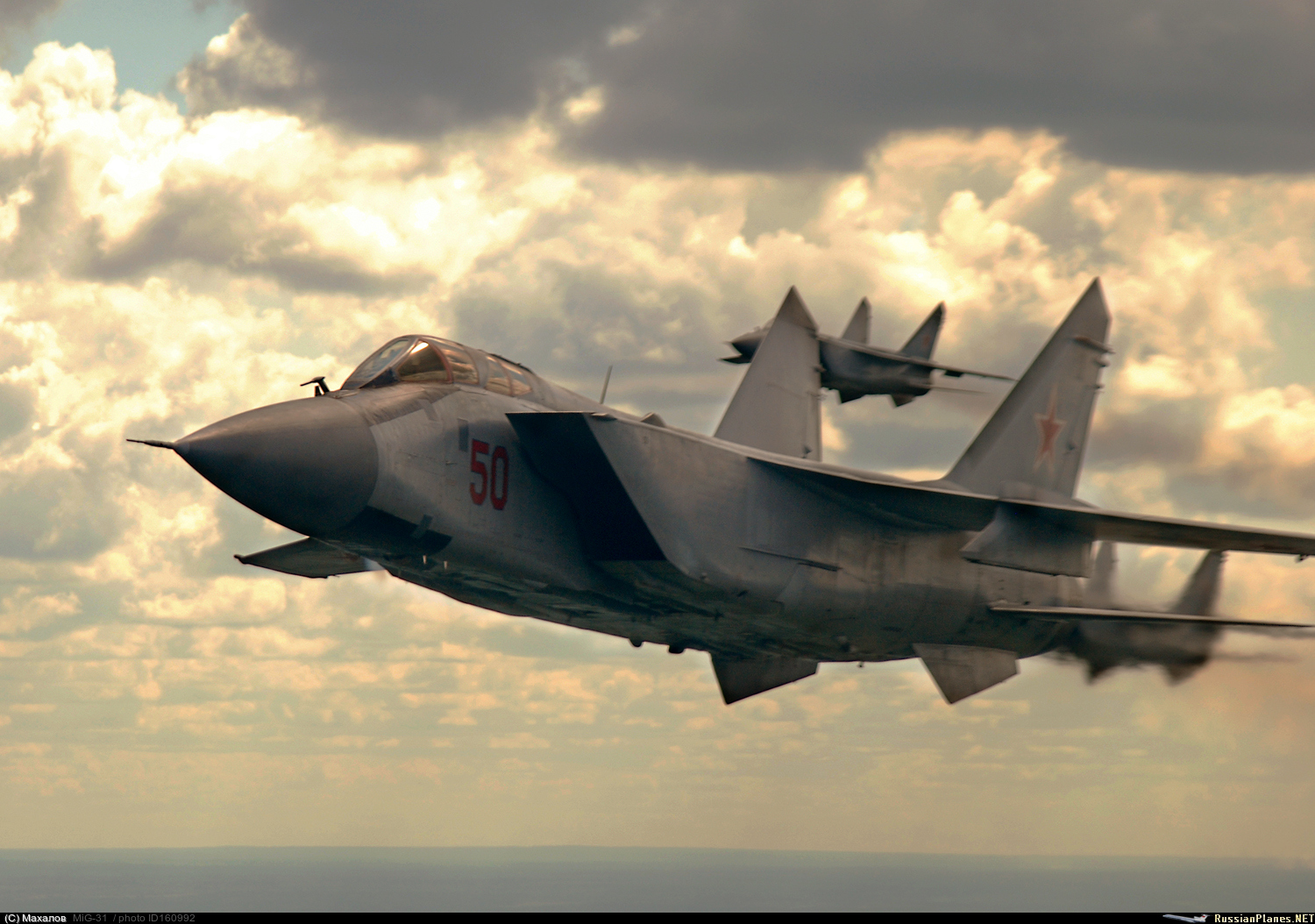
No refueling probe though.
RadDisconnect

The manufacturing tolerances of the F-35 seems ridiculous.
RadDisconnectOh boy…
I hope Deino doesn’t stumble on this thread. Otherwise I won’t be able to watch the gory curb stomp that will surely follow.
RadDisconnectAlways thought the MiG-25 was butt ugly, but I must say the MiG-31 isn’t bad looking at all. Subtle differences can have pretty big visual impact.
RadDisconnecthopsalot, your need to insist on the superiority of US technology and products (even if it’s true to some extent) on every thread is getting tiresome.
RadDisconnectWhy are they getting Su-30SM instead of Su-35? What advantages does the Su-30SM have?
RadDisconnect
RadDisconnectThe problem with you, is that you allways bring up the “-We need the see the Flight Manual” kind of argument for everything.
Thats all fine with me, but i for one has not mention a singel figure and linked it the the T-50, have i?The very reason for these forum is debating military aviation, at the same time you will never find people that are currently working for different aviation company, posting in here.. seems its lost on your logic.
You just go ahead and play the layman aviation engineer in here, i don’t care.
I’ll cut the snark, since that wasn’t really helping with the attitude here. When you make claims about a certain feature’s effect on structures, weight, and aerodynamics, don’t just pull it out of thin air, try to offer at least some explanation based on relevant physics and aerodynamic principles. While eyeballing works for very simple designs, the T-50 (and any other modern fighter) is anything but simple. Not to be cocky, but you clearly don’t have as much knowledge of aircraft design, and the associated knowledge of structures, fluid mechanics, aerodynamics as me. I don’t claim to be an expert here either, since I am only an undergraduate and don’t yet have all the relevant industry experience nor some of the more rigorous upper division and graduate level coursework (I’m still working on my degree). Still, don’t get mad when someone with more knowledge refute your assertions. Try to ask why that may be the case. And really, don’t state your assumptions in absolutes. Sukhoi knows what it’s doing, but we don’t know what Sukhoi is doing.
Here’s an example of why eyeballing isn’t reliable. IIRC, according to flight manuals, the CFTs (or FAST packs) on the F-15 can actually improve maneuverability in certain regimes. Why? Because those CFTs decrease the aircraft’s stability and thus helps “unload” the tail.
As i said before, both Mig-31 and T-50 jets are designed with the purpose the operate in supersonic flight regime. The Mig use more brute AB and with all its fuel it can sustain supersonic speed for a long duration.
The T-50 is a much more refined design, which can do it without the use of AB. Eighter way, both of them has to be pretty “clean”, in order to achieve this, that means little or no external payload.
They do it with different approach and means, and the laws of physics and aerodynamics is applied to both of them, imo drag or the lack of it is very important issue.But i never said the semi-conformal R-33 launchers had similar overall aerodynamic effect did i? Stop making **** up!
So why did you bring up the comparison between the MiG-31’s R-33 carriage and the T-50’s SRAAM bays? You used the R-33 as the analogy for why you think the T-50’s SRAAM bay would somehow have negligible drag. How is drag not an aerodynamic effect? The T-50 and MiG-31 have very different configuration of major aircraft components. The SRAAM bays on the T-50 are not even in a similar position as the MiG-31’s R-33.
What i was getting at was the similar design feature, where the T-50 also use some kind of semi-reccesed missile launcher inside those SRAAM W-bays, while the Mig-31 use the old fasion semi-reccesed design wich can partly be found on other jets as well. And that the way those W-bay doors are designed can actually add to the forward directional stability of the T-50, and at the same time use very little internal volume in those wings which actuall is is pretty clever, i do not think there are fueltanks around those SRAAM bays to begin with! Latstly i do not consider them to have any drag penalty worth mention, hense also my compair with other design solution like R-33 on Mig-31.
I think you’re getting design objectives and implementation mixed up. Yes, both the MiG-31 and T-50 are optimized for supersonic flight, but the means they use to achieve that in terms of layout configuration are clearly not the same.
This is why I take issue with you saying that the T-50’s SRAAM bay design is “clever” compared to the F-22’s. Your explanations aren’t rigorous, and you don’t know what trade studies Sukhoi did to choose that configuration. I only listed some of the potential advantages and disadvantages of that configuration. I can’t believe you think that bringing up these points somehow mean that I question Sukhoi’s competence or I think the T-50 isn’t a good design. And I’ll bring this up again. If the T-50’s layout is end-all be-all, then why did China choose a different layout for the J-20? Why does Japan’s ATD-X have closely placed engines? Yes, I like the T-50, but I don’t think it’s some magical design immune the questioning.
By the way, this spiel isn’t just directed at you, it’s for the fanboys of all aircraft. I’ve seen plenty of this kind of BS arguments on f-16.net, and some member’s devotion to the F-35 can be rabid. But the reason I picked on you in particular is because you make specific claims and try to explain using concepts you clearly aren’t familiar with, and that sticks out to someone who’s studying in that area.


 Sign In







