maurobaggio
The IA-PVO from Soviet Union had been keeping four types of long-range interceptors in its inventory during the 80’s: MiG-25PD Foxbat, MiG-31 Foxhound, Su-27P Flanker and Tu-128M Fiddler.
About of these four long range interceptors the Tu-128 had not magnetized the attention of the West while in active service.
However despite had been little known in active service the Tu-128 Fiddler were the largest ever built interceptor with maximum weight higher than the MiG-31.
The Tu-128 Fiddler had been starting into active service by 1965, and its production were stopped after building ‘only’ 189 aircraft due to the arisen of supposedly more advanced MiG-25P in the beginning of 70’s.
While the MiG-25P were highly dependent to operate with a system CGI( Command Ground Interception), the Tu-128 could operate in two basic ways : connected to CGI system or without the CGI.
The Tu 128 were crewed by two members, the pilot and the WSO( Weapons System Officer), that with added a wider range of navigations and communications equipments had been allowed the Tu 128 to operate without the CGI system if it would be necessary.
It were possible that the Tu-128 could accomplish other mission further than its primary mission of long-range interceptor with four air-air long range missiles AA-5 Ash ( R 4R/T) .
The Tu 128 also could be used as command aircraft for other interceptors from IA-PVO in vast areas from Soviet Union had not been covered by CGI system.
In case of war if it network CGI would be destroyed thus the Tu-128 could guide without the CGI the interception missions of the: Su-15, MiG-23 and MiG-25P .
Although the MiG-25P has been considered the most powerful and advanced interceptor from Soviet Union during the 70s, in fact this position should be shared with the ‘mother –ship’ Tu-128, since both had unique features that were only overcome with the introduction of the MiG-31 during the 80s.
maurobaggioPerhaps the Il 2 Sturmovik has a fascinating history as the Su 25, however certainly it history could be one of the most dramatic of the military aviation from all time.
The Il 102 could be equipped with a gunner in reason of the background from Il 2 in the World War II.
Besides this primary function that were to operate the rears guns, the gunner from Il 102 could accomplish others missions such as:
However the Su 25 had proved better in agility and much more simple fighter-bomber to build and maintain than the Il 102, and with the increasing of the threat from heat-guided missiles with the ability to engage in the forward aspect during the 70s, that would be matter of time before the MANPADS could assimilate this capability too.
Indeed the Il 102 could already become less efective than the Su 25 even during the Afghanistan War in the 80s , once the rebels had been equipped with MANPADS Stingers, and against this threat the better agility of the Su 25 were substancials benefit to avoid those Stingers missiles.
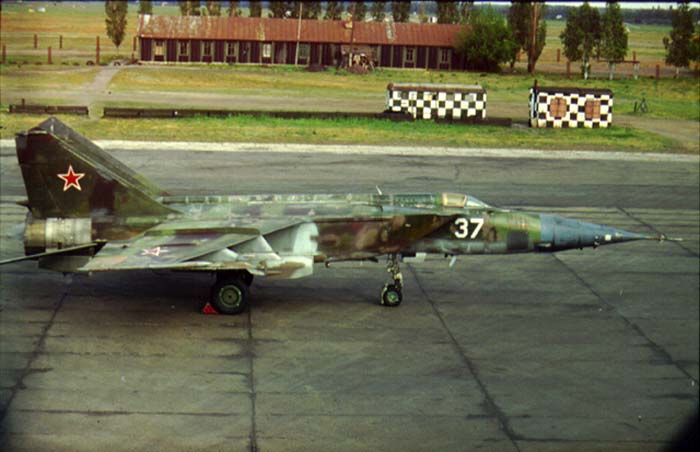
maurobaggioThe mission of the long range interceptor Tu 128 Fiddler were so important to the Soviet Union that regiments had been equipped with the Tu 128 were considered as elite even with MiG 25P available.
Those regiments only replaced the Tu 128M when the MiG 31 had been available during the 80’s. Despite the MiG 25PD for those elite regiments had been available since the 70’s the Tu 128 were replaced only by the MiG 31.
Perhaps the Tu 128 and MiG 25PD had been sharing several systems in common; however despite the difference of a few years between the introductions of these two interceptors, both were equipped with different air- air long-range missiles. The MiG-25PD has been equipped with AA 6 Acrid (R -40TD/RD), while the Tu 128 were equipped with the AA 5 Ash (R 4 R/T).
Although there are many quotes that AA 6 Acrid were an improvement of the AA 5 Ash due to various similarities between both. The AA 5 had been remained in service until the Tu 128 were retired from active service in 1990, and both the Tu 128 as the AA 5 Ash were modernized in 1979. However unlike AA 6 Acrid which had been equipped the MiG 31, the AA 5 Ash were not used by any other Soviet interceptor.
The AA 6 Acrid were not operated by Tu 128 even though it were important interceptor from Soviet Union. It were decided by Soviet Union to keep the AA 5 Ash in service and even upgrade them, as it did at the same time with the MiG 25PD and AA 6 Acrid themselves, in reason of the defection from MiG 25P to Japan in 1976, rather than replace the AA 5 for the AA 6 Acrid from MiG 25P, in this time the AA 5 Ash from Tu 128M were so important as the AA 6 Acrid from MiG 25PD.
While AA 6 Acrid had been keeping in operational status with MiG 31B/BS even after MiG 25PD were retired from service, the AA 5 Ash didn’t share similar destiny of the AA 6 Acrid, once the to AA 5 Ash were not included in the inventory from any other aircraft.
Indeed could be several hypothesis about the AA 5 Ash had not been included in the weapons inventory from the MiG 25P and MiG 31. The most common hypothesis should be a mismatch due to high temperatures as long time exposure to these conditions under the wings of the MiG 25PD and MiG 31B/BS when those fighters has been sustaining such speed close to Mach 3.
However this hypothesis could be easily questionable, once it would be that the AA 5 Ash could have easily equipped the Su 27P Flanker from IA PVO since the 80s as the supplement to then news R 27ET/ER/EP, since the Su 27P don’t reach speed such as Mach 3 from MiG 31 or even could sustained high speed of the Mach 2 for long.
Another fact has been related in several sources about the AA 6 Acrid would be in production until the end of the Soviet Union in 1991.
Maybe it were too costly to manufacture the AA 6 Acrid missiles as the AA 9 Amos (R 33) or certainly the AA 10 Alamo (R 27) during the 80’s. If the Soviet Union had been choosing to continue producing the AA 6 Acrid would be due in reason of any missions of the R 33 and R 27 could not perform.
However the AA 5 Ash had not been getting even close of the same longevity of the AA 6 Acrid despite with several similarities with this last one, once in 2010 it were possible still to see the AA 6 Acrid under the wings of the MiG 31B/BS, while the AA 5 Ash were already forgotten and resting in peace for long…
maurobaggioOther roles the PAK-DA might be required for might include the following:
i) stealthy attacks against land-based or ship-based elements of a AMD system
ii) stealthy attacks against a carrier groups or similar difficult maritime targets
iii) stealthy pinpoint attacks aimed at the air defence system of a lesser foe (imagine, if you will, a scenario where Russia might intervene against a neighbouring country that had unexpectedly performed an about-turn and started courting the West)
iv) delivering large quantities of high-precision munitions in support of ground forces during a low-intensity conflict (a la B-1 and B-52 missions in Afghanistan) … i.e. bomb-truckIf you can think of other roles the PAK-DA might be required to fulfill, please add them to this list. However, the main attributes I can see it needing are stealth and range. Speed would be a welcome addition (especially if it is seen to be necessary in order to cut time-to-target or evade interception in performing it’s primary mission) but I don’t imagine it will be allowed to come at the expense of stealth and range.
* no other potential aggressor has the capability right now to strike all of Russia’s fixed ICBMs.
In fact many of these missions have been assigned to Tu 22M3 Backfire since the days of the Soviet Union, but with note that the Tu 22M3 are not stealth aircraft.
Despite the PAK DA program has been apparently intended to replace the Tu 95MS and Tu 160, the Tu 22M2/3 could be perhaps one of the most expensive military programs from Soviet Union.
The reason for this has been well known, once U.S Navy or NATO Navy headed by the U.S. Aircraft Carrier fleet represented a greater threat for the Soviet Union than strategic bombers from U.S.
The U.S. Aircraft Carriers and its escort fleet could not only attack important targets from Soviet Union with cruise missiles and ISBM missiles launched by SSBN submarines, as well as to intercept the strategic bombers and to sink its SSBN submarines from Soviet Union.
Although many versions of the Su 34 Fullback will be the replacement the Tu 22M3, this has been not yet confirmed since for its anti ‘Aircraft Carrier’ mission should be the biggest challenge, once for this mission would be necessary to replace the anti ship missiles Kh 22 missiles or the modernized Kh 32.
The Tu 22M3 has been cataloged as long range strike aircraft and not strategic bombers was because the Tu 22M3 doesn’t has the refueling probe, since that START II agreement in 1972 has been banning the Tu 22M3 could be fitted with this equipment.
In theory the PAK DA would replace three aircraft’s type that has been currently used by Russia: Tu 95SM, Tu 160 and Tu 22M3.
In theory should might be predominant today for Russia to establish the requirements of the PAK DA so that it could be replacement the Tu 22M3 with its missiles Kh 32, once the U.S. Aircraft Carrier has remained as threat, as well as in future the Aircraft Carrier from China may be will arise as threat too.
Anyway one of the main requirements from Tu 22M3 project was supersonic speed, it should be capable to strike targets at long distances with supersonic speed, since Kh 22 missiles had been launched at supersonic speed and high altitude would expand the missiles range, and also it could create high difficult to intercept the Tu 22M3.
maurobaggioMay be because the intended targets for MiG-31 were bombers and cruise missiles? For bombers R-40 are adequate.
Yes, you are correct in all aspects.
However would be possible to notice at least a few subtleties inside of this question as the answer.Some of those could be that instead of that MiG 31 had been using two legacy R 40RD/TD under the wings from MiG 25PD generation, it could be replaced for two more advanced R 33 that could complement the standard loading of long range air-air missiles as 04 R 33 under the belly from MiG 31.
That could increase the capabilities of the MiG 31 once it had been equipped with 06 R 33 missiles in this alternative to contain both the bombers (B 52G/H, B 1B, FB 111) as well as cruise missiles (AGM 109 Tomahawk and AGM 86 ALCM). All those weapons system had been loaded with nuclear warheads during the last phase of the Cold War.
Another detail important should be that the main operator of the Su 27P Flanker with approximately 300 fighters at service that had been equipping the IA-PVO (Air Defense Force) during the time of the Soviet Union, which was also were the responsible to control all MiG 31 fighters, while VVS ( Air Force) in this time did not operate the MiG 31 and also operated ‘only’ 100 Su 27S Flankers .
| width: 500 | class: grid | align: center |
|---|---|---|
| [tr] | ||
| [td]Figther[/td] | ||
| [td]Load[/td] | ||
| [td]R 33[/td] | ||
| [td]R 40[/td] | ||
| [td]R 27[/td] | ||
| [td]Total[/td] | ||
| [/tr] | ||
| [tr] | ||
| [td]MiG 31[/td] | ||
| [td]Standard 1[/td] | ||
| [td]04[/td] | ||
| [td]02[/td] | ||
| [td]0[/td] | ||
| [td]06[/td] | ||
| [/tr] | ||
| [tr] | ||
| [td]MiG 31[/td] | ||
| [td]Standard 2*[/td] | ||
| [td]03[/td] | ||
| [td]02[/td] | ||
| [td]0[/td] | ||
| [td]05[/td] | ||
| [/tr] | ||
| [tr] | ||
| [td]Su 27P[/td] | ||
| [td]Standard[/td] | ||
| [td]0[/td] | ||
| [td]0[/td] | ||
| [td]06[/td] | ||
| [td]06[/td] | ||
| [/tr] | ||
| [tr] | ||
| [td]MiG 25PD[/td] | ||
| [td]Standard [/td] | ||
| [td]0[/td] | ||
| [td]04[/td] | ||
| [td]0[/td] | ||
| [td]04[/td] | ||
| [/tr] |
Standard 2*: 01 R 33 missile replaced by external pod APP 46TD
Thus the primary mission of the Su-27P from IA- PVO should be contain the bombers as well as the cruise missiles too, and with this mission the Su 27P Flanker has been carrying since the Cold War as it main weapon with 06 R-27(R/T/ER/ET/EP/ and maybe the EA?) almost all the time.
In this case, that instead of IA-PVO had been opting for only carry two missiles R 40RD/TD under the wings of the MiG 31, then the IA-PVO opted not to carry two R 27 or even four under the wings of the MiG 31. Thereby would have the option of carrying 04 R 33 and 04 R 27 with greater efficiency than that had been obtained by the two R 40 from MiG 25PD generation.
| width: 500 | class: grid | align: center |
|---|---|---|
| [tr] | ||
| [td]Figther[/td] | ||
| [td]Load[/td] | ||
| [td]R 33[/td] | ||
| [td]R 40[/td] | ||
| [td]R 27[/td] | ||
| [td]Total[/td] | ||
| [/tr] | ||
| [tr] | ||
| [td]MiG 31[/td] | ||
| [td]Standard 1[/td] | ||
| [td]04[/td] | ||
| [td]02[/td] | ||
| [td]0[/td] | ||
| [td]06[/td] | ||
| [/tr] | ||
| [tr] | ||
| [td]MiG 31[/td] | ||
| [td]Standard 2*[/td] | ||
| [td]03[/td] | ||
| [td]02[/td] | ||
| [td]0[/td] | ||
| [td]05[/td] | ||
| [/tr] | ||
| [tr] | ||
| [td]MiG 31[/td] | ||
| [td]Alternative 1[/td] | ||
| [td]06[/td] | ||
| [td]0[/td] | ||
| [td]0[/td] | ||
| [td]06[/td] | ||
| [/tr] | ||
| [tr] | ||
| [td]MiG 31[/td] | ||
| [td]Alternative 2[/td] | ||
| [td]04[/td] | ||
| [td]0[/td] | ||
| [td]02[/td] | ||
| [td]06[/td] | ||
| [/tr] | ||
| [tr] | ||
| [td]MiG 31[/td] | ||
| [td]Alternative 3[/td] | ||
| [td]04[/td] | ||
| [td]0[/td] | ||
| [td]04[/td] | ||
| [td]08[/td] | ||
| [/tr] |
Standard 2*: 01 R 33 missile replaced by external pod APP 46TD
The goal of this commentaries should be not disqualify the R 40RD/TD with the MiG 31, but try to understand what the Soviet Union had not been equipped the MiG-31 with some versions of the R 27 missiles, or even operate with up to 06 R 33 missiles instead of max load of the 03 R 33 and 02 R 40TD, since in this case one of R 33 should be replaced by its external pod APP 46TD as were described in some sources .
What should be unusual was the fact that in the decade from 80 all MiG-25PD were on active duty with the IA-PVO, and therefore the R 40 RD / TD for the MiG 31 would have to possible sources as would be brand new from factory or then it should come from inventory to the MiG 25PD.
maurobaggioR-27R# has a nose cone that degrades at supersonic speeds. It will never be suitable for MiG-31. The R-33 is recessed for the same reason. The YF-12A carried missiles internally for the same reason. Missiles are designed for one supersonic flight, not regular carriage at those speeds.
In fact has been described in several sources such slight degradation of the range of the missiles with different type of IR or SARH seeker. In most cases that has been explained in reason of the geometry shape from nose missiles could affected the supersonic air flow and because this would decrease the range of these missiles when equipped with IR seekers.
But just to illustrate the MiG 25BM Foxbat F had bee equipped with four missiles Kh 58( AA 11 Kilter) with nose cone as the R 33 too . Those Kh 58 missiles could be released from high altitude at over Mach 2.5 speed of the MiG-25BM so in that condition the Kh 58 had been expanding the max range of these anti radiation missiles in SEAD missions at 250 Km( 140 NMI).
In a simple analysis can compare the shapes of the cone Kh 58 with R 33 ( AA 9 Amos) as well as with the R 27 ( AA 10 Alamo) with SARH/ARH/Anti radiations seekers.
Even in this case of R 40TD has had a cone shape comparable to the R 33.
R 33 loaded with MiG 31
http://en.wikipedia.org/wiki/AA-9_Amos#mediaviewer/File:MiG-31_gear_and_R-33.jpg
Even if this were the case it would be something very easy for Soviet Union to change the nose shape of the missile R 27 missiles as cone shape to match with the R 40RD, so as to adjust better it to supersonic speed as were previously proposed.
The MiG-25BM had become operational in 1986 and these were converted from reconnaissance/attack version of the MiG-25RB.
The curious fact should be described about this time in 1986 that the Soviet Union already has been equipped with almost two hundreds of MiG 31, so it would be possible to Instead of choosing the MiG 25BM, the Soviet Union could have opted for a much more capable version of the MiG 31 for SEAD( Suppression Enemy Air Defenses) missions.
Although that in 1985 Soviet Union had revealed the MiG 31F that would be able to perform SEAD missions. But the reality was that the Soviet Union had been chosen to opt for the MiG 25BM instead of the MiG 31F.
The curiosity is that the Soviet Union had available the R 27ER/ET/EP with long burn rockets for extended range that could be highly appropriate for a long range interceptor as the MiG 31, but the Soviet Union had opted not to use those missiles and only the less capable R 40 together with R 33 . As well as the Soviet Union had been developed the MiG 31F but opted for the MiG-25BM.
Maybe at least one possible conclusion could be that the MiG-25BM as well as R 40RD/TD were already good enough for Soviet Union even with more advanced systems available in large quantities as the MiG 31 and the R 27R/T/ER/ET/EP.
For those who already accept this my ‘finding’ might could me explain how the Soviet Union disappeared in peace only in 1991 and not had already ‘wiped out’ in 1941?
maurobaggioR-40 was designed for operating underwing, the R-33 was not. Operating underwing takes much higher stress tolerances. Simple as that.
Simple as that the R 33 ( AA 9 Amos) has been reporting as the twice of the range than R 40 ( AA 6 Acrid), and R 33 could reach a speed of Mach 5.5 while the R 40 possibly reach a max speed of Mach 4.5, so the airframe of the R 33 should tolerate high efforts caused by aerodynamic drag as well as a high temperatures caused by the air flow friction of the Mach 5.0 speed for longer time than the R 40, once the R 33 has been capable to obtain at least twice the range of the R 40.
As the R 33 had not designed to be launched from the wings could not even considered as a possibility, once like many analyzes available by the R 33 assumes that has been a copy of the AIM 54 Phoenix from U.S , and as the AIM 54 were in fact loaded by the F 14 Tomcat usually under the belly as the MiG 31 has been used the R 33, however the AIM 54 also could be transported and released from the wings pylons as could be seen in the link below.
Indeed the initial tests from firings of the R 40 by the MiG 25 were highly cumbersome, and demanded the development of the specific operational mode, since at high Mach speed should be necessary to launch two R 40 missiles simultaneously from MiG 25 , and each of those missiles would be launched from each wing, in order to avoid the loss of the aerodynamic stability due to asymmetry caused by launching from a single missile of sole wing.
So would it be possible that the MiG 31 also had this same problem of the MiG 25 with firing of the R 40 in high Mach speed, since unlike the R 33 that would be released from the pylon, the R 40 were fired from the rails as a SAM missile, or missiles as the type of the AIM 9 Sidewinder.
maurobaggioEvery well-designed testing military program for a fighter has been including the possible loss from any or even several aircraft’s, since the own reason of the tests is to take the fighter to the extreme of its capabilities.
The high heat had been generated during the fire as well as the brutal cooling occurred during extinction of the fire must have irreparably compromised the structural integrity of the aircraft, as well as other aircraft systems, even though it may be advisable not be recovered back this aircraft to the flight test program ,or even same parts of this.
Because the accident happened in the ground will be more easier to determine the causes of it, otherwise if the prototype would crash down while in the flight the whole program could be paralyzed until it was possible to determine the causes of the accident.
maurobaggioIn this case the reason for adopting by Russia the solutions has been found out by U.S. with the B 2 Spirit could mean that Russia would have the intention of performing the same missions for which it were foresee with B 2A Spirit.
While the B 1B Lancer and B 52H from U.S. mission had been assigned to launch cruise missiles in the last time of the Cold War , as well as Tu 95MS and Tu 160 of the Soviet Union , the B- 2A Spirit were developed in order to attack with nuclear free-fall bombs targets that would be well protected against cruise missile attacks .
In summary the B 2A Spirit should have the must bold mission already had been planned from U.S. Strategic Air Command in the last phase of the Cold War that would be penetrate deeply the air defenses from Soviet Union .
The B 2A Spirit should be capable to cross the air patrols of the most advanced fighters as MiG 31 and Su 27 , even inside the fire range of the SAM as news SA 10, the B 2A will be capable to attack its primary targets that would be the launches bases of the ICBMs as SS 17 Stiletto and SS 18 Satan in the deeply parts of the Soviet Union .
To accomplish this mission the B 2A Spirit would release its free-fall nuclear warheads in order to destroy ballistic missiles as SS 17 and SS 18 inside its own underground silos.
The reason of the B 2A Spirit had been only planned to be equipped with free-fall nukes could be explained that missiles like the AGM 69 SRAM would be inadequate with Stealth profile as B 2A, once after were fired the high IR signature from the rocket engine those missiles could reveal the position of the B 2A at the fighters as Su 27 and MiG 31 that were equipped with IRST, beyond the fact that AGM 69 itself could be detected and destroyed by the SAM SA 10 that could be protecting those ICBM bases.
However the purpose of the B 2A has already been under discussion even before the end of the Cold War, once that Soviet Union had been starting the development of the ICBM SS 24, now has been known as Topol -M that ICBM missiles would be launching by TEL vehicles and trains , so its system SS 24 would be mobile which would make its hard to be destroyed than fixed silos like the SS 17 and SS 18.
Another launch system had been studding in the Soviet Union since the early 80s would also use transport aircraft such as the An 140 and even An 225 to launch ICBM missiles from air inside the Soviet airspace.
However the biggest challenge for the B 2A Spirit could have in destroying the ICBM launch base were the fact that it should be necessary at least several dozens of the B 2 able to penetrate the air defenses system from Soviet Union at same time and none of these could be detected, also it should be after that to coordinate an attack against all ICBM launch bases scattered around the Soviet Union in the must perfect synchronize.
Thus with the implementation of a large fleet of B 2A Spirit by U.S. maybe would be enough that one single alarm of invasion of the B 2A Spirit against the Soviet Union that could lead someone in charge to fire all their ICBM even before to confirm the possible contact from what could be such Stealth aircraft were indeed a B 2A, or then some malfunction of any of its sensors from their early warning air defense system.
The Soviet Union and the Cold War ended , and the plans to equip the USAF with 132 B 2A Spirit also , since the production of the B 2A Spirit were ended after delivery of 21 aircrafts.
maurobaggioI think there is an error regarding to “standards” about radar sets. An I-J band radar operates at same frequency as an X band radar.
X-Band is a IEEE defitinion, that includes frequencies from 8 to 12 GHz. I-Band is a NATO defition that includes frequencies from 8 to 10 GHz. There is no hardware constraint that prevents Zaslon from operating R-40.
IDK about APP-64TD pod, but its likely an early implementation, with additional software modifications, Zalson got the ability to guide R-40RD/TD missiles without it. Like you said there are billion pictures MiG-31 carrying R-40, most are without the pod you mentioned.
The radar frequencies should be faced as ‘hot stuffs’, once this issue should be keeping as confidential in order to prevent a possible enemy to use this information to jamming with ECM those radars or destroy than with SEAD missions.
However the information available about the air-air missile R 40RD/TD that it were using on frequencies between 9.2 to 9.4 GHz, while the radars Zaslon N007 from MiG 31B/BS has been operating with frequencies between 9.0 – 9.5GHz. So it would be easy to understand that the MiG 31 should not require additional system as external pod APP 46TD to guide the missile R 40TD.
Those pods APP 46TD( AA 6 Acrid) had only sighted in MiG 31 when it were equipped with two missiles R 40TD missiles and three R 33( AA 9 Amos).
However after the arrest and sentencing to death of the leader from company Phazotron in 1985 under the time of the Soviet Union, about the claiming that it was a spy and had provided the technical details of the Zaslon N007 radar to the West, many changes has been occurred with respect to the MiG 31.
The Zaslon N007 radars from MiG 31 were modified after this controversial event, and after that when fully equipped the MiG 31 had been carrying two missiles R40RD/TD under the wings and full loading of four missiles R 33 under the belly, but without any pods APP 46TD. Apparently those pods APP 46TD no longer were used or at least had been sighted by NATO aircrafts since then.
If replacing an advanced R 33 missile by its APP 46TD should be something as awkward , the purpose about operating two R 40RD/TD missile should be even more odd, once the MiG 31 had demanded the development of the R 33 missiles with purpose those missiles would be loaded into conformal recesses under the the belly from MiG 31.
That were request with goal to decrease the aerodynamic drag in order to provide MiG 31 with higher Mach speed and altitude than had been obtained with the MiG 25P.
Those MiG 25P had been carrying four R 40RD/TD under the wings and this resulted in the penalty of the high aerodynamic drag.
Therefore such possibility about the reason for R 40 had been maintained in MiG 31 could be this R 33 would not be appropriate to perform some task that R 40 from the legacy MiG 25P could be more capable to execute than the most advanced R 33.
maurobaggioThe AA- 6 Acrid ( R 40 ) missiles were developed specifically for the MiG- 25P , however the MiG 31B/BS also had been used the AA 6 Acrid in its version with IR(infrared) seeker that were R 40TD missile. This version from AA 6 Acrid with infrared seeker missile had complemented the main missile AA 9 Amos( R 33S ) with ARH seeker from MiG 31B/BS .
This fact has not been easily observable about an air -to-air BVR missile from a previous generation fighter as MiG 25P had been used for a fighter from forward generation as MiG 31.
The most interesting about its issue were that MiG 25P had been used Smerch A radar, as well as the MiG- 25PD were modernized with Sapfir 25 radar . However both radars Smerch A and Sapfir 25 were using in I / J radar band, while the Zaslon N007 radar from MiG 31B/BS has been using the X band radar frequencies.
What has been making even more ‘tricky’ understand this option about to use the R 40TD, since that MiG 31B/BS should replace one R 33 from max load of four R 33 by an external pod APP 46TD with function to provide command link to R 40TD, once the radar Zaslon N007 did not operate with the frequencies of the command link from R 40TD .
However there are pictures and reports since the Cold War that the MiG 31 had been using the SARH and IR versions from AA 6 Acrid missiles, with the max loading of four R 33 without the external pod APP 46TD .
Despite there were few attention about this issue once the AA 6 Acrid missiles were considered as secondary weapons of the MiG 31 in the West analysis, maybe an possible explanation could be that during the 80’s the Soviet Union had modernized the AA 6 Acrid missiles for MiG 31, and those AA 6 Acrid received the SARH and IR seekers from AA 10A/B Alamo ( R 27) with purpose to use the Zaslon N007 radar with X-band, in that case would not be necessary to use the APP 46TD pod.
Other possibility would be that the APP 46TD pod could accomplish some different function that were revealed, so this function should be maintained in secret, once it were always questionable the purpose of replacing an advanced R 33 for two older R 40 TD .
And there is no lack of options to replace the R 40 in the MiG 31 during the 80’s, once the Soviet Union had put in mass production the Alamo AA 10 C / D versions with extended range , in both versions with SARH and IR seekers, besides the anti radiation air -air missile R 27P.
So the main fact that the Soviet Union had equipped its most advanced and expensive interceptor as MiG 31B/BS with AA 6 Acrid( R 40) from originally MiG 25P, rather than opt for a version of the R 27, this could show that R 40 were considered effective and probably with more range that any version of the AA 10C/D Alamo.
maurobaggioRight, an 18/20 ton Russian fighter competing to equip the Schweizer Luftwaffe… Snowing in Ougadougou? :dev2:
Cheers
Indeed you forgot to mention, perhaps you have been distracted while recalled of Ougadougou, that the T- 50 PAK FA also is a 5th Generation fighter just like the F 35A/B Lightning II.
As I could remember when it was revealed that the F/A 18C/D will replace the Mirage III there were a lot of criticism about the size of the F/A 18C/D in the mountainous terrain from Alps.
However the F/A 18 C/D has been superbly performing its missions in those conditions , so a fighter like T 50 PAK FA has been more maneuverable than the own F/A 18 C/D could also play well those missions from F/A 18 C/D and overcome this in all other parameters .
In my insignificant opinion when I saw the news about the Government of Switzerland had mentioned that would cut education funding to finance the acquisition of Gripen E, this literally burned must of the chances of vote from the population to approve the Gripen E.
Maybe this had happened with purpose to make way for the acquisition of the F 35A/B in the near future. The goal could be a downsizing now with the target to persuade the population from Switzerland to invest more in the F 35A/B when the time to replace the F/A 18 C/D come.
I guess I’ll regret to ask, but what does really mean Snowing in Ougadougou?
maurobaggioThe vote in Switzerland should be no reason to disqualify the Gripen E, since this fighter is advanced and was chosen by the government of Switzerland.
However the population of Switzerland has been made an interesting choice for the future of Switzerland Air Force , since the purchase of Gripen E could now commit the financial resources necessary for the replacement of the F/A 18 C/D Hornet in the future for another fighter that were not the Gripen .
As Switzerland has been equipped with the fully capable F/A 18 C/D of replacing of the limited F 5E/F would not be a priority for the population, which could allow Switzerland to standardize its Air Force in the future with a single fighter.
Apparently when the Switzerland open competition to replace the F/A 18 C/D would be no surprise that the F 35 A/B could be compete hardly against the T 50 PAK FA from Russia and India.
If the U.S. had been a vote in 2008 to choose between canceling production of the F/A 22A or cancel the program of the F 35A/B/C which these would win the vote?
maurobaggioIt’s difficult to say R-33 couldn’t provide target illumination fast enough for four missiles, considering it didn’t exactly have steering problems for illumination. We also don’t have any reason to suspect it was a flat line inertial guidance with terminal SARH. Inertial guidance can be done on a curve to pick up suspected counter manuevers and the terminal guidance can perform limited searches looking for a proper return before assuming ballistic free flight. The R-33 was late enough to suspect it was anything but unsophisticated. Mid course guidance made all that moot.
Despite I have obtained short knowledge about the MiG 31 and the R 33 air air missiles , the R 33 is not the radar from MiG 31B/BS, since the radar of the MiG 31B/BS is the Zaslon N007 and only that could provide target illumination for the R 33 missiles.
However I found very interesting the description of how the MiG 31B/BS has been operating the R 33 that I had remembered about to read somewhere that the MiG 25PD/S from Soviet union used a launch mode from AA 6 Acrid missiles that would require the MiG 25 to perform on the climb at high altitude in order to obtain a ballistic trajectory for the AA 6 Acrid, with the purpose of expanding the range of those AA 6 Acrid missiles.
However in this case as the AA 6 Acrid had not data link , so that could not hit a maneuverable target, just as the description had been given for the AA 9 Amos (R 33) in the last post.
Could someone provide me the sources describing the AA 9 Amos ( R 33) that the same has been equipping with SARH seeker, because the same were very interesting.
maurobaggioFor such 5th Generation fighter like PAK FA that has been capable to sustain Mach 1.4 at long range such BVR missile as the new R 77M with solid rocket propulsion could be more appropriate than perhaps other version from this missile as R 77M has been equipped with ramjet propulsion , in the event of combat Fighters Vs. Fighters the long range capability should be less important than others parameters.
The reason could be that the IR sensors known as MAWS that has been equipping most of new fighters from 4ª and 5° generation would allow the detection of approaching these missiles with ramjet propulsion, this could be done before that active radar seeker from those missile turn on to engage and reveal this in the RWR from the target.
That could happen because those missiles has been equipped with ramjet propulsion would be active or burning its fuel and emitting high levels of IR, while missiles with solid rocket propulsion should be burn out on final approaching against the target, so would be more difficult to detect such missile with solid rocket than the ramjet propulsion in passive way.
Although useful on the long range parameter those missiles with ramjet propulsion must be active or burning almost all the time until that could reach the target, once these missiles has had much more aerodynamic drag than the missiles of solid rocket propulsion because the air intakes from ramjet propulsion.
In this case when this ramjet missile has been cease to produce thrust after burn out all its fuel, these missile will losing energy or speed much faster than the missiles of solid rocket but with ‘clean’ aerodynamic shape. So on the final approaching such missile with ramjet propulsion must be active or burning to keep enough energy to offset any maneuver from the target .
Thus the target has been a fighter from 4th or 5th generation should be able to detect this approaching threats as its missile with ramjet propulsion at long range because of the MAWS sensors , with its early warning that fighters could be hard target to be destroyed, once those fighters would be enough time to perform evasive maneuvers , turn on ECM, launching decoys , chaff and others.
About aircrafts with high RCS( as : AWACS , ASuW , ASW , Transport Aircrafts, Air Refueling Aircrafts and others) the PAK FA could use a specific long range missile as Project 810, this probably would operate at the same way of the solid rocket missile as the legacy R 33S or the new R 37M that has been respectively equipping the MiG 31BS and the MiG 31BM.


 Sign In








#mediaviewer/File:R-40.jpg)