maurobaggio
Dear MSphere,
I’m so sorry to be forcing you to read all these post meaningless in your opinion.
But you are very late with your comments.
Everything you said was about something posted more than a year ago.
It was not my fault that you missed this opportunity in that occasion.
At least sheytanelkebir has in its favor the fact that he has been joining at this forum since 2013, however this is not your case.
It seems to me that you are not following the guidance of managers from this forum to avoid discussing issues already extensively analyzed previous. In my opinion this is exactly what you would be doing now.
However I am not obliged to comment on the past as well as read everything that has been posted in other threads, or even agree with the opinion of others who may not have developed to consider other factors.
Interestingly, all these criticisms from you about something in far way past are occurring only after I put the pictures of the demolition of H 3 Main.
It seems to me that you should contribute something constructive instead of wasting your time in reading those posts from the past that in your opinion are so silly, then:
Why do you start by giving your opinion on what led to the demolition of H 3 Main?
maurobaggiobut really. maurobaggio, what are you trying to say? in all these threads about F14s?
Thanks for reading so carefully what I wrote, you might have been the first.
But before returning to the past, once you are back to post that has more than a year. I think it would be more productive to discuss the demolition of H 3 Air Base, once you have claimed to be an expert on this subject .
Thus not return to a past issue only with the purpose to avoid the discussion of what happened to the base H 3.
Why you do not use all knowledge to try to answer my questions about the current subject of this thread that is the demotion of H 3 Main, and that I have might learn something new with your example.
I do not know if you read the warning, but administrators are asking to avoid quotas, since it bears on the server.
But do not worry about it, because if you fill up this space I’ll make a new one, and this will be the version III.
I would be very happy to have you in it too.
maurobaggioYour answer is provided above by sheytanelkebir. no need for your assumptions of insanity.
In fact nobody here is obligated to answer since this is a democratic space and everyone can give their opinions and also do not do it.
However I think that in a democratic space everyone has the right to have opinions and accept these or not, even though they may possibly be misleading, since the purpose of discussing something is to expose the knowledge and validate or not the same.
I thank all who are following this issue, which by the way are very few, but there are rules of behavior that if violated will result in the closure of this thread, and as I have no interest in it is one more reason not to harass those participating this.
Thus if there was an act of hostility my I ask that it be shown, after all this is not my purpose.
However my assessment on all replies were kindly provided could be two:
As I said earlier it was a rhetorical question to which I already know the answer, but all gave answers and nobody asked me about mine since I did not agree with the answers provided.
How do I know a long time that my opinion is not important, the same does not apply to questions after all those may be some others who will be reading this thread, after all there may be someone who could be with same difficult to sleep, and try to read it with purpose of came back to sleep.
I should say sweet dreams for him, but this has been slept at the beginning of this post.
Now if someone could read this and have felt offended by what I wrote, please inform on.
maurobaggio
.
.
.

.
.

The two satellite Air Bases from H 3 Main, these has been H 3 Northwest AB and H 3 Southwest AB still preserve several of its HAS ( Hardened Aircraft Shelter), instead of H 3 Main AB that all HAS had been demolished .
As all these bases are very close, and as H 3 and are even closer to the border or even Israel, all facilities like hypertension should have already been demolished as H 3 Main, if this was the reason for the demolition H 3 Main.
I’m curious this possibility about when they had been starting the demolition operations on H 3 main since 2003, because this is a bit vague, once the Google Map images of the HAS from H 3 Main it weren’t demolished, while the Flash Earth images of the HAS from H 3 Main are demolished.
If indeed H 3 Main had its facilities demolished since 2003 at least there should be a reason for this, why demolitions are works that need to be performed budget, and someone paid this bill, and is paid by that there was some purpose in it.
Regarding the question about the reasons of the demolition of the HAS ( Hardened Aircraft Shelter) on H 3 Main to replace its for FAS( Fluffy Aircraft Shelters), I think maybe this should needs to be better explained by his author, as :
If to replace the fixed Hardened Shelter by mobile Fluffy Shelters, so why demolish fixed Hardened and then put in the same place the mobile Fluffy Shelter?
After this manner the mobile Fluffy Shelter would become as fixed Fluffy Shelter ,and worst indeed occupy a position that has long been known even by Google Earth.
This idea even would add the acquisition cost of the mobile Fluffy Aircraft Shelter with demolition cost from Hardened Aircraft Shelter.
I’d hate for all eternity to know that someone who proposed this idea was hospitalized for insanity, since someone said that no one in his right conscience never would put a new shelter at the same site of an old, however this was exactly what was said by this same person …:eek:
maurobaggio| width: 800 |
|---|
| [tr] |
| [td][ATTACH=CONFIG]217156[/ATTACH][/td] |
| [td][ATTACH=CONFIG]217157[/ATTACH][/td] |
| [/tr] |
| [tr] |
| [td][ATTACH=CONFIG]217158[/ATTACH][/td] |
| [td][ATTACH=CONFIG]217159[/ATTACH][/td] |
| [/tr] |
| [tr] |
| [td][ATTACH=CONFIG]217160[/ATTACH][/td] |
| [td][ATTACH=CONFIG]217161[/ATTACH][/td] |
| [/tr] |
What those pictures show is the demolition at least of the HAS ( Hardened Aircraft Shelter) from H 3 Main.
However what its pictures has not show were the reasons to demolish those HAS.Even with all the problems that Iraq has been suffered as a lack of electric power on its capital, so spend money on demolishing an Air Base disabled that was in the middle of the desert must have a very special reasons.
What would be these such important reasons?
In fact this is a rhetorical question, since I know the answer to this. As I said my stupid questions always has intelligent answers, however the fact of being smart does not mean they were complete by my understanding.
Still I’m curious to see if anyone has been felling qualified at least to try an intelligent answer to this my rhetorical question.
If it was me who had to do this I would reply: They are demolishing these old structures to make a new one instead.
It would be an answer, but in the category of intelligence …
maurobaggioH 3 Main – Oblivion Planned Part I

.
.
The H 3 Main Air Base withstood three wars, the first being the Iran / Iraq War that lasted eight years, the second was the Gulf War of 1991 which H 3 AB were one of the high priority targets from Coalition and the third War was the Invasion of Iraq in 2003.
If wars were so difficult to H 3 Main AB nothing compares with the supposed peace hovering over the base. Although had been extensively attacked during those wars most of its structures survived until recently, especially its HAS( Hardened Aircraft Shelters).
However in recent times H 3 is waging his last battle and this is against the oblivion. All surface HAS and even hangars had been demolished, still leaving some concrete structures and runways for now…
.
.
.
.

.
.

.
.
.
.

.
.

.
.
.
.

.
.

.
.
.
.

.
.

.
.
.
.

Image edited from Flash Earth: http://www.flashearth.com/?lat=32.919966&lon=39.734061&z=15.8&r=0&src=msa
maurobaggioPART I – They Surprised and Were Surprised
The War and the essence of Ardil. Thus, while it is capable, displays failure. When you decided to use your strength, pretends to inactivity. When is your next goal, makes it look far when distant, creates the illusion that it is near.
[RIGHT]General Sun Tzu – The Art of the War[/RIGHT]
By assuming that was caught on September 22, 1980, Iran showed that was completely unprepared for the war, and had ignored all the signs that a conflict could occur, since the hostilities between Iraq and Iran were occurring from the day September 4.
Between day 4 and day 22 from several sources say some aircraft from both sides were shot down near the border between both countries, The Iranians source had said that Iraq fighters as reconnaissance MiG 21R would be crossing the border for the purpose of performing the reconnaissance from Iran, which itself could characterizes likely a threat from about a ground invasion threat , even before that the Iran’s hadn’t been mobilized the Army.
At this time the Iranians had been slowly restoring their air capabilities since day 4, and that before the attack of 22 September Iran had managed to put into operation about 12 F 14A Tomcat and maybe something like 40 F 4 Phantom II, however in respect to F 14A most of these were still with its radars AWG 9 out of operation, which made them rely almost exclusively on ground control for interceptions.
However on September 22 Iraq had stroke heavily Iran with surprise, at least no interceptors F 14A took off again’t the Iraq task force. And two hours after the beginning of the Iraq attack , the air bases of Al Kut and Al Shai’bah were hit by F 4E Phantom II from Iran.
From one way or another both sides surprised and were surprised.
The preparation of an attack mission, even more against air bases that should be on high alert, with fighters on standby or on patrol as well as the air defenses positioned , is not the same as attacking a column of trucks near the border. Even on Al Shaibah there weren’t the MiG 25 PDS and MiG 23 MLfrom USSR, but still it would not be an easy target.
However on day 22 the Iraq attack was a surprise by Iran , on day 23 there was the Iraq that were surprised since the Iran attack with: 140 F 4 Phantom II and F 5E / F Tiger II with the escort of 60 F 14A Tomcat. According to Iraq sources that was a surprise since it was not expected any reaction of the Iran Air Force in less than 48 hours from Iraq offensive.
However it would be critical to the success of operations from Iraq after the 22 day use of MiG 25RB in reconnaissance missions both as photographs as signal and emissions electronics from forward positions and strategic targets in Iran, once the MiG 21R would be limited in presence of F 4E Phantom II and F 14A Tomcat even with the AWG 9 radar out operation. In the same way that Iraq should deny the use of RF 4E Phantom by Iran, and this would be useful for the MiG 25 PDS.
In the case of the MiG 25 PDS / RB could be in Al Shai’bah AB this would be in order to carry out missions both land and maritime reconnaissance, and in the case of these interceptor MiG 25 PDS could also serve as escorts for both supersonic bombers Tu 22 Blinder and other tactical strike aircraft that have a mission to cut the flow of oil from Iran, as well as the import of fuel from Iran, in the case of the F 4D / E Phantom II with its medium range missiles AIM 7E to try to stop them.
Should be a highly priority mission from Iraq had been stopping the oil refine, the export and the fuel import from Iran, since after this the entire military and economics resources from Iran would be collapses.
An important factor would be for Iran that Iraq should not start a war without first receiving the MiG 25PDS/RB, which should only occur at the end of 1981, however if the MiG 25RB/PDS were already in Iraq in secret, even though were the Soviet Union under the colors of Iraq, the result would be the best for Iraq, since this possibility could surprise Iran with an offensive in 1980 and still count on the resources of the MiG 25PDS/RB.
For the Soviet Union were denied that MiG 25 and pilots would be them, the result would be a huge propaganda from soviet technology superiority of their MiG’s against the most advanced fighter of the West, F 14A Tomcat.
Only a few years earlier, in 1976 the Soviet Union had been humiliated by the desertion of a MiG 25 PDS in Japan, the U.S. revealed most of the its secrets from MiG 25PDS to demonstrate that soviet technologies used in this fighter were so outdated.
So the Soviet Union to regain the prestige of its then most powerful and famous fighter as MiG 25 would be at least a possibility quite reasonable, since the few F 14A Tomcat from Iran would be with its AWG 9 radar and AIM 54A Phoenix missiles off operation.
Which would make the Tomcat easy preys for MiG 25 PDS Foxbat with their long-distance missiles AA 6 Acrid, and the MiG 25 RB attack/reconnaissance almost impossible to be intercept by the most advanced fighter of the West, the F 14A Tomcat.
Once the controversy would be in this hypothetical event if the radars AWG 9 from F 14A would or not be operating when the MiG-25 swept the Tomcats from skies ?
maurobaggiomaurobaggio.
why don’t you join the ACIG forum and ask cooper/bishop directly there instead of regurgitating the obsolete writings from cooper/bishop from before 2010 (when Iraqi info started to come out). Since talking to you here is like banging my head against a brick wall… you seem to be completely averse to reading any details written post 2010 by the US military from captured official Iraqi top secret documents… whilst the iranian “perspective” written by cooper/bishop is in fact not backed by official data at all…
That’s cool ! I did not know that had forum there. But I do not think it would be such funny as being here, however if you’re there I’ll think fondly on the invitation.:cool:
But while they has been tolerating each us here , once to keep this space free for debate costs money, and much more in an epoch of the international crisis, I suppose it would be more constructive to the discussion ideas and opinions as this way the knowledge could be obtained , even when we believe passionately in something that could be right it doesn’t means that would remains right after the same were exposed to debate , at least in a democratic space its is allow just like here.:sleeping:
Unfortunately I do not know Arabic as well as many other languages as include my native language, but I think as you have fluency in English and Arabic would be very interesting to bring their opinions and the sources that you used to formulate their concepts if they can be released without affecting the copyright and security from the sources.
As I recall this thread is about the MiG 25 Vs F 4 Phantom in the Iran / Iraq War, and how MSphere has made me a tricky question to answer without perhaps provoke strong emotions, and how my opinion is no better than anyone, the fact may be worse than many, I ask for someone else:
What the practical purpose of the invasion of the Iran by Iraq in 1980, and how Iraq had intended to remain the same, after all who invades a country does not do to leave it so soon as remain in war indefinitely with MiG 25 Vs F 4 Phantom?:confused:
“After evaluating the advantages according to what you hear, go to action, completing the strategic power with tactical field that respond to external factors. The strategic power, in turn, is the tactical control of the imbalance of power according to the gains to be obtained.”
[RIGHT]General Sun Tzu – The Art of the War.[/RIGHT]
maurobaggioDelaying operations for equipment to become operational is not necessarily a good thing.
E.g. Hitler delayed Citadelle so Wehrmacht could receive Panther tanks. It did not work out well for the Germans as Soviets had time to prepare defences and rebuild units damaged in Mannheim’s Backhand Blow and other operations.
You want to strike while the iron is hot – I think Saddam’s timing was ok as Iran was in chaos. It was the execution that was the problem.
Wars are not about superiority of equipment. They’re more about strategic initiative, good strategy, good tactics, access to resources and logistics.
Therefore having MiG-25s operational even in 1979 would not have made a lick of difference. Delaying war to 1982 so MiG-25 would be in service would result in loss of strategic initiative as Iran would’ve reorganised by then.
“If you know that our troops can attack, but do not know that the enemy can not be attacked, we are only halfway to victory. If you know the enemy can be attacked, but did not realize that our troops can not attack, we’re halfway to victory. It is, therefore, that if you know the enemy and know yourself, your victory will not be put at risk. If you know the sky and know the land, your victory may be full.”
[RIGHT]General Sun Tzu – The Art of the War.[/RIGHT]
It was a very good example and comparison performed, although my opinion does not mean anything.
Also agree with the analysis that the MiG 25 would not make a difference even on September 22, 1980, and if the information is true that these were already in Iraq would be further evidence that did not make the difference, Since the supposed Shai’bah AB from soviet MiG 25 Foxbat was attacked by F 4E Phantom II two hours after the start from Iraq offensive.
The reason would be that on September 23 against the Iran had attacked Iraq with a mass of the 200 aircraft, which is composed according to some sources 140 F-4D / E Phantom II and F 5E / F Tiger II fighter- bombers with 60 F 14A Tomcat interceptors as escort, with the support of tanks and aircraft command B 707 and B 747, in addition to EC 130 Hercules aircraft from Electronic Warfare.
Even if the MiG 21 and MiG 23 were able to evade the Iranians missiles BVR( Beyond Visual Range) AIM 7E Sparrow and AIM 54A Phoenix , and still had been suffering interference on their radars and communication were able to locate and get in close combat with the Iranians, but yet the Iraq fighters would be at a disadvantage since the Iranians fighters were equipped with infra red short range missiles AIM 9P Sidewinder which was far superior to the short-range missile at the disposition of Iraq in 1980.
In 1980, the Israel Air Force could only dream about a task force comprised by its aircraft’s from Iran, thus put Iraq faced this deadly apparatus alone, and resisted it, so it was still able to invade Iran with several Iraq Army Divisions in few day after that counterattack.
Although surprised by the massive counterattack from Iran which selected strategic targets, Iraq had maintained the initial plan of invasion, since the conclusion was that Iran could not maintain that intensity rate from air operations for long , and thus the Iraq Army should reach their goals without suffering major losses from Iran Air Force and the Iranian Army Aviation (attack helicopters AH 1J Cobra ).
The Iraq was wrong about the military capabilities from Iran before the war as they did not expect any air counterattack from Iran against Iraq in less than 48 hours, which could mean that this 48 hrs the Iran Air Force should have been decapitated for the whole structure (Radar Warning System, Fuel Depots, Maintenance Shops, i.e.) even if the aircraft were not destroyed in their HAS( Hardened Aircraft Shelter) and the runways from Air Bases were repaired the Iran Air Force would be unable to resist for more than weeks with limited capabilities.
Despite that was mentioned above the Iraq decision to launch a major ground offensive without establishing air superiority was almost a disaster, since all territorial gains were lost, and it did not take too long to Iraq who was defending its borders.
Assign blame for these errors in 1980 for Saddam could be the same to assign blame for the failure of the operation Citadele for Hitler in 1943, both of which had no great military experience, despite in the First World War the Hitler had better military experience than Saddam once Hitler was corporal with messenger function.
However in the case from Operation Citadele in 1943 should be important to mention too that was the British Secret Service that had informed the Soviet Union High Command from the beginning of the Phase Planning from Operation Citadele.
The British Secret Service had already deciphered in 1943 the German codes from Germans crypto communications system ENIGMA , and the Germans did not know this and used them to send the preparation instructions to all units that would participate in the operation and telling all details from this as the dates that the preparations should be finalized.
In fact Hitler should have listened to his stomach, since whenever he thought previous about the feasibility from Operation Citadele his stomach ached.
maurobaggioThe Bishop&Cooper book was written before the fall of Saddam in 2003.
The Oman option for the use of the Tu-22B was no more than an idea without second thoughts about the political consequences.
The claim about runway-length was a bad excuse. The demand of the Tu-22B was of ~2300 m runway length or similar to that of an ordinary Boeing 707 airliner f.e.
Bishop F and Cooper T, 2003, Iranian F-4 Phantom II Units in Combat.
If the book is such wrong why nobody has been writing a right book since 2003 belying what was previously written?
Regarding the former Iraq General in the book he knows much more about the Tu 22 Blinder’s apparently than all us , since in the Soviet Union Air Bases for the Tu 22 Blinder the standard concrete runway had 3,000 m( 10,000 ft) long and 80 m( 240 ft) wide, and in the summer with temperature of 25ºC and maximum load takeoff were a critical factor in the mission, since Tu 22 took off with less than 50 m( 150 ft) to the runway end.
So at a temperature between 40ºC to 50ºC during the day in Oman the Tu 22 Blinder was still “taxiing” at the end of a runway with 2,300 m (6,900 ft) length with full load of the 92,000 Kg (200,560 lb).
The military logic assumes that first should be obtain the political consent to then study the technical feasibility to accomplish a mission.
However I agree too that such idea should have been abandoned after a second thought, and this has happened because even Iraq Air Force or Oman would not be able to prevent the retaliation from Iran Air Force with fighter-bombers F-4 Phantoms II and interceptors F-14 Tomcats with air tankers B 707 and B 747 to support the operation against Oman.
Kevin M. Woods, Williamson Murray, Elizabeth A. Nathan, Laila Sabara, Ana M. Venegas. SADDAM’S GENERALS
Perspectives of the Iran-Iraq War.
About the central question. Saddam was a politican and not a military person despite dressed in uniform sometimes.
– The border incidents
– The Iran hostage crisis and US embargo
– The power struggle in Iran
– Several officers from the Schah in prisonIn short Saddam had not the idea of a full scale war against the Iran in 1980.
“War Is Merely the Continuation of Policy by Other Means” may have been his military thinking only.
The facts had been mentioned collaborating for the Iraq offensive started on 22 September 1980, however the central question remains once the former Iraq General said that it were not foreseen in the attack plan against Iran any reaction from Iran Air Force in less than 48 hours after the start of the offensive by Iraq, though the counterattack from Iran on day 22 and the main counter-attack on 23 has demonstrated the failure in war planning from Iraq.
The central question would be why the Iraq War began the offensive on September 22, 1980 when the MiG 25RB/PDS were not operational despite had been ordered from Soviet Union in 1979 as following items: 12 Mil Mi 25 Hind, 10 II 76, 24 An 12, 48 Su-22M-3K, 104 MiG 23ML, 90 MiG 21 and MiG 24 25RB/PDS. Not to mention the 1000 SAM missiles (SA-2, SA-3 and SA-6).
1)If Iraq had been requesting the MiG 25PDS Foxbat since 1978 to face the F 14A Tomcat from Iran, why Iraq started the war before to receive the critical fighter Foxbat from Soviet Union?
[RIGHT]General Sun Tzu – The Art of the War[/RIGHT]
Saddam was not military, however was surrounded by generals, and not all of them were Iraqis, so the failure was not due to lack of military knowledge of Saddam or his generals and advisers. However someone failed, since a war in eight years without winning side certainly would not be interest to both.
2)If this fails has been clear, so now the second question should be who failed?
maurobaggioPlease give the source and the related link you claim for “However the version from Iranians the MiG 25 Foxbat in Al Shaibah..” for the benefit of all intrested ones. So all of those will have the opportunity to verify it by themselves.
As I did not know this before that the link was not allowed, so the link has been removed for violating the rules, but the link was about the book:
Bishop F and Cooper T, 2003, Iranian F-4 Phantom II Units in Combat.
How I have been labeled to advertise the Iranian version, and to demonstrate that this is not my purpose also suggest reading the book at the link indicated by sheytanelkebir:
Kevin M. Woods, Williamson Murray, Elizabeth A. Nathan, Laila Sabara, Ana M. Venegas. SADDAM’S GENERALS
Perspectives of the Iran-Iraq War
However the attack on Al Shai’bah Among the pages between 189 and 197 in the link were also commented on the counterattack from Iran with F 4 Phantom II on the afternoon of September 22 against Al-Shai’bah (Shoibah in other book) and Al Kut Iraq two hours after Iraq’s had started the offensive against Iran.
In this interview with the former General the same denied that the Soviet Union had positioned aircraft in Iraq.
However what I have found out very interesting were the description on the page 195 from former Iraq General about Iraq had considered the possibility of using a Air Base from Oman to launch an attack with Tu 22 Blinders against Iran, which did not happen due to the fact the runway was too short for the Tu 22 Blinder take off with full load.
If Iraq did not receive or even request the support from others nations as the Soviet Union then why ask to launch an attack of Oman and maybe put this country in war with Iran?
I imagine in my pathetic mind if someone ask this to some authority from Oman in the better hypothesis if hi answer for it I guess the Oman authority would be denied this, even it were considered by Oman and requested by Iraq, and he would laugh about the absurdity of the idea of the Tu 22 Blinder from Iraq taking off from Oman to attack Iran during the war.
However with regard of theMiG 25RB/PDS from Soviet Union in Iraq, even though denied by Iraq and former Soviet Union( Russian today!), this could leads to some questions, since I do not know in details about the the introduction of the MiG 25 in Iraq, or better the training phase and selection of pilots for this aircraft’s. In Syria the Introduction of the MiG 25RB/PDS were a slow process as long with all other countries, even in the Soviet Union, and in the war in Lebanon with Israel in 1981 there were few MiG 25 from Syria in operational status.
The central question would be why the Iraq War began the offensive on September 22, 1980 when the MiG 25RB/PDS were not operational despite had been ordered from Soviet Union in 1979 as following items: 12 Mil Mi 25 Hind, 10 II 76, 24 An 12, 48 Su-22M-3K, 104 MiG 23ML, 90 MiG 21 and MiG 24 25RB/PDS. Not to mention the 1000 SAM missiles (SA-2, SA-3 and SA-6).
If Iraq had been requesting the MiG 25PDS Foxbat since 1978 to face the F 14A Tomcat from Iran, why Iraq started the war before to receive the critical fighter Foxbat from Soviet Union?
MSphere
Originally Posted by maurobaggio
The Iraq supposedly had a good plan to win the war in the short term, however if was a good plan what had failed?What exactly do you mean by “win”? According to you, exactly what objectives should have been met to declare “a victory”?
[RIGHT]“Ensure the conditions for victory before starting the battle“
General Sun Tzu – The Art of the War[[/RIGHT]
In another post I would try to answer your questions, but in the meantime why not consider about what actually failed in the Iraq plan to ensure the conditions for the enemy would not have the opportunity of reversing the tide of war …
maurobaggioYour problem is you do not verify claims from a single source and got trapped more than once
In general that Russian speaking web-site is your single source and used by others before for the same purpose. http://www.acig.org/artman/publish/article_247.shtml
It would be great if my problem was only believe in a single source. With respect to fall into traps, at least some must believe that I should be a fan of it, because of the countless times that falls into a trap. But I’m still here, at least for now …
As we all know the first rule of counterintelligence is to discredit the source of the information, however the fact may I have mentioned this on others occasions that was the fact that this source are free to access, but would not be the only one as I have mentioned numerous times, still I will reveal only in the end…
The Psychology has shown that we all have a tendency to search for facts that collaborate with our opinion previous established, namely that by nature we are prone to ignore information that cause conflicts with our beliefs.
The problem about this could be that many of our convictions could have been established in bases very fragile, perhaps due to immaturity or even ideological indoctrination as examples, but still they will “fight to the last man” to stay alive if they are challenged.:mad:
Regarding the Iran / Iraq War in accordance with the opinion of many this was a conflict between the totalitarian governments that spared no efforts from their respective populations to sacrifice them for victory, which would explain the 1 million dead and destroyed infrastructure that costs around the U$ 350 Billion dollars in the values from decade of 80’s.
If the dead and wounded were mostly Iraqis and Iranians, the all cost of the war was much higher than that were calculated for Iran and Iraq, since there weren’t only those billions of dollars from Iraq and Iran that were lost with the conflict for long eight years .:sleeping:
In a coveted spot as troubled like the Persian Gulf is not easy to find sources of information that are not aligned with some interests that have no interest in anything remotely close to the truth.:sleeping:
In my pathetic opinion :stupid: I think(in rare moments) it is interesting to analyze the of Iran/Iraq War beyond the fighting in the trenches as the First World War, and seek information about the technological war t which also occurred in this conflict, since this may be useful lessons for the present.
However as they say that “knowledge is power”, I do not believe that all those who have it will share, so it is often necessary to dig deep, besides taking care not to end up buried.:dev2:
Someone getting closer about a possible answer, but still lack confidence in it, so the question remains:
The Iraq supposedly had a good plan to win the war in the short term, however if was a good plan what had failed?
maurobaggioTo stay serious. The Yom Kippur War was a limited war with military targets only.
The Irakis had two Hunter squadrons in Egypt and five squadrons of Su-7, MiG-17 and MiG-21 in Syria during that war.
In 1980-88 naval targets were merchant ships like tankers at first. In 1980 there were no MiG-25RB in Iraq.Monday 22 September 1980 two Iraqi airstrikes on Iranian air force bases and early warning stations opened that war both sides had no idea about its future outcome or real target.
Thursday 25 September 1980 the Iranians were the first by attacking Iraqi oil-installations at Kirkuk and Mosul.
Sunday 28 September 1980 the Iranians did a similar attack at Mosul and Suleinanya oilfields, when the Iraqi attacked the Kharg Island oil terminal the first time with Sukhoi 20s.
Tuesday 30 September 1980 Iraqi MiGs hit Bandur Sharpur naval base.
None party had a real war-plan to follow.The first encounter between MiG-25 vs F-4 in that war was not possible before late summer 1981.
According to Iranian sources the first meeting between the MiG 25 PDS / RB with F 4E Phantom had occurred two hours after the start of the Iraq offensive on 22 September, when the Phantom counter-attacked Al Shaibah Air Base near of the city of Basra. However the version from Iranians the MiG 25 Foxbat in Al Shaibah were not from Iraq, but from Soviet Union despite has been wearing the marks from Iraqi Air Force since then.
Maybe one possibility for the MiG 25RB attack/reconnaissance and MiG 25 PDS interceptors, besides the MiG 23 ML that were in Al Shaibah would be those soviet fighters could support the offensive from Iraq Air Force to block the Iran harbors, in special the Kharg island.
With the attack and destruction of the largest oil refinery of the world, and this was the Iranian facility near the border of Iraq, Iran early in the war had lost half of its refining oil capacity , besides all its production of aviation fuel.
Thus the Iran at the beginning of the conflict had became dependent from imported fuels, and the terminal of Kharg Island became doubly strategic, since for this terminal were exported almost all the oil from Iran, as well as the necessary fuels for the war effort.
However since the counter attack from Iran on September 22 and 23 against Al Shaibah the supposed plan to cut off the Iran from the sea had became almost useless, since the Soviet Union departure from Al Shaibah AB to H 3 AB far away from Iran Air Force.
The Iraq supposedly had a good plan to win the war in the short term, however if was a good plan what had failed?
maurobaggioJust to start with a single point. The distance from Basra to Kharg Island is no more than 300 km and by that even in reach of a MiG-21.
The MiG-25PDS at Al Taqaddum Airbase were tasked with the AD of the Bagdad area. Useless as escort fighters for Iraqi air strike packages tasked for missions in some distance from the Iraqi border. Kharg Island could not be destroyed by air attacks. Just the loading facilities and some tankers in that area during an attack could be damaged. Repeated Iraki air-attacks and the mounting damage from that forced the Iranians shift the loading of that tankers further and further to the east of the Gulf over the years.
It took some time, because the new loading points were in some distance of the oil-fields and an interim solution was to ship oil with smaller tankers to that points. In fact Kharg Island was never closed really. Just when the big tankers itself became a prime target the impact was felt on both sides. On the Iraqi side it was overcome by credits from Kuwait f.e. None wasted his anti-ship capability against the much less important naval units. See a short report about that.
http://www.historyofwar.org/articles/wars_tanker.html
http://www.google.de/imgres?imgurl=http://upload.wikimedia.org/wikipedia/commons/d/de/Tanker_War_map_-_The_Iran-Iraq_War_1980_-_1988.jpg&imgrefurl=http://commons.wikimedia.org/wiki/File:Tanker_War_map_-_The_Iran-Iraq_War_1980_-_1988.jpg&h=659&w=1000&sz=573&tbnid=-fhKPppRFoU-EM:&tbnh=79&tbnw=120&zoom=1&usg=__y1w8z9GrPqnK4Mxm7-WxvN5MspY=&docid=JG3FmHVtTjrboM&hl=de&sa=X&ei=TFmWUZf2Fc7itQbtloDoCA&ved=0CEwQ9QEwBA&dur=5291980 ended in a stalemate. Just in spring 1982 the Iran was capable to push back the Iraqi invaders. In June 1982 Saddam asked for a ceasefire with Iran.
http://en.wikipedia.org/wiki/Iran%E2%80%93Iraq_War
Is a summary about the events of that war and influenced by the better public relations of the Iranians. That ignored the airwar was just the much smaller part of that conflict despite our intrest in that at first.
If the distance of the targets was the only important factor during the War of 1973 there should have been dozens of MiG 21 flying over the cities from Israel.
Even without knowing it in 1980, since the Iraq Air Force participated in the 1973 against Israel, it had opted to launch attacks at high altitude with its “ineffective”(please have mercy that its not my opinion) MiG-25RB against the oil facilities of Kharg Island, instead of opting for the MiG-21 or even the dedicated fighter-bombers as Su-22M3K and MiG-23BK , or even by its bombers Tu-16 Badger or else supersonic bombers Tu-22 Blinder.
In fact I did not understand what this means: “None wasted his anti-ship capability against the much less important naval units”, since according to several sources the Iraq Air Force had launched over 200 anti ship missiles AM-39 Exocet against naval targets.
As I told before I do not know how to do math, so I guess the number is greater than the sum of all the anti ship missiles launched by aircraft in battle since Germans had developed this method during the II World War.
maurobaggioWhat math you have in mind. Both wars were not comparable. In 1973 fierce battles over a limited area afterb a tactical surprise and in 1980 the frontline was over 1000 km and the main battle field at the Shatt al Arab where both parties had no SAM-belts to protect the groundforce, which had limited ideas about the unfolding events.
By 1985 the Iran Air Force were weakened by the war which had been dragging on for nearly five years. Though the same was able to maintain balance with the Iraq Air Force, which had constantly been strengthened with new equipment’s and tactics along almost five years of war.
In general all of the main types of combat aircraft’s from Iran (F 4D/E, F 5E/F and F 14A ) had been recorded losses, but the most significant loss were still about to occur, since the lifetime of the air-air long range missile AIM 54A Phoenix were nearing the end in 1985.
Without the missiles AIM 54A the F 14A Tomcat would be equipped with only medium range AIM 7E Sparrow and would be overwhelmed by the MiG-25 Foxbat PDS from Iraq with its long-range missiles AA 6 Acrid, besides the MiG-25RB attack/reconnaissance would have leave way in strike missions against strategic targets in Iran.
In the same way that the supersonic bombers Tu 22 Blinder would be escorted by MiG 25 PDS from Iraq it could be able to crush the oil facilities on the Kharg island , where Iran exported most all of the its oil leading Iran to the collapse.
As well as subsonic bombers H 6D (Chinese version of the Tu 16 Badger) equipped with anti ship missiles C 601 should be protected by MiG 25PDS could attack and sink the frigates and destroyers from Iranian Navy that would eventually escorting the oil tankers along the Persian Gulf.
In the case of Tu 22 Blinder if this had receive those anti ship missiles with supersonic and long-range capabilities of the Kh 22 Kitchen’s, in that case the Iran Navy would be completely swept from the seas, allowing tactical aviation from Iraq to concentrate on sinking oil tankers with the same free-fall bombs.
Despite the air cover from F 4D/E Phantom II and F 14A Tomcat for the convoys from Iran the anti ship missile AM 39 Exocet had become the main means from Iraq Air Force to defeat the Iran Navy, and the Exocet could be launched by fight bomber Super Entendard or after the Mirage F1EQ5, besides the Super Frelon helicopters.
The effectiveness of such attacks from Exocet was not starring as had happened in the War of Falklands on 1982, since the large tankers could resisted the damage caused by the ‘light’ warhead of 165 kg (360 lb) from subsonic AM 39 so much better than the medium-sized vessels such as destroyers from the Royal Navy in 1982.
For oil tankers would be ideal employment of large subsonic missile C 601 with warhead of 513 kg (1120 lb) that could be launched by Xian H 6D, or supersonic and then the most expensive Kh 22 Kitchen launched by Tu 22 Blinder with warhead of 1000 kg (2180 lb) . In fact several oil tankers hit by AM 39 did not sink, and once repaired had returned to active allowing the continued export of oil from Iran during the War.

http://upload.wikimedia.org/wikipedia/commons/thumb/d/d3/Tu-16_rear.jpg/640px-Tu-16_rear.jpg
Since that ships convoys had been protected by Phantoms and Tomcats there no favorable opportunity to strike with H 6D or Tu 22, or even about to strike with the fighter bomber ( MiG 23BK, Su 22M3K or Mirage F1Q) with free fall bombs that should be more effective than the Exocet, but the AM 39 Exocet at least gave at the Mirage F 1EQ5 the possibiliy to strike and escape from the escorts ships with SAM( Surface Air Missiles) or from Phantons and Tomcats, almost allways…
To avoid detection by radar from escort ships from Iran Navy and missiles as SAM RIM 66 Standard that were equipped some Iranian ships, the Iraq fighter equipped with AM 39 Exocet had to fly at low altitude over the sea as the same way that Super Entendard from Argentine Navy made in 1982.
However on the Falklands War the Royal Navy had the Sea Harrier with only short-range missiles AIM 9L Sidewinder to protect the fleet, and this time lacked the F 4E Phantom II equipped with medium-range missiles AIM 7E Sparrow, or even the F 14A Tomcat with long-range missiles AIM 54A Phoenix giving coverage to the fleet with the NATO.
While the ships from Royal Navy Fleet dreaming about the Phantoms and Tomcats to protect them, the subsonic Sea Harrier only equipped with news short range missiles AIM 9P had faced the nightmare that were the threat from Argentine Air Force and its Navy Air Force to the Royal Navy Fleet. The highly effective all-aspect short range AIM 9P Sidewinder from Sea Harrier were borrowed by U.S. as emergency measure in 1982 because the war with 100 units delivered.
Without the resources from oil exported the ailing economy from Iran would collapse as well as the capacity of maintaining military operations during the war with Iraq, which would certainly lead Iraq to victory .
Despite the priority of maintaining the already had been reduced stock of the missiles AIM 54A Phoenix in operation, in fact Iran failed to get on the “open market” same items that were critical for those missiles, and this was the thermal battery , since the depletion of useful life from this was responsible for getting the missile out of the operation.
The thermal battery were responsible for generating the power electricity had consumed from missile when its flew for the target, even though this item is not something new, however in the case of AIM 54 the level technology this item was advanced to this time, which led to the U.S. being only capable of producing the required standards for the AIM 54 Phoenix.
There weren’t similar items on the “open market”, at least in small dimensions to fit in the compact airframe of the AIM 54.The Phoenix were missiles with active radar and long range, which demanded a high power consumption, several times higher than that of a passive radar-guided missile (SARH) even larger as the SAM MIN 23 Hawk or SAM RIM 66 Standard .

Thus emerged in Iran two programs designed to replenish the lack of AIM 54A Phoenix, one of these was to make compatible the missile system SAM MIN 23 Hawk for F 14A Tomcat, and the other was a missile from SAM system RIM 66 Standard to the F 4E Phantom II.
In case the SAM Hawk for the F 14A the program would be quite complex, since it were intended to transform the missile semi-active radar Hawk into active radar, since the idea was to “transplant” the active radar homing seeker of the “agonizing” AIM 54A Phoenix to the Hawk with dimensions compatible with a new thermal battery with larger seize, those would be available in the market in order to meet the high demand of electricity in the guidance system of the AIM 54A Phoenix long-range interceptions that would be impossible to fit into AIM 54 airframe . The Sky Hawk program would end in a hybrid between the Hawk and Phoenix.

Detail of the Sky Hawk on the pilone wing from Iranian F 14A Tomcat
http://www.freerepublic.com/focus/f-news/1157775/posts
Regarding SAM Standard for the F 4E Phantom II the program these were previous for the War, and was initiated by Israel with code-name Distant Thunder Program in conjunction with Iran in the late ’70s. Faced with the threat of the MiG-25 and Tu 22 equipped with powerfull ECM systems, the combination Phantom II and AIM 7E would not be effective, and the idea was to transform the missiles RIM 66 Standad to be launched by F 4E Phantom II, however beyond the previous SARH ( Semi Active Radar Homing) capability of the Standard would have addressing the anti radiation capability in the case of ECM( Eletronic Counter Measure) from enemy aircraft jammed the radar from Phantom.

Israel had at the time the anti radiation missile AGM 78 for SEAD( Supression Enemy Air Defense) missions that were based on the Standard missile, and it hoped to transform both the AGM 78 with new SARH as secondary mode capability as the Standard with anti radiation secondary mode capability.
The join program from Israel and Iran was only ended after the U.S. agreed to provide AIM 7F for the F 15 Eagle to Israel with the secondary mode capability( High Classified) to lock the emissions ECM, as well as the AIM 54A Phoenix for F 14A Tomcat with this same secondary mode anti radiation capability. Even the radars from F 15 and F 14 had been jammed by ECM, the missiles AIM 7F and AIM 54A should be guided to the ECM source as anti radiation missile into this secondary mode and destroy the target with ECM source, in case of this ECM source were in range of missiles .
In 1986 apparently those two programs from Iran as Standard and Sky Hawk could have been cancelled after the U.S. supplied spare parts for AIM 54A Phoenix, as well as many other items to Iran in 1985, which eventually triggered the scandal of the Iran Gates after that were discovered by the press, with problable same help from …
However as the program of the Standard for the F 4E Phantom II were more advanced than the program Sky Hawk of F 14A Tomcat since as the first had begun in the late ’70s, the rumors that it reached the stage when it were used against real targets, those could be the MiG 25RB from Iraq in attack missions against oil terminal from Kharg Island.
The Standard when launched by F 4E could reach the range more than twice of the AIM 7E range, which would put the MiG 25RB easily into range to be shoot down by the F 4E. Indeed the Iranians always reported that the Standard F 4E had the purpose to be used as anti ship missiles, and some attacks against ships had been made for this purpose.
However the suspect those anti ship missions with Standard launched by Phantom had only the purpose of concealing the true mission that would be intercept the MiG 25RB or others aircraft as Tu 22 and H 6D, since the fleet of Tomcat were too reduced to protect many targets, and the Phantom with Standard missiles could eventually complement the F 14A with AIM 54 missiles, specially in the defense of the Kharg Island as well the oil tankers.
At least one Tu 22 Blinder was shot down over the Kharg Island by Phantom II, and that Phantom did it supposedly with AIM 7E Sparrow missile, however the Tu 22 Blinder were well equipped with ECM, and in 1988 Iraq was quite experienced to interfere with radars of F 4E with AIM 7E with high efficiency.A suspect this way and that in fact Tu 22 was shot down by a modified Standard with the capability to be guided to the ECM source even if the radar F 4E had been suffering interference by the enemy jammer. Those Standards could have been modified with spare parts sent by US to AIM 54 in 1985, but diverged to the Standard program
Regarding the MiG 25RB attack/reconnaissance fighter there no indication that any were shot down by an F 4E Phantom II during the Iran / Iraq War at least with missiles AIM 7E. Before the war some sources had speculated that F 4E from Iran indeed were capable to damage a MiG 25R from Soviet Union that invaded the airspace of Iran with missiles AIM 7E Sparrow after several failed attempts.
Despite possible still in fact there was a huge difference between the MiG 25R reconnaissance fighter to the MiG 25RB attack/reconnaissance , since this last one were second generation compared to MiG 25R, and were endowed with a powerful ECM system. In fact after the introduction of the MiG 25RB the first generation MiG 25R were gradually converted to the default MiG 25RB.
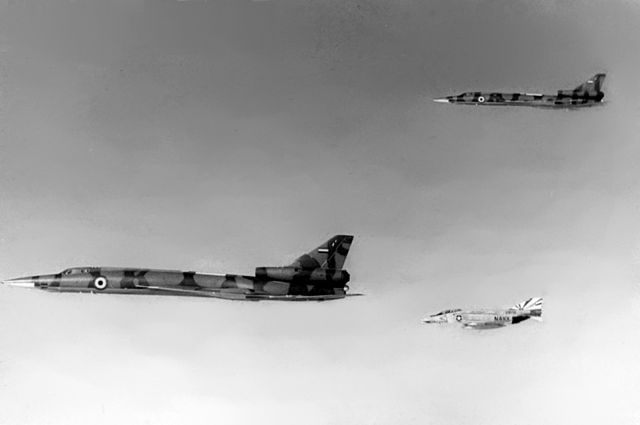
However the invasions of the Soviet Union’s MiG-25RB only had been ceased after the first encounter with the F 14A Tomcat from Iran, in which AIM 54A Phoenix fell in love by the MiG 25.


 Sign In