maurobaggio
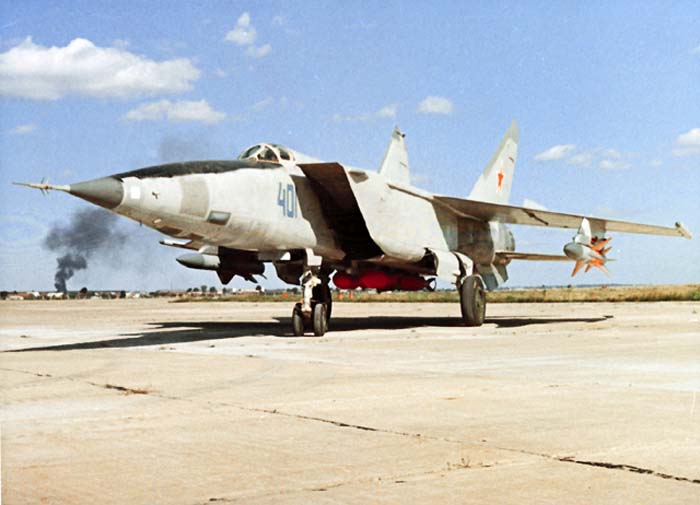
MiG 27K and MiG 25BM in Iran/Iraq War?
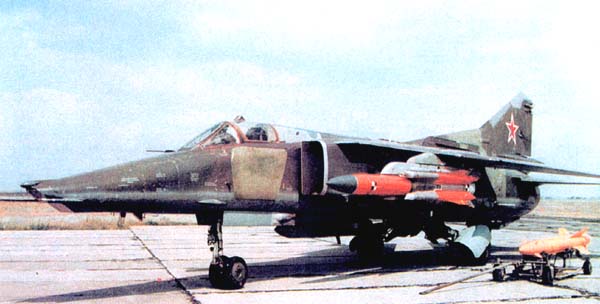
MiG 27M equipped with anti radar missile Kh 31P and laser guided bomb KAB 500L

http://www.airforce-technology.com/projects/mig27/
Drawing of the MiG 27K with anti radar missiles Kh 31P and pod designator Progress
http://chezpeps.free.fr/plus/russie/mail/2010/fevrier/03_02_2010.html
Apparently it is not the MiG 23 98 or MiG 27K but the MiG 27M, however it seems is the target designator Progress in this other air intakes pylon . As the MiG 27M were not equipped with laser target designator by TV Kaira 1 which had been fitted the MiG 27K, one possibility is that the MiG 27M shown in the photo would be some other type optical laser target designator once the laser designator Klen of the MiG 27M were limited to use laser guided missiles. As in the photo the alleged MiG 27M is carrying a laser-guided bomb KAB 500L over the air intake pylon but the would be necessary the target should be designated by other means.
The version MiG 27K equipped with TV designator Kaira 1 were a more complex version of the MiG 27 family, of which 200 MiG 27K were built between 1977 and 1982 only for Soviet Unio once the version MiG 27K hadn’t been exported for any country. As there are strong indications that the Soviet Union’s MiG 27K had been used in the Iran/Iraq War and fired missiles Kh 29L / T during the battles in 1985.
That would not be absurd that the Soviet Union has tested the anti radar missile Kh 31P with the MiG 27K flew in low altitude and missile Kh 58U with the MiG 25BM flew in at high altitude in the final phase of the war in 1988 In order to evaluate their tactics against the NATO to attack the radar stations and missiles battery SAM MIM 23 Hank from Iran.
maurobaggioMig 25BM equipped with missiles Kh 31P in the Soviet Union?
Apparently it was actually a MiG 23 equipped with Kh 31P and without the target designator pod for this. I already knew but as a teacher taught me was to see if anyone was paying attention …
Regarding the photo of MiG 25BM has been interesting since the Mig 25BM carried four pylons to the wings, but the photo appears with two and another two pylons on the ventral belly carrying free-fall bombs, which thus makes alleged that the MiG 25BM looks like the MiG 25 RB from attack and reconnaissance.
If someone could find a picture of an MiG 25BM carrying the Kh 31P missiles it would be a great discovery. Apparently the Soviet Union was more dedicated to equipping the strike fighters like the MiG 27K and attack aircraft as Su 24M with Kh 31P missiles than the MiG 25 BM own, since the lack of evidence of those aircraft are carrying these missiles during the Cold War.
[CENTER]MiG 27K equipped with Kh 31P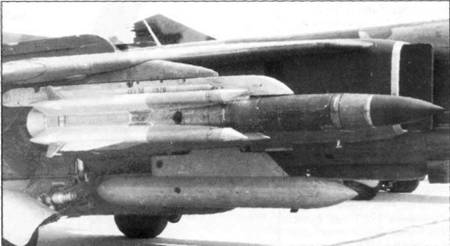
http://defenceforumindia.com/forum/indian-navy/97-adm-gorshkov-ins-vikramaditya-news-discussions-37.html
Su 24M Fencer equipped with Kh 31P
http://forum.keypublishing.com/attachment.php?attachmentid=111989&d=1138785444
From Member : flex297[/CENTER]
maurobaggioSome Reasons about the MiG 25 BM had been tested in IRAQ
The Soviet Union had developed their own tactics to confront the technological superioirity in the eletronic field from NATO once that had AWACS aircraft as E 3 Sentry and EW/IW aircraft as EF 111A Raven and EA 6 Prowler.
The MiG 25BM Foxbat was beyond the SEAD missions once that could be included the elimination of EW and AWACS aircraft in order to support the armored divisions of the Warsaw Pact so that they stay less vulnerable to NATO air strikes.
During the 80’s the Soviet Union had entered into service two anti radar missiles possessed nearly equivalent performance, but they were completely different projects: Kh 58U and Kh 31P.
The Kh 31P with ramjet propulsion that had been developed for the purpose of this missile could be capable of approaching of the missile batteries against as SAM PATRIOT and SAM I- HAWK at low altitude in order to reduce the time of those to engage the incoming missiles, as anti ship missiles flying close to the sea to stricke the warships.
The Kh 58U were developed with rocket propulsion of solid fuel and because of this it got a better range when launched from high altitude and supersonic speed as it were possible to obtain with the Mig 25BM. Like this to be launched from high altitude performed a ballistic trajectory to the target if the radar stations in the land, allowed the SAM Patriot and SAM I-HAWK missile intercept them Kh 58U before its reach the air defense radars.
The tactic that the Soviet Union could employ would be combine attacks with high altitude Mig 25BM equipped with Kh 58U in order to activate the SAM batteries SAM PATRIOT and SAM I-HAWK to intercept them, and surprise SAM batteries with missiles as Kh 31P that would approach at low altitude from long range had been launched by Su 24M Fencer while the SAM radae’s were active.
How little has been disclosed as the Mig 25BM equipped with missiles Kh 58U would be able to hit a high mobile target as EW or AWACS aircraft with anti radar’s missiles its a good question even today, but a realistic possibilty would be one version of the Kh 58U equipped with the seeker from R 33 ( AA 9 Amos) with active radar assets as well as its warhead in order to increase the range by decreasing the weight from original version of the Kh 58, and with this could be receveid a rocket with for propelent that would be increased the range.
In the case of Mig 25BM this as a ELINT platform that could locate with passive sensors AWACS and EW aircraft, and against them could launched the Kh 58 missiles with active radar, these missiles could received updates via datalink to its inertial navigation system of the target position had been provided by MiG 25BM, and when the missile closer to the target as EW or AWACS aircraft, it would activate its own radar and reach it as an air-air missile.
The Kh 58U with active radar may have been the first anti AWACS missile that had reached operational status. As successor to the Kh 58U as killer AWACS could be the KS 172 missile which was originally intended for the MiG 31M, the KS 172 had besides a greater range was also more agile in order to overcome the limited maneuverability of the Kh 58 against the aircrafts.
maurobaggioThe mystery remains about the Project Snappy?
MiG 25PDS Foxbat from Iraq with AA 6 Acrid SARH missile in the internal wing pylon and AA 8 Aphid IR missiles
Artist: © Anatoli.F.Ignatiy
Source: “Aviation and Times” 2006, No.1 (83)
There are many differences between the interceptor and MiG 25PDS and the MiG 25 RB that were designed to attack and reconnaissance missions, but with respect to MiG 25 BM had been proposed to stricke against radar platforms the visual differences between the MiG 25 RB with the MiG 25 BM are are not very visible, if not desired to show the same.
There are great illustrations of the versions of the MiG 25 and great informations at the website below:
http://www.acig.org/artman/publish/article_247.shtml
MiG 25BM with Kh 58U missile
http://wp.scn.ru/en/ww3/f/38/19/0

Artist: © Aandrey V.Khaustov
Source: “Aviation and Times” 2004, No.5 (74)
The MiG 25 BM Iraq were not exported for any country, they were used in Iraq by the Soviet Union with the purpose carrying out real tests, and as the Iran / Iraq ended they returned to the Soviet Union, since the MiG 25 BM had never been placed for sale as the Soviet Union or even later by Russian.
The MiG 25 BM were converted to this version using the MiG 25 RB platform once they weren’t built for this standard. In fact, the VVS expected to receive a version of the MiG 31 had been specialized in SEAD missions, but due to the complexity and cost of the MiG 31, since the whole production of it was committed to the IA PVO because the missions of SR 71 on the Soviet Union.
The VVS had chosen to modify the MiG 25RB into MiG 25BM for the standard as an alternative until it could receive the Foxhound MiG 31M Foxhound, which was the successor to the MiG 31F even this last one not entered in production and would be replaced by the development of the MiG 31M.
With respect to the Project Snappy for the E 3B Sentry has been designed to jammer with the radar from French origin, I would like if possible, the source of this information, since using the E 3B Sentry to jammer the air radar defense would be a new application for those aircraft in Gulf War, since the USA had the EF 111A Raven and EA 6B Prowler to carry out these missions of eletronic jamming of the radar stations.
Beyond what even the U.S. version and from Iraqi officials version who were in controlled of the air defense system of the Iraq that the air defense radars from Iraq had been suffered interference before they are destroyed in the initial night of the attack in 1991.
In many opportunities I have read about on the missile Kh 58U had been supplied for Iraq to equip the Su 24MK Fencer, but only to demonstrate that I am not the only one who has this information:
http://en.wikipedia.org/wiki/Iraqi_Air_Force
maurobaggioProject Snappy From USAF AWACS E 3B Sentry

Drawing of the MiG 25 BM From Iraq with Fuel Tank in the Center Belly and Kh 58U missile
http://wp.scn.ru/en/ww3/f/38/19/0
I agree to everything you said MSphere about photo or image of the MiG 25 BM in Iraq, as they say in my country a image is worth than thousand words. However I admit that I could not distinguish between a MiG 25 RB and MiG 25 BM if the photo had not a great quality and show in detail the four pylons on the wings of the MiG 25 BM instead of two MiG 25 in RB.
I agree with you SENS about the fact that the MiG 25RB Foxbat did not participate in the war in 1973 in attack missions, and only made reconnaissance missions at the end as you said.
In the first Gulf War in 1991 all 15 E 3B Sentry AWACS from USAF sent to the conflict had been equipped with additional sensors that were not identified, since it were secret, in a program called Project Snappy.
One of the speculations about this program was that it Project Snappy could be designed to face the threat of the Kh 58U missiles that were designed to equip the MiG 25 BM and Su 24M FencerII that for the latter would be necessary to install the Fantasmogoria pod for it to operate the missieis Kh 58U.
The Soviet Union had supplied the Su 24 MK to Iraq but there was no evidence that Kh 58U missiles have been provided as well as the pod Fantasmagoria for Iraq.
Good planning should always be done under the worst possible scenario, since there is a chance of something happening, you’d better be prepared for it.
maurobaggioCome Back From The Dark Side Of This Thread
To be polite I think you should read the books from authors prior to insinuate that this is doing a campaign against the former figthers from Iraq Air Force.
The impression I have about the working of those authors was that contrary to what you are implying, in my humble opinion they had the courage to study the air war from the point of view of those who have never been interviewed about the same in all those years from both side as Iranian and Iraq former figthers.
By demonstrating that the ability from Iran Air Force was much higher than what has been described and remains to be widely accepted, shows the difficulties that own the Iraqis had to face with their opponents, and so is a tribute to the efforts and bravery of those who fought and died for his country as Iraq, since Iran was much better equipped with weapons systems in that time as most advanced from the entire world, since a few years before the war, Iran was an ally of the U.S.
I understand you may have been feeling confused after receiving information on which you did not know before, this is a common reaction to strike the new to protect what was consolidated before.
The purpose of this thread was only about the Mig 25RB Foxbat and F 14A Tomcat II in the 1973 War and the conflict between the Iran / Iraq was brought at this thread in order to explore with examples well documented and accepted what could have happened in 1973.
I am not the owner of the truth, and I am here also to learn and correct me too, after all our knowledge is limited by the information that we have been received, and not everything that we are received could be true, but for this you need to question others as ourselves.
How many Iraqi pilots brought their aircrafts to Iran during the first Gulf War to prevent the destruction of those from attacks against the Iraq bases by U.S. and its allies?
I haven’t found out about it in that subject. Don’t you think that is strange the missing of this information?
maurobaggioMiG 25 BM and IL 76 AWACS for the SEAD Missions in Iran / Iraq War
MiG 25 BM equipped with Kh 58U for SEAD missions
http://wp.scn.ru/en/ww3/f/38/19/0
Kh 28 from Iraq in 2003
http://www.ausairpower.net/APA-Rus-ASM.html
The Soviet Union and France were the main suppliers of the armed forces of Iraq during the war with Iran.
Iraq has never designed and built a large aircraft or high-performance and therefore would not be able to modify itself as an aircraft IL 76 Candid AWACS aircraft.
Thus it is evident in the similarities of the AWACS IL 76 ADNAN ( Baghdad II) in Iraq with the A 50 Mainstay AWACS of the Soviet Union that the Iraqis were supported by Soviet technicians to perform the conversion. Probably Soviet and French technicians together with Iraqi technicians had been working to convert the IL 76 Candid into AWACS aircraft equipped with French radar Tiger G.
As the image in the site above made by U.S. troops in Iraq in 2003 the Iraq’s Air Force had anti radar missile Kh 28 (AS 9 Kyle) for SEAD missions. Those missiles were operated in conjunction with the pods that tracking the radar emissions from the target and these could equip the Su 22 Fitter Iraq with missiles Kh 28. This website with this image about the Kh 28 missile has high quality informations about many issues.
The missile Kh 58U which were the successor in the Soviet Union for the Kh 28 has never found out in the inventories of the Iraq’s Air Force , but also in many analyzes made during the first Gulf War, the missile Kh 58U were included in the inventory of Iraq.
In the Iran / Iraq conflict was a much more important than what is described in many cases. This war was the main cause of Kwaitt invasion of Iraq in 1990, which triggered the first Gulf War.
The catastrophic defeat of Iraq before the allies under U.S. leadership demoralized the military capabilities from Soviet Union which also contributes to the dissolution for this last one.
The invasion of Iraq in 2003 by the U.S. and the UK were because of chemical weapons produced in Iraq during the war with Iran, and until today the credibility of the equipment used or produced by Russian are still affected by the catastrophic defeat of Iraq in the first Gulf War
The site below has some interesting information about the Iran / Iraq War.
http://www.acig.org/artman/publish/article_206.shtml
maurobaggioAWACS aircraft in support of MiG 25 BM / RB / PDS against F 14A Tomcat II of the Iran

http://www.armybase.us/2009/05/russia-to-upgrade-military-transport-fleet/
IL 76 Baghdad I AWACS captured in the Iran Air Force
http://img.wp.scn.ru/camms/ar/737/pics/33_1.jpg
IL 76 Baghdad II AWACS captured in the Iran Air Force
http://img.wp.scn.ru/camms/ar/737/pics/33_2.jpg
At the end of the Iran / Iraq were employed AWACS ( Airborne Warning And Control System) aircraft by Iraq. Those aircraft were conversions of IL 76 Candid into AWACS that had been designed as IL 76 Baghdad I and IL 76 Baghdad II by Iraq. Its aircraft had received French radars Tiger G. The IL 76 Baghdad II were with the appearance of the Soviet Beriev A 50 Mainstay, and these last began had been entered in service on the Soviet Union around 1984.
As the IL 76 Baghad I had not become effective and the IL 76 Baghdad II probably were delivered in 1989 after the end of the war would be very likely that the Soviet Union sent some of own Bereiv A 50 Mainstay radar-equipped with Vega Shmel to support Iraq during the offensive of Iran in 1988 and testing its in a real conditions.
With support from AWACS aircraft the Soviet Wilde Weasel MiG 25 BM were able to attack with Kh 58U and Kh 31P missiles against Iran’s radar stations without to be intercepted by F 14A Tomcat II once the AWACS given warning alert for the MiG 25BM .
With the radar stations damaged or destroyed the F 14A were restricted in patrols missions to replace the affected land radars and performing air defense missions to protect the main cities of the Iran.
The MiG 25 RB in Iraq became more effective in reconnaissance and attack missions due to the support of AWACS that could warned them on the approaching of the F 14A Tomcat II.
The AWACS provided support to Interceptors MiG 25 PDS so that they were then able to operate with an escort to their own AWACs and perform missile launches of the AA 6 Acrid in long ranges without the need for support from land radar stations, thereby the MiG 25 PDS had become a real threat for the F 14A Tomcat even deep in the Iran territory.
With AWACS aircrafts Iraq began an air and land counter offensive against the Iran offensive and paralyzed this last one. In this final phase of the war the Iraq Air Force carried out many attack missions to support Iraq Army with little opposition from the Iran Air Force.
Iraq would receive in 1988 the Su 24MK Fencer attack at any time and was converting a Boeing 727 on a platform of electronic jammer that would turn the attack missions of Iraq Air Force much more dangerous.
With all this Iran after the failure of his last offensive accepted a ceasefire with Iraq ending a nearly nine years of conflict that was started by Iraq.
maurobaggioMiG 25 BM and MiG 25 RB in Joint Missions Against F 14A Tomcat II II
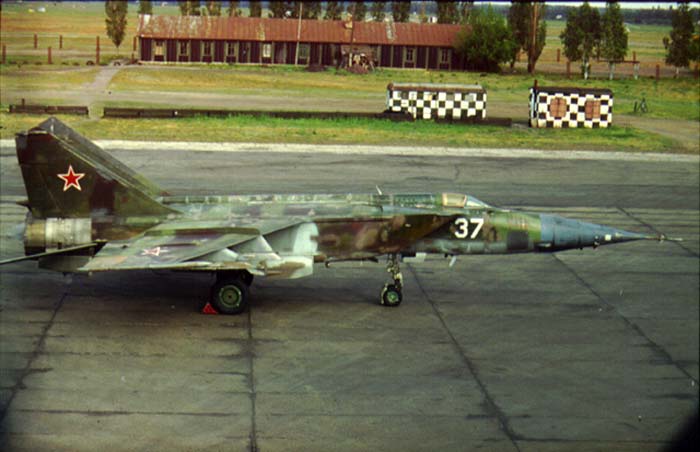
http://airbase.ru/sb/russia/mikoyan/mig/25/bm/indexe.htm
The source that has been describing the operations of the MiG 25 RB / BM and the real missions from MiG 25 BM with missiles Kh 58U and Kh 31P could be found out in the books of the authors Tom Cooper and Bishop Fazard about the operation of the F 14A Tomcat II and F 4E Phantom II from Iran Air Force .
The MiG 25 PD / RB Foxbat from Iraq and MIG 25 BM from Soviet Union had both suffered losses against the F 14A Tomcat II, which really limited the missions of the MiG 25 throughout the conflict.
There are some rumors that the MiG 25 BM for the anti radar missions belonging to the Soviet Union did missions directed against the F 14A Tomcat II, not only against Iranian radar stations.
In these missions alleged in rumors but never has been confirmed by secure sources, a MiG 25 RB penetrated into Iranian airspace, supposedly on a mission to attack or recognition, while others MiG 25 BM had remained farthest in the rear. When the F 14A would be positioned to engage the MiG 25 RB and switch on the AWG 9 radar to fire the AIM 54A Phoenix against the MiG 25 RB, the MiG 25 BM through the electromagnetic emissions from radars of the F 14A could determined the position from these and then launched missiles Kh 58U that would guide against F 14A with this radar in active mode.
The anti radar missile Kh 58U when had been launched by a MIG 25 BM at high altitude of 20,000 m and Mach 2.2 speed could have a range exceeding 250 km, which was greater than the range of the Phoenix AIM 54A with 160 km. The primary mission of the Soviet MiG 25 BM in a war against NATO would be the shot down with anti radar missiles Kh 58U the AWACS E 3A Sentry from NATO.
Overall not much is known about the missions of the MiG 25 BM in Iraq between 1986 and 1987, but what is known is that one was shot down and another was damaged but crashed on landing resulting in total loss of aircraft, both were hit by AIM 54A missiles had been launched by F 14A Tomcat II.
However the last time that the Soviet MiG 25 BM were sent to Iraq in 1988, at least one long range radar station equipped with Westinghouse ADS 4 radar belonging to Iran and located in Subashi was destroyed in June 1988 by missiles Kh 58U and Kh 31P had been launched by Mig 25 BM Foxbat.
maurobaggioMiG 25P/RB X F 14A – The Story has Several Version’s
Before I even read your post’s thought there was more news about the Iran / Iraq War, but I was wrong that our knowledge depends on the sources we use, and it is always possible to find a new source with different interpretations of what knew each other before.
Due to the political implications of the Iran / Iraq, most of the information came through the vision of the allies from Iraq, which were as e.g: USA, France, Soviet Union, Saudi Arabia and many others. Formed a league of nations that had been assembled for Iraq was not defeated by Iran after Iraq’s catastrophic offensive in the beginning of war.
Iran after the Islamic Revolution of 1979 was classified as a threat by other countries in the Persian Gulf, so that a hypothetical expansion of this should be contained. The U.S. despite not regarded Iraq as an ally in the 80’s, it was of interest through the Iranian military reverses its fundamentalist government was weakened and removed from power, to enable a new rapprochement between Iran and the U.S.
In addition to the reserves Iran’s oil their geographical position in relation to the Soviet Union was very important in the scenario of the Cold War.
In 1984 as I recall, the U.S. and even Israel had been supplied weapons and spare parts to Iran, which became a scandal known as Irangate. Among the items most requested by Ira were spare parts and kits useful life to span its AIM 54A Phoenix missiles and spare parts for F 14A Tomcat II, which would be essential in missions against MiG 25 PDS / RB from Iraq . This can be interpreted that the U.S. had an interest in Iran and the defeat of Iran was not the goal.
For the Soviet Union the revolution of 1979 in Iran brought more instability its border in the south than before when the U.S. and Iran were allies, since the Soviet Union feared that the revolution would spread among its republics with Muslim majority.
In addition to ample supply of weapons and training for Iraq, the Soviet Union had used the conflict to test new weapons such as MiG 25BM with anti radar missiles as Kh 58U and Kh 31P, whose were sent to Iraq and came under Soviet command in H 3 / Al-Walid AB , as that these fighters did several missions against radar stations from Iran, which were of U.S. origin.
Besides MiG 27 equipped with air-ground missiles Kh 29 T / L, which were extensively used against Iranian Offensive “Fatima Zahra”, which had penetrated deeply into the territory from Iraq in 1985.
In general there are many conflicting facts in this war that killed more than 1 million people and had destroyed hundreds of billions of dollars from infrastructure of the two countries.
It is common to read about the fact that Iraq did not win the war that did not use their aircraft as it should. However when considering the losses of aircraft in Iraq and that this high investment made in building shelters for its Air Force during the war, already should demonstrates that the Iranian Air Force was not disabled as many believed during the war.
However, the Iran Air Force could not afford to replace their losses and get new equipment’s, thus it also used its air force to preserve it, avoiding the use of offensive missions that could cause many losses from Iran Air Force against Iraqi air defenses .
The U.S. had no interest in confirming or disclose the victories of their equipment supplied to Iran, since the official version was that without U.S. assistance, would be without their equipment operating conditions, to avoid new restrictions on the part of Congress U.S. to supply new weapons on unstable countries, and if they eventually broke agreements with the U.S. since it could not be capable of maintaining the equipment without U.S.A.
A source very interesting with many confirmed details about the events of the war in Iran / Iraq conflict deeply analyzed the conflict are the books by journalist and writer Tom Cooper and Fazard Bishop, who detailed the operations of F 14A Tomcat II and F 4E Phamton II in service by the Iran Air Force.
Regarding the lack of information about the Soviet Union from its MiG 25 Foxbat in Iraq even before the start of the conflict between Iran/Iraq and after the start of it, was to avoid criticism because the supply of advanced Western weapons to Iraq , once the Iraq was already very close to Moscow, and samples of those advanced weapons could be sent by the Soviet Union to review its technology, especially in the case of the Mirage F1 and their missiles and radars.
maurobaggioThe Threat from MiG 25 in Shoibiah AB
The contract signed in 1979 between Iraq and the Soviet Union comprised: 12 Mil Mi 25 Hind, 10 II-76, An12 24, 48 Su 22MK3, 104 MiG 23, 90 MiG 21, 1000 SAM missiles (50 batteries of SA 2, SA 3 SA 6) and especially 24 MiG 25.The Iraq had the greatest interest in the MiG 25 Foxbat due the threat represented by F 14A TomcatII from Iran.
Iraq had accepted the aircraft systems were standard less advanced when compared by Soviet pattern, and the number of Soviet military advisers military were incremented from 6,000 to 18,000 advisers, and at this time of the effective from Iraqi Air Force had 14,000 persons.
Another concession had been obtained by the Moscow was the control of the Shoibiah Air Base, where they placed: 16 MiG 21MF, 20 MiG 23 and 24 MiG 25. The purpose of the location of the base was to surveillance the ships over the Persian Gulf and especially from US Navy Fleet .
After the attack of September 22 by 4 F4E Phantom from Iran, Iran attacked again Shoibiah base and severely damaged it. After this attack the Russians had moved to H3/Al-Wallid in western Iraq with its MiG 25 to avoid new attacks from Iran.
The interceptor MiG 25 P Foxbat were heavily dependent from Ground Control Interception to carry out their missions. The GCI had to provide all data for this mission and the GCI were equipped with radars and communications equipment for the long-range to be able to accomplish its MiG 25 missions .
In case of GCI had been damaged, but specifically its radar and communications antennas, the MiG 25P and even in some cases MiG 25RB could not accomplish its missions.
If you were the CEO (commander in chief) of the Iranian Air Force, in preparation for an massive attack that would be in the next day, which targets would you chosen ?
A) a supposed anti ship missile system;
B) a command and control system dedicated from interception missions for the MiG 25 fighters that were most powerful air threat in the Iraq territory, which would represent a major threat to Iranian offensive in the next day;
In war the first casualty is always the truth.
maurobaggio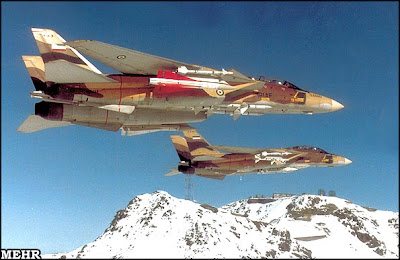
http://www.uskowioniran.com/2008_06_01_archive.html
http://www.irandefence.net/showthread.php?t=11463&page=2
The Sky Hawk program began in 1986 during the Iran / Iraq was intended to equip the F 14A Tomcat II with the Iranians missiles MIM 23 Hawk that were originally operated as SAM (Superfice Air Missile). The purpose is to equip the F 14A with a SAM missile like the MIM 23 Hawk were because Iran had been need to find a replacement for the AIM 54A Phoenix.
Once the number this missile in the inventory had been reduced by the war, and how the AIM 7E Sparrow weren’t able to intercept at MiG 25 Foxbat, the alternative was to adapt the MIM 23 Hawk to be released by F 14A Tomcat II, once the MIM 23 Hawk had a much greater range than when compared to the release of land as SAM . This fact shows how Iran considered a high threat from MiG 25 RB / P Foxbat.
On October 3 of the 1978 an MiG 25RB from Soviet Union was trying to enter into Iran but was blocked by F 14A Tomcat II from Iran that keep this intruder locked in their radar even when MiG 25RB engaged its own jamming system but this could not jamming the radars AWG 9 from F 14A Tomcat. If F 14A had received permission to launch the AIM 54 missiles the MIG 25RB had been intercepted. After this episode, the MIG 25 RB’s from Soviet Union did not invaded the Iran until the beginning of the Iran/Iraq War.
The purchase of the F14A Tomcat II were motivated too by the introduction into service of the MiG 25 and MiG 23 Foxbat by the Soviet Union, once during the 70 years the greatest threat to Iran it was with the Soviet Union due by the alignment of Iran with the U.S.A.
On 22 September 1980 to 14:00hrs the Iran Air Force attacked the air base Shoibah from Iraq , after only two hour after the air offensive from Iraq. This base had been equipped with 24 MiG 25, and only 04 of these were under Iraqi command, the others were under the control of Soviet Union. This was the first attack against the Iraqu by the Iran Air Force and was just at the base of the MiG 25 which shows the threat that were represented by the MiG 25.
From August 1982 the MiG 25 RB had started its first offensive against the oil facility in the Kark Island. In the face of the offensive the F 14A TomcatII went keeping in 24-hour patrols over Tehran from the month of September after several attacks with loss of life among the civilian population of the Iran. On September 16 was shot down the first MiG 25 RB while he was in the approach route for Kark Island by AIM 54A Phoenix missile launched from an F 14A.
Until the end of the war Iran had to face the MiG 25, on three different occasions since 1987 the Soviet Union had sent the MiG 25 BM which were designed to attack radar stations in missions against Iranian radar , several radar stations and SAM radar systems were attacked and destroye. In one of these missions a MiG 25 BM was hit and damaged by an AIM 54A Phoenix launched from an F 14A,the Soviet MiG 25 BM was able to return at its base but after the landing had suffered damage that it was declared a total loss.
maurobaggioPAK FA and S 37 Berkut Together
Long time ago I read that the S – 37 Berkut would be a project to replace the MiG 31 B/BS and Su 27S in IA PVO (Air Defense Force) and MiG 1.44 MFI was a project to replace the MiG 29 and Su 27 on VVS ( Air Force).
But that after the merger of VVS and IA PVO into the new VVS had decided in light of budget constraints to develop a new project which is now known as PAK FA or T 50, a project that would be more advanced than the MiG 1.44 MFI indeed once would be need to replace the Su 27 either in air defense missions. The MiG 31 would be retired from service because the high cost do keep theses fighter in operational service, and will not replaced since the budget constraints.
With the recent decision from Russian to modernize part of its fleet of MiG 31 B / BS for the standard MiG 31 BM could be an indication that the S 37 Berkut could be used in future to replace the MiG 31, since from the beginning of the project S 37 Berkut had equipped with engines that were used the MiG 31 and supposedly part of your electronics such as radar Zaslon N007.
The priority of the project S 37 Berkut was presumed to achieve a performance as the MiG 31 with Mach 3 speed at high altitudes but with the maneuverability of the Su 27 Flanker, stealth technology is not the high priority as it is in the PAK FA since and that conditions from Mach 3 speed in high altitudes were nob available the stealth technology from Russian .
Since Russia has been joined with India and due to this there was a decreasing in development cost per unit built for the PAK FA could be now Russia has better conditions to continue the development of the S 37 Berkut to replace in the future the MiG 31 Foxhound ?
maurobaggioThere is a saying in China which is widely used: no matter the color of the horse as long as it does the job.
However in military aviation colors always have a purpose, even when it is not very wise.
As mentioned about SR 71 could be reason the black paint in order to distribute the heat generated in the areas of high friction to the cooler areas of the surface of the aircraft, also have the purpose of reducing infrared signature of the own aircraft, since the dissipate thermal energy generated by friction in a larger area, this would lower the temperature in the areas of high friction with the supersonic flow air. Therefore it is possible to avoid the appearance of small areas with high temperatures that could be detected at a greater distance by passive infrared sensors, and then could be used as spot by the infrared guided missiles.
My mistake by changing the right name of the B1B Lancer from wrong Lancaster was unforgivable. In fact I was reading about the Avro Lancaster bomber before the written that post.
But I’ve been thinking now in my opinion that B1B Lancaster would be more elegant than the Lancer, since I do not recall some famous Lancer before of the B1B .
maurobaggioF 14A Tomcat II X MiG 25 RB/P Foxbat in the Iran/Iraq War
Reality can be considered as the interpretation of facts, and when new facts emerge could be alter our reality. The authorization for the sale of F 14A Tomcat II to Iran in the 70s was granted due to the threat of the MiG 25RB Foxbat
that invaded Iran in order to make recognition of the U.S. secret facilities in the territory of Iran what were destined to spy by electronic means at the Soviet Union.
The Soviet Union performed these MiG 25RB missions in order to pressure Iran to the United States withdraw these facilities the same, and as the F 4E Phamton II equipped with missiles AIM 7E SparrowII of Iran were not a threat to MiG 25RB.
The U.S. had authorized the sale of F 14A Tomcat II with long-range missiles AIM 54A Phoenix. With the entry into operation of the F 14A in the Iran Air Force the invasions of Iran from MiG 25RB ceased.
During the Iran / Iraq the Iraqi MiG 25 RB often manned by pilots of the Soviet Union and other Warsaw Pact nations in the beginning of the war due to lack of fully trained Iraqi pilots since the preparation of the MiG 25 pilots had required a longer training , made many strike missions against Teeram and petroleum terminal on the kark Isle .
These attacks only began to decrease in intensity as the F 14A Tomcat II were being put into operation again, due to the U.S. embargo and the Iranian pilots and their crews to develop new tactics to face the MiG 25RB.
Faced with increasing rates of losses of the MiG 25 RB in combat against the F 14A Tomcat II the Iraq began to acquire SS 1 Scud missile , and then went on to produce copies of these missiles for use against Iran.
The importance of F 14A Tomcat II was so high that in many battles that these crews were ordered not to engage Iraqi fighters, should only guide the F 4 Phantom II and F 5E Tiger II against these targets through radar AWG 9 from F 14A , to prevent loss of F 14A as well as save the missile AIM 54A Phoenix, since these were the only defense against the Mig 25RB .
Even with these restrictions the F 14A Tomcat II had obtained may have more than 120 victories throughout the war with Iraq, possibly including 10 MiG 25 RB / PD.
Iran was the only country that had to face large-scale attacks of MiG 25RB did not consider these as useless, in fact considered them very dangerous, so always tried to preserve tis strength of the F 14A Tomcat II even when they could cause more loss to Iraq.


 Sign In