maurobaggio
Very effective..? Very effective compared to what?
Very cheap compared to what?I seriously doubt its cheaper and more effective against any one of these weapons systems:
https://en.wikipedia.org/wiki/S-8_rocket
https://en.wikipedia.org/wiki/S-13_rocket
The GAU-8 is a monster on both size and weight. There are so many limitions with mounting this gun on other platforms. Its a big no-no.
And the ammo for GAU-8 is not cheap at all. What other weapon system use the same ammo? Does the Navy use it? Does the army use it?
So you end up with producing ammo rounds for the quite limited array of guns only used on A-10. I’m not sure about the gun on Apache, but i would be surprised its the same type of ammo.
‘The A-10 conducts CAS differently from other aircraft In Afghanistan, A-10 pilots used their 30mm GAU-8 cannons much more frequently than other weapons, including guided bombs. In contrast, the F-16 relied largely on guided bombs for CAS.During interviews we conducted, many ground commanders expressed a preference for the 30mm cannon over precision bombs because the cannon is highly accurate (80 percent of rounds within a 20-ftradius at 4,000-ft range), is better able to hit moving targets than even precision
bombs, and produces less collateral damage than bombs.Also, many missions involved a show of force, in which aircraft flew low and slow over the U.S. ground forces to deter adversary activity.’
John Matsumura, John Gordon IV, Randall Steeb , Defining an Approach for Future Close Air Support Capability, pag 20
http://www.rand.org/pubs/research_reports/RR1233.html
The Gatling gun 6X30mm GAU-8 standard ammunition from A-10 has been composed of anti-tank incendiary projectiles PGU-14B and high explosive incendiary projectiles PGU-13B in the proportion of 4X1, but this standard has been apparently used against targets such as armored columns (MBT, IFV, APC).
As in Iraq and Afghanistan after 2003 these are not routine targets, in fact should not have been needing the ammunition like the PGU-14B of deplete uranium to pass through armored, so this type of higher cost projectile could not be the standard with the A-10.
In fact it were almost incomprehensible that the A-10A had been not equipped with a laser designator / telemeter laser, since others attack fighters from NATO like the Jaguar and Harrier II had such system, just as this were a standard with the former Soviet Union: Su-17M, MiG-23BN, MiG-27, Su-25.
The lack of the laser rangefinder with A-10A had been limited the accuracy of both GAU-8 cannon and free fall bombs and rockets, since the A-10 were not equipped with radar, unlike the first version of the F- 16A/B that has been equipped with multirole radars.
The A-10A has been equipped with a passive laser sensor Pave Penny , then its only capable to locate targets has been marked by laser designator from others aircraft and ground troops .
With the modernization from A-10A to the standard A-10C and the introduction of the Sniper and Litening pods into the A-10C, it now has been equipped with laser designator / telemeter, as well as a long-range TV and FLIR system, so it has been considerably increased the accuracy and safety for ground troops with GAU-8 while has been compared with version A-10A.
In the attack against armored columns from Warsaw Pact from 80’s by the A-10A with the GAU-8 cannon this would have been happened at low altitude and short distance, since the GAU-8’s anti-tank ammunition needs high speed to penetrate the more resistant armors, perhaps in reason of this mission it had been omitted such laser designator / telemeter in the version A-10A.
Even in the 80’s there were plans to modernize the A-10A with laser designator and FLIR, but at this time the USAF had been already announced that it would remove the A-10A from the active service and it would replace by a new version of F 16 with internal laser designator and FLIR, once the Lantirn pod with the F-16C/D should be just a temporally measure until this new version of the F-16 that would be acquired by USAF in the 90’s.
The outcome of the 1991 Gulf War and the end of the Cold War has been allowed the A-10 still active even though it has been highly unwanted by the ‘Father’ USAF since its conception, once the A-10 does not look like a child from USAF, otherwise It looks like the ‘neighbor’ US Army.
maurobaggio…and on the other side ground troops do a great thing for the A-10 (and AMX, Su-25, Apache, Mi-28, Tiger ets, etc.):
with their movement & fire they put the enemy force into the dire choice to show up & fight, so making them a suitable target for a CAS plane attack or insteadkeep to stay hidden and being overran.This even more when we talk about the current engagement in Afghanistan and Syria-Iraq against insurgent forces that blend themselves with the civilian population and use/rob their infrastuctures and life support in opposition to let’s say the centralized and logistically heavy armed forces under Saddam Hussein that offered a lot of targets for a strategic bombing campaign.
Interestingly the comments in your post above, since it would have been possible to observe these differences in the operations from A-10 in the Gulf War in 1991 as well as in the current campaigns both in Iraq and Afghanistan after 2003.
like in 1991 during the Gulf War the A-10 had been operated mostly at altitudes above 10000ft(3050m) on CAS and BAI missions because of the threat from MANPADS and AAA . In this campaign the most effective weapon of the A 10 has been the AGM 65 Maverik, once 90% from all AGM 65 were launched by A 10 during the Golf War, while the Gatling 6x30mm GAU-8 cannon were less used because of the restrictions to stay above 10000ft(3050m) the altitude.
In the campaigns post-invasion of Iraq in 2003 and Afghanistan the most effective weapon of the A 10 has been the GAU-8 cannon, although the threat of the MANPADS and AAA has been smaller than 1991 but the same still present , therefore the explanation for this change could have been associated with the characteristics of the targets has been found out in Iraq and Afghanistan.
In 1991 those targets had been identified from 10,000ft altitude on the deserts of Iraq and Kuwait, such as: MBT, APC, IFV, MLRS, SS 1 SCUD TEL , artillery pieces among others. While in Iraq and Afghanistan after 2003 the targets of the A-10 has been found out among civilian buildings and vehicles used by insurgents, so there were not scattered and visible in the deserts like in 1991 but in urban areas among the civilian population.
Another detail that may explain the fact that the GAU-8 cannon has been became the most effective weapon in the Afghan and Iraqi campaigns shall be the improved version A-10C, which among other systems has been introduced the SNIPER and LITENING pod with FLIR and Laser Designation .
In 1991 the A-10A had been only equipped with the Pave Penny sensor that are simple located laser from marked targets by others aircraft or ground troops equipped with laser designation.
Then with the introduction of SNIPER and LITENING pods the A-10C has been equipping with laser range to increase the accuracy of GAU-8 as well as FLIR for searching more difficult targets in urban environment.
However, what has been making the A-10 highly effective with the GAU 8 are its impressive capabilities to withstand damage from MANPADS or AAA while has been flying at low altitude and speed, since the low speed and altitude will increases accuracy from GAU-8 and enables A-10C to identify difficult targets for the GAU-8 and other weapons.
maurobaggioTom Cooper’s critical(not surprisingly) view on Russian operations in Syria. https://warisboring.com/does-the-russian-air-force-even-know-what-is-going-on-in-syria-82333eadca31#.y60m6u45k
While the article is quite biased, it does point correctly at lack of recon assets in theatre. Why VKS/VVS didn’t deploy Su-24MRs in Syria?
In fact, I also found the text tendentious too, since it has been advocating the UAV as the main source of reconnaissance or intelligence of the ground troops, yet the US-led coalition that makes extensive use of UAV has also been shown difficulties in locating targets in Iraq and Syria, once in the past as 75 percent of Iraq’s air missions ended up with aircraft had been returning to its air bases carrying the weapons intended for the attack against the insurgents.
In the 1991 Gulf War the E 8A JSTAR has been recognized as the primary means to obtain intelligence on the ground battlefield, as far as I know E-8C JSTAR has not routinely been used in Iraq today, perhaps because of the difficulty of determining through SAR radar images if a civilian vehicle such as a pick up or truck would have been used to transport insurgents or military equipment.
In the same way I think that Russian aircraft like: Su-24MR, Tu-22MR, MiG-25 RB would have been highly limited in the Syria too. Perhaps the An-20 that were used in Afghanistan in the 1980s and in Chechnya in the 1990s had some use in Syria, but I guess the UAVs has been used by Russia could accomplish this missions from An-20 with less risks.
However an aircraft that should have been attracting a lot of attention , but so far has been treated very discreetly are the Ka-52 from VKS and Russian Navy.Even the recently acquired Ka-52K by the Russian Navy were sent aboard of the Kuznetsov aircraft carrier, so far as I know there aren’t information about these missions from Ka-52K.
The Ka-52 are not only an attack helicopter but a reconnaissance and command platform too, since the Ka- 52 has been equipped with a FH-101 radar that operates in two Ka / X bands to locate ground and air targets and the system GOES-451 with FLIR, as well as the Ka-52 has been equipped with datalinks.
In Syria the Ka-52 would have been kept an additional advantage in locating targets without air-air threats like fighters or long range SAM, once the Ka-52 can reach altitudes of 4,500m( 14,764 ft) even fully equipped with weapons, then it could penetrated deep in the territory has been controlled by the insurgents and remain at this altitude which puts it out of range from MANPADS and AAA.
While it has been locating possible targets as vehicles with the use of radar, the Ka-52 could approach and use the GOES-451 system to confirm them, while it kept out of range of the insurgents, as well as the Ka- 52 could attacking these with its own weapons and to command others aircraft’s or ground troops to engage the enemy.
If UAV has more autonomy than helicopters like the Ka-52, the Ka-52 can operate very close at the enemy from mobile forward bases, since these does not demand air bases or even improvised runways like the UAV.
maurobaggioRAND Report Affirms U.S. Rep. McSally Position on A-10
The full RAND report can be read here:
http://www.rand.org/pubs/research_reports/RR1233.html
Interesting reading in the full report has been placed above by TangoIII.
For many it may be a shock to read that A-10 with 6x30mm GAU 8 cannon has been pointed the most effective weapon by ground troops in Iraq and Afghanistan than even the LGB or PGM.
In this our universe there are not 100% reliability in any place, so if you are among the ground troops near the enemy and your aircrafts has been attacking with: LGB, PGM, JDAM or cruise missiles , then it has been highly recommended to take shelter too, since in Battles field such 90% reliability for precision weapons are an excellent number to put in the wall.
Such problem with precision weapons (LGB, PGM, JDAM and cruise missiles) that has been decreased the reliability from 100% its common in all others fields, once this equipment are susceptible to problems in its hardware (electronics, electrical and mechanical) as well as software (processing failure, corrupted data).
In general, free-fall bombs and cannons in the aircrafts has been several times more inaccurate( CEP) than LGB, PGM and JDAM, however a cannon shell or free-fall bomb has not been fit with means to alter its trajectory after firing or launching, thus precision weapons ( LGB , PGM , JDAM) if it has been presenting failure could deviate from the target not by hundreds feet , but by a few miles( each mile has 5300 ft)
Precision weapons has been show huge advantages in several aspects , however relying only in those precision weapons can be a particular problem in CAS missions already today, otherwise the jamming( ECM) or even invasion of the datalink network by the enemy on this new weapons will be high threat in the future too.
maurobaggioIlyushin unveils Il-38 ASW upgrade for Russian Navy
Strange..why did the RuN decide not to equip the Il-38N with an AShM?
I guess that main reason should be Russian Navy has been receiving the Su-30SM to operate in ground air bases , so the priority could have been equipping the Su-30SM with the Kh-35 missiles, while the Il-38Ns will maintain the maritime patrol function only, maybe for the concept from Russian Navy that Il-38 are very vulnerable to face air-air threats in maritime attack missions with AShM.
Apparently the Kh-35 missile had began its development in the early 1980s, and it air-sea version should have intended at the new MiG-29K( or Su-27M, Su-27IB( Su-34), MiG-29M) and the Su-24M from Soviet Navy’s in first place, but with the collapse of the Soviet Union such plans were abandoned among several others.
The anti-ship function of the subsonic AShM Kh-35 are quite different from the supersonic ASCM Kh-22/32 that has been equipping the Tu-22M3, once the Kh-22/32 are capable with better range than the Kh-35 beside the warhead 1000kg( 2204 lb) from Kh-22/32 with increasing in almost 5x higher than 200 kg( 440 lb) from Kh-35.
The Kh-22/32 has been intended for targets such as: battle cruisers, destroyers, aircraft carriers, heavy transport ships among other large or heavy protected targets in blue waters.
Whereas the sea-skimmer Kh-35 could have been developed by former Soviet Union to reach targets like: missiles boats, corvettes, frigates, amphibious landing ships in blue or brown waters, in the last case near the coast as bays and straits.
maurobaggioI’m not saying that MiG’s choice was bad at a time since export considerations didn’t play a part at that time, and, yes, the requirements for being able to operate from unprepared airstrips additionally reduced the available space for fuel. But, in post-Cold War hindsight, the basic design has two engines for which it has too little fuel and only three hardpoints per wing which rather limits its useful weapon load except for its primary short range interception role. Compared to its US rival, the F-16, which carries the same or larger payload and has a somewhat longer range IIRC with a more compact airframe allowing for a single engine to suffice. I love the MiG-29’s looks, but it’s hard not to admire what the F-16 designers did. The MiG-29M would have been what the MiG-29A should have been in the first place (improved range and enlarged wing among many other things) if it wasn’t so tailor-suited to those rather narrow-minded requirements.
In fact, the MiG 29M in the late 80s has been keeping several different aspects than the MiG 29A/C/S (9.12, 9.13 and 9.13S), and these has not been restricted only at aspects of multi-functional capabilities, as well as the internal fuel and weapons load has been increased with the MiG 29M, then it could have become less stable than the MiG 29A ( 9.12), in reason of it has been received the FBW( Fly By Wire) system, like the MiG 29K.
The MiG 29A/C/S had been developed like an aerodynamically stable configuration, unlike the Su 27S/P which has been keeping aerodynamically unstable configuration and due to this the FBW analog system were fit at the first prototype T 10 in 1977.
In fact, the MiG 29 (9.12, 9.13 and 9.13S) has been equipped with hydraulic controls assisted by an electronic filter like the F 15A / C, this electronic filter has been calibrated the hydraulic system in order to improve the controls during maneuvers like in air combat.
However it has not been FBW system since this electronic filter could be switched off if any problem happened with this system , then the MiG 29 would have been totally limited to hydraulic controls, but it would keep the conditions to remain in combat.
In the 70s and 80s the FBW systems were still novelty , as well as such novelty will require some time before all bugs could have been eliminated from the system to become mature to understand hash environment with frontal aviation , in reason of that VVS had been opted for this hydraulic system with electronic filter since the MiG 29 would be the main fighter of frontal aviation .
The FBW system would have been turned the MiG 29A ( 9.12) more complex to operate on air bases or improvised airfields near the front line, otherwise the Su 27S from VVS had been recieved the main mission to escort the Su 24M from air bases with more resources and less temporally in reason of the high range of the Su 27 and Su 24.
The simplicity from fighters has been intended to operate on air bases near of the front line or even in improvised or captured airfields were an important aspect of the frontal aviation, since under extremely harsh conditions the availability of spare parts has been critical issue, then the elimination of items such as the FBW system from fighter has been also decreasing the diversity and quantity of spare parts as well as expert technicians to perform these complex maintenance, especially while the system were novelty.
Despite the absence of the FBW from MiG 29A (9.12) it had been considered highly complex fighter of the front aviation from VVS in 1983, once it has been equipped with sighting system mounted on the pilot’s helmet, IRST with the laser rangefinder as well as BVR capabilities among others resources. So I guess that F 16 A/C despite the multi-functional capabilities had not received all those system, only in 1987 the first F 16 were equipped with BVR capabilities.
I guess either that MiG 35 has been meant to replace both the MiG 29 (9.13) as well as the Su 25SM, since both fighters had been designed to operate with front aviation, so the MiG 35 would be easier to operate on advanced or improvised airfields than heavy fighters like the Su 30SM and Su 35S.
Because of this I think that MiG 35 from VKS will not equipped with AESA radar or even with TVC in the engines for now, probably the MiG 35 will have many system from MiG 29K .
maurobaggioThat is exactly type of info I was looking for. Can you provide any further details or sources? It is quite surprising, as it was expected that FSW will be most beneficial in the 0.8-1.3M region. What is more the FSW layout was quite extensively studied by both TsAGI and Sukhoi and the designers were well aware of the stiffness problems. From what I’ve found Su-47 was flown up to speeds of 1.3M during testing, although value of 1.6M was mentioned as well.
In fact in the video above at 3 minutes and 20 s it has been possible to observe the problem with flapping wings from S 37, however in the same video has not been demonstrated with the big one.
https://www.youtube.com/watch?v=aRDqzwiSkHI
At the time of the former Soviet Union were decided to build the prototype of the S 37, and even by Soviet standards an aircraft like the S 37 were such high cost program to prove only results with little chance of success it had been already demonstrated in the initial studies in wind tunnel.
In addition in the 1980’s the US had been already researching the FSW concept with the X 29 for the 5 generations of fighters without observed the same problems. Then should be quite questionable that the US had not observed the same problem in the initial analyzes of the FSW concept since it built the X 29 too.
In this business it is quite common that when someone has been faced with an alley without exit , this Gentlemen puts large warning in the way to inform his followers with this message: forward at full speed, instead of warning about the obstacle.
The US and Soviet Union had been analyzing the supposed advances of the adversary with considerable cautions, once this practice were applied by both sides.
As the S 37 has been more complex aircraft than the X 29 and it program could have been started even before of the X 29, in fact the S 37 were classified as high secret program in the 80’s by the former Soviet Union, while the X 29 were very well knew in the world , then it is quite possible that S 37 program has not been an alley without exit.
maurobaggioWhat type 05B or type 05BM? This is a fantasy.
Aviation Plant “Sokol” produces MiG-31 stopped at the end of 1993 due to the crisis of the state.
In 1994, the plant is ready for production of the MiG 1.42
MiG 1.44 / 1.42, and S-37 fighter is a “big country”. Russia can not buy such aircraft. Russian potential only 40% of the USSRThe engine for S-37 – R179-300, 17500 kgs / 12000 kgs
If the izdeliye 5B and izdeliye 5BM that should have been more advanced versions than the MiG 31M (izdeliye 5) were fantasies, these came from a book that I did not know that belonged to the fiction class, like this:
Flight Craft 8: Mikoyan MiG-31: Defender of the Homeland
By Yefim Gordon,Dmitriy Komissarov
https://books.google.com.br/books?id=P7LWCgAAQBAJ&pg=RA1-PA16&lpg=RA1-PA16&dq=flight+8+MiG+31&source=bl&ots=18-frFYf-c&sig=BPetg2OT8u2BLNMTY2P3isB3CzI&hl=pt-BR&sa=X&ved=0ahUKEwjLm43rocfRAhWDFJAKHdRsA2wQ6AEISTAJ
In almost all mentions about the MiG 31M (izdeliye 5) like in this book it has been always mentioned that the MiG 31M has been equipped with new engines like the D30F6M, though this has been look more like new version of the D30F6 from MiG 31B/BS than new engines, otherwise the N007M radar and the R37 missiles from MiG 31M are quite different than N007 and R33 from MiG 31B/BS
It should be very important aspect about the MiG 31M about its maximum weight of 52t, which would put this above the maximum weight of MiG 31 B / BS of approximately 46t, once the engines like D30F6 (MiG 31B / BS) and D30F6M (MiG 31M) has been apparently show the same thrust , than it would reduce the T/W ratio of MiG 31M while compared with MiG 31B/BS.
| width: 750 | class: grid | align: center |
|---|---|---|
| [tr] | ||
| [td]Fighter[/td] | ||
| [td]Engines(2X)[/td] | ||
| [td]Thrust[/td] | ||
| [td]Weight[/td] | ||
| [td]T/W[/td] | ||
| [/tr] | ||
| [tr] | ||
| [td]MiG 31B/BS[/td] | ||
| [td]D30F6[/td] | ||
| [td]31 | 000 kgf[/td] | |
| [td]46 | 000 kg[/td] | |
| [td]0 | 67[/td] | |
| [/tr] | ||
| [tr] | ||
| [td]MiG 31M[/td] | ||
| [td]D30F6M[/td] | ||
| [td]32 | 000 Kgf[/td] | |
| [td]52 | 000 Kg[/td] | |
| [td]0 | 62[/td] | |
| [/tr] |
It seems that the MiG 31M (izdeliye 5) has been under-powered when compared with MiG 31B / BS, so it is possible that the MiG 31M (izdeliye 5) had been used as development aircraft for more advanced versions like izdeliye 5B and izdeliye 5BM, about those new version has not been available informations so far.
If the new engines like R179-300( 20,500 kg of thrust) had been developed for S 37 , which there are not confirmation by any source, as well as the D30F11( 14,500 kg of thrust) and the Al 41F( 17,500 thrust) of the MiG 1.44 MFI with flat nozzles TVC 2D that has not been assembled into S 37 and MiG 1.44 either, than it would be quite strange that S 37 were equipped with R 179-300 intead the MiG 31M.
| width: 750 | class: grid | align: center |
|---|---|---|
| [tr] | ||
| [td]Fighter[/td] | ||
| [td]Engines(2X)[/td] | ||
| [td]Thrust[/td] | ||
| [td]Weight[/td] | ||
| [td]T/W[/td] | ||
| [/tr] | ||
| [tr] | ||
| [td]MiG 31M[/td] | ||
| [td]D30F6M[/td] | ||
| [td]32 | 000 Kg[/td] | |
| [td]52 | 000 Kg[/td] | |
| [td]0 | 62[/td] | |
| [tr] | ||
| [/tr] | ||
| [tr] | ||
| [td]S 37[/td] | ||
| [td]R179-300[/td] | ||
| [td]41 | 000 Kg[/td] | |
| [td]34 | 000 Kg[/td] | |
| [td]1 | 20[/td] | |
| [/tr] |
Such simple analysis can demonstrate that there are at least small contradictions between the development of the S 37 with R 179-300 engines and the MiG 31M with D30F6M engines. Just to remember that R 179-300 engines had been developed in the same time of the program MiG 31M.
Then Al 41F has been developing since the 90’s with MiG 1.44 MFI , so why it were not assembled on the S 37 instead of the supposed D30F11 and R 179-300? After all why should have been developed three different engines (Al 41F, R 179-300 and D30F11) for only two fighters like MiG 1.44 MFI and S 37?
| width: 750 | class: grid | align: center |
|---|---|---|
| [tr] | ||
| [td]Fighter[/td] | ||
| [td]Engines(2X)[/td] | ||
| [td]Thrust[/td] | ||
| [td]Weight[/td] | ||
| [td]T/W[/td] | ||
| [/tr] | ||
| [tr] | ||
| [td]MiG 1.44[/td] | ||
| [td]Al 41F[/td] | ||
| [td]35 | 000 Kg[/td] | |
| [td]35 | 000 Kg[/td] | |
| [td]1 | 0[/td] | |
| [/tr] | ||
| [tr] | ||
| [td]S 37(1)[/td] | ||
| [td]D30F11[/td] | ||
| [td]29 | 000kg[/td] | |
| [td]34 | 000 kg[/td] | |
| [td]0 | 85[/td] | |
| [/tr] | ||
| [tr] | ||
| [td]S 37(2)[/td] | ||
| [td]Al 41F[/td] | ||
| [td]35 | 000kg[/td] | |
| [td]34 | 000 kg[/td] | |
| [td]1 | 0[/td] | |
| [/tr] | ||
| [tr] | ||
| [td]S 37(3)[/td] | ||
| [td]R179-300[/td] | ||
| [td]41 | 000kg[/td] | |
| [td]34 | 000 kg[/td] | |
| [td]1 | 2[/td] | |
| [/tr] |
In the time from Soviet Union it were not build prototypes for competitions in almost all programs, since competition between the different project offices had been carried out at the design phase, which has been completely opposed from the standard US method like the ATF (YF 22 and YF 23) with two fighters(YF 22 and YF 23) and two engines( YF119 and YF120).
Certainly there are lot of noise about the S 37 , since even the engines itself has been great source of controversy , then any information’s about the results of the S 37 tests has been totally speculative too, especially on the fact that wings had been flapping during the tests.
I have the impression that information about the flapping issue from S 37 were taken from documentary about the S 37 even in the time of the former Soviet Union , once a model from S 37 were put in the wind tunnel and it has been apparently demonstrated the flapping phenomenon since the time of the Soviet Union.
If the wind tunnel model from S 37 had been show the flapping issue, then why the Soviet Union started to build the S 37 prototype after this?
Maybe to prove that the wind tunnel was wrong ….
maurobaggioThere is a certain lack of information in terms of the early history of both planes. The P. Butowski claim that on 19th June 1986 the MiG was appointed as responsible for both MFI and PFI programs. Meanwhile, the S-37 was ordered in 1983 as an experimental testbed, but its status was changed in 1988 to the next generation fighter program, as the results were very promising. On the other hand, Y. Gordon suggests that the MiG indeed won the competition (it is an interesting question for which type of air force it was conducted, but I guess that for VVS)and the S-37 was proceeded as a private venture by decision of M. Simonov. In both versions the S-37 received some limited funding from the government up to 1991. Both actually flown prototypes did not receive the intended radars (the first 1.44 prototype was just an aerodynamic testbed it was not intended to receive the N014 radar) and I am not sure if the Al-41F installed on the 1.44 received TVC, but I would bet that rather not.
I thought that the often cited 1.6M limit resulted from the limitations of the FSW design. It will be interesting to know what was the actually tested maximum speed of Su-47, allegedly it achieved 1.3M in 2000, but I have no idea if during later flights it wasn’t bested. By the way, does anybody know when the last flight of Su-47 took place? The newest in-flight photo I’ve seen was taken somewhere around 2009, did it fly after this date?
Very interesting the information has been researched by you and paralay too.
With regard to S 37 I have my own doubts that the program had been keep just as private venture before or after the end of the former Soviet Union, since the S 37 were not a small subsonic attack jet like the T 8-1 (Su 25).
In fact I guess that MiG 1.44 MFI did not have the Al 41 engines with TVC has been assembled on the only prototype, as well as the PESA N014 radar, yet both system had been developed for MiG 1.44.
With regard the S 37 this has been more nebulous than MiG 1.44 MFI, once there are not mention on the radar and even about the engines D 30F11 with TVC. Indeed I have not been found out any evidence about the development of those, after all as far I know the S 37 had been equipped with the D 30F6 engines from MiG 31.
Another important aspect should be about the weapons that should be transported inside its weapons bay, after all there are not evidence about the development of these at this time too.
At the same time the Soviet Union had been developing the MiG 31M, and it were equipped with: new radar like the N007M, new engines like the D 30F6M and new weapons like the missiles R 37 and R 77.
However, the MiG 31M program after the construction of 07 prototypes and 03 unfinished into assembly facility has been officially cancelled by Russia since it would not have been passed in the state tests, in fact this decision had been occurred shortly before the maiden flight of the S 37 in 1997.
In fact this decision about the cancellation of the MiG 31M (izdeliye 5) has been quite controversial until the present day, however it shall be more surprising that MiG 31M (izdeliye 5) could have been created to carry out trials for the development of two more advanced versions: Izdeliye 5B and Izdeliye 5BM.
If MiG 31M (izdeliye 5) has been only testing new technologies from Izdeliye 5B and Izdeliye 5BM, then the fact that the MiG 31M (izdeliye 5) did not pass the official tests should not be controversial , after all the MiG 31M had been only one step on the development of the Izdeliye 5B and Izdeliye 5BM, in that case the MiG 31M (izdeliye 5) should have not been submitted for state tests, otherwise the Izdeliye 5B and Izdeliye 5BM should have been submitted for the state tests.
In any case Russia had been passing for such severe financial crisis in the 1990s, it could have been the cause of the MiG 31M ( izdeliye 5 ,izdeliye 5B and izdeliye 5BM) cancellation, however if that was the reason perhaps the program were not canceled but only suspended until resources were available to proceed with the program .
An important aspect about the Izdeliye 5B and Izdeliye 5BM that has not been any description about its characteristics or details until the present day as far I know.
Due to all the limitations has been demonstrated with respect to the maximum speed of Mach 1.3 or 1.6 from S 37 it is almost evident that it has not been prototype from Soviet or Russian 5th Generation fighter, instead an aircraft could have been destined to research for the technologies from another fighter program.
The Su 35S could be described like descendant of the research from the development of the MiG 1.44 MFI, instead the MiG 31M or the S 37 has been not left any descendants so far.
Anyway the PAK FA has been such 5th Generation fighter without any remarkable similarity with MiG 1.44 MFI or S 37, even if it has been benefited from the researches done so far like the FBW from S 37, as well as the Al 41 engine with TVC from MiG 1.44 MFI and Su 35S, this engine will not be the definitive engine from PAK FA.
maurobaggioI have no idea where did it come from. The S-32/37 program was a proposal for the RuAF MFI competition and while the MiG 1.42 was determined to be the winner, nevertheless the S-37 was still to some extent financed by RuAF as an experimental program up to 1991. After 1991 the funding was cut and S-37 proceeded as a private venture, but at this point the design was already frozen. At no point the program was connected to the Russian Navy. It is obvious that Sukhoi was looking for additional funds and was trying to sell it to other potential users but saying that it was intended and designed as Marine fighter is simply wrong.
Well, let’s agree to disagree.
Which Air Force the MiG 1.42 / 1.44 MFI won the competition against the S 37 ? Since in the Soviet Union there were two Air Forces like: VVS (Air Force) that used the MiG 29 and Su 27 and the IA-PVO (Air Defense) that used the MiG 31 and Su 27, and these had been remained separated until 1998 in Russia. Not to mention the AV-MF (Naval Air Force) from Soviet and Russian Navy.
Another unusual fact in the Soviet Union had been the construction of prototypes of different project office for competition. The competition has been always decided about the evaluation of design phase and data has been obtained in research centers about the projects from different offices, in order to save resources and time with the construction of different prototypes from different offices.
The prototype S 37 made its maiden flight in 1997, but the former Soviet Union had apparently started the construction of the prototype before the collapse, then the S 37 could have not been the definitive version , since it were not equipped with new TVC engines or even radar, instead the S 37 has been equipped with D30F6 engines without TVC from MiG 31.
The Sukhoi had been trialed the Su 27 equipped with a flat nozzles engine with TVC 2D in 1989 , this test were made in order to collect data for the program of a 5th Generation fighter in which the S 37 would have been also part.
It seems that the S 37 were built with the purpose of evaluating of new technologies and to develop the FBW system of this 5th Generation fighter that would be more aerodynamically unstable than the T 10 / Su 27, as well as it should reach speeds and altitudes from MiG 31 .
Just as possible question could be that S 37 has been equipped with the forward swept wings because this 5th Generation fighter would have this aerodynamic configuration, otherwise it were adopted in order to obtain a more aerodynamically unstable aircraft to perform tests without exposing the aerodynamic configuration of this 5th Generation fighter?
While the MiG 1.44 MFI has been equipped with new TVC Al 41 engines , as well as a new PESA N014 radar, otherwise the program of the S 37 in 1997 would have been more outdated since it were not equipped with new TVC engine or even with radar.
Because of these fact there are several interpretations that MiG 1.44 MFI would have been chosen by the Soviet Union, but if the Soviet Union had been building the S 37 for trials, as well as the MiG 1.44 , so neither S 37 or MiG 1.44 could have been evaluated by the Soviet Union before the collapse of the same.
With regard that S 37 would be equipped with folding wings in fact there were several mentions about this, but there are no evidence to sustain it, as well as the mentions that S 37 had been equipped with D 30F11 engines with TVC, then as far as I know the S 37 has been equipped with the D 30F6 engines without TVC from MiG 31
Perhaps both the MiG 1.44 MFI and the S 37 could have been planned as ship-borne aircraft on the Soviet Navy aircraft carrier in the future, but both programs were finalized with the construction of a single prototype each type without any requirements from ship-borne aircraft.
In fact there are a lot of confusion about the S 37 program, since it has been changed to S 47 or Su 47 after the appearance of the Su 37 in the late 90s, but the Su 37 itself had been also redesignated as Su 35M in the early years 2000.
maurobaggioWhile the discussion is certainly very interesting I think we got quite far from the original subject. On the Secret Projects forum I found a following quote (from anonymous source on Russian forum):”The most important problem of this ******* is not weight, but jolting. The matter is that this (FSW) scheme has a congenital defect which no one can get rid of. In a break point of a forward edge very strong vortices form which descend from the left and right consoles approximately in chessboard order. Frequency and intensity of these vortices makes flight on this pepelatz (notorious alien spaceship from soviet movie Kin-Dza-Dza) reminds driving a oxcart on a stone blocks. Americans have tried it on the X – 29 and have spat upon this scheme (and informed the whole world about these problems). But Russians have their own pride,<…>. So we have what we have. Wing fuel tanks have continuous leaks – they have to use pans to collect it”. Also, it was mentioned that the plane itself was limited to 5G due to problems with excessive loads on the airframe. Does anybody have any information whenever these claims are true?
Both MiG 1.42 / 1.44 and S 47 had been developments from former Soviet Union in order to oppose for the new ATF program from EUA. The ATF program had been resulted in the YF 22 and YF 23 prototypes of the early 1990s.
With the collapse of the Soviet Union, the 5th Generation fighter program had been halted until at least the mid-1990s, while the MiG 1.42 / 1.44 should be a development to replace the Su 27 / MiG 29 in the VVS, the S 47 would be a development to replace MiG 31 / Su 27 in IA-PVO.
While MiG 1.44 had been equipped with new avionics such as the PESA N014 radar as well as new Al 41 engines with TVC, the S 47 were not equipped with new avionics or new engines, since the engines of the S 47 were the D 30F6 from MiG 31 .
The S 47 program would have been changed due to the fact that the new engine had not yet been developed in the 90s, so the S 47 prototype has been modified to use the D 30F6 from MiG 31.
The great curiosity about S 47 has been due to the fact that this were not an experimental fighter, even in the golden times from Soviet Union in reason of the high military budgets them never will built an experimental fighter with higth dimensions only the purpose to conduct aerodynamics researches.
In addition, when Russia put all datas from MiG 1.42 / 1.44 and T 50 programs for the India delegation to analysis those for the future FGFA program from India, the Russia’s delegation would have questioned by the India delegacion why the S 47 had not been offered to them, and apparently the answers were that program S 47 program has been classified as secret yet, otherwise it means that would be more secret than the own T 50 (PAK FA ) itself.
The S 47 were not the definitive prototype of this 5th Generation fighter, once the purpose of the S 47 should be trials new technologies that will be used in a future fighter to replace the MiG 31.
Perhaps the offspings from S 47 shall be now known as the PAK DP, however the development of this has not been confirmed or even denied by Russia.
Just as possibility could be that new Izd 30 engines has been developing for the PAK FA as well as large part of the new avionics could be also used by the PAK DP, in that case the PAK DP could employ an airframe has been designed to reach speed above Mach 3.5 and 25,000 m ( 82,000 ft) altitude without the VLO capabilities from PAK FA.
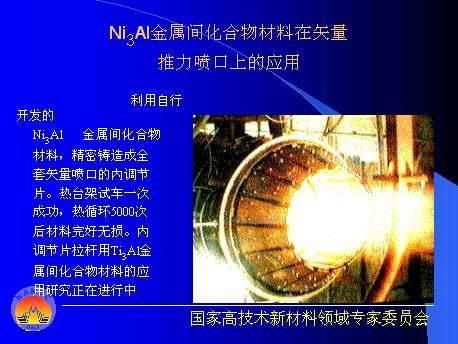
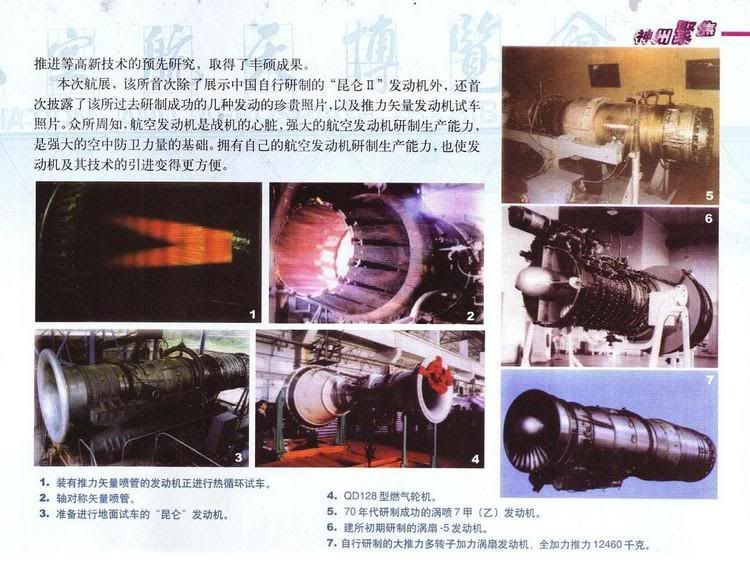
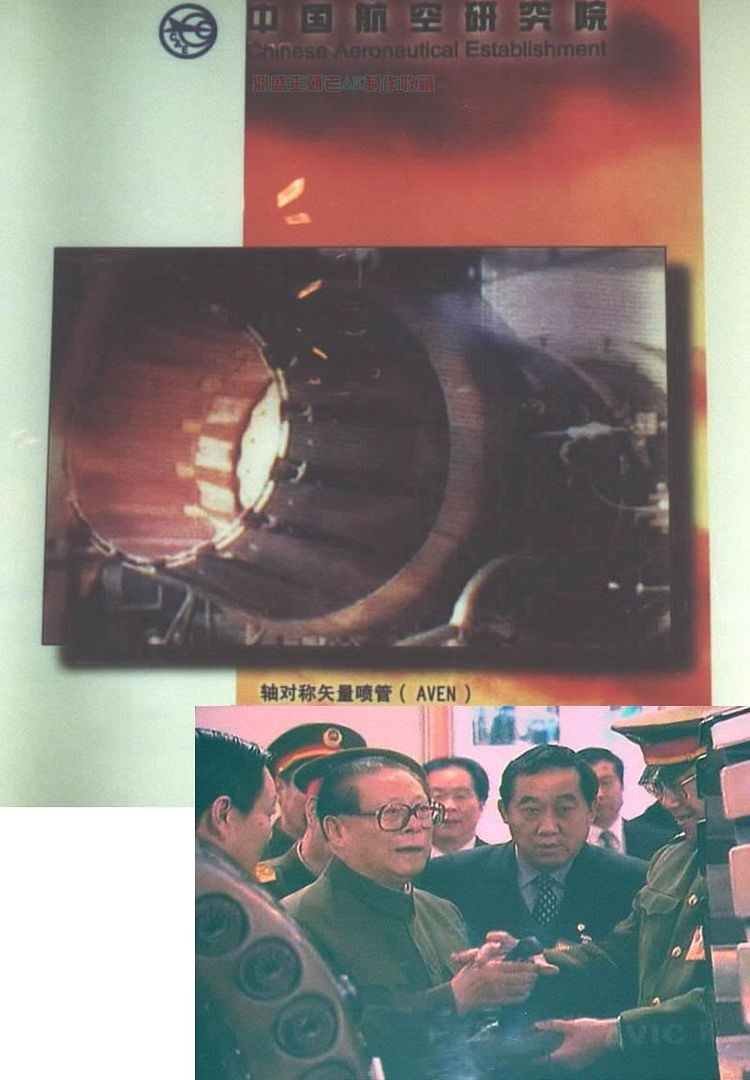
maurobaggioThey have tested different technologies from flat 2D nozzles to all-aspect 3D nozzles like GE AVEN. But all of them have been ground tests. There have been no reports or even rumors of any TVC nozzles being integrated and tested in the air. Russians have plenty of experience and proven platforms when it comes to TVC (Su-37, Su-30MKI/MKM/MKA/SM, Su-35S, T-50, etc). Su-35 will give the PLAAF and relevant companies valuable insight and experience.
Below is an AVEN testbed from the early 2000s in China. Have not heard of any flying prototype yet.
It has been quite Interesting post from you, thanks.
Perhaps the most attractive item for China about the Su 35 will not be only the Al 41 engine with TVC , but its integration with the FBW ( Fly-By-Wire) system from Su 35 as well as as its integration with PESA N035 Irbis radar system has been mounted in gimbals support with 3D capability
An important detail about radar from fighters should be it can lose its targets if the fighters has been performing high G maneuvers during combat to avoid it has been hit by a missile.
The PESA( Passive Electronically Scan Array) and AESA ( Active Electronically Scan Array) radars has been keeping high advantages in this capability with respect for previous generations radars that has been equipped with only mechanical antennas such as planar or cassegrain
If the maneuverability from fighters has been increasing with the introduction of TVC engines, it is also necessary to evolve with the FBW system from fighter, in reason to fully utilizes the advantages of the TVC engines.
This improved FBW with high G capabilities shall be integrated with sensitive sensors as radar and IRST , then its sensor should have been capable with fast-time-response to keep tracking the targets while the fighters has been performing high G maneuvers.
In this way the introduction of the Su 35 could benefit China even if the TVC engine would have not used with 4.5 or 5 Generation fighters from China, once the Su 35 has already passed through the entire R & D cycle , as well as the Su 35 has been already entered in active service with Russian Air Force, so China would have the opportunity to analyze all this technologies without the need to go through all the previous steps with the J 20 and J 31( or FC 31) as well as the pilots from those new fighters.
maurobaggioHmm, you’re right, the configuration looks exactly the same. And we probably won’t get a Russian Flanker flight manual anytime soon to see if these are mentioned.
In fact this possibility would be very interesting about to get those informations from manuals of the Su 27 S/P and MiG 29 of the anti radiation missiles R 27P/EP. But there are not real possibility of this dream could have been realized since manuals are documents of extreme low security, and therefore sensitive information has been always omitted from these, at the best of hypotheses it will describe the most basic modes.Another problem should be that R 27P/EP had not been basic equippment of the Su 27S/P like the others versions R 27R/T/ER/ET( SARH and IRH).
The best definition for military manuals of high-complexity equipment like the Su 27S/P maybe it is this I took from a movie: ‘it is more like guidelines than rules.’
After all if all information could have been condensed into manuals and books, then instructor and teachers would have disappeared long ago in all fields.
In the military or technological field it has not been recommended to place all sensitive information on documents that could have been easily mislay or stolen, in reason of that the function of the instructor still exists in those fields along many others, so to keep at the best these informations restricted for those who will use these .
Yet it is intriguing that we are here in 2017 has been interested in the R 27P/EP that date back to the 80s, since at this time the mobile phones were only capable to perform the telephone function, and nowadays smartphones has been capable for several other functions, although the most expected function by me it does not exist yet, which would be the capability to fry eggs.
So I will not be a lot surprised if the anti-radiation function on the X-band from R 27P/EP that had been allow it to target the adversary fighters in passive mode,while it were emitting in the X band through its radars modes or even through its datalink has been already included in the versions since the 90’s of the missiles SARH( semi active radar homing) R 27 or even the ARH( active radar homing) like the R 37 and R 77. After all, the R 37 and R 77 from 90’s has been equipped with active radar homing ( ARH) in the X band, which are the same band it has been used by the radars fighters around the world.
maurobaggioI feel something like ‘deja-vu’ about the 24 Su 35 for China, as it reminds me of the 55 Su 33MK/UBK that were traded with China in the mid-2000s.
The Su 33MK/UBK would have been equipped with engines Al 31 TVC and PESA N010 Zhuk radars. It seem that deal were canceled when China had obtained at leas one Su 33 (Su 27K) prototype that was stocked in Ukraine since the end of the Soviet Union.
Russia withdrawn from the agreement with China because it were reduced the amount from 55 Su 33MK to something like 06, in addition at this time China had canceled the Su 27SK/UBK the manufacturing agreement in China, and as a result China started to produce its own version of J 11 without license from Russia.
As far I remember Russia has always been offering for China the most advanced versions of the Su 27 and Su 30 as: Su 27M (1992), Su 30MK (1998), Su 35M (2002). However China has always been opting for less advanced versions of Su 27 and Su 30 like: Su 27SK/UBK (1992), Su 30MKK (1996), Su 30MK2 (2002).
I do not think this was just a coincidence, just as it weren’t due to the higher costs of the more advanced versions, maybe China had been made this option believing that getting the simpler and less expensive versions it will use in the learning process for more advanced versions of their own design in the immediate future.
This alleged pattern would have been changed with the acquisition of Su 33MK/UBK, which could have contributed for the development of its J 11D, as well as it could used the acknowledgment of the TVC engines with 5ª Generation J 20 and J 31 projects (FC 31 for export ).
This did not occur because China received such unexpected gift that was the prototype of Su 33 (Su 27K) that were stocked in Ukraine, as well as support through the acquisition of industrial equipment to start the production of J 11 in China without assistance from Russia , in special for the production if its engines like the WS 10 for both the J 10 and J 11.
Something tells me now that the acquisition of the 24 Su 35 shall be a correction in the heading from recent past, may be the gifts that China received in the past would be more like ancient Greek gifts (Trojan horse), since it could have been delaying the advances from China instead to increase these.
maurobaggioIt’s not so simple. IIRC, the missiles were assembled in Ukraine (Artem), while some of the components were made in Russia (e.g. seekers) and the missile development is more than just slapping a new seeker on. Without seekers or even planes with radars capable of guiding them, it would be hard for Artem to developed them further on their own to be even able to offer them for sale. And that’s presuming that afterwards someone would opt to buy them instead of the much superior RVV-AE.
Since the R-27 missile family is limited to 8G, I would presume this is too limiting for a self-guided missile in the terminal stage and hence why it was not chosen for further development during the Soviet Union.
The R 77 (RVV-AE) from 1994 has not been a competitor of R 27EA(ARH), since R 77 can reach range equivalent to R 27R / T, whereas the R 27ER/ET were versions with extended range when it had been compared to R 27 R/T.
In fact, the R 27R/T had been developed with short-range BVR capability but with high maneuverability capability to hit fighters from 4th Generation (F 14, F 15, F 16, F/A 18, Mirage 2000), while the R 27E/ET has been extended range due to the larger rocket engine and slow burning rocket, then the weight and dimensions of the R 27ER/ET has been increased in reason of this.
Since there are no free lunch in this business, in fact the maneuverability of the R 27ER / ET has been decreased due to the higher weight and dimensions, however the targets of R 27ET / ER should be aircraft’s (AWACS, Bombers, Transport, ASuW / ASW, ISR) with restricted maneuverability , but it could have been detected by the SU 27P / S / UB with N001 radars at great distances when it has been compared to fighters.
Just as such curiosity the MiG 29S (9.13S) were produced from former Soviet Union around 48 fighters until its collapse, and only in this MiG 29S had been already configured with R 77, while the others fighters( Su 27M, MiG 29M/K and MiG 31M) still in development phase at the collapse from Soviet Union, but the detail would be that the MiG 29S were equipped with the radar N019M , this were an improved version of N019 that has been equipped the MiG 29 (9.12, 9.13), while the MiG 29M/K were equipped with N010 Zhuk.
The N019 radars from MiG 29 according to most of the citations it has been described with 60% of components from N001 that has been equipped the Su 27P/S/UB, otherwise the curious fact should be that Soviet Union had been produced in series until 1991 the N019M that enabled the MiG 29S can engage two targets simultaneously with the R 77, but the same Soviet Union did not produce in series a version like N001M to equip the Su 27P/S/UB and Su 30 to enable it to engage at least two targets simultaneously with the R 77 too.
In fact several second-hand MiG 29S were exported after the end of the Soviet Union to countries like Peru, at least the MiG 29S from Peru were equipped with the R 77. So in the same way that new MiG 29SE with the N019M radars were produced and exported with R 77 as option, while the Su 27SK/UBK had been exported to China and Vietnam are not capable with R 77 or R 27EA(ARH).
Since 1991 to 2014 both Ukraine and Russia had been maintained a large trade-off between defense companies, so exporting or importing items were not a problem, and because of this there weren’t restriction about the R 27EA that could have been produced or exported from Ukraine.
The R-33 missiles have bigger warheads plus their targets were non-maneuvering bombers and cruise missiles so the somewhat bigger delay in target updates was probably not critical.
I agree about it is always possible to learn something new as you mentioned before, as well as your analysis of the MiG 31 from 1978 with the PESA N007 radar has been engaging 04 targets simultaneously with SARH R 33 missiles as long as the targets are not maneuverable like Bombers and cruise missiles.
But the same concept then should have been applied to the SAM Buk M2 from 90s , once it TELAR can engage 04 targets simultaneously with SARH missiles due to the new PESA radar, despite of the targets such as bombers and cruise missiles may not be it most common targets from SAM Buk M2.
However the Su 35S has been described as only capable of engaging 02 targets simultaneously with SARH missiles, otherwise with ARH missiles the number of targets shall be 08. After all non-maneuverable targets (AWACS, Transport, Bombers, cruise missiles, UAV) should have been engaged by Su 35S too, still the MiG 31 under these same conditions has been capable to engage 04 targets simultaneously with SARH missiles, even after 30 years of constant evolution of hardware and software from radars like the PESA


 Sign In