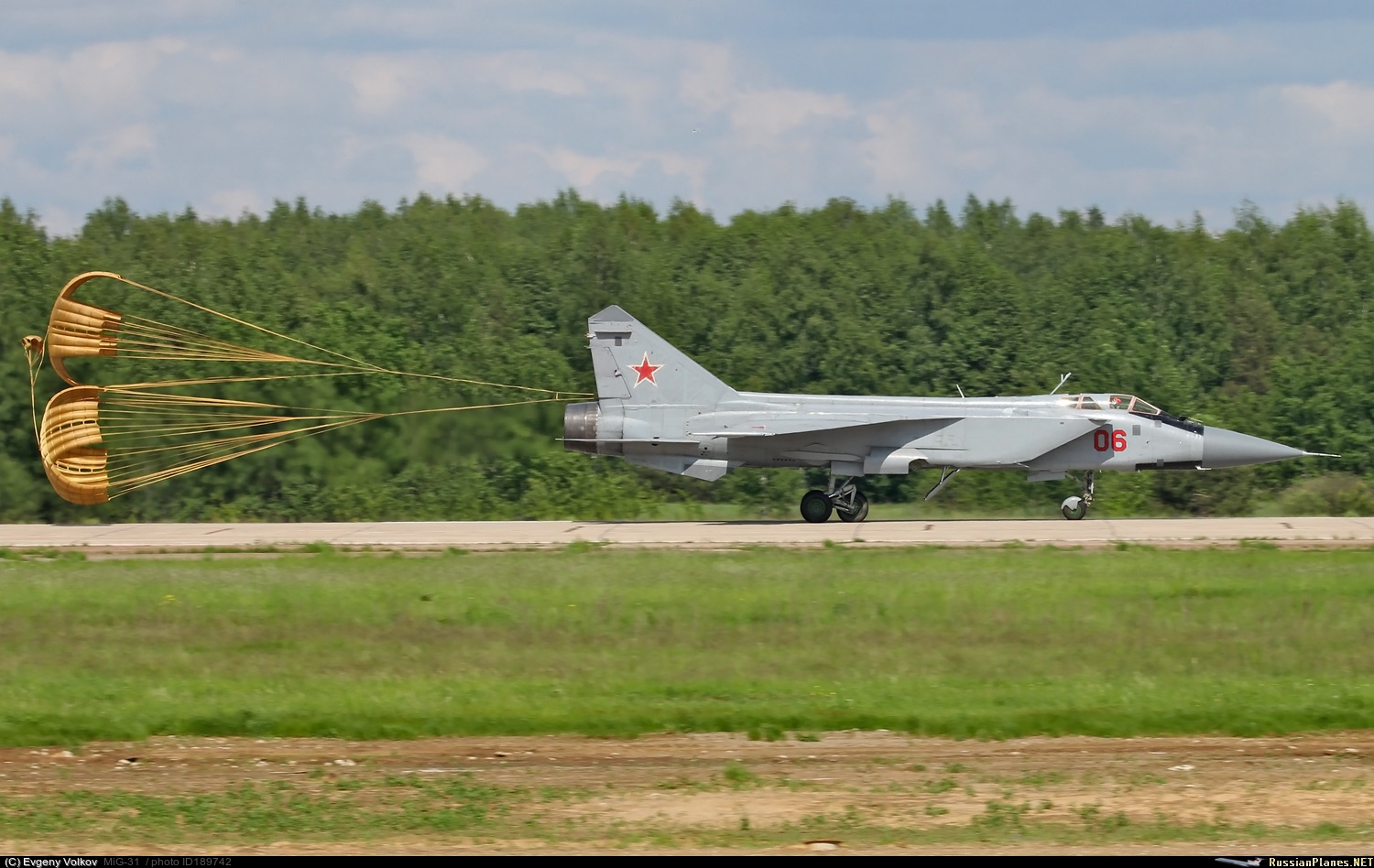
maurobaggio
In the article above the Kamov Ka 52K could be equipped with a new AESA antenna with dual band (X / Ka).
The current radar dual band Arbalet from Ka 52 has been actually operating in two bands X / Ka, but this is not the type PESA that were the previous generation from AESA.
While the N007 radar from MiG 31Dz/B/BS/BM has been using the X band as main mode for search and track since 1981, as well as the L-band for IFF, so the N007 are not officially as dual band radar (X / L). The N011M Bars from Su 30MKI and the N035 Irbis E from Su 35S are both using PESA technology with band X, but there are not dual band radar either.
My poor knowledge about the former Soviet Union and Russia tells me that they has been keeping the oldest habit about doesn’t make long jumps without first has been consolidating the way, if indeed they can put into production today such radar with dual band with AESA technology in the Ka 52K, this could be such small clue that at some time in the past they did it with PESA radar…
maurobaggioBoth beautiful as highly interesting the picture in the post above.
Thanks for the info. So basically this will be the production standard for all new Mi-28Ns after this modified version completes all testing? And will the new Mi-28NM be able to use the existing radio guided Attaka missiles if the radio guidance antenna is deleted?
If I understand correctly the Mil 28NM has been equipped with the radar at the top of main rotor as part of it primary systems just the AH 64D/E Apache, and it would not be only optional equipment as in previous versions of the Mil 28N.
With this radar in the main rotor the Mil 28NM will be able to operate with Attack missiles too, once these missiles can be targeted through the data-link in Ka or X band of the radar at the top of the main rotor, and thus the small radar in the nose like in the Mil 28N can be deleted.
I do not know if Vikhr were abandoned so far, however the Attack and Vikhr has been developing since the 80, but only the Attack missile has been produced with radio guidance , while the Vikhr were developed with dual channel guidance system, both laser and radio in the same missile.
The Vikhr were more complex than the Attacks, and the reason were supposed for this should be that the Vikhr had longer range than the Attack. About the information’s has been available from Vikhrs has been equipped with system as radio and laser guidance , in this case the radio command should be used at short distance until the missile has been aligned with the laser designation of the aircraft.
However other possibility were these dual system of radio and laser had been used to obtain better accuracy at long range with the laser channel from Shkval system at the day light, while the radio channel could be used with the radar from Ka 50 and Su 25 TM that had been developed in the decade of 80.
In this case both the Ka 50 and the Su 25TM could be able to use the Vikhrs both night and in adverse weather conditions, specially against air targets like attack helicopter and transport helicopters. Against air targets should be not necessary confirm with TV optical Shkval system if the target were friend or enemy, once aircraft’s and helicopter had IFF system.
Both Ka 50 and Su 25TM were equipped with TV optical Shkval system , but much less noticed were the radar system has been located in the nose above the TV / laser window from Shkval system into Ka 50. The Su 25TM should have been equipped with Kinzhal-S radar that was developed in 80 decade, and it were cancelled after the end of the Soviet Union. The X band Kopyo-25 has been replaced the Kinzhal-S with Ka band in the Su 25 TM ( Su 39).
The Ka 52 has been keeping such advanced radar dual band X / Ka in the nose, while the Mil 28N and Mil 28NM has been increasingly integrating the dual band X / Ka radar in the top of the main rotor, so this may show that missiles with radio guidance as Attack and the Vikhr( both laser and radio channels) could still be important. Once the millimeter-wave radar or X band from aircraft’s and the radio guidance from missiles has been suffering less degradation than IIR ( Imaging Infra Red) systems and laser guidance in adverse weather conditions, as well as the presence of smoke and high infrared sources that would be present on the battlefield due to fires in: building, vehicles, forests and vegetation.
maurobaggioWhat never existed neither as a passing thought in soviet times was the multirole fighter : istribitie’l were a thing, attack planes another.
The former Soviet Union had been developing multipurpose MiG 29M and the embarked MiG 29K versions, as well as the multipurpose Su 27M in the late 80s, and it were already in prototype phase before the end of the Soviet Union.
They can be derived one from the other like in the case of MiG-27 but they were always well separated things.
Indeed the MiG 27 had been an attack version of the interceptor MiG 23, however this were not exclusive of the former Soviet Union at this time,once in the West there were versions of Tornado IDS for strike missions and Tornado ADV for air defense missions, just as the AJ 37 Viggen and the second generation JA 37 Viggen for interceptions missions with BRV missiles.
The main reason for this division had been related to the limitations of electronic technology from 70’s in order to harmonize all its functions into fighter.
In the case of the Soviet Union this division were not so evident at least with Frontal Aviation, once the Soviet Union it had been using the interceptor MiG 23MLD as fighter bomber until 1989 in Afghanistan, even with the presence of the large numbers of strike aircraft’s like: Su 17M, MiG 27D and Su 25.
It was only in russian times that the impossibility of maintaining the two separate lines and the absolute need of exporting planes for maintaining the production lines open made them turn it in the superb multirole plane we all know now for its service in foreign air forces.
The multipurpose Su 30M from 90’s it had been developed from the interceptor Su 30 and the multipurpose Su 27M from 80’s. After the Gulf War in 1991 there were consensus that multipurpose fighters should be two-seat like the F 15E, and in this case the Su 30M has been highly keeping acceptance for several countries, while the single seat Su 27M has been improved along several year until to reach the standard of the Su 35S.
Also ithe ruaf is actually using their own Su-30 in A2G role in Syria but not surprisingly has introduced an even more specialized strike derivative with the Su34 and would end to acquire a far greater number of them than of the “multirole” one…
About attack missions Su 34 shall be more complete than the Su 30SM and Su 35S, since the Su 34 has been equipped with better armored cockpit like the Su 25, and the Su 34 has a FLIR system that has been already integrated with aircraft for weapons with laser seeker, without the need for an external pod like the Su 30SM and Su 35S.
maurobaggioDoes anybody know for how long did the Mig-21bis serve with the VVS? I have OOB from military balance in 1989-90 and World air power journal 1990 that still lists it as active
anybody have more details ? how long did it survive and given that the mig-29 was plentiful by late 80s ( almost 450 according to most sources in VVS) what possible reason did it serve ?
The MiG 21bis had been played an important part in the first years from Afghanistan invasion by the USSR at the beginning of the 80.
In fact the MiG 21bis were used as fighter- bomber in those early years instead as Mach 2 interceptor for which it had been designed in the early 70’s.
But with the intensification of the war , the rebels had been highly increasing the launch’s of MANPADS as the FIM 43 Redeye since 1984 and later the FIM 92 Stinger since 1986, then the MiG 21Bis were gradually removed from its missions over Afghanistan with VVS, once it were not appropriate to carry out fighter bomber missions in this danger environment.In this case were replaced by Su 17M3/M4, MiG 23MLD, Su 25 and MiG 27D.
However for reconnaissance version of the MiG 21R were very capable, and it had continued in operation until the arrive of the highly advanced version of the Su 17M4R
One reason for this might be the own geographical conditions from Afghanistan, once the MiG 21bis has been demanded long runway to take off by its design, than it could be compared to other fighters from former Soviet Union (MiG 23/27, Su 17M3 /M4 and Su 25), specially in such region with conditions like high attitude and hot temperature .
That aspects in the War in Afghanistan has been restricted the capability to carry heavy weapons load as well as the maneuverability of the MiG 21bis to evade from MANPADS, as well as the shortage of air bases with long runways. Otherwise the MiG 21R had not been carrying weapons load, so it were less affected by these operational constraints.
With the outcome of the assessments has been made in the Afghanistan War, I guess the VVS had not glimpsed the possibility to improve the MiG 21Bis for a multi role fighter. Otherwise the MiG 23MLD had been widely used in Afghanistan as interceptor and to escort the fighter bombers near or even inside the Pakistan border. As well as the MiG 23MLD were used as fighter bomber until the end of the war in 1989.
In fact the interceptor Mach 2 as the MiG 23MLD had been widely used as fighter bomber during the War in Afghanistan even with the availability of large numbers of truly fighters bombers like the Su 17M3/M4 and MiG 27D.
In my humble opinion I guess that Russia and other republics from former Soviet Union had been removing from active service the last regiments from MiG 21Bis quite soon after the collapse of the former Soviet Union, as well as others such as Su 17M and MiG 27 , once those were highly specialized in its single mission, likewise the strategic interceptor MiG 25PD / PDS with twin engines that had been removed from the active service few years before of the single engine MiG 23MLD.
Indeed spare parts could be obtained disassembling aircraft’s from regiments deactivated , pilots and crews were available with low paychecks since there were no job opportunities during these years outside of the military forces. However the almost impossible challenge were to get aviation kerosene to keep the minimum training for all aircraft’s, even the most advanced like the fighters from 4 generation.
Most of the suppliers of the aviation kerosene from Soviet Union had been come from the republics of Azerbaijan and Kazakhstan, and with the end of the Soviet Union countries like Russia and others had started to import aviation kerosene by world market prices in dollars. After all the aviation kerosene produced in these countries had been considered with good quality.
What once it has not been considered even such important cost to the Armed Forces from Soviet Union, or even to civil aviation, it has become the biggest nightmare from those republics like Russia with economy in crisis and devalued currency , despite it had been producing and exporting oil, indeed there were no plants to process the aviation kerosene inside Russia or under the control of the government.
Then fighters like: MiG 21bis, all versions of the MiG 27, Su 17M3/M4 or Su 17M4R could have been keeping such still significant useful life in the early 90, and because it had only single engine , so it were lower operating costs and to maintain the same in active service, however those fighters were less capable to perform different tasks or even as regards the range of its missions. After all tanker aircraft to refueling small fighters in fly are not cheap to purchase or maintain in operation too, and those tankers aircraft’s were very rarely even during the Soviet Union, specially from the eyes of the former Frontal Aviation .
maurobaggioIt’s the lighter electronics and more fuel capacity. Lighter materials in manufacturing. I fully expect R-77-1 range between 160 to 180km. After all tmc managed to double range of kh-35/kh-31 while maintaining same weight.
With respect to R 77 (RVV-AE) if will be carried out a comparison of this early 90’s with those new generations about the max range:
| width: 700 | class: grid | align: left |
|---|---|---|
| [tr] | ||
| [td]Missile[/td] | ||
| [td]Range(Km)[/td] | ||
| [td]% Increase[/td] | ||
| [/tr] | ||
| [tr] | ||
| [td]R 77[/td] | ||
| [td]80[/td] | ||
| [td]*[/td] | ||
| [/tr] | ||
| [tr] | ||
| [td]R 77-1[/td] | ||
| [td]110[/td] | ||
| [td]37,5[/td] | ||
| [/tr] | ||
| [tr] | ||
| [td]K 77M[/td] | ||
| [td]200[/td] | ||
| [td]150[/td] | ||
| [/tr] |
In fact between the first generation from R 77 and the third generation K 77M it has been increasing the max range in 150% since 1994, when it came into operation the first R 77.
However just a detail that may be important in this increasing range could be obtained by the replacement of the lattice fins for the delta fins , once this system were introduced in the first R 77 and it has been keeping with R 77-1 in order to increase the maneuverability like I had explained in the other thread on these posts bellow:
This opinion has been related in first place with the choice of the lattice tail controls system from R 77, once this could have been increased the maneuvering capability , but for instance it could have been decreased the range capability when compared to the AIM 120, since the aerodynamic drag of the lattice tail control from R 77 has been considered higher than the delta fins tail control from the AIM 120 or MICA.
The ARH R 77-1 has been equivalent in range as R 27ET/ER/EP, while the first R 77 from 90’s had been equivalent in range with R27T/R/P.
However there are some information that R 77-1 will be introduced in MiG 31BM, then I have presumed that if the same will be fired by MiG 31BM in high supersonic speed and high altitude the max range of R 77-1 could have been increased to something like 160km or even 180Km.
Anyway there are some reports that the new K 77M will enter in operation with the MiG 31BM, as well as there are different information that even the R 77-1 also goes into operation with T 50 (PAK -FA) along the new K 77M.
Just it could be such possibility that one version of R 77-1, for the Su 30SM and Su 35S or even the MiG 31BM, as those lattice fins will be replaced by delta fins with less aerodynamic drag like the new K 77M , then its new modification maybe increasing the max range from 110 Km to something like 160 km, but this will reduce the capability in maneuverability if will compared with the legacy R 77-1.
Anyway there are some information’s that the new K 77M will go into operation with the MiG 31BM, as there are different information that even the R 77-1 also goes into operation with T 50 (PAK -FA) along the new K 77M.
This can be quite confusing in the fist view, however the fact is that: there are such huge difference between the concept of the standards it has been adopted by the US and the system adopted by Russia.
While the West countries has been standardized into single range from BVR missile since the decade of 80 like the AIM 7M and others, and it has been keeping this concept with the AIM 120 and others until today. The former Soviet Union had been introduced a complete family of BVR missiles like the R 27 in two versions with short-range and long range, and it appears that Russia has been keeping this concept since the end of the Soviet Union.
maurobaggioI thought the RVV-AE was the medium AAM.. silly me.
And funny enough the RVV-SD is ranged with 110km.. the same as R-77-1.
So JSR are talking out of his @ss as usual when he claim there are export and domistics specs difference here.
In general there are three generations from R 77 missiles:
1) R 77 (RVV-AE export) were the first generation after the end of the former Soviet Union with max range has been estimated around 80km.
2) R 77-1 (RVV-SD export) has been the second generation with max range has been estimated around 110km.
3) K 77M will be the third generation for the new T 50 (PAK FA) with max range has been estimated around 200 km.
Regarding if there are differences between the max range of those versions for Russia and export , this issue should be quite controversial, in my humble opinion I think that medium-range missiles BVR( Beyond Visual Range) this should not be applied by Russia, but in regard the long range missiles its quite possible.
However, its more likely there are differences between Russia and export versions with respect to the missile seekers in both hardware and software aspects , once the techniques from ECCM( Electronic Counter Counter Measures) has been classified as secret in the same way that the United States has been made with own AIM 120 missiles , along with all others countries that has been export its own BVR missiles.
Just as note it is very important has been access to the sources codes of the radars software from its own fighters, but the same shall be applied to the missiles BVR, once it could have been turned useless to develop its own techniques of the ECCM for the radars from fighters, and it does not do the same for its missiles BVR .
maurobaggioOops… thanks yes I see now that I made a mistake in the conversion… No more Italian pizza for me tonight.
I do not understand this concern on the value in US dollars for possible contract with Gripen, once it has been approved the budget in Bulgaria it has not been in US dollars, as well as the amount that could have been received with this deal will depend on the Bulgaria’s currency on the day of signing such possible contract.
Just it had occurred in the case of Brazil, since the SEK should be the currency used as reference in the budget of Brazil. In this case it had appreciated against the dollar, then the contract of the 36 Gripen E/F from US$ 4.5 billion since 2009 were increased at the US$ 5.4 billion in 2014, and returned again to the value of US$ 4.5 billion because the SEK currency has been depreciated against the dollar.
To avoid confusion just it happened with those 36 Gripen E/F from Brazil, instead of using the dollar as a reference, my suggestion is to keep the value of currency from country budget.
maurobaggioYeah, these slits are fugly.(( Interior never was a strong point of our aerospace industry.
I do not know if there is a Russian word for this, but in Germany I know it does not exist or they had deceived me saying there weren’t such word for this ‘failures’. So those failures could have been classified as: provisory implement technical.
The worst problem with this provisory implement technical are the same instead it has become temporary, eventually it has become definitive since in many cases working very well.
In fact it seems they not even washed the airframe from Be 200 prior for the exhibition, as well as the final painting it has often been missing for an exhibition to Western eyes as young Russians, once they does not analyze something by the standards of the former Soviet Union.
As the Be-200 has been assessed around tens of millions of dollars, in fact the probable buyers of these in the world market will examine the product like such executive jet with high standard from a renowned brand, and not only by politicians and CEO, but even the high-ranking military.
In the West there are one concept of :’Apparent Quality Product’ that could be synthesized as the aspects of the product that can be observed or sensed by such superficially examining from all parts of the product that has been exposed by the customer.
However the concept of apparent quality product has been very important for the human being, once if they have detected little faults in such superficial analysis, then its probable customer will bring doubts even at the subconscious level with respect for the non-apparent aspects of the product, such as: the own compliance of all items that has been assembled into the product.
Thus their self-criticism has been become very obvious, what brings more doubts and questions about the: functional aspects of the product, its useful life and the worst part about the cost of the product.
In fact it were not just the Germans that had not created such word for it, but they made me explain the same countless times until they could understand the meaning of this word as: provisory implement technical . Finally when I thought they had understood the meaning, they started laughing because there had been thinking it was a joke!
Often I kill the jokes, but this time more by accident I had created good one for the Germans.
maurobaggioWhy, hello there, guess it really is real.
MiG-31BM2.
This appears to be it.
I am certainly not an expert about radars, but I guess that I did read somewhere in the past any comments after the presentation of the Zhuk AESA radar in 2007 from MiG 35, than modernization program of the MiG 31B / BS to standard MiG 31BM could add such option for the replacement of the passive modules in the PESA antenna from N007 Zaslon for active modules GaAs from Zhuk AESA, still with back end of the Zaslon PESA.
The original N007 Zaslon from 80s has been estimated with total weight of 1000 kg, and the antenna with 1.1m in diameter and 30 cm in width , and it has been estimated alone with weight of 300 kg.
Just for comparison the radar antenna from N011M PESA radar has been used in Su 30 MKI /MS with a diameter of 0.98m has been estimated with weight of 110 kg.
Thus there would be enough internal volume into Zaslon antenna to install both GaAs active modules as well as the cooling system for this active modules.
If I recall the proposal should not have been replacing the entire N007 Zaslon , instead will add the AESA capabilities in the legacy N007 PESA .
So this purpose could have been increasing the capabilities of this radar in all aspects, just in the parameter Peak Power this hybrid radar could nearly double the capability of the original Zaslon PESA from MiG 31B / BS.
The goal should be that this hybrid AESA/ PESA Zaslon AM radar with its antenna 1.1m in diameter could have been capable to overcome the N007M PESA radar with an antenna 1.4m in diameter that had been proposed in the early 90’s of the MiG 31M.
This improvement could have been increasing the detection against STEALTH targets or in heavy ECM conditions, as well as introduce the missile R 37M with ARH , that will be more advanced and with long range than the R 33 with official SARH system.
However I think about this proposal of such Zhuk AESA / Zaslon PESA does not make much sense, once if there were benefits of this hybrid system AESA/PESA that would apply about the proposed modernization of the Su 30 MKI from India, and it has been seems to me that proposal for this were just replacing the N011M Bars PESA by the Zhuk AESA.
I am not an expert on radars, then I’m just adding with other speculation about the MiG 31BM2.
maurobaggio+1
Well written and explained!
Indeed it were very well written and explained the text from Swerve, however only about one side of this coin, after all as its highly clear the Government of India has not only interested in the purchase only 36 Rafales directly from France, but in its Make in India program.
As the Rafale F3 won the competition MMRCA, this would be the first option for the Make in India program.
if India will require 100% of ToT in this Make in India program , I think in my humble opinion that the negotiations would reached the same problem between all current competitors, as well as with the Rafale F3 in MMRCA program.
The reason in my humble opinion is again the excellent article has been collected by Tango III:
Nobody has really interested to develop competitors in the future, only markets for the present and also for the future.
The 100% ToT could have even created market at present time, but in the future there will be another major competitor in the market.
However if India will accept 100% ToT could become with time something like 30-40% ToT, and it will not involve sensitive technologies, then the negotiations will be done quickly.
If India will want 100% ToT it should necessary created such true partnership, because partnerships has been really formed because both need each other to achieve their goals. So when one partner can remain independent and in this way could reach his goal, then he will not compromise as it were expected by the other.
maurobaggioIndeed. Just as no SAM system can boast a 100% success rate, the same must apply to anti-SAM systems.
Thank you for sharing your knowledge about the SA 18 in that post.
I have agree with your statement above in the box, however I would like to make just simple comment about this issue:
In the case of SAM( MANPADS) those ‘fireworks’ can be several times less efficient( Success Rate) than Anti-SAM systems, yet those SAM could have become several times more effective than the anti-SAM systems in the war.
Two examples: first the US had been estimated in the 80s that for every ‘MiG’ or ‘Mi-24’ shoot down in Afghanistan were necessary 10 Stinger missiles.
The second example was that the former Soviet Union demonstrated for West such Su 25 had been hit on several occasions by 5 Stinger missiles in this war, and still was operational.
If only the second example were true, still the Soviet Union did not mention the cost to repair the Su 25 as well as the time in which it were grounded in this reason.In fact it would be an evidence of the impact of MANPADS in this war.
Otherwise the main fact should be that the Soviet Union lost the war in Afghanistan, and MANPADS Stinger had been highly important about this, once the impact about morale of Soviet troops in Afghanistan, as well as the political impact of the portable system( MANPADS) were capable to shoot down their aircraft’s, actually it was more overwhelming than the own cost in equipment and crew for the former Soviet Union.
In my humble opinion the crew of the AH 1W ,that were kill in action by MANPADS, indeed they should receive such medal for bravery, after all they were flying alone at low altitude, as well as in mission during the day over the enemy territory with presence of the MANPADS like the SA 18 or SA 24.
So if I was the AH 1W pilot who had received such order for this mission in those conditions from my commanding officer, in fact today I would be alive, however prisoner awaiting for the court martial.
However I am not a pilot or an analyst like you, in fact I’m just the packer goods in the supermarket .
If this has not been obvious in this text, just ask for Loke and his will confirm my identity as well as the supermarket when I have been working for these days.
maurobaggioLots of speculation here.. It could have been simple failure to detect a rocket launch..
In fact this is a realistic possibility, after all there are no systems with 100% reliability.
Among the various novelties from SA 18 when this entered in service in 1983 it has been included two modes in the trigger from the launcher that the operator could choose against the threat : the first mode were against fast targets (attack jets) and the second against slow targets ( helicopters).
“When engaging slow or straight-receding targets, the operator tracks the target with the iron sights in the launch tube and applies half-trigger. The shooter then pulls the trigger fully, and immediately applies lead and super elevation. This method is called a manual engagement. An automatic mode, which is used against fast targets, allows the shooter to fully depress the trigger in one pull followed by immediate lead and super elevation of the launch tube.“
http://www.armyrecognition.com/russia_russian_army_light_heavy_weapons_uk/sa-18_grouse_9k38_igla_man-portable_missile_technical_data_sheet_specificatio ns_description_pictures.html
As the missile were the same into the SA 18 launcher, this choice of ways by the it has seems a bit pointless, after all the rocket solid from the missile are also the same, however the difference between those two modes are about the fire solution that will be adopted by the missile after its launch.
In the case of the fast targets ( attack jets) the SA 18 will fly directly against the target as inherent in all previous soviet MANPADS ( SA 7 ,SA 14 and SA 16) .
But the second mode against slow targets ( helicopters) the images available from SA 18 and SA 24, that it has been show against at mock up targets both stationary or at low speed, the SA 18 and SA 24 has apparently been described an erratic trajectory away from the target, but subtly its changes the trajectory and hits the target.
SA 18
SA 24
In the case of AH 1W apparently in my humble opinion the missile SA 18 did not make such straight flew against the target, but it first climbing in the sky , and then already with the solid rocket off , the same its had headed against AH 1W.
This trajectory apparently erratic could have been put the SA 18 beyond the range or even confused the algorithms of the MAWS from AH 1W while the missile was climbing with the rocket on after the launch, but when it was dive against the target already with the rocket off the MAWS could have been unable to locate the SA 18 and launch the flares or even the to active jamming system in the top of the main rotor.
The problem with this seemingly erratic trajectory from the SA 18 and SA 24 against slow targets are that: it has been deliberately developed over many years to hit targets as attack helicopters from NATO since the early 80s by the former Soviet Union.
maurobaggioProblem is not procurement or obsolete equipment you keep flamebaiting, the problem with equipment is in either a)pilot did not switch them on b)they were malfunctioning. Like I’ve said, all our AH-1Ws have IRCM and all around MAWS sensors. In fact PKK always had MANPADS, and only 3 helicopters lost to MANPADS in 20+ years of asymetric warfare is not something I would call a “failure” in any part. Sometimes bad things do happen.
Welcome from its holidays of this forum, at least from the threads that I have accompanied at the last times.The absence from your posts has been noted by several members, especially for those like myself that had used to enjoy such big headache to comment your well-elaborated posts.
After a quick search on the internet I have found out this article which shows the severity of the problem from MANPADS that has been highly spread in Syria after all those years of civil war.
http://www.smallarmssurvey.org/fileadmin/docs/G-Issue-briefs/SAS-IB9-MANPADS-and-Syria.pdf
I my humble opinion these last posts from you were well prepared on this complex issue, but I thought that you were too rigorous with the crew that were killed in action from AH 1W.
About such possible failure from MAWS equipment of the AH 1W I would point these aspects:
First about what I was able to observe in the video, in my opinion it had been fighting in the nearby position of the launch point of MANPADS against AH 1W. Probably it were artillery explosions, and that could have been affected the detection of the MAWS due to strong IR emissions of this combats in the moment of the MANPADS was fired against the AH 1W. I think that algorithms from MAWS system should be capable to differentiate an explosion from artillery against the launching MANPADS, however in combat conditions those things do not always behave as it were expected.
Second about what I guess its should be more important , although a lot of information today has been available from MANPADS (SA 16, SA 18 and SA 24) , still these has been often described in the West as just improved versions of older MANPADS like SA 7 and SA 14. Just to draw a comparison between MANPADS and MiG’s it is like to mention that the MiG 29SMT should be an improved version of the MiG 21PF, without to mention the initial versions of MiG 29 or even the MiG 23 and MiG 21BIS.
In fact all MANPADS: SA 7, SA 14, SA 16, SA 18 and SA 24 has been keeping many similarities due to the concept for which it has been designed since the first SA 7, however its capabilities are incomparably distinct.
So the break point in this evolution from soviet MANPADS it were with SA 18 that had been entered in service from the former Soviet Union in 1983, while the SA 16 were a temporary solution until the introduction of the SA 18.
The SA 18 were high priority program for the Soviet Union, once this would have the mission to counter the new AH 64A Apache as well as the A 10 Thunderbolt II from US that has started the operation in the decade of 80.
Indeed the SA 18 could be described an equivalent in capabilities of the FIM 92A Stinger from the 80’s, then about it had been demonstrated in Afghanistan War in the 80s, while against infrared counter measures such as flares and active IRCM, both counter measures it were not very effective against FIM 92 Stinger. Although the tactical soviet aircraft’s had not been equipped with MAWS, only with the exception of Su 24M.
In summary, the MAWS can be useful to warn about the approaching missiles, in this case the pilot could take evasive actions , and the MAWS could perform the automatic launch of the flares more fast than the crew of the aircraft, however the flares are not a guarantee that the aircraft will not hit by an advanced MANPAD as the Stinger and SA 18 from the 80’s.
This is the reason for the emergence of the DIRCMS system to complement the MAWS system or even to replace those.
maurobaggioWrong. The eventual lease (not purchase) of C /D would have been a different, separate contract.
If you know so much about this subject, please enlighten us with your knowledge, after all by what I have seen here in this thread, there are many who still believe that Brazil will receive 14 Gripen C / D before of the 36 Gripen E/F.
Why would you buy new NG and new C / D? And for the same unitary cost as NG? Doesn’t make sense.
In fact it does not make any sense, since It is not about to buy new Gripen C / D until those 36 Gripen E / F will be operational around 2025, once the time has been required for this will be long and as well as the cost will be high, instead the goal were compare both models like the second hand Gripen C/D with the new Gripen E/F.
Otherwise this table bellow does not make any sense to me either:
| width: 700 | class: grid | align: center |
|---|---|---|
| [tr] | ||
| [td][/td] | ||
| [td]Type[/td] | ||
| [td]Number of Gripen NG[/td] | ||
| [td]Amount of Contract (Billions)[/td] | ||
| [td]Unit Cost (millions)[/td] | ||
| [/tr] | ||
| [tr] | ||
| [td]Brazil[/td] | ||
| [td]Gripen E/F[/td] | ||
| [td]36[/td] | ||
| [td]Us$ 4.5[/td] | ||
| [td]US$ 125[/td] | ||
| [/tr] | ||
| [tr] | ||
| [td]Switzerland[/td] | ||
| [td]Gripen E[/td] | ||
| [td]22[/td] | ||
| [td]US$ 3.233 [/td] | ||
| [td]US$ 147[/td] | ||
| [/tr] |
By the less of the unit cost from Switzerland the Brazil would have enclosed in its contract:
I guess that people from Switzerland does not think that table above has been made any sense too.
Wrong. Nobody ever claimed the increase from U$ 4.5 billion to U$ 5.4 billion was due to exchange rate. The REDUCTION of the value in USD AFTER the signature was due to the exchange rate because the contract was signed in SEK and not in USD.
Let me put in portuguese for you:
A REDUÇÃO do valor (em dólares dos Estados Unidos) DEPOIS da assinatura do contrato foi devido a flutuação da taxa de câmbio, já que o contrato foi assinado em coroas suecas e não em dólares.
Forgive me for my huge ignorance, but the Portuguese language has been beyond my capabilities. In reason of that I used the Google Translate for it.
The first translation that I got was something like this: you’re an old man very naive.
In fact I have agreed with this first answer , although it was not exactly those words that it wrote for me, but how it has been children in this thread , then I have soothed those adjectives about me.
However I had made others attempts until the Google could provided with this translation from your text:
“REDUCING value (in US dollars) AFTER the signing of the contract was due to fluctuation of the exchange rate, since the contract was signed in SEK and not in dollars.”
As you can see it is not the same words that you put in the first sentence in English that you wrote in your post: “The REDUCTION of the value in USD AFTER the signature was due to the exchange rate because the contract was signed in SEK and not in USD.”
Them in my humble opinion the sense of both sentence its not equal.
Please tell me if this translation has been correct, because if you really said it , then I will answer this or both.
maurobaggioThis is not what Maurobaggio said. He is claiming the value of the contract was reduced AFTER the signature because of possible investigations by Brazilian Justice. And that is simply not true. The only thing that changed after the signature was the exchange rate.
After the contract were signed in 2014 about US$ 5.4 billion, there were several mentions that besides those 36 Gripen E / F, it would be added 14 Gripen C / D from second hand, once those fighters would be provided to Brazil until the Gripen E / F could became operational around 2025.
Apparently the US$ 900 million that had been added to the original contract of US$ 4.5 billons from 36 Gripen E / F , actually it would be used in the purchase of 14 Gripen C / D of second hand from Sweden.
Assuming that those 14 Gripen C / D would have an useful life in Brazil around 3,000 hours, the cost could be compared with the Gripen E / F with a useful life of 6,000 hours in 30 years from service in Brazil:
| width: 700 | class: grid | align: center |
|---|---|---|
| [tr] | ||
|
[td]Type[/td] |
||
| [td]Number of Gripen[/td] | ||
| [td]Amount of Contract (Billions)[/td] | ||
| [td]Unit Cost (millions)[/td] | ||
| [td] Life(hours)[/td] | ||
| [td] Cost/hours(U$)[/td] | ||
| [/tr] | ||
| [tr] | ||
| [td]Gripen E/F[/td] | ||
| [td]36[/td] | ||
| [td]Us$ 4.5[/td] | ||
| [td]US$ 125[/td] | ||
| [td]6 | 000[/td] | |
| [td]21 | 000[/td] | |
| [/tr] | ||
| [tr] | ||
| [td]Gripen C/D[/td] | ||
| [td]14[/td] | ||
| [td]US$ 0.9 [/td] | ||
| [td]US$ 64[/td] | ||
| [td]3 | 000[/td] | |
| [td]21 | 000[/td] | |
| [/tr] |
By the same cost/ hours of the second hand Gripen C/D from Sweden, the new 36 Gripen E/F from Brazil would have enclosed in its contract:
In my humble opinion US$ 900 million for 14 Gripen C / D with half the useful life could be quite reasonable, after all this should cover the cost of training and the acquisition of weapons for those 14 Gripen C/D.
So instead of 14 Gripen C / D fighters with half of the useful life , if Brazil could have opted for new Gripen C / D with a useful life that has been estimated around 6000 hours, then:
| width: 700 | class: grid | align: center |
|---|---|---|
| [tr] | ||
|
[td]Type[/td] |
||
| [td]Number of Gripen[/td] | ||
| [td]Amount of Contract (Billions)[/td] | ||
| [td]Unit Cost (millions)[/td] | ||
| [td] Life(hours)[/td] | ||
| [td] Cost/hours(US$)[/td] | ||
| [/tr] | ||
| [tr] | ||
| [td]Gripen E/F[/td] | ||
| [td]36[/td] | ||
| [td]Us$ 4.5[/td] | ||
| [td]US$ 125[/td] | ||
| [td]6 | 000[/td] | |
| [td]21 | 000[/td] | |
| [/tr] | ||
| [tr] | ||
| [td]Gripen C/D[/td] | ||
| [td]14[/td] | ||
| [td]US$ 1.8 [/td] | ||
| [td]US$ 125[/td] | ||
| [td]6 | 000[/td] | |
| [td]21 | 000[/td] | |
| [/tr] |
By the same cost of Gripen C/D that would have been built in Sweden , the new Gripen E/F from Brazil would have enclosed in its contract:
This crude estimate of the unit cost around US$ 125 million for each new built Gripen C / D with a useful life of 6000 hours, it should be consistent with information has been published by the web on the Gripen C / D as : acquisition cost + operational costs + training + weapons.
So far in Brazil it has been completely discharged the option of leasing 14 Gripen C / D until those 36 Gripen E / F that will enter in service around 2025.
By coincidence this withdrawal from leasing 14 Gripen C/D occurred after the claim of the Government of Brazil to the Justice Department that the responsible for increasing the cost of contract from U$ 4.5 billion to U$ 5.4 billion it had been the exchange rate of SEK, however as the contract has been returned to U$ 4.5 billion since 2009.
In relation of the conditions of the acquisition from 36 Gripen E / F by Brazil, in my humble opinion the contract of US$ 4.5 billion has not been realistic, once there are several cost that has not been mentioned so far, in reason of this too:
| width: 700 | class: grid | align: center |
|---|---|---|
| [tr] | ||
| [td][/td] | ||
| [td]Type[/td] | ||
| [td]Number of Gripen NG[/td] | ||
| [td]Amount of Contract (Billions)[/td] | ||
| [td]Unit Cost (millions)[/td] | ||
| [/tr] | ||
| [tr] | ||
| [td]Brazil[/td] | ||
| [td]Gripen E/F[/td] | ||
| [td]36[/td] | ||
| [td]US$ 4.5[/td] | ||
| [td]US$ 125[/td] | ||
| [/tr] | ||
| [tr] | ||
| [td]Switzerland[/td] | ||
| [td]Gripen E[/td] | ||
| [td]22[/td] | ||
| [td]US$ 3.233 [/td] | ||
| [td]US$ 147[/td] | ||
| [/tr] |
By the less of the unit cost from Switzerland the Brazil would have enclosed in its contract:


 Sign In