Pretty cool YA-9A… I mean, Su-25 pictures.
Spain wouldn’t go back to Typhoon once they get acquainted with F-35B. They will adopt F-35A for half the money.
https://armadainternational.com/2016/01/aegean-tensions/
https://russianmilitaryphotos.wordpress.com/tag/s-300f-missile/
There are two more references to an S-300F system. But if you go into the individual ships the commonality is the 5V55R missiles and the radar and associated support systems are literally unique from ship to ship. It’s almost like S-300F simply means ‘5V55R support’. And the upgrade (S-300FM) means ‘5V55RM support’. However, when you talk about ground-based S-300 systems they have specific radars and support. The missiles involved in the ground-based systems have become flexible as it continues to evolve.
S-400F has the same generalized meaning like S-300F/FM, only it means no definitive missiles and would be customized to each ship. Perhaps each deployment may involve unique configurations. Poliment-Redut has the same generalized meaning referring specifically to the S-350 equivalent. It’s true that 9M96 has been around. Unfortunately 9M96 wasn’t mating up to the naval radars and the missiles had a high defect rate. They sacked the guy getting in the program’s way and it’s issues were sorted out. The timing of it made it later for the navy, but it certainly delivered exceptional performance.
https://wiki2.org/en/S-400_missile_system
Striking a target at 56km altitude certainly is impressive for a hittile at the edge of it’s envelope.
TR1-
You confuse systems with the associative missiles.
Like I said earlier, arguing with you is simply unpleasant because you are choosing the meaning to terms that the manufacturer never intended. But since you’re simply unable to comprehend your mistakes, it’s really a reflection of your own self. I’ll accept your total lack of controlling your negative and condescending remarks as the submission it warrants on face value.
Sorry, TR1, but you interjected on haavarla’s response, which first brought up S-350/Vityaz. You so carefully corrected everything else, except that glaring faux pas by haavarla which began this whole sidetrack?
You move goalposts, bud.
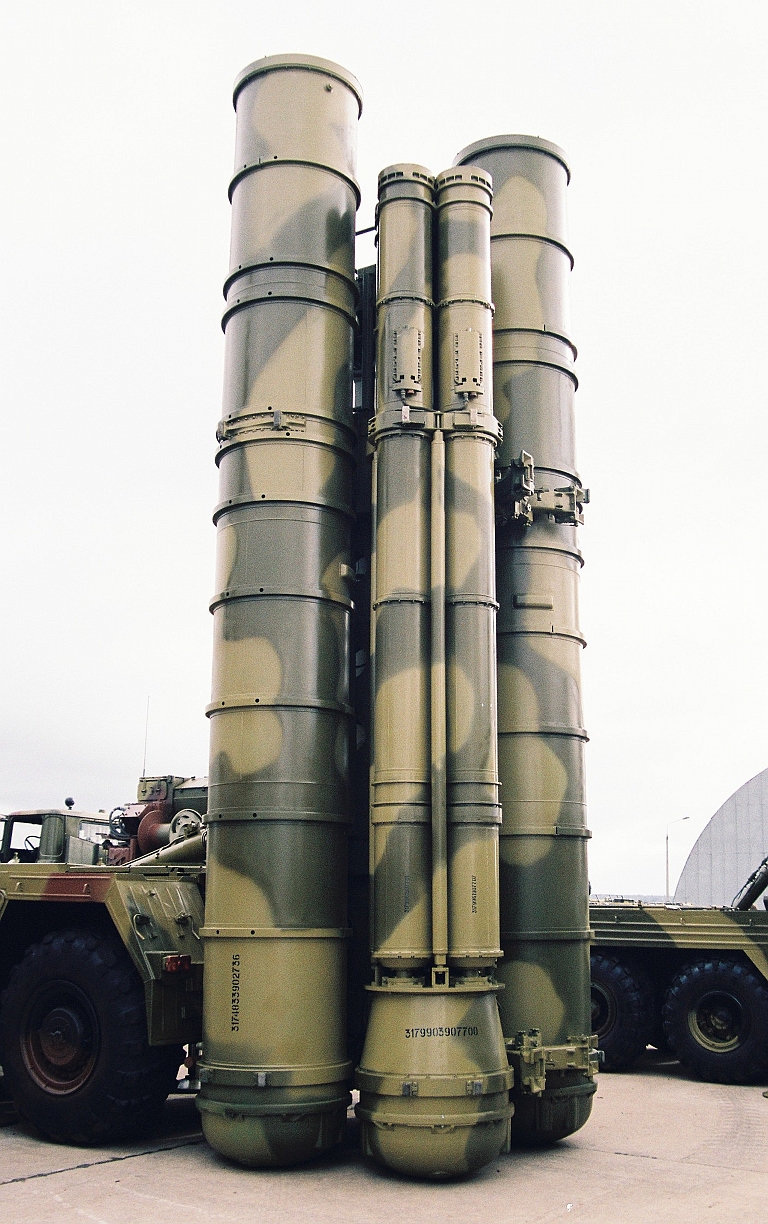
S-300 includes radars, TELs, command post vehicles,, missiles, and auxiliary support equipment. So, no, there is no S-300 naval system, genius.

But that’s not technically factual now is it. S-400 missiles have been integrated. There is no naval S-300 system. There is no naval S-400 system. But missiles from both systems have made it to navy projects. Real life operational projects. 9M96E and 96M100 are used from the lower end of the S-400 system, which you want to claim are strictly tied to the S-350 system. The navy doesn’t use the 48N6 nor the nonexistent 40N6. They have also tested and likely deploy 9M96E2. Yes, these are all common to both S-350 and S-400. The fact is the S-350 came afterwards as an interim export option for countries not considered for the 48N6 and the associated radar technology. But news spoiler, the Russian navy doesn’t use any of the radars from S-300, S-350, or S-400 systems. They do however, use missiles from said systems so everything I stated was factual. But that’s cool, man. Arguing with someone that moves the goal posts is unpleasant. So, peace out.
That’s just the point in my prior post, you called me out for being wrong when specifically everything I posted was factual. I don’t need to rehash all the points. It would have been much easier just to acknowledge your error and move on. I get the impression you’re not up to the task. But that’s cool.
TR1-
The moving the goal posts comment went right over your head. We talked about Russian navy ships deploying S-300 and eventually fitting S-400 somehow to shooting down or at least reaching targets at an altitude of 100 km. The sad thing is you redefined the question before the answer. S-300F was actively used on no less than seven Soviet-built missile cruisers. Never mind initial testing on a third class proved it would work… I’m not sure why you engaged me in this way, but it wasn’t necessary to carry on. I mean, seriously, I’m the first guy to point out the ineffectiveness of using ABM technology as policy.
TR1-
Stop moving the goal posts. You obviously are trying to miscount by ignoring the ships using S-300 missiles. Like I acknowledged, the ground radars are different and the navy uses fewer overall systems to search, track, and direct them. But it doesn’t mean the missiles didn’t get used across the fleet. And you’ve cherry-picked which missiles to include. This isn’t the only forum that has covered this topic. Please don’t create an unnecessary argument over semantics.
I guess you could specify where you get only 4-5 ships used S-300. Once you get into specifics you’ll see the nonsense there. The navy doesn’t use the same radars as the ground-based units, which is a bigger issue than which missiles. So technically none of the navy uses the ‘systems’ of either S-300 or S-400.
Look up the Kirov-class for two forms of the S-300 family. I think the S-400 began integration around 2008 or 2009, actual deployment began within the previous 24 months. It was scheduled for deployment with the refits of the Kirov-class to give it a big boost in engagement range over the old system. The Kara-class was actually the first cruiser to test out the feasibility of S-300F. The Slava-class actively used them, too.
If you’re trying to pin me to say 9M96E2 was here, 9M96E was there, etc. That’s a bit tough to pin exacts. The navalized 9M96 has had quality control issues since the beginning. 9M100, the smaller missile, hasn’t had the head aches. We do know that there hasn’t been any 40N6 to wonder about.
S-300 is a staple in the Russian Navy. S-400 is adapted, too. And again this helps how? Interceptor missiles must be literally directly in the path to work.
Proof?
Read the de facto standards of US Ballistic Missile defense and you would know fairly well that only offensive capabilities are a deterent.
2-3 meter CEP at 2000 km on a laser gyro would be pure magic. Absolutely no ballistic missile does that based on laser gyros. And since you’re flying in that little strip of the atmosphere where radio wave interference is a real issue, you’re not sending it updates via a command link. And at its speed, GLONASS is essentially unable to provide an accurate reference signal. You’re basically launching the bus off an MRBM. It’s flying with the same limitations. You simply opted for an air-launch versus from the ground. Let us all know how MRBM technology has changed conventional warfare.
edit: St John covered some of what I’m saying.







