Mirage F.2 was cancelled after getting through a mature development. It was dropped because the French conceded a split buy for the air force. If the French had opted for a single airframe the Mirage F.2 lives and Mirage F.1 never happened.
And to reject Su-24 is simply being obtuse. Su-24 developed from a fighter. Sukhoi was disappointed with Su-19. There was no requirement for it. They revived it as Su-24 in much the same way F-111 was restructured for tactical work. It’s a shame F-111 never made it on carrier decks, but A-6 was already adequate and the USN was cash starved.
MiG-25 actually had a dozen variants for quite a wide spectrum of roles. No doubt it could have been adapted to fighter-bomber or geared at least for both attack and strike roles. I always thought the RB variants looked the best. That long nose and the wing tanks were reminiscent of F-15A. The P variants always looked overly bulbous. The fuselage needed more space IMO. Regardless of my opines, it’s still literally the iconic Cold War fighter of the Soviet Union.
Viggen is an interesting option. Stick Pratt & Whitney J75-P-5A or a pair of late model J57’s in it and I think you’re better off. It would have been cool with all-moving canards, rather than trim-set, but actuator technology probably wasn’t quite ready for that task yet. I also wouldn’t have minded it less with square intakes. Performance-wise the Viggen was more myth than legend, but there is no denying it had utility.

Su-24 hasn’t been considered yet. It doesn’t have MiG-25 performance, but it wasn’t exactly a world loser.
If F-14 counted, then so does F-111. The F-111 is a better all-around airframe than F-14 and we know a tactical bomber FB-111A can be developed off it. But it’s too much cost for filling all the gaps and it’s not an answer to MiG-25.
The Mirage F.2 would have been justified over Mirage F.1, so IMHO the F.1 is a no go. It’s more likely to handle MiG-25 in a fighter role. The Mirage 2000 is the natural offspring.
The F-4E Phantom would easily retain its hold on the majority of the market. F-15 is its natural successor. F-4E could be modified to handle MiG-25, but the F-4E was always multi-role so a natural choice.
The MiG-25 becomes justified over the MiG-23 exports. If resources were actually committed beyond its PVO role, it’s a great airframe worthy of modifications. The MiG-31 was right around the corner.
Realize that construction typically aimed for 2,000 to 2,500 flight hours on multiple trips to the depot for major overhaul work. Nothing you choose is going to last two decades without resorting to reserve status.
August 1955 was the delivery of one airframe to Sweden, presumably in the UK for squadron development. Delivering the first airframe is a far cry from standing up a full squadron.
They both definitely saw some production before 1955, but the actual competition wasn’t over until 1956. The British had a tendency to use what they had on hand. They definitely participated in action over the Suez in an early form.
I thought the Hunter wasn’t winner of its competition with the Swift until ’56, which technically disqualifies it. The Hunter does look pretty good in a contest set between1955 and 1965.

You’re right, not very many choices when you draw it down to at least five years of service. The problem becomes numbers, because short of F-86, MiG-15, and MiG-17; there wasn’t a deluge of jet fighter production prior to 1955. Most jets in the military had narrow purposes.
I suggest F-101 like I did for the 1960’s. My second choice is the F-8 Crusader. Can the North American A-5 Vigilante get a radar and play fighter? Or how about a fly-off between Sea Vixen and Buccaneer? All of them seem pretty solid. I wouldn’t dismiss Mirage III, Lightning, Delta Dart, Hunter, or MiG-19 as solid choices.
Su-7 always looked intimidating, but MiG-19 was probably a better fleet fighter. MiG-19 also had its internal guns, a big plus for something expected to be multi-purpose. The one-size fits all airframe has to be purpose-configured by mission. MiG-19 was also more flexible with basing, whereas Su-7 needed long runways. Su-15 suffers the same issues with long runways. If basing wasn’t a problem then Su-15 is superior IMHO.
No such thing as Mirage 111 nor Mirage iii.
How hard is it to type out Roman numeral III? Not very hard at all.
Light fighters today were heavyweights compared to fighters in the 1950s.
What they need perhaps is a useful light fighter that is considerable smaller, like in the F-5 class at most.
With virtual sensors being fielded in trainers, the same concept could be extended to GCI. Only the fighter could actually augment the data with his own FLIR and tiny radar combination. A couple of EODAS sensors to enhance spotting.. 90% of the work of light fighters is air policing. Keep the design requirements practical.
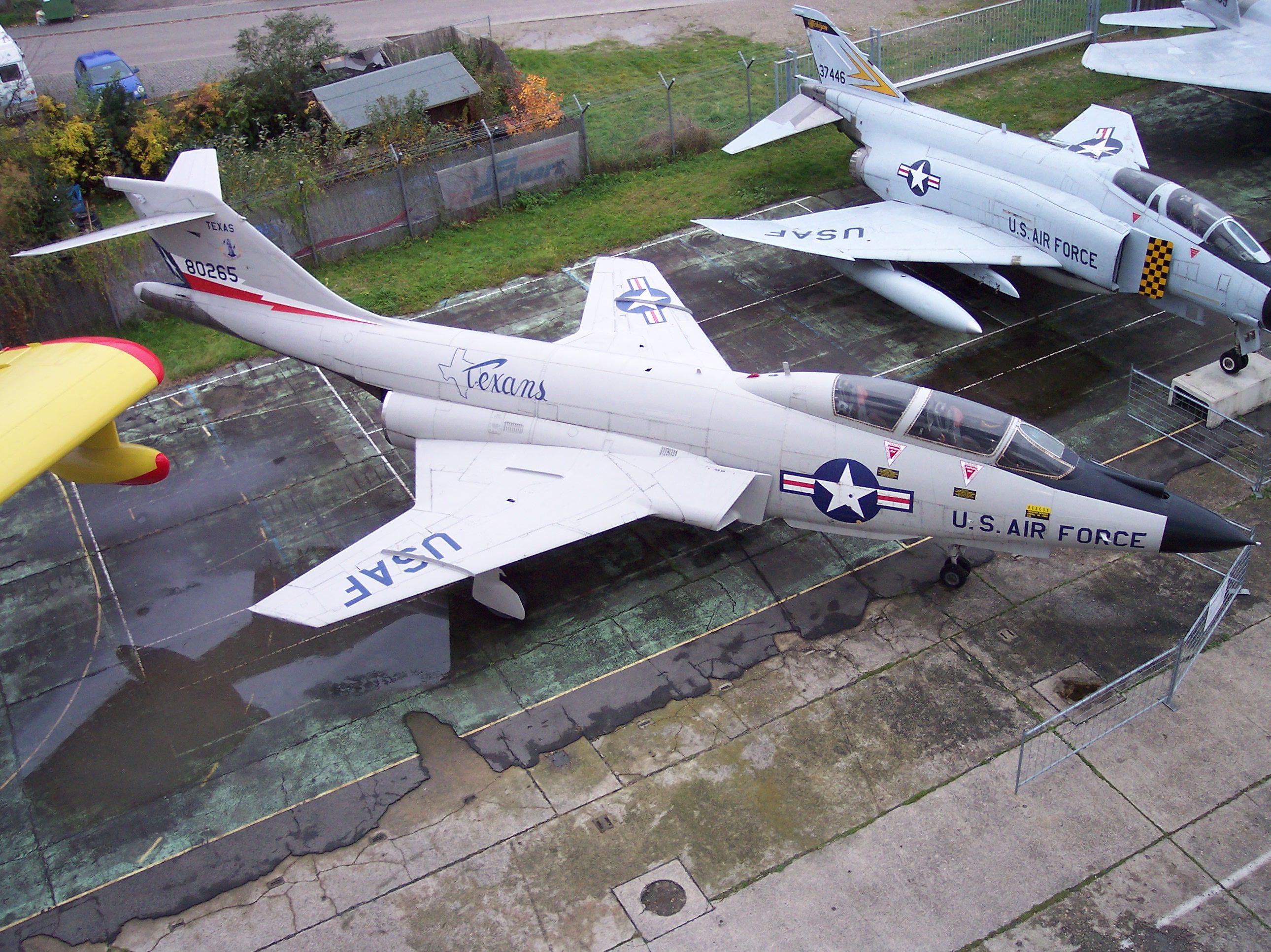
The F-104 and F-4 were a good high low mix using common engine families in the 1960’s. McDonnell learned lessons with common engine families previously, which greatly aided proliferation of the A-4. The F-101 didn’t enjoy a long run, but it helped scale support for J57s. It was a versatile engine family found on other supersonic fighters like the F-100 and F-8. Subsonic versions also were chosen, like when J57s were chose by Grumman for the A-6 and Douglas for the iconic A-3 and B-66. I wonder how well the F-101 would have performed if tasked over Vietnam. We know they lost one to a MiG-21, but otherwise they were too fast for older MiGs.
The F-101 needed some upgrading to immunize it from the F-4. Maybe a scaled down a2a warload settling for a pair of each Sidewinders and Sparrow would have been feasible, especially utilizing the radars in development for Douglas and McDonnel like for the Skylancer program. Something akin to a precursor of the F-4. Maybe not the making of the F-15, but certainly bold enough to demonstrate a little of everything.
F-105 was never in same league as F-111.
Ultimately for third generation technology the two seaters were the way to go.