You won’t catch a glimpse of them at Brize Norton anywhere in this documentary:
The AW609 is sort of a stab at the urban to airport VTOL model, on a smaller scale.
Free pair of earplugs supplied on the door? :applause:
I like the theory that this is a Japanese aircraft. The Nakajima Ki-27 wore a similar scheme:

The horizontally asymmetric swoosh on the undercarriage faring and engine cowling looks promising.
The scenery in the first photo looks more like that of a Pacific island than Spain.
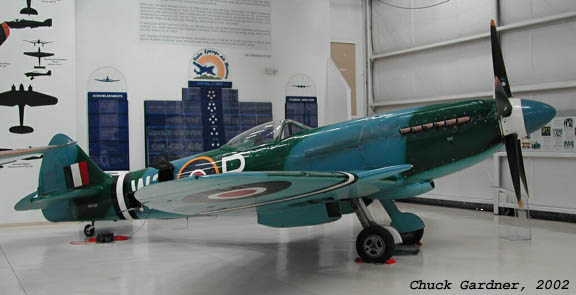
I’m wondering if, and why, an aircraft in a civil/racing scheme would be kicking around in Spain in 1941. I’m also trying to work out the letters on the underside of the port wing. SCA?
Is there any aerial imagery from the 1940s kicking around for the Scilly Isles? I’m wondering if the smaller fields were combined into fewer, bigger fields to help with food production? I can see faint demarcations, or strips, within the large field in my photo but this might just tie in with the farming activities in that field.
Either way I’m glad this thread is still bubbling on and I’m grateful that people are giving this some serious thought.
To draw a parallel with one of my other hobbies, there is a trend for guitar manufacturers to finish instruments with pre-worn areas. Older electric guitars were finished with a nitrocellulose lacquer that quickly wore down and discoloured. Some guitarists want this look from the word go. Some critics of this finish hint towards it being stolen valour of a sort, as the wear hasn’t been earned honestly through the hard work and discipline of playing these guitars for the hundreds of hours required. If nothing else, the manufacturers of these instruments tend to go hog-wild and produce a finish that looks like the guitars took a serious mauling; right down to some adding fake rust to metal parts!
I wonder what Melvyn Hiscock makes of it all…
I’ve already said that I like this Messerschmitt’s scheme. Plus, the option is always there to crack open the paint stripper (I’ve seen dedicated ‘aircraft stripper’ on some websites) and paint it some other colour.
The only thing that bothers me is that it almost doesn’t look like a full sized aircraft. If somebody uploaded this on Britmodeller as a 1/24 model set up as a diorama then I wouldn’t be too surprised. Maybe the finish is just a bit too uniformly flat and satin-finished?

We can narrow it down to somewhere between 194X and 1964. It is possible that when these family photographs are sorted they will be pinned down more accurately, as hopefully other photos of the holiday will come out the woodwork.
The Telegraph Tower sounds like a good match. It is in that area of the Island, and originally had a building next to it that has since been demolished. The additional lookout on the top of the tower, mounted off-center, matches the shape on the horizon of the photo.

I quite like Hooligan’s hypothesis, as there is a similar curve in High Cross Lane to the North of St Mary’s airfield. Looking at Google Earth imagery, the fields look a lot smaller and more numerous on St Mary’s. However a similar track runs parallel to the modern fields to that shown on the right hand side of my image.
I’m wondering if, counter to pretty much everywhere in the UK, the fields have been made smaller on St Mary’s since 1964 or before (when the Dragon Rapide service was replaced).
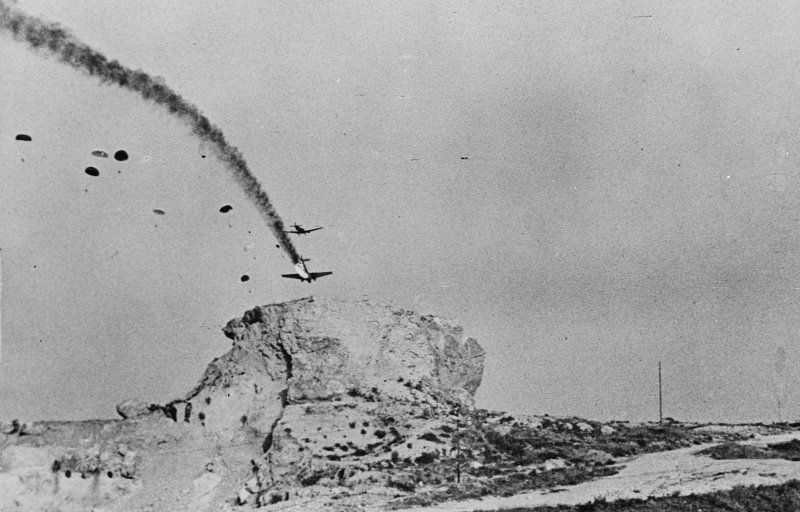
Excellent guesses all, Brian! I’ve found other websites reproducing larger chunks of the image, and it appears to show a stricken JU-52/3mg4e.
In fairness the artwork isn’t any worse than the storage conditions those Ansons were in already, and it gives a good sense of how much of each aircraft remains.
I’m more surprised that there is a field full of rotting Ansons out there!
The Internet is a wonderful place! With a bit of wildcard Google searching I found a section of the photo had been reproduced here:
https://nzhistory.govt.nz/war/the-battle-for-crete
The photo is captioned “German paratroops over Crete”.
Perhaps the photo I’ve uploaded is the prelude to this image:

I like it as well. An honest-looking finish rather than a saccharine facsimile.
The opposite of this, in other words:

I snapped a photo of those Meteor drop tanks in Malta without knowing what they were, beyond being drop tanks! I’m glad they are going to be used, as they were dumped right round the back of the museum.
Maybe Duxford’s TSR-2 in Milestones as well? Or turn Milestones into a potted history of how Britain slowly lost its hand in the world of aviation? :highly_amused: