 Wanshan
However, I was looking for something outside the “canned spam” of internet sources… personal opinions on the qualifications and experience of the various companies, and so on.
You might find this one interesting (real time Delphi method)
http://www.brainnet.com/phpwcms/pdf/Future%20of%20Indian%20Aerospace%202019.pdf
Or these
http://www.pwc.in/assets/pdfs/industries/changing-dynamics-india-aerospace-industry-091211.pdf
http://www.frost.com/sublib/display-market-insight-top.do?id=246211631
WanshanPropeller aircraft were able to approach the speed of sound in a dive. Unfortunately, doing so led to numerous crashes for a variety of reasons.
There are several claims that the sound barrier was broken during World War II. In 1942, Republic Aviation issued a press release stating that Lts. Harold E. Comstock and Roger Dyar had exceeded the speed of sound during test dives in the P-47 Thunderbolt. Hans Guido Mutke claimed to have broken the sound barrier on 9 April 1945 in an early German jet aircraft, the Messerschmitt Me 262. In his book Me-163, former Messerschmitt Me 163 “Komet” pilot Mano Ziegler claims that his friend, test pilot Heini Dittmar, broke the sound barrier when steep diving the rocket plane and that several people on the ground heard the sonic booms. Heini Dittmar had been accurately and officially recorded at 1,004.5 km/h (623.8 mph) in level flight on October 2, 1941 in the prototype Me 163 V4. Ziegler claims that on July 6, 1944, Heini Dittmar, flying a test Me 163 B V18 VA + SP, was measured traveling at a speed of 1,130 km/h. The Luftwaffe test pilot Lothar Sieber (April 7, 1922- March 1, 1945) may have inadvertently became the first man to break the sound barrier on 1 March 1945. This occurred while he was piloting a Bachem Ba 349 “Natter” for the first manned vertical takeoff of a rocket in history. In 55 seconds, he traveled a total of 14 km. Unfortunately, there was a crash and he perished violently in this endeavor. The first powered flight faster than sound may have been the Soviet ramjet experiments of Yuri Pobedonostsev in 1933. Phosphorus-powered ramjets achieved speeds of 600–680 meters/second (Mach 2)
WanshanBTW, Il-114 and An-148 did not equiped with aft ramp just like C-27J or C-295/CN-235. How big do you Gents think this as a factor?
There is the ramp-equipped An-178 cargo variant of the An-158 stretched fuselage version of the An-148. The An-178 adds a rear cargo door and ramp, but retains most of the features of the high-wing An-158, which is itself a stretched version of the 70-85-seat An-148 regional jet.
http://en.wikipedia.org/wiki/Antonov_An-148
http://www.flightglobal.com/news/articles/antonov-details-plans-for-an-178-airlifter-359233/
Ukrainian Antonov Company will start the development of new An-178 transport aircraft in 2012. The plans of An-178 development have been unveiled by Antonov Company in February 2010. The Ukrainian company has offered India to take part in the project in April 2010.
http://www.ruaviation.com/news/2012/2/9/777/
Fuselage schmatics:
http://upload.wikimedia.org/wikipedia/uk/c/ca/An-178_2.JPG
http://upload.wikimedia.org/wikipedia/uk/0/03/An-178_1.JPG
Wanshanhttp://www.aviationweek.com/Article.aspx?id=/article-xml/asd_11_27_2012_p03-02-521298.xml
I don’t know much about the Indian aircraft industry outside of HAL, so given the statement in the above article that HAL will not be participating, could someone enlighten me as to what Indian aircraft manufacturing companies could be the “Indian partner” of the “foreign players”… and what experience and capabilities they bring to the table?
See
http://en.wikipedia.org/wiki/Category:Aircraft_manufacturers_of_India
http://www.indiacatalog.com/web_directory/aviation/2601.html
http://www.indianlogisticsinfo.com/indian_aviation/aerospace_aircraft_manufacturer.html
Plus, this article on Airbus in India also gives an idea
http://www.airbus.com/company/worldwide-presence/airbus-in-india/
WanshanGermany agrees to sell submarines to Egypt despite Israeli opposition
Well, 6 Dolphins for Israel versus 2 Type 209s…. seems fair. Perhaps if those 209s are like 209PN (i.e. Type 214s). Still, those 4 improved Romeos need to be replaced at some point.
WanshanObscure question, I know…but what was the last aircraft catapaulted off the Big E?
There has to be an image somewhere.
´t was november 3rd 2012…
http://www.youtube.com/watch?v=oAJhKMi4hyk
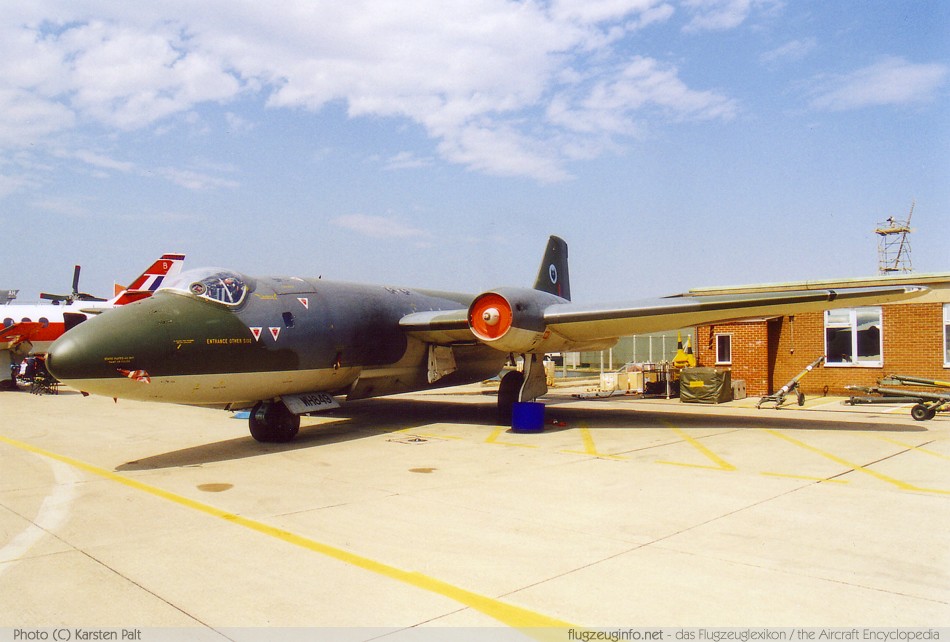
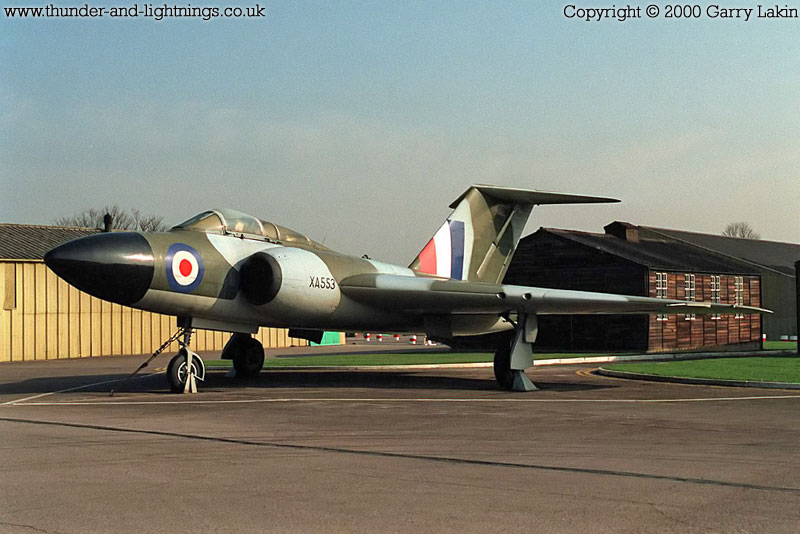
WanshanI wonder if this nose cone is off of something similar?
It is said to be off a canberra???
Most EE Canberra I’m aware of have a glass nose. On the ones with closed nose, the cone appears ‘fatter’, less pointed.

Might be from a Gloster Javelin: FAW.1 XA553 carrying out her final RAF duty – gate guard at RAF Stanmore Park, 2000.

WanshanTHe sentences “The conditions which the commanders have put forward for the new ship is that it should spend a very long time without being reloaded with any energy from outside (it is planned that this will be reached by equipping the ship with nuclear reactors), be workable at any weather and have a high combat viability….The displacement of the new aircraft carrier will be more than 50,000 tons, which is bigger than that of “Admiral Kuznetsov” but smaller than that of its modern US analogues. It will be able to take about 80 airplanes on its deck.” in the article linked to by Tango III suggested as much.
Displacement: 60,000 tons empty, 79,758 tons full load
Propulsion: 4 × KN-3 nuclear reactors, 4 × steam turbines, four shafts, 280,000 shp
Aircraft carried: 70 aircraft total
http://en.wikipedia.org/wiki/Soviet_aircraft_carrier_Ulyanovsk
WanshanA question I have: Does the SMART-L radar also provide fire control for the SSMs and naval gun, or is a separate radar required for that?
On the Dutch Zeven Provinciën class the Thales Nederland SMART-L long-range air and surface surveillance radar, APAR air and surface search, tracking and guidance radar (I band) and Scout (Low Probability of Intercept)surface search/navigation radar all feed into the SEWACO XI combat data command system (German F124 Brandenburg class ships used Tacticos – SEWACO FD instead). This controls the Harpoon SSMs and the 127mm / 54-calibre Oto Melara gun.
The Thales Nederland Mirador optical surveillance and tracking system can serve to control the main gun in EMCON conditions. Thales Nederland Sirius IRST long-range infrared surveillance and tracking system is the main passive means of detection (ESM aside).
Background
Harpoon is a Fire-and-Forget weapon: it is fed target information prior to launch, fired and then flies to the target general area where its own radar is activated and the missile takes out the target without any intervention by the launch platform.
WanshanTop Plate then hands over SAM target to Orekh that can guide Shtil SARH SAM
Smart-L hands off to APAR, which then guides SARH SM2 and ESSM. I don’t see a difference there.
WanshanTop Plate does a combined air/surface search that provides initial search/track for air/surface target and then hands it over to SAM FC or Antiship missile FC radar or even gun/missile system for narrow band tracking
As I understand it, that is exactly what SMART-L does
…
SMART-L (Signaal Multibeam Acquisition Radar for Targeting) is the D-Band (former L-Band) long range surveillance radarversion of the successful family of SMART multibeam 3D radars. It is designed according to NATO specifications for a Volume Search Radar. Designed to fulfil:
* Medium range detection of the newest generation of small “stealth” air targets
* Long range detection of conventional aircraft
* High ECCM performance
* Guidance support for patrol aircraft
* Surface surveillanceDue to its larger power budget, SMART-L is dedicated for the early detection and tracking of very small aircraft and missiles. The accurate 3D target information, gathered by the SMART-L radar, provides an essential contribution to the threat evaluation process, especially in multiple attack scenarios and it allows the weapon control system to perform the fastest lock-on.
…
and fast but reliable track initiation and maintenance of up to 1000 air targets. Clutter map and jamming map allow the detection and tracking of tangential flying targets and jammers. Surface surveillance is performed by an D-Band surface surveillance channel capable of automatic detection and tracking of up to 100 surface targets. Tracking data is transferred to the command and control system and high quality plot data to a MFR or MTTR.Main characteristics
* Fully automatic detection, track initiation and tracking in 3D for air targets
Mission selectable illumination patterns including a burn through pattern
* Fast reaction mode for the initiation of cued search by MFR or MTTR
…
WanshanIts a pile of gash Wan.
Ah, now the world makes sense again! Thx Jonesy 😉
WanshanNo I think Furke-4 will perform exactly the same function that Top Plate does today but it may be a Full AESA radar.
The Missile Tracking and Guidance for SAM would be likely done by Poliment which is a 4 faced AESA radar operating in X/S band.
Furke-4 is placed at the very top so it is in a good position to look further beyond the horizon limit with no ship clutter to worry ( like EMPAR does ) , most likely it would do a combined Air/Surface search capability , handling of targets to Poliment or to firecontrol system of Antiship missile , GUNS , CIWS SAM etc …and in secondary role it would do target guidance if required ( like EMPAR )
Having different band for radar would have it own advantage too and Furke/Poliment would compliment each other.
Most certainly the Furke/Poliment is a big leap for Russian Navy compared to what they have been operating till date making it comparable to any Western/Israel/US system out there
I’m still not quite clear what you see as the function of Top Plate and how it differs from the function of Smart-L.
WanshanJust a little context to add to that website…
The first V-22 was rolled out with significant media attention in May 1988. The V-22 first flew in 1989, and began flight testing and design alterations; the complexity and difficulties of being the first tiltrotor intended for military service in the world led to many years of development.
The United States Marine Corps began crew training for the Osprey in 2000, and fielded it in 2007; it is supplementing and will eventually replace their CH-46 Sea Knights. The Osprey’s other operator, the U.S. Air Force, fielded their version of the tiltrotor in 2009. Since entering service with the U.S. Marine Corps and Air Force, the Osprey has been deployed in both combat and rescue operations over Iraq, Afghanistan and Libya.
http://en.wikipedia.org/wiki/Bell_Boeing_V-22_Osprey
USMC Mishaps 23
Date unknown 6
Date known 17
Date, number of mishaps, context
1988 no flights
1989 0 First of 6 MV-22 prototypes first flew on 19 March 1989
1990 0
1991 1
1992 1 October 1992 – April 1993, Bell & Boeing redesigned V-22 > V-22B
1993 0 V-22 flights resumed after safety improvements in prototypes
1994 0
1995 0
1996 0
1997 0 first of four pre-production V-22 delivered, first EMD flight
1998 0
1999 0 first of four low rate initial production aircraft delivered. Sea trials
2000 3 USMC begin crew training. aircraft again grounded after 2 crashes
2001 0
2002 0
2003 1
2004 0
2005 1 V-22 ends final op-eval, HMM-263 transitions, full-rate production
2006 3 HMM-263 reactivated as VMM-263. First CV-22 operational
2007 2 USMC begins fielding V-22, first combat deployment Iraq
2008 1 MV22: 3,000 sorties, 5,200 hours in Iraq per July 2008. CV22 to Mali
2009 1 USAF begins fielding CV-22: 6 to Iraq. VMM-261 to Afghanistan.
2010 0 MV-22 to Haiti on humanitarian missions
2011 1 MV-22s deployed to Afghanistan surpassed 100,000 flight hours
2012 2 required mission capable rate 82%, average 53% 6/2007 to 5/2010
subttl 23
USAF 4
total 27
During testing from 1991 to 2000 there were four crashes resulting in 30 fatalities. One other incident in 2000 occurred at the same time as crash (i.e. other aircraft coming to aid of crashed aircraft > hard landing). Since becoming operational in 2007 the V-22 has had three crashes resulting in 6 fatalities, and several minor incidents. This includes its operational and combat deployments.
Wanshan£1.5bn (Astute) submarine compared to Morris Minor as whistleblower reveals serious faults with pride of Royal Navy
http://www.dailyrecord.co.uk/news/uk-world-news/15bn-submarine-compared-to-morris-minor-1441109
So the plant developed for Vanguard apparently does not work well for the Astute? Due to gearbox? Interesting, particularly since the French Barracuda will use a plant developed for use in the Triomphant class and CdG (wondering how French solve similar potential issues, and whether RN should talk to MN)


 Sign In







