 Wanshan
MORE YAWN YAWN YAWN!!!
WanshanYAWN!

WanshanDAVIDE System represents the evolution of the 76/62 Gun for employment as an inner layer antimissile defence system. It provides the gun with the capability to defeat supersonic or subsonic missiles, seaskimming or diving. It has been conceived as an add-on equipment, to allow retrofitting on the in-service 76/62 Super Rapid or Compact Gun Mounts.
DAVIDE System provides an RF guidance link to the projectiles in flight. DART (Driven Ammunition Reduced Time of flight) is the smart ammunition fired and guided by the DAVIDE System. A sub-calibre guided projectile with canard control and with high terminal manoeuvrability.
Guidance system characteristics:
No limitation to number of projectiles in flight
Data link to the projectiles
All-weather
Projectile main characteristics:
Full compatibility with existing 76/62 gun and FCS
Proximity programmable digital microwave fuze
Notched warhead
Effective range > 5 Km
Fuze main characteristics:
Radial sensitivity: > 10 m
Operating altitude (above sea level): down to 2 m
High reliability
Burst point optimization
System performance:
High effectiveness against all missile and aircraft threats
Secondary role against small fast patrol boats
Average number of rounds per engagement = 3
http://www.otomelara.it/news/news.asp?id=15
“76mm guided ammunition proven the exceptional manoeuvring capacities and flight stability of the new ammunition”
http://www.spacewar.com/news/2004/milplex-102804-1614-35.html
“We are developing DART, which is guided by a radio frequency beam, and the unguided variant, ART, to provide cost effective tools for naval planners concerned about the threats posed by cruise and sea skimmer missiles now available to rogue forces and the ‘small swarm boats’ used by terrorists,” said Howard Goldberg, CEO of OTO.
“When you combine a range in excess of 8,000 yards, a proven microwave fuze, and a high rate of sustained fire capability, DART will defeat a barrage of incoming missiles and multiple swarm boats.”
WanshanIt should be equally important for ship to shore work as well. The enemy could send an MPA or strike group to the area after DF.
I suppose … unless the’ve been nuked. But then, you don’t need that much precision using a nuke. So, you’re probably right 🙂
WanshanRegarding a previous comment:
“If range and being multipurpose are that useful why not have the 130mm or 127mm guns as your favourite? The former having 30kg plus shells with proximity fuses optimised for AShMs like Harpoon with a range of 23km”.Obviously the topic at the moment is about CIWS which by definition is a weapon of last resort and I have therefore not mentioned larger calibres. Therefore for closer range engagements you need small to medium calibres which offer high rates of fire to offer maximum chance of destroying incoming anti-shipping missiles. Larger calibres simply so not have the very high rate of fire necessary (even if they might be very effective).
Obviously a larger calibre weapon such as 100mm or more offers some significant advantages such as good range and probably more important is a lot cheaper than a missile. However, the range advantage is to some extent neutralised by the fact there is no guarantee sensors (radar etc) would be able track at longer ranges (e.g. 20km). This is where a missile comes into its own – particularly a heat seeking missile (e.g. South African Umkhonto) would be effective tracking an incoming missile against a cold sea background.
You are aware the Italians use 76mm guns are CIWS? And developing smart munitions for them, like the Swedes for their 57mm? Why couldn’t that also work for larger caliber: you trade-off lower rate of fire for use of advanced guided rounds. The whole point of going to a larger caliber gun is to move from last-ditch close range business to a little further out. Greater distance means more reaction time and less risk of the ship being hit by missile debris. And don’t say it is a radar problem. If you can have fire control radars for tracking a missile that is to be hit by semi-active radar homing ESSM (range 25-50km), then why couldn’t you track that same missile for a gun at these ranges?
WanshanA carrier can be still a usefull tool in power-projection below ‘Super Power level’. See Russia, India and several other Navies about that. It even can act as ‘tripwire’, because a direct attack on such capital ship means ‘real business’, when a frigate or destroyer can still be labeled as an error or a mistake.
A helo-carrier is the next best thing, but the ‘Varyag looks’ ‘overdesigned’ and too expensive to operate in such a limited role only.
Agree, but there is potential for this ship in air assault role as well as ASW. Still, we’ld have to see some sort of action related to (re)engining.
WanshanThe ESSM is surely a more advance weapons system “No Doubt” and appears to have a similar range. Yet, the SM-1 MR is still a viable system and has a much larger warhead. Regardless, it will have to soldier on a little while longer. At least until the advent of the SM-2 equipped AWD’s. :rolleyes:
Never said SM1MR was was no longer viable 😀
WanshanMore BS from Farce/Sengupta? The Brahmos is not intended to have a datalink for the sake of keeping it’s launch area hidden.
That may be important in ship to ship work. How about for ship to shore role?
WanshanJust a quick point to introduce into this is that pumpjets do have some quite significant drawbacks that come with the quieting advantage. Chief amongst these is the adverse impact that increasing depth has on the efficiency of a pumpjet system. Not sure how public this is but the prototype Spearfish HWT’s suffered significant performance degradation when fired at depth.
What would be the above water analogy for this ? Better jetengine performance at high altitude and worse at low altitude?
WanshanSupposedly ESSM is longer ranged than NSSM Sea Sparrow. Note that NSSM Seasparrow already had a range of 14.5km (8nm) … ESSM range at least 25km (14nm) and possibly up to 55 km (30nm).
“Range More than 30 nautical miles (approximately 55 km)”
http://www.globalsecurity.org/military/systems/munitions/rim-7-specs.htm
“Effective range is significantly bigger than that of the RIM-7P, making ESSM a short/medium-range surface-to-air missile.” “Range 50+ km (27+ nm)”
http://www.designation-systems.net/dusrm/m-162.html
“ESSM range 16 Nm at Mach 2+ (point defense)” = ~29km
http://www.tno.nl/defensie_en_veiligheid/militair_optreden/operational_analysis/joint_extended_air_defenc/ead_systems_and_threats/ead_systems/air_defence_command_friga/
(NB: Under the header ‘Defence, Security and Safety’ TNO acts as a strategic partner of the Dutch Ministry of Defence.)
WanshanBut what would be the use of Varyag? Unless they are converting it into training deck or less likely a conventional carrier or maybe only a helo carrier… I don’t see the point.
Use as a theme park would also require a lick of paint. The point being that a lick of paint says nothing except that there will be no scrapping in the near future. Use as training deck is unlikely: while you could land CTOL aircraft on deck, it would be difficult if not impossible – as I understand it – to take off without wind over the deck i.e. without turning the ship into the prevailing wind and running at some speed. Which requires propulsion.
WanshanAn oldie you might find of interest in this context is:
General Sir John Hacket et.al. (1978)
The Third World War. A history of the Future.
Sidgwick and Jackson Ltd., London.
(A fictionalized scenario of World War III based on a Soviet invasion of West Germany in 1985. The novel was highly successful, though criticized for being dry and impersonal. Chapters 15 and 16 and parts of other chapters concern naval forces and tactics)
WanshanStop the frigging flamming. 😡
I second this motion.
WanshanI don’t think there is any airframe of mock-up air frame on deck. From the stage of what workmen seem to be doing (exterior painting, no activity on the deck itself or elevators), it would be too early anyway. If there is interior work going on e.g. sanding and painting, they are going to need one or more air conditioners. From what we’ve seen on finishing ships, that usually is a square or rectangual, often blue-ish item parked on deck with a lot of yellow of white air-hoses sticking out of it and going into the ship. There may also be a need for generators.
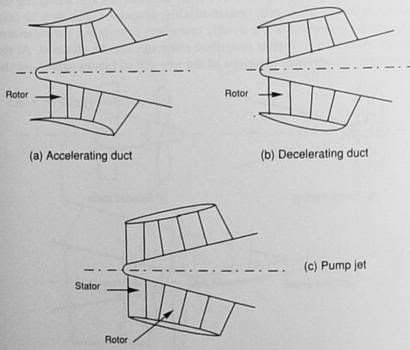
WanshanBasically, the pumpjet works by the propeller sucking in water and spitting it out the back. Due to the spinning of the propeller, it makes the water twist and creates lots of bubbles, which are propelled out in the wake of the spinning blades. This creates lots of noise, so anti-swirl vanes are used to stop the swirling of the water and “kill” the bubbles. The pumpjet does not remove the wake. It works like a jet engine, water in becomes water out.


 Sign In







