 Wanshan
The HAWK was carried in trials, I don’t think it ever became operational. The compromised F-14/Phoenix story is an urban (or rather a political) myth…
Wanshan I think you will find this interesting:
http://www.acig.org/artman/publish/article_212.shtml
HAWKs were trials. Do you have a link to some source that authoritatively dispells the myth for F14/Phoenix from Iran to Russia. Would be interested. Thanks for the link, but I had seen it already (I live there too 🙂
WanshanGarry, you consistently misread what I say …
1. There is a difference between ‘copying’ and ‘learning from’. Just because you don’t copy a jet doesn’t mean you didn’t learn from taking it apart. Just looking at stuff may give you a new idea or point your developments in a different direction. That’s called “influenced by”. I never said or suggested Russia copied F14 or Phoenix. But if they had a chance to look at both, they would be silly not to draw lessons from that and incorporate these into their own designs.
2. At no point did I speak to the operational status of the F14 in Iranian service. I’m sure they are hard to maintain. But that doesn’t mean it is not possible. Frankly, I have no idea how many – if any – still fly.
3. I did not at all say Mig25 looks like A-11/A12/SR-71 or XB-70A. My point was that Mig 25 was developed to counter these high speed American aircraft and their capabilities are what influenced the design of Mig 25. So Mig 25 was influenced by these American designs not in the sense of the Mig copying their features but the Mig being tailored to combat them. (function > form)
4. At no point did I say, suggest or imply that Mig 25 is an F14 copy (besides, there you go again! It is not necessary to copy something in order to learn from it)
5. Don’t be a jerk: it is common knowledge that Mig 31 is a development of Mig 25.
6. Iran under the Shah ordered F14/Phoenix, Iran under the Mullahs passed F14/Phoenix on to the Soviets. Different regime, different international relations. I’m sure that the Iran of the Mullahs got something in exchange. Don’t know exactly what but use your imagination: it could range from Russian assistance in weapons development – as is evident in current Iranian produced weaponry – to, oh let’s suggest something wild and off-beat, nuclear technology.
7. I don’t know what Phoenix is based on but would not easily suggest Phoenix is based on AA-5 Ash. Ash is an older generation missile (1961, vice 1974), it is substantially larger (length 5.3m vice 3.9m, span 1.3m vice 1.13m), and it is only medium range (15-30km vice well over 150km). You ignored that I pointed out more than just a resemblance in the Phoenix and Amos. I included some technical information. I will grant you that I was not in a position to take a look inside both missiles. But neither were you …
Hope you enjoyed your sandwich :p
Wanshandeputy undersecretary …. so … that’s the assistant to the assistant to the secretary, isn’t it? 😀
“Pentagon deputy undersecretary for international technology security Jack Shaw has been forced to resign.”
“John A. ‘Jack’ Shaw, the Pentagon’s deputy undersecretary for international technology security, was ordered to leave after refusing to sign a letter of resignation.”
Here’s why:
http://www.commondreams.org/headlines04/0707-03.htm
http://www.warandpiece.com/blogdirs/001480.html
http://inn.globalfreepress.com/modules/news/article.php?storyid=1117
“Objection overruled! Goes to the credibility of the witness”
Wanshanbut…
A major part in the development… the Foxhound hasn’t got swing wings… apart from a second seat what did it get from the F-14? The reality is that the Foxhound is actually an upgrade of the Mig-25 and has almost nothing to do with the F-14. It is the ego of the Americans that the Russians can only copy and can’t create anything decent themselves.
Quite amusing ego really.
But Garry, whose ego are we talking about here? Wouldn’t you agree that one aircraft can have a great influence on the design of another without the latter actually sharing any of the design characteristics of the former? E.g. a fighter designed specifically to deal with a particular other fighter or bomber.
By 1960 the development of a trio of Mach 3 aircraft, the A-12, YF-12 and SR-71, was under way. The MiG-25 was originally designed as a counter for the this trio, and not the XB-70A Valkyrie as is commonly believed. Relatively recent revelations by the MiG OKB (notably by R.A. Belyakov, the OKB’s current head) have dispelled this myth. Now, does the Mig 25 look anything like the A-11/A12/SR-71 or XB-70A?
The MiG-25 was designed only for high-altitude flight and has correspondingly terrible low-level performance and dogfighting characteristics. Although reconnaissance and defense suppression variants of the MiG-25 were developed, the aircraft’s range of applications has always been limited. As a result, Mikoyan Gurevich later designed the MiG-31, an improved MiG-25 with significantly better low-level performance for use in more common attack fighter roles.
As for the F-14, the Shah had wanted an interceptor that could deal with intrusions by Soviet MiG-25 reconnaissance aircraft over Iran’s northern border. The Tomcat and its Phoenix missile seemed to fit the bill. It is known that the Soviet Union obtained both the F-14 and the Phoenix missile for reverse-engineering from Iran. It is unclear if this was done by the Iranian Islamic Republic’s government or by a defecting Iranian pilot. F-14 technology (not necessarily design) may have influenced development of the Soviet MiG-31 “Foxhound” or “Super Foxbat”, and it seems very likely that the Phoenix had a strong influence on the Soviet “AA-9 Amos” AAM, since the two missiles closely resemble each other externally.
This was something of a blow to the US, as the US Navy had been careful not to compromise the Tomcat’s secrets. On 14 September 1976, a Phoenix-armed F-14A had rolled off the deck of the US Navy carrier JOHN F. KENNEDY in the North Sea, with the crew ejecting safely. Of course a Red Navy cruiser had been shadowing the American carrier group and presumably the Soviet sailors didn’t fail to notice the bungle, and so the Navy performed an expensive eight-week deep-water recovery effort to retrieve the fighter. It is unclear if it ever returned to service after recovery, though it seems a bit unlikely.
In any case, the Phoenix was compromised at the same time that the AIM-54C variant was in development. As a result, the missile’s development program was modified to ensure that the new variant of the Phoenix could defeat countermeasures developed against older variants.
As for Mig 25 Foxbat’s effect on Eagle Design, dispite the attempts of Riccioni, Spey and Boyd, the initial F-15 Eagle turned out to be quite a disappointment. Designed as a replacement for the F-4 with a multi-role capability (it was not designed strictly designed for air superiority!), the design modifications brought on by misconceptions about the Foxbat made the Eagle an expensive, less-than-capable aircraft. The Eagle ended up with a range significantly inferior to the F-16. It is slower at high and low altitudes than the Falcon. Its huge radar, thermal and visual signatures negate many of the advantages of its (somewhat unreliable) radar. It has proven expensive to procure, maintain, and support. There was a counter for the Foxbat: the F-12B. The Eagle should have remained a multi-role aircraft. The Strike Eagle has proven the airframe’s abilities in this role.
AA-9 Amos. Guidance system: Inertial, command updates and semi-active radar. Weight 490 kg (warhead 47kg), Length 4.15 m, Diameter 380mm, Fin Span 1.18 m ( 0.9 m wingspan ), Range 160 km, Speed Mach 4.5.
AIM-54 Phoenix. Guidance System: Semi-active and active radar homing. Weight 450 kg (warhead 61kg), Length 3,90 m, Diameter 381mm, Fin Span 1.18 m ( 0.9 m wingspan ), Range 184 km, Speed Mach 4.5.
WanshanI will be VERY surprised if the Brits get them………….I have a sinking feeling that the aircraft carrier in Britain goes away with the Invincibles…………
They could always purchase some ADS from India ….
Wanshan
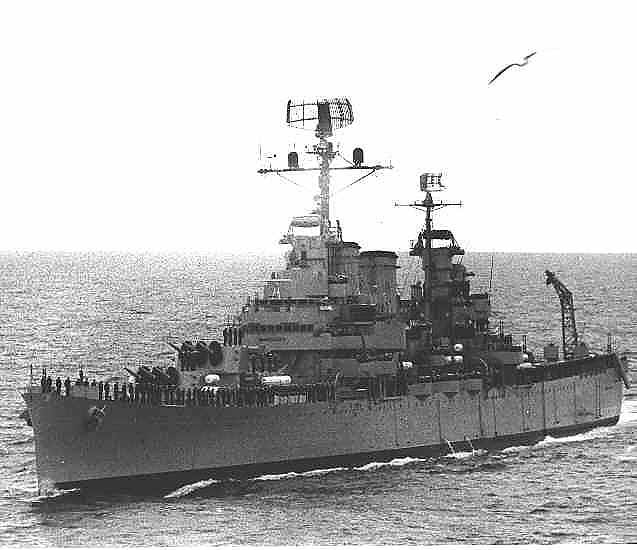


WanshanAnyone got a shot they could post of the old ‘General Belgrano’, if I recall, the former ‘USS Phoenix’ if memory serves?
Mark


WanshanI’m not sure if I remember this correctly,but as I recall the primary goal the Argentine Junta had in mind when they decided to annex the Falklands was to keep their grip on power by diverting their own population’s attention away from economic,political and social issues in their own country, and then unite the people against a common enemy under their leadership, just as Bismarck had done when he created the a united German “Reich” after the war against France from 1870 until 1871
… and some say Thatcher did the same thing in sending a task force south!
WanshanOther than cold hard cash (typically a good yet often insufficient motivator) what interest does Russia have in moving WMD from Iraq to Syria. It’s a key question and the article does not answer it in any way.
WanshanAnd as the Argentinian Navy not be big: at the time the MEKOS weren’t yet delivered, but just tell me if a navy like that, perhaps hte most powerful in the s.a., could be called “small”. What other navy had tried to face with a western navy like argentians done? they weren’t enough strong but atleast they posed a serious treaht to the RN, perhaps the only time in the post war conflicts. Thisi s what i mean: almost happened even aa carrier airbattle!
Correct, you are. The first (D10, Almirante Brown) was commissioned in 1983
Main units in commissionat the time of the start of the conflict were:
– four patrol submarines (mod Guppy),
– one light fleet “carrier 25 de Mayo”
– one WWII-ere ex-US cruiser “GENERAL BELGRANO”,
– 4 ex-US destroyers
– 2 UK-built Type 42 destroyers
– three french-built ‘frigates’ (Exocet armed),
– amphibious warfare craft,
– eight fleet tankers and transports,
– two icebreakers or polar vessels,
Summary of Main Argentine Naval Invasion Forces
TASK FORCE 20 – DISTANT COVER AND SUPPORT (Vice Admiral Juan Lombardo i/c)
CV “25 de Mayo” (flagship)
DD “Comodoro Py”, “Hipolito Bouchard”, “Piedra Buena”, “Segui” (all ex-US)
Tanker “Punta Medanos”
TASK FORCE 40 – AMPHIBIOUS (Rear Admiral Jorge Gualter Allara)
DD “Santisima Trinidad” (flagship) , “Hercules” (both British type 42’s)
FR “Drummond”, “Granville” (A67 type aviso’s)
SS “Santa Fe”
TASK GROUP 40.1 – LANDING FORCES (Rear Admiral of Marines Carlos Busser)
LST “Cabo San Antonio”
Icebreaker “Almirante Irizar”
Transport “Isla de los Estados”
(i.e. practically the entire Argy navy but for the cruiser Belgrano, one FR, 3 SS and some auxiliary ships)
WanshanYes, I have heard of that myth. It doesn’t seem to stretch too far being romanticism though. I could mention the Kyoto treay, the ICC, the UN, views on diplomacy, etc although I will grant you that the division was perhaps not as visible in the early eighties when the Cold War brought both sides of the Atlantic together.
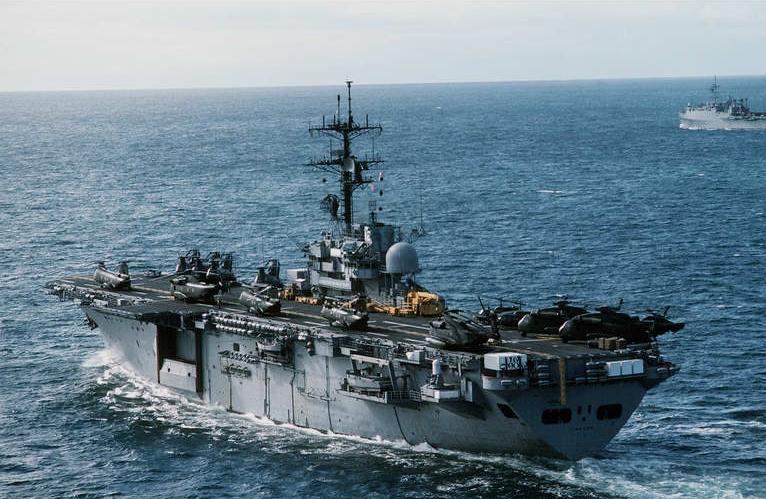
Any carrier (or LPH accroding to some sources) offer was impossible and thus symbolic. You must remember than the US didn’t offer to lend the UK the crew aswell, so the CV/LPH would have had to be manned by RN personell.
Now that I think of it, you might be right on the offer being a LPH (Iwo Jima class) and not an actual carrier. Dating from the 1060s, that’s not the most advanced or high tech ship even by the standards of the 1980s, but sufficient for the task at hand. As for crewing it, although USN might not provide personnel, I am willing to be you could hire ex-Navy personnel (i.e. civilians) that once served on a USN LPH if you wanted to. I’m sure many crew tasks are the same regardless of the vessel involved so I’m sure RN personnel would be able to do a lot aboard an LPH. IMHO, it would not be perfect but it could work to man the ship this way.
How would you know if this was a myth? The rush delivery of top of the line models of Sidewinder illustrates which party the US would actually support in this conflict. There is really no relation at all to Kyoto treay, the ICC, the UN, views on diplomacy, etc which are not comparable at all. In actual military conflicts, we see US and UK pulling together a critical junctions time and time again. Would not be surprised is some special partnership existed, perhaps dating back to the WW-II days and the lend-lease agreement.
WanshanI was watching the movie BAT 21 with a friend earlier tonight, and I got curious about the B-66. It seems most of them were recon and/or electronic warfare birds, but 62 actual bomber versions were built designated B-66B. I’m wondering what weapons and stores the bomber version was cleared for. How much could they put in the weapons bay. I know they had a hardpoint under each wing for a 500-gallon fuel tank, but all weapons were carried internally. Anyone have info on what the Destroyer carried for an offensive punch? Also does anyone have any idea how many rounds were provided for the tail-mounted 20-mm guns?
Oh, and was this aircraft also nicknamed the Whale, like it’s Navy A-3 brother or was that only a Navy thing?
You really should try Google with the keyword “B-66B” …..
Specification of Douglas B-66B Destroyer:
Engines: Two Allison J71-A-11 or -13 turbojets, 10,200 lb.s.t. Performance: Maximum speed 631 mph at 6000 feet. Cruising speed 528 mph. Initial climb rate 5000 feet per minute. Service ceiling 39,400 feet. 900 miles combat radius. Maximum rang 2470 miles. Weights: 42,540 pounds empty, 57,800 pounds loaded, 83,000 pounds maximum Dimensions: Wingspan 72 feet 6 inches, length 75 feet 2 inches, height 23 feet 7 inches, wing area 780 square feet. Armament: 2 20-mm cannon in remotely-controlled tail turret. Up to 15,000 pounds of ordinance could be carried in the internal bomb bay.
WanshanThese will be relatively small LHAs, hardly appropriate to refer to them as aircraft carriers. But interesting to hear how one capability can be used as a stepstone to another 😉
WanshanSurely the CV offer can only be seen as symbolic… ?
Special strategic US-UK relationship?
WanshanExactly ,this was the unic time after teh WWII that two HUGE navies almost clashed one each other
and also:But here a question or two:
-the french Navy could have been impressive, but as logistic it seems to me not enough comparable with RN. this cannot be only a question of requiring civil vessels to have a logistic available to fight until the Pole South
-The Harriers on the RN carriers operated very often in very bad weather conditions, so i ask: A Clemenceau could operate with its conventionals aircrafts in such conditions? I think that it could be difficult even for a US carrier (after all, there must be a weather limits also for these latters, or?)
Two huge navies? Excuse me, but the entire Argentinian navy at that time comprised the carrier 25th Mayo, gun cruiser Belgrano, 2 Type 42 destroyers, 4 Meko 360 frigates, a couple of Meko 160 corvette and a three ex-french A67 avisos and a couple of old submarines. Not exactly a huge fleet, not even compared to the RN!


 Sign In







