 BlueRobin
Thanks Dean, you’ll see I took some of what you said on-board…
Day 5
One session today, lesson plan calls for limited/partial panel work. However since we have extensively covered this during the CPL, including 5 hours logged in the sim, we skip this. Incidentally the sim is used for flying without reference to the DI, AI and VSI as this is tricky to achieve in the DA42; a sign-off being placed in your logbook so circumventing doing on test. The one session covers both CPL and IR skill tests. You do though have to fly on the DA42’s standby instruments (Alt, AI and ASI).
So more ILS practise and stalls. No SID today. Plate is the 27 ILS/DME/NDB for Norwich. Depart from 27, head south for a while and we practise the stalling first. The fully-developed clean stall is omitted for the IR. So a base turn and landing config stall, all recovering at “the first signs of the stall” usually the stall indicator. Doing this in the DA42 results in masses of yaw which you have to counteract with Maule footloads full of rudder. The PA34 sim doesn’t seem half as bad.
I’m vectored back inbound to the NH NDB from the south-west. The Norwich hold is non-standard being a left-turn. My initial thoughts, having only performed right-handers thus far, is that it will be for a direct entry. Getting closer just about to commit, I double-check and realise I need to do a parallel entry. We go around the hold a few times this time with wind. And with the extra angle to account for, it’s tougher to judge whether you are tight or wide, I have to confess I can’t spot it instantly.
The primary approach method for the 27 ILS involves no procedure turn. Rather you descend on the last outbound leg of the hold, continue to 7DME, then turn in, intercepting the localiser at a nice 30 deg cut before capturing the glideslope at roughly 5DME.
Predictably the cloud is below DA, so I go-around. The briefed engine failure never occurs. However levelling out on full-power the airspeed is stuck at around 105 knots. I check the drag situation, the gear and flaps are all up. Trimming forward, there’s no speed change and the altitude is stable. I check pitot heat on and ask mistakenly if I need to flip the alt air on. What I really should have asked is the alt static source, for which there is no switch for in the sim.
My ASI is returned back to normal and I’m vectored in a circuit back onto the ILS. Despite the turb having been turned on by now, the approach seems to be better than yesterday. I’m trying now to get the pitch attitude, power and trim set correctly so the aircraft maintains about 500ft/min or about 3 degrees. I can then attempt to concentrate more on correcting for the localiser drift. Doesn’t go too badly, however I’m initially too fast, then with a power correction, I get too slow with a too high rate of descent. Re-stabilised, I break cloud with two reds, two whites on the PAPIs!
So lessons learnt. Outbound leg on the hold, when correcting for drift, two times single-drift when drift correcting heading into the hold axis, or three times when correcting outside of the hold axis. Also try and find a good power setting for 100knots and 500fpm with gear and one stage of flap. Any ideas?
11h20m logged this week. £140/hr …
BlueRobinCredenhill? According to the NOTAMs, they’ve been jumping there in the past week or so
BlueRobinDay 4
Only one session today. My IR buddy has turned up and has been shown around. The sim is also being used in preparation for an IR renewal, so we’re having a slow, relaxed day.
Introduction to ILS today. A Compton 3D SID is performed but I muck up the intercept onto the Daventry VOR radial and end up there a bit too late. We’re also flipping over to the Approach freq after departure (as you would). I’m beginning to see the usefulness of CRM in multi-crew operations…
Having intercepted the CPT (Compton) VOR, I’m vectored back for an ILS approach on 33. All doesn’t go quite according to plan. The instrument scan on approach involves looking at the glideslope, pitch/VSI and checking the power. Whilst that’s going on, you need to stay on the localiser course, adjusting heading as necessary. My scan is all over the place, the aircraft is out of trim slightly and we end up too high. Regardless the sim weather is down on the deck so passing our decision altitude (DA) plus 50ft, missed approach/go-around is commenced.
Here the left (critical engine) is failed. Not being a Seneca pilot (thus far) the whole procedure of shutting down the engine with variable prop, mix and mags is a bit alien 🙂 Cleared to 2500ft, the aeroplane lazily climbs and ATC takes me on a right-hand circuit out to about 8 DME and vectored back onto the 33 ILS. This time though the heading control is a touch more difficult, the vertical profile seems easier. Was it because I had done one before or was it the single engine? Descent profile is looking reasonably good, speed is way too high but Brum has a long runway. I’m probably sub-consciously scared of reducing power too much and ending too slow in IMC with one engine in a heavy Seneca for another go-around. Cloud break is made before DA and a crap landing is performed.
I’m off to look in the FAA manual for suggestions on a good instrument scan for an ILS.
BlueRobinHi, what job were you interested in and are you interested in any particualr sector? Where do you live?
BlueRobinDay 3
Session 1
Time for the dreaded NDB hold I’ve heard so much about. All as per above with VOR holds but the tough part is a) assessing how far off the hold track you are with no CDI and b) comparing the QDM to the beacon to your turn. The latter should ideally be at 90 deg in the turn, 90 degrees off your head plus 5-10 deg for “dip” an phenomena of NDB tracking where the needle advances toward the lower wing.
We takeoff and track outbound from Glasgow, resetting the position for hold entries from differing directions. The exercise ultimately culminates with a NDB/DME approach back at Glasgow. With a 100ft to go before MDA, the field is visual and surprisingly dead ahead! Though a bit high with 4 whites on the PAPIs. Having nil wind set might have helped.
Session 2
Standard Instrument Departure (SID) using 27 from Liverpool, followed by outbound and inbound beacon tracking, then DME arcs.
The workload increases. I am now expected to comply with and read back departure clearances, including any ATC instructions when airborne. The SID involves using three sources of information, the ILS DME, the NDB and the WAL VOR. Once established outbound on the 187 radial from WAL, I get bored so the turnulence is switched on and my smooth IFR flying goes to pot.
DME arc exercise now, I try to maintain 10 NM on the DME turning left around WAL (so anticlockwise). Back inbound I initially **** up, thinking WAL is still behind me. A quick reset and I fly 10DME to the right (clockwise) this time. They key is to keep the beacon at about 9 degrees, let it drop about about 15-20 degrees then turn roughly by the same amount. You don’t so much get a circle but a polygon.
I get vectored inbound, take up the hold for two circuits then perform the procedural base turn inbound to 27 on the NDB/(I)DME. The NDB is displaced about 6 miles from the threshold, so performing the join and turn is interesting; you have to remember that the beacon will not read near 0nm this time. Back inbound on the approach with the turb becoming less severe, a little high but cloud break made with about 200ft to spare and slightly off.
Quite involving this week has been, at this rate I feel we may be done within a month and going a bit fast for it all to sink into my mind, but without an IR partner we’re doing a late morning session, having a long lunch then another sessions. But, the prospective IR buddy will turn up tomorrow, another escapee of a certain FTO I may have attended in the past.
BlueRobinDay 2 19th June
Good VFR flying weather, still I don’t need to worry about that anymore! Seems the prospective IR buddy may not make an appearance so I’m still on my tod.
Session 1
Spent about 1.5 hours ADF/VDF tracking basically. Took off from Halfpenny Green and am given various QDRs (tracks from) using the Green’s on-site NDB “WBA”. We also look at inbound tracks (QDMs), passing the station, intercepting an outbound track, reversing track with the the odd procedure turn. ADF needle was failed then using feedback with VDF, was able to verify, assess rate of change and went to come onto track. Again wind was applied to add an additional layer and practise correcting for drift.
Must fire up flight sim and make sure I have the method correct in my head for turning onto QDM and QDRs.
Session 2.
Some ground briefing to explain the dreaded hold procedure. The hold is divided up into three sectors and that dictates how you take up the hold procedure. Remember “twist, time, turn and talk” all nicely planned before commencing the turn. Time is commenced when overhead and abeam the station. Effects of wind are discussed, applying two or three times more drift correction than required on one leg than the other, evens out the drift in the turns which you cannot really correct for when turning. Checks outbound have to include “Ice” (check for), “Identify” (check the station ident) and “Indication” (that the needle looks right)
A VOR/DME plate is then produced for Benbecula. My mind immediately conjurs up past tales of macaroni cheese. The sim exercise will be to fly the 06 hold on the VOR at Benbecula.
We explore entries from various directions, one advantage here compared to those schools without a sim is that you can be repositioned immediately. You can also freeze the sim and look at the console to see your track, instant feedback in “god mode” is useful. Right turns and left turns are explored.
The rate of change tracking outbound on the RMI VOR pointer is observed, too fast and you are close into the hold. If it falls slower than normal, you are wide. This gives you an idea of what remedial action may be taken when turning inbound.
We then fly the base turn to approach 06 first without descending, then quickly repositioned back outbound on the base turn, followed the descent profile based on DME distances. About 300ft high at 3 miles, increasing descent is initiated but cloud is broken well above the minimum descent altitude (MDA), the aircraft below the 3 deg path so I fly level for a bit then land.
Longer session this one, about two hours in the seat. Fortunately the sim is based on a large twin (PA-31 ish) so is more comfortable than the DA42.
Okay couple of sessions, a few turns a bit late on the time so I need to think ahead a little bit more and call out all the checks every time they are required.
BlueRobinYou’ll recognise Janie, she’s the brunette babe in the bone-dome 🙂
BlueRobin£3.69 on Amazon, where some have given it bad reviews based on their view that the runway wasn’t hit and destroyed… Who is right?
edit: just found some material on thunder & lightnings
BlueRobinMy old dear just thrust this under my nose last night. I’m not that really smitten by the Vulcan to be honest, but the book does seem rather well written. I read the first 75 pages last night and that’s very good going for me!
BlueRobinFrom forumite cessna152towser
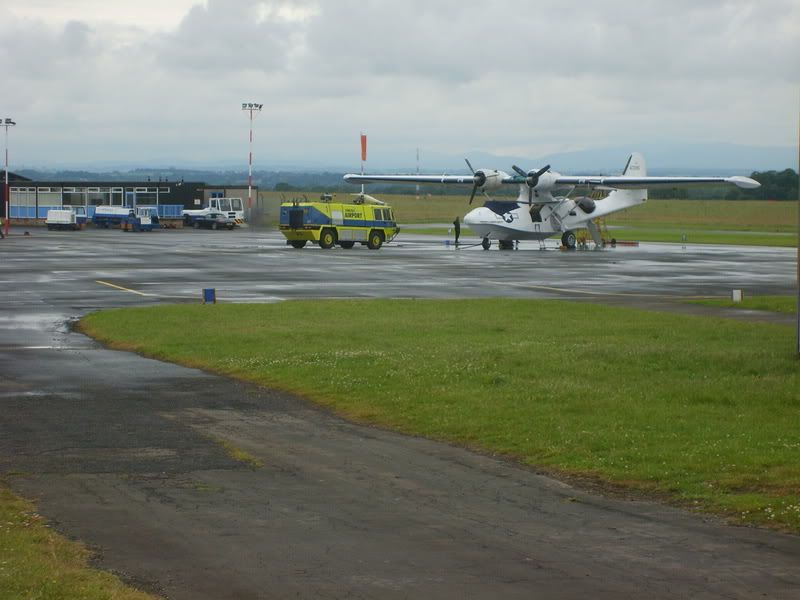
The other (starboard) propeller was still attached but it was feathered.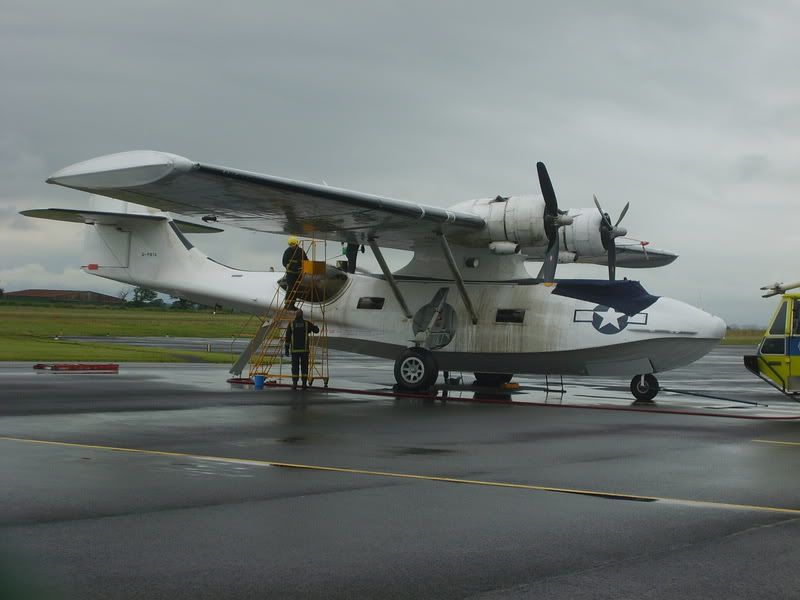
One big oil slick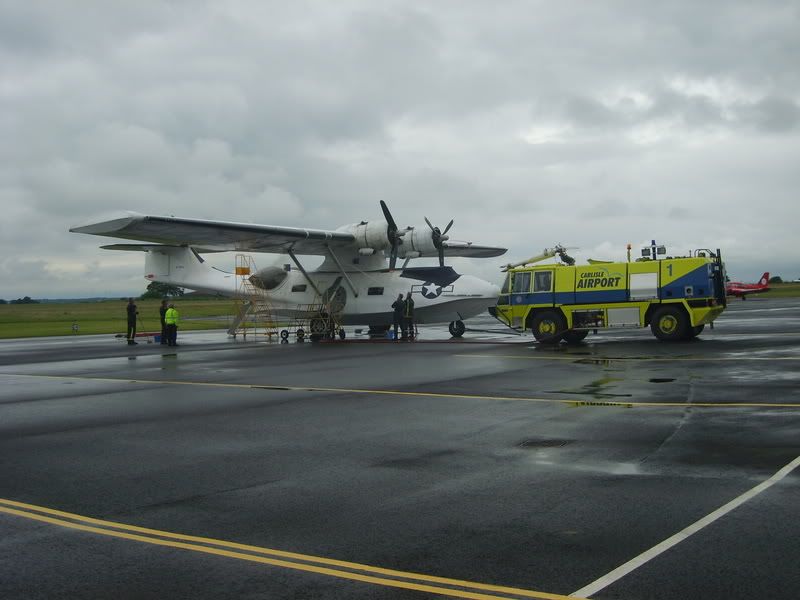
Which the airport fire service helped to wash off.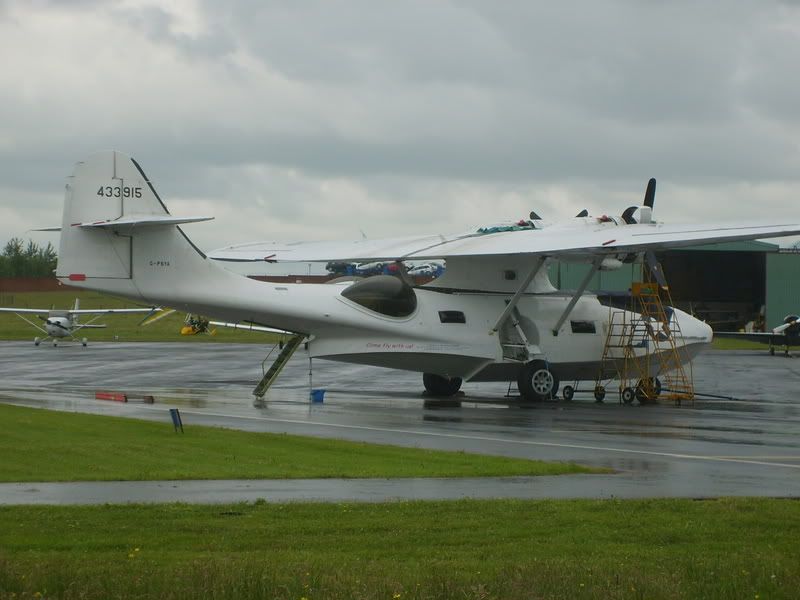
Leaving the Catalina nice and clean..
BlueRobinThe source http://www.newsandstar.co.uk/news/viewarticle.aspx?id=510989
Any problem, the airfield may put the crash crew on standby as a precaution.
BlueRobinGiven the position of the undercart, landing it would be errr interesting. 🙂
BlueRobinwhich Dean got from http://www.caa.co.uk/ginfo
BlueRobinArchiving probably still being done internally on a voluntary basis so very slow. If you’re desperate, contact the office in Sutton, Surrey. Or British Library perhaps? They have to keep every copy of a published magazine iirc?
BlueRobinLast time I looked Alcester was not East of Warwick 🙂
Did you see the Lynx pair route through yesterday/today?


 Sign In







