 Ja Worsley
Large LST are not terribly popular any more.
What about participating in the LCU-X?
Or T-Craft?
Hey Dis: mate I had a look around at these projects and I found very little on the LCU-X but found some very interesting designs on the T-Craft.
ONR’s concept does seem to be right out there, but is the RAN ready to move towards a hover craft design?
Here are some of the designs for the T-Craft that I came across.


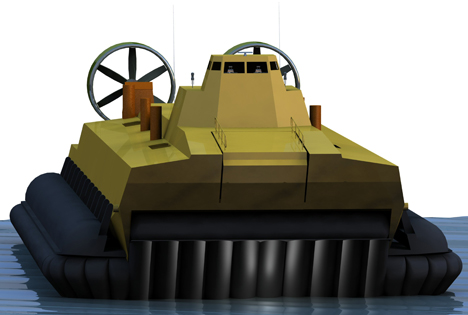
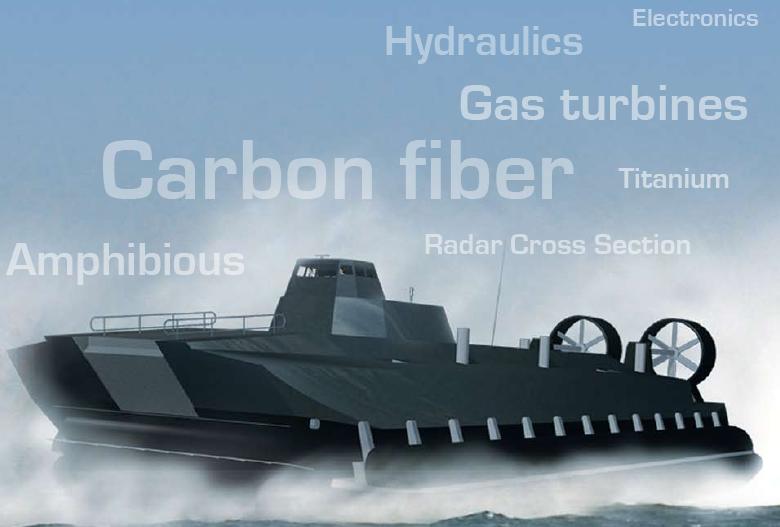
I also found info on the HLCAC
And more interestingly the L-Cat which France is currently working on, now this project seems to be of interest to me!

http://defense-technologynews.blogspot.com/2008/11/france-navy-test-new-l-cat-landing.html
Depends on the force you’re trying to project into a specific theater. If it’s about mopping up coup attempts on pacific islands, 200 men with a couple vehicles, these LSTs are pretty much the only size needed.
There are a number of proposals for the BATRAL replacement:
Rolls-Royce proposal (UT-527):
http://www.meretmarine.com/article.cfm?id=102955
– 1800 tons displacement
– dimensions 92.4 x 18 meters
– high automatisation, 12 men crew
– range 20.000 nm @ 16 knots (!), max speed 20 knots
– heavy helicopter platform, no hangar
– capacity for up to 320 troops, or 120 troops with 20 vehicles including some armoured
– multi-purpose with towing and firefighting capabilityProposal is for 6 ships for the Marine Nationale, to replace the BATRALs and the southern patrol cutter Albatros, possibly also a candidate for P400 replacement. Proposed introduction 2013-2018.
CNIM proposal for BATRAL replacement (MPV):
http://www.meretmarine.com/article.cfm?id=108703
(well, somewhere in there)
– dimensions: 90 meters long, catamaran
– range 12.000 nm @ 12 knots, cruise speed 20 knots, max speed 25 knots
– crew: 25 men
– platform and hangar for medium helicopter and/or UAV
– capacity: up to 300 troops or those 120 men with 20 vehicles (160 lane meters / 500 m² 5-m-roof flex deck)
– beachableThe primary concerns for “Projet BIS” from the MN seems to be :
– massive range for worldwide autonomous use
– standardized troop capacity identical to BATRAL
– helicopter capabilityThe rest seems to be … negotiable.
Kato: Mate that Rolls Royce proposal is ugly, I mean as far as ugly is concerned, this thing fell out of the ugly tree and hit every branch on the way down!
I feel that the CNIM proposal may be along the lines of what is needed but it in this form is way too big and thus has no chance- As I said above, have a look at the L-Cat that France is working on- this is the size of vessel we need and this particular vessel being capable of ro/ro just goes to add more to it being a winner!
[QUOTE=Nomad;1456113]
[IMG]
So what other vessels could be in the running? Would the RAN consider the Visby class? are there any other designs to be considered?While there are many good designs currently available both in service and on the drawing board the design that to my mind comes closest to the the White paper description is the Gowind from DCNS.
But which ever design is eventually chosen by/for the RAN, IMHO the design should include the ability to launch/recover and support on board a Seahawk class replacement sized helicopter.
For the ASW role – Helicopter with dipping sonar
Offshore/Littoral combat – Helicopter with Penguin class ASM’s
Hydro/Oceanographic – VTUAV/LUH
Special Forces support – Utility helicopter/VTUAV/LUH
Border Protection – Utility helicopter/VTUAV/LUH
Counter Terrism/Piracy -ARH/Utility helicopter/VTUAV/LUH
My thoughts
Nomad
Nomad: I’ve had a look at the Gowind designs and I feel that they are just a little too big for the OPC role, now granted there are smaller designs on the board, I feel that these vessels might actually be better proposed as the replacement Frigate vessels of which we need a new design to replace the Anzac class and which have been stated they must be bigger- one proposal on the board is the F-100 modified without the SPY-1 radar. This would bring commonality to the fleet and allow a huge reduction in costs of logistics support, but could that really be a proposal?
As for the replacement Seahawk helo, From what I am hearing with my contacts in defence- the NH-90 NFH is going to be the winner due to the strict compliance with the Air 9000- specifically to reduce the number of different types operated- besides, the NFH does offer better quallities than the Seahawk in any form- especially in growth potential!
Ja WorsleySwerve: Point taken about the Skyhawks, still the US did block the RNZAF big wigs from trying to sell them to Brazil even to the point of forbidding them to go to the country to talk about them- New Zealand decided to do a sneaky and hold talks in Wellington with the Diplomatic staff from Brazil there. I think the reason being was that the US as you correctly mentioned, had the F-16 and F/A-18 up for competition in Brazil and this might have swayed judgment on any decision.
As for the Tejas, the Indians are indeed going to develop it and we are seeing (finally) full rate production of the air force model starting to role off the line, though in very limited numbers. There is still trouble with the Kuvari engine but HAL has assured that in time these problems will be sorted. Personally I see a big future for the little Tejas and can only wish them well with it. As for the T45 and naval version of a Mk-120 series hawk, I doubt that would ever happen, sure the T-45C is a decent machine but it lacks any real punch and certainly not enough to be considered a Fleet Defence Fighter.
As for there being only 9 F1 model Rafaels in French service- this is incorrect, IIRC they were upgraded to F2 standard before heading off to Afghanistan where they proved themselves a decent air to ground machine as well as air to air. Currently the MM fleet is undergoing upgrade to F3 standards.
Ja WorsleyI mentioned it in another post, but the reasons Brazil is looking at this type of vessel is simple: they have operational differences of opinion with the US.
Brazil isn’t to comfortable with having nukes patrolling just off her shores, while the US won’t say that they do, it’s well known in the silent service that one of their patrol areas is just outside the Brazilian national limits. Brazil wishes to have an SSN as a deterant to outside influence such as marauding USN SSN’s.
A new carrier is a great idea and with Brazil and India already forming great bonds, I can’t see why Brazil couldn’t tack on a carrier or two to the current Indian order of three, these certainly would cost considerably less than Brazil trying to build one herself.
Ja WorsleyJust as an after thought: the really winner here seems to be India who are producing the Teejas Naval version which if they finally get the program organised, could clean up in the market selling them to Argentina and Brazil!
Ja WorsleyI too have thought about the replacements for the MdB’s AF-1’s. The first thing they really need is a carrier training program, it’s ok to always send pilots to the US for this but what if there is a difference of operational opinion (as I do know there is with the US and Brazil). I know that the Javelin has finally found it’s first customer. They have often said that they could produce a version for naval aviation.
What I would like to know is, what will the next light strike plane be for carriers of conventional use? The US and UK are moving towards use of the STOVL F-35B but what about Brazil and France? What if the UK decided to go back to CTOL carriers? What about China and India who are using the Russian system and what of Russia they have recently announced that they want to build more carriers too.
Now I know Argentina launched a program some time ago to build a carrier in house, but by the time they finally get one afloat their naval aviation would need a complete overhaul.
I read above that someone was talking about the Kahu’s, well those are out! The US needs to apporve the sale of the planes and since these planes have F-16 equipment on board, it’s doubtful that the US will allow the Brazilians or Argentinians to have them because the countries don’t see eye to eye on the political field.
Ja WorsleyInteresting Dis, I had a look for info and pics of the proposed LCU-X and found only info on the FAS site (And we all know what those guys are like).
The T-Craft produced more results and what I see there is interesting but would the Government- let alone the RAN go for something in the Air Cushioned range? I was talking to someone from the navy- one of the high ups, and I asked why the RAN wasn’t looking at LCAC’s for the new Canberra Class LHD’s, the reply I got back somewhat stunned me- he said that they weren’t interested in LCAC’s because those particular landing craft have more that can go wrong with them than normal landing craft! Now thinking about this, the only thing I can think of would be ingestion to the bags of certain wildlife that frequent our areas of excercise but this shouldn’t usually be a problem surely!
I do agree that large LST’s are now a bygone age, sort of like Battleships really. Better to throw everything in a large Sealift ship and have landing craft take them the final distance. Of course my justification in saying that is simple, the days of beach head warfare (such as the landings at Normandy) are well over, these days wars are fought very differently.
Ja WorsleyGer: I was wondering if someone would hit the Aussie products- the MRV I have bee a supporter of for some time now- just search the history files! This vessel could easily fill the OPC role and I am now wondering if the RNZN OPV’s could also be in contention?
As for the BATRAL’s, These vessels are the focal point of what the RAN is looking at, albeit in a more modern version. Perhaps if France is retiring it’s five vessels and Australia needs six of this type, then perhaps a co-operative venture could be launched cutting the costs down somewhat.
The other way I would go is the long held support I have for the InCat LHT design I have referred to in times past.
Ja WorsleyWe should just go with a new build aircraft so that BAe keep their services open and we get something perfect for the navy. Or we just go to Nuclear carriers if we want to be like the yankees.
There are two problems with that mate:
1. BAE are loosing out to the megacorp of Europe “EADS”, even now they admit that EADS is basically driving the aerospace business today.
2. Britain doesn’t want to be like the US, they want the capabilities but retain a different function as opposed to that of the US. Personally I feel that Britain should just stop being silly and join the EU that way they are assured of economic survival! BAE and Westland won’t die under the EADS umbrella, Casa hasn’t nor has any of the other major european aerospace firms.
Ja WorsleyThe RAAF and Government have said that the first batch of Hornet replacements would be manned aircraft, the second batch may be unmanned.
IMHO it is more likely we will see a aircraft along the lines of Northrop Grumman’s X-47, before we ever see an F35B in RAAF colours.
Are you trying to tell me that the 100 F-35’s that are already approved will be in two batches with the second (28 frames) not actually bought, but rather ammended to become X-47B’s? I don’t think so- read the White Paper and then compare that to the DCP and what is already on the DMO’s website… 100 F-35’s will be bought- 72 of those are to be A model! This is why I am asking about the other 28, I do know for a fact that the B model does hold interest in the ADF (who cares if it’s the RAAF or the RAN that operates them)- fact is, 28 F-35’s are yet to be accounted for!
The White Paper suggests that Navy is looking to replace its Patrol Boats/MCM’s etc with a multi-role vessel that has more combat power than the current fleet of PB’s to operate independently in the green zone and as part of a TF/SAG in the blue zone.
I believe something like DCNS’s Gowind would be a good solution.
Actually the White paper acknowledges the short supply of vessels on the front line up in the top end, this is why they are looking at mission modular capabilities. Recently HMAS Leeuwin and Melville (our two main hydrographic vessels) have had to deploy under a patrol condition- they had their nice shiny white finish painted over and became warships in the standard storm grey like all other RAN Fleet units. The fact that these two vessels have an organic air element prompted the RAN and the government to include this capability on the next class of vessel for patrol duties! The recent surge in hostilities with Pirates has also raised the question about the pure stopping power of the 25mm Bushmaster gyro stabalised weapon aboard the current patrol fleet. When I did an interview a couple of years ago with the Commander of HMAS Wollongong III, he praised the weapon (as you’d expect) saying that this gun can shoot the rudder off an FFV with precise accuracy- this is a huge advancement over the Bofors 40/60 on the old Freemantle class! Thing is, the old Bofors had a bit more punch and the Bushy has the precision. What the navy want is a weapon that combines these two guns into one- with precision and punch, because the Pirates have some very heavy weapons on their side (mostly WW2 5.5″ guns and the likes, left where they stood after the war ended)! Sure they make their own ammo and yes 1 in 25 shots blows up in their face, but getting to number 25- who wants to take on such a big gun in todays standards?
I had a look at the Gowind design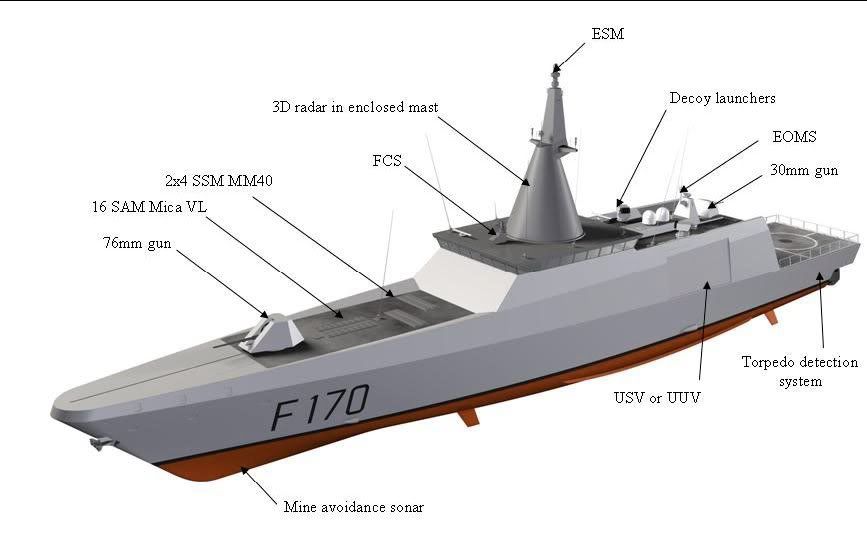
You can’t be serious! Yes they look nice and they sure do pack a punch- but these are better off being replacements for the Anzac class than the Armidale class!
Incase you didn’t see the link to the MRV by Austral above, here are a couple of pics of this vessel…


Finally below is the Incat LHT I spoke of above and many times before (honestly, I would love to see this vessel in service-ANYWHERE)!
Ja WorsleyHere you go, some pics of the NFH NH90
Dutch_002.jpg)
Norwegian
French
And the Swedish Hi-Cab
Ja Worsley1997 for me. I remember all the rumours of Kidd, Ticonderoga and Spurance transfers also!
Ah yes, I remember those as well- everyone was looking forward to them coming here but the government wanted new build vessels. I also remember the offer to have three Already Broke class transfered to us with a fourth thrown in to sweeten the deal, this one fell through because we NEED organic air cover- the ones offered to us only had the helo landing deck. I also remember the OPC back then, I still think we should have went ahead with that plan- Stupid Howard Government!
I’ve also heard 12 for Holsworthy. It depends on the different mixes quoted. July 2010 is for one in service at sea, with others to follow. You’ve probably already seen MRH90 photos with Army or Navy on the nose….
Yeah I have seen the pics of 002 (NAVY) and 003 (ARMY)- in fact if you look at the original post you can see that I posted a pic of 002 😉 Really not sure I agree with the camo on the Navy buses- I guess in time that will change! I was also wondering if you heard anything from your sources about the RAN getting more Helo transport once the LHD’s come on line? My sources have said that the RAN want their own machines because they don’t trust the Army on their new ships (this coming from the incident with the Blackhawk falling off the LPA), my sources have mentioned the Navy looking at the Hi-cab version like those being built for Sweden and Finland.
Oakey is combined Army/Navy training – three of the six naval MRH90 are supposed to be deployed at one time, which doesn’t leave a lot for initial aircrew training.
This emphasises my questions about more being ordered for the navy in fleet support role! If you take into account all deployed aviation for ships it breaks down like this:
1x Tobruk
1x Success
1x Sirius
4x (minimum) for LPA’s
Now if you take out Tobruk as being dockside (and it hardly leaves there these days :mad:) This still leaves all six employed at any one time. The two LPA’s are hardly ever home and when they are they only here for a few weeks before they are off again (They are our most used vessels). Sirius doesn’t have a hanger, so it’s helo will be shore based at FBW and Success’s helo would be over worked due to her being up in MEAO almost all the time. We do actually need more and soon.
At least 44 Penguin missiles have been delivered (and in stock a number of years back). At least the MU-90 is a dead cert for some of the European NFH customers. AFAIK The RAN wants medium range (Penguin or similar) and Hellfire missiles.
The MU90 will be a dead cert on any new Naval Combat Helo, I don’t see much problem intergrating the Penguin on our fleet, since IIRC, the Norwegians are also doing this.
About the common civilian misconception – during the mid 1990s the Army was actually the worst! You’d remember what a non-event the internal disclosure was when ADF policy changed? LOL
Ohhhhh yeah, I do remember that- I remember also when Sexual preference also got thrown out under the “Non Discrimination” laws- there was a certain PO who jumped at that one and fully announced that he couldn’t wait to pull into port to **** some boys! Needless to say that during my time, I only ever found one and he was very odd- he got done one day. I was sitting in the SCRAN hall with my oppos and we were reading the paper, and there was this pic of a person done from an Identity kit who was wanted for questioning over a certain incident in Frankston involving a minor- later that afternoon, the Police came screaming in with lights and sirens going, turns out, it was him after all! Such a shame.
Ja WorsleyPeter: I agree that “NO Official” sources say that there will be any B models, but all other “Official” sources do state that only 72 A models will be bought and that the “Official” total will be 100 bought- this is where I get my 28 B models from. I know that back when I was in the Puss, there was talk of buying B models (this was in 96-98). While I do see a small number as you say, going to ship board usage, 28 would give us two squadrons (805 and 808 with 10 each) as well as a training squadron (724 with 8 planes).
July 2010 for the first deployment of the MRH-90 Navy, that means that they will receive them as of next month if they haven’t started to already, after all, they need to work up on them and attain IOC all before deployment! As for the six at Holsworthy- I think I hear a higher number going there as a back up to the Anti-Terrorist group who have gotten their Blackhawks already. IIRC I read that the training for the MRH-90 was going to be done at Nowra and not Oakey (will confirm that).
Yes the OPC’s will be helo capable and also very highly possible with UAV support as well as the RAN are serious about intergrating this capabilty into frontline units especially along the top end with Piracy, people smuggling and drug trafficking becoming a higher priority now (God knows how many times we’ve stopped the Tampa returning). As for the number of helos, the latest report states that the number needed will be 24- but as you say, that number changes all the time!
The SCUP program does seem to revolve around avionics and radar rather than adding any new firepower to it. The new MU90’s will be intergrated on the AP-3C’s and not the Seahawks and any thoughts of Penguins on any helo have gone right out the window now (which leads me to ask- did we actually buy any stock of those and if so, can we sell them off?)
Air 9000 Phase 8 has actually been brought forward with it now up for second pass approval this month! This means that acquisition of a winner will now take place in 2010/2011 (contract signing with deliveries to commence 2012/2013). This gives the impression that the current fleet is in a bigger crisis than previously thought! If this comes to pass, then the favoured choice will be the Romeo’s as they are a majorly reduced risk compared to the NFH-90’s. The support structure as mentioned above is already in place! The swaying factor will be the total aim of the Air 9000 Program- “To reduce the amount of Helo’s operated by the ADF”. Now given that the Seahawk and Blackhawk are on the way out and the MRH-90’s are coming on line- this is where the strength of the NFH bid comes from. The first customer (The Netherlands) will receive their first machine this month with Norway and France set for not long after that. That being so, there is still major work to be done on the program in terms of:- First of type certification, ironing out the teething problems, working out weapons fits which each customer (it’s a given that Australia will want different weapons on their machines compared to those in Europe).
I’m glad to hear that someone else agrees with me on the Ordinary Seaman position- it really does make a lot of sence, I mean they sign up, see what life in the Puss is like then decide if they want to stay and where. I garentee (as would you given you and I share a common back ground), that when they get in and do a trip, they will see that it’s not all Yelling and screaming at you, nor is it off to fight a war straight away! Bringing back the OS position will actually dispell a vast amount of fears held buy the civilian world about life in the navy- especially that very common one (you know they one I’m talking about)!
While doing a bit of searching tonight, I came across a pic that I’d thought I’d share with you guys- An F-38B in 805Sqdn markings 😎
Ja WorsleySwerve: Look forward to seeing those pics mate. As for the radar, not sure- there was a proposal at one stage to fit the Erieye radar to it’s back like the P-99A has, and then this radar version came along which was to be houses in a retracting turret under the fuselage (taking up the torp bay I’d imagine).
Ja WorsleyArthur would know- he’s the resident Russian expert!
Ja WorsleyPioneer: There is a slim lined version out there already, the USCG are already on to it- The Bell Augusta BA-609 known in it’s service as the HV-609

Mark: Thanks for the links, most interesting- the original gun I remember being proposed was the two barrelled under over gun as I mentioned before- the GAU-19 you have shown me looks like a modern version of the Cobra’s original gun and reminds me of the Hind D’s gun.
Badger: Mate give it time and the USMC/USN/US Army will see a need for this piece of hardware. I agree that it will become a nessecity sooner rather than later as the standard V-22 concept can’t very well be held back by the current range of helos no matter which helo they use. They have to remember that the Osprey is a new type of system combining both fixed and rotary winged machines. While a fixed wing machine could provide cover in transit, when over the target area, a V-22 would be left alone.
I can see a new type of doctrine being made for this system, just like what the US had to make with the Helicopter in Vietnam! Perhaps time will show us what is in stall for it.
While I was looking for pics of the USCG’s version of the BA-609/HV-609, I came across something I hadn’t seen before anywhere and now I am wondering why AFM hasn’t covered it:
Bell/Agusta Unveils BA609 SAR Variant
As the most advanced rotorcraft technology innovation that will revolutionize vertical flight in the forthcoming future, the BA609 Tiltrotor features an unparalleled combination of high performance and maximum flexibility which makes it a perfect platform for a variety of Government support roles such as SAR (Search and Rescue) operations, Homeland Security missions, Special Forces insertion/extraction , border and maritime patrol, vertical fleet support/patrolling, head of state transport, Emergency response, evacuation, interdiction , disaster relief, airborne command and control, and training, etc.

Users can leverage on the BA609 unique capability to dispatch quickly, hover mid-mission, and rescue people at more than 300 miles (500 km) from the coast providing extended border management and coverage with existing bases. At a cruise speed up to 275 knots (510 km/h) with a maximum unrefuelled range of 700 nautical miles (950 nautical miles with auxiliary fuel tanks), the tiltrotor is able to search for and reach the target at twice the speed of conventional rotorcraft reducing the typical helicopter mission time by 44%. The BA609 may descend directly from 25,000 feet to a rescue scene at sea level, into a hover, for hoist recovery of up to 6 people — unlike any other aircraft. The BA609 can be provided with a tailored configuration for SAR missions. A complete range of SAR equipment including rescue hoist, litters, health care tools, basket & pump, and the standard SAR avionics suite such as search/weather radar, FLIR/LLTV, NVG compatible cockpit, and other customized equipment requested by the customer. The BA609 configuration can be quickly changed to transport up to 12 people, in addition to pilot and co-pilot.
The BA609 is designed to fly into known icing conditions. Furthermore, the Tiltrotor ensures maximum operational flexibility with shipboard compatibility for naval applications with vertical take-off and landing in helicopter mode on common Coast Guard or Navy vessels and it is compatible with existing 3 to 11 ton class flight decks. This extends the basic maximum projection range further exploiting the already impressive BA609’s characteristics. With the quietest flyover noise signature of any VTOL, with very efficient fuel economy, the BA609 Tiltrotor offers an ECO-friendly set of operating characteristics allowing improving success in many Government Support roles.
Exclusive performance, versatility and productivity enable the BA609 to compete for many existing requirements, overcoming the inherent limits of helicopters and airplanes, and proving an unprecedented ideal solution to cost-effectively replace mixed fixed/rotor-winged fleets. More than 80 BA609 units have been ordered so far by approximately 40 customers, (including government agencies), in over 20 countries).
Taken from Helicoter Association International who got it from the AugustaWestland site
And this showing an interior layout of the HV-609 SAR variant came from: SAR The Americas 1999 Conference Report located at Equip.com
Bell / Augusta HV-609 Tiltrotor
As a pilot, the most appealing piece of hardware on display (albeit in model only), and subject of a compelling presentation, was the Bell Helicopter/Augusta HV-609 Tiltrotor, a SAR variant of their civil/commercial 609 Tiltrotor currently under development. While we also heard exciting presentations on the status of the military V-22 Tiltrotor and on SAR applications for the Eagle Eye Tiltrotor UAV (unmanned air vehicle), it was the HV-609 that captured this editor’s imagination.

The capabilities of the proposed HV-609 far exceed that of traditional helicopters for the SAR role, both in terms of range, 750 nm (863 miles / 1,389 km), and speed, 275 kts (509 kph) maximum cruise. Both attributes can be the difference between life and death to a survivor beyond the range of conventional heli-rescue (as illustrated in this mission profile). The HV-609 is configured with a 600 lb. (272 kg) hoist, six stowable passenger seats and two crew seats, and can be equipped to be flown by one or two pilots. (Click to see the basic specifications and three-view.)

The HV-609 certainly seems to fill a big hole in USCG SAR capabilities and would vastly increase their SAR capacity. One can only hope that the concept eventually comes to fruition and the USCG is able to take advantage of this extraordinary new dimension in aviation SAR. In the meantime, in front of some 200 attendees this editor was promised a flight in the not too distant future, once the basic 609 Tiltrotor prototype is cleared for demonstration flights. I can hardly wait.


 Sign In








