 BarnesW
In other news US pilots in Syria rejected request to speak Russian.:D
BarnesWWhich is why you don’t understand how and why this or that engine is fitted into a specific airframe.
That made no sense either? I said it can produce the same thrust as the M88 at a lower jet velocity due to higher mass flow rate. That does not prevent it from being able to generate a higher specific thrust and a higher jet velocity when required. It will not be flat out at all times.
SFC is SFC. Fuel consumption is another thing and depends on thrust setting which, for a given speed, is higher for an heavier aircraft.
As already mentioned, I’m talking about the engine not the aircraft. Bringing the aircraft into it makes it far too complicated to analyse because all the data isn’t available and their are too many variables.
In case you didn’t get it yet, the Typhoon weights about 15% more and that doesn’t come for free.
It weighs about 10% more. Rafale B weighs 33,000lbs, Rafale C 32,000lb, Typhoon 35,000lb.
The Rafale got a smaller (and less powerful engine) because it’s smaller and lighter. M-88 is designed to be what it is, not to be an EJ-200 like.
But the net result is an engine with a higher T/W, and lower SFC, and an aircraft with a higher T/W.
Now if you knew your stuff, you should have get that the bypass ratios mean the mass airflow that goes by the hot parts of these engines is 46.2 kg/s for the EJ-200 vs 45.5 kg/s for the M-88.
Dude, you made 4 obvious factual errors in your last post, I think you should lay off the, “Now if you knew your stuff,” charade:
http://forum.keypublishing.com/showthread.php?136822-Typhoon-vs-Rafale&p=2268676#post2268676
And when you begin with, “Now if you new your stuff,” it usually doesn’t help to follow it with an incorrect execution of a basic mathematical operation:
77/1.4 = 55kg/s core flow (EJ200), 65/1.3 = 50kg/s core flow (M88)
But in terms of flow through the turbine (‘hot parts’), you obviously have to multiply those figures by (1 + F), where F = Fuel-to-Air Ratio.
EJ-200 inlet diameter used to be 740mm on official brochures (and still be on eurofighter.com), and that’s already an achievement according to some untold parameter (namely frontal thrust).
The 700 mm figure is too spurious to be taken seriously. Firstly the engine weight would then be way too high for such a simple design, secondly it would be a world record by a fair margin as far as frontal thrust is concerned.
No really, that’s very doubtful and I don’t buy it. Even if this is the right number for something, it doesn’t compare to the 27″ inlet diameter of the M-88.
Well I’m only going by the manufacturer’s datasheets which say 700mm for EJ200 vs 27.5in (698.5mm) for M88, but hey, what do they know? Maybe the diameter changed on later versions?? But MTU is very specific, in that they also say 28in, which is clearly not rounded to a multiple of 5 or 10.
http://www.mtu.de/fileadmin/EN/2_Engines/2_Military_Aircraft_Engines/1_Fighter_Aircraft/EJ200/ProductLeaflet_EJ200.pdf
http://www.snecma.com/file/download/fiche_m88_2011_ang_hd.pdf
The engine weight is different because the engine is longer due to a more gradual pressure gradient across the more complex compressor stages, which yield a higher pressure ratio than the M88. So I suspect 15% extra length explains 10% extra weight.
https://en.wikipedia.org/wiki/Overall_pressure_ratio#Advantages_of_high_overall_pressure_ratios
Generally speaking, a higher overall pressure ratio implies higher efficiency, but the engine will usually weigh more, so there is a compromise.
BarnesWThe largest units of the Soviet & now Russian navy have always been stationed in ports from which they could sally, poised for attack, not coastal or territorial defence.
Funny that they never really have, apart from 1962, nearly, I guess.
BarnesWThe Argentinian navy only had 5(?) actual Exocet missiles delivered at the beginning of the war – I don’t think this weapon in such numbers was ever going to have much effect on the Soviet Navy in 1982. Didn’t the RN lose more ships to dumb bombs?
The only Exocet that actually hit got lucky because another ship was blocking the engagement radar and secondary TV mode of a Sea Wolf system. And HMS Sheffield failed to receive the warning from HMS Glasgow that it was coming. The Sea Wolf system was otherwise more than capable of shooting it down.
https://www.flightglobal.com/pdfarchive/view/1983/1983%20-%202236.html
BarnesWActually EJ-200 specific thrust is a bit higher, that means a higher jet velocity.
It means it can be higher when needed.;) Which is why the maximum thrust advantage over the M88 is slightly greater than the increase in mass flow rate over same. 77kg/s vs 65kg/s. 90kN vs 75kN.
Core engine mass-flow rates are identical because of the difference in bypass ratio, hence SFC values are in the same ballpark.
That made exactly zero sense. If I take the same 2 cores and add a BPR of 0.5 to one and 1.0 to other, the latter will have lower SFC in a subsonic cruise. I also don’t get how you assess the core flow rate to be identical.
77/1.4 != 65/1.3
Still, EJ-200 inlet diameter is larger to cope with a higher mass-flow rate that’s needed to get more thrust to cope with a heavier airframe. That’s how things work together.
The M88-2/4E and EJ200 inlet diameters are identical to within 1.5mm (0.2%). Only the M88 ECO demonstrator required a 14% larger inlet diameter to produce 90kN and still with a lower mass flow rate.
http://www.snecma.com/file/download/fiche_m88_2011_ang_hd.pdf
http://www.mtu.de/fileadmin/EN/2_Engines/2_Military_Aircraft_Engines/1_Fighter_Aircraft/EJ200/ProductLeaflet_EJ200.pdf
BarnesWSome quite old info from Indian MMRCA and some old info from many various sources.:-
In 2007 it was ~2000 hours MTBO for EJ200, then there were ‘upgrades’ these could be used for either more thrust or more life, the peacetime setting is for more life.
Then the methodology changed from a set time to on demand maintenance, ISTR 6000 hours is still the design lifetime of engine before full overhaul, but would need citation.
The EJ200 has ~15 changeable modules, M88 = ~21,
The Rafale M88 was quoted as 3000 hours some time ago, with 800h inspections.
Ej200 does have a good reputation for reliability, but how it directly compares to M88 is unknown to me.
I think you are right about the 6,000 hours if I’m understanding this link correctly:
BarnesWI think you beat the EJ200 by quite a large margin spouting so much hot air.
So far you haven’t brought any facts to the table but still haven’t stopped spouting.
AdlA & MN got to chose between 90KN or lower SFC & better cost of ownership, they chose the latter. By your own chart which compared EJ200, M88-E4 ECO & M88-3 you find that potential T/W is pretty similar if you go for M88-3. But those who use it opted for lower SFC & increased life. Since you can’t compare the life of both engines because the the MTBO of the EJ200 is nowhere to be found (hint… it’s probably not that good or it would be plastered all over), you can’t compare how much emphasis has been chosen on sheer power or lower cost/longer life.
Yes but the M88 ECO has a 14% larger inlet diameter than M88/EJ200, and longer than the M88-2/4E, so I’m not really sure that would even fit without body modifications and would mean increased drag. It’s not really the same engine at all in fact.
http://www.snecma.com/file/download/fiche_m88_2011_ang_hd.pdf
Maybe the high operational cost of the EF hints to low MTBO of the engines?
High operational cost based on what? You continuously make random allegations with zero evidence. Jane’s made an estimate of $16,500 per flying hour for Rafale but Air&Cosmos 2425 Page 18/20 : MRO gave a much higher estimate and this figure was back several years ago before the Euro tanked! It was 1.3-1.4 USD to 1 Euro at the time.


Why are there even two values for the EJ200? What do they represent exactly? How did you come to the conclusion that the M88’s value representing the same thing as the average between those values? It’s not logical deduction, it’s faith.
It is clearly a range of figures over given operating regimes. A single figure usually means an absolute minimum, so one could well argue it’s the 0.74lb/lbf.hr that compares directly.
As for the rest I’m not educated enough to conclude either way.
Nic
Fair enough.
BarnesWDouble post.
BarnesWSupposedly it will, but aren’t those Kh-55’s?
Yes. Ah I see, it might not be able to carry newer missiles internally yet.
http://www.flankers-site.co.uk/tu-95.html
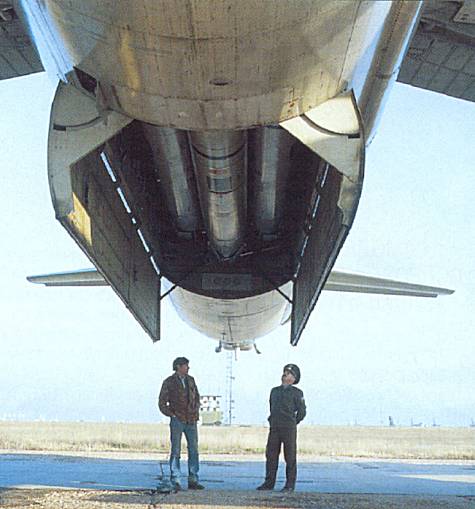
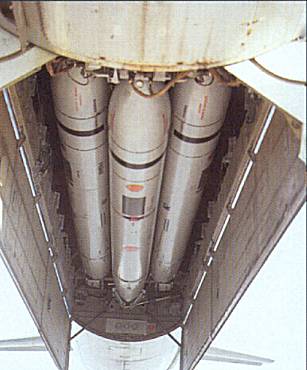
Internal weapons bay on a Tu-95MS armed with six Kh-55
cruise missiles on a rotary launcher.
Also Kh-555
BarnesWYou have proven that its T/W ratio is a bit better on the EJ200 at 0 altitude. That doesn’t prove much besides the fact that your are dishonest.
Nic
T/W 10% better, SFC a few percent better based on medium value, higher pressure ratio, higher mass-flow rate confirm SFC likely better throughout much of the envelope and mean lower jet velocity and core temperature for any given thrust. Same diameter, same drag package. Can’t see what else there is to discuss.
BarnesWI’m afraid you’ll soon discover that high flow rate is less effective than jet velocity to get high thrust at supersonic speeds.
I knew that already thanks but since the Typhoon is also faster, they obviously found a way around that. For any speed of flight, the most efficient way of providing the thrust is to have jet velocity as close as possible to aircraft speed, which means using the highest possible air flow rate.
And since you seem to consider that high flow rate is a “must have” item for some obscure reason, then I think you may want to read a thing or two about SNECMA M53 “superior” effectiveness. If not, you’ll surely can tell us why this superior engine (by your own metrics) has not been used to equip the Rafale.
It’s your assertion that it’s superior but all the points I’ve already covered show why it isn’t.
http://www.snecma.com/military-engines/training-and-combat-aircraft/m53
Specific fuel consumption without PC (lb/lbf.h) 0.88 (10% worse than Rafale)
Pressure ratio 9.80 (This is ridiculously bad – less than half that in M88 and EJ200 and there’s your problem https://en.wikipedia.org/wiki/Overall_pressure_ratio, no amount of mass flow rate is going to help that out)
Bypass ratio 0.36
Inlet Diameter 796mm (100mm wider than M88 and EJ200 – more drag)
Length 200in (>3ft longer than EJ200 and M88)
Wet T/W – 6.39 (well that’s just poo)
BarnesWLike you did when you claimed that the EJ200 was superior to the M88, to which I asked why exactly?
Nic
And which I think I’ve more than proved now to anyone with an open mind. This is the problem with some people. They have to insist that everything about one aircraft is better and refuse to accept that they both have strengths. Now I understand why France ended up off the project. All the partners were like, “well this engine design is obviously better,” and then some French guy says, “no no, ours is better.” And they replied, “well every parameter of this design seems better,” to which came, “no no, we must have a French engine.” And because of that, all 5 countries ended up with a fighter that’s worse than it otherwise could have been. The EU will fail for the same reason.
BarnesWThat is an awesome pic. And Tu 160s carries twelve of these?
Counts as 1 Launcher 🙂
Doesn’t the Bear carry some internally too.
BarnesWAnd what if someone just makes unfounded remarks with no evidence or context?
BarnesWI actually had a mindslip, since the range of the missile doesn’t have much to do with RCS insofar as detection range is better than engagement range. Case in point that F117 shot where the missile was detected by the battery over 50km, but missiles were shot from 13 km.
Nic
The SA-3 launch didn’t happen until 13km because the engagement radar couldn’t lock it until 13km due to the fact it was VLO, it had nothing to do with missile range. The 5V24 was replaced a long, long time ago by the 5V27 and in the case of Libya, they signed a contract for the S-125-2TM system in 2008.
http://thediplomat.com/2014/08/the-f-35-vs-the-vhf-threat/
Consequently, despite inputs from the VHF acquisition radar, the X-band* engagement radar of Dani’s SA-3 battery was able to track the F-117 only at a distance of 8 miles (13 km)
http://www.nti.org/media/pdfs/libya_missile.pdf?_=1316466791
http://www.tetraedr.com/production/production_war/detail.php?ID=9


 Sign In







