 NightReaper
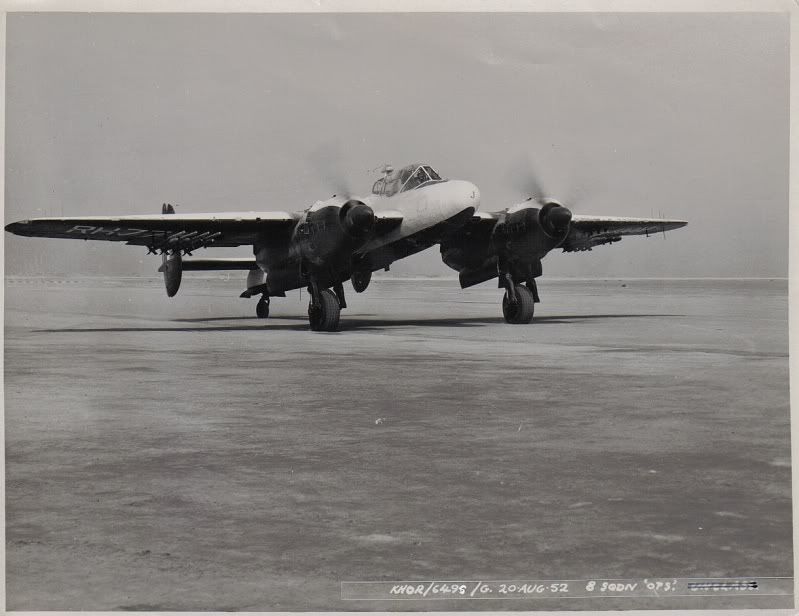
RAF Khor 1952
Flown by Roy Howard who later went onto Valiants and took part in Operation Grapple.
NightReaper53FM Domestic fire tender equipment
53HH Mobile servicing trailer equipment
53Q Coles crane, Mark 7, series 2, 5 ton mounted on Thornycroft WF/AC6/1 short chassis
Mark 7, series 5, 3 1/2 ton crane, mounted on Leyland Retriever WLW/IC chassis and Crossley 6 wheeled, 30/70 chassis
Mark 7, series 7, 5 ton crane, mounted on AEC 6 x 6, type 0854 chassis and Thorneycroft WF/AC6/2 short chassis
Mechanical transport spares:
61AR Ariel motor cycle (solo)
61CR Crossley 30/100 hp (FEI) fire tender, 6 wheeled
Crossley 30/70 hp (IGL3) heavy tender
Crossley FWD, type 2
Crossley FWD, type 3
Crossley tractor, type 1
Crossley tractor, type 3
61DE Dennis sullage tender, 5 ton
61DY R type trailer, Mark 2, 4 wheeled
61FT Stacatruc fork lift truck (Industrial Truck Development Ltd)
61MS Morris 14 hp ambulance
61NN Norton motorcycles, 490 cc
68A Auxiliary power plants airborne, Sunderland
NightReaper53FE MT coachwork spares:
Bodies, general service all models
Bodies, oxygen plant
Bodies, office
Bodies, mobile decompression chamber
Bodies, cooker
Bodies, parachute container trailer
Bodies, parachute drying trailer
Bodies, parachute packing and storage trailer
Bodies, signal, types 100 to 457A inc.
Bodies, air, mobile torpedo compressor
Platform, floodlight
Caravan Astra dome body
NightReaper44A Balloons, pressure type, Marks 7 and 10 and ancillary and armament equipment
44C Balloons, Ballonet, type, Mark 11
45A Balloons, hydrogen equipment
49 Balloons, equipment (blowers and spares)
51 Kites and ancillary equipment
52 Recognition models
53A Trailer, water carrying, 300 gallon (ECD water purification plant)
53CC Water, 150 gallon, ECD purification plant
53D Ambulance bodies ‘heavy’
53FC Water, 200 gallon, Thompson Bros. as fitted to Bedford 15-cwt, type MWC
NightReaper42AQ JAP 6 engine
42BQ JAP model 55 engine
42DQ JAP model 4/2 engine
42HH Petters PU.8 and PU.6/8 engines
42HQ Petters A, AS, AHM and 2A engines
42KK Ford 10 hp engine fitted to 4 KW reflector floodlight and 3 KW landmark beacon
42M 5 KW dioptric floodlight, Coventry Climax engine
42QB Enfield diesel engine, fitted to 5-6 KVA, 230 volt SP generating set, Mark 3
42QE Atlantic 6 BE, 45 hp engine
42QF Ruston Hornsby 60 hp engine
42QM Morris 8 hp engines spares
42QP Scammell, 3 hp engine
42QX Enfield 270 CC and 350 CC engine fitted to test sets
42R 6-3 KVA, 230 volt, SP generating set Coventry Climax E and ZE engines
42RR 1.224 KW Maudsley generating set Coventry Cub diesel LM engine (marine craft)
42Y 500 WAC portable test set mounted on trolley, Norman SM engine, JAP 4B engine, 1.2 KVA petrol electric AO test set mounted on trolley, 1,200 VA, 350 watt generating set Douglas, Mark 3, FT 350 engine etc
42Z AA 90 CM searchlight, Marks 6* and 6** etc
42ZG Gardner 18/24 KW 100 volt DC generating set with Gardner type LW engine, mounted on Bristol or Winget trailers
42ZN Nunn 18/24 KW DC generating set with Ford V.8 engine, mounted on Nunn trailer
NightReaper41E 37 1/2 ft. firefloat, engine Perkins S.6M, Meadows 100 hp
41EE Airborne lifeboats, Mark 2 and 2A, engine Austin
41F 18 ft. inboard dinghies, engine Meadows 8/28 hp
41HH 40-ft. ferry boat, engines Ford Parsons V.8 and Ford Thornycroft V.8
41KK Miscellaneous hull spares for mooring vessels, RAF auxiliaries and ships lifeboats
41P 38-ft. firefloat, engine Perkins S.6M
41Q 40-ft. seaplane treaders and firefloat, engine Perkins S.6M
41X 33-ft. bombscows, engine Meadows 8/28 hp
41Z 68-ft. launches, target (remote control) and target towing , engine Napier 500 hp
NightReaper6T Aircraft automatic pilots, Mark 9, major components servicing and tools
26AP Airframe spares, Magister 1
26Ek Airframe spares, Hamilcar 1
26FB Airborne ancillary equipment
27R Oleo leg equipment. British landing gears ltd
27S Standard ball and roller bearings (other than MT)
39D Hangars – blister
40F Aircraft packing cases
40P Containers for petrol, oil and lubricants
NightReaperThe last of the B Types (’41) tend to be without the makers name and address. Something to do with not advertising a potential bombing target if aircrew or their kit fell in to enemy hands
NightReaperThere’s nothing much in TNA on the RFC schools at Aboukir and Heliopolis. Seems unlikely that the medical records are still around.
NightReaperThe Spitfire Society
It’s the loveliest of all aircraft, but the world is awash with Spitfire information now, there is little to be said or learned.
I have to disagree. The problem with the abundance of data on the Spitfire is that there is a lot of misinformation. I spent a day volunteering with the Eastern Wing of the Society at Duxford on the weekend (lovely weather!) As usual, we had a steady stream of visitors asking questions, telling us about family members who flew during the war, sharing information & photos etc etc. There is always something new to be learned – and in turn, we try to educate and inform people about all aspects of the Spitfire – something we plan to continue doing.
NightReaperFrom our archivist: I have a theory about this picture. In the book Spitfire International (Air Britain) there is a photo of a badly weathered ground instructional airframe marked (it says) S.3*10. I think this is the same aircraft, the “4” having been cropped on the photo in the book. The aircraft in the photo is clearly in poor condition and if the Italians are anything like the British it was very common for people to have themselves photographed in “fighter pilot” pose in G.I. airframes to send home to the folks.
NightReaperAndrew Stillwell-Cox
Lieutenant Commander Andrew Stillwell-Cox joined the Royal Navy in 1972, aged 15, as a Boy Sailor at HMS Ganges. Following 12 months training he joined HMS Pembroke where he trained to become a Chef and later served on a variety of ships before promotion to Leading Hand in 1980, and a posting to HMS Glamorgan (a Guided Missile Destroyer). It was in this vessel that he served in the South Atlantic during the Falklands War (Operation CORPORATE) in 1982. In action his place of duty was as a ‘fearnought suitman’ at the amidships Fire and Damage Control Section Base (the Glamorgan was the only ship that was hit by an Exocet missile that survived the campaign). Promoted to Petty Officer in 1985, Stillwell-Cox served on Type 42 destroyers HMS Liverpool and HMS York. Selected for officer training in 1990, he later took up his first appointment as a Staff Officer to Commander in Chief and Second Sea Lord. Following promotion to Lieutenant in 1992 he embarked on an exchange appointment with the Royal Australian Navy in 1993 as Base Logistics Officer at HMAS Koonawara, Darwin. In 1995 he joined BRNC Dartmouth as Training Officer, later was Inspecting Officer at MOD Bath in 1997 and promoted Lieutenant Commander in 1999. Completing Staff Course, he joined HMS Illustrious (Logistics Officer) and saw active service in Sierra Leone as part of a humanitarian aid operation to Mozambique in 2000. Following a brief period on shore on HMS Raleigh and HMS Nelson he then joined HMS Fearless as Logistics Commander, sailing to both Afghanistan and Iraq during Operation ORACLE. Before retiring from the Royal Navy he joined RNAS Yeovilton in 2002 as Deputy Logistics Commander, prior to his final appointment as First Lieutenant at RNAS Culdrose. Lt-Commander Stillwell-Cox was awarded the following medals: South Atlantic Medal; Operational Service Medal (Sierra Leone); Operational Service Medal (Afghanistan); Queen’s Golden Jubilee Medal; Long Service & Good Conduct Medal.
NightReaperAndrew
I knew Andrew and he was no coward. Obviously deeply troubled by personal circumstances that made him to do this. I was going to direct you to his distinguished Naval record on the IWM site, but it’s just been taken down. I can post it here if you would like.
NightReaperSutton
The OC is Kenwyn Sutton – not sure about the other one
NightReaperNot Aircrew
He’s listed as Admin / Special Duties in 1940 and then onto Technical Branch from early 1941


 Sign In







