 crobato
For that to happen your wingman would have to get lost and end up near the target area. If you and a wingman are flying in formation and you fire an AIM-120 at an emitter source 50 km in front of you, logic dictates that yor wingman isn’t going to go leaping ahead of the AIM-120 to see what happens. He can’t anyway, the F/A-22 isn’t doing much past Mach 2, while the AIM-120 will at least double that speed heading towards the target area.
YOu can still hit a friendly or something civilian even further away. AIM-120 still cannot launch until the fire control system gives the authority which in this case would have required verification of hostility. There would still be IFF interrogation of the target, and the RWR would know enough if the signals are hostile or friendly.
crobatoI think that cockpit is the FC-1. Look at the antenna in the center of the canoy. In the J-10 it does not go as far forward as it does in the FC-1.
2nd or 4th prototype? The first one should have a lightning bolt over the triangular warning sign.
crobatoBut this was around the time that Taiwan couldn’t get the F-16, that was the reason for the IDF in the first place. Notice how once the F-16s and Mirages began arriving, all the upgrades for the IDF fell apart (particularly more powerful engines).
It was the US government who restricted the engines, not because of General Dynamics. And the restrictions was placed right from the start.
AIDC never acknowledged any American company in the airframe, and I don’t think any American company worked with AIDC in the official basis on the airframe. I am more likely to think that the American assistance on the airframe was American engineers from various companies hired and paid by AIDC, and thus officially, these engineers did not work under American companies but under AIDC. [This is to avoid repercurssions of said business by such American companies also doing business in mainland China].
crobatoGeneral Dynamics to have participated in the project would have been a conflict of interest. After all they were also trying to sell F-16s to Taiwan. I was thinking more of Northrop or Grumman. Westinghouse didn’t participate in the engine program, Allied Signal did. The avionics had nothing to do with Hughes—the FBW was by BAe Systems, the radar by Raytheon and the INS by Northrop Grumman.
crobatoCrobato,
I know you tend to think quite highly of yourself and therefore opinions like mine are simply worth nothing, but I don’t think you have actually read a single thing I’ve typed. At no point did I say that the J-10 and Lavi were identical in any one aspect, so quit trying to use that as proof the two aren’t related. When I say related I mean that Israeli engineers that helped design the Lavi or perhaps worked on the project in some form or fashion were likely involved in the design of the J-10. The J-10 and Lavi are too broadly similar (i.e. more more like one another than any other two modern fighters I can think of that aren’t modifications of an existing design…i.e. F/A-18C/D to F/A-18E/F) for them not to be related in a design sense. Obviously there are going to be design differences, and that’s nothing I’ve ever disputed (yet as I pointed out you continue to try to pound it into my head that little things like the ventral fins being located in a slightly different location are cause to believe that there was no Israeli help in the design).
you really don’t seem to understand do you?
Broadly similar does not qualify as having engineer participation. All the Formula One cars look broadly similar one way or another to each other but it does not mean they all share engineers. There are so many real world examples of this that it simply does not qualify starting from trains to tankers and airliners.
The J-10 is not just different in the details. The accumulation of all the details creates an entirely different plane. Many of the solutions embodied in the J-10 are different from what the Israeli designers (unlikely, more like American) did on the Lavi.
By the way the Lavi was developed as a multi-role warplane, but the emphasis was to be on the strike mission. The aircraft was to replace both the A-4 and Kfir. I’m glad to know that you are more knowledgable than the people at IAI about how the Lavi should have been designed. You say you are of the opinion it has many design flaws? Excuse me while I take a few minutes to have a good laugh. Are you an aerospace engineer with a job at Chengdu or perhaps Shenyang or Harbin? I think not…so who are you to say the Lavi was improperly designed for whatever mission the Israelis had in mind for it?
That was my opinion. And yet there was nothing to indicate that the Lavi was ever a technical success.
Do you realize how contradictory you are?
If the Israelis were advising the Chinese, why did they advise the Chinese to create such a different plane from the Lavi in a myriad of details? Eh?
Why would they advise the Chinese to create a shallower canopy?
Why would they advise the Chinese to create a taller stabilizer?
Why would they redesign the ventral fins to be deeper and farther on the back?
Why seperate the canards further from the main wing?
Why advise using a squared variable intake—which is really funny since the Israelis don’t have experience in this sort of design.
Eh, maybe you can explain to me.
Oh and these changes have NOTHING to do with a fighter or strike mission. You should be aware that the J-10 appears to be groomed as a strike craft. I can’t see why the Lavi is meant as a “strike” craft with so much less engine power than an F-16 and not much hardpoints to boot. The “strike” emphasis BS is just political to make sure the Lavi does not compete with the F-16 when the project is presented to certain legislature bodies.
These types of comments cause me to lose respect for you, and I generally hold you in regard as someone who is very knowledgable on many accounts. You by contrast never had any respect for me to begin with so I guess we’re even. I’m going to have to retire from this debate because it’s simply wasting my time and yours. Good to know neither one of us has changed our opinion about the J-10….we both hold fast to what we believe is the truth.
Cry me a river. Never think you were interested in the truth in the first place. Just your own prejudices. You never really studied my arguments and points in detail. Why the myriads of differences?
crobatoOh yeah, Flogger, General Dynamics wasn’t involved with AIDC at all. There was American involvement, but it wasn’t from General Dynamics.
crobatoYou seem to be quite simple minded, are you? Just as that idiot Flogger is. The F-16 and the F-2 still shares over 60% identical structural parts (the F-18E and the F-18A also has 60 to 75% from what I heard).
The J-10 and the Lavi got ZERO commonality. Not a single panel, rivet or panel is the same.
crobatoNope. AMRAAM and I think Derby can be fired blind off the rail, set to go active and blow up the first target they acquire at a specific point in the sky. This is how the Raptor makes the most effective use of it’s ESM suite-by obtaining the location of a hostile airborne emitter or other signal, you can throw an AIM-120 at the target without ever using a radar.
Not without IFF override and authorization, or you will blow up your own wingman.
crobatoA Y-7 radar test machine with CUA (China United Airlines – PLAAF commercial arm) marking.
We saw a Y-8 with an obvious J-11 nose previouly in this thread. To which fighters the noses in these two picts belong are not clear from the post which went with the photos.
The plane with the red collar should be the J-8II nose.
The plane with the orange collar should be the J-10 nose.
I didn’t think the JH-7A would use the Y-8 to test its radar since the radar was tested on the JH-7 083 prototype.
crobatoThe cockpit for me does not look like an FC-1. The way the back of the canopy curves down to the back looks more like J-10 to me.
crobatoYou are the liar and idiot i guess. Now after selective reading now you suffer with selective understanding?
Why don’t you check the earlier replies of mine instead of going around in circles? Or is it your stsrtegy to prove me wrong and hence J-10 is Lavi.
I have already explained Lavi + and – = J-10. Its the same thing you are showing to me in pictures. Just that you are using it to deny that j-10 is not Lavi :rolleyes:
Since you are a complete idiot, let me explain it to you. There is not one bolt and nut that the J-10 shares with the Lavi, not the tail, not the wings, not any panel across the board.
Just because two planes look similar does not mean the detail are. And the details are very much differnt.
i find little differences between both the planes. Plus you don’t have any credible proof.
You are the one who do not have any outright proof other than echoing articles based on prejudiced opinion already and do not stand up to inspection.
The devil is in the details, and the planes are different from nose to nozzle. You don’t copy a plane, then proceed to make changes every inch of it. Changes in a plane work like a chain reaction. If you make a change there, it must necessitate a change in another area, and the changes cascade across the board. Planes are not plug and play, unless you’re an idiot.
There are many cars out there that look similar to each other, but it’s all very different when it comes down under the hood.
crobatoNow, isn’t it posible that any Lavi starting point, reworked for a new mission (which requires different emphasis on different aerodynamic aspects), would end up as the J-10?
Certainly not. In my opinion, the Lavi’s wings seemed too swept for an attack role, which is better on the high speed interceptor role. An attack role would require a plane with have less swept and better low speed maneuverability and handling. But then again, the Lavi would probably have smoother ride over low altitudes because of this, which is good for a low altitude penetration role. At the same time, there is no doubt tha the Lavi has an air defense role.
I just don’t see any fundamental changes the Chinese have in mission role for the J-10 with the Israelis over the Lavi. The bottomline for both is a multirole, multipurpose aircraft designed to operate a variety of roles including interception, patrol, strike and attack. In some cases, like the hardpoints, the J-10 may even be better on the strike role.
crobatoFrom data I’ve seen, the Python III is capable of 40 degress off boresite launches, not 30. I’ve always heard it was about 27 degrees for the AIM-9L. As far as IOC dates for AIM-9L I was thinking of AIM-9M.
No it doesn’t. It is about 30 degrees off bore at least in the initial production. 40 degrees is possible among the later Israeli production of the P3s, and the Chinese production of the PL-8 but who can you say that AIM-9L/M would not improve on the later batches as well.
Nevertheless, my point is still that the Python III is a more capable missile than AIM-9L. If it wasn’t, then it would never have been fielded. 15-km range for AIM-9? I find that hard to believe. I’ve always heard that 10 km was a much more reasonable figure. Weapons like AIM-9 and Python are still for all intents and purposes, WVR weapons, as in you actually see the target when you fire the missile. The idea of shooting an AIM-9 at a target that’s 15-km away is against all the tactics and training for these types of weapons that I’ve heard and read about. 15-km would almost make it a BVR type weapon (albeit at much shorter ranges), because when a target is 15-km away you are not going to see it.
That is flight range. Has nothing to do with seeker range which is only about 5km or less.
You keep forgeting that a missile with a longer flgiht range means it has longer flight time which means more time and range to pursue a target.
The Python 3 is more capable than the AIM-9L but only in an incremental sort of way.
The US complained about the licensing of the Python 3 to China by Israel because the missile contains American patents. US PATENTS were also in the Phalcon radar that Israel attempted to sell to China.
As far as the J-10 goes, the input lies in the design itself. The J-10 and Lavi are both canard deltas, but they are considerably different from the others you’ve mentioned. First off, aside from the Gripen all the others are twin engined planes. The air intake on the Typhoon and 1.44 is similar to that of the J-10, but it feeds one engine on the J-10 and two on the 1.44 and Typhoon.
But once again, that has little to do with the intake design. The Rafale’s intake design is quite different fromt the MiG 1.44and the Typhoon, and the Gripen’s is to the Lavi.
The J-10 used a system that is much closer to the Typhoon and the MiG 1.44, which has variable sliding ramps. The Israelis simply do not have any experience in such a design. The location of the intake, which is much deeper down the plane in relation to the engine (compared to the Lavi) means you have to have an S shaped duct, which is also used in the Typhoon.
The air intakes on Gripen and Rafale are of course very different from Lavi and J-10. So in the case of the Typhoon and 1.44 the intake may be somewhat similar to J-10, you’re feeding twin engines. In the case of the Rafale there is absolutely nothing about it that looks like the J-10 unless you say they are both canard deltas. The canards are much smaller on the Rafale in comparison to the wing than on the the J-10 and Lavi.
That’s not correct on the Rafale. If you’re using the canards for elevator control, you can’t have it small otherwise you won’t have much control authority.
The wing is also more mid-mounted than on the J-10 or Lavi. The Gripen is more similar to the J-10 and Lavin in that it is a single-engined design and the canards are fairly large compared to the wing, but that’s where the similarities end. The air intakes and totally different and that’s just for starters. The 1.44 is much much larger than the J-10 and is obviously a twin engined design. The wing on the 1.44 is so big that even the large canards on it look fairly small in comparison. Additionally, it has two vertical tails. So I see nothing in common with the J-10 short of the box like intake.
Do note that the “twin engined” version of the J-10 being developed, however, looks a lot more of the 1.44.
The Lavi’s canards don’t strike me as big.
Then when you look at the J-10 and Lavi though you see much more similarity. The single engined design coupled with the ventrally mounted air intake, and the fairly large canards as compared to the main wing.
All the canards from Viggen to the Rafale are fairly large.
Second, a single engined design with a ventrally mounted air intake is pretty much a broad category, just as a twin engined passenger air liner with engines hanging under the wings.
The landing gear assembly even looks similar.
To the F-16 you mean? So does the FC-1 but then again, you can rely on this from the Pakistanis.
Then, there is the ventral fins and their location on each of the two types.
Lol, you also have ventral fins on the same location in the JH-7A, original J-8, the FC-1 and the JJ-7s. You keep forgeting fins are placed where they are simply because of their function. The fact that a dolphin and a fish has fins located in similiar areas arise from sheer function, not copying ideas.
The fins are not the same even here. In the J-10 they are set further back, right where there is overlap with the engine nozzle. The J-10’s fins are also deeper and longer.
The lower portion of the vertical tail also looks similar, with the rather large base on each of the two types (similar to the F-16….especially European F-16’s with the extended tail base).
Standard fare with all jets that houses a parachute brake.
If you were to put the Rafale, Typhoon, Gripen, 1.44, Lavi, and J-10 together and picked a random person to pick the two that looks the most similar then they would invariably pick the J-10 and Lavi.
Hardly an educated answer. If I put an Airbus A300, a Boeing 767, a Boeing 727 and a Boeing 757, they will also say that the Airbus and the 767 is most similar.
Obviously with China’s different requirements and the different engine, the design is going to change, just look at what the Japanese F-2 changed from the regular F-16C.
China’s requirements is interception, patrol and attack. How is that much different from Israel’s or any other fighter?
Obviously, the F-2 is much more closely related to the F-16 than the J-10 is to the Lavi, and I’m not even saying the J-10 and Lavi are in the same family, but there was and is Israeli input in the design of the J-10.
And where is specifically that input?
Bubble canopy —- Removed on J-10.
Lavi fixed circular intake vs. J-10’s variable squared intake.
J-10’s fuselage hardpoints—more like a Mirage 2000, nothing on the Lavi.
Lavi’s rudder is a ripoff of the F-16s; the J-10’s is much bigger and deeper.
J-10’s twin seater cockpit has one pilot higher than the other, not like the Lavi’s.
J-10 is slightly longer.
J-10’s nose is more rounded.
J-10’s canards have less sweep and most likely a higher aspect ratio.
J-10’s canards have a greater distance seperation from the main wings than the Lavi.
J-10’s wings have less sweep and most likely a higher aspect ratio.
J-10 lacks the wing tip missile rails of the Lavi.
J-10’s forward slats are halfway of the wings, while the Lavi’s is nearly the full span.
J-10 has twin control surfaces on the wings; the Lavi only has one.
J-10’s rear edge of the wings creates a triangular formation; the Lavi’s is more of an arrow shape.
The J-10 has nine access panels across the fuselage, while the Lavi only has six.
The J-10 has a raised hump on the back possibly for greater fuel storage.
I can’t see how these changes are attributable to the Lavi. They represent a complete overhaul of the design with significant aerodynamic changes and lots of new wind tunnel time invested. You cannot say that an engine change could cause all this since the PW1120 is basically a downrated PW F100 and is nearly about the same size, and not that much smaller from an AL-31F. (The F-16A and the Lavi has the same empty weight, despite the F-16A’s more powerful engine).
In my opinion, the Lavi has a bunch of questionable design traits. The rudder doesn’t seem as big compared to the active canards that actually went into service. It seems like a spitting copy of the F-16’s. An active delta canard is much more likely to have a tail centric C/G than a conventional layout, making it more unstable. This requires a larger rudder to counteract that. Furthermore, the Lavi retains the F-16B’s bubble canopy, and that canopy has a tendency for high drag in higher speeds, not to mention heating up from it. The canopy would surely create canopy wake which the already relatively small rudder has to cope with. Not helping things a bit.
At the same time, the canards are very close to the main wing, and if you looked from the top, there is some overlap (which also prevents the canards from turning fully). That’s more likely to throw fresh wake and turbulence right over the main wing, and that may not be good in some situations. Active canards you see including the J-10 always have some distance between the canards and the main wing to partially reduce this; in the Typhoon it is avoided entirely by moving the canards as far up the nose.
The changes may be subtle for you but they do add up. For example, putting the slats halfway down the wing helps create a jagged sawtooth effect (the Gripen uses this device), which breaks the spanwise airflow over and under the wings bleeding outward and reduce lift. Twin control surfaces on the wings as opposed to one, means a significant rewrite of the FBW code and design of the servos.
You can say that the J-10’s changes can be attributable as improving from the Lavi’s, but then that would also be saying that the Lavi then is being used a model for you not to emulate, but to avoid all the mistakes made beforehand.
crobatoIn any case what I was getting at was this….if the Python series of missiles is American technology then why didn’t the U.S. have something in the class of the Python III during the early 1980’s? We had the AIM-9L and that was it. The Pyhton III is a much better weapon than the AIM-9L due to its off boresite capability and greater agility. The Python IV and V would be more more akin to the AIM-9X’s capabilities, but even the Python IV was fielded well before the AIM-9X (which is barely in service). The Israeli’s are 2nd only to Russia when it comes to fielding off boresite AAM’s with a helmet mounted sight. Europe and the U.S. (not to mention China which would be no where without Israel in this case) were well behind both Russia and the Israelis in this technology.
Eh? Who ever told you that the Python 3 is that much better than the AIM-9L that it belongs to a different class?
The Python 3 at best, is just slightly better than the AIM-9L, the kind of “better” where you can study the original product then improve on it. It’s only an incrementally better sort of thing. The Python 3 is about 30 degress offboresight, while the early AIM-9L is about 25 to 27 degrees, not much of a difference. The range of about 15km for the two missiles is about the same, although the Chinese are able to get their PL-9 up to 22km.
Both the AIM-9L and the Python 3 got fixed seekers. That’s why they can’t turn around like the way the R-73 could. The Python 4 and 5 got those wide off bore angles only because they adopted the gymballing seeker the Russians started with the R-73.
The rest of your post leaves me incredulous.
[quote]The Python III however is a different story. It’s whole fin configuration is completely different, and the seeker is also better.
Huh? I don’t think the fin configuration is that much different. In fact, I think the canard design on the AIM-9L is better. The Chinese improved on their PL-9 over the PL-8 by adopting the double delta canards used on the AIM-9L.
The Israeli’s are 2nd only to Russia when it comes to fielding off boresite AAM’s with a helmet mounted sight. Europe and the U.S. (not to mention China which would be no where without Israel in this case) were well behind both Russia and the Israelis in this technology.
China’s helmet targeting technologies might not be just from Israel’s but also from Russia. Their latest designs such as using head motion show they’re already taking the next step in design.
crobato:diablo: Selective replying. Show photos and do what you liar. The whole Israeli F-35 participation is in doldrums because of Israeli connection to J-10 and you wnat proof? Selective lying is also a lie Mr. crobato and you have no credibility. 😀
You’re a real liar and a major idiot. Look at the J-10 photos above and compare it with a real Lavi photo.
You’re down to mere insults since you could no longer respond in matter and substance.
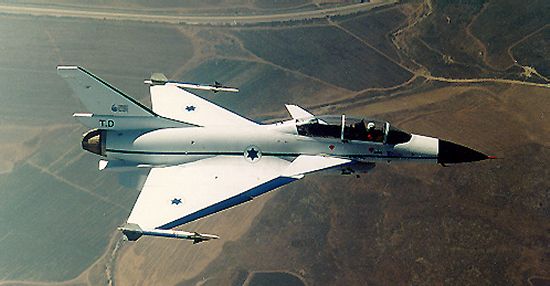
See the wing shape?
See the rudder?
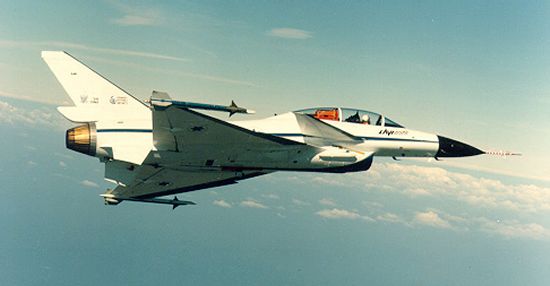
See the canard angle?
See how different the canopies are?
See how different the intakes are?
See the nose?
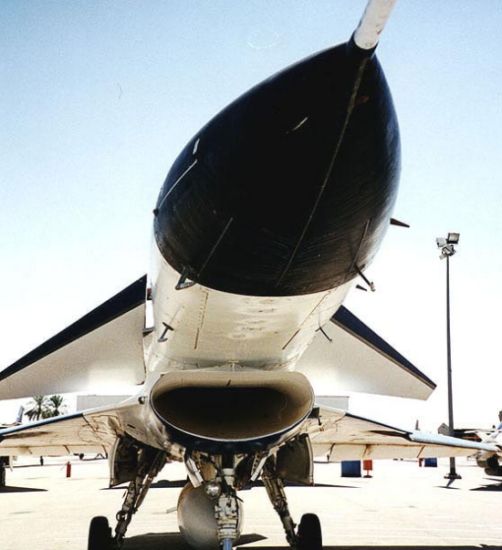
Other than the general configuration, I can’t see not a single surface or wing that is common with the Lavi and the J-10.


 Sign In







