roberto_yeager
OOOOOHHHHHHHHHHHHHH!!!!!!!!!!!!!!!!!!!!
THAT`S GOOOOOOOOD!!!!
1Saludo
roberto_yeagerLM wins Aussie fire control contract
Published: Sept. 27, 2007 at 4:48 PM
Print story Email to a friend Font size:CANBERRA, Australia, Sept. 27 (UPI) — Lockheed Martin has won a $20.6 million contract to improve Australia’s MK92 Fire Control System.
The upgrade is required “to support the introduction of Standard Missile 2 — SM-2 –capability into the Royal Australian Navy Adelaide-class guided missile frigates — FFGs,” Lockheed Martin said in a statement Tuesday.
Lockheed Martin said its MK92 system “provides integrated X-band radar surveillance, target tracking and weapon fire control capability for naval gun and missile applications.”
Under the contract, Lockheed Martin will provide MK92 alterations and related support services for the design, development and integration of the new system features supporting the new missile capability. “The upgrade is part of the Royal Australian Navy’s SEA 1390 Phase 4B program and will be performed by Lockheed Martin Australia in Sydney, as well as Lockheed Martin’s business in Moorestown, N.J.,” the company said.
“The upgrade will ensure robust capability of the Royal Australian Navy FFG fleet against threats that have developed since the introduction of the current combat system,” said Paul Johnson, managing director of Lockheed Martin Australia. “The project complements our Aegis combat system integration work currently underway on the Air Warfare Destroyer project.”
“The MK92 upgrade represents the very first introduction of SM-2 into an FFG-class surface combatant anywhere in the world,” said Stan Ozga, Lockheed Martin’s director for Naval Radar Programs. “With this contract, Lockheed Martin will deliver a major improvement to the FFG anti-air warfare capability and continue more than two decades of support to the operational needs of the Royal Australian Navy customer.”
Lockheed Martin said that “more than 125 shipboard MK92 systems have been produced and are currently deployed in nine different navies — including the Royal Australian Navy — around the world. It has been installed on more than 70 guided missile frigates, as well as a variety of other surface ships including coast guard cutters, corvettes and fast attack craft.”
roberto_yeagerLockheed Martin wins ATP contract for B-1B
Published: Sept. 27, 2007 at 4:51 PM
Print story Email to a friend Font size:ORLANDO, Fla., Sept. 27 (UPI) — U.S. firm Lockheed Martin said Tuesday it had won an Advanced Targeting Pod contract for B-1B aircraft.
The company said in a statement it had “been awarded a $2.8 million follow-on contract by the Boeing Co. to support full Sniper Advanced Targeting Pod — ATP — functionality on the U.S. Air Force B-1B aircraft. Integration activities began in June 2007.”
“This contract follows on the heels of highly successful B-1B Sniper demonstration flights in January 2007 involving live weapon drops. Sniper ATP’s low drag, extended range performance and high reliability make it exceptionally well-tailored for the B-1B,” Lockheed Martin said.
“The addition of Sniper on the B-1B will broaden the range of options to warfighters and not only fulfill traditional missions, but also meet the demands of non-traditional intelligence, surveillance and reconnaissance for coalition forces. Additionally, Sniper ATP provides the B-1B with a real-time bomb damage assessment capability,” the company said.
“Sniper’s ease of integration will enable the U.S. Air Force to expediently field this enabling capability on the B-1 to meet the challenges of current ongoing operations,” said Ken Fuhr, Sniper program director at Lockheed Martin Missiles and Fire Control. “Sniper will contribute to the bomber’s ability to assist the warfighter in achieving mission success.”
“Sniper ATP’s exceptional stability and superior imagery permit aircrews to positively identify and extract weapon quality coordinates from outside many threat ranges. For urban combat and training, a dual-mode laser permits both eye-safe laser use and enhanced Laser Guided Bomb guidance. For target sharing, a laser spot tracker, laser marker and video downlink enable highly improved joint and coalition ground force coordination,” Lockheed Martin said.
The company said sniper pods were already “flying on the F-15E, F-16 blocks 30/40/50, A-10C, A-10A(plus), F/A-18 and GR9 Harrier platform configurations.”
“Its common software/hardware interface design enables the U.S. Air Force to ‘plug and play’ Sniper across multiple platforms providing maximum flexibility and capability across the force,” it said.
1Saludo
roberto_yeagerI love those XFV-12!!!!!
Good job.
1Saludo
roberto_yeagerI think that they are making several prototypes for one reason, they are doing several modifications for:
First they said that they wold facture this:
Later this…
And more later this…
I think that they are making several flights for have enought info about air configurations and to make the Shafagh
1Saludo
roberto_yeagerDon´t forget F-35 in Superman Returns…
And “the final contdown”… F-14, A-6, A-7, Zeros…
There was a (bad) spanish film about the life of a young pilot with some C-101… and and old film “no le busques los tres pies al gato” about the life of a Spanish F-104 pilot… and some more made when Franco dictatorial about the armed forces…
I remember a fil about a dessertion of a Irak or Siria pilot to Israel…
1Saludo
roberto_yeagerIt is indeed, although it’s derived from the Mil Mi-8 and not from the Mi-4.
It never entered production.Here’s a better photo.
http://www.foxbat.ru/maks/datangshan/index.php?picid=datangshan169
I was thinking that it was derived from the Mi-4, because you can see that the landing sistem its identical to the Mi-4, and the cabin door too.
So thanks for all…
1Saludo
roberto_yeagerWhat the hell…???

I´m sure that it comes from a Mi-4, but that new cabin????
1Saludo
roberto_yeagerYes, Spain signed a contract for the integration on the FA-18 some month ago
1Saludo
roberto_yeagerSome very thoughtful insight crobato. I rather enjoyed that last post. I’m not so sure I agree with the following though:
Your last sentence in particular troubles me because if you think about it……there are many aircraft throughout history that are considered legends or classics precisely because they were in the right place at the right time. I think a perfect example if the F-4 when it went into Israeli service. It provided the IAF with the capability to do many things that were just not previously possible with their existing fleet of aircraft.
Before I go off on a tangent though let’s look at the Harrier itself. First off let’s clarify that the Harrier was not at any point designed as a fighter. The original intent of the design was as a VTOL strike aircraft that could operate in areas with little or no runway. The whole rationale behind this was the possibility that the Soviets might overrun and/or destroy NATO air bases within a matter of days or weeks due to their superiority in numbers. As with anything, there are always compromises to be made. The Harrier compromised some of the outright hauling capability of aircraft of the time period (i.e. F-105, etc.) as well as the speed and range of other bigger jets for the ability to operate in places that jets like the F-105 (which needs about the same runway length as a 747) could only dream about. Thus, Harriers could be widely dispersed, and they would be readily available to provide a quick response to any potential Soviet ground threat.
As it turned out, the Harrier (when flown by a properly trained pilot) proved that it was quite a good attack aircraft, and in later models was actually able to carry quite a sizeable payload to pretty good ranges even when compared to other conventional aircraft.
The Harrier’s use in the fighter role (aside from general back-up day fighter roles that AIM-9 armed GR.3/AV-8A’s could carry out) was really only born out by the fact that the U.K. decided to get rid of its conventional aircraft carriers, thus taking away a significant portion of the FAA’s ability to defend its ships (a service provided by Phantom FG.1’s). As a compromise, a much lighter breed of carrier was designed and a radar-equipped version of the Harrier that was also designed for operations at sea was born……enter the Sea Harrier. With its roots in the design of a subsonic VTOL strike fighter, obviously the Sea Harrier was not going to be a supersonic design (although it will exceed Mach 1 in a shallow dive), it did prove to be very agile with a decent radar and superb weaponry (30-mm cannon and AIM-9L). The combination of its agility and the AIM-9L (as well as proper ground control from Sea Kings and FAA ships) allowed the Sea Harrier to fight against aircraft that were almost twice as fast. Good pilot training also contributed to their success……FAA Sea Harrier pilots truly were masters of their aircraft.
I don’t judge the Harrier one of history’s greatest fighters because of its astounding success in the Falklands, but one of the reasons I do judge it one of history’s greatest combat aircraft is the fact that an aircraft born out of a requirement for a subsonic VTOL strike fighter was able to be adapted into a decent VTOL air defense fighter for the FAA.
With the advent of more modern radar and the AIM-120 AMRAAM, the FA.2 was born, and the Sea Harrier became more dangerous than ever, proving in exercises that properly flown FA.2’s were formidable opponents even to more conventional supersonic jet fighters.
The American AV-8B variant even has a BVR capability now with APG-65 and AIM-120………how many other attack aircraft can you mention (prior to the Su-34) that have a good capability as a fighter due to features such as those?
Of course the Harrier shouldn’t just be judged on its surprising set of good qualities as a shipboard fighter, but in its overall success throughout its career. It has been exported to quite a few nations, and it has seen combat on an off since the Falklands in 1982. As I mentioned earlier, it doesn’t carry the weight of weapons that something like an F-15E would, but the newer AV-8B+ and GR.7/9 models are able to carry quite a good-sized warload into combat and they are able to deliver it with the utmost of precision. Sure, the Harrier is hard on the maintenance, but with its unique capabilities you’re going to have sacrifices. The same applies to its speed, range, and payload compared to more conventional aircraft.
The bottom line though is that the Harrier took an unproven concept, and not only did it prove that concept, but it established it as a benchmark of modern warfare. This is proven in the fact that of the five initial operators of the F-35 (i.e. USAF, USN, USMC, RAF, and FAA), three of them are buying the VTOL variant). It is proven in the fact that the Russians attempted to create a counterpart in the Yak-38 only to develop the even better Yak-141 later on.
Sorry for the long-winded post, but I hope I got my point across. I’m just saying the Harrier should not be judged for its relative lack of capability in certain areas but in the realization that despite the fact that a compromise was reached in its design, it still managed to prove incredibly successful and thus the influence for many future designs.
See the Harrier for what it is…….not something trying to be a fighter, but something else that just happened to have some decent fighter qualities among its other traits.
YES!!!!!!!!!!!!!
Harrier RULES!!!!!
I´m 100% with you.
1Saludo
roberto_yeagerSpain also have a NOTAR in 1957!!!!! which descent from the Nord 1750 “Norelfe”
Aerotecnica AC.14 1957
The AC-14 is an enlarged version of the AC-13, powered by a Turbomeca Artouste II shaft turbine and with accommodation for five persons in its passenger-carrying role. It is available also as an agricultural and ambulance aircraft.
As in the AC-12, the engine is mounted above the cabin, which is extensively sound-proofed. Residual thrust is used to increase forward speed, leaving the movable tail fins to provide anti-torque and directional control.
Six AC-14’s are being built by the ENHASA company, of which the first flew for the first time on July 16, 1957.
TYPE: Five-seat single-rotor Helicopter.
ROTOR: Four-blade rotor with double-articulated blades of similar construction to those of AC-12. Rotor blade area each 0.84m2. Rotor disc area 72.35m2. Anti-torque control by gas deflection in helicopter flight and by vertical rudders in gyrodyne flight (high speed cruising).
ROTOR DRIVE: The main rotor is driven directly from the turbine gear-box through a universal joint.
FUSELAGE: Light alloy structure.
LANDING GEAR: Skid type. Track of skids 2.0m.
POWER PLANT: One Turbomeca Artouste IIB shaft-turbine, developing 400hp. Fuel tank under seats with capacity of 74 litres in agricultural version and 244 litres in passenger-carrying version. Oil capacity 9.4 litres.
ACCOMMODATION: Enclosed cabin seating pilot at the front and four passengers in two side-by-side pairs behind. Entrance door on each side of cabin.
Jane’s All the World’s Aircraft, 1959-60
Cantinieau had also been working on another project for a three-seat turbine-powered helicopter, the designs for which he had sold to SNCAN. The layout of this machine was very close to that of the AC.12. SNCAN built two prototypes of this helicopter as the Nord N.1750 “Norelfe” which was a rather futuristic all-metal machine with a large bubble canopy and a Turbomeca Artouste I turbine mounted above and behind the cockpit. The three-blade rotor was positioned directly over the engine and had a rotorhead enclosed in a large spherical fairing. The tail rotor was replaced by a ducted exhaust gas arrangement similar to that employed forty years later on the McDonnell Douglas NOTAR designs. This was controlled by the pilot through pedals.
The three-seat Norelfe prototype, F-WGVZ, was flown on 28 December 1954 but SNCAN was occupied with other projects and sold both the aircraft and the rights to Aerotecnica who designated them AC.13A. After further testing in Spain, Aerotecnica moved to a larger five-seat version known as the AC.14. The prototype AC.14 used part of the structure of one of the AC.13s but had a lengthened cabin section with a rear seating area and a larger 400shp Turbomeca Artouste IIB turboshaft engine.
Having funded much of the Aerotecnica helicopter project, the Spanish Government placed orders for twelve examples of the piston engined AC.12 and ten of the AC.14. These were delivered to the Spanish Air Force, with the designations EC-XZ-2 and EC-XZ-4 respectively, where they served for a relatively short period before being retired. Aerotecnica also started construction of a prototype of the much larger AC.21 which was a 12/14 passenger machine with twin Turbomeca Turmo III turbines and a massive ducted-air tailboom. A turbine version of the AC.12 was planned and they also started working on the AC.15 development of the AC.14 with a 260hp Lycoming O-435-V engine. Unfortunately, in 1962 the Spanish Government withdrew further financial support and Aerotecnica went into liquidation.
Following the collapse of Aerotecnica, Jean Cantinieau returned to France where he joined Matra. There, he designed and completed a single example of the “Bamby”. This single-seat machine closely resembled the Aerotecnica machines but embodied a triangular end to the tailboom which provided a better direction and control of exhaust gas. After brief testing in 1963 the “Bamby” suffered a power train failure and was abandoned.
R.Simpson “Airlife’s Helicopter and Rotorcraft”, 1998
Technical data for Aerotecnica AC-14
Main rotor diameter: 9.60m, overall length: 11.22m, fuselage length: 8.25m, height to top of rotor pylon: 3.10m, weight empty: 700kg, weight loaded: 1300kg, max speed: 180km/h, cruising speed: 150km/h, best rate of climb at sea level: 300m/min, hovering ceiling IGE: 2700m, service ceiling: 6350m, range: 260km
Nord 1750 “Norelfe”
SNCAN built two prototypes of this helicopter as the Nord N.1750 Noreife which was a rather futuristic all-metal machine with a large bubble canopy and a Turbomeca Artouste I turbine mounted above and behind the cockpit. The three-blade rotor was positioned directly over the engine and had a rotorhead enclosed in a large spherical fairing. The tail rotor was replaced by a ducted exhaust gas arrangement similar to that employed forty years later on the McDonnell Douglas NOTAR designs. This was controlled by the pilot through pedals.
The three-seat Noreife prototype, F-WGVZ, was flown on 28 December 1954 but SNCAN was occupied with other projects and sold both the aircraft and the rights to Aerotecnica who designated them AC.13A. After further testing in Spain, Aerotecnica moved to a larger five-seat version known as the AC.14.

1Saludo
roberto_yeagerMay 30, 1995
The Boeing 777 jetliner becomes the first airplane in aviation history to earn FAA approval to fly extended-range twin-engine operations (ETOPS) at service entry.
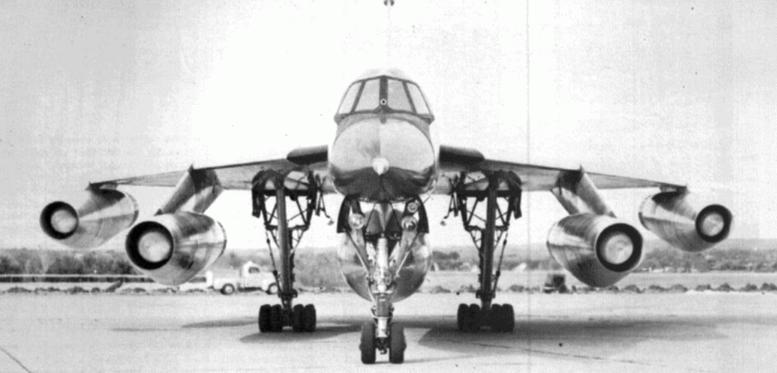
Significance of Type: The B-58 Hustler garnered a number of “firsts” during its relatively short service career. It was the first supersonic bomber, the first bomber to reach Mach 2, the first aircraft made of stainless steel honeycomb sandwich and the first aircraft to have stellar-inertial navigation. The B-58 also set more world speed records than any other type combat aircraft.
It isn´t the first to make a supersonic ejection of a bear???
1Saludo
roberto_yeagerHere’s a weird one if ever there was – A flying submarine from the Soviet Union.
It had a crew of 3, and was to be armed with 2 x 18 inch torpedoes and 2 paired machine guns.
Aerial thrust was provided by 3 x AM-34 radial piston engines of 1200 hp each, which would give the aircraft a maximum speed of 100kts (200km/h), a maximum altitude of 8500ft (2500m) and a range of 500 miles (800km)
Maximum takeoff weight was to be 15,000 kg.
Underwater, propulsion was provided by a 10 hp electric motor which gave the “vessel” (shall we call it) a max speed of 3 kts and a range of only 5-6 miles.
The outer skin/hull consisted of 6mm duralumin.
The project was first proposed in the mid-thirties by a Naval Engineering academy student called Ushakov.
I wonder why they never gave him his own Design Bureau like all the other talented designers/constructors such as Tupolev and Mikoyan at that time?:D 😀
Yes… they are lovely desings but there was al least one real Flying Submarine…
Reid Flying Submarine RFS-1
1Saludo
roberto_yeager😀
There cars are different
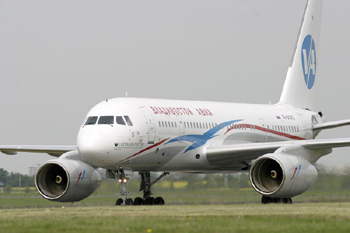
seethey are as similar as the Tu-204 and the Boeing 757 are to each other
http://img.lenta.ru/articles/2006/05/19/arrestair/picture.jpg
http://www.know-library.net/images/thumb/e/ea/320px-Condor_Boeing_757_Sonderlackierung.jpg
But i am sure when the PAK FA is flown and showed to the media many will say it looks like a copy of the F-22 :rolleyes: 😀 😉otro saludo другое приветствие
Yes I know that… but they are very very similar… and there was another (Mazda 121, which was a version of the Ford Fiesta), and several years ago there was a commercial trade between Mazda and Lada… who knows they didn´t buy the engienering blue prints… like they do with Renault and their engines…
I only put that ford photo because it was very interesting for me, they seems very similar… I don´t like to discuss anything more… ¿ok?
Between the F-22 and PAK-FA… well we must wait
1Saludo
roberto_yeagerInteresting…


I had that ford…
1Saludo


 Sign In