Around 40 miles from the EO Cast Glance, not bad images!
1Saludo
171005-M-XO599-257 TWENTY-NINE PALMS, Calif. (Oct. 5, 2017) F-35B Lightning II aircraft assigned to Marine Fighter Attack Squadron (VMFA) 211, Marine Aircraft Group (MAG) 13, 3rd Marine Aircraft Wing (MAW) conduct flight operations above Marine Corps Air Ground Combat Center Twentynine Palms, Calif., Oct. 4. The ability to refuel in flight is critical for the supportability and the sustainability of the F-35B during missions. (U.S. Marine Corps photo by Lance Cpl. Becky Calhoun/Released)
1Saludo
171010-N-MJ135-1155 PACIFIC OCEAN (Oct. 10, 2017) An F/A-18E Super Hornet assigned to the Stingers of Strike Fighter Squadron (VFA) 113 lands on the flight deck of aircraft carrier USS Theodore Roosevelt (CVN 71). Theodore Roosevelt departed San Diego for a scheduled deployment Oct. 6, 2017 to the U.S. 7thhttp://www.ejercitos.org/forum/Themes/Exodus/images/bbc/img.gif and 5th Fleet areas of responsibility in support of maritime security operations and theater security cooperation efforts. (U.S. Navy photo by Mass Communication Specialist 3rd Class Spencer Roberts/Released)
1Saludo
¿24 Typhoon for Qatar?
http://www.middleeasteye.net/news/uk-supply-qatar-eurofighter-jets-97038783
1Saludo
1Saludo
Sorry if it was posted before…
But… I can dream with a Vulcan with lots of LGB’s!:rolleyes:
1Saludo
1Saludo
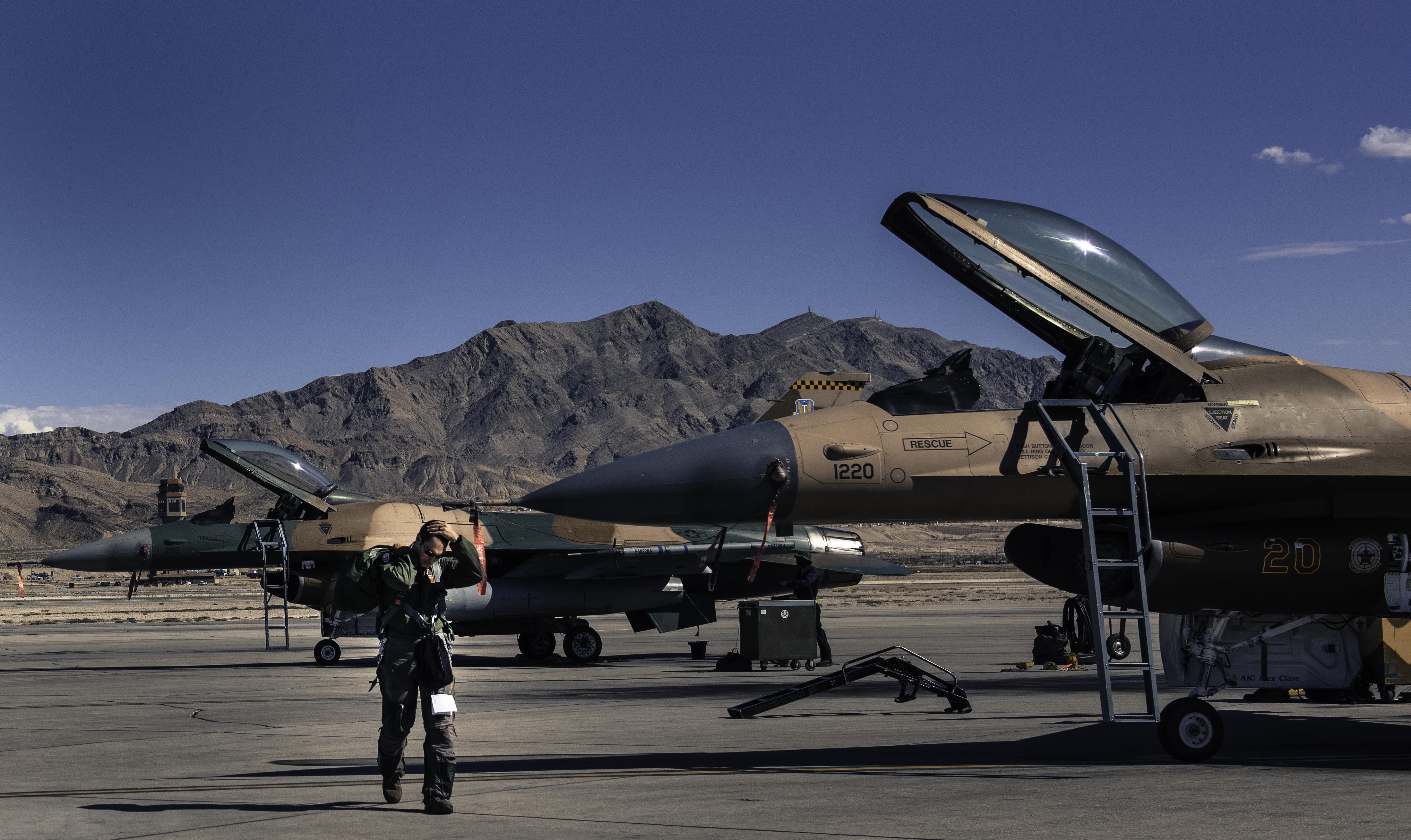
A 64th Aggressor Squadron pilot walks from an F-16 Fighting Falcon after a Red Flag 17-4 exercise sortie on Nellis Air Force Base, Nev. Aug. 25, 2017.
The 64th ARGS has handled the mission of preparing combat air forces as well as joint and allied aircrews for tomorrow’s victories since 1972. (U.S. Air Force photo/Senior Airman Kevin Tanenbaum)
1Saludo
[2] HAWK T.1 / T.1A
* The Hawk that emerged from the development process was not merely a good-looking aircraft; it was agile and handled well, with clean responsiveness to controls, and pilots found it great fun to fly. It was capable of transonic speeds in a dive, which apparently came as something of a surprise to its designers, and had long range and endurance. It was economical to operate and would acquire an excellent safety record. The Hawk was also a relatively quiet aircraft as military jets go, and ambient cockpit noise was low, improving communications between instructor and student.
As mentioned, the Hawk was a tandem-seat trainer with a low-mounted, slightly swept wing, a single engine with inlets above the wing roots, and a conventional tail assembly. It had tricycle landing gear, with all gear assemblies featuring single wheels. The nose gear retracted forward, while the wide-track main gear hinged in the wings towards the fuselage; the nose wheel castored but was not steerable, ground steering being performed by differential mainwheel braking. The aircraft was of conventional construction, built mostly of aluminum alloy, with some use of magnesium to save weight. Interestingly, the Hawk was the first British aircraft to be designed in metric instead of English units.
The wing featured outboard ailerons and inboard double slotted flaps. The tailplane was all-moving. There were also twin fixed ventral fins under the tail; these were significantly shorter in early prototype machines. There was a single airbrake in the belly in front of the two ventral fins — that cost less than twin airbrakes, but it couldn’t be extended while landing. Flight controls and landing gear were powered by duplicate hydraulic systems.
The aircraft was designed to allow fit of five stores pylons, with one on the centerline and two on each wing, though RAF Hawk trainers would never use more than one stores pylon on each wing. The extra attachment point on each wing was specified to permit flexibility for export sales. The inner attachment points were plumbed for drop tanks. For weapons training, the Hawk could be fitted with a centerline gun pod — similar to those fitted to British Harrier jump jets, with a single 30 millimeter Aden Mark 4 cannon with 120 rounds — and a stores pylon under each wing for munitions. Pylon loads included practice bomb carriers and SNEB rocket pods, or a pair of 455 liter (120 US gallon) drop tanks. External load in practice was restricted to 680 kilograms (1,500 pounds).
But I don’t know if it were used in RAF service…
1Saludo

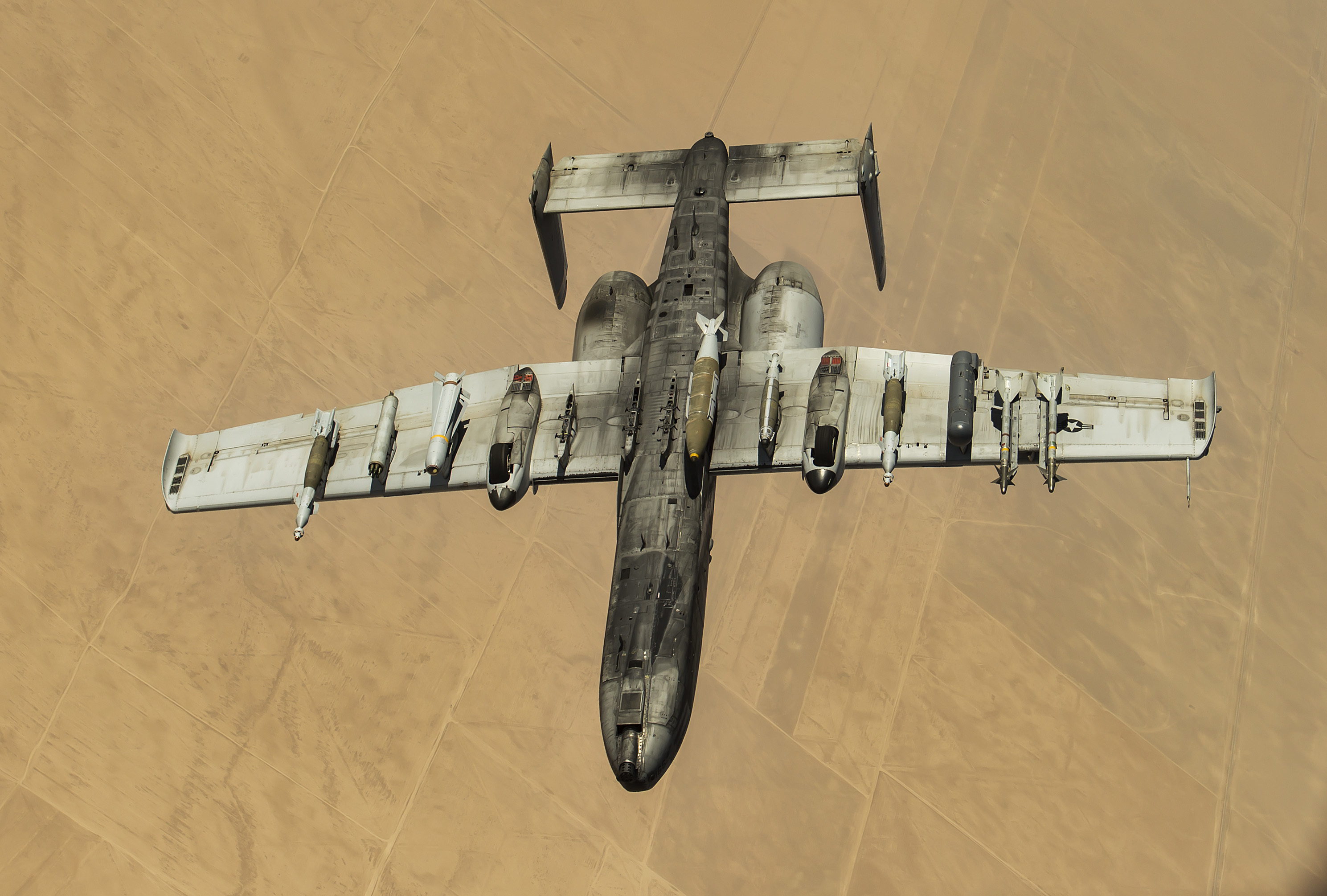
An A-10 Thunderbolt II departs after receiving fuel from a 340th Expeditionary Air Refueling Squadron KC-135 Stratotanker during a flight in support of Operation Inherent Resolve, July 6, 2017. The A-10 employs a wide variety of conventional munitions in support of OIR and the destruction of the Islamic State of Iraq and Syria. (U.S. Air Force photo/ Staff Sgt. Trevor T. McBride)
1Saludo
Cherry Ripe
No, look at the rear fins. Set forward from the nozzle and quite high-aspect.
This is an R-Darter / Derby. Trailing edges flush with the nozzle and low-aspect ratio.
😮 What was I thinking?:stupid:
You’re right, sorry!!!
1Saludo
Cherry Ripe
Cheetah C, Python 3
Not Python 3, it’s a Kentron V4 R-Darter
1Saludo
Paris Air Show 2017
An F-35A Lightning II from Hill Air Force Base, Utah taxis back after performing for a crowd of nearly 100,000 people at Le Bourget Airport, France, during the Paris Air Show, June 23, 2017. The Paris Air Show offers the U.S. a unique opportunity to showcase their leadership in aerospace technology to an international audience. By participating, the U.S. hopes to promote standardization and interoperability of equipment with their NATO allies and international partners. This year marks the 52nd Paris Air Show and the event features more than 100 aircraft from around the world. (U.S. Air Force photo/ Tech. Sgt. Ryan Crane)
1Saludo
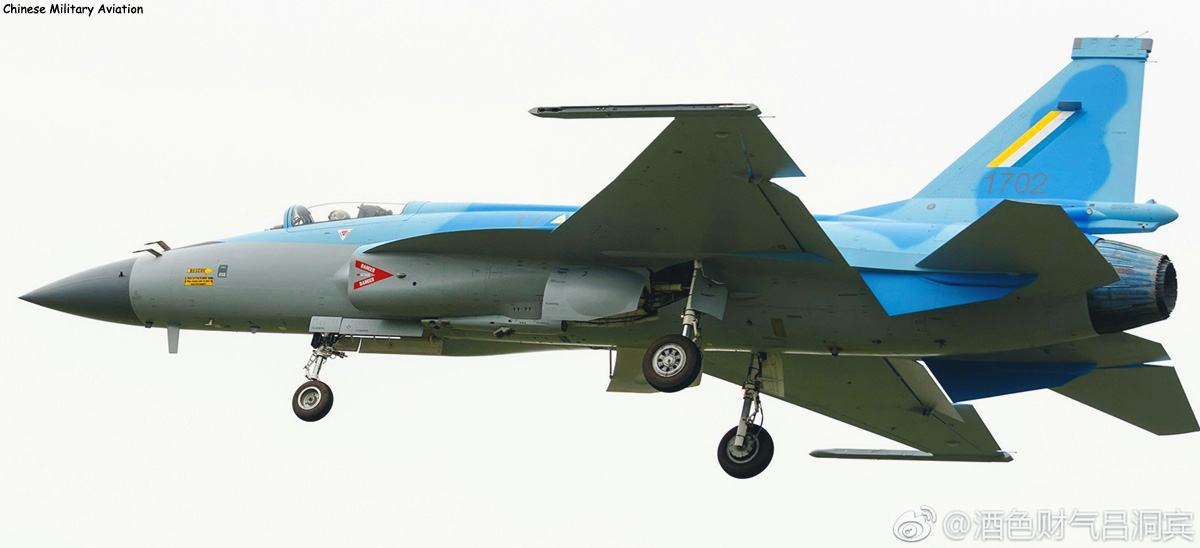
Myanmar JF-17M (JF-17 Block II)

1Saludo
170607-N-FE442-134 MEDITERRANEAN SEA (June 7, 2017) An F/A-18F Super Hornet from the “Blacklions” of Strike Fighter Squadron (VFA) 213, fully loaded with 10 GBU-32 1,000 pound bombs, launches from the aircraft carrier USS George H.W. Bush (CVN 77). George H.W. Bush, part of the George H.W. Bush Carrier Strike Group, is conducting naval operations in the U.S. 6th Fleet area of operations in support of U.S. national security interests in Europe and Africa. (U.S. Navy photo by Mass Communication Specialist 3rd Class Matt Matlage/Released)
1Saludo