Years ago, the engine was visible on the beach, but I do not think that there was anything else left of it.
Best wishes
Steve P
Airspeed Cambridge
Best wishes
Steve P
Ignore my last post, I was talking utter claptrap. 😮
Best wishes
Steve P
Looks like a Sea Venom to me. Didn’t the NF Venoms have a different radome?
Best wishes
Steve P
Too busy being green with envy to reply. 😀
Is that Shack owned by Air Atlantique?
Best wishes
Steve P
Cheers for that JDK, I’ll have a hunt about for those magazines. I wonder if “The Aeroplane” and “Flight” published annual indexes in the 1930s?
Best wishes
Steve P
Wow fantastic, didn’t know they had one. What markings are they planning to give her?
I don’t know what the plans are concerning the Bolingbroke. At the moment there seems to be little activity on the restoration side of things at EF.
They also have a Beaufighter which too, needs a lot of work.
Could some nice person explain to me how to post a pic as a thumbnail?
Best wishes
Steve P

Cheers for the info. I’ve lost track of the various UK Blenheim/Bolingbrokes.
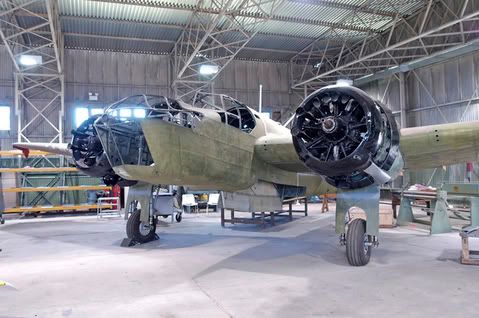
Here’s a pic of the East Fortune Bolingbroke, taken last month:

Best wishes
Steve P
So, what actually happened to the original Blenheim that crashed back in 1988? It’s not the one being restored by the IWM or the one being restored to fly that crashed recently, because there both Bolingbrokes, or maybe it was a complete write off?
Are the engines now attached to the Bolingbroke that is being restored at East Fortune?
I thought that the one that crashed in 1988 was also a Bolingbroke?
Best wishes
Steve P
Officially, it would have had a C1 roundel, with a yellow surround.
Best wishes
Steve P
In the 1990s Aeroplane Monthly ran a series called “Tested and Failed” on various aircraft that did not perform as planned (eg Miles Monitor – tendency towards massive fuel fires exacerbated by being made of wood…). I’m fairly crtain that the Firebrand was in it – looked mean, mean to fly.
I can’t comment on the Firebrand article in that series, but in the one on the Welkin, the author was a bit selective in his choice of quotes from the Boscombe Down reports. It seemed to me that he was quoting to fit his argument, rather than reading the reports then forming an opinion.
Best wishes
Steve P
So considering all the extra weight it wasn’t that fast then when you consider that the Spitfire lands at about 70 as far as I can remember
When the slats were locked down the stalling speed increased to about 90 mph ASI with everything down.
Best wishes
Steve P
Cheers for the info.
Best wishes
Steve P
What’s the story concerning the outer slats on the Whirlwind? Most books and articles that I have read state that at some point they were locked and leave it at that. However, David Mondey in his book on the manufacturers Westland (Janes 1981) claims that only early Whirlwinds had slats, later aircraft being built without them. It would make sense in leaving them off if their use has been prohibited. Can anyone confirm this?
Best wishes
Steve P
Was range a factor? The Coastal Command Halifaxes were able to carry a bombload in the in the wings and an extra fuel tank in the fuselage bomb bay, allowing an endurence of up to 16 hours (although in practice, flights were limited to 13 hours to allow a safety margin).