Victor
http://www.bmtdsl.co.uk/media/6098065/VENATOR-110%20Technical%20Brief.pdf
Fits within the Indian specification. Will do medium chopper plus UAV/UUV/USV as needed owing to mission reconfigurable bay. Bit of a stretch calling 120m a corvette of course, but, when the Japanese get away with a 248m through-deck ‘DDH’ who is going to notice!.
What does this project say about the Kamorta’s though?. Would it not be more efficient to add 7 more to the build run and get scale economies – even if you get a little more ASW muscle than you actually need is that a bad thing?.
Here’s the list of specs in the RFI that the article mentioned:
– Length: 120m
– Mono-hulls and include a hangar for a single helicopter
– Top speed of over 27 kt
– Operational range of 4000 n miles
– Endurance of more than 14 days
– 158-member crew
– SuW suite with at least eight surface-to-surface missiles and a medium-range gun
– ASW suite with sonars, torpedo launchers, decoys and an ASW-configured helicopter
– AAW suite with a close-in weapon system as well as surface-to-air missiles
– Full-spectrum electronic warfare suite
– Passive infra-red search and track system
– Surface and air search radar or a single multi-function surveillance and threat alert radar
– Responses to the RfI are due by 18 November
– Option clause for another 3-4
Looks like the IN wants a full multirole ship not a specialized ship like the Kamortas.
Victor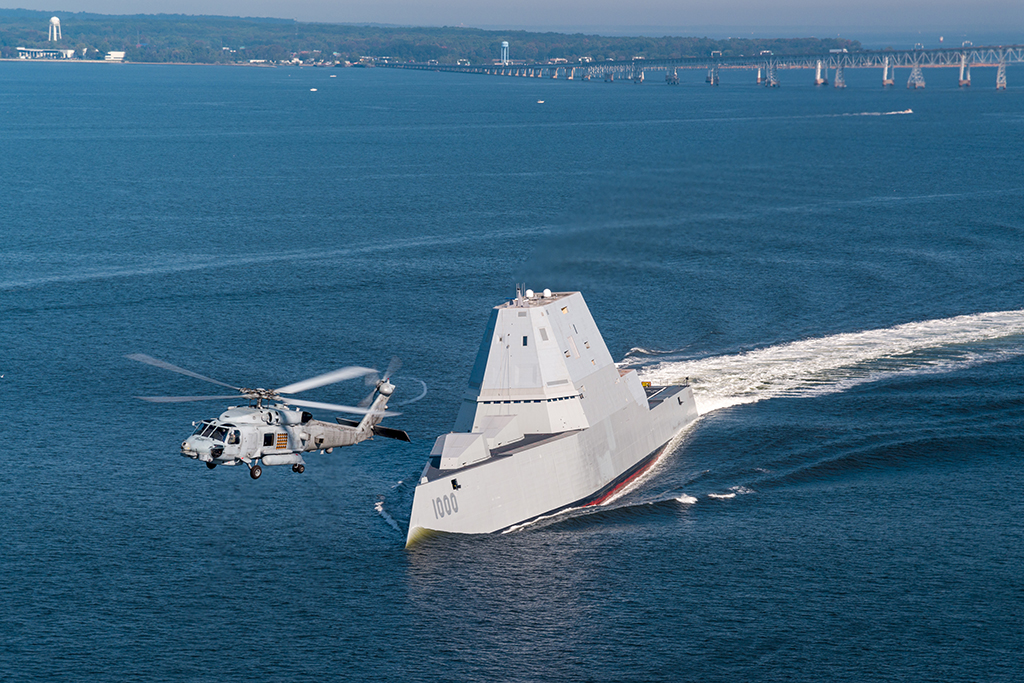
If only the ship performed as well as it looks.
VictorThe article mentions that the request calls for a single helo hangar. That’s surprising considering that maritime UAV capability is pretty much a necessity. The request should have mentioned a hangar big enough for one 10 ton helo and two UAVS the size of Camcopters.
VictorEr “losing polish helo contract” is not a surprise, the party arriving in power after the french helo was selected had announced they’d do everything it took to butcher that deal… so, well.. their problem, after all…
And the Trudeau govt in Canada did the exact same thing to Lockheed! But you don’t see GOTUS cancelling official visits, disinviting Canadian delegations and generally being a prick about it. LM mentioned that Canada might lose some contracts tied to the procurement. That seems like a far cry from the govt taking punitive actions. Canadian participation at the JPO is still encouraged. Anyone defending the prickish behavior of the French govt regarding the Caracal deal has no standards.
VictorRussia’s Rostec to sign $1 billion helicopter deal with India
http://echelon-defense.com/2016/10/14/russias-rostec-to-sign-1-billion-helicopter-deal-with-india/
Hooray! This was a golden opportunity to reduce the two (Allouete III and Lama) types of light helos in the fleet to just one LUH. But no, India can’t possibly have just one type for one role. Why have one type when you can have two types doing the same job. On top of that, the Ka-226 will poach orders away from the Indian LUH. This decision and the Rafale decision makes me face palm at this govt’s handling of defense procurement.
Although, judging by the petty and childish reaction France is having regarding losing the Polish helo contrat, I have a feeling that the India had little choice but to order a small number of Rafales. Other wise, France probably threatened to have an equally petty reaction to India dropping the Rafale altogether.
Added later: Still, this govt is leagues better than the prior govt but this govt continues the tradition of bending to external pressures on defense procurement even at the expense of Indian interests.
VictorThe Dhruv ALH should have had far more export sales than it has had, considering just how cost competitive it is and what performance parameters it has and avionics it features.
The Dhruv will not be exported in any numbers unless and until it gets FAA/EASA certification. The only exports will be onesie and twosies here and there like Nepal and Mauritius. Even those were not sales but gifts.
But really, the big issue now is how to get the numbers for assembly up to 16 per year and then higher if possible.
The IAF will need to replace ~324 Mig 21s and 27s over the next few (ten) years. There is no way HAL can produce Tejas fast enough to keep up with the retirement rate of the Migs. Hence, the new single engine procurement. Hopefully, in a few years time, the Mig-29 will be the only Mig in the IAF.
VictorBottom line is that the IAF will need an additional 120+ frames over and above what we already know of its acquisitions in the next 10 yrs. That 120+ can come from additional orders of a combination of MKIs, Rafales, and a new type (Type X). And that’s just to break even!
For argument’s sake, let’s say that no more MKIs are ordered because the Super 30 upg is ready by the time HAL delivers the last of the remaining 45 MKIs. Thus, the production line and people does not need to be bridged with new orders. And let’s say, again for argument’s sake, no more Rafales are ordered. That leaves 120 frames for just Type X. Now let’s say that the IAF is looking towards force accretion and wants more than 120 of Type X, say… 200 frames. Now a clear economic case is starting to develop for having a production line in India with a potential steady state production rate of around 16 frames a year.
VictorAdditional Tejas (past 120) may be ordered but I don’t see those additional Tejas being inducted within the next 10 yrs. Past the 120 order, it will be for something evolved from the Mk1A config; whatever it’s called.
VictorAccording to AvWeek, India has 324 Mig-21s and 27s.
By my estimates/recollection, all or nearly all will need to be phased out in the next 10 years. So, to replace them 1-to-1, India will need to have a acquisition rate of about ~30 frames per year over the next 10 years just to avoid a major dip in force levels. I think a dip to 32 sqdns from the current 34 is inevitable but a further dip can be prevented by inducting 30+ frames per year.
The Rafale will fill some of the ~324 frames that will need replacing. That still leaves ~288 frames.
AvWeek also states that the IAF has 225 MKIs. So, that leaves 45 frames (of 270) still to be inducted. That leaves ~243 frames that need to be replaced.
The latest quote from the IAF Chief states that he is expecting 120 (20 Mk1 + 100 Mk1A) Tejas between 2025 and 28. So that still leaves a gap of 123 frames. I am bearish on the PAKFA joining the IAF in any tactical capacity within the next 10 years. HAL/IAF might have a few frames for integration tests, so I’m not counting those chickens till they are closer to hatching.
Summary:
~324 (Mig-21/27) frames need replacement.
Rafale…….36
MKI……….45
Tejas…….120
—————-
Total…….201
Leaving a deficit of 123 frames. I am hoping that the IAF doesn’t add another type and the IAF bridges the 123 frame gap with additional 40+ more MKIs and 80+ more Rafales. But I don’t think the IAF CAPEX or specially OPEX can handle 120+ twin engine frames.
This doesn’t even account for the 20-40 or so Jaguar frames that will retire within the next 10 years. In 15 years (~2030), the upgraded Mig-29s and M2Ks will start to reach their EOLs.
Added later:
As I think about the numbers above, I can’t see a way for the IAF to actually have force accretion without adding (yet) another type. I don’t blame the IAF for not hanging its hat on the Tejas as they are still yet to see a Mk1 in FOC config from the final production line. My best guess would be that IAF will place an order for 40+ MKIs with HAL to tide it over till the PAKFA/FGFA line gets up and/or till the Super 30 upgrade program gets to execution stage. If the 80+ frames don’t go to the Rafale, it will probably go to the new type plus a “bunch more”. That “bunch more” and 80+ will be the new type that will contribute towards expanding the IAF’s frame count.
VictorNot sure when this pic of the Dhruv Mk3 was taken but note the LWS, MAWS, and RWR along with the intake filter.
VictorThis might shed more light on the issue MRTT RfP cancellation
Consequently, the MoD has now scrapped plans for procuring the 10 A330-220 MRTTs, and instead, by this October is expected to ink a contract with Rosoboronexport under which the IAF’s existing six IL-78MKI aerial refuelling tankers will be upgraded and refurbished to IL-78MKI-90 MRTT standard, another six of the IAF’s existing IL-76MD transport aircraft will be converted into IL-78MKI-90 MRTTs, while the remaining 18 IL-76MDs will be upgraded to IL-76MD-90 standard.
The upgrade component will include re-engining with PS-90A turbofans, and incorporation of glass cockpit avionics.
The entire upgrade/refurbishment work will be undertaken by CJSC ‘Aviastar-SP (Ulyanovsk Aviation Industrial Complex), located on the left bank of Volga River in Russia’s Ulyanovsk region.
Some early concepts of the Su-30MKI upgrade and their equipment; note the wingtip pods.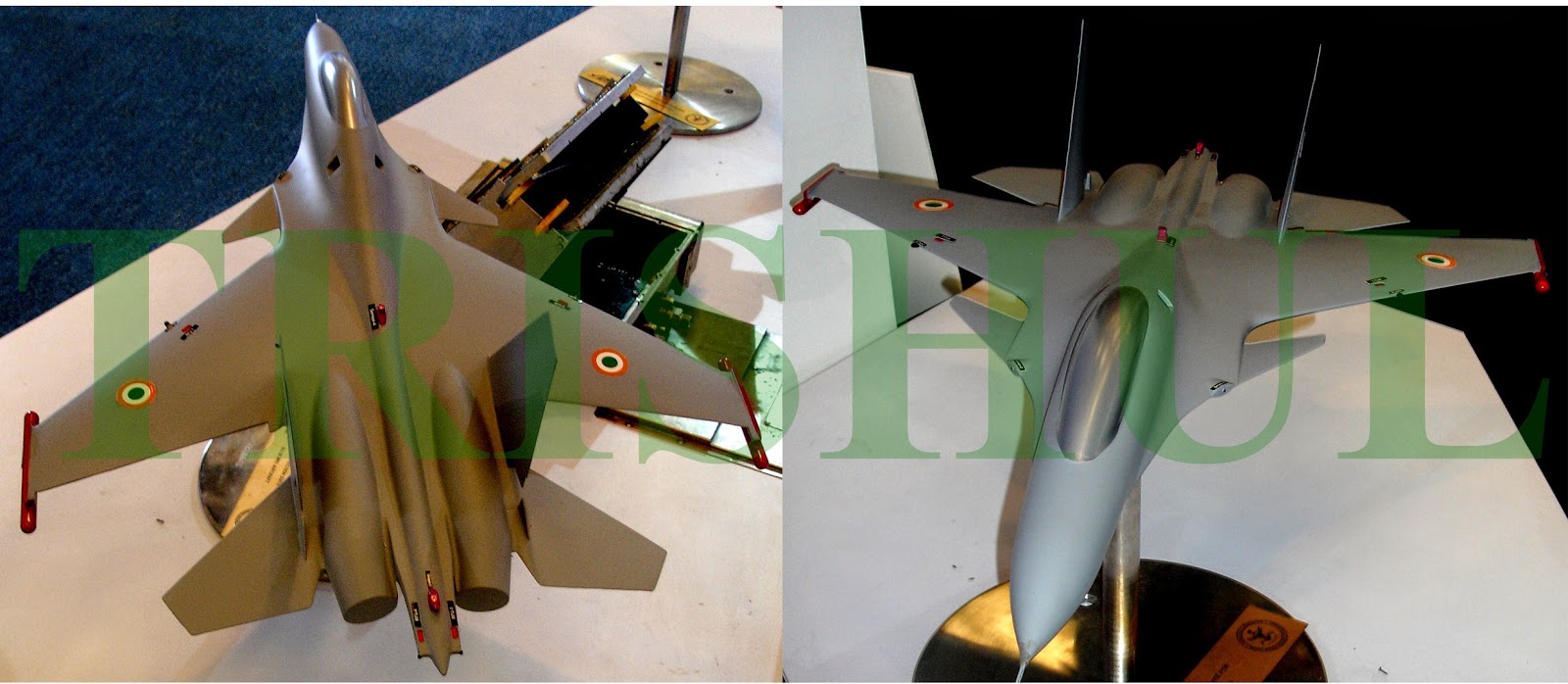
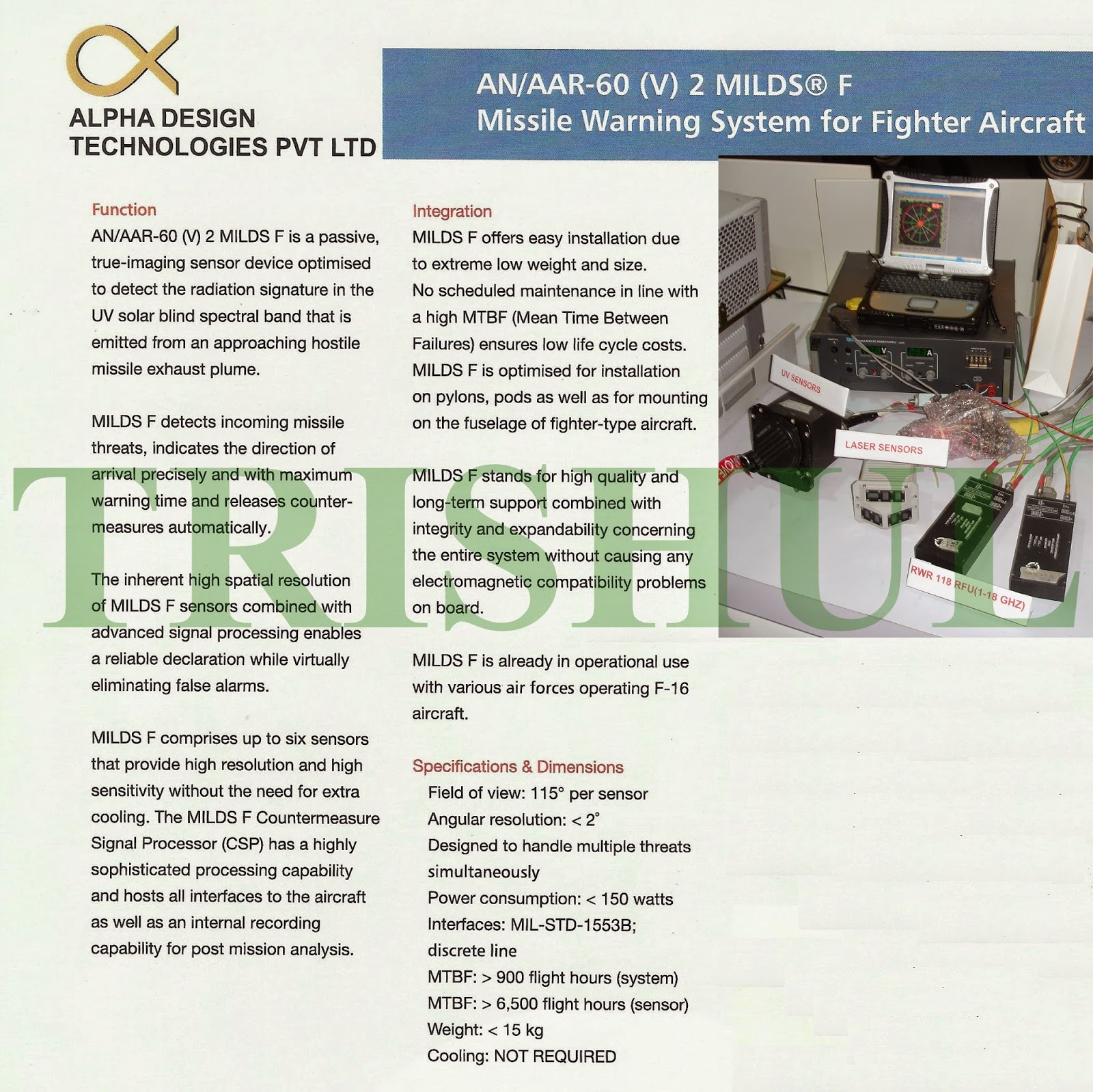
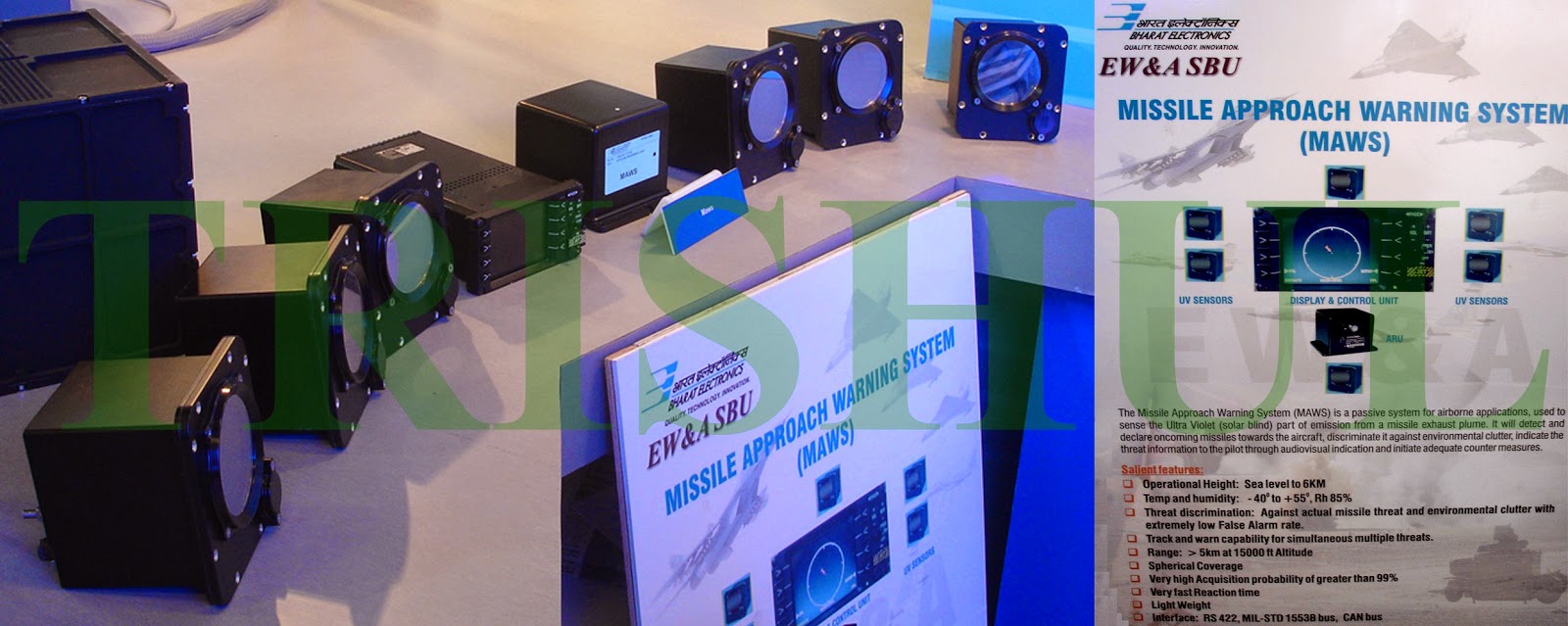
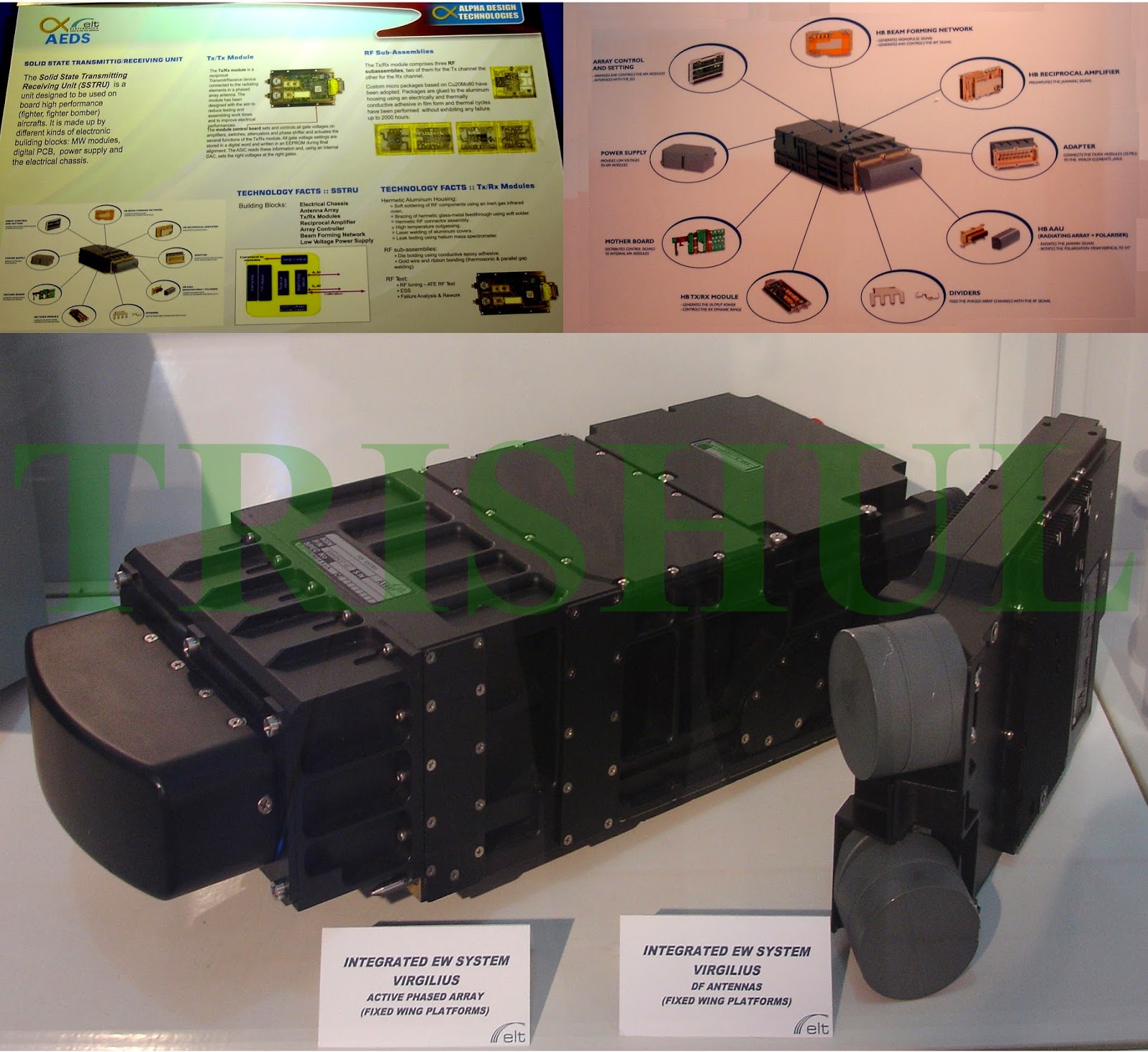
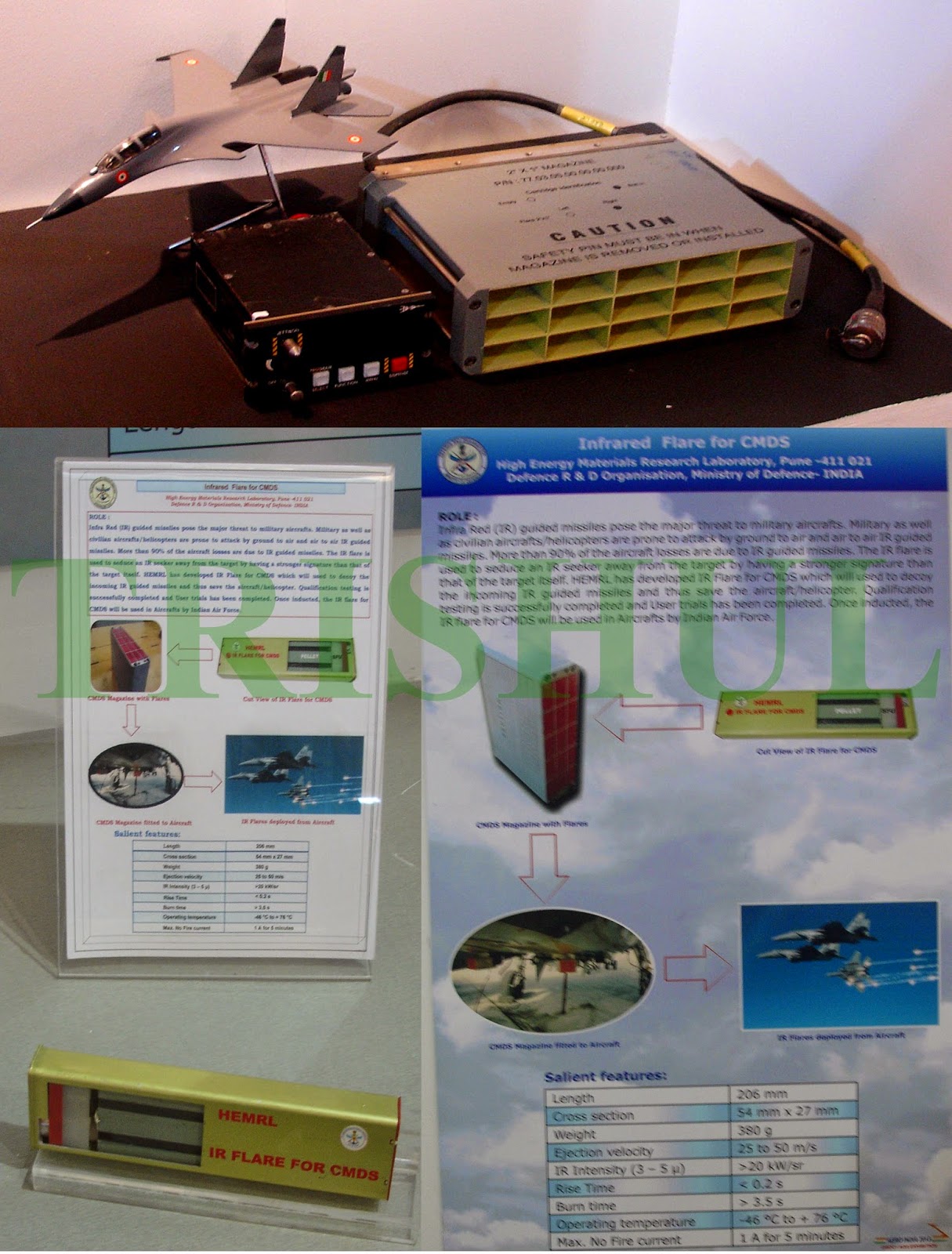
It should also be noted that this particular blogger has been known to be unreliable source of “scoops” in the past. He’s hit or miss, at best, so YMMV.
VictorAMCA mission simulator.
Interesting. I wonder if the sidestick is the way the IAF is thinking or is just a figment of the simulator designers.
VictorVictor


 Sign In