 RodolfoRodolfo
A Prompt translation referred to the development of the PRS-1 (the older brother).
“The design of new high-speed antimissile was executed in two organizations: OKB -2 (the chief designer OF P.D. Of grushin) and KB “innovator”. Was selected the version, proposed BY KB “innovator”. This PR obtained designation PRS -1. Rocket was cone without aerodynamic carriers and managers of elements. In the engine was used the quick-burning powder in 4 seconds of the work of engine rocket it were accelerated to the maximum speed. In this case axial overloads reached 300 g., and the temperature of skin rose to 2000 degrees. All this required the new technical solutions with the creation of onboard equipment, which must be small and high-strength. Onboard equipment was developed in KB -1: autopilot – by association P.M. Kirilov, radio equipment – by association V.I.Tolstikov and V.I. Dlugnii. Everything else, except warhead and engine, in KB Novator under the management L.V. lyul’eva. Engine installation was created in KB of Perm’ plant under Kozlov’s management.”
“Its development conducted Sverdlovsk KB Novator with the chief designer L. lyul’ev. This KB approached the works in 1967. Task stood extremely complex. It was necessary to drive away rocket for several seconds to speed on the order of 4 km/s. This could make an engine on the rapidly burning powders only. This engine undertook to develop chief designer Kozlov from Permian KB. In view of the fact that in flight in the atmosphere at a high speed the surface of rocket nagrevayetsya from the friction against air to the temperature above 2000 degrees, was required the adoption of special measures for the protection of constructions and equipment. Housing PRS -1 was executed in the form of cone with the special heat-shielding coating without any coming out elements. Gas current engines with the thrust vector, directed perpendicularly to the axis of rocket were used as the control elements and stabilization. PRS -1 had single-stage diagram from the separable head part. Creation for this rocket of onboard equipment for stabilization and control was complex problem. It must be small with the light weight and operational with the overloads to 300 g. Furthermore, already to e-ya-oy second of flight on the surface of rocket was formed the high-temperature plasma, which is screen for the radiowave propagation. The development of onboard equipment was produced in KB -1: autopilot – in the subdivisions P.M. Of kirillova, and equipment for radio control and sighting – by subdivisions xV.I. Tolstikova.kh and xV.I. Dolgikh.kh.”
“As a result of design and designing were developed avan- and preliminary designs, while in 1973 experimental model PRS, was created and set for the tests. The first launchings were carry ouied from the launching ramp at angle of 20° to the horizon. To the second launching the rocket was not equipped with onboard equipment and, as a rule, it broke. From the third – the rocket had regular assembly. Stage separation was not produced. Beginning from 1978, from 7 through 11 launchings they were carried out with the draft on funds of the first prototype of system. Beginning from 12 launchings in 1979, the means of the second prototype were used. Tests were passed with the great difficulties, connected with the special features of rocket. Of 15 that following it is starting into 6 rocket it broke also to 17 launchings it was impossible to ensure reliable radio communication with the board. The fact is that the designers of rocket, worrying about strength and aerodynamics, led for the installation of onboard antennas the ground part of the second stage of rocket. As tests showed, in flight these antennas completely screen by plasma. After detailed analysis of the insistence of specialists KB -1 for the designers of rocket it was necessary to establish antennas on the housing of the conical forming the rockets in front of the nozzles gas current system for control. Moreover the duplexing system depending on the position of the axis of rocket relative to radio equipment of complex was developed. The developers did not meet with such difficulties. Beginning from 17 launchings, it was possible to obtain stable communications along the control channel, and with 20 – and along the channel of sighting. In the course of these tests it was necessary to finish equipment SPK and to introduce into its composition of the device of initial tracking with the appropriate changes in the programs of control.”
A modified version of the previous quote. Changes were introduced to improve readability. I hope not to have changed the meaning of paragraphs.:o
The design of new high-speed antimissile was carried out in two organizations: OKB -2 (Chief designer OF P.D. O Grushin) and KB “Novator”. The version, proposed BY the KB “Novator” was selected. This PR obtained designation PRS -1. The rocket was conical without aerodynamic actuators. In the engine was used the quick-burning powder and the engine rocket accelerated to the maximum speed in 4 seconds. In this case axial overloads reached 300 g., and the temperature of skin rose to 2000 degrees. All this required the new technical solutions with the creation of small and high-strength onboard equipment. The onboard equipment that was developed in KB –1. The autopilot in association with P.M. Kirilov, the radio equipment in association with V.I.Tolstikov and V.I. Dlugnii. Everything else, except warhead and engine was developed in KB Novator under the management L.V. Lyul’ev. The engine installation was created in KB of Perm’ plant under Kozlov’s management. Its development was carried out in Sverdlovsk KB Novator with the chief designer L. Lyul’ev. This KB started works in 1967. The task stood extremely complex. It was necessary to drive the rocket just for several seconds to a speed on the order of 4 km/s. This could be made with an engine using only rapidly burning powders. The chief designer Kozlov from Perm KB of this engine undertook the development. Due to the friction against the air caused by the flight in the atmosphere at a high speed, the surface of rocket reached temperatures above 2000 degrees and was required the adoption of special measures for the protection of the equipment. The PRS-1 shape is in the form of cone with a special heat-shielding coating and without any protruding elements. Thrust vector with gas flows directed perpendicularly to the axis of rocket were used as control and stabilization elements. The PRS -1 had single-stage separable from the warhead. The creation of onboard equipment for stabilization and control for this rocket was a complex problem. The equipment must be small, lightweight and operational with the overloads to 300 g. Furthermore, high-temperature plasma was formed on the surface of the rocket already in the first second of flight which acts like a screen for the radio wave communication. As a result of design and redesigns of preliminary designs, the first experimental model of PRS was created in 1973 for tests. The first launchings were carried out from a launching ramp at an angle of 20° respect to the horizon. For the second launch the rocket was not equipped with onboard equipment and it broke. The rocket had the regular assembly from the third test and the stage separation was not produced. Beginning from 1978, and from launch 7 to launch 11 tests were carried out with the first prototype of system. Beginning from launch 12 in 1979, the second prototype was used. Tests were passed with the great difficulties associated to the special features of rocket. Of the first 15 tests the rocket broke in 6 cases. Also until the 17th launch it was impossible to ensure reliable radio communication with the onboard equipment. The designers of rocket were worried about strength and aerodynamics and installed onboard antennas on the bass part of the second stage of the rocket. As the tests showed, these antennas completely screened by plasma in flight. After a detailed analysis it was necessary to locate antennas on the conical part of the rocket in front to the nozzles gas flow used for control. Moreover a duplex system depending on the position of the axis of the rocket relative to the radio equipment was developed. The developers did not meet with former difficulties anymore. Beginning from the 17 launch, it was possible to obtain stable communications along the control channel, and from the 20 along the channel of sighting. During these tests it was necessary to finish the equipment SPK and to introduce into the composition of the device of initial tracking with the appropriate changes in the programs of control.
RodolfoMakes sense. I often wonder why they don’t replace the MMIII fleet with a variant of the D-5 for commonality.
I wonder if is really so easy. If the D-5 is yet in production, it may be possible. If not, may be start a ICBM design from scratch seems more logical.
The Russians had the advantage of a (low) production rate line. So, they took some things from the Topol-M for using into the Bulava. After that, the reverse path: get some Bulava parts for using in the RS-24.
RodolfoBack to the issue. It seems that the RS-24 is just a MIRVed Topol-M. See the Podvig blog. It just uses the payload of the Bulava. The simpler and more efficient way. OK, but RS-24 is not precisely a “heavy” ICBM (i.e. the SS-24).
RodolfoThe only image that might show a part of the 53T6

By looking the men around the thing, it seems that the bottom diameter is around 2 m. Really big.
There are claims also that it is very similar to the PRS-1, whose nose is showed below.

In the end it seems to be taller and slimmer than their American counterpart, the Sprint.
RodolfoAnother Bulava test
RodolfoI think this article was already posted in the forum. Nevertheless, it is matter of this tread.
Moscow, 27 July: A regiment consisting of two battalions of S-400 surface-to-air missile (SAM) systems will enter the inventory of the Russian air force in 2005, Col-General Anatoliy Nogovitsyn, acting air force commander-in-chief, said on Wednesday [27 July].
“In accordance with the state defence order, a regiment of S-400 systems will be commissioned this year. It will be deployed in Moscow Region,” Nogovitsyn told Interfax-AVN.
“The first regiment is experimental and consists of two battalions,” he noted.
“The S-400 system is capable of efficiently destroying all existing and future short and medium range ballistic missiles that will threaten the territory of the Russian Federation,” Nogovitsyn said. The system “works perfectly against both ballistic and aerodynamic targets,” he stressed.
The S-400 system developed by the Almaz-Antey air defence consortium is an absolutely new system that has a modular design, which developers never practised before, the acting commander-in-chief went on. Its baseline variety has four types of missiles, and the upgrade potential is enormous. In particular, the launcher of the new system is fit to fire old missiles which are in the inventory of S-300 system. “All subsequent missile modules will have the same size and weight,” he stressed. [Passage omitted]
The system can destroy targets in the near space at altitudes of up to 185 km and at distances of up to 400-450 km. It is capable of engaging ground and sea surface targets, too.
“This is an absolutely new system that is protected from jamming, has advanced accuracy and is capable of using target indication data from aircraft,” Nogovitsyn noted.
At the same time, S-400 can serve as a target indication means for fighters and assault aircraft. [Passage omitted]
“State tests of the system are in progress and a S-400 with the full set of missiles is expected to have been commissioned by 2008,” Nogovitsyn concluded
Interfax-AVN military news agency web site, 27 Jul 05
RodolfoThe source if the Pavel Podvig blog. Respect to the “build-up”, it seems that there are evident difficulties to differentiate number of ICBM from types of ICBM. The same occur for SLBM and SSBN.
RodolfoSOC, you say in your blog
The S-1000 may enter development earlier than the S-500, as there is no “S-400 equivalent” being pursued for the Russian S-300V systems.
I disagree. The “S-400V”-like system will be the Samoderzhets. The Russians simply will skip the deployment of the S-300VM and go directly to the Samoderzhets to replace deployed S-300V. This because S-300VM can be considered as an incremental upgrade while the Samoderzhets will be a deep upgrade that blends the electronic and radars of Triumph with a 2nd cycle modernized 9M82 plus its dedicated illuminator (probably upgraded too) systems.
Just an opinion. 😀
RodolfoIt seems that, for Russian nuclear planning, the steady ICBM number is around 150, with more or less 90 Topol-M plus 60 RS-24. That means far less ICBM than US and a Russian land force around 700 nukes. So, to label “build-up” this current replacing trend is simply senseless.
RodolfoGentlemen, the Russians have oficially denied any sale of Foxounds to Siria or Iran.
RodolfoWell done, India 😎
RodolfoAnd a very strange graphic:

Look the trajectory. It is launched from Plesetsk toward the Kura test site in Kamchatka. A very “militarized path”. I.e. what happens if the Kosmos rocket is replaced by a Topol booster and the parachute is replaced by a small nuke. May be I am paranoid but I see a ICBM boosted scramjet re-entry vehicle. On the other hand, can the scramjet vehicle “breath” near IC ballistic altitudes? :confused:
RodolfoHere something from mother Russia
Kolod in an old SA missile used like booster:

Kolod
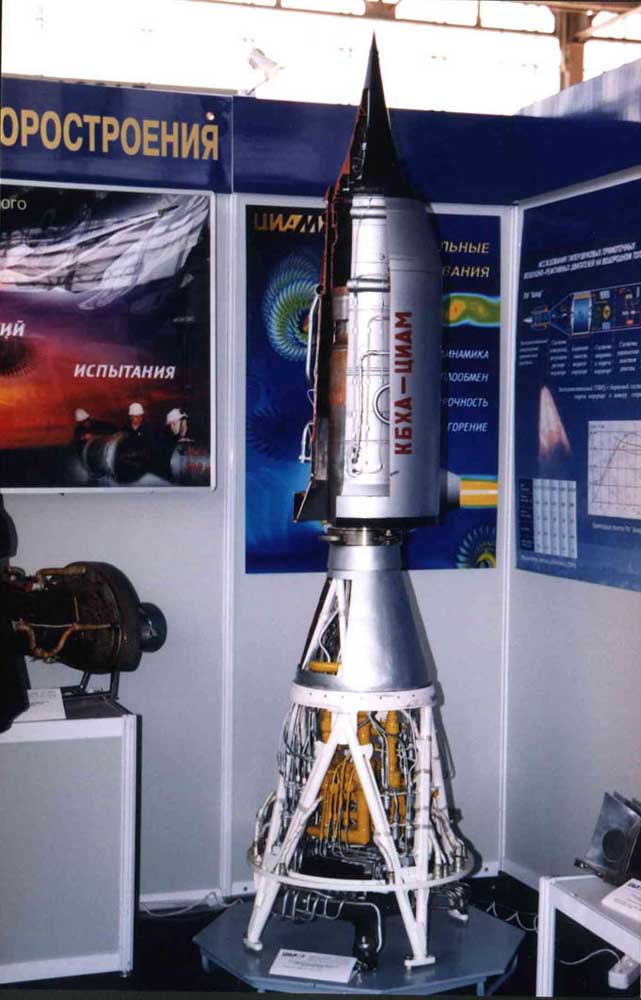
It doesn’t look to be able to transport some paiload.
The Igla
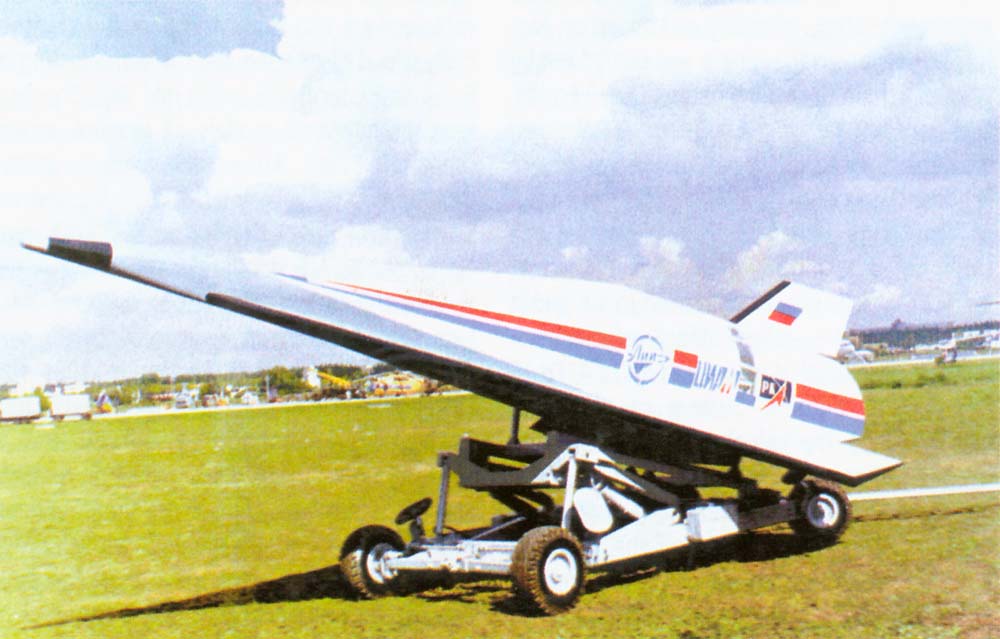
Igla vs her Western counterpart

RodolfoActually, the best Iranian “weapon” is the Ormuz strait. If they manage to strangulate the strait for 2 or 3 weeks and sink half a dozen Oil-tankers, they may have a chance to disrupt the whole Western economy by bringing it near an energy-collapse. The best way to spend their bucks is in multi-platform antiship missiles. In the XXI century, asymmetric strategies rule. A hard retaliation in the energy-front is the best Iranian deterrence tool in face of an American aggression.


 Sign In







