 a89
a89Great photos, thanks for posting.
a89Potentially more exciting news is the VK-2500 being completely indigenized by Klimov, another step in reducing the imported number of Motor-Sich engines.
Has the Ukrainian government put any pressure to protect Motor-Sich? Ukraine still produces many components for missiles and strategic troops.
I am surprised that there isn’t any contract for MiG-35 (yet).
a89Contract signed for the delivery of 30 Su-30SM to VVS. This is the second, the first was signed in March 2012 and included the same number (30).
http://www.aex.ru/news/2012/12/19/101051/
Can someone confirm?
a89With no established production line, will production even be fast though?
The main problem is to get a large order to start production. I agree with you, I do not think the Tu-334 will get large orders. They have a few unfinished frames which might be sold, but thats it. I assume that if production is launched, the aircraft would need more modern avionics (like An-70).
a89Polish magazine “Armia” 3-4/2009 , 5/2009
article : F-16 vs MiG-29http://www.sklep.kagero.pl/16-armia-5-2009.html
http://www.sklep.kagero.pl/15-armia-3-4-2009.htmlCol. M.Wiączkowski ( MiG-29 pilot) describe some fights:
Thanks for the translation ff1987, it’s very interesting.
a89Rusavia-Sokol has acquired a single Tu-334-100:
http://www.aex.ru/news/2012/12/5/100566/
This aircraft was dead a few years ago, but it may gain a second life. Russian government agencies need to replace airliners and Tu-334 is 100% Russian. No big orders so deliveries could be faster than other models (SSJ).
a89In the last few moths this topic has been discussed. Apparently Antonov Airlines does not need a second An-225, thus it has been offered to Russia. The cost of completion has been estimated at 100 million $ by Ukrainians and 300 million $ by Russians.
http://www.ruaviation.com/news/2011/5/11/304/
This was published yesterday:
a89Is this the UPG version for the RuAF?
That looks to me as an Ex-Algerian MiG-29SMT.
a89Question regarding the glass transparency- why did they keep it when establishing new production?
I thought it was for other purposes: fire-fighting, parachute dropping…
Russian MoD has signed for 39 Il-476 for ~4 billion $. I wonder what will be the final price of An-70. One of the reasons stated for leaving the program back in 2006 was the aircraft’s price compared to Il-76. Funnily enough, An-70 price is stated as 67 million $.
a89I cannot speak for Buk M2, but the earlier version seems to have had a less-than-stellar performance, and is badly affected by jamming. Finland was quite disillusioned by the system.
I thought Finland was quite satisfied with performance. Problems laid in support and training. It was the first contract signed with Russia and when it came to negotiations, support, training and so on, it was different (worst) than with Soviet Union.
There is an excellent thread of Finnish SAM missiles here:
http://208.84.116.223/forums/index.php?showtopic=34812&st=0&p=889167&#entry889167
a89Heh, no surprise Motor-Sich is not happy with such a plan.
CEO of Rossiya stated that they are not fully satisfied with An-148 fuel efficiency.
http://www.ruaviation.com/docs/2/2011/9/22/41/#cite26
At the end of the day the Superjet has attracted foreign orders, something the more “Russian’ AN-148 has failed to do, not to even mention the Tu-334/204 and Il96.
My impression is that many people who support Tu-334/204 struggle to understand that airliners are built in many countries nowadays. Boeing has even offices in Russia. You cannot really expect to fully build the aircraft in Russia because countries want to get involved in development and/or production phase.
a89Interesting article on why Interjet chose SSJ:
– CRJ900 couldn’t meet its hot-and-high requirements.
– E190 was believed to be overpriced.
There are quite a few discussions in Russian circles on SSJ performance. Some people are lobbying for state support to other aircraft (Tu-334, Il-114), believing that the SSJ is monopolising state support and not performing as it should be. Any opinions?
a89A former Iraqui Air Force officer used to post in ACIG a few years ago. His nickname was Ahmad Rushdi, real name Ahmad Sadik. He has writter a few articles on the Iraqui Air Force. This is what he explained on MiG-25
– Iraq received from the Soviet Union 22 Mig-25 PD/PDS. Of those 12 were original Mig-25 P converted to PDS by Soviet experts in Iraq in 1983. Iraq operated the Mig-25PD/PDS in the 96th squadron stationed in Tammuz AB (Taqaddum). The Iraqi 84 squadron operated the Mig-25RB from the same base.
– During the Iraq-Iran war Iraq lost one Mig-25PDS w/o after a heavy landing on August 6th 1986. It was hit originally over the Iranian town of Tabriz by an F-5E machine gun.
-Iraq lost two Mig-25RB during the whole war, as follows:
1. Mig-25RB shot over the Gulf, Kharg Island by F-14 during spring 1982.
2. Mig-25 RB shot over the Iranian city of Isfahan by a Chinese HQ-2. The pilot a 1st Lt. ejected and was POW.
Among the long list of Iranian claims, the Iranians would be able to present to the world the pilot of the second Mig-25RB as well part of the wreckage of his aircraft only.
All he other claims are non existent. The list in the ACIG Iranian air to air victories about the F-14 shooting so many Iraqi and Soviet Mig-25 are all not correct.
Tom,
The Soviet Union didn’t declare war on Iran
As for Soviet Mig-25 aircraft being shot over Iran, please let the Iranians show us photos of wreckage, pilots or remains of pilots should be presented. Even if the AIM-54 blasts the Mig-25 out of the sky and the pilots are shredded to small pieces, the engines should survive. Where are they?
As for the Soviet” Mig-25BM contingent” in Iraq I would to make the following comments and questions:
-Iraq is a small country, not like the US where you can have Area 51 completely sealed to the outside world. If the Soviet Mig-25BM operated from Iraq, then it had to operate from one of the Iraqi basis and there was no such a thing.
-The soviets would bring with them there technicians and there spare parts and that meant that to operate a force of 4-6 Mig-25 at least around 200 Soviet military personnel would be present.
– The Soviet contingent would have to bring all the equipment necessary to maintain their aircraft (they would never use Iraqi equipment) and they have to bring all the equipment to test their unique weapons.
– The soviet contingent had to bring their own GCI officers who would talk Russian to vector or control their planes. This mean that every listening post in the Middle East would be informed about the attacks by the Soviet pilots against Iran. The Soviets weren’t that naïve.
– Iraqi AF main operation center as well the AD sectors had to be informed whenever the Soviets flew and returned back.
Nothing of the above ever happened how can you explain that? You cannot hide such operations from the world and the soviets were forbidden from flying armed aircrafts in Iraq except at the request of the Iraqis.
I am ready to dialogue with you about this issue, no problem for me
The encounter between the Mig-25PD and the Iranians occurred early in the day, and I do remember it was a Friday. The after action report of the Iraqi pilot mentioned that his RWR (type SPO-15) indicated that there was a lock-on by an AWG-9 (radar associated with F-14 aircraft) and then it indicated an AIM-54 Phoenix launch. The Iraqi pilot decided to make two reverses and then dive inside a valley. He was flying in the mountainous area located in Northeast Iran. The lights in his RWR went off and he decided to report that to the Iraqi GCI, before doing so he felt bullets striking the back of his aircraft. He immediately broke off and returned to Iraq.
Next day I went with a group of specialized Iraqi officers to inspect the Iraqi Mig-25PDS in Saddam’s AB. We managed to have a fairly good look on the aircraft from all angles there was no indication whatsoever that the aircraft was hit by any missile. Then a ladder was brought and after taking off my boots I walked on the back of the Mig; counting holes and retrieving 2 or 3 bullets. Further analysis showed that it was 20mm ones from the guns of an F-5.
The radar of the Iranian F-5E was not working and this what made the Iraqi unaware of the Iranian aircraft presence. It is now quite clear that the Iranian missile missed the Mig-25PDS and that for unknown reason the Iranian F-14 pilot didn’t press his attack, or that he may have thought that he has shot down the Iraqi Mig. Why didn’t the Iranian F-5E use its AIM-9, this is another unanswered question.
Iraq received only 22 Mig-25 PD/PDS and there were no further deliveries. It had only one squadron for this type of aircraft, the 96. In this case we might disregard the SIPRI figure. I don’t know how the latter arrived at this figure. The Soviet Union was in fact very reluctant to provide the MIG-25PD to Iraq, it did so only after intense negotiation and the ten aircraft was delivered to Iraq by Soviet pilots flying from the former Soviet Union via Turkey. By 1986 the Soviet Union informed Iraq officially that it was going to close the production line of that type of aircraft. The Iraqi air force had to import large quantity of engines for both the MIG-25 PD/PDS and MIG-25RB
The Iraqi air force received 12 Mig-25P from the Soviet Union in 1980. In 1983 all 12 were modified to Mig-25 PDS. They were flying under the 96 squadron located at Tammuz AB (better known as Taqaddum). Later on 10 Mig-25 PD were added so the total was 22 aircrafts.
The Iranian fighters were no match for the Mig-25PD/PDS which prevailed in every clash with Iranian F-4Es and F-5Es, as well knocking down the Iranian ELINT aircraft C-130 (The Iranians called it the Khofash-bat in both Arabic and Farsi) killing all its valuable and indispensable crew and depriving the Iranians of an important intelligence asset. Iraqi Mig-25s roamed the length and breadth of Iran unchallenged. R-40R, R-40RD and R-40TD missiles were used in these air to air battles.
Only one Mig-25PD was hit by an Iranian F-5 during a patrol over the Iranian City of Tabriz; the incident occurred in September 1986. The Iranian pilot managed to sneak to about 2000 meters from the Iraqi Mig-25 undetected due to the fact that his radar was not working; there was no warning for the Iraqi pilot. Due to lack of aerial profieciency; the Iranian pilot decided to open fire from his gun prematurely; out of range. The majority of his bullets missed their target and fell short. Only about 25 bullets managed to hit the fuselage and both wings. The Iraqi pilot 1st Lieutenant Mohammad Salem managed to bring the aircraft back to its temporary base at Saddam AB (better known in the west as Qayarrah West). However the landing of the aircraft was too heavy and it was declared an R/O later.
Two other accidents occurred with the Mig-25PD/PDS both were unrelated to Iranian action. One before take off and the other during landing. Both pilots survived. On the night of January 17th 1991 the Iraqi Air Force had 19 Mig-25 PD/PDS.
In 1983 there were no Mig-25 PDS in Iraq. In 1983 a large soviet depot level delegation was converting the 12 Iraqi Mig-25Ps into PDSs. This was extensive work which included the replacement of radar, fire control system and some extensive wiring of the aircraft including the missile pylons, which have now to accommodate the R-40RD/TD and the canceling of the R-40R.
Between early 1981 and the mid of 1983 there was a limited number of sorties performed by Iraqi Mig-25P. Including the operation that led to the shooting down of the Algerian G-III with an R-40R. Again it was a single Mig-25P that was guided by GCI to near the Iranian-Turkish border, the place where the International air corridor is located. The Iraqi pilot locked on the Algerian plane and fired a single R-40R, he watched the plane explode. He returned back to his temporary base without any attempt by the Iranians to intercept him, although the interception occurred somewhere to the north of the Iranian town of Tibriz.
The description of the incident of 2 F-4Es as told by the Iranians doesn’t match what I saw and knew. Never during the Iraq-Iran war did the Mig-25PDS ever venture near Tehran. Iraqi Mig-25 PDS always worked in a single ship formation. The Iraqi Mig-25 PDS always worked under GCI control, Tehran was out of range of Iraqi GCI. The maximum the Iraqis could afford to send the Mig-25 PDS and not the RB was somewhere near Hamadan.
The only way to know the full circumstances surrounding the Iranian story is that if you can obtain information about speed, altitude and course of the “Iraqi targets”. Where the Iranian F-4E from Mehrabad or Hamadan? I am just trying to be helpful. There might be some confusion with a Mig-25RB sortie. Could it be a Mig-25RB with an active repeater jammer on? In 1983 there was a big Iraqi campaign to photograph Tehran and all the economic installations nearby. Again the Mig-25RB worked in a single ship formation.
Putting the Iranian aside until we get more information, why would I trust US reports when I was sitting on the radar screens watching these battles.
The Iranian F-4E RHAW could have never warned the pilot of a Mig-25PDS Lock-on or missile launch. There was no technical capability to do so. If you look at the manual of the Iranian F-4E RHAW and if you match that with the actual hardware you will see that there was no provision to warn the pilot from a lock-on by Mig-25 or any launch of its missile. I would like here to point that there is no change of mode between lock-on mode and fire mode in the Mig-25P radar. This was shown practically, when I noticed that in actual air battles, the poor Iranian pilots never realized what the Iraqi Mig-25 launched towards them. They never reacted to the launch of the R-40. You should always bear in mind that the F-4E RHAW was a Vietnam era device. It would be very interesting if the Iranian pilot depended on a change I the Iraqi plane contrail to decide that there was a missile.
If any Iranian is generous enough to show us the photograph of the unexploded Iraqi R-40 then I and the readers of this thread will be more than happy. The radome of the R-40 was made from ceramic, it can withstand high temperatures alright but it was fragile. Hitting the ground at such a speed would certainly cause to crash and thus damage the RHH. The R-40 also had an impact fuse mechanism; I wonder why this didn’t work as well. It is also puzzling why a high ranking Iranian delegation which visited Libya in 1986 asked to inspect and fly the Mig-25. The inspection included a brief on the aircraft armament.
a89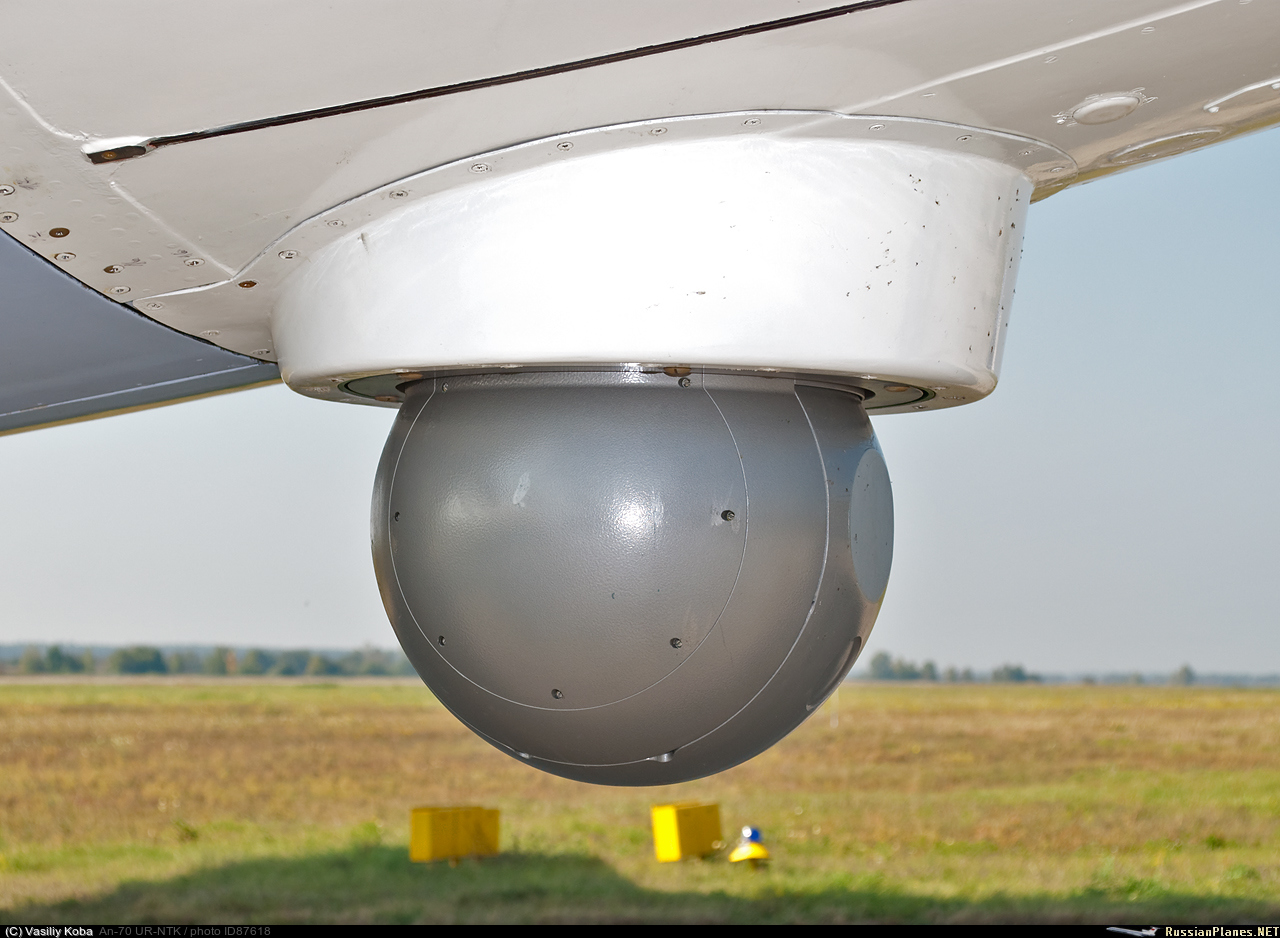
a89Belarus is going to acquire former Indian Su-30K:


 Sign In







