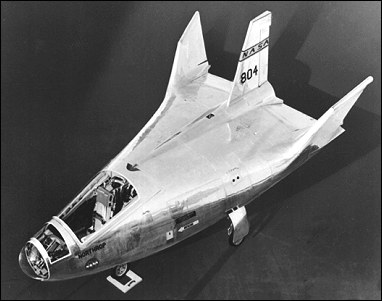
That IS why HL-10 merely an experimental aircraft.
With experiment, a complete data is not the essential condition which is also the difference between prototype and ex-model.
The HL-10 does was an lift-body concept, however, its profile is completely different from the J-20.
Now we do have side view foto of J-20, do you are able to draw that curve along the belly of J-20?
I posted HL-10 only to show your statement of this confugration only work at hypersonic is wrong. As I said in previous thread I believe Canard+LERX contribute more lift. However J-20 does have lift body design and I’m not denying that. And there’s obviously more than one way of achiving body lift.
Are you going to bet the TW ratio?:rolleyes:
As far as I know TW ratio has nothing to do with aerodynamics, you mean L/D right? 😀
I’m pretty sure J-20 has impressive supersonic L/D ratio.
when WS-15 is finally fitted, it will have very impressive supercruise performance.
And as always, I’d say time will tell.

Did you have any knowladge about what you were talking?
The so-called lifting body you describled works at marginal atomsphere must with hypersonic speed.
How do you explain HL-10 then?
along with other lift bodies at that time, most test were flown in subsonic speed. I don’t see the must here.
If you learnt some aerodynamics, you’d better know layout designed like present J-20 due to lacking sufficeint power, not something advanced someone dreaming to
If you learnt some aerodynamics, you’d be laughing at what you just said here mate:D
===========================================
NEW PHOTO COMING
This is an impressive angle of the canards![]()
what’s the point of that?
anyways with the advances in semi-conductors in couple of years detection range on IRST may really be useful at long range. :dev2:
To reduce RCS in non combat situation? 😀
hmmm very unlikely
IRST might be very useful for future UCAV development though, instead of installing expensive and heavy radar
donno those in the rear are engine related vents.
I thought I saw a bump on top of the nose. may be an covered up mount for IRST to be added later?
May be they designed a pop up version:diablo:
where you most need it is prob low speed.
also remember those local flow on top of the fueslage is does not necessarily align with velocity vector or the fueslage center line.who has a close shot of top of nose near the cockpit?
wonder what are those stuff?
upper nose seems very clean
or work with VT also.
FCS and RCS works in unisome is an open secret.chevrons do help noise (and IR) by mixing hot/cold air.
also look at the cooling vent in the side nose, F-22 style. right above its single side probe.
this think is meant for a big (AESA) radar.
I think pitch control using VT would cause too much drag…
IMO in this pic J-20 was doing landing approach, and VT were acting as air brake![]()
Also, on this video:
http://www.youtube.com/watch?v=SlLGk6GiDuA
you should be able to see the preflight surface checks performed by the pilot on J-20 yesterday before it took off.
watch when the pitch checks were performed.
for pitch checks, elevarons and the canard moved in unisom .
also, notice how extreme the articulation on those engine petals were. and on the edge there were chevrons.
a new way to manage IR and noise may be?
I think it might be able to use elevons only to perform pitch trim in cruise, While the canards can be fixed in a optimised trim angle for that speed, to reduce forward RCS.
I believe the shiny petals were there for IR reduction purposes.
Would those chevrons help mixing cold air by draging vortices?
J-20’s main body employed a quite strong lifting-body design, this is the first seen for any canard-airframed fighter,previous canards fighter never employed such design since it is very diffcult for developing a proper flight control system due to the tonque created by the lifting body and the tonque created by the canards at different Machs.
By lifting body I mean the main body is designed in a shape such that itself is somehow works like a wing and create lifting tonque (e.g. the lower half of the main body of the fighter is more “curved” and the upper half is flatter), a (very strong) lifting-body demonstrator looks somehow like this:
Combining this with coupling-canards and strakes, the fighter should be a very agile one, all suggesting its primary role, if not being the sole one, should be air-superiority.
I think the main benefit is from the vortex lift from canard+LERX
As a fan-boy, what I heard is that J-20, with a canard design, could flight better (more maneuverable and faster) than others if the engine is as good (namely could fly as good if engine is worse), however, with a cost of losing some stealthiness. This is a quite reasonable design under circumstance that they don’t have a superior engine like that on F22.
hmmm, it is a pleasure but… I should have watermarked my drawing:(
——————–
Also, heared it was
WS-10G with 155kn of thrust and 2500 hours of lifespan
J-5 accompanied J-10’s first flight
Then J-10 with J-20![]()
and 10 years later, what would J-20 fly with?:cool:
This is some nice and funny fan art..:D
Obviously CAC bought over Robco and evolved it’s famous stealthboy:diablo:


edit: seems fake…
Comparison in similar angles:diablo:
damn how do we shrink the picture???

What is going on with that 2001 number on the first image?
http://forum.keypublishing.com/showpost.php?p=1688265&postcount=233
TJ
well spotted !
may be he mirrored it to make it look better with the logo?:cool:
There is a obvious pattern, any doubt we had would be solved in a few days via some kind of ‘official’ leak.
So just put out the flame, sit back and relax, I believe we’ll get the answer very soon:D
Hi-Res pic x2