LordAssap
Scorpion82;1352239]Who says it isn’t? There were no requirement and there still is no requirement.
It’s in Eurofighter’s website DUDE!!!
Ask the manufacturer.
Dont need to i know.:D
Long coupled canards.
Sure, logical after inventing CINEMATICS!!!:D:D:D
Quite similar is what I wrote and 29.5° for Rafale and a similar limit for the Typhoon…
STILL CANT MAKE THE DIFFERENCE BETWEEN HARD AND SOFT LIMITS.
Why SO soft limits if the aircraft can safely do SO much better?
Because not every pilot can handle higher limts, if you have had you bum on an aircraft lonmg enough you’d comprehend the issue.
Up to 15% of the normal max. g (9) in override.
NOT 11 g and please provide a source…..
Well you don’t speak about anything else for obvious good reasons.
Don’t I???:dev2:
Before it was 270°, with a maximum of 290°.
Maximum is still 90* higher.
In any condition? Why any restrictions at all?
Adverse condition you comprehend or NOT?
MY QUOTE: Rafale is NOT the Su-27 for some VERY good reason you don’t understand and YOU are still talking WAY above your knowledge base.
Well you don’t speak about anything else for obvious good reasons.
OBVIOUSLY YOU DO NOT WANT TO TRY ME ON THIS DO YOU?
MY QUOTE:That’s the difference between the REAL world and your fantasist one you canot make; precisely…
You couldn’t find a more worse excuse, could you? :rolleyes:
Well after “CINEMATICS“, Long coupled canards and a few other NO.
XXXX
[ SURE = Your definition of proper information😀.
The pitch up mitigation and ALSR document is from 2004, we have 2009…
Still unresolved my friend, as the docs says and Typhoon AoA and LOW speed limits REMAINS, NOW about the issue of high-speed vibrations in the Inlets which is a lot more recent mmmmmm?
[QUOTE]MY QUOTE: Well as John BOYD would have said, i never designed an aircraft but if i tried and then ******-up i could do better.
40 years later with the knowledge of others…
[B]
XXXXXXXXXXXXXXXXXXXXXXX
XXXXXXXXXXXXXXXXXXXXXXXXXXXXXXXXXXXXXX
YEAH YOU PROVED THIS AGAIN.:D
Improved manoeuvrability at low speeds was the main aim.
AND HOW EXACTLY DO YOU ACHIEVE THIS WITH THIS AERODYNAMIC ARRANGEMENT?:D:D:D
XXXXXXXXXXXXXXXXXXXXXXXXXX
LordAssapAu contrair!
Even the turbo-jet equipped Phantom F-4F has an op ceiling of 44kft when clean. Down at 40kft when loaded to 46klbs.
That the M2000 makes it a bit higher, OK, that might be. But a full 12000ft more than F-35, F-4F, F-16 or F-18? By all respect, that is bullock.
Does the French have smaller feet, maybe?
No, i’m not bolloking you here, they had requierements for higher ceillings and designed their engines and aircrafts accordingly, since Mirage III, 50.000/75.000 ft. Ops/Maxi, for grace stake the IIIEs which MATRA 530 i serviced even had rocket packs to get there faster remember?
Dont forget one thing; from ALL US the aircraft you can come up with including F-22, the only one with a higher Operational ceilling than a Mirage 2000 is the F-15.
This requierement was STILL very much valid when SNECMA was asked to design M 88 for the ACX project for the very same reasons, the only compromised made after ACX (Rafale 2) was frozen was the deletion of the “souris” because there was no requierement for a sustained Mach close to 2.0, only 1.8.
As for M 88 it was also requiered to have better performances in the low-level-/high-speed strike flight profile so they went for the following specs:
High compression Ratio <> 25 for performances at high Machs.
As HIGH TET as possible.
Moderate Bypass Ratio..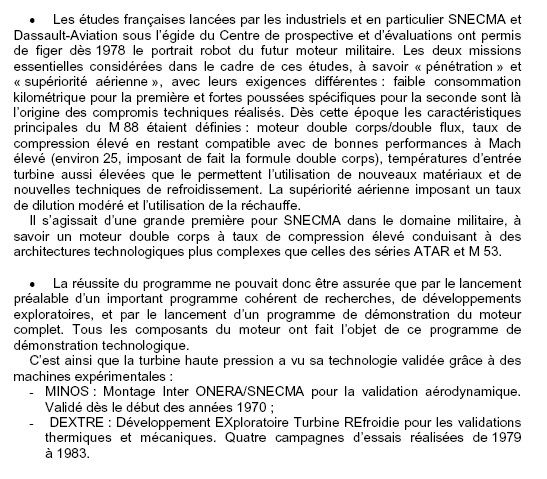
Source Ingenieur General d’Armement Jaques Bongrand, Directeur d’Etudes M 88.
The engine reached 1.700*K in 1983 and 1.850*K in 1987.
Mach 2.0 became DASH speed by default (Inlets diverters allowing).
Mirage 2000 Cs were asked to intercept Mig-25s flying at M 2.8 10.000 ft higher with Matra Super-530 which couldn’t do it with a lower ceiling from the aircraft, i guess wit hthe advent of MICA this isn’t such a problem today.
LordAssapIt helps to put comments into context… In fact it is QUITE CLEAR, when put into proper context, that the comments were in relation to US public opinions.
I concur…
LordAssapScorpion82;1352173]All nice, the operational AoA limits are still quite similar with no obvious advantages.
XXXXXXXXXXXXXXXXXXXXXXXXXX
= with no obvious advantages??? You’ve been revving about Post Stall Maneuvres for some time haven’t you?
WHY is Typhoon NOT navalisable?
Why is Typhoon Roll rate a full 90* lower than that of Rafale?
Why is Typhoon approach speed a full 20 kts HIGHER?
Why is Typhoon AoA approach HIGHER too while been FASTER?
Who says “Operational” Maximum AoA are the same for all of them?
Can YOU comprehend SOFT and HARD FCS LIMITS?
CAN Typhoon pull 11 g?
CAN it land in 400 m without a drag chute?
Who CG-tested their aircraft at 100*+ with associated Herbts post-stall maneuve before validating during flight-tests?
Doesn’t NASA know full-stop WAY better than YOU what they’re bubling about when they come up with a study on maneuvrability in the behalf of USAF?
Just take a look at the Su-27 which also achieved a significantly higher max AoA. And while the aircraft proved its ability to recover from those AoAs (~105°+ during the cobra, not 90°), it was by no means “controllable” in ALL axis.
Rafale is NOT the Su-27 for some VERY good reason you don’t understand and YOU are still talking WAY above your knowledge base.
(~105°+ during the cobra, not 90°) = Gripen, Rafale went passed 100* mate; you’re SIGNIFICANTLY OUT OF YOUR LEAGUE AND NEED TO INVENT AGAIN….
The F-16 max roll rates are faster than that of the Typhoon either, so do other aircraft..
Rafale 290*/sec is ONLY a FCS limit to allow for an average Jockey to fly it through the full of its flight envelop.
These limits are NOT related to aerodynamics; in particular lack of control as from its surfaces as they are well covered by energised airflow coming from LEX + Integrated CANARDS + Zones of Expension Waves; Typhoon only posseses ONE out of the three, NOT optimised, and now i’m sure you know which and are going to tell us…
As for F-16 since you obviously also DON’T know, its AoA limits are there for the very SAME reason than Typhoon low-speed recovery problems (In F-16 case, nothing to do with roll authority before you start bubling about it too).
= SUPERSTALL…
Close coupled canards doesn’t SUPERSTALL, control authority REMAINS.
Does it mean they provide higher roll authority and better handling at high AoA? No
What is famous about the Viper and you also didn’t know since you actualy mystake roll rate capabilities for AoA’s:
The F-16 AND Mirage 2000 are TWO aircrafts which does something VERY WELL within their actual AoA LIMITS:
ROLL at HIGH AoA.
Airfix? Quite harsh words for someone who is consitently posting commercials stuff from Dassault etc. to “prove” his points…
= consitently posting commercials stuff from Dassault etc Let me guess, the NASA and EADS doc are from Dassault too.
That’s the difference between the REAL world and the fantasist one you canot make; precisely…:D
So far I don’t have the impression of higher roll rates at high AoAs, not even on the Rafale.
Sure you have no clue but only impressions.
I was under the impression myself that all the doc i posted proved you don’t have anything else than impressions to oppose to some very documented and official official doc.:D
You see from when the sources are 5+ years ago.
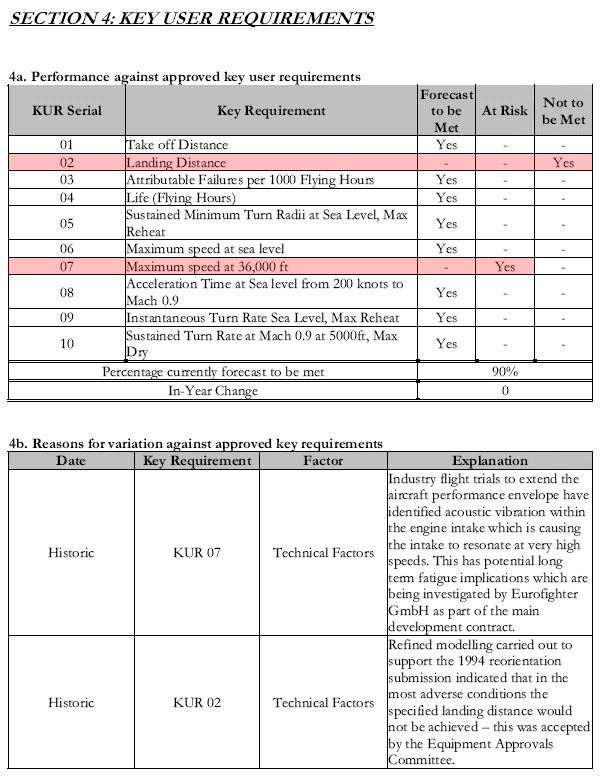
And BTW about the landing distance:
“…in the most adverse conditions the specified landing distance would not be achieved…”
Not FIVE NO, last year or 2007 at worse and in the same conditions, Rafale or Gripen doesn’t MISS their targets.
And Mr. Lordassap of course knows all much better than the MBB experts. .. :rolleyes:
XXXXXXXXXXXXXXXXXXXXXXXXXXXXXXXXXXXXXXXXXXX
XXXXXXXXXXXXXXXXXXXXXXXXXXXXXXXXXXXXXXXXXXXXXXXXXXXXXXXXXXXXX
Non-integrated in relation to the wings…
OR LEX, which is the REASON for EADS trying to fix the problem by mounting them and flight-testing them too.
If you knew your basic you’d had a clue.
The intention to develope a new combat aircraft was there, not just the intention to study…
:D:D:D
Obviously you not only counterdict yourself but you now also imply Germany had the budget for it. NICE.
Another opportunity for what?
XXXXXXXXXXXXXXXXXXXXXXXXXXXXXXXXXXXXXXXXXX
LordAssapNope, that is dry thrust ceiling.
A Rafale will equally fail to jump over 45000ft subsonic.
Your quoted ceilings are absolute ceilings, which are normally M1.3-1.5 reheat for current generation fighters.
I’m afraid you are not on it this time.
French aircrafts are only limited to a 55.000 ft ceiling for safety reasons, the actual Operational ceiling are a little higher, not to mention full-AB Maximas.
At 57.500 ft Mirage 2000 C (M 53-5) acceleration tests were conducted from M 0.9, from Dry to full A-B.
That’s why i insist the F-35 ceilings (Cruise/Combat/Maximum) are a tad lower…
LordAssapGood guess from that:
35-38kft maximum initial cruise altitude for combat loaded aircraft.
45kft maximum operational ceiling for aircraft with reserves and basic armament, so the lowest significant combat weight.All for dry thrust subsonic.
My rough estimates too, still way off that of a European fighter by a good 10.000ft…
LordAssapThe R stands for Root. Just type LERX in google you’ll get a lot of hits. So don’t blame me Mr.
Sure! SO the definition of the inventors of LEX themself is not the right one…
http://oea.larc.nasa.gov/PAIS/Partners/index_entries.html
leading-edge extension (LEX) 29, 31, 32, 34–37, 39, 40, 45, 46
Here from those who write the books…
No wonder you keep getting things way off and yes you’re to be blamed for digging to the worst sources possible.
TRY to find this in DRYDEN’s definition for a laugh, BTW do you google everything you write?:D
Let’s call a TV a TV-B the B standing for Box, shall we?
LordAssapNot achieving a AoA of 100° is an “issue”? Transonic pitch up mitigation, who says it hasn’t been solved in the meantime?
No Germany never intended to go it all alone on cost grounds, but a participation in a multinational programme playing a vital role was the intention. Let alone that MBB was studying and developing a lot of technologies as part of TKF90 and even long before!
=Scorpion82;1352118]Not achieving a AoA of 100° is an “issue”?
Maximum AoA reflects the aircraft capabilties to REACH high AoA and RECOVER from them without problems, the higher the better.
Reaching an AoA 30* superior also means retaining control in ALL axis at an AoA 30* higher, which in turn translates by a higher roll rate and higher level of roll authority up to higher AoAs which according to the USAF maneuvrability classification framework are part of what makes an aircraft USEFUL in a turning fight = AGILITY POTENTIAL.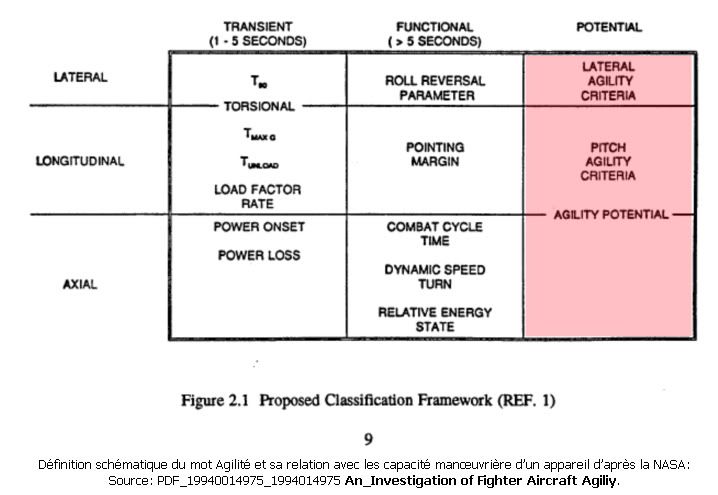
MEANING:
A = One doesn’t ignitiate a TURN before ROLLING.
B = Once in the turn having the capability to reverse or roll further while pulling Gs at HIGH AoAs is an asset.
C = The higher the roll rate at the highest AoA is the highet level of useful mameuvrability.
Transonic pitch up mitigation, who says it hasn’t been solved in the meantime?
EADS.:D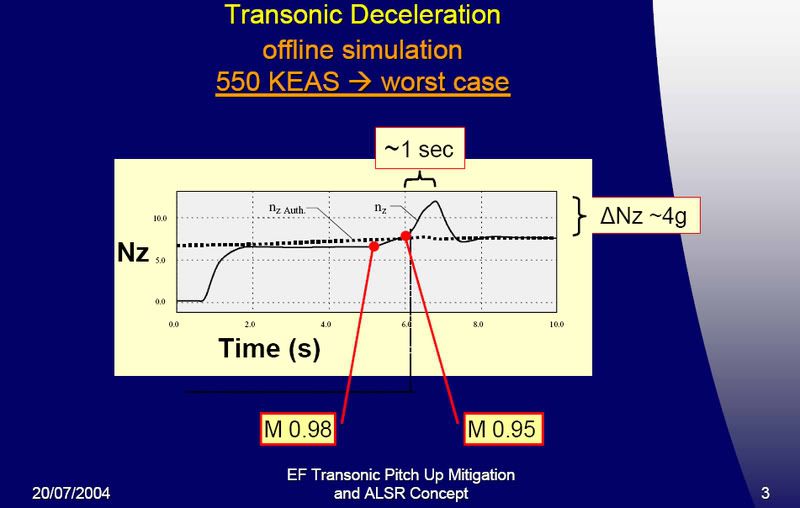
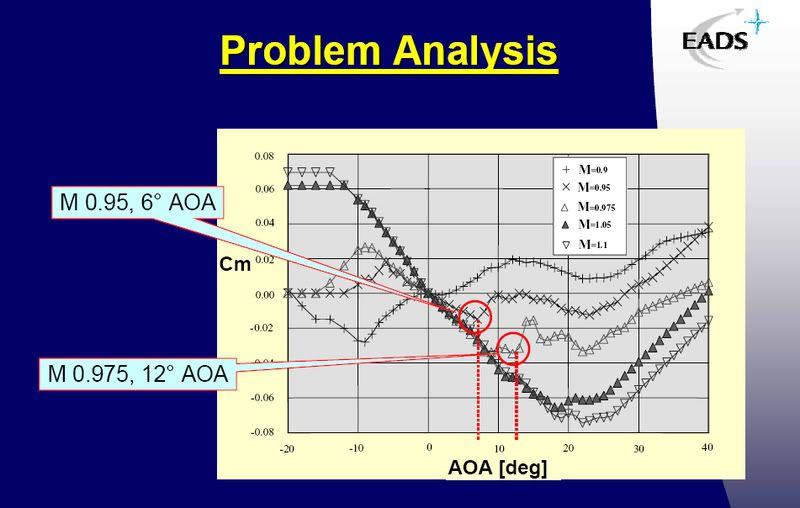
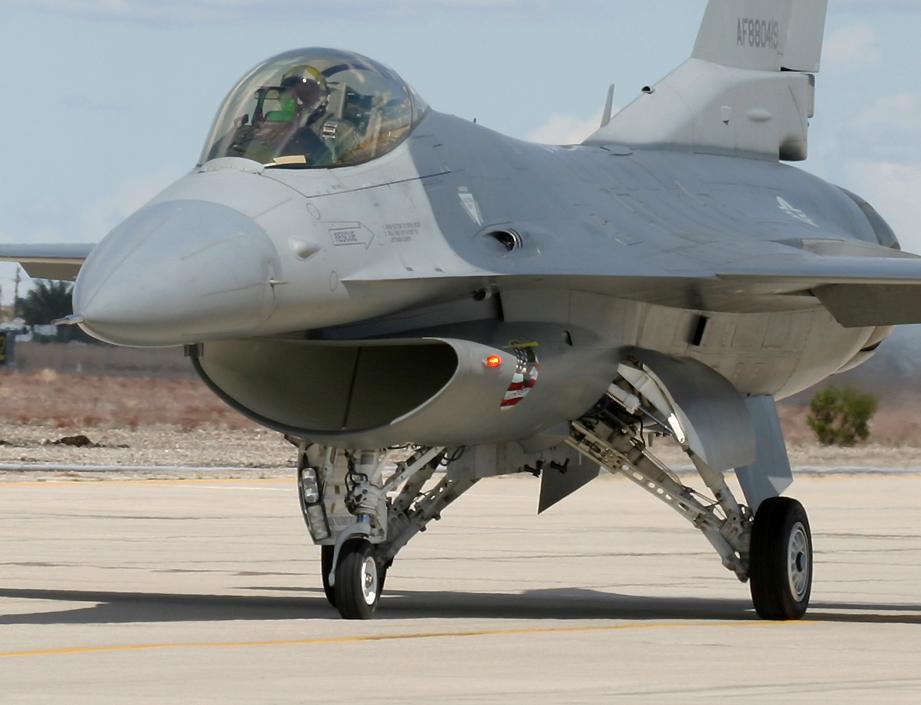
BEFORE…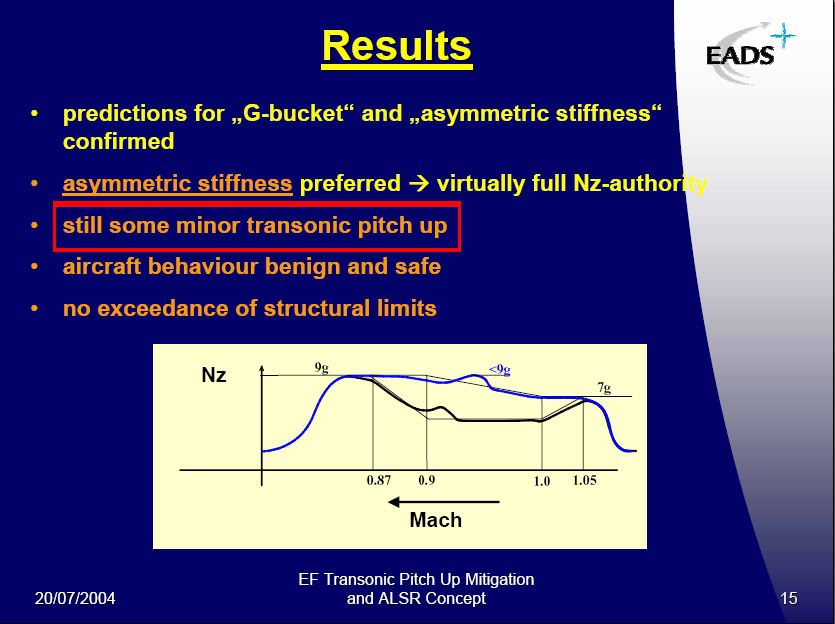
AFTER… Where FCS twicking is visibly NOT enough to fully compensate for the lack of canard integration…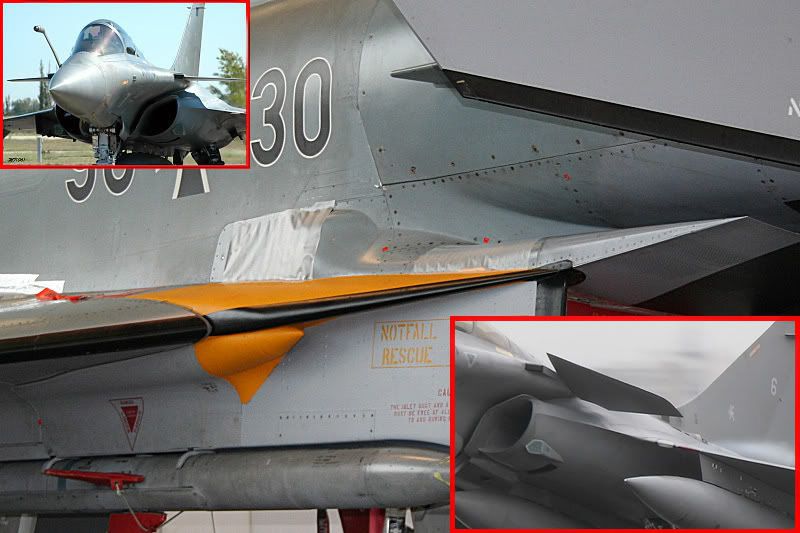
And this, Scorpion82 is NOT the ONLY design issue inherited from MBB “expertise”…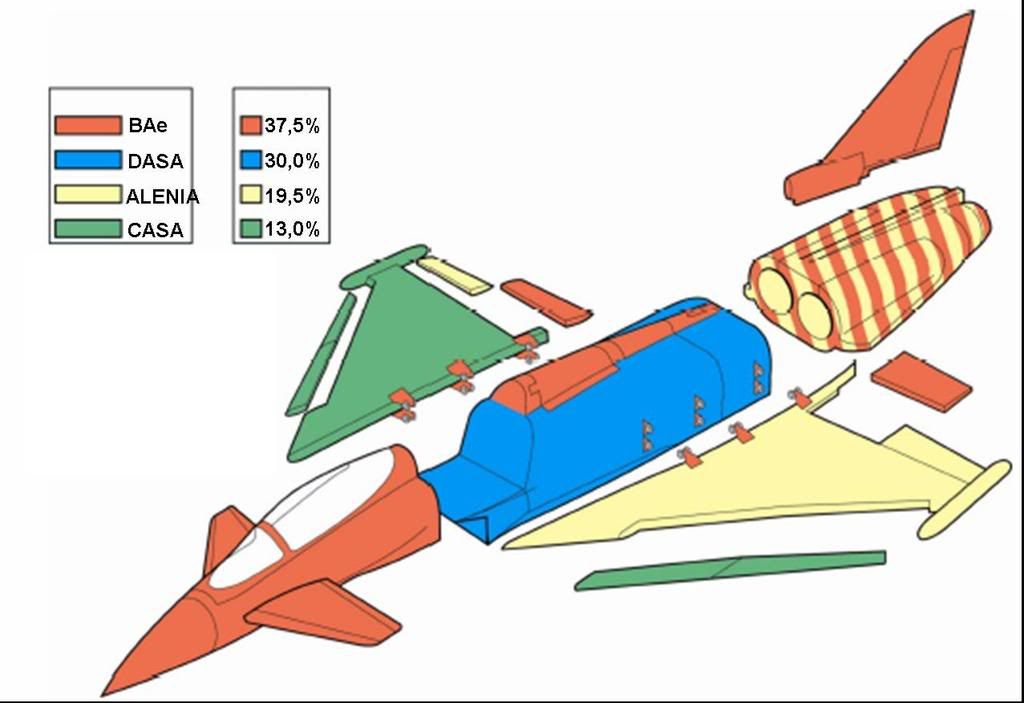
The ventral inlets ARE a TFK90 feature and didn’t WORK with close coupled canard, reverting to non-integrated long moment harm canards equaled to loosing the close-coupled NATURAL DYNAMIC INSTABILITY AND DAMPING.
And MBB designed/ DASA manufactured inlets are causes of high-frequency vibrations too.
No Germany never intended to go it all alone on cost grounds, but a participation in a multinational programme playing a vital role was the intention.
SO GERMANY WAS CONDUCTING STUDIES AS WERE MOST DEVELOPED AEROSPACIAL INDUSTRIES.
Let alone that MBB was studying and developing a lot of technologies as part of TKF90 and even long before!
SO WHAT? It’s MBB retained design features which are cause of Typhoon problems at this level, not that of BAe so that’s tells you a lot about the level of used expertise.
You REALY lost a (YET another) good opportunity to stay quiet, because i didn’t realy need to bring this up, you asked for it…
LordAssapthe deadly Rafale crash 2007 shown the lack of carfree handling.
And HOW does pilot SPATIAL DESORIENTATION relates to the lack of carefree handling exactly?:confused:
Can’t resist stupid jabs to concurent aircrafts with better handlings and NO aerodynamic troubles?
If you want to play this game, i can post REAL good information on the subject that will get you run for cover, crying for your nanny (Mod) immediate support for cause of “offensive” material (as usual).
Get off your rocking horse and show some foaking respect for the pilot who lost his life to NO aircraft issue but a known human factor.
Now S.T.F.U, BOY.😡
LordAssapAt least Germany WAS interested! Hence the TKF90…
TFK90 never made it further than the aerodynamic studies and model simulation stage and it is very doubtful that Germany would have been designing developing and producing it on its own.
More to it it was ALWAYS intended to be fitted with TVC which partly explains Typhoon’s AoA and pitch-control issues.
In West Germany, Dr. Wolfgang Herbst of Messerschmitt-Bolkow-Blohm (MBB) aggressively touted the advantages of post-stall technology (PST) for increased effectiveness during close-in air combat. Herbst’s conclusions were based on wind-tunnel tests of a German advanced canard fighter configuration known as the TKF-90 and piloted simulator studies during which the application of simulated thrust vectoring resulted in rapid directional turns at high angles of attack had increased the turn rate by over 30 percent. Technical discussions between the Rockwell SNAKE Program managers and Herbst were initiated in 1983, and planning for a mutual program on PST ensued. Discussions with the Defense Advanced Research Projects Agency (DARPA) were very positive. When funding for collaborative international activities became available from the U.S. (the Nunn-Quayle research and development initiative in 1986) and West German governments, the technical expertise of Rockwell and MBB were joined under DARPA sponsorship in the X-31 Program. In view of Langley’s extensive experience in high-angle-of-attack technology, unique test facilities, and contributions to the Rockwell SNAKE Program, DARPA requested in 1986 that Langley become a participant in the X-31 development program.
http://oea.larc.nasa.gov/PAIS/Partners/X_31.html
😎
LordAssapWell LERX is used since many years by many sources.
Yeah sure, ENLIGHT US!
Whats does the R from LERX stands for?😀 XXXX
XXXXXXXXXXXXXXXXXXXXXXXXXXXXXXXXXXXXXXXXXXXXXXXXX
At least HE seems to have some degree of intelligence to the point where he doesn’t insist into making the SAME mystake time and time AGAIN!
In the early 1960’s worldwide interest in the phenomenon known as “vortex lift” increased as a result of aerodynamic studies of highly swept configurations such as the Concorde supersonic transport. Two events contributed to the initiation of a world-class Langley vortex-lift research program led by Edward Polhamus.
http://oea.larc.nasa.gov/PAIS/Partners/F_16.html
THEY invented them so THEY know how they are called, YOU DONT.
The second event that led to the vortex-lift work at Langley was a cooperative Langley and Northrop study of hybrid wings that centered on the use of relatively large, highly swept wing extensions at the wing-fuselage intersection to promote strong beneficial vortex-flow effects.
http://oea.larc.nasa.gov/PAIS/Partners/F_16.html
LordAssapsimdude97;1351993]No what I see here is a crude attempt to try and blend the wings into a botched application of engine inlets. Blended wing/body looks like this:
Sorry Dude but you are wrong.
Rafale HAVE BLENDED wing-fuselage junction as well as 70* swept LEX, clean off your eyes you visibly CANT SEE.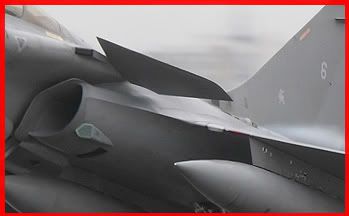
Now BOY, Q: Where does this VORTEX comes from???
In the early 1960’s worldwide interest in the phenomenon known as “vortex lift” increased as a result of aerodynamic studies of highly swept configurations such as the Concorde supersonic transport. Two events contributed to the initiation of a world-class Langley vortex-lift research program led by Edward Polhamus.
http://oea.larc.nasa.gov/PAIS/Partners/F_16.html
Answer: Junction LEX/Wing.
http://home.att.net/~jbaugher4/f17.html
Go here to see what they look like: http://www.smugmug.com/popular/Airplanes/2/26500333_nRjJ6#26500333_nRjJ6-A-LB
Note the large structure above the engine inlet for the LERX. In fact note the inlet. Hint it has something to do with reducing RCS.
WRONG:
The “Large struture” above F-16 engine inlet is a DIVERTER designed to provocs an MILD shock at the inlet leading edge, diverters raises the Mach from M 1.8 to M 2.0 compared to a PITOT inlet, in fact it is a 1.5 SHOCK inlet.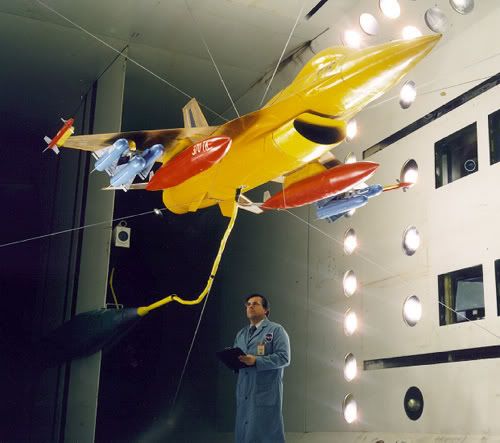
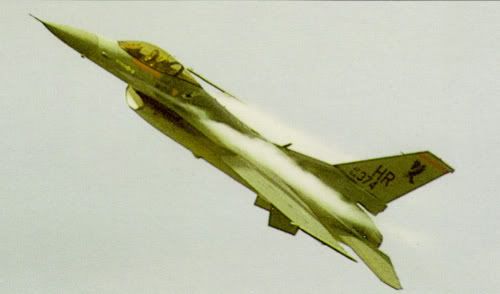
As for F-18/F/A-18 LEX size doesn’t make smaller LEX non-LEX, those of the F-16 are WAY smaller too.
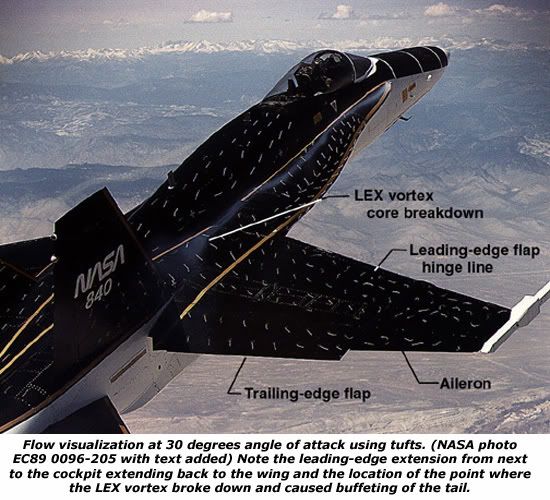
Researchers used the film and videotape images of the airflow patterns from the smoke, dye, and tufts for a comparison with computer and wind tunnel predictions. Additional data that they obtained included air pressures recorded by sensors located in a 360-degree pattern around the nose and at other locations on the aircraft. Researchers paid particular attention to the location of strong vortices (masses of air in circular motion) that formed off the forebody and wing-body-strake (leading-edge extension or LEX) at high angles of attack and their role in inducing tail buffeting (beating by unsteady flow, gusts, etc.).
http://www.nasa.gov/centers/dryden/history/pastprojects/HARV/index_prt.htm
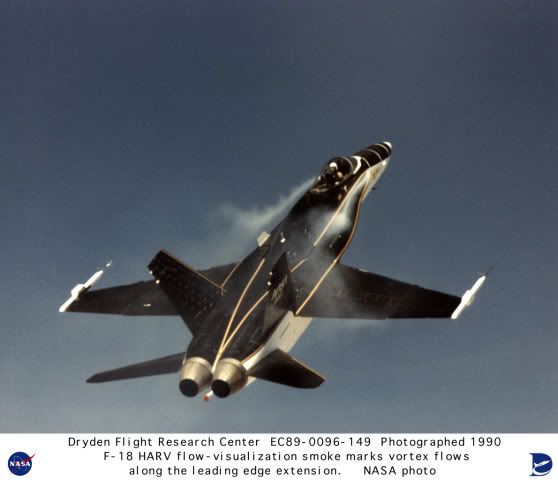
Leading Edge Extention is what LEX Means.
The F-18 has a maximum maneuverable AOA of 83 degrees.
http://www.flightglobal.com/pdfarchive/view/1994/1994%20-%200027.html
Frankly, if it where canards that where responsible for such a large AOA why doesn’t the Eurofighter have the same ability?
Because Typhoon’s canards are NOT close-coupled but Long-Moment HARM.
No thanks, LERX are the way to go.
That’s WHY Rafale CAN reach 100* AoA and Gripen (without LEX) 90* AoA.😀
Billions of dollars, countless hours of flight tests and the commercial success of the twin tailed American planes seem to indicate that.
They sure didn’t spend all this money in your education NO.
Besides canards are not exactly good for reduced RCS, they induce additional drag.
NO they DONT actualy, compared to conventional aircrafts they are reducing induced and TRIM drag as for RCS it’s also wrong they are actually closer to the IDEAL RCS reduction 45* sweep angle than F-16/F/A-18 elevators.
DRAG: It’s the opposite, F-16/F-22 and F-35 have LIFTING elevators which canot be trimmed to neutral at any subsonic/transonic speed because they need to counter the pitch-up moment in subsonic/transonic and in supersonic it’s very much the same story exept worse because they then have to compensate for a higher percentage of Cl/Cg travel than close-coupled canard which are naturaly DYNAMICALY INSTABLE.
As for your structural problems, there have been over 3700 twin tailed F-14 through F-22 built to date and another 2000 to 3000 planned. What structural issues are you talking about?
Cracks on the FINS due to aerodynamic bash up for F-18, F-22, F-35, all of which have to be structurally strengthened with on top an AERODYNAMIC FIX in the case of the F-18 i.e dorsal strakes meant to reduce vortex energy before they hits the fins.
Nope, I meant F-106 with canards. In fact I was being charitable. The F-106 carried it’s weapons internally and was able to super cruise. The Eurocanards are simple deltas with canards attached and causing instability.
You realy dont KNOW what you are talking about.
Yes, B-70 was a stable aircraft, the point being made is moveable canards are nothing new.
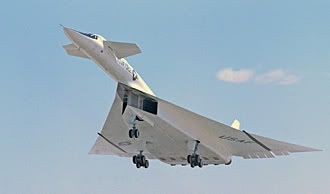
XB-70 canard were FIXED with elevators DUDE.
http://www.nasa.gov/centers/dryden/news/FactSheets/FS-084-DFRC.html
MOVEABLE is not a proper aeronautic term the word you’re looking for is monoblock or all-moving (for newbies).
The use of a canard for trim and a rear sailplane for control is beneficial. The canard would trim the rearward shift of the aerodynamic center at supersonic speeds, and the strong nose-down moments from high lift devices (flaps) at low speeds by providing uplift. When not used, the canard can be allowed to trail in the free stream at zero lift and also generate minimum drag.
http://history.nasa.gov/SP-367/chapt9.htm
As for your photo essay on the history of french experimentation with FBW, thanks for the education.
Now i CAN do further aerodynamics too if you want but i’m afraid you are not level just yet, this subject is quiet complex and you definitly need to start by the begginner’s books and BTW there IS a lot of history involed in it meaning if you’re are a revisonist at heart (like many) you’re FOACKED from the letter A.:D
Maybe, maybe not, but they are not a lot more than LERX.
LERX is YOUR undoing DUDE, from a badly informed website and repeated TYPO….:D
http://oea.larc.nasa.gov/PAIS/Partners/F_16.html
HERE IS THE REAL THING…
http://www.nasa.gov/centers/dryden/history/pastprojects/HARV/index_prt.htm
Researchers paid particular attention to the location of strong vortices (masses of air in circular motion) that formed off the forebody and wing-body-strake (leading-edge extension or LEX) at high angles of attack and their role in inducing tail buffeting (beating by unsteady flow, gusts, etc.).
http://www.nasa.gov/centers/dryden/news/FactSheets/FS-002-DFRC.html
I believe it is you who needs to flush, INCLUDING THESE BAD WEBSITES YOU FEED YOURSELF WITH BAD INFOS FROM …… DUDE
Now where is that name calling idiot?
YOU have the oppotrunity to LEARN so the question is: LEARN or PASS?
Don’t worry REAL Idiots usual PASSES.
LordAssapWhen you’re finished foacking about, pating yourself on the back thinking you’re a genius let us know…:D
LordAssapNo inaccurate comment on European public opinions was made.
But you have shown yourself to be easily confused.
Realy and by WHAT?:D
Originally Posted by pfcem
Utter nonsense. People OVERWHELMINGLY approved the Iraq war.
THIS?
LordAssapIts worth noting that the XP-92 barely reached Mach 1 even with its Highly Sweptback Wing and Coke Bottle Shape. While, its weight was around 14,500 lbs and had about 7,500 Lbs of thrust. You would think it would still have a higher top end. Especially, considering many aircraft with about the same power and less wing sweep flew much faster…………..just food for thought!
You’re HO SO observant…
Coke Bottle Shape in 1948? NO mate…:cool:
http://www.vectorsite.net/avf102.html
Some don’t seem to understand this is a typical Anti-Surface Attack Profile. Which, explains the Altitude and Range……..
NO it doesn’t mate, it is consistent with the rest of L-M’s docs; but typical is your habbit to write W.H.A.T.E.V.E.R…
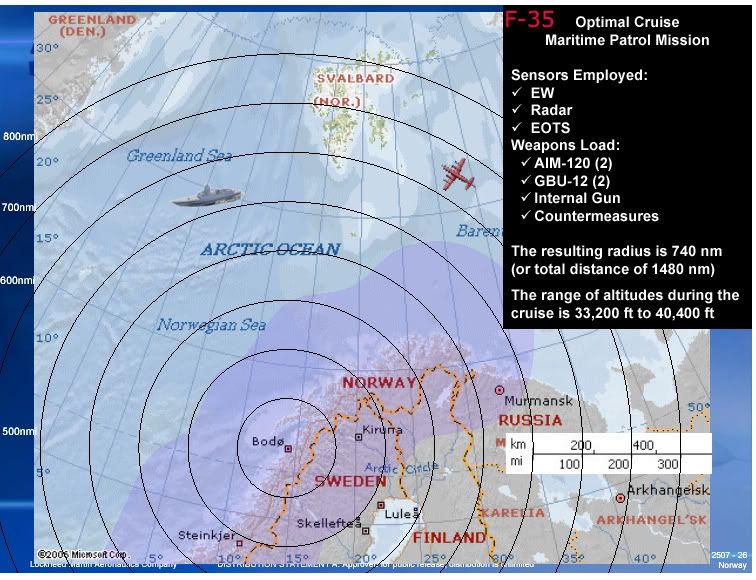
33/40.000 ft. vs a 35.000 ft Ceiling for Harrier II…


 Sign In