LordAssap
Hmmm,
I await your reply to this idiot.
simdude97;1351936]shall we?
LET’S.
Eurocanards in general.
WRONG: Fundamental aerodynamic differences, NO generalities here.
No blended plane form.
WRONG:
No lerx.
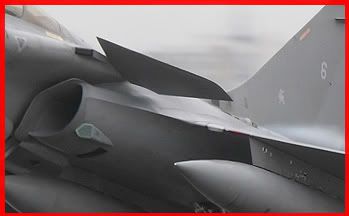
WRONG: and it’s Leading Edge Extention, DUDE.:D
No oversize tail surfaces aft of the engines,
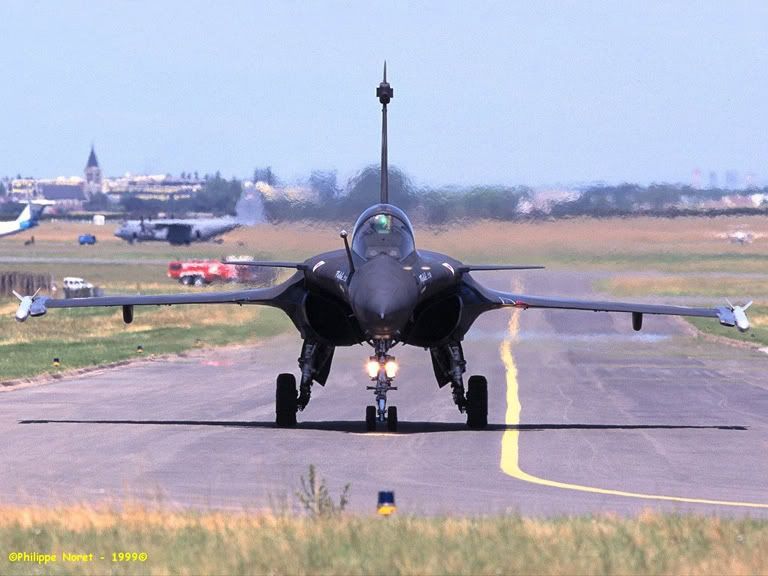
NO need for additional YAW stability when canards root vortexes does the job at up to 100* AoA.
These vortexes energises the airflow around the SINGLE fin without the structural problems known to affect EVERY single US double-fin design since F-18, INCLUDING F-35, solution being simpler and lighter at once.
no stealth.
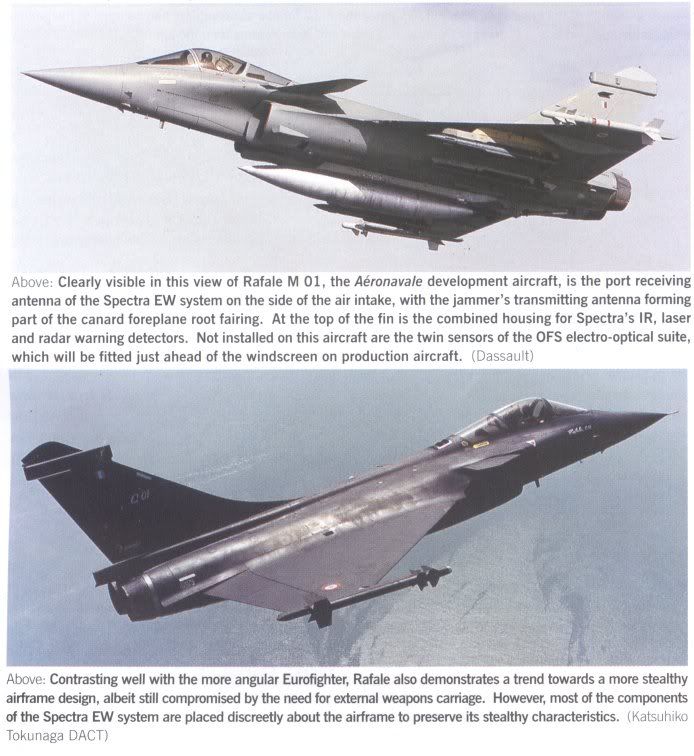
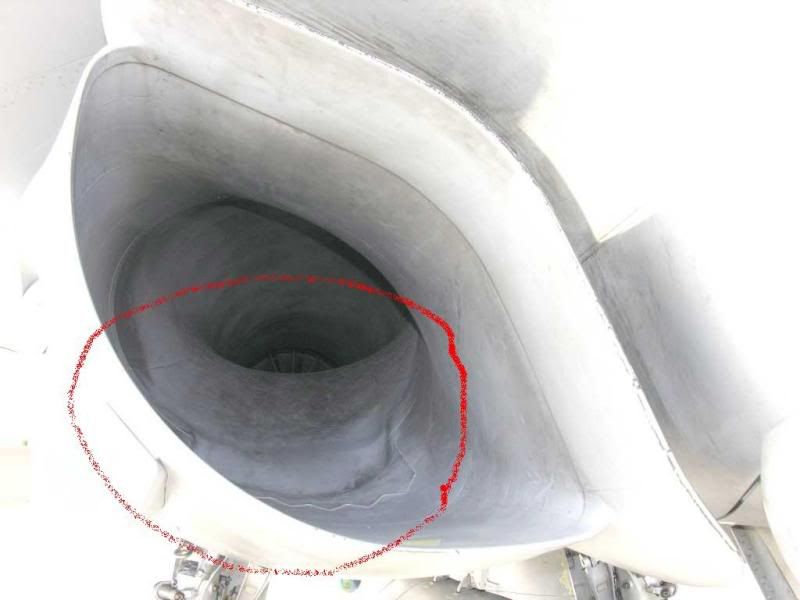

WRONG:
Kind of like a F-106 with canards.
If you meant DELTA wings YES; so does F-22 with virtualy similar leading edge sweep and of course the delta VORTEX LIFT going with it..
Oh yeah, canards and quadraplex FBW, the B-70 had movable canards placed well forward in 1964.
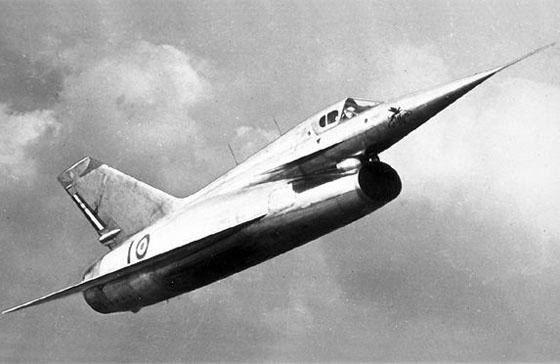
WRONG: B-70 was a STABLE aircraft with canard acting mainly as lifting surfaces such as the Grifon in 1954.
The Agile Eagle had quadraplex digital fly by wire and canards in 1988.
WOW!!!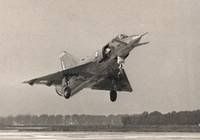
maiden flight of the Milan took place at Melun-Villaroche on May 29, 1970 with Guy Mitaux-Maurouard in the pilot seat.
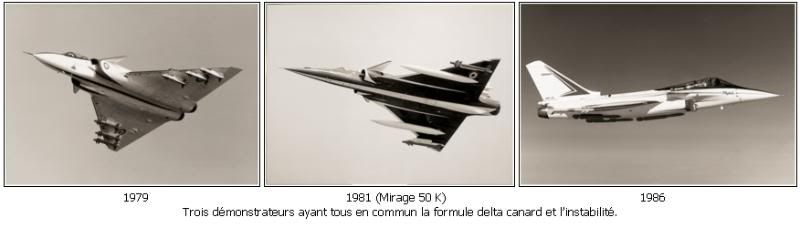
Wer’e SO impressed…
The first digital fbw system was flown by a NASA F-8 Crusader and a Sukhoi T-4 around 1972/3.

The Mirage III fighter had electrically linked flight control on the yaw axis with mechanical back-up. The same system without back-up, controlled the two inboard elevators as well. This was a single channel system on an aerodynamically stable platform.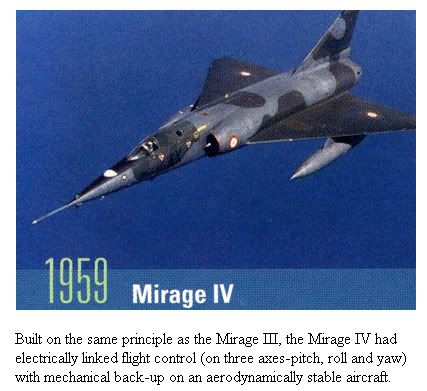

The Balzac created a unique situation in which the aircraft was aerodynamically unstable when transitioning from vertical to horizontal flight. During this phase, the orientation of the tail pipes was controlled by a three-channel fly-by-wire system.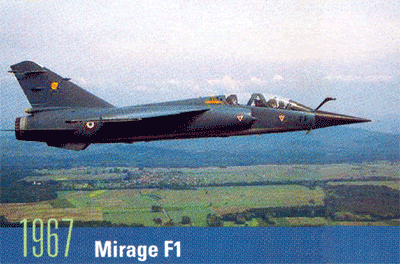
Stable aircraft with electrically linked flight controls and mechanical back-up on the pitch and yaw axes. Introduced a duplet channel to the electrical linkages with an automatic testing of safeties.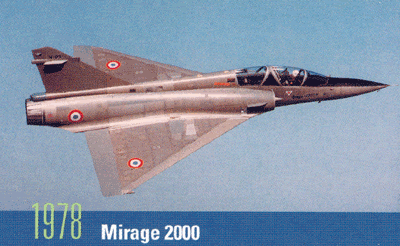
First aerodynamically unstable fighter jet with full fly-by-wire. Quadruplex system with four analog computers, full authority on three axes (pitch, roll and yaw) and no mechanical back-up. Back-up was performed by a single channel fly-by-wire system.
Falcon 20 serial number 1 was transformed into a flying test bed in order to perform tests related to establishing the rules and regulations of the airworthiness of future jets. The full fly-by-wire system allowed in-flight simulation of handling characteristics of different types of aircraft (i.e., four-engine jet, short-haul transportation aircraft, etc.).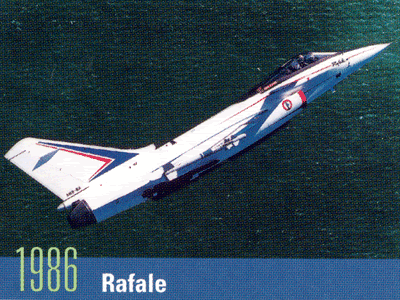
Dassault’s fly-by-wire configuration advances yet another step with the introduction of three digital computers with one analog computer as back-up. Also an aerodynamically unstable aircraft with no mechanical back-ups.
http://www.dassaultfalcon.com/whatsnew/falconer_article.jsp?DOCNUM=31233&IDOCNUM=31229
There is nothing new here. Canards are a poor substitute for LERX and a four tail configuration when it comes to maneuverability and stealth.
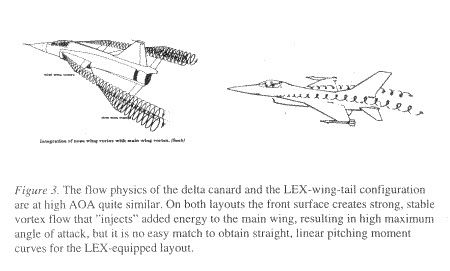
CANARDs are a LOT more than LEX.
I await your reply to this idiot.
 Here is your reply DUDE…
Now pick up your pieces and copy and go flush please.
LordAssapOriginally Posted by KKM57P
Problems
Unfavorable demonstrated 180* AAM remote targeting and with a kill to make the point…
OUI MON C..SIEUR.😀
LordAssapQuite funny for someone who says “take on the argument not on the poster” :rolleyes:
So in which way did my statement Boeing is proposing an even more advanced blk III variant contradicting to the sources you gave? NOWHERE so please spare us the usual offenses, by your lack of proper arguments.
Scorpion82 Quote:Originally Posted by LordAssap
This is what Boeing proposes instead of “MORE” F-35…Not really, that’s just the roadmap plan, much like the Rafale F3+.
DIDN’T YOU write THIS?
I’m sorry mate:
It is YOUR attitude which is to blame, as usual you tried to counterdict ME as usual you FAILED.
So now don’t go complaining.
You strongly remind me of a boy who bought hiself a Superman suite for X-Mass, opened the window and despite my request for reconsidering jumped.
Obviously he hurted himself since we were living at the second floor of this boarding school.:D
LordAssapHi, I’m searching pics of the iraqi modificated Dassault Falcon 50 armed with excocets and maybe other stuff. I’m really desperate and hope for help. THNX
GEEEEEEEEEEEEEEEEEEEEEEEEEEEEEEEEEEEZUS.
I don’t think even Dassault have these.
LordAssapAnd all these sources contradict to my statement in which way?
Ho please, spare US your usual knot-spinning “I didn’t say this”.
Reach for your painkillers.:D
Boeing Plans Sixth Generation Fighter With Block 3 Super Hornet
Jan 30, 2008
David A. Fulghum/Aerospace Daily & Defense ReportBoeing is touting an even newer version of its F/A-18E/F Super Hornet that, paired with an advanced sixth-generation fighter in the works at the company, would give customers what Boeing deems a better package of capabilities than Lockheed Martin’s combination of the F-22 Raptor and F-35 Joint Strike Fighter.
The idea is that customers could buy 4.5 generation Super Hornets (perhaps 4.75 generation with the planned extra forward stealth and extra range of Block 3 aircraft) and then switch to a new, sixth generation faster than if they bought the fifth generation Joint Strike Fighter. To be available circa 2024, the sixth generation aircraft would feature a combat radius of more than 1,000 miles and stealth against a much wider spectrum of radars.
“The [Navy] C-version of the F-35 doesn’t buy you a lot that the Super Hornet doesn’t provide,” says Bob Gower, Boeing’s vice president for F/A-18 and EA-18G programs. “Our strategy is to create a compelling reason for the services to go to the next [sixth] generation platform. How do you bridge F/A-18E/F to get us there? We want to convince customers to stay with [Super Hornet] a few years longer — by adding advanced capabilities and lowering price — so that they can get to the sixth generation faster. If you go to JSF first, it’s going to be a long time.”
Another part of Boeing’s argument is that the “Navy is comfortable with the Super Hornet against the highest [enemy] threat through 2024, with the [improved] capabilities we have in the flight plan,” Gower says. “The ability to counter the threat gets you to about the point that [Boeing’s] sixth generation is available.”
It’s part of Boeing’s counterattack on Lockheed Martin’s claim that the decreasing price of the F-22, which is now at $140 million each, will make it so attractive that Australia may reconsider its buy — already being paid for — of 24 two-seat F/A-18F Super Hornets. Until Australia’s recent change in government, a number of U.S. officials said the government was considering a second lot of 24 Super Hornets and a six-plane squadron of EA-18G Growlers.
Boeing makes the argument that a sliding in-service date for the JSF is worrying both the Australians and the U.S. military.
“The U.S. Air Force and Navy are now talking a lot more about where they need to go with sixth generation to get beyond JSF,” Gower says. “It could be unmanned, but I think you will see a combination of missions — some manned, some unmanned.”
For Boeing, the real discriminators are going to be extended range (1,000-1,500 miles), a small radar signature against low-frequency radars, expanded awareness through connections with the network, and the ability to carry a number of bombs internally.
http://www.aviationweek.com/aw/generic/story_channel.jsp?channel=defense&id=news/6THG013008.xml&headline=Boeing%20Plans%20Sixth%20Generation%20Fighter%20With%20Block%203%20Super%20Hornet
LordAssapToday…
Yeah? Well you missed a bit and then some.:D
Boeing Pitches Sixth-Generation Aircraft Strategy
January 30, 2008
It’s budget time, and Boeing must be smelling blood, because they’re going for what they think may be the most vulnerable of the Pentagon’s aircraft programs, the Lockheed Martin-built F-35 Joint Strike Fighter. Boeing says it’s got a nifty plan to offer something just short of a fifth generation aircraft– a souped-up Super Hornet — to tide everyone over till it can build a sixth-generation fighter. This would allow the Pentagon (and foreign militaries) to skip the fifth-generation F-35, which has many shortcomings, according to Boeing (the biggest apparently being that’s it not built by Boeing):
http://blog.wired.com/defense/2008/01/boeing-pitches.html
LordAssapis VLO more beneficial for A2A roles or A2G?
I would imagine that it will always be beneficial for A2A,
while for A2G roles, perhaps on the first few days of wars useful for taking out radar installations and SAMs.. but once gone.. any aircraft with a bomb can do? :confused:
Please define STEALTH.:cool:
LordAssapPerhaps your all looking at this wrong.
Consider this – Could it be the Typhoon came along at just the right time?, it is in service right now.
It has given good work and technological capability to Europe and is proving to be just the right capability required to cover the transition to newer UAV’s (6th generation?) etc, Europe has now the capability to make such craft and the reason is that they kept the technology and skills to do so with programs such as Typhoon.
If the work on UAVs keeps up to its present pace then the ‘new’ manned fighters now on the drawing board may be obsolete much faster than any previous generation.
Could it be in 2020 when the JSF is in real service its already been made redundant??.
Remember a fighter is more than just a fighter, its a total program to keep skills and technology from being eroded, and a vital key to keeping sovereignty and money in the European system.
Thats why the JSF has had $2B spent on keeping Skill/technology leaking to purchasers.
Cheers
Agreed, straight to the point and non-nonsense as often with your posts.:cool:
LordAssapNot really, that’s just the roadmap plan, much like the Rafale F3+. Boeing speaks about an even more advanced blk III variant though not much details has been released. There were talks about improved LO treatments and stronger engines.
When was the last time you read anythnig on the subject of aircrafts?
DATE:18/07/08
SOURCE:Flight International
FARNBOROUGH 2008: Superbug makes giant stridesThe Boeing F/A-18 Super Hornet on display here has become a familiar sight at the world’s air shows, invariably flying impressive displays. And the aircraft – known affectionately by its crews as the ‘Superbug’ – has been amassing an enviable reputation in service with the US fleet.
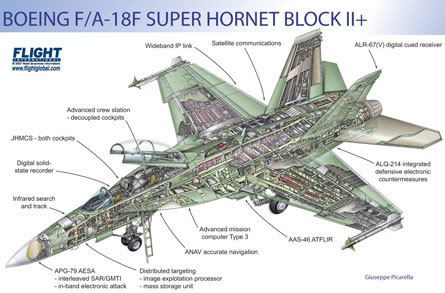
The Block II version of the aircraft incorporates improved displays, a decoupled aft cockpit and new computers, and enhanced network centric capabilities thanks to the integration of Link 16 MIDS, as well as an ATFLIR targeting pod, the joint helmet-mounted cueing system and the game changing AN/APG-79 AESA radar.
It is also much cheaper to produce, with a new forward fuselage that has 40% fewer parts, 51% fewer fasteners and which takes 31% less time to build.
APG-79 was incorporated in new build aircraft coming off the production line in 2005, but service introduction of the Block II F/A-18E/F with AESA has been delayed. The first squadron equipped with Block II aircraft achieved ‘safe for flight’ status in October 2006.
The Block II aircraft was originally expected to undertake a cruise with VFA-213 in 2007, but this was cancelled shortly after the original operational evaluation judged that it represented a “quantum leap” in air-to-air capability but at the same time reported that it was “not effective and not suitable for combat operations.”
Apart from VFA-213 (Black Lions), the Block II Super Hornet is now in service with VFA-106 (the West Coast Super Hornet training squadron) and VFA-22 (the Fighting Redcocks) received Lot 29 FA-18F Super Hornets equipped with the APG-79 in April 2007. VFA-211 and VFA-137 achieved Safe to Fly certification last week.
http://www.flightglobal.com/articles/2008/07/18/225813/farnborough-2008-superbug-makes-giant-strides.html
DATE:13/03/07
SOURCE:Flight International
Ultra Hornet
By Graham Warwick
Boeing and the US Navy are poised to expand and exploit the F/A-18E/F Super Hornet’s capability for precision engagement and battle management now the upgraded platform is matched to the latest avionics
http://www.flightglobal.com/articles/2007/03/13/212600/ultra-hornet.html
LordAssap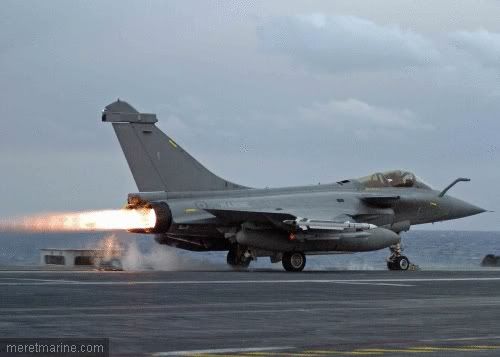
22.2 tons Buddy-Buddy refueling configuration.
Off the “ramp”, vertical acceleration (pitch-up) is 30*/sec while the kinetic energy absorbed during a trap is <> 90 tons in 10 ms.
LordAssap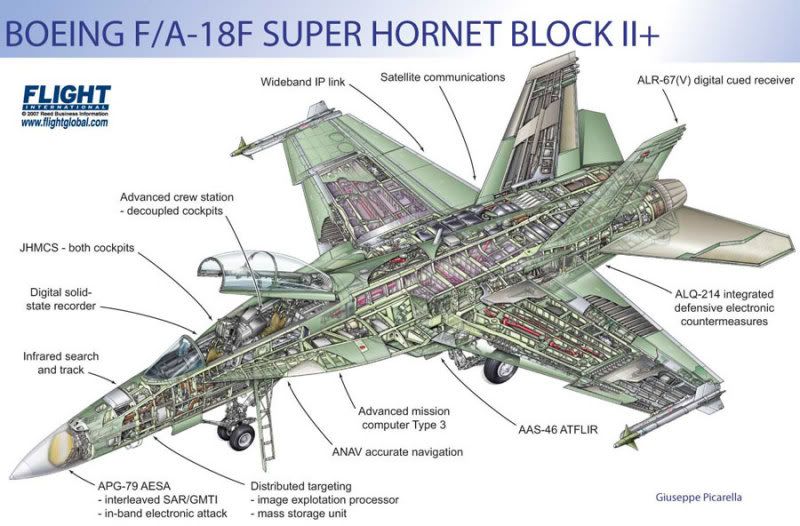
This is what Boeing proposes instead of “MORE” F-35…
LordAssapyep I understand that, but does it work perfectly for large area wings, such as Mirage 2000, from min—to–max loaded weight at low level, or does the wing loading also add, though small, a factor to low level ride?
Yes it does although obviously some more loaded aircraft have more natural tendencies to resist gust wind.
For your info 750 kt is the limit for Rafale, i forgot for the Mirage but it might not be too far off this, one thing though, the 2000 was designed as an high-altitude/high-speed interceptor not a strike aircraft.
LordAssapSo the FBS compensates for all the negative low level ride effects caused when very low wing loadings are used? So there is no difference between max/min loads at low level? I know the Tornado IDS did not suffer from this but that design was something special.
Gust wind prediction, FBS FCS allows for a faster response time from control surfaces; the sensors in front of the aircraft can actualy detect gust wind.
Works wonder with the BIG B1Bs…
LordAssap=Scorpion82;1351644]
Well the austere package was issued after all those delays, as AG capabilities of that kind were not planned to happen before T2. It is in fact T2 that will bring full multirole capabilities over the time, not T3. T3 might just improve on that.
And a structuraly beefed-up airframe too.
Well the Rafale or F-22 or virtually almost every other fighter programme of that time suffered quite similar designs.
MEANING?
Well I won’t go into that cost debate again, just pointing out that the 60 mln pound figures is way off and misunderstood.
What is not is programme COST and Typhoon cost is gone through the roof a long time ago.
But this has been explained a thousand times here and I’m not going to repeat this again.
Cause you would probably not be listened too nor believed?
So what were the alternatives?
Dassault superior design expertise.
Well the SH, while being considerabley redesigned airframe wise is not an all new design, but based on the legacy Hornet.
It IS a new design.
though the Rafale introduced many of those items as well (before some start complaining 😉 ).
You mean all of them and not only Rafale but also SAAB Gripen?
I basically see an aircraft as a whole, many tend to reduce it to single factors such as the aerodynamics only or the avionics only.
As far as reaslity goes it is aerodynamics that makes them fly, we’re not debating iron tables here and it’s the way to start comparing them in the first place unless you skip the A from ABC-Z because you dont know A, dear dear dear…
The Eurofighter combines an aerodynamically better performing airframe than the teen/teenski series, with an FCS which is second to none,
:D:D:D
Let US guess, 18 month in a hangar to sort out the bugs after roll out, still NOT totaly sorted (See the bump in transonic) i know a few aircrafts which have better FCS.:cool:
a higher degree of systems integration, automation,
Than which?
the maybe best MSA radar ever developed which is still very capable and a quite good performer,
Think RDY-2 and compare…
a somewhat unique IRST/FLIR sensor for which there is no operational equivalent in Russia or the US,
OSF.
Basically I see a quite advanced and effective combat aircraft, which is quite deadly in AA right now, but still lacks the flexibility when it comes to AG.
Certainly but nowhere near as “in front” or unique as you dare describing it.
the most important early warning/communication facilities and ADs were destroyed by special units on the ground (if possible) and more importantley CMs.
In which conflict? In GW I it was done with Apaches…
counter measures and SEAD/DEAD platforms in the theater won’t make it that easy for such an ADS.
Typhoon SEAD capabilties?:confused:
but perform better due fewer aerodynamical restrictions.
Restrictions which are known and that you dont look at too closely my friend.
LordAssapQuite right, although there has been comparisons claiming the Rafale has better low level ride. But it also depends on mission wing loading doesnt it?
This is no longer an issue since the event of FCS FBW (See Mirage 2000s).


 Sign In