 LordAssap
You forgot spaceship enterprise…
The usual low level flying is that all you got?
Please get yourself INFORMED before replying.
So in a real combat situation (NOT AN AIRSHOW ONE, THAT IS) in order to change direction when already turning on the other pulling say 7g, does it need to unload first?
I guess it does.
I gues you dont know your Yaw from you Pitch and Roll axis.
Try the airclub nearest to your home they got basic aerodynamics books for you.
The quick answer is no, as the FCS will not allow the aircraft to find itself in such condition. AFAIK, the EF has never been tested beyond 30o AoA.
The real answer is, all the above are purely airshow stands, and of negligible real life use.
The REAL answer is the resulting capability in retaining a high level of control in combat situations but you wouldn’t know about it considering you cant make the distinction between A and B and you try to talk about Z.
Just try someone your size boy, you’re waisting forum space. Bye.;)
LordAssappardon???
YEP.
READ: 5th Generation Core system architecture.
Only Mirage 2000 Mk2/9, F-22 and F-35 have the SAME architecture.
Can the Rafale perform a vector velocity roll?
It could if its FCS was programmed for the use of the rudder the way that of Typhoon is but Rafale is a LOT more stable in the YAW axis at high AoA due to the way its rudder is fed with energised airflow.
= No need to use, but obviously it need programation for the use of rudder for some figures which BTW have which relevance in Air Combat?
FACTS: Rafale doesn’t suffers from ANY of Typhoon aerodynamic shortcomings.
It have a 20kt lower minimum and approach speed a MAX AoA about 40* superior, retains CONTROL on 3 AXIS at AoA where Typhoon FCS have to take over to prevent departure and superstall etc. = KNOWN FACTS.
= Dont mess with reality coming up with airshow stunts, or i could throw something like;
Can Typhoon perform a Square dance with revesed aileron rolls?
NO it does it the easy way.
Can Typhoon be flown at passed 100* AoA and 40kt NEGATIVE speed while retaining FULL control authority?
IS TYPHON DEPARTURE AND SUPERSTALL RESISTANT? Answer is NO, Rafale IS.
CAN TYPHOON PERFORM THE HERBST MANEUVRES? NO! BUT RAFALE DOES.
GlobalPress
thx lord for getting facts and argumenting with strong datas sources
Why should i mess YOU about? I hope you enjoy the doc because its the real thing, not “I’ve been told” stuff.
LordAssapThe performance achieved was with aircraft which nver weighted 9.75 t. But to be honest think what you want ignorant chap.
because performances didn’t change at all! curious isn’t it?
[/QUOTE]
Yeah we all know they never do at least in British forums where you write.
As for other being ignorant it seems to me that only digging into Flight International archives get you all over the place.
Please spare us the jokes and wait until Rafale pilots report their VWR confrontations with Typhoon for a laugh!
LordAssap2.) Typhoon uses another method to achieve this
NO BLAH-DI-BLAH = NO 5th Generation ECMS or CORE system architecture. All your explainations doesnt change FACTS.
Bla bla. Me knows nothing and you are the one and all super duper expert on everything…
Instantaneous turn rate is the A from ABC even if i typoe from time to time.
Obviously you talk way above your knowledge base.
Fact is the available processor in the Typhoon are sufficient for the current purposes. You claim the opposite by bringing up comparisons which are completely irrelevant!
FACT is Typhoon systems are 4th Generfation, Rafale’s 5th Generation and this IS a technology GAP whatever way you try to spin it.
Not really, but even if you do it like that you can easily see that the rollrate is well above 200°/sec. There is no upper difficult science behind that.
You got bionic eyes we all know this.
The point is that you hype your super duper roll rates which are basically irrelevant. There is no reason for a 300°/sec roll rate or something like that.
Roll rates are VERY relevant as the USAF flight test pilots working for NASA who determined it was part of the most important phase of air combat; starting and stoping rolls accurately. = Then pull Gs.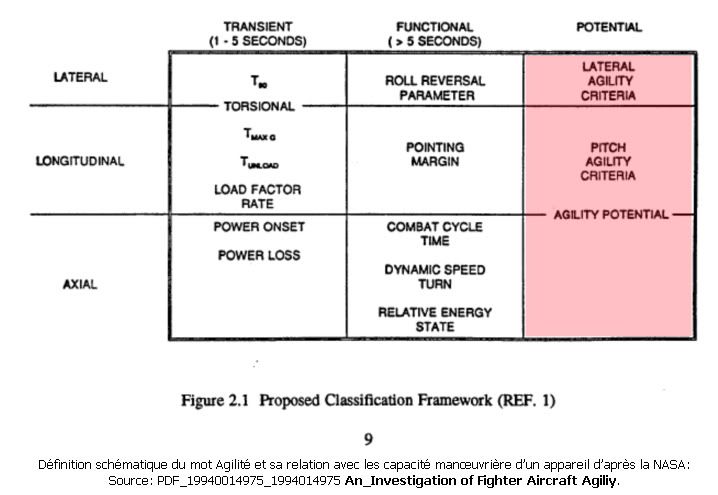
There are instant and sustained turn rates! And me is the newbie :rolleyes:
Yes this is YOU not knowing about the basis. Instantaneous and Sustained., my typ(oes) doesn’t change FACTS.
So does tell Typhoon pilots that the aircraft makes the tightest 180° turn at 200 kts or that its g-onset is 15 g/sec. Yet this doesn’t tell about every other aircraft.
Sorry mate, you’re totaly OUT of order here, G onset doesn’t MEAN anything in terms of real maneuvrability, as for turning tight at 200 kt Typhoon certainly doesn’t compare to Rafale at low speeds, and BTW even Tarnished recon Typhoon and Rafale have the SAME corner speed if this means anything to YOU; get REAL…:D
Quote me directly. You accuse me for things I have not even said, confuse me with other people and want to blame me because you have a problem with me.
I have NO problem with YOU i have problems with what YOU (and some other famous “specialists”) writes, this paranoiac thing doesn’t serve any purpose lese to make you look like a victim.
You’re NOT from the number of corrective articles i posted; you atre among the offenders for desinforming the rest of us.
These are apex strakes mr. smartass aimed to improve low speed manoeuvrability. Unlike you I can be critical, I don’t pretend to know all or that the Typhoon is superior, better… at everything. You just try to drag me in that direction to create you an enemy on which you can shed your frustration.
REALY? We guessed this one long ago, considering Typhoon offers no guaranee of departure at low speeds as opposed to Gripen/Rafale and a Max AoA about <> 40* inferior while having problems with controls in both pitch and roll at high AoA and transonic speed, this have little to do with FCS but everything to do with aerodynamics and design…
The guarantee isn’t there because the AoA sensors are not accurate enough at that speed. And 5 kts is very low:diablo: (it were 50 kts). So if you quote something quote the whole thing and don’t take out the relevant things
Realy? So Ftrench sensors are better then? LOL!
Reality STRIKE: It is because the long moment harn doesn’t provide the amount of lift, damping and dynamic instability the close-coupled canard does and this is REALY well documented by several reknowned aerodyamicists, refusing reality and inventing part of it doesn’t WORK.
:rolleyes:
LordAssapFirst mea-culpa, 290*/sec it is, beeing too confrontational doesn’t serve me that well.
Several Forum legends goes down in smoke.
1 = Rafale is more suited as a naval design as one can READ in the topic “Will the Eurofighter flop-14” because of “thousand of hours” of work.
Quote:
-Dassault spent thousands of hours on Rafale’s carrier compatability, and as a result the aircraft is inherently superior as a carrier aircraft than Typhoon.-
Correction:
This is only due to AdA requierements for STOL performances, Dassault researches on canard long moment harm and close-coupled and the advantages enjoyed by the close-coupled canard formula over the long moment harm at lower speed and higher AoA.
Design origin
-The Rafale M was conceived in 1986, after the plan to develop a carrier version of the variable Dassault Mirage G was abandoned, and the French navy opted not to buy McDonnell Douglas F-18s as an interim replacement for its ageing Vought F-8 Crusaders in service on the carriers Foch and Clemenceau.-
-In 1988, the navy requirement was merged with the French air force need for a multi-role fighter, itself the result of the decision to go ahead with a national solution instead of becoming a partner with Germany, Italy, Spain and the UK in the Eurofighter EF2000 (then the European Fighter Aircraft) programme.-
-The design for both air force and navy Rafales is derived from the original air-force requirement for an 8.5t aircraft.-
http://www.flightglobal.com/articles/1997/07/09/10543/raring-to-go.html
2 = Rafale team didn’t spend as much time on the MMI as that of the Typhoon commitee…
“Will the Eurofighter flop-14”.
Quote:
-And the EF partners spent an inordinate amount of time on the aircraft’s MMI, using a cockpit design committee whose members had direct operating experience of virtually every modern fighter, and who thrashed out the best compromise.-
“virtually every modern fighter”???
Well OBVIOUSLY NOT THE FRENCH, as Typhoon cockpit is not even improving on that of theMirage 2000 5F.
Let’s NOT forget that MMI involves ergonomics:
Concurent aircraft:
–
Tests revealed, however, that the pitch-integration rate was slower than expected, and the aircraft undergoes “roll ratcheting” during rapid roll manoeuvres. The cause is a pilot’s hand-and-arm inertia effect on the stick during rapid rolls and will be cured through adjustments to the FCS.-
DATE:16/10/96
SOURCE:Flight International
EF2000 aimed at Mach 2
http://www.flightglobal.com/articles/1996/10/16/9557/ef2000-aimed-at-mach-2.html
Rafale MMI:
-The ergonomy has been particularly worked out by engineers and the pilot has a very carefully designed interface-.
-Both the throttle and stick are mounted unusually high on the side of the cockpit, just below the canopy sills, with an adjustable wrist rest in the case of the stick. This arrangement releases more space on the side panels for switches and helps alleviate the problem of blood pooling in the pilot’s arms at high g.-
DATE:23/06/99
SOURCE:Flight International
Combat ready
Flight International puts the Rafale BO1 two-seat prototype to the test in its heavy configuration
Chris Yeo/ISTRES FLIGHT TEST CENTRE
http://www.flightglobal.com/articles/1999/06/23/53125/combat-ready.html
-With so much information at its disposal, the aircraft requires a powerful processor to combine the inputs into a simple pilot display. Rafale’s modular data processing unit (MPDU) consists of up to 18 line-replaceable modules, each of which has 50 times the processing power of the Mirage 2000-5’s XRI computer. The MPDU integrates data from the FSO, datalink, Thales RBE2 electronically scanning radar and MBDA/Thales Spectra electronic warfare system, displaying each threat or ally as a single icon on the pilot’s eye-level display.-
DATE:18/11/03
SOURCE:Flight International
Forward Roles
http://www.flightglobal.com/articles/2003/11/18/173965/forward-roles.html
Multithreading it IS!!!
MDPU (Modular Data Processing Unit)
The core system is based on a Modular Data Processing Unit (MDPU) comprising:
– mission software
– display software
– mapping software
– network software
– flight-management software
– critical flight software.
The MDPU is connected to the 1553 and 3910 databuses.
All the major systems on the Rafale are connected to the MDPU via interface units. These databuses are complemented by a point-to-point video network, linking the aircraft’s systems with the display and recording systems.Human-machine interface
-A high level of integration of all systems reduces pilot workload and, in turn, the number of control screens.-
-Particular emphasis is placed on real-time and quick access to control instruments enabling direct access to most information and controls.
The layout is now centred on the most important function in modern combat aircraft: the tactical situation.-
Source: Thales
RESULT:
Air chief Marshal Sir Glenn Torpy was impressed with the Rafale F2 performance and the intuitive cockpit layout, and greatly impressed with the sensor fusion.
http://www.raf.mod.uk/news/index.cfm?storyid=326752CD-1143-EC82-2EFB230750159FD9
Another forum legend DOWN:
Chris Yeo gives Rafale B01 empty weight at 10.000kg = PREVIOUS to “modification to the undercariage” designed to increase MTOW.
Rafale B official weight is 10.196 kg today.
Source: Echeance 2006 du programme Rafale pour les forces armees. PDF MinDef
Rafale empty weight didn’t increase with higher MTOW as we were repeatedly told and suggested.
Reasons behind the high degree of commonality and easy navalisation of Rafale:
Aerodynamics.
QUOTE:
-Close coupled canard, by definition, have a more significant effect on the canard-wing aerodynamic interaction and, consequently, the aerodynamic performance of the aircraft.-
Source: NASA Technical Memorandum 11394:
“Numerical Study of Steady and Unsteady Canard-Wing-Body Aerodynamics”
Eugene L TU Aug 1996.
Concurent aircraft:
Results of long-moment harm solution.
DATE:07/05/02
SOURCE:Flight International
Eurofighter FCS software to counteract Mach pitch-up
http://www.flightglobal.com/articles/2002/05/07/147262/eurofighter-fcs-software-to-counteract-mach-pitch-up.html-Eurofighter’s flight control system (FCS) software has been modified to counter transonic pitch-up automatically and reduce pilot workload.-
-BAE Systems Eurofighter head Ross Bradley says FCS software to be delivered at the end of this year will include the ability to maintain the aircraft’s attitude as it passes through M1. The load will also include an automated low- speed recovery capability. The latter will allow the aircraft to take over control if the speed becomes too low, perhaps during dogfighting.-
Sounds like the old Mirage III transonic pitch moment only reversed.
-Le recul du point d’application de la portance en transsonique impose un recul du manche (un braquage à cabrer des élevons, en fait) important (impressionnant !) lors de l’accélération.
En supersonique, on a donc un neutre du manche beaucoup plus en arrière, une traînée des élevons plus importante, mais surtout vers M 1.5 une possibilité de manœuvre largement diminuée parce qu’on arrive à la butée à cabrer du manche vers un truc dans le style 3 ou 4 g….”- http://garmy.org/news/index.php?page=10&limit=10
According to this Mirage III pilot; the transonic zone in this aircraft translates by a shift backward of the Cl during the acceleration.
In supersonic the neutral position of the elevons is important, and around M 1.5 maneuvring is widely reduced because of the pitch down moment:
This was limiting the aircraft to 3 or 4 g, while the more modern Typhoon’s transonic pitch-up picksbetween M 0.98 and M 0.95 at ~4g.
Source:Transonic Pitch-Up mitigation for the EF2000 PDF.
Same old thing for the Typhoon then:
-at 30,000ft (9,150m) and a speed of M1.8, Typhoon requires a 4° upward flaperon deflection to maintain level flight.-
http://www.flightglobal.com/articles/2000/05/23/66017/ej200-thrust-vectoring-backed.html
So here we go, a “Superior” design with the SAME problems than a 50 years old design but different symptoms due to the presence of canard surfaces and instability.
Typhoon so called “higher” level of instability reverses to a high level of stability in supersonic.
The “FIX” is obvious:
-The close coupled delta canard configuration’s primary feature, its stable vortex flow up to very high angles of attack, meaning high maximum lift coefficient, had lately been realized by the Americans, instead using large strakes as forward wing root extensions together with conventional tail arrangement, as found on the F-16 and F-17/18.-
http://www.mach-flyg.com/utg80/80jas_uc.html
So we know what this 98+30 Typhoon LEX modification was for now; atempting to RECOVER a degree of hysterisis.
Rafale posses BOTH close-coupled canard and LEX.
-canards INCREASES the damping-in-pitch of the configuration while REDUCING the oscillatory stability.
Source:Transonic Pitch-Up mitigation for the EF2000 PDF.
Otherwise said; close-coupled canards provides higher level of DAMPING and lower DYNAMIC stability, meaning a Gripen or Rafale will still be trimmed positively in supersonic and doesn’t suffer from such a dramatic pitch-up transition in transonic.
Adding close-coupled Canards to the Mirage III actualy had some very positive effects on low-speed handling:
Low speed and High AoA…
-The canard produces two additional vortices which combine with the vortices of the delta wing. This gives and extension of controlled airflow up to higher AoA and an unshielded fin and rudder.-
-The vortex lift starts ealier which results in reduced drag at a given lift.-
-At a given AoA. the canard configuration gives more lift and less drag than the canardless delta configuration.-
-The improved YAW stability permits higher AoA, and therefore lift and drag are approximatively doubled with the canards.-
-Overal maneuvrability at low speed is much improved. Minimum speed in 1g flight is down from 150kt to less than 107kt KAS.-
-The canards are about two-third the size of those on the IAI Kfir.-
-Up till now we had a forward and aft c.g limitation on the Mirage III. From test we know that the aft c.g limit was too optimistic and the wind-tunnel proved that the canard would move the neutral point forward by about 1-5 per cent.-
High AoA…
-Approaching AoA limits in a standard Mirage III, a minor buffeting is felt. Beyhond this limit, the buffeting increases slowly without being a real warning. With the canard fitted, no buffeting at all is felt, and the pilot has no natural warning.-
NOTE:
For those wondering what the dogtooth are for on the leading edge of the IAI KFIR, they results on turbulent airflow separation and creates this buffeting, giving the pilot the warning he needs when approaching AoA limits.
On a Rafale the leading edge slats have the same effect while energising the airflow above the wing at higher AoA.
-The canard configured Mirage III presents a great improvement in low-speed maneuvring and INSTANTANEOUS turn rate.-
DATE:14/12/85
SOURCE:Flight International
Canard Mirage on test (Archive)
By Test Pilot Walter Spychiger
Another serious source:
-The aerodynamic advantages derived from the close coupled canard configuration, foremost its good vortex flow stability up to high angles of attack (AOA), that can be translated into a very high instantaneous turn rate,-
Delta canard’s inherent good aerodynamics are:
· Stable detached leading edge vortex flow, high maximum lift coefficient.
· Positive trim lift on all lifting surfaces.
· Floating canard offers stable aircraft if EFCS fails.
· Good field performance (take off and landing), enhanced by special aerodynamic breaking mode.· Battle damage tolerance good, “overlapping” control surfaces.
· Potential for future adaptations, like steep approach, fuselage aiming.
· Low buffeting levels made even better with leading edge flaps.Spin recovery known to be acceptable for close coupled delta canard (not necessarily so for a long coupled canard configuration):
· Proven spin recovery capability for complete cg and AOR range.
· Nor risk of being trapped in a superstall, control authority exists.
http://www.mach-flyg.com/utg80/80jas_uc.html
So here you go:
· Positive trim lift on all lifting surfaces.
Think: The hysterisis effect doesn’t vanish at supersonic speed, so positive trim lift remains.
DAMPING defines the ability of an aircraft to naturaly counter parasite moments such as unwanted pitch-up at transonic speed.
Similarly, low speed characteristics are way better, which make them naturaly more suited to carrier operation.
There is NO risk of SUPERSTALL, 3-axis control remains throughout the whole flight envelop…
-Rebourg said that to date, they have not been able to depart the aircraft into a spin».
DAVID M. NORTH/ISTRES, FRANCE quoting Philippe Rebourg, «deputy chief test pilot for military aircraft at Dassault.-
SAAB designers agrees on that point, so does NASA Technical Memorandum 11394:
Eugene L TU Aug 1996.-Increasing mid-canard deflection increases overall pitching moment for all computed angles of attack. Significant nonlinearities due to the canard-wing interaction are also noted in the pitching moment curves.-
In landing configuration, the Rafale canards are automaticaly pitched-up at 30*…
-For long-coupled canard configurations, the effects on aerodynamic performance is usualy limited to the lift of the canard itself and the total pitching moment. However, the close-coupled canard has significant influence on wing performance as well.-
NASA Technical Memorandum 11394:
Eugene L TU Aug 1996.
Canard lift is only available when used in pitch control (UP).
UNDERSTAND: We’ve been told these gezzers are boyscouts who doesn’t know their buzz…
Approach speed is also naturaly lower…
-On return to Coningsby our landing speed was around 140kt ground speed.
Fuel load for our mission totalled 5,000kg (11,000lb), including an external drop tank on the aircraft’s centreline stores station, and our take-off weight was around 12.5t.-
DATE:24/04/07
SOURCE:Flight International
Eurofighter Typhoon special: Storm force training
By Craig Hoyle
http://www.flightglobal.com/articles/2007/04/24/213442/eurofighter-typhoon-special-storm-force-training.html
-With 1,410kg of fuel remaining (aircraft weight 15,900kg), the minimum speed was 120kt at 18º alpha. As noted before, the ideal approach incidence is 16º alpha and, above this incidence, the control column must be deflected aft of neutral.-
-The test configuration included three 2,000litre (530USgal) fuel tanks, two SCALP cruise missiles weighing 1,300kg (2,860lb) each and four Mica fire-and-forget air-to-air missiles.-
READ: 3400 kg and 20kt advantage to the close coupled canard although during Rafale flight-test, due to gust wing aproach speed was 132kt, it is normaly 120kt for a lighter aircraft.
-Short landing : at 120 knots the aerodynamic braking is not that efficient and Dassault test pilots advice to immediately put the main gear on the runway in order to brake quickly. The aircraft stops in less than 500m.-
-In Rafale the angle of attack is 16° but it can fly easily at 30°. Deck landings in the past were very stressful for the pilot. Now [in the Rafale] they are easy.-
Former Dassault Chief test pilot Yves Kerherve.
DATE:02/09/96
SOURCE:Flight Daily News
Yves sings the praises of Rafale
http://www.flightglobal.com/articles/1996/09/02/2445/yves-sings-the-praises-of-rafale.html
-Dassault chief test pilot Yves Kerhervé says that the Rafale’s wing design enables a “very low” carrier approach speed of 120-128kt (220-235km/h). “The aircraft is perfectly stable, whatever its configuration, with very precise control. The 16 degree approach angle is a long way from the critical 28.5 degree point, providing much better visibility and a far higher margin of safety compared to the Super Etendard and Crusader,” he says. He adds that the Rafale will provide novice pilots with “far less demanding” carrier take-offs and landings – again increasing safety.-
DATE:09/07/97
SOURCE:Flight International
Raring to go
The next millennium will herald a new age for French maritime power
http://www.flightglobal.com/articles/1997/07/09/10543/raring-to-go.html
-The 16 degree approach angle is a long way from the critical 28.5 degree point.-
He is talking about visibility not the AoA as he already said previously it can be easly flown at 30* AoA.
-Vitesse d’approche : 120 noeuds
Source: Rafale M
Flottille 12 F
Présentation
Ministere de la Defense.
http://www.defense.gouv.fr/marine/decouverte/equipements/aeronefs/rafale_m
So what does this mean for Rafale at the end of the day?
It was designed for high control authority from very low speeds at up to Mach around 1.6/1.8.
AdA requierements for STOL suited carrier Ops.
Rafale approach speed is 20kt LOWER than that of Typhoon and its landing distance WAY shorter without break chute.
It is the aircraft which demonstrated the highest AoA under full 3-axis control without TVC.
Its payload capabilties (fractional) and low speed handling are superior to all competitors.
Its INSTANTANEOUS turn rate is the highest of all aircrafts of its generation (and we dont talk TVC-nose-pointing but actual TURN RATE).
All of which without compromising on structural design it was actualy tested at 185% of its design limit before failure.
All of the Rafale models are builts to the SAME structural standard before modification for the M.
All aiframes are built to 1.9 (1.85) load factor.
A serie Rafale CAN pull up to 11g in case of emergency.
Rafale airframe is now mature and doesn’t requiers any structural modifications so we can expect the actual weights to stay at their levels.
Comparatively, concurent aircrafts have to be structuraly strengthened and get heavier to allow for a still lower level of multi-role capabilties (Multirole T2s, Gripen).
-The ability of carefree handling to control g limits precisely has allowed designers to reduce the ultimate load factor to 1.4, from the normal 1.5, resulting in a lighter aircraft. The airframe is designed for a 6,000h life.-
DATE:16/06/99
SOURCE:Flight International
Agile thinking
http://www.flightglobal.com/articles/1999/06/16/52589/agile-thinking.html
According to structural tests on Rafale this is 1000h service life lower and -0.45 load factor.
REASON?
Search for VERY HIGH TWR, VERY HIGH Sustained turn rate at M 1.6/40.000 ft Optimisation for upper regions of the flight envelop.
So everyone can LAUGH now:
Rafale design was SPOT-ON from day ONE, no need for structural strengthening and weight increase, aerodynamic patch-ups or anything of the sort.
I am curious to SEE disclosed the empty weight of the full multi-role T2 Typhoon now… :diablo:
LordAssapScorpion82
There is no twist and spin. Did I say the F-22 has no inferometry? NO! Did I say the F-22 has no ECM? YES! Doesn’t matter for that topic anyway.
Interferometry allows for ANY emitor to do ECMS, THIS is your SPIN and TWIST revisited.
I have done so above, if you cna’t read it’s your problem not mine.
Your problem is you DONT know Rafale and knows Typhoon too little too.
In the Rafale you have one computer (with 18 processor boards by the way) which takes over most of the tasks. In the Typhoon you many more dedicated computers.
Funny you can pretend to know about it when any PC goof would understand what multithreading is about = YOU GOT IT ALL WRONG AGAIN.
While in the Rafale the superior processing power of a single computer is used for many purposes, in the Typhoon you have multiple dedicated processors.
READ my response again, even a dual Pentium II would do it.
The single computers in the Typhoon are slower, but as there are many of them the processing power for individual tasks is not necessarily lower in sum.
And TWIST and SPIN.
As said the modular approach is better and I hope it will be adopted for the Typhoon in the future.
At this rate i doubt so very much.
Why should I, you made the claim so you have to prove it not me.
Because you’re the predending Typhoon specialist with the webpage and all.
I know some other ones:
Would Eurofighter development phase director Martin Friemer be GOOD ENOUGH for you?
-Eurofighter designers wanted as much instability as possible, for minimum drag and maximum agility. “We aimed for 15% early on, but settled for 8%,” says Friemer.-
DATE:16/06/99
SOURCE:Flight International
Agile thinking
http://www.flightglobal.com/articles/1999/06/16/52589/agile-thinking.html
When, in which aircraft, with which FCS revision? In this case a simple look at an airshow video unveils you that the roll rate is more than 200°/sec. 240-250°/sec is the least the aircraft can reach and that is sufficient.
LOL I’m sure you look at the vids with a chrono in hand.
Infortunatly this is NOT the only control problem encountered by Typhoon.
And HO, the higly suspiscious “When it is not superior it wasn’t disclosed thing”…
LOL all you want, Typhoon roll rate WAS disclosed and IS 200*/sec and in view of the commercial noise made by eurofighter i se eno rerason for its roll rate to be classified.
Rafale roll rate IS 270* like that of the Mirage 2000.
There is MORE to it than roll rate only:
SOME MORE ON Typhoon “SUPERIOR” HANDLING:
Tests revealed, however, that the pitch-integration rate was slower than expected, and the aircraft undergoes “roll ratcheting” during rapid roll manoeuvres. The cause is a pilot’s hand-and-arm inertia effect on the stick during rapid rolls and will be cured through adjustments to the FCS.
DATE:16/10/96
SOURCE:Flight International
EF2000 aimed at Mach 2
10 years LATER:
13-07-2006 The Danish testpilot PEL fly the Eurofighter
During the debriefing PEL said the jet wouldn’t stop rolls when he asked for it to do so.
“EADS pilots know about this problem and have learned to compensate for it so they don’t think about it too much.” Here a couple of ‘foreign eyes’ can assist them in the development of the jet.
http://forsvaret.dk/FTK/Nyt+og+Presse/Nyhedsarkiv/nyheder/2006/Dansk+pilot+tester+et+af+fremtidens+kampfly.htm
As for what realy makes an aircraft a winner in a turning fight…
Rafales typical roll rate is 270°/sec, while the max is 290°/sec and that is the best performance. Different conditions are another topic.
270*/sec is the French/Dassault standard AdA MN doesnt consider more */sec useful for their average squadron pilots, you got some more to learn.
Simultaneous turn performance? I doubt I will find anything in any book :-p.
Realy So according to YOU there is only sustained turn rates which are as a matter of FACT resultant of the Simultaneous turn rate and SUSTAINED thanks to thrust (vs drag).
I knew you were a newbie.
If Dassault doesn’t give any data, no problem. My problem is that you claim something you can not backup.
Neither CAN you with all your superioricist claims you still cant tell which one will out turn the other in a sustained turn, but I can tell YOU that everyone who flew Rafale told that its INSTANTANEOUS turn rate is WAY superior to anything they flew before. = Close coupled canard.
Quote:
Now: Rafale was optimised for speeds of M 0.9 to M 1.6 Typhoon for higher Machs; at M 0.9 to 1.5 i’d have a Rafale ANY time because 90% of all engagements takes place at these speeds and their corner speed is IDENTICAL.
Lol.
I hope you will do your home work before writing about Rafale in your site because apparently you missed the whole developement story.
Ah yes and the Typhoon is such a crappy aircraft that it can’t terminate roll moment with precision. It must be such a crappy aircraft and all those guys at BAE or EADS are complete idiots which have no idea what they are doing…
They know way better than you about what you write but still can get a few thing wrong.
A wonder that the Typhoon flys at all its such a bad, useless crappy design and inferior at everything to everything ever created
Well they still didnt sort its aerodynamic did they?
Trying to patch them up with add-on LEX says it all, integration of the main wing to the canards have its known advantages and one is damping.
EADS published a very informative PDF on Typhon Supersonic Pitch-up mitigation due no doubt to the lack of damping, it also contains some very good stuff on low speed recovery characteristics saying that at <> 5kt there were NO guarantees of preventing departure, which is precisely what Rafale pilots werent caapable of getting it to do.
Depart or/and enter a STALL, so Blah-Di-Blub here you go to your local airclub mate!
__________________
The pure imagination of some people, makes them look like living in another dimension which for some is and will always remain two-dimentional… 😀
For your education what makes an aircraft maneuvrable to the point of usefulness in Air combat:
LordAssapWhich document says only these aircraft feature interferometry? BTW the F-22 does not even have ECM!
Are you doing it in purpose or are you realy blind?
F-22 active systems uses interferometry and therefore are useable as ECMS.
Enough of your usual twist and spin exercise please!
The technologies mentioned are not all related to MMI and where just an example that there are also technologies/capabilities in the Typhoon which can’t be found on the Rafale. It’s the same the other way round.
Sorry WRONG again, they ARE and tell me WHAT Typhoon posseses that Rafale doesn’t please a laser designation pod?
Just like AGP 1 and 8 are different graphic buses, data transfert and computing power are directly related to DATA FUSION as well as the ease and transfert/volume SPEED at which these datas are processed and then presented to the pilot = MMI.
Source data?
Of your Eyesight specialist? You tell US. 😀
Based on the fact that Rafales rollrate has been reported with 290°/sec, while for Eurofighter nothing has been disclosed except >200°/sec? Lol
Based on a Danish pilot REPORT saying it WAS 200* and IMPRECISE enough to make him miss his F-16.
Bliblablub what is the sustained and max g of the Rafale at ~mach 1.6 at 40k ft+?
[/QUOTE]
Mister Scorpion: When one canot READ the difference between Simultaneous and Sustained one get himself a good aerodynamic book and LEARN.
As for the figures you’re expecting us to give to you, they should have been given by Dassault if they had been made available to public, all you got is that of the underpowered and STEALTHIER Rafale C01 with early M-88-E1 and more discreet air intakes.
Now: Rafale was optimised for speeds of M 0.9 to M 1.6 Typhoon for higher Machs; at M 0.9 to 1.5 i’d have a Rafale ANY time because 90% of all engagements takes place at these speeds and their corner speed is IDENTICAL.
The difference IS a Rafale cant DEPART and doesn’t NEED its FCS to take over control to the pilot to prevent a superstall at lower speeds.
Apparently you’re not up to comprehend the conceipt of transcient maneuvrability as defind by DRYDEN and the USAF either, just a hint, before pulling Gs aircrafts have to bank, to bank they have to initiate and terminate a roll moment with precision IF possible at all. :diablo:
My tip: TRY Dryden and SAAB aerodynamicists they know what they’re talking about.
LordAssapAbout OSF:
What people should have been aware of since 1999 or at least 2003 had they done their homework.
DATE:09/06/99
SOURCE:Flight International
Seeker gets on track
http://www.flightglobal.com/articles/1999/06/09/51953/seeker-gets-on-track.html
-Thomson Optronique is responsible for overall integration and for the TV and laser ranging elements of the FSO, Sagem the infrared component. The signals from both devices are fed to a dedicated computer mounted directly below the scanners, between the radar and its processor.-
-The FSO is slaved to the aircraft sensor system and can work either as a standalone sensor or in conjunction with any other sensor such as the radar, Spectra self-defence system, or missile seeker.-
-It scans at the same angular speed and looks at the same area of sky or ground, according to the search/track mode set by the pilot. Interception, for example, requires a wide sweep, to look for targets, while combat sweeps involve smaller angles (the figures are classified).-
-The infrared scanner works in the 3-5mn and 8-12mn bands, providing a 3-5mn capability for the first time in the west, says Thomson Optronique commercial director Jean-Claude Vergnères. This wavelength provides “considerably better detection capability in humid conditions”, he adds.-
-The TV provides tracking, identification and three-dimensional acquisition for weapons lock-on (using the laser ranging function). It has a narrow field-of-view of less than 1¼, for precision and high resolution (and therefore target identification) at long range.-
-Thomson Optronique declines to give exact performance details of the FSO, but it is understood that at 20,000ft, for example, in air-to-air mode, the system will have an infrared detection capability of around 130knm, while laser ranging is possible out to about 33km, and the TV is capable of looking out to 45km.-
DATE:18/11/03
SOURCE:Flight International
Forward roles
http://www.flightglobal.com/articles/2003/11/18/173965/forward-roles.html
-The F2 includes the Thales front sector optronics (FSO) forward- looking sensor system, which includes a 60û cone of TV coverage and 180û frontal coverage using IR.-
This means that the camera (obviously) is equiped with a ZOOM and that its WIDE ANGLE FoV is 60*.
Some other interesting archives…
DATE:09/06/99
SOURCE:Flight International
http://www.flightglobal.com/articles/1997/07/09/10543/raring-to-go.html
Marine Rafale
-The Rafale M’s greater weight and the limited capability of the Charles de Gaulle catapult will leave it with less range than its air force equivalent, at around 1,850km radius of action in the air-to-air role or 1,300km in “hi-lo-lo-hi” missions. Aboard the carrier, a fully loaded aircraft will be catapulted off the deck weighing 19.5t against 21.5t for the land-based aircraft.-
Record de masse au catapultage battu sur le porte-avions Charles de Gaulle
21/06/2007
-Lors de la campagne CGD 07, le porte-avions Charles de Gaulle a catapulté un Rafale dont le poids atteignait 22.2 tonnes, soit l’avion le plus lourd jamais lancé par le bâtiment. Décollant pour la première fois en pleine post-combustion, l’appareil expérimentait une configuration de ravitaillement en vol, avec quatre bidons de 2000 litres sous les ailes, soit 10 tonnes de carburant.-
So it seems that the Dassault team have managed to increase the maximum launch weight of Rafale M from (1999) 19.5t to 22.2t in 2007.
This is 1.5t higher than the 1999 landbased C/Bversions.
For comparison, BAe gives Typhon MAX TOW for 23.500Kg (51.809lb) for a landbased aircraft with little or no navalisation capabilties.
NOTE: There is a poster in this forum who consistantly tries to rewrite history claiming that Rafale was primarily designed as a naval aircraft.
This is FALSE and part of a desinformation campain which have been lasting for YEARS:
The aircraft structure was designed to be easly upgradable to naval structural standards with a high degree of commonality between all models, including full anti-corrosion treatment.
For this purpose, Dassault designers chosed to give the a higher structural standard than the international norm for ALL versions. 1.9 vs 1.6.
The aircraft airframes are guaranteed for 9G + 90% for the whole duration of their service life.
The aerodynamic solutions answers an AdA ACX requierement for a short T-O-L Air superiority fighter, as was the case for the SAAB Gripen.
They were tested with earlier Dassault designs including Mirage III Asterix and Milans (Long moment harm first flight Melun-Villaroche Septembre 27, 1968 Mirage 5J n°2) and IIIS (Close coupled canards).
One major gain with close coupled canards (as demonstrated during the Mirage IIIS flight-tests) was the reduction from 150kt to 107Kt minimum speed at 1G.
Source: Flight International, 14 December 1985. CANARD MIRAGE ON TEST.
A Rafale at MAX TOW can turn a 360* ROLL at 100Kt.
An increase of up to 25% of vortex lift was also observed, as well as increased DAMPING and Dynamic instability, allowing for a reduction of supersonic trim drag.
This increase in DYNAMIC instability due to the effect of the canard integration means that at supersonic speed the aircraft cL shifts is more limited that is the case for Typhoon for example.
This is only possible with fully integrated (or close coupled) canards configuration, NOT with the long moment harm canard configuration.
The so-called “Superior” instability of the Typhoon is also a forum legend, at 8% it is merely superior to that of F-16.
However,at 30,000ft (9,150m) and a speed of M1.8, due to the lack of DYNAMIC instability resulting in the use of the long moment harm, Typhoon requires a 4° upward flaperon deflection to maintain level flight.
DATE:23/05/00
SOURCE:Flight International
EJ200 thrust vectoring backed
http://www.flightglobal.com/articles/2000/05/23/66017/ej200-thrust-vectoring-backed.html
In the case of an integrated canard solution, DYNAMIC instability REMAINS in supersonic, allowing lower trim drag and lower degree of stability to be maintained.
This was further validated with Mirage 4000, IIING, Rafale A, and optimised for higher degree of canard/wing integration with the final design.
So you guys CAN happily believe in Typhoon vaulted “Superior” supersonic agility, FACT remains:
-Rafale roll rate is consistantly 90*/sec HIGHER.-
-Typhoon instantaneous turn rate and supersonic drag ratio nowhere better than that of a Rafale.-
-Their corner speeds are exacly the SAME..
READ:
DATE:09/06/99
SOURCE:Flight International
http://www.flightglobal.com/articles/1997/07/09/10543/raring-to-go.html
Marine Rafale
-In technical terms, the Rafale M is basically identical to the air force version, changes having been kept to a minimum to reduce costs. The main compromise resulting from this is the lack of a folding wing, which although reducing complexity – and associated weight – means stowage above and below decks will be less easy.-
DATE:09/07/97
SOURCE:Flight International
http://www.flightglobal.com/articles/1997/07/09/10543/raring-to-go.html
Raring to go
The next millennium will herald a new age for French maritime power
Design origin
-The design for both air force and navy Rafales is derived from the original air-force requirement for an 8.5t aircraft. This also fitted navy needs, with the result that the two aircraft are virtually identical in structural, avionics and propulsion terms, the main compromise being the lack of a folding wing for carrier use. “This means we will have to be careful about stowage on the carrier,” says Roche, “but it also gives us an advantage in terms of weight and complexity and hence maintenance.”-
-The most visible difference between the two aircraft is the longer, stronger, nose landing gear of the navy version. To this is attached another first for the French navy – a US-style nosegear-mounted catapult hook, replacing the rear-fuselage-mounted “bridle” on previous carrier aircraft. This will enable the aircraft to be aligned and correctly tensioned ready for catapulting without requiring men to operate under the aircraft – improving safety and reducing the launch cycle. The gear also carries an infra-red alignment device, coupled with the inertial-landing system to assist carrier touchdowns.-
-Other structural changes include a strengthened main landing gear, reinforcement under the main fuselage and a tail hook. The changes necessary for the Rafale M, says Roche, have resulted in a weight difference of just 500kg between the two versions – slightly below the original specification of 600kg.-
-The entire structure of both versions is given full anti-corrosion treatment, as is the Snecma M88 powerplant. “We decided early on to do the same for the air force and navy aircraft,” says Roche. “It is easier in production terms and will ensure that air force aircraft have the best protection available from the beginning of their service life,” he adds.-
POINTS:
-The design for both air force and navy Rafales is derived from the original air-force requirement for an 8.5t aircraft.-
-The most visible difference between the two aircraft is the longer, stronger nose landing gear of the navy aircraft, which gives the marine version its characteristic nose-up attitude on the ground.-
-Other structural changes include a strengthened main landing gear, reinforcement under the main fuselage and a tail hook. The result is a weight difference of just 500kg between the two versions – slightly below the original 600kg.-
Hope you enjoyed the informations we needed a fresh start after all this spinning qand twistings didnt we???
LordAssapScorpion82
True, but does it mean the avionics are less good integrated or less good interacting with each other? NO! The modular architecture mainly provides the advantage of being easier to upgrade and it might save some cost in terms of operating costs.
So according to YOU, a 4th generation core avionic system offers the same advantages as that of the F-22/F-35 etc. Good going.
Don’t know if its ECM uses interferometry or not, has it been explicitely stated anywhere that there is no interferometry? Or is it just that you haven’t heared/read about it so you assume it’s not present?
If it was the case, the rest of the world would know and YES you keep ignoring other posters documents, only F-22/F-35/Mirage 2000 Mk2/9 and Rafale are equiped with interferometric ECMS.
The other way round where are TRD, DVI in the Rafale for example? Are all checklists in an complete electronic format availabe? Is there a helmet with display including FLIR/NVE imagery etc.?
More TWIST and SPIN? We all KNOW that there is NOTHING to validate claims of better MMI or anything else in Typhoon advantage but pure earsays and “I’ve been told” stories actualy counterdicted by some SENIOR RAF officers and BAe test-pilots in very officials ways.
BTW I know that DVI and a helmet has been tested for the Rafale, but where rejected on cost grounds. Yet you can also find technologies/capabilities on operational Typhoons, which you can’t find on the Rafale. As said both aircraft have their stronger and weaker points.
It doesnt make of Typhoon core system architecture that of a 5th generation fighter. This IS a technology GAP, happy or NOT. Period.
__________________
The pure imagination of some people, makes them look like living in another dimension in a state of reality denial beam-in-the-eye!!!
LordAssap=H_K;1312805]IIRC, the CFTs flown on the Rafale B were aerodynamic mock-ups, not functional CFTs with plumbing & all. That’s why I said the CFTs have been “partially tested”: we know that the CFTs’ aerodynamics are OK, but we don’t know for sure whether Dassault finished redesigning the FCS software to accomodate changes in the center of gravity etc.
Sorry mate i will take the GIE word against yours ANY time, and THEY say ready for production and one do NOT reach production-ready stage with mock-ups, GIE isn’t Eurofighter, and as YOU say; YOU dont know.:D
Yes, the M-88 ECO programme has been completed, but it’s focus was on reducing fuel consumption.
AGAIN inacuracy: SNECMA stament says it clearly.
ECO WAS TESTED AT 90kn to validate the conceipt in view of future versions of Rafale as well, the goal wasn’t single but dual.
QUOTE:
This program alkso checked out the feasability of increasinf M88 engine thrust to about 20.000lb.
ECO will guarantee the competitiveness of all evolved version of the Rafale fighter including both maximum take off weight (MTOW) for higher payload capacity and performances throughout the entire flight envelop.
ONE COULDNT BE CLEARER.
I’d be SO PLEASED to see YOU posting infos as they were published by the manufacturers, please read and understand the official staments before posting your own version and trying to make it that of the programs.
Thanks in advance.
LordAssapThe combination of Eurofighter Tranch1 Block5 + Lightening III pod has already had such capability right now. As for Rafale, it seems that it won’t get such capability formally until 2009 or 2010.
AdA have this capability by the bucket, this is NO valid argument, integration of AASM and other weapon WAS AdA priotity, NOT Damocles.
Rafale was already cleared for LGBs as early as 2002.
Well the range/payload issue is indeed true and I never said the opposite, though my chosen words were maybe a bit unlucky.
I’m sorry to say; like much of what is writen about Typhoon or Rafale these days…
Technology wise the Typhoon T2 is not inferior to the F3 standard Rafale at all. There are strong and weak points for both aircraft.
Sorry, does Typhoon posseses a 5th generation core system architecture comparible to that of F-22 or F-35?
As far as the rest of the world knows the answer is NO.
It doesn’t fare much better than the latest model of 5F and certainly less than the 2000 Mk2/9 or Rafale and its ECMs doesnt use interferometry.
This IS a technology gap like it or not.
LordAssapArthuro,
I am not a Typhoon fanboy. I’m a professional defence and aviation writer
Desinformation comes to mind…:dev2:
and instead concentrated on improving the very solid single seat MMI developed for advanced versions of the Miraqe 2000. Result? EF has a better MMI.
Aren’t WE rewriting history for convenbience here?
It is exactly the opposite WAY around and Rafale MMI was developed from scratch, with the Mirage M2/9 systems developed FROM that of Rafale in a simplified form.
The new MDPU developed by Thales was fited to the UAE 2000/9 but specificaly developed in the frame of the Rafale programme, this together with the rest of Rafale systems and sensor fusion.
There is NOTHING in common between the Rafale and the previous generation of Mirage 2000 to the exeption of the 5F MDPU used on the F1 version (Actualy 3 of themwhich BTW were there ONLY as a stop-gap measure to sdatisfy the Marine Nationale need for the urgent replacementr of its F8FNs.
The core of the enhanced capabilities of the RAFALE lies in a new Modular Data Processing Unit (MDPU). It is composed of up to 18 flight line-replaceable modules, each with a processing power 50 times higher than that of the 2084 XRI type computer fitted on the early versions of Mirage 2000-5.
http://www.dassault-aviation.com/en/defense/rafale/computing-power.html?L=1
As a matter of FACT: Only FOUR aircrafts in the west share the same core system architecture, the Rafale F2, the Mirage 2000 mk2/9, the F-22, the F-35.
This makes of the 2000/9 and Rafale 5th generation systems carriers, not Typhoon case unless you can prove otherwise.
Please tell it as it is,m french posters are NOT stupid.
2)and in claiming that Rafale has “systematically won against the F-15 and the Eurofighter Typhoon” he is not being truthful or accurate.
And as usual YOU are the one in the know and can prove you point otherwise than with the “I’ve been told” story…
3) The Dutch CPB evaluation was a paper exercise, with no access to the aircraft, and with no meaningful evaluation of capability. It was primarily an economic/industrial evaluation.
Still Rafale finished 3 points of F-35 ad trashed Typhon as in every single competition they were pited vs each other.
LordAssapNicolas10 “Well, saying the FOV was 60° surely isn’t the reason they asked that poster to be banned”
Ca et le reste…
As usual the ones who insisted for the ban are those who doesn’t like to be counterdicted and are proven wrong with time, but this is a known patern, isn’t it mate?
Scorpion82
“You just don’t get the point”
There is NO point to make or get, and BTW, did YOU write this?
Scorpion82″The weapons apart I can’t see any advantages for the F3 Rafale”.
I’m curious to see a Typhoon carrying two Scalp or Storm shadow with a 1000nm+ range any tranche, any time.
Capabilties; expressed in terms of fraction (Fuel, playload) are nowhere near to be equal for any tranche of Typhon and that’s design for you; Scorpion82.
It is certainly not a question of weapon…
Something else all external tanks including the 2000l are cleared for M 1.6.
H K
“Conformal Fuel Tanks (testing partially completed)”.
They were fully tested and developed as well as ready for production for export customers, please read GIE own documentation of the time…
“Higher thrust engine (testing partially completed – M-88 ECO)”
See DGA/SNECMA stament, ECO was fully tested years ago and the programme is now well completed, some are simply missing a few years of information here.
LordAssapDGA awards M88 TCO contract to Snecma
The French defense agency DGA (Délégation Générale pour l’Armement) announced on January 2008 that it was awarding to Snecma the “TCO Pack” (Total Cost of Ownership) contract for the M88-2 engine which power Rafale multirole fig (designated “Pack CGP” in French). The TCO Pack contract will support the development and production of upgrades to M88-2 engine parts, an order for 16 engines and spare parts with long lead times, and the associated repair services.
Upgrades are planned to the high-pressure compressor and high-pressure turbine, and are derived from various technologies tested during the ECO exploratory development program.
Qualification of these modifications and delivery of the first production engine to the TCO Pack standard are scheduled for 2011.
For more information, download the M88 pack CGP factsheet:
http://www.snecma.com/spip.php?article719&var_recherche=M88&lang=en
http://www.snecma.com/IMG/pdf/Fact_sheet_Snecma_M88_pack_CGP_VA_OK.pdf
Enjoy.
LordAssapBTW for those VERY informed frenchies who were bashing up anotherone to get him banned in another forum, pretending they knew better about the OSF Camera, its PoV is actual 60*.
Thats makes this now banned guy R.I.G.H.T.
Please DO your homework…
The problem is that the Tranche 2 has limited abilities versus a Rafale F3.
Not necessarily: The problem is that the Tranche 2 has limited abilities versus a Rafale F3.
Not necessarily
Sorry mate, Typhoon whatever tranche A2G capabilties are WAY lower by design, payload, range, etc.
Please, skip the funny little atempts to prove otherwise you just CANT.


 Sign In







