A photo I found on the internet

Extreme enlargement of a part of a photo of the NELSAM Mystere:

Text as follows
1. BRISER LA GLACE
2. S’ECARTER ET APPUIER
SUR LE BOUTON
In the Danger Triangle I can’t quite read the text, except DANGER on three sides on white. In the middle red part probably something like SIEGE EJECTABLE.
What a bizarre incident and it really puzzles me why there was no immediate assistance from firefighters and other rescue services. Also the fact that spectators obviously had direct access to the operational area really amazes me. In the past I’ve been involved myself in organizing and designing a few airshows and safety measures always came up as priority number one! I’m glad that it seems that nobody got hurt extremely seriously and hope that this beautiful Spitfire is not beyond repair.
Flying Legends 2012
HJ711 at Elvington 2012

Another picture of Cessna O-2A N590D taken at the Oostwold Airshow in the Netherlands last Monday.

Thank you Alan; yes they do land it on water regularly. Only they try to avoid using the wingtip floats as much as possible to prevent unnecessary wear on the mechanisms.
The underside panel mentioned above, is also clearly visible in this photo, which I took at the Texel Airshow in the Netherlands in 2007.

This thread is getting more interesting all the time!! Good stuff ……
I look forward to seeing RR232 in its new colours and the “Shark” Mustang at the Oostwold (NL) Airshow next Monday.
For story and photographs https://theaviationist.com/2017/05/27/sea-vixen-does-wheels-up-emergency-landing-at-duxford/
The crew of the ill-fated BOAC Flight 777 flown with DC-3 G-AGBB (ex PH-ALI) on 1 June 1943 consisted of captain Q. Tepas, co-pilot D. de Koning, flight engineer E. Rozevink and radio operator C. van Brugge.
Cornelis (“Kees”) van Brugge was wellknown as a member of the crew of Douglas DC-2 PH-AJU “Uiver”, which participated in the 1934 London – Melbourne Air Race. This aircraft was the winner in the handicap section in this race.
Flight cover in my possession carried by the PH-AJU in the London – Melbourne Air Race 1934
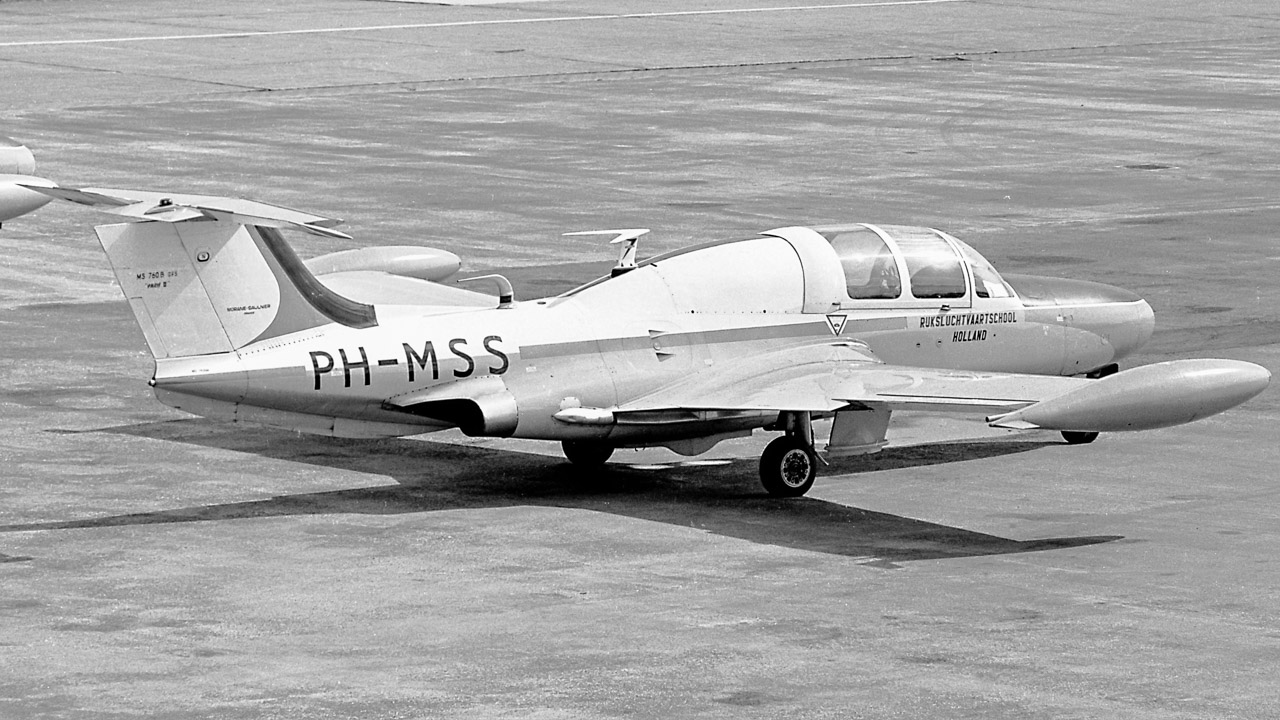
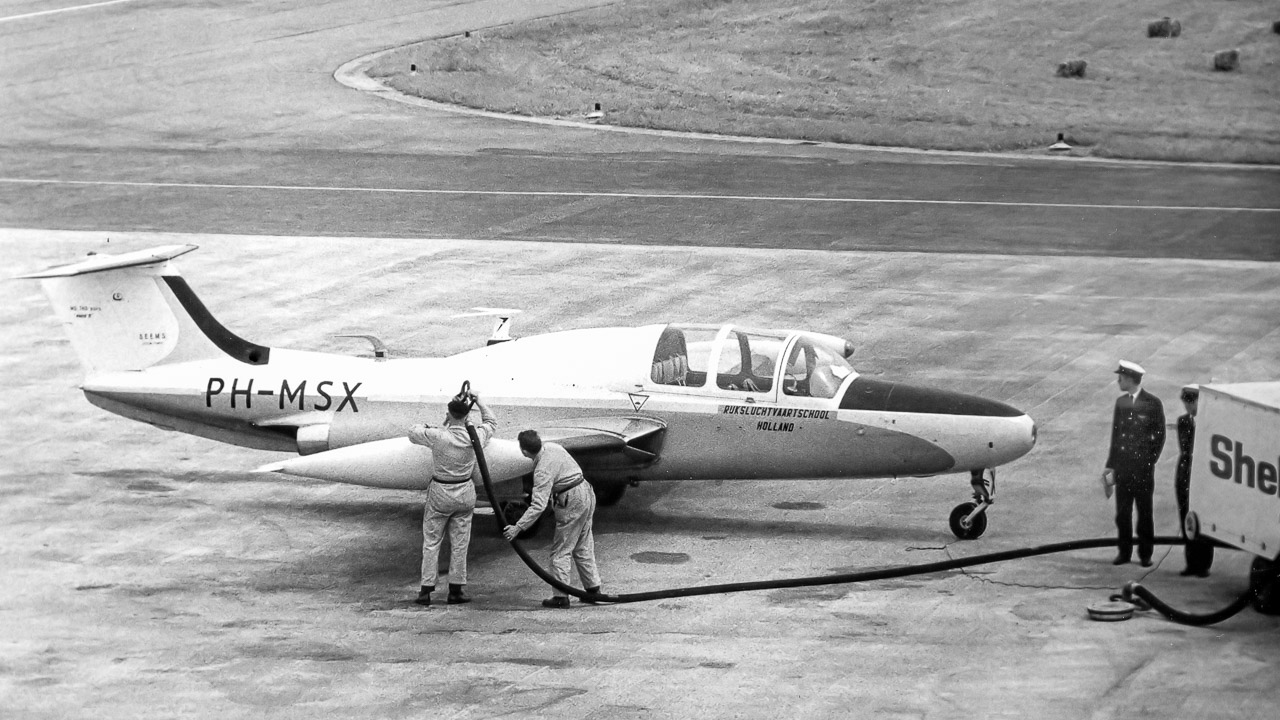
Although a very nice looking aircraft, the Potez Heinkel CM-191 was dropped by the French authorities in favour of the Morane Saulnier MS.760 Paris.
The Rijksluchtvaartschool in the Netherlands, which much later became the KLM Flight Academy at Groningen Airport Eelde (EHGG), acquired 7 examples of this aircraft (MS.760B Paris II) in 1962 to offer jet experience to its trainee’s.
In my initial air traffic controller training in 1965, I’ve made 7 flights in those beautiful machines.
1965 Groningen Airport Eelde (EHGG)
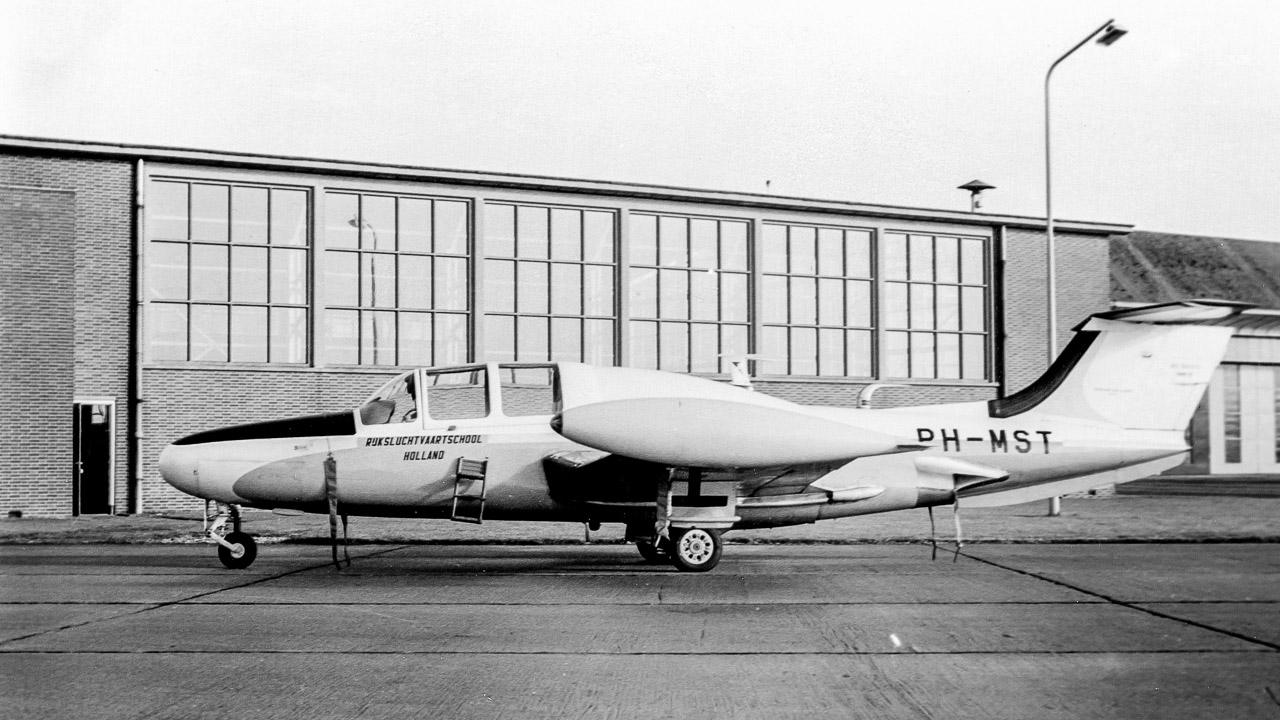
1968 Beek Airport (EHBK) in the Netherlands (nowadays called Maastricht-Aachen Airport)


KLM became the first overseas operator of the DC-3 with the PH-ALI “Ibis” delivered in 1936. During WWII this aircraft was operated for BOAC with a Dutch crew under the registration G-AGBB. After having been attacked by Luftwaffe aircraft twice before, the aircraft was shot down June 1st 1943 over the Gulf of Biscay by a Junkers 88. Eventually all occupants were killed.
See https://www.dc3dakotahunter.com/blog/tragic-final-flight-of-the-dakota-dc-3-ibis-boac-flight-777-1-june-1943/
It will be nice to have a Trislander at Duxford.
Below a few pictures of the prototype Trislander G-ATWU, taken at Bembridge in September 1970.


Ex G-AMCA, KN487 at the Aviodrome Lelystad Airport in the Netherlands (2007) in 1939/40 KLM wartime livery representing PH-ALR “Reiger” (Heron).
For the past 5 years this aircraft has been in use in RAF camouflage livery as a prop in the musical “Soldaat van Oranje” (Soldier of Orange) in a converted hangar at the former Valkenburg airbase.