Right I think that’s it, I’ve gone through the process I use for the ILS and I’ve explained every part of it
One of the most important things here is actually understanding what is happening, the ILS consists of a Localiser which basically is your runway centreline, but not always, this can be offset like the approach into Innsbruck rwy26, and your glideslope which is typically your descent path down the ILS, a normal glideslope will be a 3 degree approach angle, to obtain your 3 degrees and remain on it a simple formula can be used, this is ROD (Rate Of Descent) = 5 x groundspeed, so for a groundspeed of 140kts you need a rate of descent of 700fpm, remember this is groundspeed and not necessarily your IAS as shown on your ASI.
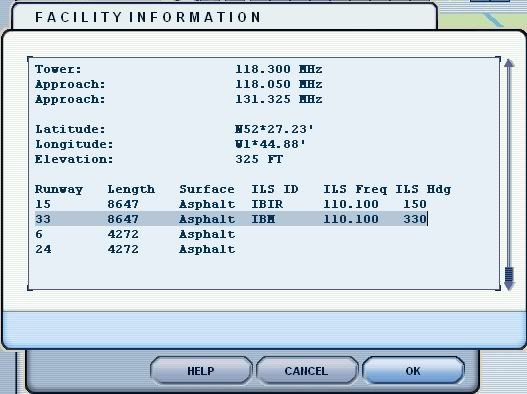
It is very very important when conducting an ILS approach to have the correct OBI setting on your HSI, for the approach stated above this will be set to 330 degrees, on your MCP for your particular aircraft this will be indicated by the course, just set this to 330, the 330 is the actual QDM of the runway.
It is imperative on an automated ILS approach as stated above that you intercept the glideslope from below it, you will not capture it from above, on your PFD & HSI you will see a white dot to the left of the window, this should be towards the top of the little screen, this indicates you are below the GS which is ok, if you fly level you will intercept it, if you are descending equal to or more than the ROD in the formula I gave you will never intercept it and will stay too low, next thing is the Localiser deviation, this is shown on the PFD & HSI by a white dot at the bottom of the screen, and also on the HSI by a CDI or course deviation indicator, this is where it is important you set the correct runway QDM into the course selector on the MCP, basically the course deviation indicator will show the localiser and hence the runway centreline in relation to yourself, if the needle is left then fly left, if it is right then fly right, you will know you are on the LLZ & GS because the 2 white dots will be centralised, you should see a scale as well dipicted as yellow dots? (may vary), well if the white dots hit 1 dot deviation this constitutes a go around and missed approach procedure, which I’m sure you all do right? 😉
I’ll add more later
Dean


 Sign In