Witcha
No, I’m not talking about EW suites but purpose-built passive long-range radars.
That only works if the incoming aircraft are radiating in the radar frequency ranges.
If they are “running silent”, than the ship depending on the passive system is blind.
Which is why the passive system is paired with an active radar antenna.
WitchaWhat you & most folks who do these sort of comparisons dont understand is that for all practical purposes, South Korea works hand in glove with the United States. It has deep access to many US supplier lists, US technological assistance and furthermore, it can acquire systems off the shelf from Europe or even repackaged via JVs (Samsung Thales Techwin) without any political objections raised.
India faced (and still faces) a huge hurdle in terms of technological assistance. The K2 you mentioned above has systems from across the world, available to Korea off the shelf and customized, and the PM can concentrate on system integration and overall design. The K1 predecessor, was pretty much a US supported design. The cooperation extends beyond just design and technology transfer to the crucial field of heavy engineering. SoKo firms dont face any restriction in collaboration and procurement of both manufacturing equipment and even R&D. They built on this to get a fairly decent R&D setup in military, which piggybacks on the worldclass civilian R&D which again was setup without any sanctions/political issues dogging it.
In contrast, the average Indian PM has had to face a usual delay of 2-3 years to even get an off the shelf system, thanks to India’s non aligned position and its status which placed it directly in opposition to the United States political objectives. The limited funding means that a total develop from scratch approach is not possible either.
Take a look at the Arjuns gun sights. The Indians originally procured them from Europe, but the Germans said they could not help as the US would not allow them to, the Dutch who offered something, were in no place to support their systems a decade into the project as the crucial Thermal sight was American and they were denied a license, and it took several years of diplomatic efforts till France stepped in, agreed to work with India on supplying the imager.
The only way around this logjam is for India to invest heavily, in the tune of billions of dollars to develop its local R&D and manufacturing capabilities, along with creating an ecosystem of world class civilian capabilities (look at how Taiwan created its electronics ecosystem) for sustainability and long term commercial growth, but thats easier said than done in India, where widespread political corruption works hand in glove with vested interests (civil and military) to preserve the status quo. One Chief Minister recently spent around $420 Million to have her own statues made and installed. The great economist PM of India serves more as a figurehead and is busy pottering around with loony peace overtures in search of a Nobel prize whereas the economy takes on more and more debt, and corruption piles on. In such a milieu, India’s defence organizations have and will continue to face an uphill struggle.
And another factor: defence research in India is largely done by old-fashioned, poorly run government-owned institutions like DRDO, DPSUs and Ordinance Factories. Due to various problems inherent to government-run institutions(inefficient management, low wages, lack of performance increments, no incentive to meet deadlines due to assured funding and lack of domestic competition) these have consistently underperformed given the budget and resources allotted to them(high in Indian money and still higher given lower Indian costs).
The government is trying to change this in recent years by inviting the Indian private sector’s involvement in defence but this is half-hearted because the politicians in charge of the defence industry(like Antony and Raju) have socialist mindsets and the PSUs and their labour unions lobby aggressively to maintain their monopoly over the armed forces’ needs. What is needed is for India to embrace private defence firms the way the South Korean armed forces have embraced companies like Hyundai.
WitchaBased on the venerable Udaloy hull but fitted with more modern weapon and sensor systems.
I didn’t know that. Where did you read it? The 21956 design is over 1000 tonnes heavier thanthe Udaloys and has an almost completely different weapon and sensor suite.
But yes, it’s likely that whatever new destroyer the Russian navy decides on will look nothing like the 21956. It’s based on older systems like the Fregat radar and S-300FM SAM whereas any new destroyer will likely leverage the new systems developed for the Admiral Gorshkov frigates.
Witchahttp://en.wikipedia.org/wiki/EL/M-2075
Singapore Air Show 2010: An operational G550 CAEW of 111 Squadron Republic of Singapore Air Force on display
Not much of looker, is it? Are the antennas on only the sides or inside the nose as well?
WitchaI meant ‘compared to’, actually.
WitchaKAI’s T-50 was intended to loosely mirror the F-16. Yes, T-50 is used to train ROK pilots and ground crews for their F-16 squadrons. But T-50 was also given weapon systems and flight performance that allow it to augment F-16 in combat operations. Radar modes, navigational accuracy, IFF, weapons compatibility, M1.68 speed (clean), +8/-3G structure, and turning performance similar to F-16 are all way beyond the needs of a “trainer”. Because of the additional capabilities, it is not an inexpensive “trainer” system to own or operate.
The IAF wanted a cheap, easy-to-maintain, non-combat trainer, so most of those added bells and whistles were excluded from the HJT-36 by choice. If the IAF had asked for them it would not have taken much more effort for HAL to integrate the original AL-55 instead of the de-rated non-afterburning version, added a real radar and IFF. As it is most of those features can be added as an option to make it combat-capable if necessary.
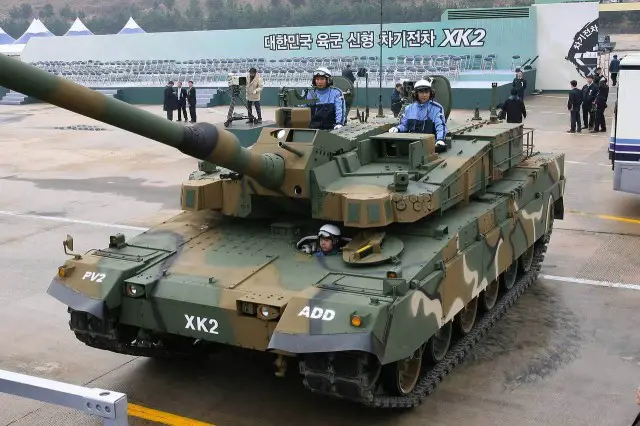
Tanks on the other hand is something else.. I think the K1A1 and the new K2 programmes are far more successful than the Arjun. the K2 already secured exports for its technology for Turkey’s new tank.
Wasn’t K-1 based on the M-1 Abrams?
Witchaperhaps the Russians should consider purchasing and license building the Kolkata class destroyers. Its a modern design, and the Russian ship industry has yet to offer something to replace all those udaloys, sovremmenys, etc. the Kolkata also uses many Russian components to begin with, so its not like the Mistral. (or perhaps that is the problem)
I don’t mean any offence but a post like that is going to be badly dismissed, especially from Russian members. The Russian shipbuilding industry, at least for military shipbuilding, is still far, far ahead of the Indian one. As for the Kolkata, it is based on a dated hull design(Delhi) and has somewhat limited stealth features compared to the current international norm. I would have preferred for the Indian Navy to start with a new design, like the P-17As.
Russian design bureaus already have multiple designs ready for a new large destroyer(most prominently the Project 21956, a real beast that was displayed in an older thread). It only remains for the Russian Navy to finalize one for production, which they’ll do in 2012 or assuming no funding problems.
WitchaIrrelevant to the question of maritime surveillance capability (what does it – coverage – matter when you fly racetrack patterns, mainly looking sideways anyway). Also irrelevant to the question about the number of operators.
You didn’t get the connection? Erieye in standard platforms only has a few operators and is dependant on ground control, so Pakistan chose a bigger platform(Saab-2000) for greater capability. I proposed the same thing for the Hawkeye.
WitchaNor does England owe us anything for the colonial occupation. England gave us a unified India, democracy, judiciary, railways, the English language and ..cricket 🙂
It also gave, through its policies, a large amount of poverty and starvation since renaissance times… but no more on that.
I’ve been looking up the modular construction technique that’s being used to build these carriers. It seems to me that there are only a few dozen large modules being constructed. This in contrast to, say, the Indian ADS, which despite being half the size will have over 800 modules assembled together. Any reason why? Wouldn’t more modules make production faster?
WitchaThat’s easy
Thanks… not being able to read it I assume the 15-20km figure is for active detection and 40-60km for passive detection. Or is the first figure for towed array and second for hull-mounted sonar?
How does it compare to the MGK-335 Platina and MGK-345 Bronza in specs? I’ve heard mention of the Platina’s max range being 40km.
Witchatsk, tsk!
“The E-1 Tracer was the first purpose built airborne early warning aircraft used by the United States Navy. It was a derivative of the C-1 Trader and first entered service in 1958.”
http://en.wikipedia.org/wiki/Grumman_E-1_Tracer“the Grumman E-1 Tracer… was a modified version of the venerable the S-2 Tracker piston-engined anti-submarine warfare plane … The E-2 and its sister, the C-2 Greyhound, are currently the only propeller airplanes that operate from aircraft carriers…. the E-2A Hawkeye, was the first carrier plane that had been designed from its wheels up as an AEW and command and control airplane. “
http://en.wikipedia.org/wiki/Northrop_Grumman_E-2_Hawkeye“The C-2 Greyhound is a twin-engine cargo aircraft, designed to carry mail and supplies to and from aircraft carriers of the United States Navy… The C-2 Greyhound, a derivative of the E-2 Hawkeye, shares wings and power plants with the E-2 Hawkeye, but has a widened fuselage with a rear loading ramp.”
http://en.wikipedia.org/wiki/C-2_Greyhound
Should have made myself a little more clear.:o It’s currently the only such system.
Are these critical factors?
Ever looked at the Ericson EriEye? Sweden’s ERIEYE use a platform (S100 Argus a.k.a. Saab 340) with only 3 operators. However, if using the SAAB 2000 – as Pakistan has elected to do – it can carry up to 9 operators. Let alone using an EMB-145 like BRazil does. The Erieye Ground Interface Segment (EGIS) provides a two-way exchange of data between the airborne AEW & C platform and a ground-based air defence network via an associated datalink sub-system, or on-board operators can control friendly fighters directly.
Which is the argument I was trying to make. Transferring the Hawkeye package to a P-8 would offer the same advantages, along with being designed with resisitance to corrosion under maritime conditions.
I know about the Erieye, but it’s not operated by any navies and I doubt it’s as fine-tuned for maritime scanning as the Hawkeye is.
Witcha@ djcross: The days of airborne sensors are certainly far from over! I would even say that the large platforms will gain tasks, mostly as relay and for UAV control.
Agreed. Humourously one thing djcross hasn’t mentioned is how exactly does this much-vaunted CAOC going to gather data in the first place? That’s exactly what the Hawkeye’s for!:p
@ Witcha: I see the P-8 in a little bit of a pinch. Should the stay-up-and-drop-stuff approach really work, the KC-X airframe might be an even better platform. However, should that approach not work then the P-8 will probably not be very mission effective (the Nimrod is pretty much the only airliner airframe that can effectively operate low down, the B737 is not necessarily a good basis for that).
This means that the P-8 might not have a too bright future.
I think the simple fact that the USN is going to buy over 100 of them will itself guarantee the P-8’s operational success. It would lower logistics costs for itself and other Hawkeye operators to standardise the P-8 platform for land-based AWACS.
That said, I’m still hoping for a J-CSA programme …
The ongoing dependency of carrier aviation on land based aircraft (tankers, &c) is a bad idea.
Well, considering not even an American supercarrier can carry tankers or large transport aircraft that’s not going to change anytime soon.
WitchaWhy say this? It is obviously untrue.
Just look at an F-16 & a T-50. Then check dimensions. As well as being significantly different aerodynamically, requiring considerable structural differences, T-50 is smaller in every dimension, lighter, & slower. It has an engine that has never been fitted to any F-16 model, with less thrust than any F-16 variant has. Etc., etc.
There are similarities, derived from the LM design assistance, true – but that does not make it a ‘re-packaged KF-16’. If it was that, it’d be a more capable (& more expensive) aircraft.
T-50 is a trainer developed with LM as a foreign partner for most components while LCA is a multirole fighter developed mostly without foreign input aside from the radar and engine. A better comparison perhaps would be the HJT-36 trainer being tested right now.
WitchaDoes any one have any performance specifications on the new Zarya sonar suite on the Stereguchy class corvette? Information on sonar performance, in general, is hard to come by.
WitchaAre you still going on? Gods, you are annoying for real.
Luckily, there’s already been someone in the conservative government calling for a reduction of aid given to India, which means that they saw the absurd of giving money to a superpower with a space program without getting any advantage in exchange.For the people like you who did not get it yet, the Afghanistan operation we are all tangled in, will be ultimately won or lost in the South-Afghanistan/North-Pakistan region, teh sanctuary of talibans and the red-alert area, since it reaches all the way close to Pakistani nuclear facilities.
Aid to Pakistan is strategically relevant because of this simple fact. If you have evidence of the money of the aid being used for other military programs unrelated to the struggle in northern-pakistan, i could even believe it, pretty easily in fact. But it does not change the fact that we need Pakistan to work in the fight against talibans, and we unfortunately have to pay in some way for it.As to budget aid, what has no strategic relevance for me should be immediately cut, in this times of crisis. When you have problems at home, you have to fix them before you can play nurse with the world.
If you still don’t get it, cut it short anyway. Because you have grown annoying for real. And you keep forcing people to go out of topic. End it once and for all.
You keep rambling and rambling without getting the message that was clear several posts ago; or more likely you realised how fundamentally flawed your main argument is and are ignoring it out of pride. Either way I’m done with you. I’ll just give you this one line to think about:
If you cut 4 F-16s out of Pakistan’s military aid package they’d still be happy, there would be no difference whatsoever to the Taliban cooperation(since F-16s aren’t going to be deployed there anyway), and you would free up that 250 million you’re so desperate for, without any harm done to needy people in any country.
– – – – – – – – – – – – – – – – – – – – – – – – – – – – – – – – – – – – – – – – – – – – – – – – – – – – – – – – – – – – – – – – – – – – – – – – – – – – – – – – – – – – – – – – – – – – – – – – – – – – – –
Returning to the thread, are there any plans to include armor plating on the CVF or do they remain dropped due to cost? At that size it’d be a shame if they didn’t use some of the space to ensure it didn’t sink with one AshM.


 Sign In