ante_climaxante_climax
India surprised by Chinese fuss over Agni-V
NEW DELHI: The Indian defence establishment has been left baffled by a brouhaha being generated in China over the yet-to-be-tested Agni-V
ballistic missile. “It seems quite contrived,” said a top official.For one, Agni-V’s first test is likely to take place only in end-2010 or early-2011. From there, it will take at least three years before the missile can be dubbed fully-operational since it will require four-five more tests, series production and user-trials by armed forces.
For another, the 5,000-km strike range of Agni-V pales in comparison to already-operational Chinese missiles like Dong Feng-31A, which can hit targets 11,200 km away, or even the JL-2 submarine-launched ballistic missile with a reach beyond 7,200 km.
“China’s missile and nuclear arsenal is leagues ahead of India, capable as it is of hitting any city in India. We can never compete. Our entire focus is on building only credible minimum deterrence against China, not active offensive capabilities,” said the official.
Agni-V, much like the 3,500-km Agni-III, which has been successfully tested a couple of times, has been designed in keeping with this strategy. The already-inducted Prithvi (150-350-km), Agni-I (700-km) and Agni-II (2,000-km) are more Pakistan-specific in nature.
As earlier reported by TOI, the solid-fuelled Agni-V, for which the government has sanctioned around Rs 2,500 crore, will be a canister-launch missile system to ensure it has the requisite operational flexibility to be fired from any part of the country.
The ongoing work on Agni-V basically revolves around incorporating a third composite stage in the two-stage 16.7-metre tall Agni-III, along with some advanced technologies like ring laser gyroscope and accelerator for navigation and guidance.
Though slightly short of true ICBMs, which have ranges in excess of 5,500 km, Agni-Vs will come in special storage-cum-launch canisters, making it much easier to store them for long periods without maintenance as well as to handle and transport.
So, conceivably, Agni-V will be capable of being swiftly moved closer to the border with China to substantially enhance its strike range into the country. What has exercised China is the fact this will bring even its northern-most city, Habin, within the missile’s strike envelope.
Moreover, DRDO is also developing MIRV (multiple independently targetable re-entry vehicles) warheads for the Agni missiles. An MIRV payload basically is a bunch of several nuclear warheads carried on a single missile, which can be programmed to hit different targets separated from each other. Given this, even ballistic missile defence systems can be overwhelmed by MIRVs.
This fits in with India’s nuclear doctrine, which holds that even though there will be no first-use, “nuclear retaliation to a first strike will be massive and designed to inflict unacceptable damage”.
ante_climaxLike a big sponge, moon absorbs charged particles to produce water
BANGALORE: New data from Chandrayaan-1 has revealed how the moon “produces its own water.” Much like a big sponge, it absorbs charged particles emitted by the sun, which then interact with oxygen on the lunar surface to produce water.
A scientific instrument on Chandrayaan-1 — the Sub keV Atom Reflecting Analyser or SARA — made this discovery that was published in the latest edition of the Planetary and Space Science journal.
According to European Space Agency (ESA) scientists, hydrogen nuclei from solar winds are absorbed by the lunar regolith (a loose collection of irregular dust grains making up the moon’s surface). An interaction between the hydrogen nuclei and oxygen present in the dust grains are expected to produce hydroxyls and water.
SARA, developed by the ESA and the Indian Space Research Organisation, was designed to study the moon’s surface composition and solar wind-surface interactions. Recently, another instrument on the Indian spacecraft, the Moon Mineralogy Mapper — an imaging spectrometer developed by the U.S. National Aeronautics and Space Administration — first found water molecules on the lunar surface.
Not all nuclei absorbedSARA’s results also highlight a mystery: not every hydrogen nucleus is absorbed. One out of every five rebounds into space, combining to form an atom of hydrogen. “We didn’t expect to see this at all,” said Stas Barabash of the Swedish Institute of Space Physics, who is the European Principal Investigator for SARA.
Hydrogen shoots off at speeds of around 200 km per second and escapes without being deflected by the moon’s weak gravity, the team found.
This knowledge provides timely advice for scientists who are readying ESA’s BepiColombo mission to mercury. The spacecraft will carry two instruments similar to SARA and may find that the innermost planet is reflecting more hydrogen than the moon because the solar wind is more concentrated closer to the sun.
ante_climaxNair set to retire; bemoans poor quality higher education
ISRO chief G Madhavan Nair, who is to retire by this month-end after an illustrious career at the space agency, bemoans that the country’s higher education system is not up to the mark, churning out graduates only for routine jobs.
Nair, also Secretary in the Department of Space, called for improving quality to produce high-class technologists and scientists.
“The level of education and knowledge being imparted by many colleges…They are not up to the mark. Instead of concentrating on quantity, these institutions should concentrate on quality,” he told PTI in an interview.
“I am not happy with the education system in the country. The bulk of applicants (who applied for scientific and engineering jobs at ISRO this year)…They are not able to get even 50 per cent marks in our entrance tests.”
Nair said if the quality level is not up to the mark, then one would only get people for clerical or routine jobs. If real technologists for manufacturing and scientific research were to be produced, the quality had to be far better.
Appointed as chairman of Indian Space Research Organisation in 2003, Nair’s tenure saw realisation of 27 space missions, of which 25 were successful, with India’s maiden moon mission Chandrayaan-1 being the pinnacle of glory for the country’s space agency.
Nair got two extensions in 2005 and 2007.
ante_climaxIndia sending Dornier aircraft to Maldives for surveillance mission
NEW DELHI: As part of the overall strategy to prevent China from further spreading its influence in the Indian Ocean Region (IOR), India is
sending a Dornier aircraft to Maldives to help the country in maritime surveillance.Defence ministry sources said an Indian Navy Dornier would begin its maritime reconnaissance missions from Male over the weekend. This comes in the backdrop of defence minister A K Antony’s recent visit to Maldives, where he promised measures to bolster defence cooperation with Maldives.
Under the new plan, India will apparently help Maldives set up a network of ground radars in all its 26 atolls and link them with the Indian military surveillance systems.
Moreover, amid fears in Male that one of its island resorts could be taken over by terrorists, India will also provide Maldives with a couple of helicopters, as also help patrol its territorial waters with both warships and reconnaissance aircraft.
India has taken several steps to build bridges with IOR nations, which range from joint patrols with Indonesian and Sri Lankan navies and exercises with Singapore and Oman to providing seaward security for international summits in Mozambique.
Maldives, in particular, constitutes an important part of this strategy since China is making persistent moves in the region as part of its military diplomacy.
India, on its part, has always been willing to help Maldives in times of crisis. Indian paratroopers and naval warships, for instance, were rushed to Maldives in November 1988 by the Rajiv Gandhi government under Operation Cactus to thwart the coup attempt against the Abdul Gayoom government.
Similarly, India had deployed two ships and four aircraft to Maldives after the killer tsunami struck in end-2004. “In April 2006, India gifted a fast attack craft INS Tillanchang to Maldives as a goodwill gesture. Apart from training, hydrographic and military assistance, our ships visit the country regularly,” said an officer.
ante_climaxPenguin AShM On Offer For Indian Navy’s Multimission Helicopter Competition
Norway’s Kongsberg Defence & Aerospace is offering its Penguin littoral anti-ship missile for the Indian Navy’s bid to purchase 16 multimission maritime helicopters. Among other helicopters, the missile is certified on the Eurocopter-Agusta-Fokker NH90 and the Lockheed-Sikorsky MH-60R that are contenders in the Navy’s multi-role helicopter (MRH) competition.
ante_climaxIsn’t that strange? Dec 2009 delivered to de US government… 6 months later to the PAF? Will Pakistani pay for 6 months parking fee?
Pakistan is not even paying for the jets, let alone Parking fee. :rolleyes:
ante_climaxIndia, Russia to continue negotiations on aircraft carrier
New Delhi, Oct 15 (IANS) India and Russia have failed to reach agreement on the revised cost of the aircraft carrier Admiral Gorshkov that the Indian Navy has purchased and negotiations on this are to continue, it was announced Thursday.
The issue was expected to have been resolved during Defence Minister A.K. Antony’s two-day visit to Moscow that concluded Thursday. However, no breakthrough could be achieved in spite of Antony’s meeting with his Russian counterpart, Anatoliy Serdyukov.
“On the sale of the aircraft carrier Admiral Gorshkov, both sides agreed that the cost negotiations would continue to find a mutually acceptable solution,” a defence ministry statement said.
The deal for Gorshkov was signed in 2004 for $1.5 billion. Of this, approximately $948 million was meant for the ship’s refit and the balance for the 16 MiG-29 fighters and Kamov anti-submarine warfare helicopters it will carry.
The project hit the headlines in 2007 as the Russians increased the price and the delivery date was pushed back almost four years to 2012.
The two sides have been carrying on price negotiations for more than two years. India is unwilling to pay what it considers an unreasonable escalation that has nearly doubled the cost of the aircraft carrier.
According to senior officials involved in the negotiations with Russia, the newly quoted price fluctuates between $2.2 billion and $2.9 billion.
The carrier will be named INS Vikramaditya when it is commissioned in the Indian Navy.
ante_climaxRussian Akula-II-class n-sub to be delivered to Indian Navy in 2010 news
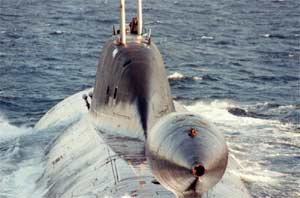
Moscow: The Russian navy will formally commission the Akula-II class Nerpa nuclear attack submarine sometime in December before it leasing it to India early next year, a top Russian naval official is quoted as saying in Russian media.
“The submarine has undergone a range of sea trials, and state tests will begin in late October or early November, after which the Nerpa will be commissioned by the Pacific Fleet,” the naval spokesman informed Russian agency RIA Novosti.
According to the report, an Indian crew would undergo a course of training together with Russian specialists and servicemen in early 2010 and then sail on their own for Indian shores under supervision of Russian instructors.
The submarine will be commissioned only after training of the Indian crew is completed. The submarine will carry the same name as an earlier Soviet-era Charlie-class nuclear powered submarine leased to India – INS Chakra.
The submarines delivery has been delayed due to an onboard accident in November last year in course of sea trials. An accidental release of lethal Freon gas killed 20 civilian technical staff and crew members.
The ninth session of the annual Indo-Russian Inter-governmental Commission on Military-Technical Cooperation (IRIGC-MTC) meet concluded just this week with an assurance to Indian defence minister AK Antony from his Russian counterpart, Anatoly Serdyukov, that Moscow would try to make up for the delay in the submarine’s delivery at the earliest.
India and Russia agreed to extend the IRIGC-MTC framework by another ten years and have drawn up a list of 31 new areas for mutual cooperation. Defence co-operation is expected to receive a fillip with Indian prime minister Dr Manmohan Singh’s visit to Moscow for a summit meet with Russian president Dmitry Medvedev.
ante_climaxNavy to patrol Indian Ocean with Indonesia,Maldives
New Delhi, Oct 16 (PTI) In the backdrop of increased piracy related incidents and illegal activities in the Indian Ocean Region, India will join littoral countries, Indonesia and Maldives, to patrol the waters to protect their maritime boundary this month.
The navies of India and Indonesia would carry out their 14th coordinated patrolling of Malacca straits region, once a piracy hit area in the Indian Ocean, from October 18 to November 5.
The Indian Navy would also deploy a Dornier maritime patrol aircraft in the Maldives as part of the security assistance New Delhi agreed to provide Male to secure its waters from pirates and threat from terror groups.
“To increase the cooperation in the Indian Ocean Region, the Indian Navy will conduct coordinated patrols of the international maritime boundary with Indonesia.
ante_climaxSays you, which is most active thread on forum?
I know you are taking a swipe at the IAF thread. Well we turned that from a shambolic ranting thread to one of the better managed threads in this forum.
ante_climaxChina has bigger numbers yet cannot get a decent engine… Sweden had to import US engine. India is busy getting Kaveri up and running. I think the time that nations can do it alone is gone era.
Personally I doubt that India has more intellectual capacity then Sweden. I think Saab has a long hiostory of aviation and with the Gripen (NG) is showed that as a small nation it is far beyond bigger nations. If Sweden was less then India would not go for Gripen as their MRCA. But you might have your opinion and I have mine.
You are confusing intellectural capacity with expertise. Sweden has a much better aviation and technological pedigree, you cannot achieve it easily, but slowly I think China, India and others will get there. 😉
ante_climaxForces, IAF choppers ensured violence free poll in Gadchiroli
Nagpur: Heavy deployment of para military forces assisted by four Indian Air Force helicopters helped the administration and police to conduct violence free polling in Naxal infested Gadchiroli district, official sources said.
As many as 27 companies of Border Security Force (BSF), 26 companies of Central Reserve Police Force (CRPF), two
companies of State Reserve Police Force (SRPF) and three companies of India Reserve Battalion (IRB) were deployed in the district, Gadchiroli police said today.Two MI 17 and two Chetak helicopters assisted the police and polling machinery during the October 13 poll and October 15 repoll in 22 polling stations. Choppers air-lifted a total of 154 EVMs to district headquarters, including 98 on October 14 and 56 EVms yesterday, they said.
Out of the 832 polling stations in the district, 227 were hyper-sensitive, and 191 were sensitive.
Polling was conducted at 810 polling stations on October 13 and remaining 22 yesterday.
Repolling in 22 stations was necessitated as the polling staff could not reach the destinations on time after Naxals dug up roads and placed logs on the road.
ante_climax

 Sign In