aurcov
Ok, we can go for ages in circles.
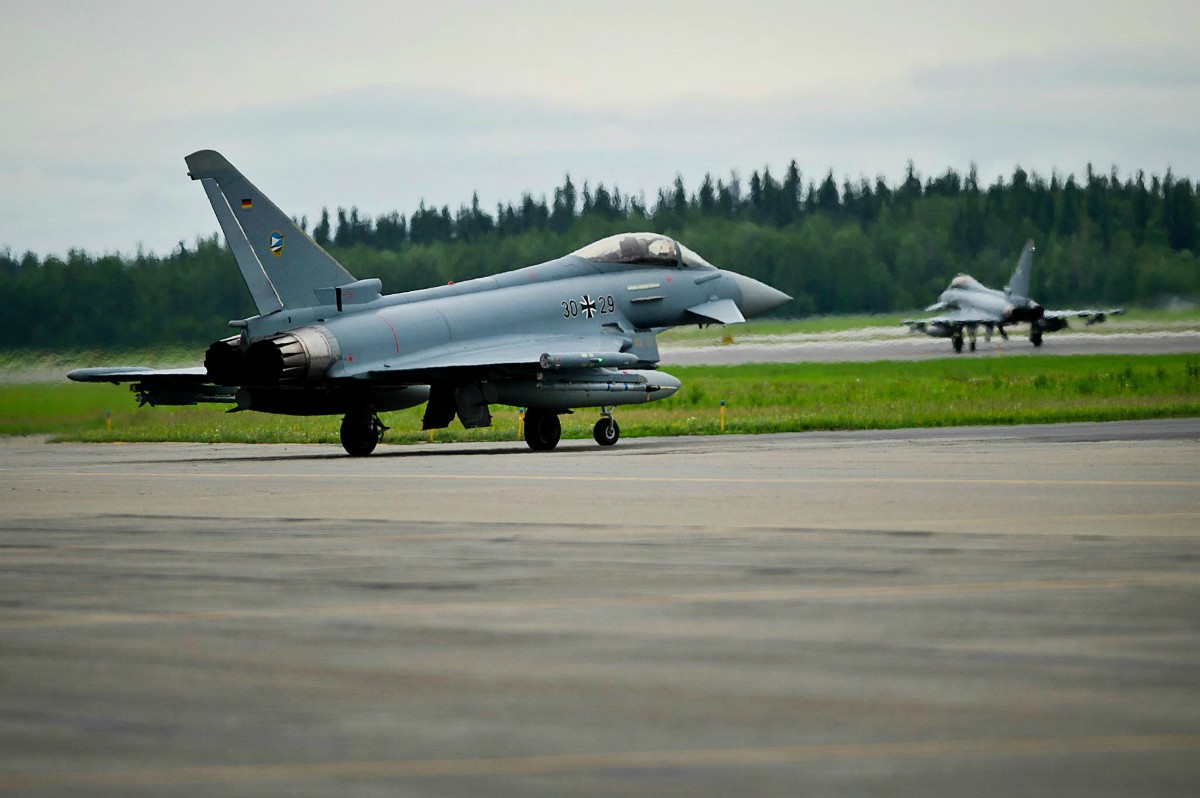
We have German pilots claims about Raptors range/endurance. They claim that EF can stay longer on station than F-22. They claim that F-22 time on station is about 20-25min during exercise. Goal of the exercise is to simulate as close as possible real war conditions.
You were going in circles. I said that the most probable configuration of EF in those missions in which they outstayed the F 22 (and these were the missions were they were co-operating, not the ones they were dogfighting) was with EFTs. How many, 2-3? I can’t say. I also invited you to post a official data about EF combat radius with internal fuel, since I did post two sources about the F 22. You still didn’t.
If we asume that average speed for F-22 was 540knots (which is a bit optimistic) how many miles will he travel during a course of 50 minutes?
I think you will find it hard to squeeze out 600nm combat radius for F-22 out that endurance.
Again, 600 is in subsonic. 540 knots is not subsonic.
That is the point of all my talk. You have plane with much greater combat radius than F-22 (including 2 EFT) and still, air tankers were very close to the Yugoslav borders. You need to remember that US and NATO forces had total air supremacy over relatively small battleground area and that balance of power was preposterous. If there was equally strong opponent against US and NATO forces, their flight profile/tactics would be totally different with much more fuel to burn in order to stay alive, and you can bet that air tankers would be among the first targets of the war.
And what is the reason of penetration if you are not going to drop the bombs?
Imposed altitude floor for most of the time and above most of the air space was 15000ft. In some regions with little anti-air activity that line is lowered to 5000ft. I personally observed F-16 on one occasion close to 5000ft but that was very rare. A-10`s were the lowest flying planes in the course of the war.
The prefered tactic for penetration for F 15/F 16 is hi-lo-hi type. Flying low is why they put the LANTIRN navigation pod on these beasts. To navigate hands-off at 60 m above the ground.
If I remember correctly F-15`s that engaged Migs were flying at 37000ft when they picked up a contact.
Those were F 15 C and their mission is air superiority — they stay high.
BTW, about multiple refueling: it’s stanadrd procedure, especially when you fly low, to take-off with min. fuel and re-fuel immedialtelly after, since it spares the engines (the take off weight is reduced).
My friend if you have F-22 whose mission is to fight with equally dangerous enemy fighters (he is going to burn so much more fuel in BVR and WVR and avoiding SAM`s ), do you truly, honestly think 1111km radius is in option?
Of course, 600 Nmiles is in subsonic, but with 15 min. of fight (including AB) and fuel reserve. For a more demanding foe, let’s say that they go for 410 Nmiles (with 100 in SC). That,s 760 km. I still consider safe fo a tanker to stay there. I also assume that you know that the range of a S-300/400/whaterver is 400 km in ideal conditions, when the target is flying towards the SAM site. If the target is flying away, the range is 1/2.
For example, F-22 will spend most of its fuel for air show demo that lasts little more than 10 minutes over the air space that has few miles in diameter.
And how do you know how much fuel has a F 22 in demo? And how much still has when it lands? I’ll be curious.
I mentioned both, ground based radars and AWACS combined.
You asked me why a powerfull ground radar will not see an object, and I answer,
Depending on type of the radar, 1m2 RCS target can be detected at ranges close to 300km for 10000m altitude or close to 400km for 20000m altitude.
Still safe for an F 22 to drop EFTs+pylons at 700-800 km away without being detected.
I`m not going over this again. Just for your information F-15`s that engaged in BVR fight against Migs doped their EFT as soon as fight started. And we are talking about BVR not WVR fight.
“Sleeked” means without anyting hanging not even CATM/training pod and with (maybe) 1/2 of the fuel, in order to offer EF a chance.
aurcovAnd your proof for that is?
Well, show me a link to an official figure for FE combat radius on internal fuel.
You are right! For example F-15E/K has over 1000nm combat radius. Much more than F-22.
Actually it has 1000 Nmiles on internal+CFTs http://www.slideshare.net/TheDEWLine/silent-eagle-media-briefdoc?type=powerpoint , page 11/20. With EFTs > 1200 Nmiles. But, again that’s high altitude flight.
And please, can you post the link about official F-22 combat range on internal fuel. Thanks!
But of course: http://www.f22-raptor.com/technology/data.html (that’s the official f 22 site of LM); also see the .pdf attached (that’s from AFA (air force association). This (595 Nmiles) is the combat radius (in-out) in subsonic, with fuel reserve, or 410 Nmiles with 100 Nmiles in SC.
So you think that F-15E has to fly lower than F-22 in order to drop the same JDAM bomb?
What low level flying in Kosovo war are you talking about?
No, the F 15 F were flying low in order to penetrate hostile airspace, not to drop bombs. It delays enemmy radars reaction time. But I asumme you know this :).
And there is some number of fighter planes that have much better combat range than F-22, thrust me.
Not so many. In fact only the Su 27/3x has a longer combat radius (not range, btw, since radius is in and out) on internal fuel. And the F 35, but this one is not operational yet.
Type of mission, type of weapons you are carrying and type of threat will dictate the height you are flying at. In other words, F-22 cant have greater combat range than its max combat range in ideal conditions and there is no such thing as ideal condition in the real war.
USAF do not calculate combar radius based on ideal conditions. Aerospace companies OTOH do this in sales broschures.
I`m not talking about “most SAM`s” I`m talking about state of the art SAM`s.
State of the art or not, there is no missile that can hit at 600 Nmiles (1111 km !).
You lost me there. . .I would like to see your calculations for the thing you just said. . .and please stop quoting 600nm numbers because it is not possible in the real war conditions against equally powerful opponent.
That’s a problem of line-of-sight (see tha attachement). A ground based radar will not see a target under a certain altitude because it is under its horizons: regardless its power output, it will not detect a target flying at 50,000 fts at > 250 Nmlies. OTOH an AWACS (right curve on the graph) will. But you mention ABM radars and this ones are ground based.
And for hundredth time EF is not going to enter the real war dog fight with EFT and any other load (bombs etc.) that can degrade planes performance. Pilot is going to drop all unnecessary load. So in essence “sleeked” configuration is the normal one when we talk about WVR fight.
The German officer was very precise: they “sleek” th EF. This means more than droping bombs/EFTs when ambushed by an ennemy fighter.
Also, the American pilot said something very diferent. Now, it all depend of who you trust.
aurcovYou are mixing theory and reality.
When you say F-22 has 600nm combat radius it is the same like when you say AIM-120C-5 has max range of 105km. In reality that missile range is going to drop several times depending on launch condition (height/speed), position of the target relative to the missile and targets counter maneuvering actions.
It is the same with combat radius.
Depending on mission type and flight profile you will get much different range numbers. Add to that the fact that the plane might have to fight its way to the target or evade ground to air fire or if its goal is to destroy enemy fighter planes, your combat range is going to shrink several times.
Of course, 600 Nmiles is valid only in some ideal conditions, like subsonic flight, no dogfight/violent maneuvers; that’s why I mentioned that if the F 22 used SC in Red Flag, it’s absolutely normal that they shoud return faster. You fail to see the essential: used in similar flight profiles the F 22 has a longer combat radius than an EF if both were on internal fuel.
Because of all of that you will be surprised how close air refueling tankers need to be to the battleground.
Here is one interesting read.You will see that in Kosovo war refueling was done, for example, over Adriatic sea or over Bosnia. Take the map and look how many miles is that from Serbian border. Like I said, with S-400, Su-35s, Mig-31BM or PAK FA, that slow moving/maneuvering tankers would be in great danger.
Conventional fighers/bomber in Kosovo are not exactly an F 22 –they flew at low level carring bombs/missiles, and this shrinks the radius big way. An F 22 will fly higher, in fact higher than most opponents. At that altitude the fuel consumption is totally different. But, as i already said some SC or dogfight will reduce significantly the range. However, it’s still outside the reach of most SAMs. As for fighters, be it Su 35 or PAK FA, it’s the other way around –they shoud face hostille fighters when attacking the tankers. This unless you take serious the wunder A/A Russian missiles with 300 km range :D.
Forget that distance you are talking about, because like I said theory is one thing and reality is another.
Can you give me a link for 1m2 RCS and don`t forget that that number is probably from the most perfect angle. If you have fused radar network you will have much better results.Here is a list of some very powerful radars:
http://en.wikipedia.org/wiki/Voronezh_radar
First, APA is not a reliable source. They take for granted Russian broshures and minimize US weapons capabilities. Second, antiABM radars will fail to detect some falling EFTs simply because at this altitude they are under the radar horizont. As for low band radars, they won’t see an F 22 with EFTs at 500/600 Nmiles (see the offcial specifications).
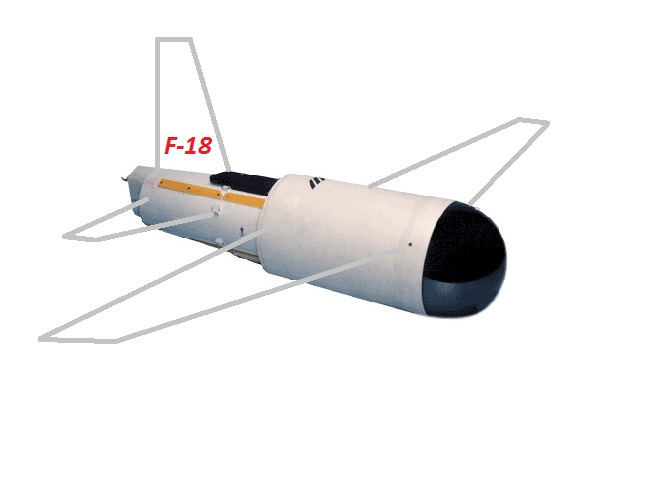
That`s right but you fail to comprehend the fact that it needs to have ACMI pod if you what to have accurate results of the exercise (WVR fight included). That ACMI pod is located almost at the end of the wing. If you don`t want to have asymmetrical load you will put one SRAAM missile on the other wing pylon and I don`t think that they are removing ESM/ECM pods 😉
The discution started when I said that the configuration in which the EF “won” some of the dogfights is entirely different from the configuration the EF had when they were able to stay longer then the F 22 in the air. Consequelntly the “sleeked” configuration is not the normal one. Do you agree?
aurcovI see you don`t have the link for your claim. But for starters, there are lots of pictures of EF`s with 2 EFT at Red Flag, not 3 like you said.
German pilot said that F-22`s were on station for about 20 to 25 min and then they needed to turn around and go back home. Even if EF had 2 EFT at that moment, how do you know that EF can`t stay longer than F-22 in the air on internal fuel only. Based on total amount of fuel left (EFT and internal) German pilot can draw conclusion if he can stay longer in the air on internal fuel only compared to F-22.
Fuel consumption is dependent on mission/flight profile, but Sintra explained that very nicely.I`m not saying you are wrong, but than again. . .
The combat radius of an F 22 (subsonic) is 600 Nmiles. I don’t think that thr EF can match it. OTOH, if the F 22 supercruise (after all it’s designed for this) the radius drops (that’s about half the subsonic one). But if the flight profile was similar, i stick to my oppinion: the EF was with EFTs (2, or 3 –I can’t tell).
I wouldn’t bet on that one!
If you look at the photo I posted you can see that EF needs to have at least one ACMI pod and on the other side there is one SRAAM missile. You also have intergrated ESM/ECM pods at the tip of the wings. And do you really think that 2 small IR missiles have such a big impact on planes performance?
Regarding the amount of fuel in EF. How do you know how long the dog fight is going to last? Depending on pilots it can last one minute or much longer and if you are most of the time on burners you need relatively large amount of fuel if you want to stay in the fight.
The photo you posted, was probably taken when the planes were doing anything else, but dogfights. They had EFTs!
If you have S-300PMU2 or S-400 with ~400km range at the edge of your borders supported by planes such as Su-35S, Mig-31BM, PAK FA or J-20 with missiles that have over 200km range, things are going to be very nasty for tankers!
If the F22 can cruise (subsonic) back to the tankers for 600 Nmiles, that’s enough for tankers to stay outside the threats. Even if the F 22 shoud supercruise to disengage, there is still a 500 Nmiles safety zone.
Yes, but you have big ground radars and AWACS that can locate F-22 with EFT at great distances. It is very helpful to know the direction which the opponent is coming from.
Considering the most demanding scenario — when the F 22 is obliged to SC for 100 Nmiles, it’s still a total of 400 Nmiles distance after the F 22 dropped its EFTs. Is there a radar that can detect 2 EFTs (total RCS >>>1 m2) at this distance?
aurcovMaybe they used 3 EFT, but then again maybe they didn`t. Do you have any source for that claim?
Yes, common sense: without EFT the the combat radius of F 22 is bigger.
That is what pilots usually do when they enter the real dog fight. They release unnecessary load for better performance. This was exercise and EFT are not cheap so they didn`t put them in the first place. In the real war they would drop EFT or any load they don`t need for WVR fight.On the other hand 2 SRAAM`s are not going to degrade the planes performance.
I bet the Euros did not even had SRAMs (remember “gunshots”?) , they probably has just enough fuel to sustain the mock dogfight (the quote about Eurofigher staying longer than F 22 regards the scenario when they worked together durring the Red Flag). In these ideal conditions, maybe the Eurofighter has some chances. In real life…
Well, it seems that in this particular scenario with EF2000 that amount of fuel was not enough, they where out of “juice” early on.
That’s what I said too. Euro with EFT, F 22 without.
For me, it is interesting fact that Germans claim that EF has better acceleration and that can outclimb the F-22. With similar T/W ratio it looks like that F-22 is the dragier plane and among other things drag has big influence on fuel consumption.
F 22 dragier? 🙂
Against serious adversary tankers are going to be very big and juicy targets and if F-22 is using EFT. . .well, than it`s not that stealthy anymore.
Against any adverary the tankers will be used. Thay just have to stay at a safe distance of the FEBA (forward edge of battle area) — that’s ~ 200 km back. About F 22 with EFT, I assume you know that the EFTs and pylons can be jettisoned when they entered in contested airspace. But again, tankers are the first option: I remember a quote from Codeone magazine about the first Rad Flag Alaska (2006 ?) where the F 22 did participate: the F 22 engage/disengage (both in supercruise), go back to tanker in subsonic, than re-engage.
aurcovYou are right, as it turned out EF2000 can stay longer in the air than F-22 in latest exercises. [/url]
Of course it can, with 3 EFTs. But I wonder what the outcome of the mock dogfights (in wich supposedly the EF won :p) would have been if the EF had entered in this configuration. Remember the german pilot said they “sleeked” the EF as much as possible in order to gave them a chance.
In order to have really tactically useful supercruise F-22 needs to have as much fuel as Su-35S or PAK FA.
That depends. According to AFA (sort of “semi-official” USAF source) the F 22 has a combat radius of 500 Nmiles of wich the last 50 are in supercruise. That have been considered enough for most scenarios. The F 22 can count on some 500 USAF tankers if it get thirsty. For a longer distance mission, with contested airspace (dangerous for tankers) the F 22 can add 2×610 gallons EFTs (that would probably hold more gas than the skinny EFT) and add some extra distance.
aurcovYes and no (don’t worry, the bottom line will be that you’re right ;)). You have distinguish between the field of view which the sensor can survey at one time without physical movement of its bore sight, which is called instantaneous field of view, and the field of view it can scan by slewing – more accurately called gimbal limits.
In fact, the gimbal limits of the AAS-42 are +/-70 degrees in both azimuth and elevation, but its IFOV will be around 2-3 degrees as well, like a FLIR (this is why it has so much longer range than EODAS with its wide-angle instantaneous coverage). However, for BVR engagements (rather than quick evasion of a missile at close range) this only sounds like a problem until you consider that an X-band radar with a 60-70cm antenna (think APG-73 or CAPTOR) also has a beam width of about 3 degrees. Yet nobody seems to complain about their ability to survey a wide field of view by scanning the antenna!
Sure, an AESA with its near-instantaneous beam repositioning can scan faster than any IRST, but it’s not like mechanically scanned radars with comparable scan performance have proved useless, is it?
I won’t argue because I don’t know the inst. FOV of an AAS 42; however, if what you said is true, then why US Navy would buy the tank-mounted IRST, when they have one of the best FLIR (ATFLIR)? I presume that’s something more than 3 deg. …
aurcovYour logic being?
Clouds?
Not necessary. Even a higher hummidity could reduce drastically the detection range.
aurcovDarn, I missed it!
I thought that F-18SH is all about this. . .
. . . I thought that he can destroy any enemy plane just by staring at him! Guess I was wrong?! Who needs that piece of junk, it only costs money!
Though I wouldn`t mind having it when some stealthy plane is flying around me 😀
What we have to keep in mind is that you should compare, for example, Su-35S`s OLS (much more sophisticated than Su-27`s) to one intended for F-18SH when we talk about true sensor fusion.
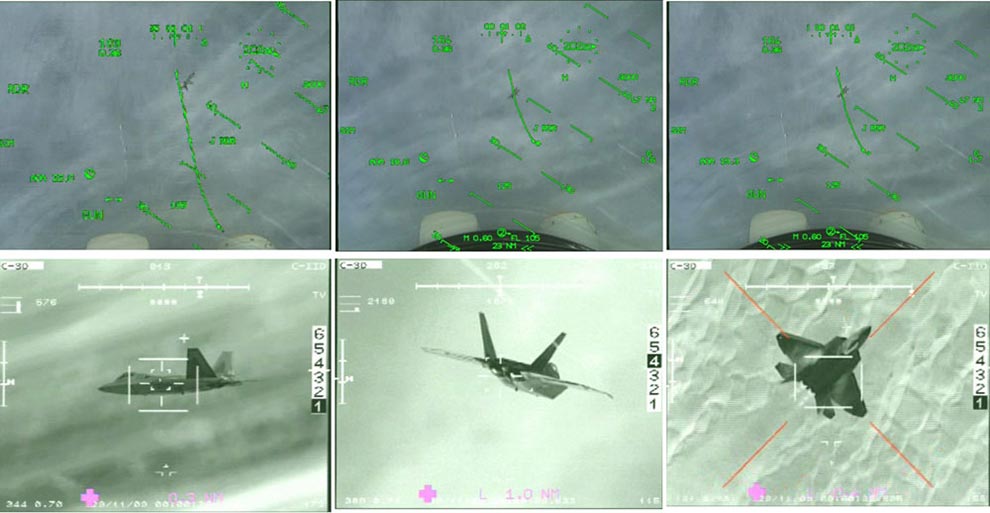
The images you posted are not from an IRST, but from the TV channel of a Rafale OSF.
aurcovI
I really don`t care what are the reasons for its absence (technical nature, performance, money, politics, bad decisions etc.), F-15 from 80`s don`t have IRST and Su-27 does, which I find advantageous for Russian plane..
Maybe the reason is that back there, the range of an IRST was much smaller compared with a decent radar. Now, the range of a sophisticated IRST (AAS 42, OSF, Pirate) is comparable with the radar’s one, and even bigger against LO/VLO targets.
aurcovSounds more impressiv than it is. Similar to the view a tank-driver has.
This analogy is true for a FLIR –those systems have minuscule FOV (2-3 deg.) but they phenomenal zoom (there are pictures of Sniper/Litening/ATFLIR showing clear images at ~40 Nmiles). An IRST has far greater FOV: http://www.lockheedmartin.com/content/dam/lockheed/data/mfc/pc/irst/mfc-irst-pc.pdf, page 2 (bottom left)
By the way some pilots used the FLIR connected to the HMS like an IRST already.
Not as IRST, that would mean to move their head from left to right with 70 deg./s 😀
aurcovCould you show me IRST device mounted on F-102, F-106 and F-104?
aurcovFor easier understanding the IRST is something like binoculars, but you still have to know were to point it in advance against a fast moving target..
Not quite: an IRST (AAS 42 made by Lockheedmartin) has a search field of 140 deg. – as big as a radar. On the contrary, an IRST can point a radar, for more precise ranging, or a FLIR (Lantirn or Sniper that are hanged under in the Tiger Eye suite) for positive identifictaion (the IRST works in longwave and the image isn’t comparable with the sharper one offered by a FLIR midwave sensor)
aurcovYou think he is carried away?
http://www.lockheedmartin.com/us/products/InfraredSearchTrack.html
http://www.f-15e.info/joomla/en/export-variants/f-15sa/2515-f-15sa-differences
http://www.defenseindustrydaily.com/f-18-super-hornets-to-get-irst-03429/#infra-red-search-track
You think there is no problem to fit IRST in every teen fighter?
You still think there is no practical use of IRST?
They are wiling to degrade aerodynamic performance and radar signature just to have it!
The first IRST was put on an F 101 Voodoo in 1965. Almost all the US fighters in the ’60/’70 had one: F-101B Voodoo, F-102 Delta Dagger, F-104 Starfighter, F-106 Delta Dart, F-8 Crusader e F-4B/C Phantom, F 14 A/B/D.
If USAF/USN believe that now it’s worth to put IRST on some of their fleet, it’s not because they did not had this capability earlier. They exported the Tiger Eye suite (IRST + FLIR) to S Korea and Singarore, and they will export to S Arabia.
aurcovAlso, F-15 lacks leading edge flaps which reduces both critical AOA and lift at higher AOA, hence lower max available turn rates.
Leading edge flaps were nothing new when the F 15 was designed. The engineers at McDonnel were not convinved that they can bring much improvement compared with a no-LEF wing.


 Sign In