An exhaustive answer.
The real question is the development of the ‘ejector’ type exhaust which includes the ‘Siamesed’ three stub efforts as well as the six stub. Previously, both prototype Spitfire and Hurricane had exhausts that just exited to the air at right angles to the direction of the airflow. Previous to that were either the long pipe or the bizarre type seen on the Hawker Hart family (example on the Hart trainer in the RAFM) which had no speed advantage, but (I think) helped with disguising the exhaust flame.
A similar development was the expansion and compression chambers in radiator intake exhaust design, seen at its peak in the Mustang and MB-5, but also used earlier on the Spitfire and 109. This went some way to negate the drag created, and (I think – anyone?) actually added MPH to the Mustang.
None add horsepower, they all remove drag and / or add to thrust or remove factors that choke or make the engine less efficient.
Short, simple and point them aft is the best!
What an exhausting question. Some of the variations of Merlin exhausts. Now name the types to which these examples were fitted.
John


I think the Mossie still exists… 🙂 ..I have it somewhere that she’s preserved at RAF Museum Cosford…
I’m sure that is Horse Guards Parade and features the embryo RAF Museum collection. The Tempest and Lizzie are in the respective backgrounds.
John
A couple more pictures (sorry, haven’t quite got used to posting pictures yet!) from the same source. The first shows what looks like a pile of twisted aeroplane, the second shows what I assume could be the Vice Regal alighting the Trimotor…
Dav’
The mangled parts look like a Wapiti.
John
Good morning
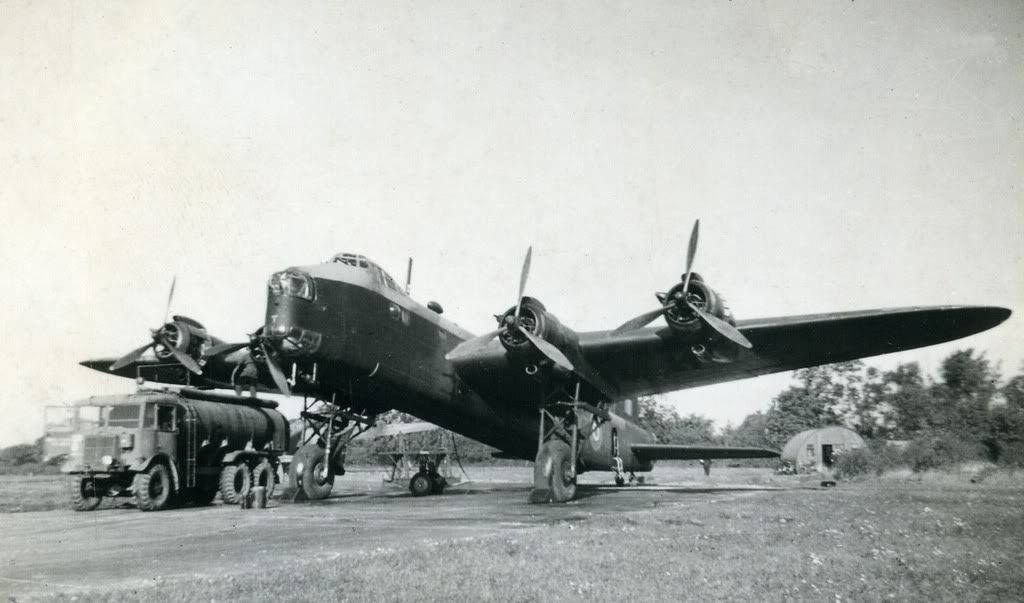
I am seeking information about the refuellers used for the Lancaster Bombers in the 2nd world war.
I own a Stuart turner engine which was used to run the pumps made by Zwicky Ltd on these refuellers but can’t seem to find out much information on this subject.
Can anyone help?
Thanks
Will this help?
John

I had thought that RR is possible, having spotted the flange has the same stud pattern as some RR engines.
Just to give some background, this part was found while clearing a property in Derbyshire following a death and the former owner had been known for collecting all sorts of things.
Is it part of an Argonaut exhaust system?
John
Ideas anyone
Guess RCAF Bristol Freighter Germany. 1950’s
John
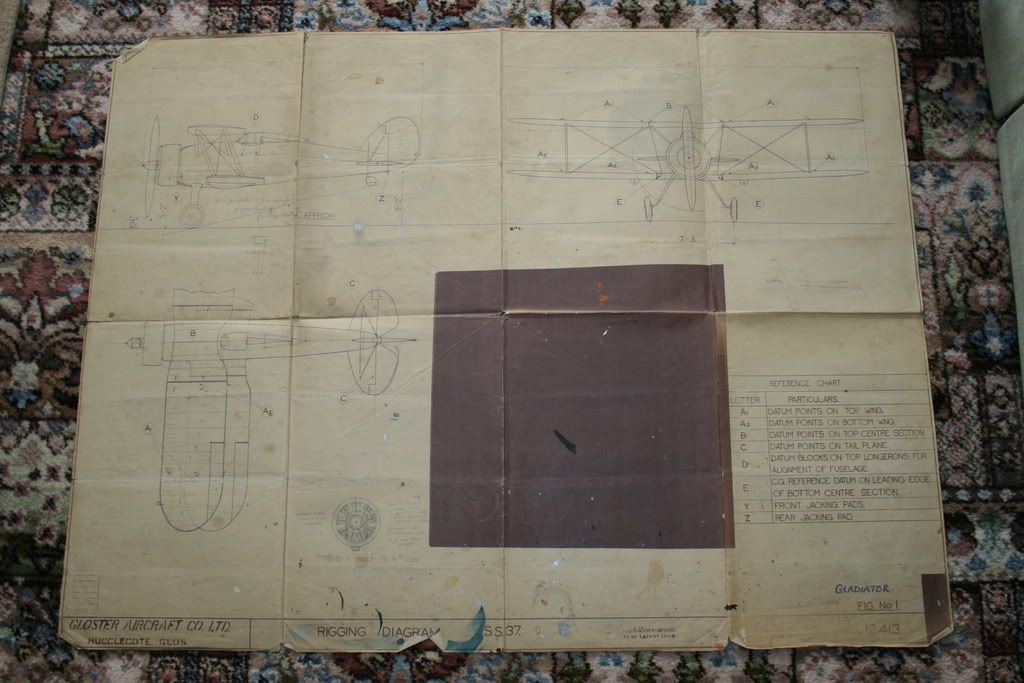
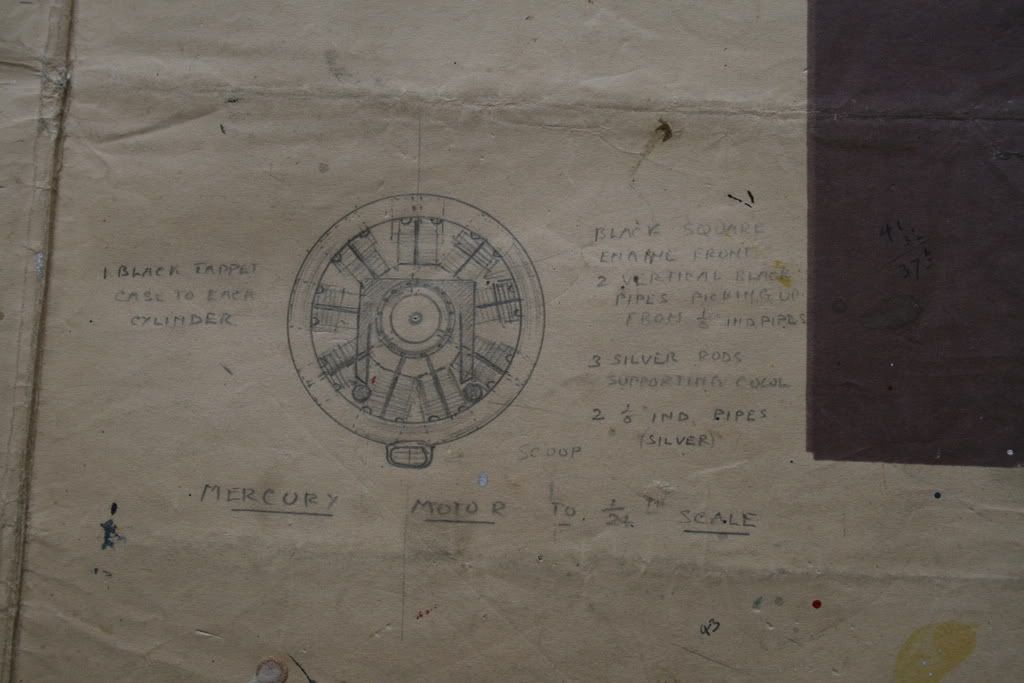
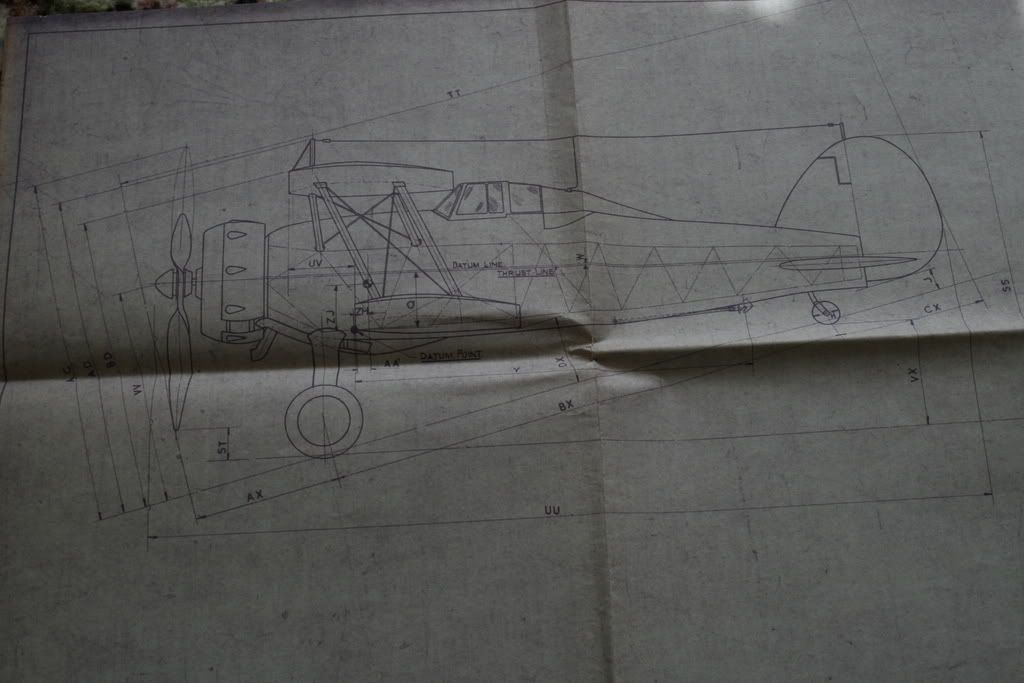
A few more pictures of a seperate drawing:
Ive also got a colour scheme for a Latvian Gladiator if anyone is interested…
Dean
Thank you for posting these. I personally would like to see more. If you have anything on the Gauntlet, I would be pleased to see it as I am working an a model at this time. Be careful how you store your Blueprints as I have just found a Supermarine drawing of the Spitfire 18 which had been stored (rolled)in semi light at the back of a garage and is now a virtual blank piece of paper.
Cheers
John
A friend of mine (Julian Waterfield) has asked me to post some old photographs that belonged to his grandfather on this forum. He hopes to find out as much as possible about them, including location/s, aircraft types etc – anything at all. The pictures carry no dates or details on the reverse except that they were processed by Sukh Raj Bros. in Peshawar. His grandfather is one of the three gentlemen posing in front of the airliner.
Over to you…!
Detail from the above image:
Ta,
Davski
The “Fokker” is an Avro Ten ( note the Lynx engines) and quite likely the Viceroy’s aeroplane VT-ACT.
John
On the lower shots of the Bristol Fighter,does anybody know for sure what that object is, up on the left hand side of the cabane, that looks like an overgrown vent pipe?
It’s a header tank, usually found with the extra rad under the nose.
John
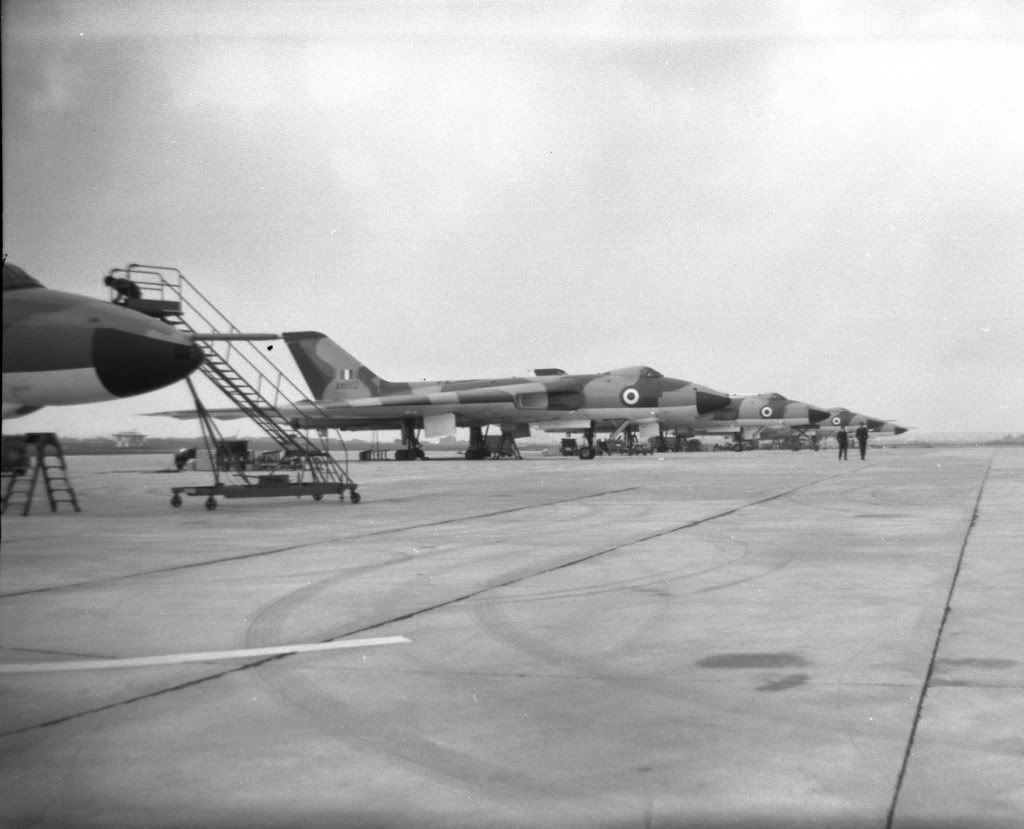
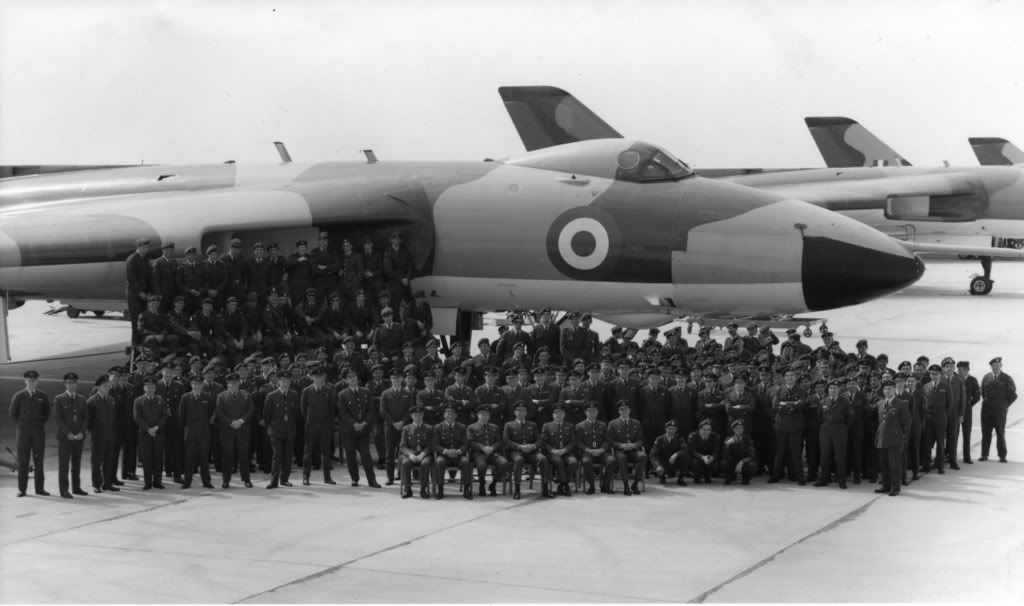
Standing under a Vulcan on starter crew and hoping the airbrake and undercarriage switches were’nt similar.
John


The last malaysian Brigands.
A few from a rather large cardboard box recovered from the loft yesterday.
International Alloys Yard, Aylesbury, 1958.
Some of the Lincolns, the ones illustrated in ‘Lincoln at War’ as at Lindholme(?) and a Brigand.
I seem to remember that the year I took the Brigand shot, an airworthy Brigand was at the BoB day at Hendon, possibly the last show there.
Mark
The last Malaysian Brigands.
John

hi all,
anyone help me with a close up or a drawing of the see thru type df loop, i have loads of images with this type but none are clear enought to see what the inside looks like, i need this for my Dutch Hudson, trust me to pick one with this type of loop!
thanks in advance
The clear loop aerial is just a top and bottom perspex moulding with a join line running all the way round horizontally. The inner varnished copper loops can be rotated through 360 deg. the mounting base does not come up the side of the lower moulding as yours does.
John
Ok. L&S, I’ll have a bash.
photo 1 Demoiselle (replica ?) lets say La Ferte Alais.
No 2 Auster Frame and fuselage of a Luton Minor.
Concur with the Auster and Demoiselle , and Minor plus Caudron G3.
John
No it’s not Prestwick, those hills are far too close. I can’t hazard where it might be though.
John
I would have though part of his anatomy would be going
“Half a crown, sixpence”
John